Actually, the movie theatres have been open for a couple of weeks, but I felt apprehensive about sitting in a theatre in the dark with other people who were all BREATHING. I made up my mind on Saturday that I would go to see this on Monday, only to learn on Sunday that it was no longer compulsory to wear a mask in a theatre. What to do?
Well, I went to Palace Westgarth and I was one of about ten people in a theatre that would probably seat 100. Certainly a movie like Brazen Hussies, about the Australian women’s movement in the 1960s and 1970s, attracts an audience of 60+ year old women and so there we all were, without being told to do so, sitting there with our masks on. I obviously wasn’t the only one who thought “too soon” when the order to wear a mask inside was lifted.
Having just read Michelle Arrow’s The Seventies, this felt like the documentary version of her book. It covers very much the same territory, making the same arguments. It was rather bracing seeing fresh faced, earnest young women in the 1960s being interviewed as craggier, wiser, – and let’s face it – old women in this recently filmed documentary. I have not previously thought of Marcia Langdon as “mellowed” but she was certainly a firebrand in the 1960s. Elizabeth Reid was measured and graceful both then and now. Many of the names and even the faces were familiar to me from their later lives (Sara Dowse, Biff Ward, Pat O’Shane, Eva Cox) but I didn’t have a mental ‘face’ to place on their names back in the 1960s. And..oh…the patronizing, arrogant smugness of young men interviewed at the time, and the the media commentary. It was reassuring to see footage of a recent protest and to realize that, in spite of the ever-present threat of roll-backs, the fight still continues.
The History Listen (ABC). So- a proposal for a coal mine on the coast, to be constructed by a foreign-owned company, and the community and environmentalists outraged. Does this sound familiar? No- it’s not Adani, but instead the Clutha mine that was proposed on the Illawarra escarpment in 1970. The plan was that the coal would be mined, put on conveyor belts down the escarpment to ships waiting at newly-constructed docks on the waterfront. This program Clutha 1970- the biggest battle over coal you’ve never heard of tells how local activists gained the support of politicians on both sides, unionists, lifesavers and the community to stop this going ahead.
Rear Vision (ABC) It looks as if we’re getting to the sticky end of the Brexit arrangements. EU and Brexit – the view from the continent gives a good summary of the Brexit saga. In a way, it has all been pushed off stage with COVID, migration and far-right Eastern European politics. What a self-imposed mess.
I didn’t end up travelling to South America this year, and I can’t see much possibility of doing so next year either. Mass tourism – how everyone became a traveller discusses the history of mass tourism from the Great Tour of the 18th century, the post WWI British holiday camp (what a dreary prospect), post WW2 American driving holidays and the mass tourism that has ruined Venice, Barcelona etc. They end up with a prediction that in a few years, tourism will be 50% more expensive than it was pre-COVID and suggest that perhaps that’s a good thing. Hmmm.
Nothing on TV Well, the smell of the dead rat in the wall of Robyn Annear’s house has cleared, and she comes to us with another of her delightful episodes about Australian history, drawn from newspaper columns via Trove. In The Hatpin Menace, she explores the international public furore over the hatpins that women used to tether their ‘Merry Widow’ Hats (which could measure 2 ft or 60 cms across). These hats had very wide brings- Robyn likens it to wearing a stockpot on your head! – but women used Gibson Girl hairstyles and false hairpieces to bouff out their hair so that the hat fitted. The hatpins, required to hold the hat onto the whole confection were about 30 cm. long. Men fulminated about the perils of the hatpin on public transport; sometimes hatpins were used as weapons; other times women held their hatpins as a form of reassurance (like the way women hold their car keys on a dark night, I suppose). It’s a funny episode and I’m pleased to say that Melbourne was the last Australian city to pass laws against them.
The Documentary (BBC) The episode The Mapuche: fighting for their right to heal investigates the fight by the Mapuche, the indigenous people of Chile, for recognition of their traditional healing and control of their own health service. I hadn’t realized that there was so many parallels with Australia: Chile is the only South American country that doesn’t recognize their indigenous people in their constitution (although that may change when Chile creates a new constitution in the coming years) and their language and practices were banned under Pinochet. Their land was appropriated and given to timber plantation companies and large agricultural firms, and there is currently a lot of unrest over land rights etc.
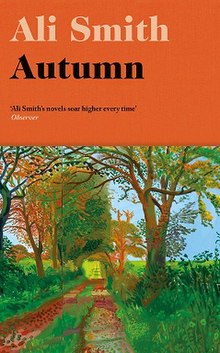
This is the first book in a quartet of stories written in real-time. Written in 2016, and set in England after the Brexit vote, it moves back and forwards in time as Elizabeth, a 32-year-old junior lecturer in Art History at a London University, visits her elderly neighbour (very elderly- 101!) Daniel Gluck as he lies dying in hospital. She had always been close to Daniel, who recognized her intelligence and sensitivity, even though her mother disapproved of the relationship because she assumed that he was gay. It was Daniel who introduced her to the works of the real-life 1960s British Pop artist Pauline Boty, who died in 1966 at the age of 28, with her works unrecognized for many years. The story alternates between Daniel’s prolonged dreams as he drifts towards death, and Elizabeth’s memories of her childhood with this kind neighbour who opened up the world for her.
The book reminded me of Virginia Woolf’s Mrs Dalloway in its quotidian Englishness. As with Woolf, Smith reveals her strong narrative muscles in what seems a simple story in which little happens. The pettiness of bureaucracy and the barely-disguised boorishness of the Brexit vote, the threadbare nature of casualized work, exist alongside a reflection on how hard it is to really live, and how hard it is to die, too.
I’m looking forward to reading the other books in the series too. I love the idea that they are written in real-time as events are happening, with the author just as oblivious to their meaning and significance as her characters are. And boy, can she write! It’s confident, masterly writing, in a short book with little actual plot, that makes me realize how much of what I read is neither confident nor masterly.
How could the start of the month come round so quickly? The December Six Degrees of Separation meme (see Books are My Favourite and Best for an explanation) starts off with Judy Blume’s Are You There God? It’s me, Margaret. I was a little too old for Judy Blume’s Young Adult books, which started off in the mid 1970s, and the whole Judy Blume phenomenon passed me by. But it did start me thinking about the book that I loved most as an adolescent, and how that book has been reflected in my later adult reading.
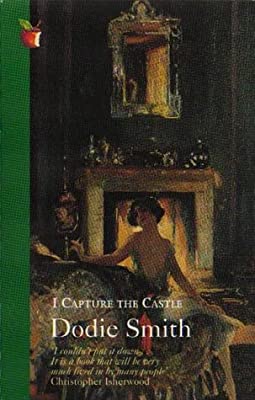
The book that I loved most in early secondary school was Dodie Smith’s I Capture the Castle. It’s a story of a young girl and her older sister living in a racketty old Big House, with their author father suffering from writer’s block. In my own family, we never bought books, and so I reborrowed this book from the school library again and again. Now that I actually do buy books, I have not one but two copies on my bookshelves, but I’m a little apprehensive about re-reading it in case it doesn’t live up to my memories. It was the start of my love of Big House books, which is the ‘degree of separation’ that joins all my books.
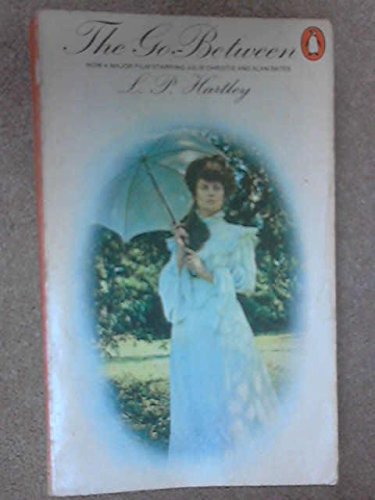
I read L.P. Hartley’s The Go-Between when I was in H.S.C. (i.e. Year 12). I just loved the summer 1900 setting of this book where a young boy, sent for the summer to a friend’s Big House, becomes an intermediary in an illicit love affair between his friend’s sister and a nearby tenant farmer. There’s a similar feeling of a young adolescent out of his depth emotionally, entangled in other people’s affairs and the feeling of impending doom.
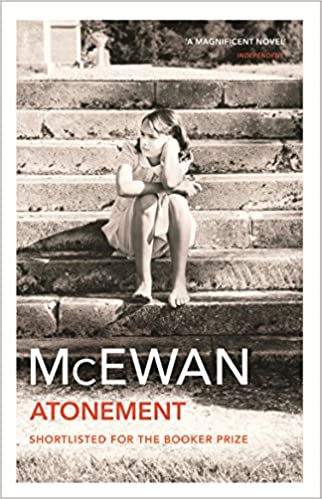
These same themes came up in Ian McEwan’s Atonement, which was made into a lush film starring Keira Knightley. Again, we have a young girl in another Big House, and another illicit love affair. The same feelings of summer, emotional immaturity and guilt come through in this book, too. This book, though, has three separate time periods, although the implications of an innocent but erroneous childhood action reverberate through a lifetime.
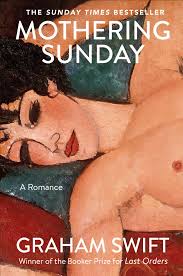
There are a number of similar books that I have read since writing this blog. Graham Swift’s Mothering Sundayis only small, at 132 pages, and dealing with just one day – Mothering Sunday – when the hired help in post WWI Big Houses are allowed to go home to visit their families. But housemaid Jane is orphaned, and so spends the day with her lover, Paul, the son of a neighbouring Big House family. It’s a perfectly formed, tightly told little story.
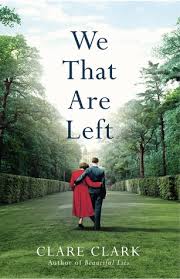
Big Houses, tied as they are to the arcane inheritance arrangements of the aristocracy tend to elicit manipulative relationships and long-held grudges on the part of the disinherited. Clare Clark’s We That are Leftis set in a postWWI Big House, once again with the outsider child brought into the midst of messy upper class family arrangements. We learn in the opening pages that the outsider child ends up owning the Big House and the narrative thread of the novel is just how he achieved it.
For me, Big House novels are inevitably set in England, although there are probably plenty of Big Houses in other countries too (all of a sudden Gone With the Wind or The Leopard spring to mind). What about Australian Big House novels? The houses may not be so big, and certainly not of similar antiquity, but Patrick White’s The Eye of the Storm is set in a Big Enough House, where two adult children return to their mother’s affluent house, intent on putting her into a nursing home so that their inheritance is not gobbled up by her in-home-care nursing arrangements. I really don’t know if I even understood this book, which is often the way with me with Patrick White.
And so, I find myself laughing at the idea of starting off with Judy Blume and ending up with Patrick White. Could any two authors possibly be more different from each other?
99% Invisible Remember when we could fly? Remember the safety card in the pocket of the seat in front? My daughter-in-law must not listen to In the Unlikely Event, which looks at the design of the Safety Card on airlines. The first safety cards were completely prose, without diagrams, lest the passengers should be deterred from flying. The reality is that most people do not read the card, and that in any crash, many passengers are frozen with fear into immobility. Many design considerations go into the Safety Car (pictures only; highlighting colours that are significant; making them specific that that particular aircraft; depicting effort required e.g. opening the emergency door). So, if I ever get to fly again, I’ll look at it with new eyes.
Rough Translation (NPR) There’s a language warning at the start of Radical Rudeness and yes, it sure is offensive. Really offensive. Stella Nyanzi, a Ugandan poet, sacked from her university job, took on the President Yoweri Museveni with very offensive poetry, and ended up in jail. She has since served her sentence, but is a damaged, dangerous woman. Very confronting.
West Midlands History. I did quite a bit of local research on the 1919 Spanish flu epidemic here in my local suburb in Melbourne, and it was interesting to hear the experience in UK with Spanish Flu Comes To Birmingham. In UK, the first wave occurred in 1918 while the war was still under way, with food shortages and all medical resources directed towards the war.
My Marvellous Melbourne. I really do enjoy these podcasts produced by Andy May at Uni of Melbourne with members of the Melbourne History Workshop. Episode 3 of My Marvellous Melbourne looks at the history of bells in the Melbourne soundscape, an oral history recorded in the 1980s where an old Preston resident Evan Luly remembers back to post WWI. He and his daughter Lexie were keen photographers. Their photos between 1950 and 1970 have been digitized and are available as the Luly collection at https://omeka.cloud.unimelb.edu.au/melbourne-history/collections/show/3 The program finishes with the case of Ivy Cogden who was found not guilty of murder when she attacked her 19 year old daughter with an axe in Oakleigh in 1950. The jury found that she killed her daughter while she was sleepwalking, and committed her to Mont Park where she died in 1952.
The Last Archive. Episode 2: Detection of Deception will take you on a wild ride. It starts off with the inventor of the lie detector William Moulton Marston, who hoped to have his invention accepted by a court of law in 1920 in the case of James Frye, a young African-American man accused of murder. But this is not just a podcast about a courtcase. It turns the lens back onto William Moulton Marston, with lots of surprises!
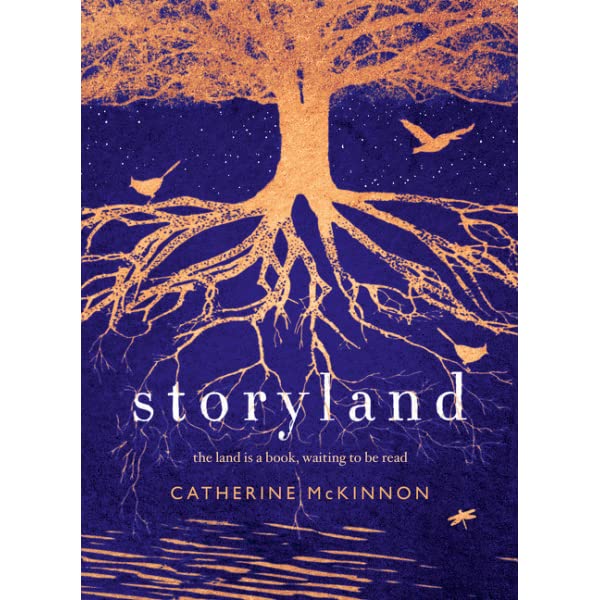
I will confess that I spent the first half of this book being angry at it (a rather futile endeavour, I must admit). The ‘hook’ of the book is its pyramidal structure where each separate story builds chronologically onto the next one, with a link between each story until it reaches an apex, then goes back down again, revisiting each story in descending order. It was used to brilliant effect by David Mitchell in his Cloud Atlas in 2004, a book which I absolutely loved. Mitchell was able to draw you to his characters emotionally, so that you felt reluctant to let them go when the next story commenced. Unfortunately, this wasn’t the case in Catherine McKinnon’s book, which followed a similar structure, even to the point of having a dystopian story as the apex story. As a shorter and ‘thinner’ book (both in page numbers and in imaginative complexity), there was not time to develop the same engagement, and the choice of characters felt a little didactic rather than creative. So, for much of the book, I felt cross that it was such a poor, derivative shadow of an idea.
Where McKinnon’s book differs from Mitchell’s is that the stories are all set in the same geographical location: around Lake Illawarra (south of Sydney Cove and Botany Bay, near Wollongong). As the title and subtitle (‘the land is a book, waiting to be read’) suggest, the land is the unifying feature, although birds and a stone axe are also literary talismans that appear in each story. The stories in her triangle are:
Will Martin – 1796 based the real-life William Martin who accompanied Matthew Flinders on his second Tom Thumb journey of exploration
Hawker 1822- based on a real-life court case where a convict, Seth Hawker, was tried and acquitted of murdering an Aboriginal woman on a farm at Exmouth in the Illawarra district
Lola 1900 – when farming came to the Illawarra
Bel 1998 – when the suburbs have reached the lake, and indigenous art has become commercialized. Children, not quite understanding what they are witnessing, are exploring their neighbourhood and are befriended by a young indigenous woman in an abuse relationship
Nada 2033-2717. Nada is the ‘hinge’ story, where an apocalyptic climate event has wiped out the Illawarra area. A survivor, Nada, has had her DNA and brain data stored, and 684 years later technology has given her a new body and is trying to piece together her memories.
and then, back the other way again……
I said that I begrudged the book for the first half. For me, the breakthrough came with the Nada story. Clambering back down through the stories that had been set up in the first half of the book, at first I found it a little difficult to remember the scenario that had been set up and had to flip back to the matching story in the first half. However, if the apex Nada story was about the reconstruction of an unfiltered memory, in each of the ‘climb down’ stories there was an obfuscation of the truth, an agreement to twist the narrative just slightly. As well as this reflection on history, there was the underlying thread of the land, against which her characters battled, and then tamed, only to be defeated by it again. The land is beautifully described, in its untamed and strange menace, and its persistence amongst suburbia. Indigenous people are always there, right from the voyage of the Tom Thumb II, and the telling of their stories becomes caught up in false narratives, false testimonies and false merchandise.
And so, I ended the book with an appreciation of its themes, rather than the characters as such. I still regret the similarity with Cloud Atlas, and there was an earnestness about the selection of her characters as representations of a historical phase, rather than complete in themselves. Nonetheless its intent in telling the story of the Illawarra, a land like a book, with its omissions and evasions, was well realized.
Rough Translations There’s much talk of trolling and cancelling online, and the episode Dream Boy and the Poison Fans looks at the story of Chinese celebrity Xiao Zhan, whose fans took trolling to a new level. Xiao Zhan was riding the celebrity wave, earning huge sums for product endorsements, until a story on a fan fiction website prompted his fans to turn on the fan fiction site. Supporters of the fan fiction site then attacked the products that he had endorsed. In the end, it was Xiao Zhan who suffered most. The ‘reporting’ culture of China’s past seems to have revived, now using social media.
99% Invisible How perverse! Ecologically fragile peat bogs are drained in order to plants trees to soak up carbon, thereby releasing the carbon from the bog! For the Love of Peat looks at peat bogs, how they are formed, and ecological programs that threaten or protect them.
Nothing on TV. I do enjoy Robyn Annear with her quirky little podcast program! Deadwood Dick and the Picture Show Panic looks at the moral panic about boys reading comics and watching the picture shows. She then goes on to explain the craze for the ‘movies’, all over Australia, where the audience consisted almost entirely of children under 14 who would save up their bottles and threepences to go to the movies – often! By post WWI, there was more restriction on the morals depicted in the movies. Fascinating!
Dan Snow’s History Hit The title How Deep History Swung the US election sounds pretty out-there, given that Deep History deals with the distant past of human history, integrating archaeology, anthropology, geology, primatology and genetics. What Lewis Dartnell is arguing is that the geological construction of America has encouraged particular industries (cotton growing; iron; coal) which in turn has political implications for party affiliations.
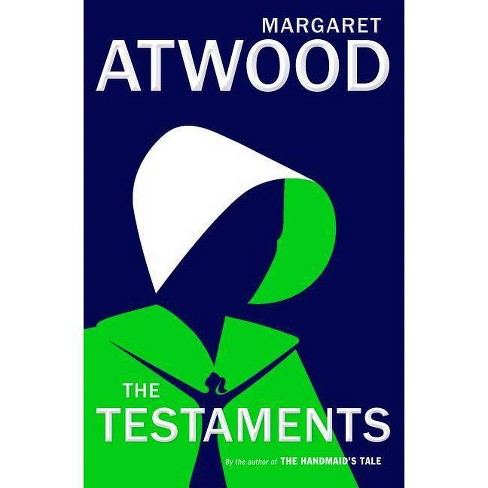
I read The Handmaid’s Tale back in 1997, before I started this blog. I can remember turning the last page and cursing that everything was left so indeterminate. Well, 36 years later, we finally have closure! Of course, in between there has been the enormously successful HULU series which started in 2017, and the red cloaks and white bonnets have been incorporated into protest iconography, especially in response to abortion rights and the Trump presidency.
The Testaments is told in alternating chapters, that are labelled either ‘The Ardua Hall Holograph’ or ‘Transcript of Witness Testimony 369A or 369B’. The Holograph is addressed to an unknown reader, by a writer who does not know if it will ever be read. She introduces herself to us in the second segment:
I am well aware of how you must be judging me, my reader; if that is, my reputation has preceded me and you have deciphered who I am, or was. In my own present day I am a legend, alive but more than alive, dead but more than dead…. I’m a bugaboo used by the Marthas to frighten small children – If you don’t behave yourself, Aunt Lydia will come and get you!
p.32
And so we meet Aunt Lydia again, indelibly cast in my mind as the actress Anne Dowd. We learn more about the Aunts, who now need to recruit young missionaries to cross over into Canada to entice young women across to Gilead. As one of the four ‘founding’ Aunts, Aunt Lydia has power, although the founding Aunts have decided to publicly defer to the Commanders. In the pre-Gilead world, Aunt Lydia was originally a Judge- which is rather uncanny with the confirmation of Amy Coney Barrett to the Supreme Court, a member of ‘People of Praise’ group that used to have a religious rank ‘handmaid’. (This article explains that another Catholic charismatic group ‘People of Hope’ who also used the term ‘handmaid’ may have influenced Atwood’s original book). Through Aunt Lydia’s book, conveyed through Holograph, we learn what her experience was as Gilead became a Theocracy, how and why she became an Aunt, and how Gilead is sustained through the Aunts’ work.
It takes a little while to work out the Witness Testimonies. It becomes clear that there are two witnesses, although their narrative voices are very (and too) similar. I won’t say how they fit into the story, but I became increasingly apprehensive about why they were designated ‘Witness Testimonies’. The ending of the book very much echoed the epilogue of the original Handmaid’s Tale.
The visual imagery and architecture of the HULU Handmaid’s Tale streamed series is so striking that this book seemed particularly devoid of description. I can’t remember whether that was the case for the original Handmaid’s Tale book or not. Atwood has worked as consulting producer on the series, and perhaps she – like us – has internalized the ‘look’ of Gilead so much that there is no need to spell it out.
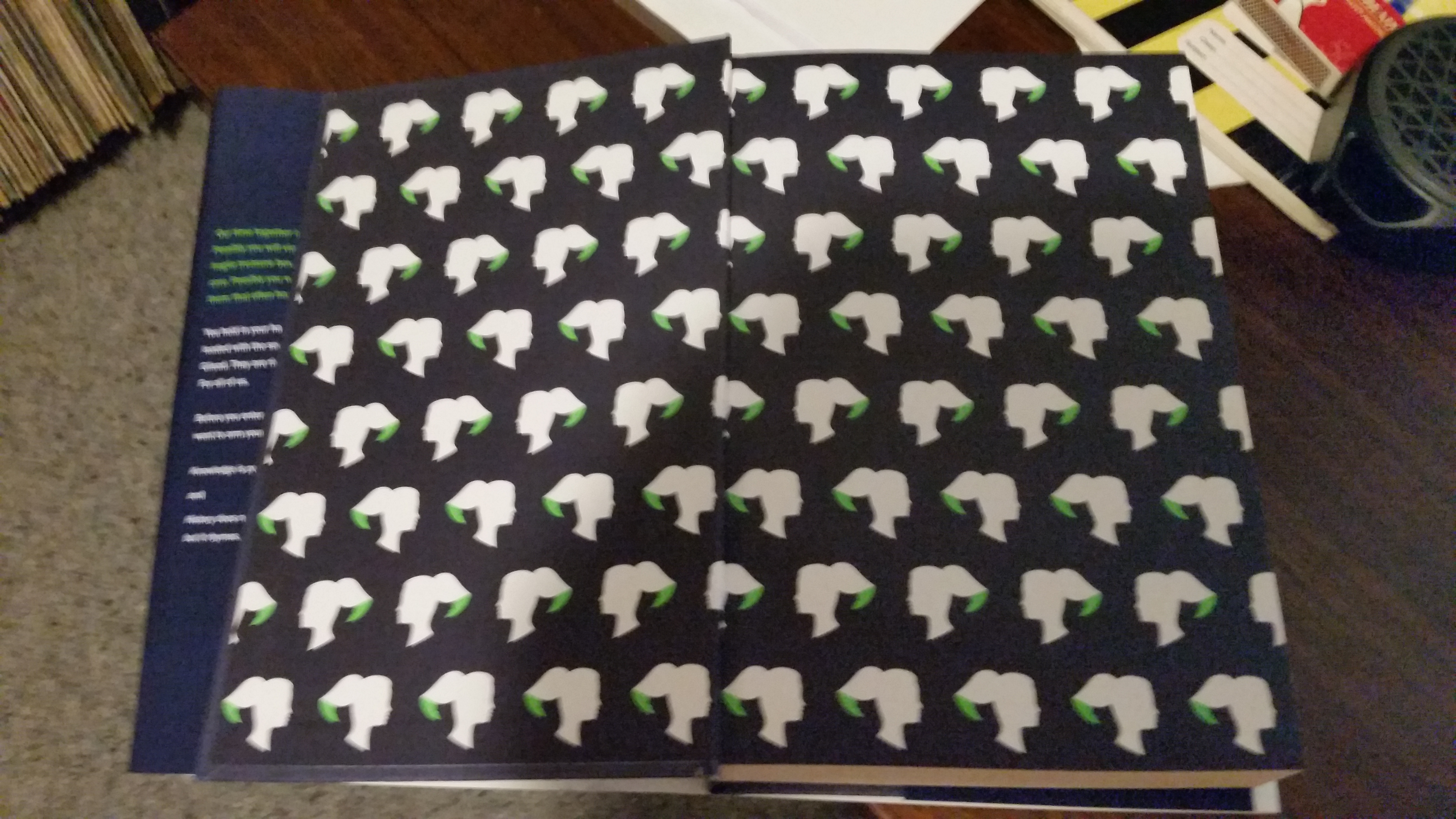
I bought the hardcover version, which is really beautiful. It has eschewed the red and white of the handmaid’s uniform for dark blue, bright green and white. The endpapers (is that the right word? the inside of the cover) are a clever visual trick that switches between handmaid and girl with a ponytail. It made me remember how much I enjoy reading a real, hard-cover, printed book.
I finished the original The Handmaid’s Tale thinking “NOW what happens??” Margaret Atwood doesn’t leave her readers so unsatisfied this time – you know exactly what happened. And she has left plenty of space for Series 4, Series 5…as many Series as they want.
This book was awarded the 2019 Booker Prize, even before it was released here in Australia. I don’t know whether it really deserved it in its own right as a literary work, as distinct from a cultural phenomenon. It’s well constructed and satisfying but the writing is rather pedestrian, although that may well reflect the paucity of intellectual life in Gilead and post-Second-Civil-War Canada. I can’t help thinking that it received the Booker through gratitude that there finally was a sequel, and for the perspicacity that created a Gilead that we have more cause to fear now than in 1985.
My rating: 8.5 /10
Sourced from: purchased as a pre-lockdown indulgence.
It’s strange when you read a history that is analysing events that you lived through yourself. The events are familiar, of course, but there’s also an element of surprise at things you didn’t realize at the time, and at the matters that the historian has placed emphasis on, when you weigh them against your own perspectives and memories. It’s also rather disconcerting to realize that your own lifespan is now considered ‘history’.
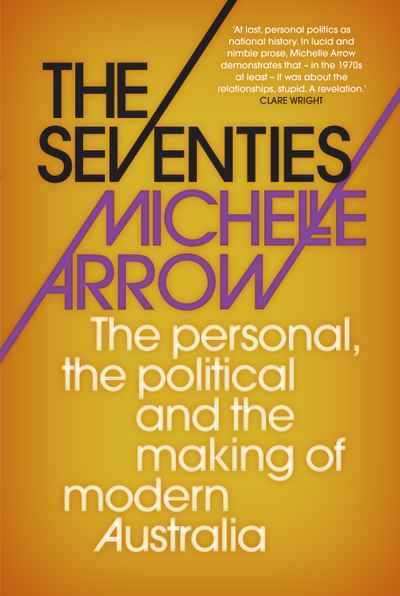
Of course, histories of a given decade or century do not neatly conform to calendars. Historians speak of the ‘long’ eighteenth and nineteenth centuries, and in this case, Michelle Arrow sets the start date for the ‘sixties’ with the retirement of Robert Menzies in 1966 (I don’t know if I agree with her here), and ends ‘the seventies’ with the election of the Hawke ALP government in 1983. As she points out, there has been relatively little scholarly interest paid to the Seventies in Australia, especially in comparison with the United States and the United Kingdom. The decades of the 1950s, 1960s and 1980s in Australia have all received book-length treatment, but the only stand-alone study of Australia in the 1970s was Frank Crowley’s Tough Times: Australia in the Seventies. The 1970s, she argues, have either been defined solely in political terms, most particularly involving The Dismissal, or as a gloomy economic narrative leading up to the 1980s and 1990s as a period of economic deregulatory reform (think Paul Kelly’s The End of Certainty or George Megalogenis’ work).
Her book does not pretend to be a comprehensive history of the decade, but it does emphasize social change rather than political events and economic policies:
Somehow the social movements and social change of the decade sit just outside the frame through which we see the 1970s…This book places them front and centre and positions them as key drivers of change…this book is primarily concerned with the ways new understandings of gender and sexuality transformed Australia, and as a result it focuses on the women’s movement and the gay and lesbian movement.
p.11
And so, having made the women’s movement and the gay and lesbian movement her main frames of analysis, this book traces these two themes through the 1970s, discussing social and political events of those years along the way. As has been the case with many of the decisions and programs of the Whitlam government (e.g. dismantling the White Australia policy, withdrawing from Vietnam), quite a few had already been set in train in the last years of the 1960s, although not prosecuted with the fervor of the Labor years. This was also true of the women’s movement and the gay/lesbian movement. There had been ‘women’s groups’ of different political hues throughout the twentieth century, pushing for ‘liberalism’ rather than ‘liberation’. The Homosexual Law Reform Association of the Act was formed in 1969, priding itself on the knowledge that ‘no member of our committee is a practicing homosexual’ (p. 30)
What changed in the 1970s was that the mantra ‘the personal is political’ was taken up by both the women’s movement and gay/lesbian rights groups. Consciousness-raising groups brought up individual stories which were then woven into a political analysis of systemic oppression. It’s hard for us to realize now, in our time when everyone has their ‘story’ and their ‘journey’, that 1960s Australia, along with other Western cultures, was content for uncomfortable stories to be kept private, out of the public eye, and certainly not the basis for political (as distinct from individual) action.
However, ‘The personal is political’ did not translate into electoral success for women in the 1972 election that swept Gough Whitlam to power after 23 years of Liberal-Country party government. (An amazing thought: people voted in that election who had never seen any other government than a Liberal-Country party one). There were no women in the House of Representatives, and the only two women in the Senate were from the Liberal Party. As a result, Gough Whitlam appointed Elizabeth Reid to be his advisor on women’s affairs, from a short list that included Anne Summers, Eva Cox and historian Lyndall Ryan. It was a tough gig. She had no staff but she became the public face of the women’s movement (p.93). Many in the women’s movement objected to her appointment by a man. She embarked on a listening tour and inviting women to write to her, hearing women’s stories- there are those stories again- in order to develop policy ideas to turn the personal into policy. Equal pay for equal work, the introduction of the single mothers benefit, and improving the quality and availability of child care emerged as the most important needs. There was an uneasy relationship between the Whitlam government and the women’s movement, and between Elizabeth Reid and the women’s movement as well.
In 1972 with Helen Reddy’s ‘I am Woman’ ringing in their ears, the UN General Assembly declared 1975 to be International Women’s Year. In the leadup, Spectrum research had conducted a research report into the status of women that both provided a snapshot into women’s lives but also revealed a widespread lack of interest in feminist issues and the women’s movement more broadly. A grants program set up as part of IWY further exacerbated this schism (although many of the projects and women creators who were supported through these grants have stood the test of time). The headline event was the week-long Women and Politics conference in Canberra, which was opened by Gough Whitlam on the evening of the 31 August. Arrow notes that in many ways it was an exemplary feminist project, with subsidized fares for low-income participants and free child care. But it also highlighted the fractures in the women’s movement between white feminists and migrant women, working class women and particularly Aboriginal Women, led by Marcia Langton, many of whom had different priorities to the largely middle-class white feminists. But as the political temperature rose in 1975, Reid’s power was reduced; there was a suggestion that she be moved into the bureaucracy, and she tendered her resignation.
‘The Personal is Political’ was writ large in the Royal Commission on Human Relationships, headed by Justice Elizabeth Evatt, journalist Anne Deveson and Brisbane Anglican archbishop Felix Arnott, which was established by the Whitlam government in late 1974. By the time it reported on 28 February 1978, the Fraser government wanted no part of it. It was not the first government inquiry into human relationships – the Royal Commission on the Decline of the Birth-Rate and on the Mortality of Infants in New South Wales of 1903-04 was a world-first – but unlike that earlier commission which mainly heard from men, the 1974 commission actively sought the views of women. The files of this Commission form the heart of Arrow’s book, where she describes some of the evidence collected in the submissions, both in relation to women’s issues and homosexuality, and traces through the muted response once the government had changed.
Australia had become a “nation of bank tellers” in the second half of the 1970s, as the role of women’s adviser became circumscribed, the Women’s branch had its resources cut, and funding for refuges dried up. The National Women’s Advisory Council was established in 1978 ‘to assist in policy making’. Chaired by the vice-president of the Victorian liberal party, Beryl Beaurepaire, it included an Aboriginal woman, a migrant woman, a representative of the ACTU, the President of the Family Planning Association, law lecturer (and later Governor General) Quentin Bryce and a representative of the CWA. Only Wendy McCarthy, the Family Planning president, was part of the women’s movement. Arrow argues that it replicated much of the work of the Commission on Human Relations, and although it developed a comprehensive policy agenda, none of the initiatives came to fruition until the Hawke Labor government. There was backlash over abortion reform (think Margaret Tighe and the Right to Life); religious conservatives became more organized (think Festival of Light) and groups like the Women’s Action Alliance and Women Who Want to be Women formed a visible anti-feminist front. Sex education became bitterly contested, especially in its approach to homosexuality. The first Mardi Gras parade, held in June 1978 opened up a new more confrontational phase in gay and lesbian politics. (p. 220)
Reflecting the ‘long’ Seventies that Arrow deals with, the book closes with the Women Against Rape collective protests at Anzac Day commemorations in the early 1980s – a reassertion of the ‘personal is political’ trope into national affairs. In her Afterword Arrow picks up on the Hawke Labor government, and the emphasis on the economy that has largely obscured the importance of using individual story-telling as the basis for political action. But there is no great triumphant ending here. Perhaps the most important legacy is the continuation of the recognition that the personal is political, as seen in the Human Rights Commission Bringing Them Home report in 1997 and the Royal Commission into Institutional Responses to Child Sexual Abuse in 2017. But, as Arrow points out, too often “personal stories are told without political activism to animate them…the political is all to often reduced to the personal.” And there is still much unfinished business of the 1970s.
This book won the Ernest Scott Prize for 2020, awarded annually “to the book judged to be the most distinguished contribution to the history of Australia or New Zealand or to the history of colonisation published in the previous year.” It is carefully footnoted and researched, but it maintains a light tone which is personal at times. It is well-structured in a narrative sense with chapters divided into discrete sections, and ‘hooks’ at the start and end of each section to drive the argument forward.
But, having lived through the seventies myself, I do wonder about the difference between the historian’s view and the perspective of those who lived at the time. In Arrow’s book, a documentary archive (i.e. the correspondence of the Royal Commission on Human Relationships) takes on an importance for a historian that I’m not really sure it had for the general public at the time. Was I even aware of it? I certainly didn’t contribute to the commission- in fact, did I know anyone who did? Maybe my obliviousness to this Royal Commission reflects nothing more than my own sheltered, middle-class, conservative, politics-free life at the time.
But perhaps even the visibility of, and participation in, inquiries then and now signals a change. I think of inquiries held today into what would previously been seen as ‘personal’ matters, most especially the Institutional Response to Child Sexual Abuse inquiry, and I think that there is a high level of public buy-in (e.g. the animus against George Pell; the ribbons on church railings) that I don’t recall existing in the 1970s. But perhaps the importance of an inquiry doesn’t rest in its creation or impact at the time, but the use that is made of it in the years and even decades following.
I’ve had enough of America. All my listening this week comes from anywhere other than the Disunited States of America.
The History Listen (ABC). This is fantastic! The Scholar’s Hut is about Thomas Shadrach James, a Mauritian born school teacher who worked with indigenous students at Maloga Mission (about 15 ks from Moama) in 1883-8, and after the mission closed, he reopened his school at Cummeragunja. The program featured a restaged roll-call of students, and at first I thought that it was just for effect, because it’s a virtual who’s-who of 20th century southeastern Australian aboriginal activists : Bill Onus, Doug Nicholls, Jack Patten, William Cooper, Margaret Tucker. But it’s not just for effect: Thomas Shadrach James taught them all, and encouraged them to use ‘leading and writing’ (rather than ‘reading and writing’) to agitate for change.
My Marvellous Melbourne Episode 13: St Kilda Main Drain may not sound very exciting, but for a Melburnian who likes sticky-beaking, it’s just the thing – especially as the lockdown has prompted us to walk our neighbourhood more than we ever have before. Andy May starts off with a reflection on Darebin Creek, then Sophie Couchman talks about the St Kilda Main Drain. Living on the other side of town, I wasn’t familiar with a lot of the streets that she mentioned, but she has a blog with maps and pictures.
Rear Vision (ABC) In July 2020 during the COVID lockdown here in Melbourne, suddenly the Housing Commission residents of high-rise towers in Flemington and North Melbourne found themselves quarantined, with chaotic service delivery and a heavy police presence. Cruise ships in the sky- the story of public housing and high-rise towers looks at the move across the world during the 20th century to build multi-storey housing, at first of relatively good quality, and the political decisions that resulted in its later success or failure.
And here’s one of my favourite historians, Graeme Davison, among others, talking about petrol stations in Fill ‘er up- the history of the Australian servo. After talking about the history of servos, the program talks about the future of petrol stations. If and when electric vehicles are more common,petrol stations will be leisure stops while you rapid-charge your car – or at least, that’s what they’re planning to do. And did you know that the best selling product at petrol stations with convenience stores attached (i.e. nearly all of them) is not petrol but 500 ml energy drinks?
The Documentary (BBC) I often listen to the BBC in the middle of the night when I can’t sleep and wish days later that I could remember what program it was that interested me. I did find these ones again- The Burning Scar is about the dodgy deals that Indonesian palm oil companies are making with traditional owners in Papua. Don’t trust that Forest Stewardship Council accreditation you see on packets of printer paper: they have accredited Korindo, one of the worst offenders. Here’s a video by Greenpeace about recent burning.
India’s Missing Children is about the selling and kidnapping of children in India to work in factories, as domestic labour and in brothels. It’s estimated that a child goes missing every eight minutes, and the coronavirus pandemic has only made things worse.


 The Resident Judge of Port Phillip