The Daily (NYT) So what happens to the Trump supporters now? A Conspiracy Theory is Proved Wrong interviews a number of ‘true believers’ who fervently believed that somehow Trump would end up as president. As in a millenarian cult disappointed after the Messiah does not appear (again), believers blame themselves for misinterpreting what they were told. I just don’t know how you prove that something – i.e. fraud- did not occur.
Dan Snow’s History Hit .These podcasts are teasers for Dan Snow’s History Hit television channel, and you really needed visuals here. Edge of Empire: Rome’s Northernmost Town looks at Corbridge, two miles south of Hadrian’s wall, and the archaeological ruins uncovered there. It was a garrison town that survived after the soldiers left to become a trading centre. I think you have to see it for this podcast to make sense.
Heather Cox Richardson continues her history series on Reconstruction. In her January 15 episode she looks at two forces which challenged the post Civil War idea that all men (including African-American men) should be able to have a say in the government. First there was fear of ‘communism’, spurred on by the resurrection of unions after the Civil War and the Paris Commune which was publicized by the new improved Transatlantic telegraph table of 1865. Second, there was the careful creation of the independent, government-scorning Western cowboy as a counter to the eastern states ‘socialists’.
Late Night Live (ABC). I saw that Simon Winchester has written a new book Land: How the Hunger for Ownership Shaped the Modern World.Philip Adams interviewed him here. He seems (from this interview- I may be wrong) to start his analysis with the land enclosures in the 1600s onwards but I found myself wondering about feudal ownership beforehand, Indian and Chinese ownership- was there such a thing?- and how nobility and kingship fitted in with land ownership. It all sounds a bit Euro-centric – again, I may be wrong.
Saturday Extra (ABC) It’s the 10 year anniversary of the Arab Spring, and I’m interested to know what the after effects were. A week ago Geraldine Doogue interviewed Sarah Yerkes, from the Carnegie Endowment for International Peace in Tunisia: Ten years since the Arab Spring. She argues that Tunisia came out better from the Arab Spring than many other Middle East companies, but that there have been recent uprisings again. Then this week, Doogue interviewed James Dorsey, journalist, and a senior fellow at the National University of Singapore’s Middle East Institute. He argues that in recognizing Israel, the United Arab Emirates and Bahrain were allowing Trump to give something to his evangelical followers, and to present an alternative to conservative Islam – a trend that is occurring across the Middle East to varying degrees. After the interview, he was chatting informally to Doogue. He said- and she had his permission to add this to the podcast- that Indonesia is being underestimated, but at this point he started to talk to Doogue as a real insider, and I didn’t know what he was talking about, quite frankly.
If you’ve been following my blog for a while, you’ll know that I’m rather uncomfortable with the current trend to write history as a quest, interweaving the researcher/narrator’s perspective on the search with the actual history itself. Initially, I loved it as something brave and humanizing. But after at least a decade, it’s becoming a bit tired, and I feel that it is often resorted to as a symptom of the paucity of sources, as much as anything else. Ah, but I’ve said this again and again, and now I’m even boring myself.
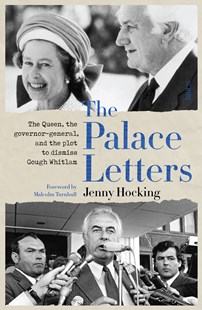
But sometimes the historian genuinely is part of the history, and this is certainly the case in The Palace Letters. Jenny Hocking has written a two-volume biography of Gough Whitlam, and has been working on the Dismissal for many years. Indeed, if it were not for her persistence, and the generosity of pro-bono legal representation, historians would only have been able to work with retrospective accounts of the leadup to the 1975 dismissal of the Whitlam government. The real-time documentation leading up to the November 11 1975 events was held at the pleasure of the Queen as ‘personal’ documents instead of the Commonwealth records that they are. After the National Archives refused Hocking access to the correspondence between Sir John Kerr and the Queen’s Private Secretary Sir Martin Charteris after the statutory period had elapsed, she embarked on a ten-year battle to resolve the status and ownership of these documents as part of the historiographical record of Australia. This book is the story of that fight.
I have been following her battle for several years , especially through her recent book The Dismissal Dossier and I think I even threw some money towards her crowd-funding campaign to fund her legal expenses. After the papers were finally released, I can remember feeling somewhat disappointed that there was no ‘smoking gun’ of a Palace conspiracy, but rather the self-serving and pompous bleatings of Sir John Kerr, the Governor-General who did not cover himself with glory in November 1975 or in the years afterwards. But having read, The Palace Letters there is, at the personal level on the part of the Queen’s Private Secretary Charteris, a passive encouragement to Kerr, and certainly a structural effort to keep this communication hidden on the part of the National Archives, Liberal/Coalition governments over the decades and the Palace itself.
The book is written in the first person, with remarkably little self-promotion and puffery on Hocking’s behalf, even though she could have easily trumpeted her credentials for writing this book. It starts off in the archives, where all historians love to be, and her discovery that there were actually two copies of the letters: the first, the actual letters and the second, a photocopy made at night by David Smith, the Governor-General’s official secretary in order to send to Kerr to write his Journal. When both copies were placed under an embargo by the Palace on the grounds that they were personal papers, she thought that she would never see them. It was when she read Sydney barrister Tom Brennan’s blogpost ‘Australia owns its history‘ that she realized that there were legal allies with whom she could join forces.
The book then moves to the various court cases that the issue moved through, and the arguments that were made on both sides for or against the release of the letters. She was a participant, rather than a disinterested observer, and the National Archives does not come out well, in her retelling, taking advantage of tactics like unequal access to information, obfuscation and courtroom time-hogging. Headed by David Fricker, a former deputy director-general of ASIO, it becomes clear that the Archives are more than just a repository for documents but a political actor in their own right. There is even a National Archives whistle-blower who, infuriatingly, conveys important information at such a late stage that it cannot be used. The Murdoch-owned Australian is a player here too, and it is not surprising that Australian journalists Paul Kelly and Troy Bramson have published The Truth of the Palace Letters as a counter to Hocking’s analysis of the letters, once they had been made available.
Hocking gives a good sense of the imbalance of this fight: the National Archives are able to draw on their government-provided budget (albeit at the expense of their other activities) whereas Hocking could be held personally responsible for court costs. Although she was able to negotiate a capping of these costs, and was able to draw on the cream of Australia’s legal system for pro-bono representation, there must have been many times when she felt sick to her stomach at the implications of the losses in court. For losses there were, and it was only when it went to the High Court and received a 6:1 victory, that the long battle had been vindicated.
The final third of the book looks at the content of the letters themselves, and the aftermath of the Dismissal for Kerr himself as the Palace distanced itself from both Kerr and the decision. At one stage Sir Martin Charteris referred Kerr to a book written by conservative Canadian politician and expert on the reserve powers of the Crown in former dominions, Eugene Forsey, which enlarges the scope of the question beyond just Whitlam and Kerr into a broader historical question. However, after the dismissal, the time for book recommendations had passed, and Charteris becomes frostier, with Kerr’s actions now in the past.
While, of course, tales of the archives and courtroom stories will appeal to a particular type of reader, this book itself is very accessible. Who said that historians can’t be heroes? If you’re tempted to read it, read Hocking’s The Dismissal Dossier first (which will probably get you fired up) and then read this book, almost as a type of morality tale, to see the Mighty Fallen and the rewards for persistence and the courage to put yourself on the line – for our right to know our own history.
My rating: difficult to rate…8?
Sourced from: e-book from Yarra Plenty Regional Library.
Once again, I have not read the book that starts off the Six Degrees of Separation meme on the first Saturday of each month. You can read the ‘rules’ for Six Degrees of Separation on Kate’s Books are my Favourite and Best website. This month the starting book was Anne Tyler’s Redhead by the Side of the Road.
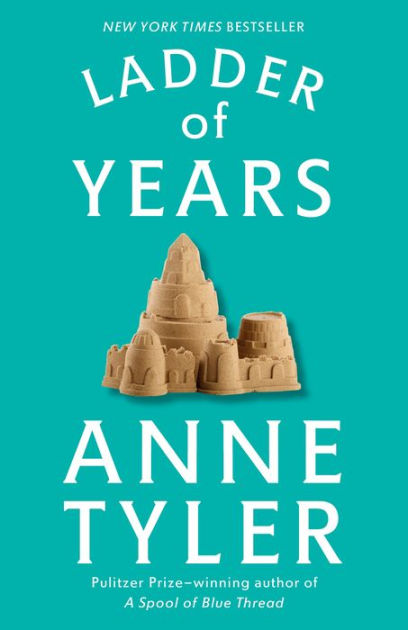
I might not have read this particular Anne Tyler book but I have read several others. Before starting this blog I would have nominated her as one of my favourite authors, but I think that after a few books I had begun to tire of the Americanness and everyday-lifeness of her books (I don’t know if either of those words exist!) and I haven’t read anything of hers in the last ten years. I know that I really enjoyed Ladder of Years, where the middle-aged female main character decides to just walk out on her family, adopt a new identity and start a new, stripped-down life. Perhaps my enjoyment of this book says more about me as a middle-aged female reader, than the book.
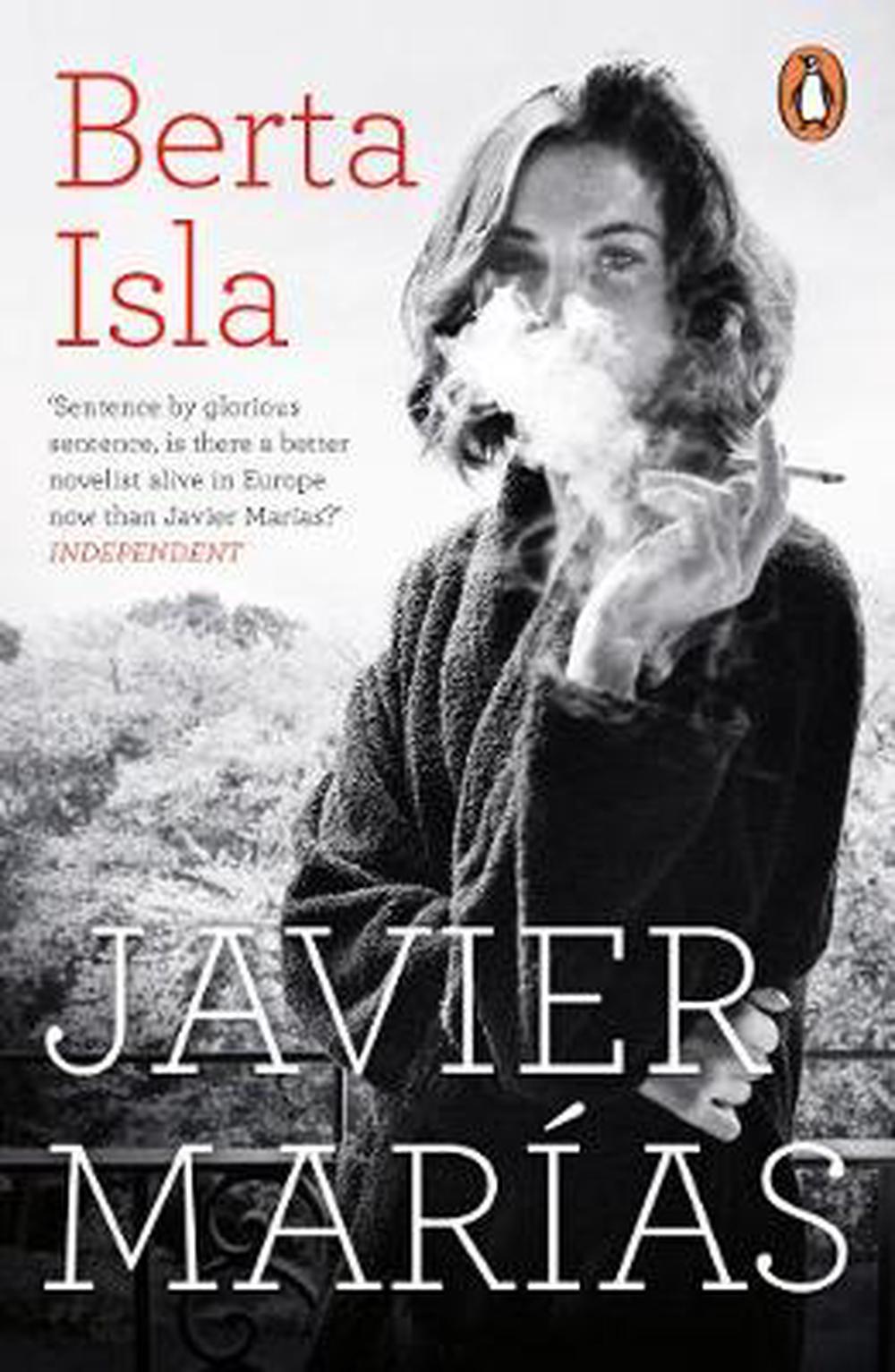
Someone working as an undercover agent would be adopting new identities all the time, I should imagine. But what happens to the family they leave behind? Berta Islaby Javier Mariás explores the scenario of a wife whose husband disappears ‘on business’ for increasingly lengthy periods of time.
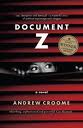
If you say “spy” to an Australian, probably the first names that will occur to them are those of Vladimir and Evdokia Petrov (in fact, there’s a good chance that the Petrovs will be the only names that most Australians will be familiar with). The image of Evdokia Petrov being manhandled along the tarmac to an aeroplane is one of the iconic images of the 1950s. Andrew Croome has fictionalized the Petrov Affair in his Document Z.
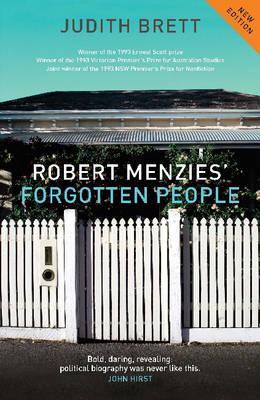
Prime Minister Robert Menzies was able to take advantage of the Petrov Affair during the 1954 election campaign- a timing which many thought was too convenient. I grew up during the 1960s believing that Robert Menzies was the only possible Prime Minister: a bit like the Queen, he just was. Judith Brett wrote an excellent biography of Menzies and the middle class in the post-war years in Robert Menzies’ Forgotten People, which I read prior to staring this blog.
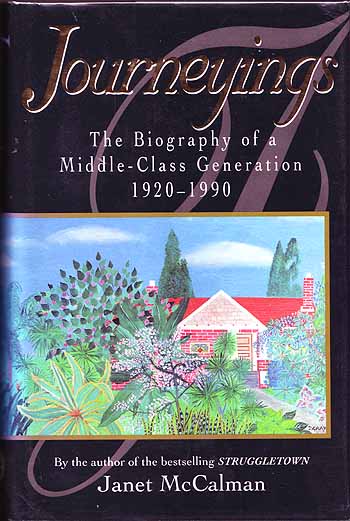
Another historian who captured twentieth century Melbourne middle class life very well is Janet McCalman inJourneyings: The Biography of a Middle Class Generation 1920-1990. She takes as her narrative vehicle (literally) the No. 69 tram travelling from Carlisle St St Kilda to Cotham Road Kew, picking up the students of four private schools: Scotch, Trinity, Genazzano and MLC (Methodist Ladies College) and traces the experience of middle class, Melbourne life in the suburbs through which the No. 69 travels.
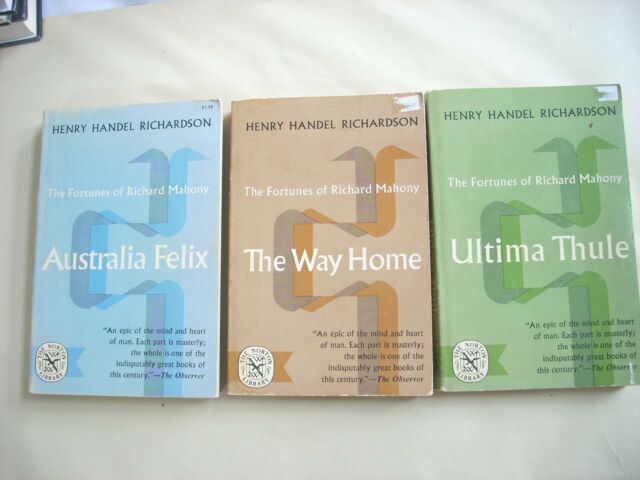
The other major denominational rival to MLC was Presbyterian Ladies College, whose most famous alumni is Ethel Florence Lindesay Richardson, better known by her nom-de-plume Henry Handel Richardson. She famously wrote about her school days in The Getting of Wisdom, but I much preferred her wonderful three-part work The Fortunes of Richard Mahony which is probably one of my favourite Australian novels.
Hah! Four Australian books this time- and three of them by women!
Stuff the British stole (ABC)Shots Fired I heard this program advertised some time ago on the radio, but I could never catch the title! However, I finally tracked it down and listened to this episode on Invasion/Australia Day. I can remember feeling angry that the Gweagal shield was being returned to the British Museum after being on exhibition in Canberra as part of the Encounters exhibition at the NMA, where it was identified as being ‘collected’ at Botany Bay. But now that the custodianship of the shield by the British Museum is being challenged, it seems that it was probably not the shield dropped as part of the first contact at Botany Bay in 1770 after all. It raises questions about the relative worth of an artefact, the stories attached to it, and the politics of retaining or repatriating it.
The Daily (NYT) One of the first things that Joe Biden did on becoming president was tear up the Keystone Oil Pipeline. Good thing, too. This article from February 2018 has been read as a podcast and it goes through the history of American climate change activism, starting with Bill McKibben and 350.org, and focussing on five activists called The Valve Turners who deliberately trespassed while shutting off pipelines to ensure that they would front a court so that they could argue the necessity to act against climate change. Middle aged, upper middle class, educated Quakers and Unitarians… I’m proud to hear this, and I doff my cap to their bravery.
My Anne Lister-fest I finished watching Gentleman Jack (starring Suranne Jones) last night and I was curious to know more about Anne Lister and how accurate the Sally Wainwright-directed depiction was. First I listened to the History Extra Podcast Anne Lister, the Real ‘Gentleman Jack’ which featured Anne’s most recent biographer Angela Steidele. I think that her biography, Gentleman Jack: A biography of Anne Lister, Regency Landowner, Seducer and Secret Diarist was originally written in German and translated by Kate Derbyshire. I wasn’t quite convinced by Steidele’s unfamiliarity with English gentlewomen’s diaries which (from the limited experience I have with them) are almost always boring, and there seemed a lot of emphasis on the ‘coded’ part. This same Kate Derbyshire the translator was a guest on The Dead Ladies Show Episode #12 Anne Lister where I was disconcerted by the tittering and male guffawing in the audience, something that the presenter seemed to be playing up to. I noticed that in the TV series, credit was given to Jill Liddington, so I sought her out. I found a series of videos on ALBW – Anne Lister Birthday Week- which was planned for 2020 before COVID intervened. They have bravely rescheduled it for April- then, July 2021- I am not hopeful. Jill Liddington seemed more a historian’s historian, who gave equal weight to the context of diary-writing and the English class system. Jane Liddington: The Inspiration of History is a one-hour interview with Pat Esgate (American organizers of the ALBW).
The Guardian. I have a friend from Brazil, and since I’ve been learning Spanish I am more interested in Latin American/South American affairs. I saw the appalling news about the shortage of oxygen in Brazil, so I was interested in Why Brazilians are taking the Covid crisis into their own hands. The reporter in this podcast, Tom Phillips, thinks that the tide has turned on Bolsonaro because of his handling of Covid. I’m not so sure.
Latin American History Podcast Continuing on with The Conquest of Mexico- Part 4, the podcaster Max Serjeant pulls a bit of swiftie here. He starts off telling the story of a European explorer meeting with an indigenous culture, going off, returning, getting killed and that’s the end of the story. This explorer is not Cortez of course, (I’ll let you guess or find out who it is) but he raises some interesting questions about how the appearance of a ‘stranger’ fits into pre-existing cosmology. Cortez meets envoys from the Aztecs, and is rebuffed in his efforts to meet with Montezuma, who rather foolishly keeps sending him gifts which just happen to include gold – thereby highlighting the desirability of Aztec wealth. Cortez teams up with the Totonacs, who had been defeated by the Aztecs in the old “enemy of my enemy” scenario.
Heather Cox Richardson. Returning to her Thursday series on Reconstruction in America, on 31 December she looked at two groups who were excluded by the 14th Amendment: the indigenous American tribes and women. For some reason, I always avoided doing American history and I’m embarrassed to admit that I didn’t realize that the ‘Indian’ Wars took place during (as well as before and after) the Civil War. It was interesting to juxtapose these wars, treaties and land swaps with what was happening in Australia with our indigenous people. However, I disagree with her definition of ‘suffragist’ vs ‘suffragette’ (she sees it as a US vs UK thing) rather than a difference in strategy.
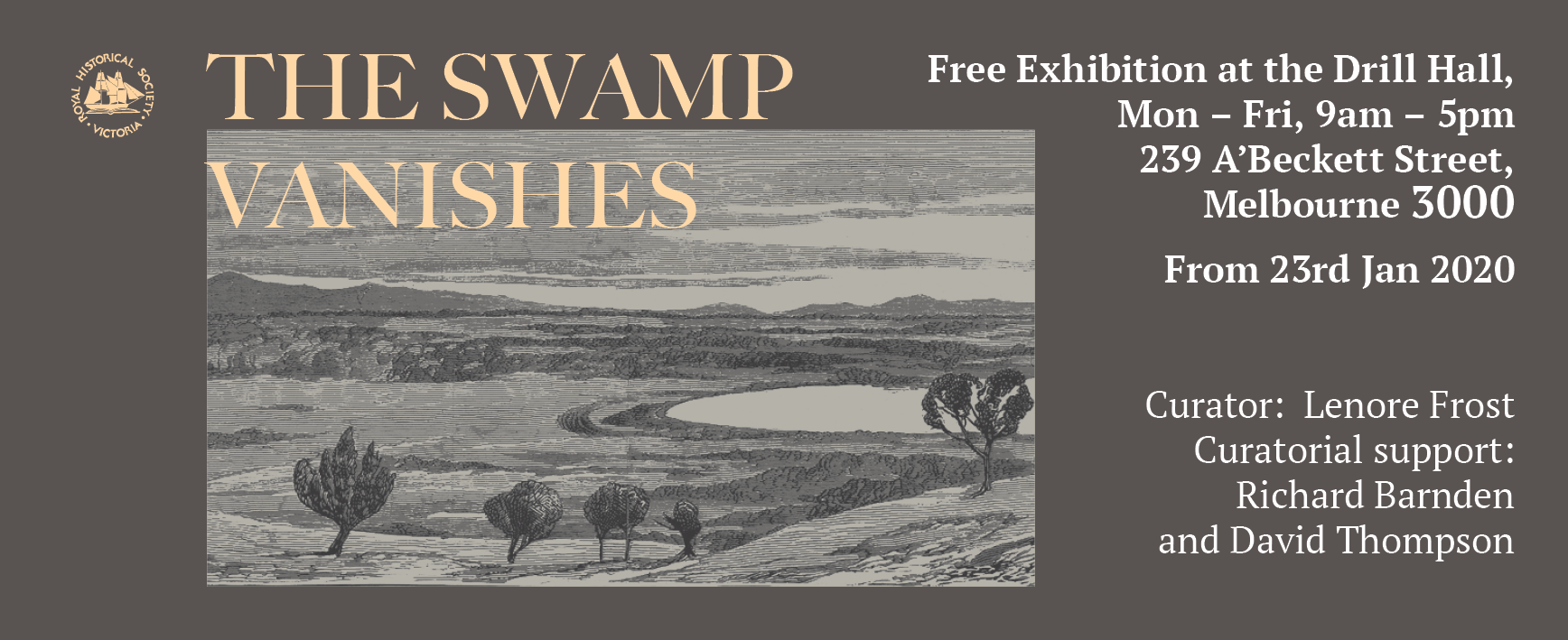
Well, true to form, I visited the current exhibition ‘The Swamp Vanishes’ at the Drill Hall in a’Beckett St, the home of the Royal Historical Society of Victoria, just days before it finishes. Extended because of the pandemic, the exhibition will close at 5.00 p.m. on Friday 5th February – so if you want to catch it, you’d better hurry.
‘The Swamp’ was a large wetland, west of Melbourne which has been variously known as the Batman’s Swamp, the West Melbourne Swamp, the Dudley Flats etc. It is still hard to describe exactly where it was because the area is now criss-crossed with infrastructure and construction works. I remember leaving Spencer Street (now Southern Cross) railway station by bus at sunset, bound for Adelaide, and turning to my then-husband I asked “Where on earth are we?” because, despite the high-rise buildings in the background, it felt a completely deserted, flat, wasteland. This is the area described in David Sornig’s excellent book Blue Lake: Finding Dudley Flats and the West Melbourne Swamp (my 10/10 review here) and the book and this exhibition complement each other.
However, unlike the book, the emphasis here is more topographical, with many maps and diagrams, many from the RHSV’s own collection. There is a section in the exhibition on Dudley Flats (the aspect of the by-then-drained swamp that I found most fascinating in Sornig’s book) but this is more about navigation and engineering. If you like poring over old maps, you’ll enjoy this exhibition – if it’s still on!
This is the second in Ali Smith’s Seasonal Quartet, a series of four books each set in the year in which they were written from 2016 onwards. It’s a strange and playful book, full of literary puns and allusions. It’s a bit show-offy, and for me there was no particular engagement with the characters, who seemed like mouthpieces for Smith’s own literary virtuosity and pawns in the author’s own political project, rather than flesh-and-blood characters in their own right.
The book starts with Sophia Cleve, a retired businesswoman, alone in her large 15-bedroom house with a disembodied head. This head bobs around in Sophia’s peripheral vision, moving in and out of rooms, and nestling closer to her. She is not frightened of the head- indeed, she becomes rather fond of it- but as a reader, you don’t know whether it is real or a hallucination. It is heading into Christmas, and Sophia’s son Art is coming to Cornwall to spend Christmas with her. A dilettante nature blogger, he has recently broken off with his girlfriend Charlotte, and so he pays a young girl, Lux, whom he met in a bus stop, to pretend to be his girlfriend for three days to avoid his mother’s questions. When he arrives there, his mother is acting particularly oddly. Lux encourages him to call his aunt, Iris, from whom Sophie has been estranged for several years, as the only other relative who could assist. Iris is a long-term social justice warrior, a veteran of the Greenham Common anti-nuclear protests, who may have played a more important part in Art’s life than his mother admits, and more than what he remembers.
In many ways, the Big House setup is a bit of narrative cliche. The Christmas setting evokes Charlies Dickens’ A Christmas Carol, especially when Sophia thinks she hears the clock striking midnight twelve times. Time jumps back and forward to other Christmases, as in Dickens’ book, as we learn more about Sophia and Iris’ relationship, Art’s life and relationship, but little about Lux’s life.
At the same time, the book is threaded through with the current-day politics of 2017. Iris represents the progressive social justice old-left, having left behind the concerns about nuclear weapons to now protest the harsh immigration policies of the last few years- something which Lux, as an immigrant herself, understands well. Sophia spouts Daily Mail political opinions, while Art is cynical and rather cavalier about the nature and environment that he writes about in his blog. The book ends with the ascent of Trump – (and how delicious to read about it as Trump leaves office in the real world!) – and even though it is July, a chill falls over the book.
But most of all, the book is playing with literature. There is much mention of Shakespeare, especially his play Cymbeline (I have never heard of it- should I feel ashamed?). Art describes the play as “The one about poison, mess, bitterness, then the balance coming back. The lies revealed. The losses compensated.” I strongly suspect that this is the political trope that is running through the series – although I will have to wait to find out about that. There is lots of word-play, and little reflections about phrases and how they can be challenged – for example, what does ‘to-day’ mean? What is the verb ‘to day’? How do you ‘day’?
I didn’t enjoy this book as much as Autumn, which felt more human, with less virtuosity. I felt as if I was a bit ‘slow’ when I was reading it, and a little anxious that allusions and witticisms were going over my head. I’m interested to keep reading the other books though- indeed, I have them piled up beside the bed – and so I’ll reserve judgement for now.
My rating: 7/10
Sourced from: Eltham Bookshop. I bought it because I couldn’t borrow it.
Heather Cox Richardson. I’m listening to her history of Reconstruction. Her talk on December 18 2020 picks up on Congressional Reconstruction. After Lincoln was assassinated, there was a long hiatus until Congress reconvened, and in that time President Johnson (a Southern democrat) tried to tie everything up so that the South could come back to Congress as if nothing that happened. And, they pretty much got away with it.
Nothing on TV is Robyn Annear’s homegrown podcast drawing on the newspaper resources of Trove. In the episode The Suburban Ghost she regales us with reports from all over Melbourne of a ghost, sometimes described as ‘Spring-Heeled Jack’ who would jump out of bushes, pull back his cape to reveal his phosphorescent chest, thereby terrifying a friend-of-a-friend who passed on the story (as all good urban legends do). The reference to ‘Spring-Heeled Jack’ sends Robyn back to the British newspapers and an earlier history of such ghostly appearances.
The Daily (NY Times) I was impressed with the New York Times podcast about the riot at the Capitol, and so I’ve added it to my favourites. What Kind of Message Is That? is a rather depressing podcast about how Trump-supporting Republicans think about the riot. Biden might be President but there are millions of these people believing genuinely that the election was stolen, citing dogs or dead people who voted (whose existence has never been proven). I do ask myself though: if I were in a country where an election was stolen (and heaven knows there are enough of them), what would I do? Hopefully, though, I’d be acting on evidence instead of hearsay.
ABC Fictions. I heard about this particular episode before Christmas, but I hadn’t got round to listening to it. Paul Daley and Van Badham, who often write for the Guardian Australia pick up on Paul Kelly’ssong How To Make Gravyand write a short story from the point of view of one of the characters in the song. Paul Daley’s story is told from the point of view of Dan, and Van’s story is from the angry sister Mary. Have a listen to the song, then to the podcast How to Make Gravy: a tribute to the Australian classic
The Documentary (BBC). I am opposed to capital punishment. Full stop. I was appalled by Trump’s orgy of executions carried out in the last weeks of his tenure. Lisa Montgomery: The road to execution tells the story of the woman who was one of those executed prisoners, the first woman executed in seventy years. She committed a hideous crime – almost beyond words – but no one (including me) wanted her set free. What a terrible life. What a terrible outcome.
The Latin American History Podcast. The Conquest of Mexico Episode 3 starts with a consideration of the various sources for our knowledge of the conquest. Most, but not all, Spanish sources generally portray the conquest rather benignly (although one Spanish source was so graphic in its depictions of violence that it was banned). The conquistadors themselves had their own agendas. Then there are the Aztec codices, drawn by Aztec men who were there (albeit somewhat after the conquest) – what an amazing resource. He then goes on to describe Cortez’ first battles with the Maya, drawing a distinction between a leader and a commander, and the procurement of Malinche who was to play such an important and controversial role.
I’m old enough to remember the TB van coming round for compulsory chest x-rays and I believe that I had one before the mobile Xray program concluded in 1976. Amongst the sunspots and wrinkles, my arm bears the fifty-year old scar of a BCG vaccine shot against TB. I remember the secondary-school rite of passage of lining up for the Mantoux test on the inside of your wrist, eyeing it anxiously to make sure that there was a bit of a reaction but not too much. Then the fear of lining up for the TB injection itself, which school rumours depicted as being huge and excruciatingly painful (neither rumour was true). I’ve read about the local uneasiness in my own suburb of Heidelberg about the TB Sanatorium at the Hospital for the Incurables (now the Austin) and for returned soldiers at Mont Park and Gresswell. TB is still the world’s deadliest disease, but in Australia public anxiety decreased to the point where the school-based BCG vaccination was discontinued in Victoria in 1984-5.
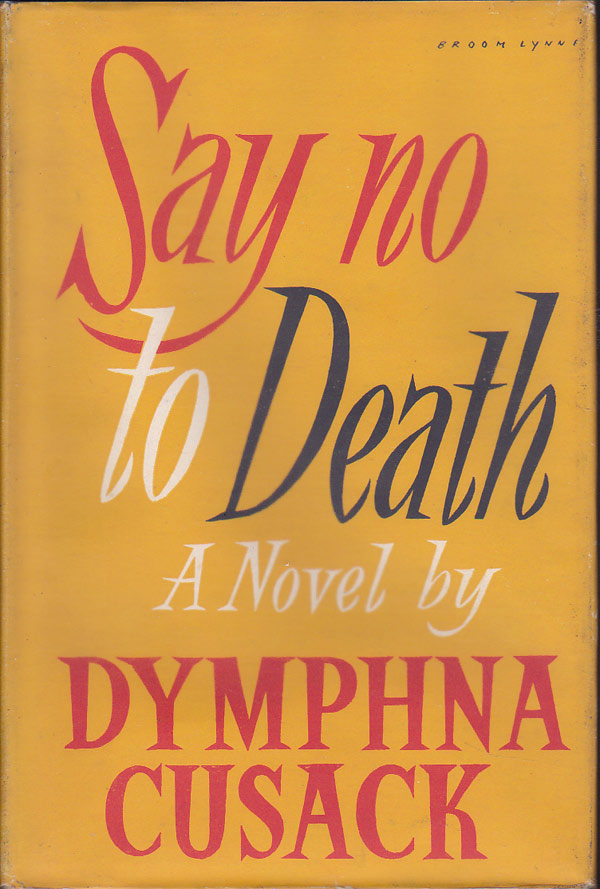
This was not the case in 1951, when Say No to Death was published. Tuberculosis had carved out its own literary space: think Thomas Mann’s The Magic Mountain, Novalis and his love for Sophie von Kuhn in Penelope Fitzgerald’s The Blue Flower, John Keats, Anne and Emily Bronte, Mimi in La Boheme – and probably many, many more. But in urban, post WWII Australia there was little romance or lyricism in TB. As this book shows, public health provision was under-funded with very uncertain outcomes, while private provision was overwhelmingly focussed on commercial profit-making considerations. People were afraid of TB, and there was blatant discrimination against sufferers in finding and keeping accommodation.
Jan lives in post-war Sydney with her older sister Doreen, both their parents having died. They live together in a small, basement level flat. When Jan goes to meet Bart’s ship returning to Sydney after a stint in occupation-era Japan after serving in WWII, her sister does not approve and she approves even less when Jan and Bart go off to a deserted beach shack for ten days together. This beach-shack holiday becomes a talisman for them both when Jan is diagnosed with tuberculosis. Despite his initial nonchalance about their relationship, he falls in love with Jan and is thrust into the role of carer in the small family.
I haven’t read a modern, urban (if you can call 70 years ago ‘modern’) TB story before. It reminded me a little of those cancer tear-jerkers that seemed popular in the 1980s (Molly dying in A Country Practice; the movie Sunshine) but there’s more critique of the medical system in this book than in purely emotion-based stories. Jan is not diagnosed for some time; the proprietor of the private hospital is a financial leech; there is much better care for returned soldiers who contract tuberculosis than for civilians; and if just a fraction of the money spent on war was directed to health funding, the public system wouldn’t have to be so threadbare and overworked.
Despite the gloomy subject matter, I ‘enjoyed’ this book. Cusack’s descriptions of landscape, especially at the sanatorium in the Blue Mountains, are evocative and she captures well the powerlessness of illness. She deals with betrayal, loyalty and trust, and I found myself worrying for the characters, as well as about them. Of course, it was a contemporary book when it was published, but I found it interesting as a piece of social history, despite the dated language. Somehow reading it during a time of pandemic, when we are again at the mercy of a disease, gave it an added poignancy as well.
My rating: 8/10? It’s dated, but I suspect that it will stick in my memory
Sourced from: my own bookshelves. I had read praise of it somewhere years ago, and when I saw it second-hand, I snapped it up.
The Daily (New York Times) What does it mean to be the last two females of a species? A Mother and Daughter at the End is about Najin and Fatu, the last two remaining Northern White Rhinos. (Interestingly, the Guardian also had a different article about them recently too). Born in a European zoo and with numbers falling precipitously, they were sent back to Kenya in the hope that going ‘home’ might spur procreation, even though Kenya did not have Northern White Rhinos. They needed to be taught rhino behaviour by a southern white rhino. The only hope for survival of the species is through assisted reproduction.
The Documentary (BBC World). The episode The Digital Human: Sacred looks at objects that are imbued with special meaning because of the memories they hold. Some end up in museums, some are cherished personally: a camera, a mobile phone.
Latin American History Podcasts Back to The Conquest of Mexico, Episode 2. The Aztec were already on edge before Cortez even set foot on land, with a number of strange happenings and premonitions presaging momentous events. Imagine Cortez’ surprise when what he should stumble upon but Spanish-speaking shipwreck victims who had been in Mexico for years, who acted as very handy intermediaries.
Heather Cox Richardson. With all that’s happening in America at the moment, I’m hooked again on her current affairs chats. You can find them on her Facebook page. The Tuesday videos are her responses to current questions, and at the moment all the questions are about what is happening in America today.
History West Midlands. I enjoy these history podcasts from the Midlands of England (Birmingham etc.) which mainly focus on industrial-revolution era social history, with a mattering of Roman and English Civil War history. Women Chainmakers: the ‘White Slaves’ of England looks at the system of outwork in the manufacture of chains by women working in small forges attached to their houses in the town of Cradley Heath. In 1910 they achieved the breakthrough wage of two and a half shillings an hour, but had to strike against their employers to actually receive it as the bosses tried to finagle their way out of paying. There’s a fascinating page showing different types of sweated domestic labour here. It was part of a 1906 public exhibition to raise awareness of the conditions under which small items of manufacture were made.
Radiolab. I actually heard this being played on Earshot during their summer season of repeats. More Perfect: Sex Appeal is about the way that Ruth Bader Ginsberg used a court-case of discrimination against men to establish the principle that the 14th amendment could apply to gender as well as to race. RBG’s case went down in history, but immediately prior to that case in court that day was another case (Craig v Borum) based on drinking laws and a Honk and Holler outlet. This is the story of that largely-forgotten and rather fumbled case.
Full Story(Guardian Australia) I was surprised to learn that ethnographers and linguists were still studying the Noongar people of south-western Australia until the 1930s. In Kim Scott on reconnecting to Noongar identity through story, author Kim Scott talks about a project linking government and European historical records, with Noongah stories of country. These Noongah stories are based on interviews with the children and grandchildren of the informants to ethnographers, and family stories handed on through generations. It is linked to Scott’s essay that he wrote in the Guardian in August 2020 as part of the Fire, Flood and Plague anthology, edited by Sophie Cunningham
I don’t often read books twice, but I’ve just read this book for the second time. I first read it in 2007, when I had just started my post-grad studies at La Trobe University. The author, Anna Lanyon had quite a claim to fame within the history faculty at the time for having published not one, but two, books before embarking on her PhD. I enjoyed the book then, but felt that the combined travel/history format with the author playing an active role in the narrative was becoming rather hackneyed (although it may have been more unconventional in 1999 when the book was first published). Now thirteen years later, the historian-as-character is even more ubiquitous and my reservations about this well-worn technique are even stronger.
So who was Malinche, or as she is also called, Malintzin or Marina? She was a Nahau woman who acted as translator to the ‘conquistador’ Hernan Cortez. She had been either sold or kidnapped into slavery to a group of Maya, where she learned the Mayan language. When this group met with Cortez’ conquistadors, she was passed on to Cortez. It was transaction for both Cortez and Malinche that had personal and historical ramifications. When Cortez and his men encountered the Nahuatl- speaking Moctezuma, it was possible to set up a four-way translation chain between the Spanish-speaking Cortez, the Spanish/Mayan-speaking Jerónimo de Aguilar, Mayan/Nahuatl-speaking Malinche and Nahuatl-speaking Moctezuma (and back again). She soon learned Spanish herself, and acted as Cortez’s interpreter, advisor, intermediary and lover. She is variously seen as traitor or victim, and her story has been incorporated into the La Llorona legend.
So why am I re-reading this book now? I was prompted to read it after watching the excellent seriesHernan on SBS On Demand, which is available until February 2022 (Spanish, with English subtitles). I’ve been learning Spanish for a few years now, and am far more attuned to the issue of translation, which runs through this book. There has also been increasing emphasis on contact history in relation to indigenous/British history in an Australian context. The BLM protests have raised questions about contested commemorations, and Malinche’s contribution to Mexican history is certainly controversial. I’m more attuned to Latin American history now. While I haven’t been to Mexico City (alas, it was on my to-do travel list which will probably not be fulfilled), I have been to other South American countries and am more familiar with Spanish colonial architecture and town layout, and Latin American culture. So, the book remains the same, but I have probably changed as a reader.
For all these reasons, I think that I enjoyed the book more the second time around. It is very much a travel/history amalgam but apart from some rather clunky dialogue with people she met on her travels, there is also considered, informed reflection on language, representation, memory and agency during first contact. While she does describe her lodgings and her work in the archives, she does not resort to details about the food or the weather as the less adept of these historian-as-character books do. While I recognize the appeal for readers and hence the encouragement of publishers, I still suspect that this genre tends to roll the historian onto centre stage when the historic record is thin. That is not to say that I don’t like seeing the historian at work – I do -, but I prefer eavesdropping on their questions and ruminations as professionals rather than reading their itinerary.
I do have her second book The New World of Martin Cortez and I’ll be interested to see whether the approach is the same.
My rating: When I read it the first time back in 2007, I rated it a 7. It’s gone up in my estimation and is now an 8.

 The Resident Judge of Port Phillip