The ANZLHS conference at Sydney

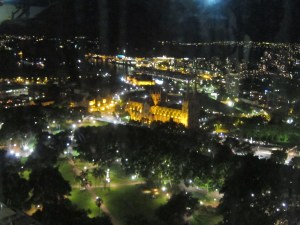
I’ve been up in Sydney for the last couple of days for the Australian and New Zealand Law and History Society conference.  You’ll note that the name of the organization  is ‘Law and History Society’ and not ‘Legal History Society’.  It’s an important distinction: it’s not just lawyers exploring historical cases but historians wading into legal waters as well. The conference reflects this dual focus, as I now realize even more clearly after attending the British Legal History conference last year which is far more lawyer-oriented.

IMG_0105

It probably reflects my membership within the historian camp, but the presentations that have remained most clearly with me are those involving people rather than principles.  So, just off the top of my head: terrific papers on the wardens watching Jimmy Governor before his execution; taking Nat Turner’s profession of faith seriously, a South Sea Islander petitioning for a lease on an island in the middle of a river in Northern Queensland,  and the fascinating case of Eugenia Falleni (the topic of a recent book).

But good papers on historical legal issues as well: vagrancy legislation in NZ and Australia during the 19th century; 18th trials of slave traders in Sierra Leone, and 19th century factory legislation that dared not speak its name in limiting the employment of women and children.

Some sessions I attended just for fun, like the “Literary Traces” panel, which ranged across Rousseau, Dickens, and the concept of “the reasonable man”.  Then there were the issues which spilled out of historical straitjackets into current issues: the historical trajectory of international human rights, the concept of marital rape immunity, and immigration law.

Did I give a paper? Yes I did, based on a case that arose out of the abolition of slavery in 1834 in British Guiana featuring Judge Willis (of course).  I’m not quite sure what I’ll do with it yet.

Lots to think about and I learned much.  Well worth going.

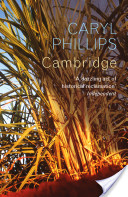
‘Cambridge’ by Caryl Phillips

cambridge

1991, 184 p.

A funny thing happened while I was reading this book.  I’m in the habit of reading in bed before I go to sleep, but I never read ‘work’ (i.e. thesis) books that I think I might need to really concentrate on.  Novels, yes; diaries, yes; arcane books from Google books yes.  Occasionally I find something in these books that I might jot down, but it’s all pretty low key.

So here I was, reading Cambridge by Caryl Phillips.  I’d heard about it on one of the lists that I subscribe to,  in response to a question regarding novels set on Caribbean sugar plantations. It is, indeed, set in the West Indies.  Now, I’ve read quite a few books about the West Indies by now for my thesis,  including travel books to the West Indies as in Mrs Carmichael’s jolly tracts review here and here, and diaries.  The first section of Cambridge is told from the perspective  of a young Englishwoman sent out to check on her father’s plantation before returning home to marry an older man her father had chosen for her.  So utterly convinced was I by the narrative voice  that I picked up a pen ready to make a note until I thought- hold on: it’s fiction.

The first section, told in the first person by Emily Cartwright is written as a journal-type narrative (although not divided by dates or other chronological markers) and in the immediate past tense.  When Emily arrives at an unnamed West Indian island, at an unspecified time (somewhere between 1807 and 1834) she finds that the manager, Mr Wilson, has disappeared and been replaced by Mr Brown.   Mr Brown is a surly, uncouth man but Emily falls in love with him gradually, and all of a sudden he is no longer ‘Mr Brown’ but Arnold.  Emily is troubled by Mr Brown’s black mistress, a woman called Christiane, whom all the other slaves fear to be an obeah (witch) woman.  Cambridge, a large well-built negro worker, is set to keep watch over her at night.  The first part of the book is by far the longest – 122 of the book’s 184 p.  It is told at a leisurely pace- hence, I think, my being lulled into thinking of it as an authentic diary, and it shares the one-dimension perspective of the diary genre.

The second section is told by Cambridge- a slave whose travels have taken him on his own Atlantic triangle- Africa, England, West Indies.  He is a man of many identities and many names- Cambridge,  David Henderson, Olumide. His voice is the formal, stilted witness of the evangelical convert, and he retells many of the same events as Emily does, but brings another truth to them.

In an interview with the New York Times, Caryl Phillips said:

To begin a book I must first find characters who allow me access to their lives and who trust me to tell their stories….I began by reading period novels. That wasn’t enough, so I turned to diaries and collections of letters. I found that a considerable number of personal narratives existed, written by English travelers to the Caribbean. All of that helped me to understand the language of the period, the attitudes that it shaped and reflected and the subtlety of statement common to the period.

I think that it was this capturing of nuance so authentically  that I responded to: so much so that I was disappointed by a third short narrative, in the form of a newspaper story, that somehow missed the mark.  It starts as a report such as you might find in the ‘criminal’ section of a colonial newspaper, but it then segues into the florid prose of a story-telling also common to the colonial press of the time,  complete with improving verses and sunrises and sunsets.  But in reality, you’d find these two separate sorts of writing in different parts of the newspaper as two completely different articles.   For something that had felt so authentic up to this point, this was disappointing.

This is the third  Caryl Phillips book I have read: I reviewed his Crossing the River  and Dancing in the Dark some time back.  Both Crossing the River  and Cambridge are similar with their multiple narrators, but I think that this book has a much better unity.  It is a pastiche, of course, but a very well researched one (and I know this because I’ve read the same primary sources!) that wears the research lightly.

I suspect from the rather dismissive reviews on Google that it has been assigned as school reading.  I acknowledge that the first part is very slow, and events unfurl as they do in life.  It’s a much more complex book than these disgruntled young readers realize. It also supports an academic response as well, all steeped in postcolonial theory (see here and here and here as well) .

My rating: 9/10

Read because: It was suggested on a list of fiction works addressing plantation life

Sourced from: The Annexe at La Trobe University.  Obviously not enough people borrowed it.  They should.

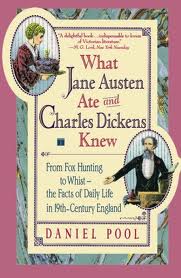
‘What Jane Austen Ate and Charles Dickens Knew’ by Daniel Pool

416 p. 1994
Some time ago I read and reviewed Victorian People and Ideas, a book that I described as a ‘light touch intellectual history’ that explored the mental furniture of  characters in the canon of Victorian Literature.   As you might guess from the title of this book, it has a similar intent but it’s Mills and Boon in comparison, and not so much about mental furniture as the actual furniture that Elizabeth, Anne, Tess et al might have sat on.

No concerns here about periodization- Austen,  the Brontes, Trollope, Hardy- they’re all bundled in together with nary a thought about the wider political and physical world outside.
The book is a cradle-to-grave, upstairs-to-downstairs explanation of the domestic and social world of the characters one might find in Victorian literature. It explains clothes, food, business practices, social manners and expectations etc in a rather whimsical fashion.  It doesn’t take itself too seriously, and you don’t really need to have read particularly widely to enjoy it.  It is divided into two parts- the first is organized thematically, while the second part is a glossary of particular terms and phrases that you’re likely to encounter in reading Victorian novels.

The author is American, and the book felt a bit like a travel guide from the self-assured comfort zone of Americana into the weirdness of British life and customs.  It’s written in a breezy style and you can easily pick it up and put it down again, but I found that very little actually stuck with me- with two exceptions.  One was his explanation of entail and inheritance, which is of course so important to Victorian novels, and the other was his description of promissory notes.  I see that the author is a lawyer, and I think that he put his skills to good work here.

I know that the book is not intended in any way to be an academic tome, but I did find myself frustrated that there were no footnotes or references at all. You were just left to trust him and not question too deeply. Still, the book is intended as a bit of a hoot, and in that way it probably fulfils the promise of its catchy title perfectly.

Australian Women’s Writing Challenge

Surely I’ve finished this challenge by now, I thought, adding a book that I read about a month ago. And so I have.  I went to sign in that I had finished the challenge and they wanted a post linking to my reviews.

Well, here t’is.  In no particular order.  Actually, I’m surprised that I have read as much contemporary fiction as I have.

1. Past the Shallows– Favel Parrett

2. Swallow the Air– Tara June Winch

3. All That I Am – Anna Funder

4. Forecast Turbulence– Janette Turner Hospital

5. Animal People – Charlotte Wood

6. Memoirs of a Suburban Girl– Deb Kandelaars

7. Mateship with Birds- Carrie Tiffany

8. Otherland– Maria Tumarkin

9. Black Glass– Meg Mundell.

10. The Voyagers: a Love Story by Mardi McConnochie

11. Alexander Macleay: From Scotland to Sydney by Derelie Cherry

12. For Those Who Came After- Elisabeth Holdsworth

13. The Lost Mother by Anne Summers

Thirteen- is that unlucky?  There’s more I could add I guess but that’s enough. Look to 2013, I reckon.

Nurse??!!

Ever since the Black Saturday fires some years back, 774ABC radio is the designated emergency ratio station for Melbourne.  As a result, if there’s fire, flood, funny smells- then 774ABC goes onto ’emergency’ footing with frequent warnings and advice interspersed with its normal programs (unless of course it’s a REAL emergency, at which time usual programming is suspended).

There was a fire at a recycling centre in suburban Melbourne this morning, and this triggered  774ABC emergency warnings right in the midst of “Making Christmas Gifts with Craft”- quite a surreal juxtaposition!  I was interested that at the end of the warning about toxic smoke, keeping your windows shut, turning off the airconditioner and staying inside etc, there was advice to call Nurse- On-Call if you had any concerns.

Nurse-on-Call is a telephone service that provides 24 hour a day advice from a registered nurse. I’ve never used it.  From what I have heard from people who have used it, they’re normally told to go to hospital.  This may reflect the demographic of my sample- i.e. old codgers primed for heart attacks, and perhaps it’s different when people ring with a baby or young child.  But I can’t help thinking that in these litigious times, it would be unwise to advise to “just wait and see”.

Perhaps in a situation like this though, when people are wanting reassurance as much as anything else, there might be a role for nurse-on-call as a way of deflecting unnecessary panic.  But it did make me wonder about the statistics on Nurse-on-Call: is my perception that they always advise ‘go to hospital’ valid? Has it saved hospital visits or increased them?  I did actually go to the Dept. of Health webpage where they had their annual report, but it would have taken 8 minutes to download and I thought…..nah.

On to The Conversation website and blow me down….there’s a report on telephone medical advice lines. In a Medical Journal of Australia article, researchers looked at the difference in  ‘appropriate referrals’ from GPs, a telephone medical advice line, and self-referral.  I’m a bit disconcerted by their definition of ‘appropriate referral’ which ranged from  admission to hospital, referral in an inpatient or outpatient clinic, transfer to another hospital, performance of radiological or laboratory investigations- or death in the Emergency Department. (I’m hearing echoes of Monty Python’s ‘I told you I was sick!”)  As might be expected, GPs scored the highest in ‘appropriate referrals’ but interestingly telephone-line and self-referrals were ranked much the same- in fact, the self-referrals scored slightly higher.

Moreover, the study found that people when do receive advice to seek medical advice in a non-Emergency Department (so there goes my theory),  50% of people ignored the advice and turned up anyway. The conclusion of the study? The MJA editorialized:

It is not clear that, if offered an informed choice, the community would choose to pay for telephone advice that makes little difference to their behaviour over other health service priorities. In relation to whether an ED visit is required, it appears that a phone call will not answer the question.

‘The Factory’ by Paddy O’Reilly

2005, 258 p

Ah, synchronicity!  Within days of reading Lisa’s review of this book at ANZLitLovers, why there it was sitting on my library shelf.  It’s out of print, she tells us, and very good she says, so off to the borrowing machine I go!

You’re drawn in from the opening paragraph:

They took away all my research papers when I was arrested on the mountain in Japan.  As the four policemen crowded into my cubicle, neatly piling up my reams of handwritten notes and packing my computer into its travelling case, I sat on the bed and started to tremble….

…Later, during my interrogation, an interpreter with a twittery voice read out some badly translated excerpts of my notes.  Did I write that? I wondered.  Did he say that?  I may never have those notes returned, so now I can only write from memory.  Some events are hazy, others I remember so clearly that my eyes ache from the pain of those days living in the sharp light reflected off the sea around the peninsula.

Hilda Moore is an Australian PhD student, researching the establishment and collapse of  Koba, a Japanese community dedicated to rescuing traditional folk-arts and performing them for new audiences during the 1970s, based at The Factory on a Japanese island.  It combined radicalism with tradition, artistic high-mindedness with more human jealousy, manipulation and power-trips. There were certainly cultish aspects to the group, which revolved around the master Yasuda sensei, and it collapsed after the death of one of its members, only to be revived again twenty years later.  This is Hilda’s opportunity- she agrees to act as record-keeper for this second manifestation of the group, while interviewing the original members for her research, some of whom have rejoined; others who eschew any contact with it.

The book has a complicated structure: the stories she pieces together of the original Koba, the interviews from her informants who each give their own conflicting perspectives on Koba and its collapse, and her own experience as she and another Western girl, Eloise, join the second-generation Koba as it re-establishes itself at its original home at the Factory. Suspended throughout  are the present-tense episodes from the quiet, sterile, lonely and controlled jail.  We do not know why she is there, and it seems to exist completely outside time and place.

It was mainly this jail narrative that kept me going through the book, and at the risk of spoiling I will just say that I was rather disappointed by the ending.  The ending is beautifully written and open-ended, but I didn’t think that it was strong enough for what had come before.

Unless I didn’t ‘get’ the ending. That’s a distinct possibility.

My rating: 7/10

Sourced from: Yarra Plenty Regional Library

Read because: Lisa spoke so highly of it.

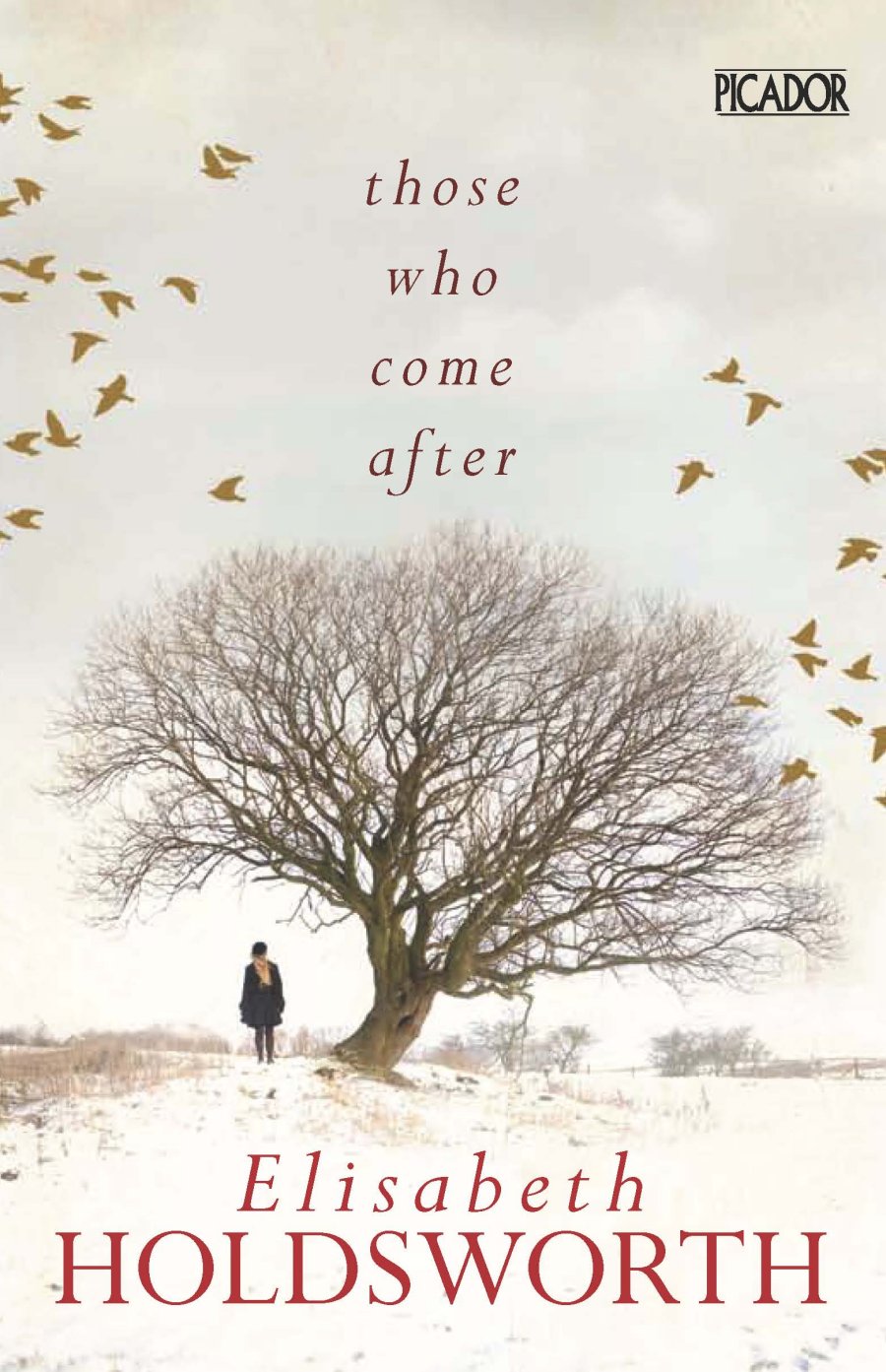
‘Those who come after’ by Elisabeth Holdsworth

2011, 342 p.

I snapped this book straight off the shelf as soon as I saw it because I remembered the author’s Calibre-Prize winning essay that was published in The Australian Book Review about five years ago.  I recall where I read the essay: in a cafe in North Melbourne that I walked to from the Public Records Office to stretch my legs after a morning steeped  in the archives .  It was a powerful read that combined history, memoir and reflection as a middle-aged, Dutch-born, now Australian narrator returned to her childhood home in Walcheren, a flat island sheltered from the sea by a network of dykes off the coast of Netherlands.  Her father had been the scion of an old, aristocratic family; her  mother a Jewish beauty.  She tells of the war and its aftermath that swept away the history of her family with such  a flatness of tone that the reader is left  to fill in the betrayal and violence that such actions engendered for herself.  I found myself sitting there, quite stunned by the strength of such a quiet retelling. You can read the essay here:  it’s called An die Nachgeborenen: for those who come after, published in the Australian Book Review in February 2007.  I had remembered the essay, and its effect on me for all those years.

But on reading the book, it seemed as if I was reading the essay again, except in a longer form.  Here was the child, the old aristocratic family, the Jewish mother, the dykes, the flooding again, but now intertwined with a longer travel narrative and a migrant story as well.  It was fuller, but somehow seemed emptier.

It was only when I read an essay that Elisabeth Holdsworth wrote about the writing of the book in ABR in October 2008 that I realized that what I was missing in the book was the writer herself.  I hadn’t noticed the switch between first person voice in her original Calibre-prize essay and the third person voice of her novel, and having now read her reflection on her decision to write her memoir as fiction, I’m even less sure of the distinction between them.

I think, actually, that I preferred the first essay.  There, the flatness of tone conveyed a dignified restraint, whereas in the book it seemed like an absence and a distance.  It’s unusual to read three versions of the same story like this – essay, novel, reflection – and it raises many questions about the choice of genre, the line between memoir and fiction, and the author at work.

My rating: for the book 7/10; for the essays 9/10

Read because: I enjoyed the essay so much

Sourced from: Yarra Plenty Regional Library

awwc2012

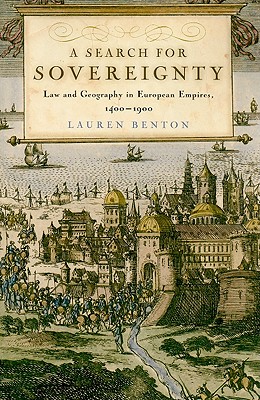
“A Search for Sovereignty” by Lauren Benton

2010, 300 p & notes

Lauren Benton A Search for Sovereignty: Law and Geography in European Empires 1400-1900

As a 1960’s schoolgirl, there was something rather comforting about all that red (or was it pink? or just faded?) territory on the map of the world that graced every classroom.  So much red; so neat and decisive.  In the same vein,  I think that John Howard was also drawing on the soothing idea of defined borders- so easy in an island continent- when he thundered that “we will decide who comes to this country and the circumstances in which they come”.

But as Lauren Benton argues in this book, borders (even for islands) are porous and contested. Although laws might be passed to regulate who comes, they often cannot be enforced-  or I’d suggest can only be enforced at significant financial and moral cost.  Nor did all that red on the map unfurl in an orderly, deliberate fashion.  Instead,  European control in new colonies was often “lumpy”. It was thick along river-banks, but sparse to non-existent inland; harsh on islands; cocooned in enclaves; and subsumed by the larger ‘law of the sea’ in open waters.

Benton divides her book into four geographical sites: rivers regions, oceans, islands and hill enclaves, and she ranges across a number of European empires to illustrate the contingent, fragile and contested nature of legal authority in these settings.

Rivers were “corridors of elusive but essential imperial control” and counterintuitively, it was the law of treason that colonists wielded against both whites and indigenous peoples perceived to be hindering exploration.  Quite a deft legal move there: using the crime of treason against people to whom legal protection was not offered!

She depicts the oceans as an even legal space, divided into long, thin zones of imperfect control that connected port towns, coasts, garrisons and islands.  Pirates and privateers drew on several competing legal regimes in drawing up commissions and in transacting privateering schemes, and they operated in the margins of the distinctions between the right to navigate and the right to exclude others from navigating.

Islands were used by empires as sites of exile with their own anomalous legal regimes (Van Diemens Land, Norfolk,…Guantanamo, Nauru,  Manus….) underpinned by military discipline of civilians and justified by evocations of vaguely defined emergency.  In such places,

…nature would corral criminals, military rule would ensure order, and systemic violence would respond to vaguely defined necessity (p.220)

Hills, too, were defined either as sites of lawlessness (think bushrangers in VDL, the maroons in Jamaica) or purity (Indian states- even Shangri-la??) and often became little enclaves, carved out and separate from surrounding legal, social and political regimes.

The structure of this book works well in explicating  the argument by jolting the reader loose from a focus on a particular territory or  empire. Instead, it ranges across the globe in exploring a geographical rather than territorial topic, and it includes Spanish, Dutch, English, Portuguese empires.  The structure also works chronologically as well, and the book ends with a  reminder of current fault lines between geography and law: the contentious status of Guantanamo Bay, the bare sovereignty offered to Iraq and Afghanistan, jurisdiction within US Indian reservations, and part-sovereign enclaves like Gaza.

A day at the races 1840

Cross posted from my other blog BanyuleHomestead.   Years ago when this blog was young, I also wrote about early Melbourne racing here.

Well, it’s Cup Day today and there is, perhaps, a tangential connection between Banyule Homestead (which is in Heidelberg after all) and the Sport of Kings.

The first races in Melbourne were held on the grassy flat at the base of Batman’s Hill, now the site of Docklands, I suppose, in March 1838 in a three day carnival.  The course was marked out with stakes and saplings, commencing at what is now North Melbourne station, sweeping down through West Melbourne and finishing at what is now Southern Cross station.  Two bullock drays were lashed together to make a grandstand.

Two years later the venue switched to Flemington. The grandstand was a rough scaffolding near the river side, close to the winning post.  The run home was staked and roped.  Between the stand and the river were the “refreshment” tents.  The Grand Stand Refreshment Mart was described by Garryowen as

a sort of bower of Bacchus, fabricated out of ti-tree with the foliage left on

There were two other smaller tents, but the grandest of them all was Thomas Halfpenny’s establishment

a substantial, commodious, weatherboard three-roomed structure, partitioned with Chinese curtains.

It was obviously lucrative for its publican, taking 80 pounds on the first day of the races. There was a large attendance from Melbourne, although patrons grumbled at the change of venue.  Numbers rowed from town, while others arrived on dog-carts and bullock drays.

Again, it was a three-day carnival and the first at which the riders wore colours. The Heidelberg Cup was held on the third day with the purse of fifty guineas raised by private subscription.

Because I don’t even start to know how to describe a race, I’ll let Garryowen do it for me:

THE HEIDELBERG CUP, 3 miles, gentlemen riders, 50 sovs., and 5 guineas entrance. Town Plate Weights.

Mr Wood’s br g. Will-If-I-Can, aged -, red and black, 1.

Mr Highett’s b m Music, 6 yrs- crimson and black cap. 2.

Mr Powlett’s br h Sir Charles, 5 yrs- green and blue 3.

Mr Baillie’s br h Duke of Argyle, 6 yrs

Mr Yaldwyn’s b h Blacklegs, 4 yrs- black, pink and white; withdrawn

Mr Russell’s b g Freedom, 6 yrs- green and gold, black cap; withdrawn.

The four that came to the post made a capital start, and kept well together until half round the course, when Blacklegs bolted, and so lost all chance of the race.  Coming to the distance, Will-if-I-Can shot ahead, and won by several lengths, Music and Sir Charles working hard for second place.  The winner’s condition rendered it an easy victory.

The first Flemington racing carnival was, according to the Sydney Gazette of 26 March 1840

…very numerously attended, all the elite of the settlement were there; the weather, the animation, and the hilarity were alike delightful, and in unison with the excellence of the running.

Sources:

Robyn Annear, Bearbrass

Edmund Finn (Garryowen) The Chronicles of Early Melbourne p. 719

Trove.

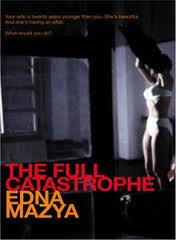
‘The Full Catastrophe’ by Edna Mazya

2005, 334 p.

It’s a commonplace but true that one of the best things about being in a bookgroup- apart from the friendships you make with fellow readers- is that you read books that you wouldn’t normally read.  Come to think of it, one of the worst things about being in a bookgroup is, too, that you read books you wouldn’t normally read-  and often for very good reason.

But in this case, I simply hadn’t heard of this book or the writer. Edna Mayza, apparently, is a well-known Israeli playwright. The narrator of the story is Ilan Ben Nathan, a 48-year-old astrophysicist who works at the Technion (university)  in Haifa.  His wife, Naomi is twenty years younger  and he is besotted, possessive and obsessive about this wife that he can scarcely believe he has landed.  So insecure is he that he becomes (quite rightly) convinced that she is having an affair and it dominates his every word and action with her.  You know that it’s not going to end well when he tracks down her lover, who is, perversely, an older man like he is, and he confronts him.  I shall say no more.  Think Woody Allen, think of suffocation and close-up, minute scrutiny and that’s Ilan: nerd on the outside, screaming heap of obsessions and fears on the inside.

It is striking that this book written by a playwright has such a distinctive, breathless present-tense narrative style where the dialogue is reported as part of very long, run-on sentences that extend sometimes even over pages.  It’s just as anxiety-provoking and suffocating as Ilan is, and it works brilliantly once you get used to it.  Here’s an example:

When I get home in the evening I find Naomi sitting at her desk…Her movements seem jumpy, I can’t get her to meet my eyes, she immediately offers to make me supper and I say that I’ve already eaten at the Technion.  She asks with a glassy look, what do you want to eat, I say again, more slowly, I’ve already eaten Naomi, and she asks, should I defrost a steak for you?  I stand there and wait for her to come back to me, and after moving restlessly to and fro she pulls herself together, faces me without looking at me, and asks, is anything wrong, and I repeat in the same tone, is anything wrong, and now she almost looks at me and asks in a different tone, is anything wrong, and I saw, nothing’s wrong, why should anything be wrong, I’m simply trying to explain to you that I’ve already eaten, and now that I’ve finally caught her attention she understands, and she kisses me lightly and says that in that case she’ll carry on working…

As I said, the writing does take a bit of getting used to, but it also draws you completely into Ilan’s world view.   I was interested to see that the book has been made recently into an Israeli film called Naomi . At first I wondered how such an interior form of narrative would translate onto the screen, but when I think about it, for the reader, Ilan’s narrative makes you an observer only- his consciousness does all the work for you. Often watching a film is a receptive act too, because you are not participating in the conversation yourself, but watching and listening to it from the outside.  So perhaps it’s not so strange that a playwright would create such a text after all.

I can’t remember having read any books set in present-day Israel.  There’s no writing for an international audience here at all: it is as local as a Helen Garner book is for Melburnians. I found myself curious about the position of Arabic people in Israel (are they the same as Palestinians?) and was rather surprised to find that Galilee was a desert spot with weekend rentals (wasn’t there a Sea of Galilee?)  There were lots of restaurants and apartments, and I never did quite make a mental picture of where Naomi’s lover lived- there is mention of a red plastic curtain and I summoned up a picture of a red curtain covering a makeshift shack in a slum against a cliff face, whereas my fellow-bookgroupers saw abandoned tenement buildings.  I guess I’ll just have to wait for the movie.

And I’ll make a point of hunting it down  too, because this is a terrific book: suffocatingly, insistently compelling and shot through with black humour.

My rating: 8.5/10  (maybe even a 9!)

Sourced from: Council of Adult Education

Read because: it was the November book for my bookgroup.

And as an aside, it’s called Love Burns in America. Can’t really see why the name change, I must admit.