Ballarat Bound #3: The Gold Museum

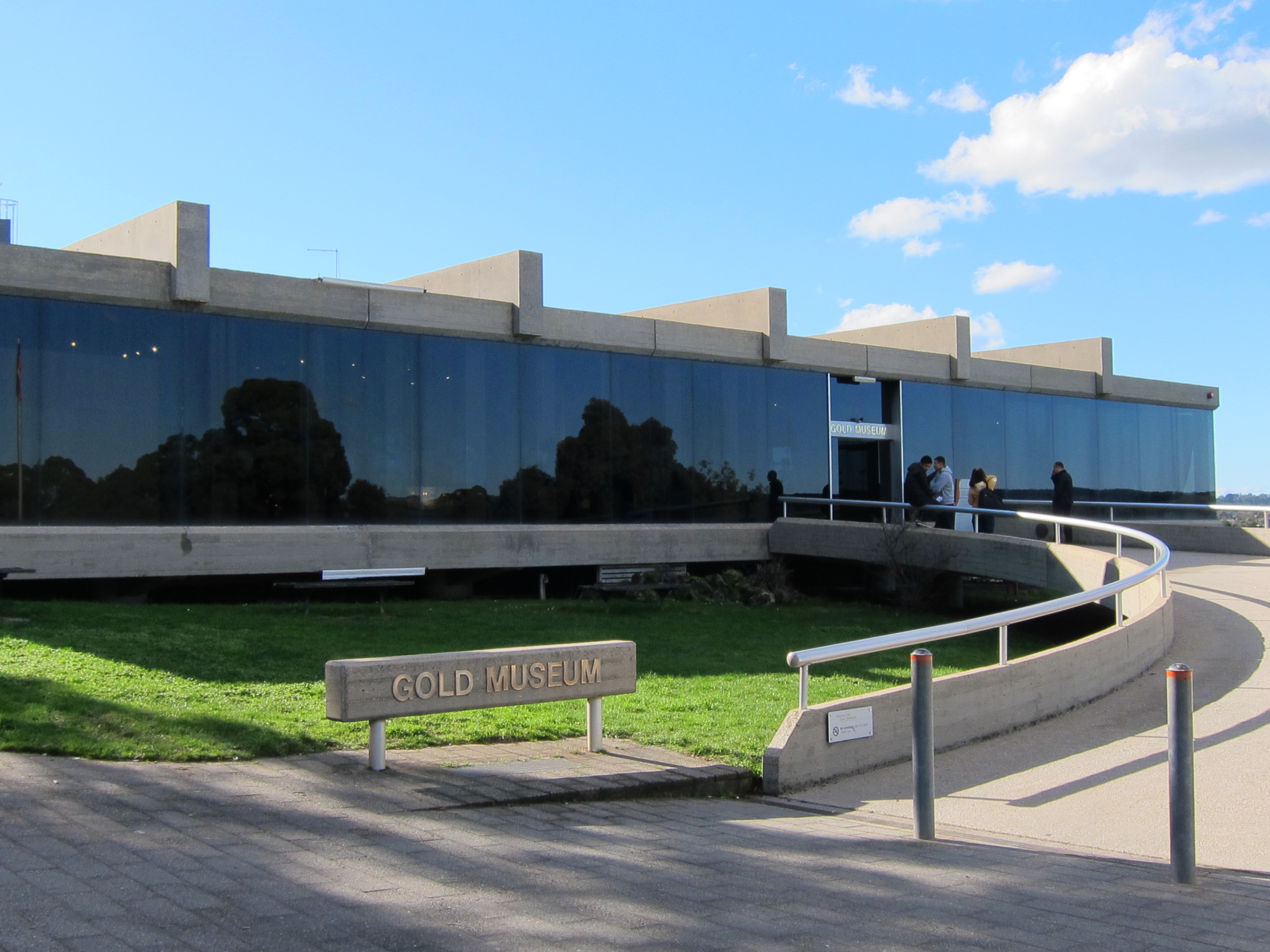
The final stop on our weekend in Ballarat was the Gold Museum that is adjacent to Sovereign Hill.  It’s been there for some time- in fact, it even has a statue of Sir Henry Bolte out the front, welcoming his contribution to the creation of the Sovereign Hill/Gold Museum precinct.  I suppose that there’s a long tradition of commemorating patrons with a statue.

IMG_0260

The Gold Museum had always seemed a rather strange place to me.  I remember it having many displays of gold coins and nuggets which have never particularly interested me.  I’m not sure whether they’re authentic or reproductions: I suspect the latter because there seemed to be little overt security presence.  As a display, it seemed even more disjointed this time around and rather tired.

However, this was only part of the display, and the rest was excellent.  There was a rather dimly lit exhibition about gold and its impact on Victoria generally, and Ballarat in particular, and it was very well done.  We spent probably 45 minutes looking at a panorama of Ballarat taken by William Bardwell from the top of the town hall spire in 1872. (See here for just one of the 15 images)  I assume that the photographs had been taken in the early morning because there are not many people about and the clarity, especially for a photograph of its age, is amazing.  We spent ages picking out buildings we knew, contemplating the variety of industry and civic life depicted, transportation etc– very well done indeed.

A temporary display highlights letters of the goldfields, and in particular the Petford Letters Collection.  This is a series of 36 letters written by James Petford who arrived in Adelaide in 1848 then travelled between goldfields in Victoria.  It’s sobering to see how tenuous the communication links could become between family members with letters waiting literally years before being collected, and vain attempts to keep some sort of chronology intact with marriages occurring and breaking down, children being born and dying and people moving on.

We had been lured up to the museum by the Anne Frank travelling exhibition which had closed in Melbourne before I got to see it.  No doubt, those who have seen the Anne Frank house itself would sniff at this travelling exhibition but given that I’m not in Amsterdam….  There was a good video, then a pictorial display based on a timeline.  All very apposite, given that last week was Refugee Week.  I’d like to think that I would have had the courage to help had I been in the situation, but I fear that I wouldn’t.  Life was so cheap.  I hadn’t realized how close to liberation Anne Frank’s death was, and I continue to be impressed, especially when I hear readings of her diary entries, by how well she wrote.

And so,  completely museum-ed out we headed for home.  Where next, I wonder, within 100 km of Melbourne?

Ballarat Bound #2: The Museum of Democracy at Eureka

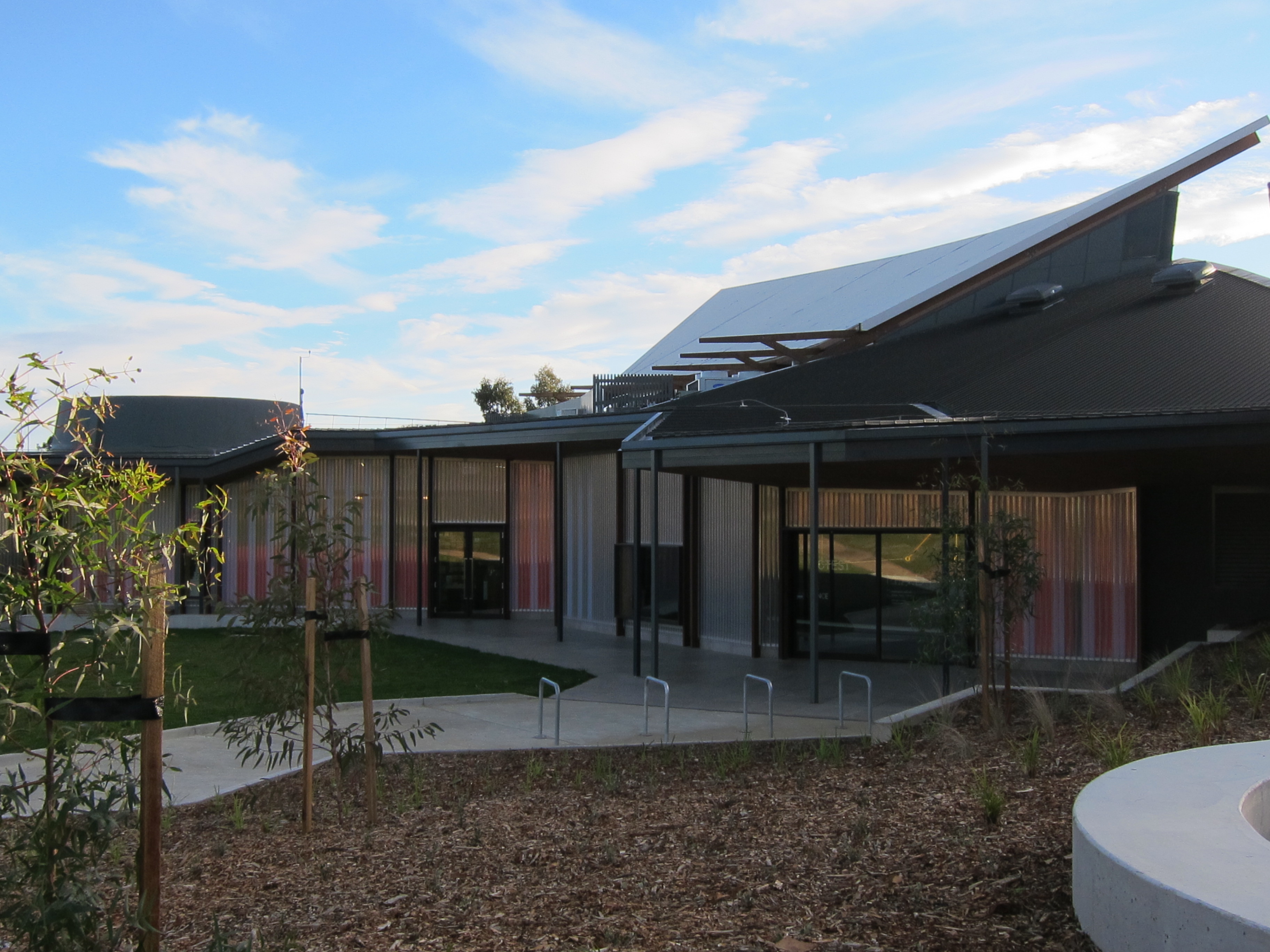
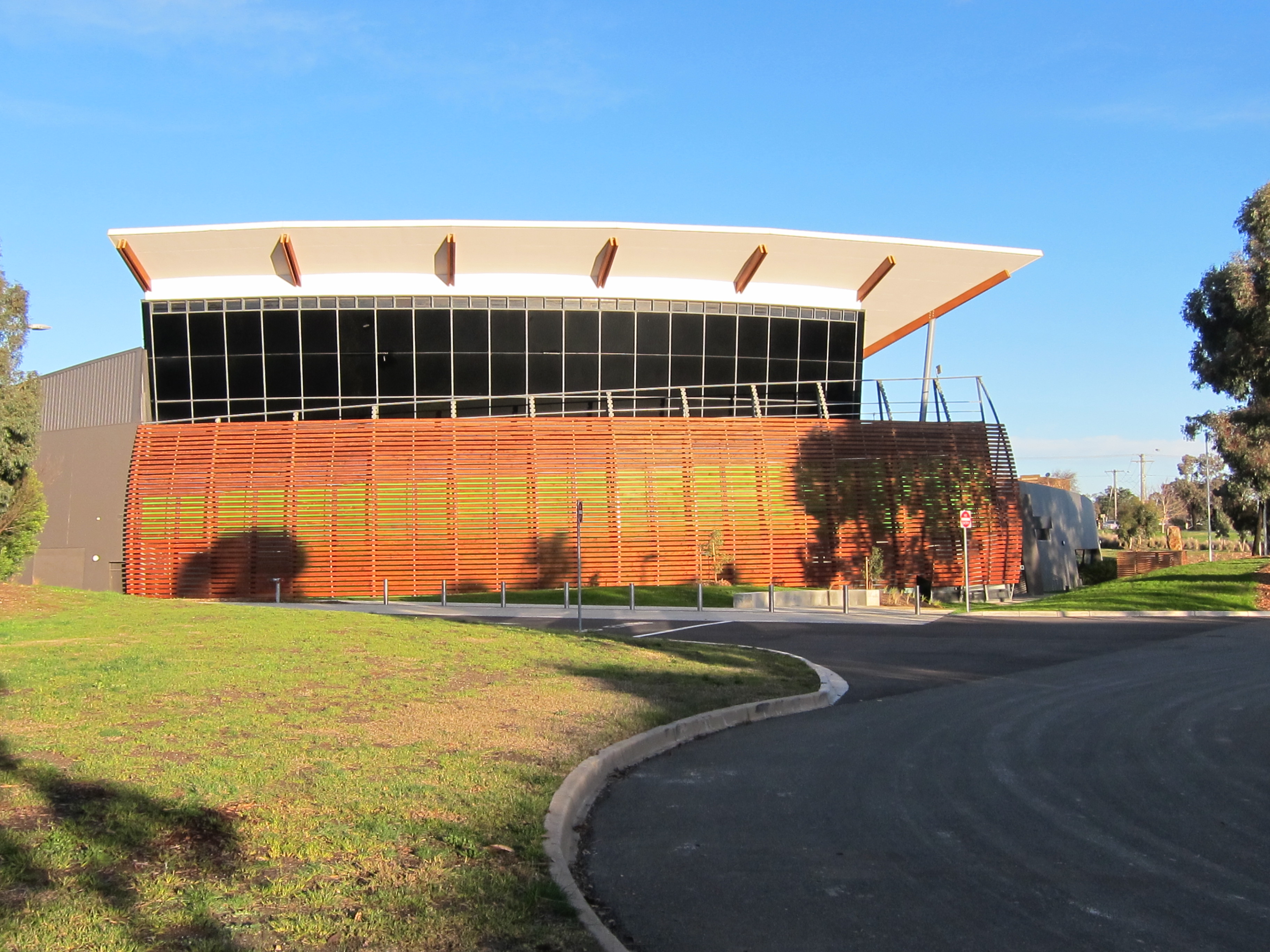
Victoria’s newest museum, M.A.D.E , The Museum of Democracy at Eureka opened in May this year.  The building looks a bit like a grown-up version of Julia’s schoolrooms throughout the country, with the timbering on the back expanse referencing the stockade that was erected roughly on the site in 1854.

IMG_0246

IMG_0247

As all of the kerfuffle over the National Museum in Canberra during the Howard years demonstrated, museums are rarely neutral institutions and this is particularly true of this museum.  You can see a number of worthy priorities at stake here: a desire to ‘teach the young ones their civics’; a desire to take advantage of one of the colourful episodes in Victorian history as something that kids might get excited about; a bit of local pride and tourism opportunities for Ballarat as a region.

The Eureka Rebellion of 1854 was a revolt of gold-miners against the expense of the mining licence they were required to hold in order to pan for gold and its administration by the Gold Commissioner and his troopers.  Civil disobedience had been rumbling along for a while, and culminated in the creation of the Ballarat Reform League and a shoot-out at a hastily erected ‘stockade’ (probably a generous term) on 3rd December 1854.

One of the claims for the Eureka Rebellion- and one that is pursued through the displays in this museum- is that the Eureka Rebellion marked the birth of Australian democracy.  This is a rather tenuous and parochial claim, and one that you’d rarely find enunciated in other museums celebrating democracy in other states.  It’s a view that largely overlooks the contribution of Chartism in UK and other international political undercurrents,  and struggles to explain why South Australia had manhood suffrage before Victoria did.  Direct links between the Eureka rebels and the Federal Parliament and its policies some 50 years later are also fairly slight.  However, not to put too much weight on this particular thrust of the display, the museum does also explore the concepts of democracy, power and participation more widely.

The exhibition space is laid out with the Eureka Story in the centre, with alcoves around the room other sections discussing differing aspects of power through words, influence, numbers and symbols.  The Eureka Story display had a good chronological narrative and was, rather surprisingly, very heavily primary document-based.  The displays were operated using all the display syntax of the i-phone: swiping, pinching to reduce and magnify etc- something that people would not have known how to do three years ago (and possibly will be surpassed in future years).  That said, it’s not a particularly option-laden display: your choice involves choosing which particular topic to explore on a given screen and then just clicking ‘next’ on the transcription of the primary document attached to it.  It was frustrating and troubling that already, after less than a month, some of the touch displays required several pressings.    Only two or three people can gather around each display tablet at a time, and only one person can ‘drive’ it. I don’t know if I would have felt comfortable poring over the primary documents in the way I did, had there been a queue of people behind me.  There’s always the tendency to keep pressing buttons (or in this case, icons) quickly just as a way of seeing what comes next, and I think that under the pressure of crowds waiting for you to move on and let them control it instead of you, you’d feel a strong pressure not to linger.

The displays on the outer walls were rather less touch-screen based.  There was an interesting video with a woman talking about feeling powerless in a Muslim country, followed by a video of a refugee;  there was an  activity where your face was scanned for digital recognition and you were either granted or denied the right to vote based on age or gender (not colour, interestingly enough given the salience of colour as a criterion for the right to vote, historically).  It was rather funny: I was trying to look as happy and beautiful as possible (!) and was assessed as a 45-55 year old MAN in a ‘neutral’ mood.  There was a display about songs, which had a rather primitive stop/start mechanism based on standing on footsteps on the floor.  The one song was played,  no matter which set of footsteps you stood on- perhaps there would have been too many competing sounds in a small area otherwise.  I don’t think that it was well enough explained why those songs, in particular, were chosen.  There was a good video-based display about the power of persuasion, with an interactive quiz at the end, and an excellent auditory presentation of famous political speeches highlighting the rhetorical devices used by the speaker.

Then, of course, there’s the Eureka Flag itself, on permanent loan from the Art Gallery of Ballarat, where it has been on display for a number of years.  It’s in a darkened room behind glass, and it’s quite a reverential experience.  A video outside the display explains the conservation techniques that have been used on the flag, and the complexity of its shift from the gallery to this new museum.

Like all  new public buildings of its ilk constructed today, the gift shop, cafe and auditorium dominate most of the usable space.

All in all, it’s a very multi-media laden display and I wasn’t at all surprised to see that the director of the museum is a digital-content expert rather than a historian.  In fact, any mention of curators or historical consultants seems to be missing entirely. Perhaps that’s why, too, the transcriber of a particular government document seemed to be completely unaware of the bureaucratic convention of writing the gist of the government reply on a diagonal angle across the back of a document.  This led to a rather garbled and nonsensical transcription, and one that should not have appeared in a display of the quality and expense of this museum.  Still, given the huge conceptual difficulties of displaying and even enthusing visitors (and especially young people) about democracy,  this museum is a very twenty-first century approach.

I’ll be interested to see how this museum fares under a conservative government, if that’s what we’re heading for.  I’d be willing to bet that Christopher Pyne, who has already reprised the cry against ‘black arm band history’ will be hightailing it to Ballarat very quickly, calling for an enquiry into this exhibition that celebrates protest so overtly.  It’s definitely worth a visit.

Ballarat bound #1: The Art Gallery of Ballarat

So what if the Aussie dollar is dropping?? I’m still on the road:  Geelong a couple of weeks ago; Ballarat this weekend! Who needs to go further than 100 kms from home?? Wot larks!

I’d been disappointed to miss the Anne Frank travelling exhibition that closed recently at the Jewish Museum and when I found that it had headed off to the  Ballarat Gold Museum, I thought I’d follow it.  Then there’s the new Museum of Australian Democracy at Eureka (MADE) which opened just last month, and a scientific drawing exhibition from Museum Victoria on show at the Ballarat Art Gallery.  So, all in all- a good reason to go!

IMG_0258

For those of you not familiar with Ballarat, it’s a large provincial gold-rush town about 100 km north-west of Melbourne.  Enormous wealth poured into both Ballarat and the similarly-sized Bendigo  in the early 1850s and is expressed in its grand architecture and densely-woven civic culture.

IMG_0255

First stop- the  Art Gallery of Ballarat, the oldest and largest regional art gallery in Australia (yet another manifestation of the wealth brought by gold, no doubt).  There were two temporary exhibitions that we were interested in, both as it happens  touring exhibitions from Melbourne-based institutions.

The first was The Art of Science: Scientific illustrations from Museum Victoria, featuring 300 years of scientific drawings from nature.  Birds and wildlife dominated the first room, with pictures by John Gould and his illustrators, various French and British naturalists who had come to Australia in the late 18th century and several plates from Audubon’s Birds of America.   I’m often fascinated by the very first scientific drawings of -for example, Australian fauna- that are really grappling with trying to depict something that has not been seen before and yet don’t quite capture it properly.  Possibly it’s lack of skill, or perhaps it’s because the painter is reaching after comparisons and analogies that don’t work.

There was a chronological and conceptual narrative  in the way that the works were displayed in this exhibition.  The illustrations in the first room tried to replicate reality as accurately as possible, then the exhibition moved on to scientific depictions of the unseen through the  reconstructions of fossils and then finally magnification as a form of hyper-seeing.

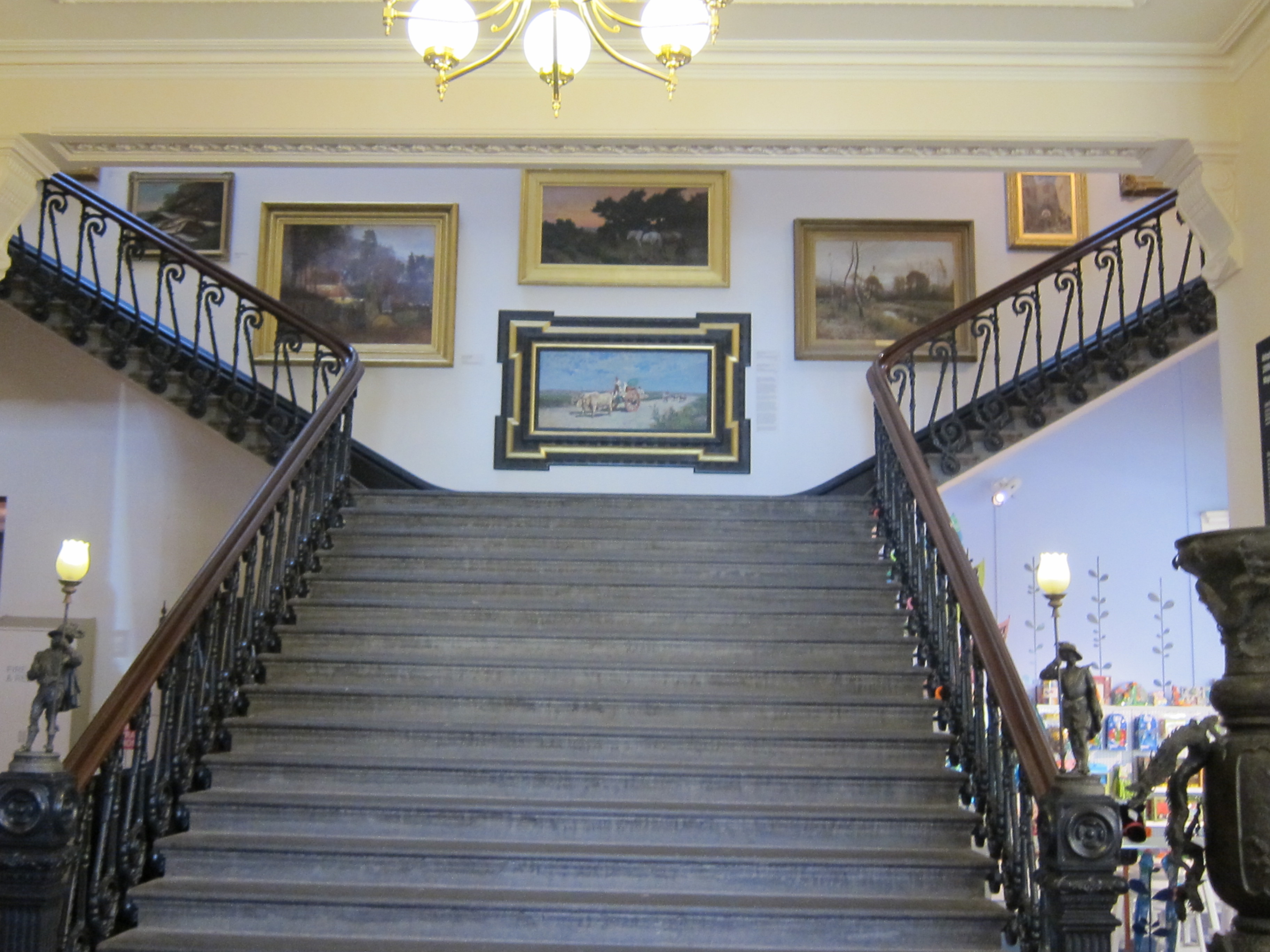
Stairway leading up to galleries, Art Gallery of Ballarat

Stairway leading up to galleries, Art Gallery of Ballarat

All of which formed an interesting juxtaposition with the exhibition in the adjoining rooms Living Traditions: The Art of Belief  from the NGV which showed man’s attempts to draw or respond through art to something definitely unseen (and in my opinion, not real at all).

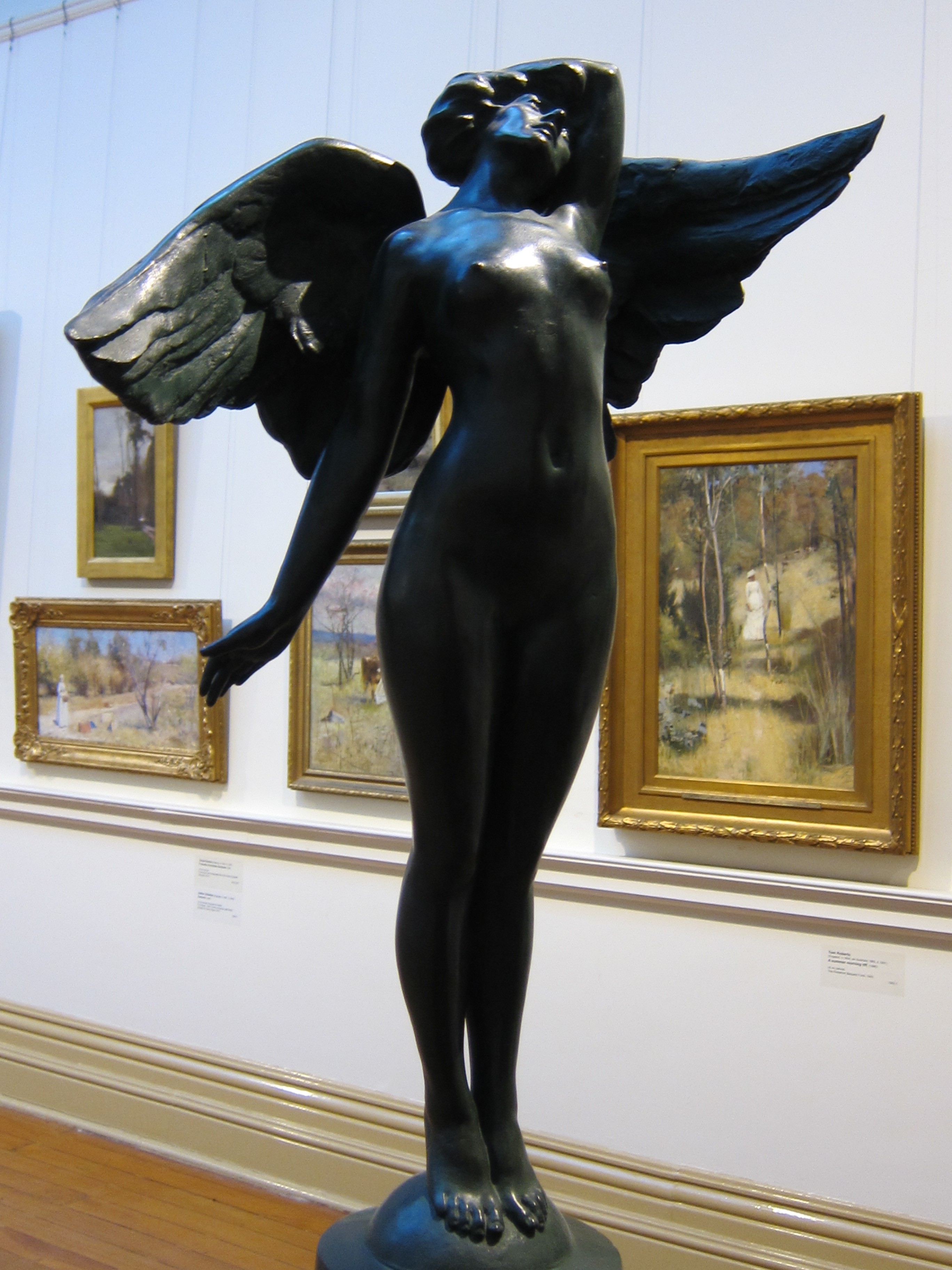
Then upstairs briefly to look for Mr Judge’s Grand-dad’s contribution to the Gallery.  Most major  galleries in Australia have a Web Gilbert somewhere tucked away.  Here’s Ballarat’s:

'Psyche' by C. Web Gilbert, Art Gallery of Ballarat

‘Psyche’ by C. Web Gilbert, Art Gallery of Ballarat

A pie for lunch (what else?) then next stop- The Museum of Democracy at Eureka.

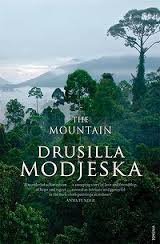
‘The Mountain’ by Drusilla Modjeska

mountain

2012, 426 p.

There are spoilers in this review.

Why would an acclaimed non-fiction author ‘go over’ to fiction?  Perhaps there’s something about the personal meaning of the material for the author that makes it easier to deal with fictionally. Perhaps there are ethical challenges in grappling with it, where the story is based on real-life, still-living people? Perhaps there’s squeamishness about ownership of the story: whether the story is the author’s to tell.

The Mountain  is Drusilla Modjeska’s first book of fiction, although none of her work fits neatly into defined categories. Her non-fiction has always straddled the genres of non-fiction, memoir and imagination.  In this book, too, I sense that it is not ‘straight’ fiction and I felt almost deceived when reading her acknowledgements at the back of the book that elide the fact that she, herself, was the young wife of an anthropologist in New Guinea in the 1970s. She has made no secret of the fact in her interviews after the writing of the book, and even before, and yet there is this strange distancing of herself from the narrative in her acknowledgements in the book itself.

The book opens with a prologue set in 2005.  Although called a prologue, it is actually at the chronological fulcrum between Part I, set in 1968-73 and Part II set in 2006.  As such, it was largely incomprehensible at first, although I found myself flipping back to it several times while reading the book as the characters became (somewhat) more settled in my own mind.  The book closes with an epilogue in 2006 that largely mirrors the opening prologue.

Part I, told in the past tense, focuses on Rika, a young Dutch woman who accompanies her older husband, Leonard, an Australian ethnographic film-maker to New Guinea.  Set in 1968, she is absorbed easily into a mixed-race, expatriate social milieu gathered around the university.  Her husband Leonard goes ‘up the mountain’ to film villages and their inhabitants, and in his absence she falls in love with Aaron, who has come ‘down the mountain’ and is acclaimed as a future leader when Papua New Guinea achieves  the independence which is on the horizon.  Rika, racked with guilt but also determined in her love for Aaron, travels ‘up the mountain’ to tell Leonard personally of her decision and returns to take up her life with Aaron leaving Leonard heart-broken.  However, as time passes and Aaron becomes increasingly caught up in the politics of independence, Rika does not fall pregnant and  is thus unable to be fully accepted as Aaron’s wife by the villagers.  When five-year-old  Jericho is sent down the mountain, Rika realizes that Jericho is actually Leonard’s son by a village woman up the mountain.  She adopts him and he too becomes part of this large, mixed-race expatriate community, viewing Rika and her friend Martha as his two mothers.  I was engaged by the love story between Rika and Aaron, but found myself bewildered by what seemed like an endless succession of men with biblical names coming ‘up’ and ‘down’ the mountain and their wives.

My bewilderment and confusion carried over into Part II when Jericho, now a grown man, returns to PNG in 2006. There had obviously been a rupture: he had been brought up in Oxford where Leonard still lived; he was still in contact with Rika who was now a famous photographer but alienated completely from all contact with PNG and those who still lived there, and Aaron was dead.  The hopes and optimism of independence had soured, and the threats of palm oil plantations, mining leases and ecological exploitation were ever-present.  I actually managed to read about 50 pages into Part II before realizing that I had confused Aaron and Jacob (there’s those biblical names there) and had to go back to re-read once I realized my error.  Inattentive reading on my part, to be sure, but obviously the characters weren’t etched sufficiently into my own reading to survive the time-gap of thirty years between the two sections.  Part II is told in the present-tense and it largely revolves around solving the mystery of the rupture between Rika and the expatriate and village communities she had been trying  so hard to join.  At this level, the book is essentially a story of relationships against a wider political and ethical backdrop.

Although the book is fiction and centred on fictional characters, it is very much a book of ideas and it’s the ideas that I take away from the book.  There are poetic word-pictures of the beauty of the jungle and the garishness and incongruity of modern development.   Betrayal and alienation and being ‘hafkas’ (half-caste), and the multi-layered issues of colonialism and independence, exploitation, superstition and development are all explored with intelligence and nuance.  The focus on art and representation evokes Modjeska’s work in Stravinsky’s Lunch, and there are layers upon layers of thought  in the book that speak to the influences that Modjeska makes reference to in her Acknowledgements.   The book has been short-listed for many awards, including the Miles Franklin, and despite the Miles Franklin’s (sometimes disregarded) restriction to Australian works ‘in all their….’, this is very much a book about Australian colonialism as well.

I’m not sure, though, that I was completely satisfied by the book.  I recognize its depth and the importance of the ideas it carries but I don’t know if fictionalizing was a solution to the problem of how to represent them.

My rating: 8/10

Sourced from: Yarra Plenty Regional Library

Read because: it has been shortlisted for several awards, and as a review for the 2013 Australian Women Writers Challenge

awwbadge_2013

Toy time!

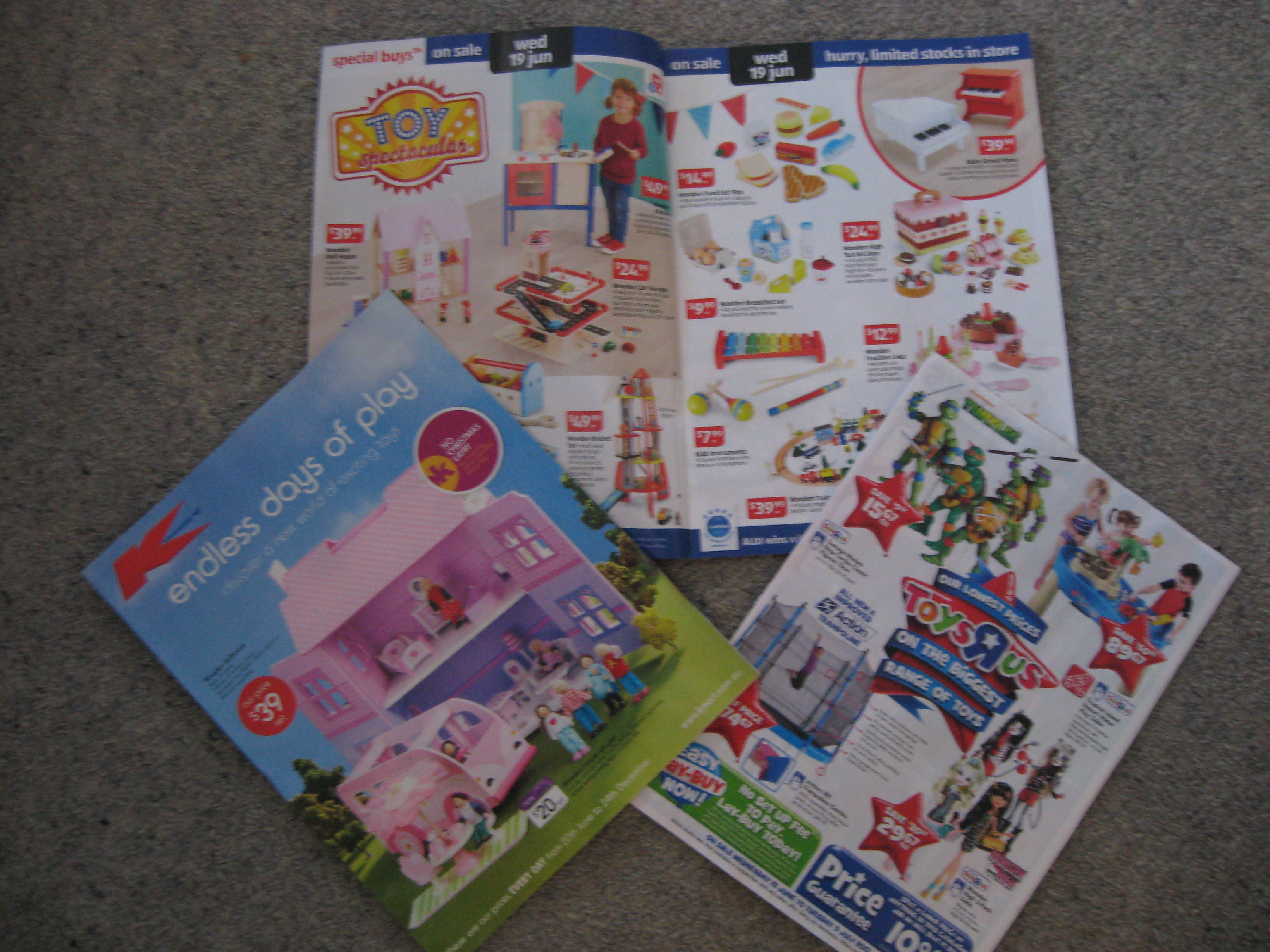
toycatalogues

Well, well- the toy catalogues are here.  It must be mid-winter.

I’ve noticed that the toy catalogues always appear in the middle of the year, harking back no doubt to an earlier time when we actually saved for things. I remember that the newsagent in Upper Heidelberg Road Ivanhoe used to have a big toy sale in the middle of the year and ‘the mothers’ would line up along the footpath, waiting for the shop to open.  Presents would be put on layby and would be wrapped in brown paper and stored above the shelves, up near the roof with the surname written on the parcel with texta.  All the second half of the year they would sit there.  You could see the names from child-height below, and wonder if there was something there for you.  A win-win situation, you’d have to say: a present could be bought on sale and paid off gradually with no tricky Santa-hiding problems, then whip along on Christmas Eve and pick it up!

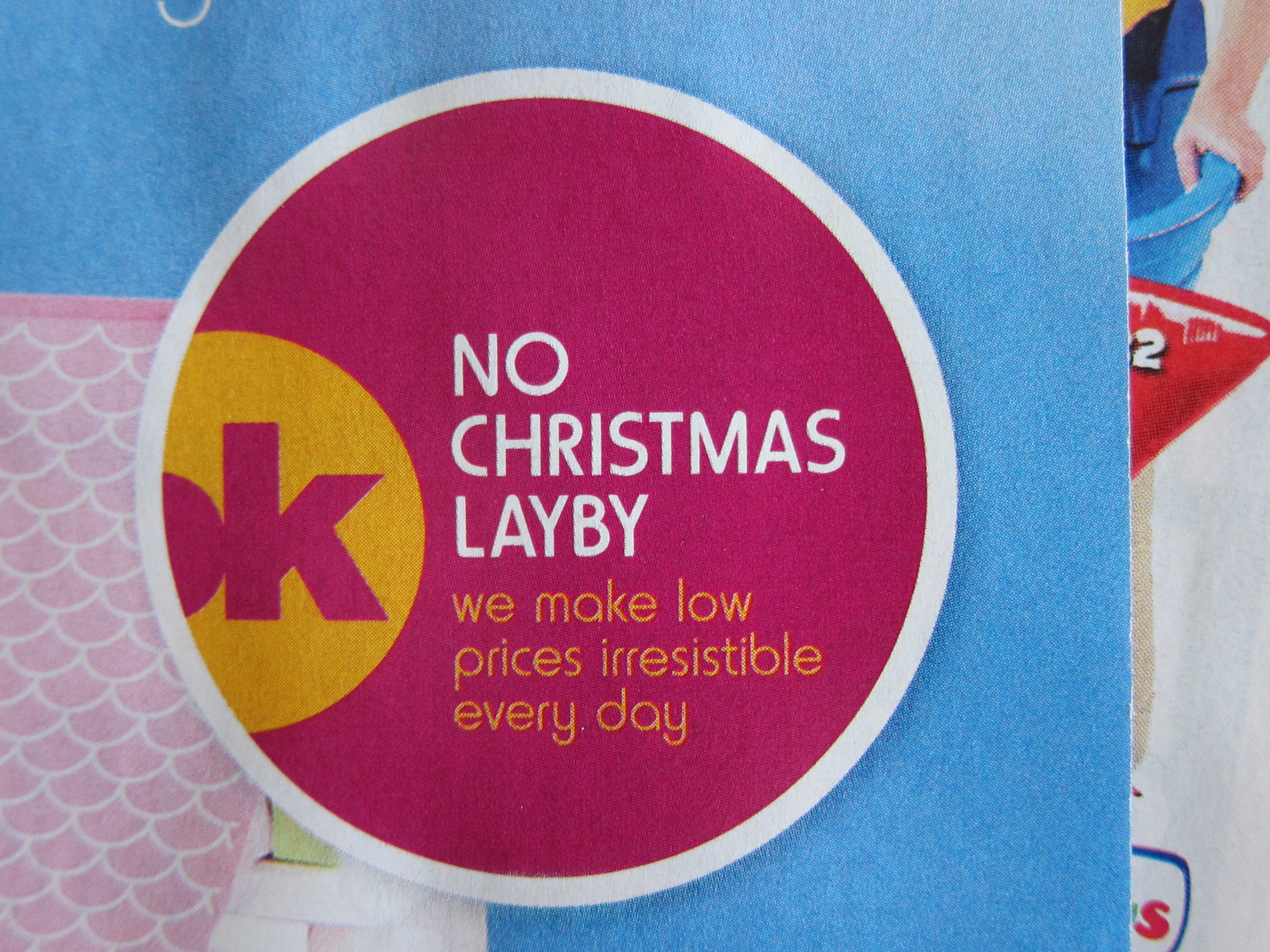
So is there any such thing as lay-by any more?  I see that the K-Mart catalogue has a sticker on the front that tries to make the absence of a service a virtue:

IMG_0239

No need for Layby! Low prices every day!

On the other hand, ToysRUs do still have layby, but there’s a catch!

IMG_0240

They’ll waive the $7.50 layby set up fee but the 10% deposit and $2.90 monthly fee still apply- and there’s more conditions to see in store! So- set-up fee, monthly fee on top of the repayments- hope it’s a good special!  I do note that it’s ‘lay-buy’ (with an emphasis on the transaction) rather than ‘lay-by’ (with an emphasis on the storage location).

But of course we don’t wait for things these days, do we?  If you want it, buy it! I’m sometimes saddened by those ‘Nothing to pay until 2016!’ advertisements when I think that whatever was purchased in such haste will probably be shabby and thrown out by 2016 when the repayments start.

It all seems a long way from gazing at a brown-paper parcel on the toyshop shelf. And of course, perhaps there’s no thought of Christmas at all- perhaps it’s just toys for the sake of toys.

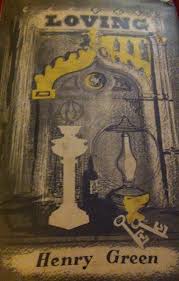
‘Loving’ by Henry Green

loving_henrygreen

229 pages, 1945 (my version 1965)

Apparently Time magazine listed this book as one of their ‘100 Best English-Language Novels from 1923-2005’.  I must admit that I had never heard of it, or the author, until Lisa wrote a glowing review of Loving several days ago.  “Goodoh!” I thought,”a book set in an Irish Country House during WWII – that’s the book for me!” anticipating a mixture of Elizabeth Bowen, Sarah Waters (as in The Night Watch) and Molly Keane.  I have to admit to being disappointed.

Eire was neutral during WWII, and so those Irish with loyalties to Britain had mixed feelings about their place in the war: aware of the Blitz and the hardships suffered across the sea; relieved not to be part of it; guilty that they felt such relief; fearful of the Germans and fearful of the Irish Catholics who would not resist a German invasion.  There’s a sense of ‘meanwhile’ and unreality that pervades the book, with the war going on ‘over there’, heightened further when Mrs Tennant, the mistress of Kinalty, a large Irish Country house, leaves the servants to keep things going while she slips over to England to visit her son. In her absence, in spite of coal rationing,  the servants (most of whom are also English) relax in front of the fires roaring in the grates to keep the pictures on the wall in good condition.  They eat well; they play hide-and-seek in shut-up wings of the house that enclose rooms built as reproduction Greek Temples, and they loiter around the dovecote built as a miniature Leaning Tower of Pisa.

Nothing much happens in this book.  There is a lost ring, jealousies and spitefulness between servants, and a love story that emerges probably more from proximity, convenience and lack of other opportunities than any great sweeps of passion.  Those ‘upstairs’ are vapid, languid and hypocritical, and probably more reliant on the continued employment of their servants than the servants are themselves.

To be honest, I found the book really hard to follow.  I thought that perhaps it was because I was reading it last thing at night after some fairly draining days.  The dialogue is rapid-fire, and there is much of it, often without identifying the speaker.  Scenes would change from sentence to sentence, without even a paragraph break, and there are no chapters to speak of- just a slightly larger white space on the page. It brought to mind a radio play, where the listener has to do the work in distinguishing one character from another, and there are no visual cues to a change of setting or speakers.

But then I started to wonder if the writing itself was just bad.  Take this paragraph, for example, which I had to re-read several times (and yes, I have checked that I haven’t omitted any words or punctuation):

When a few days later as she lay in bed Miss Swift was paid a call by Miss Burch she was able to cut short the thanks having expressed what was necessary on the first of two visits of sympathy Miss Burch had already paid. But on the subject of her symptoms she left nothing out.  (p. 118)

I found it quite hard to distinguish the characters, who seemed to come in pairs, and having two characters called Albert only added to the confusion.  It was all rather a muddle to me.  Nonetheless, many others including Rachel at Booksnob, Lorin Stein at the Los Angeles Review of Books,  Sebastian Faulks is a big fan,  A Penguin a week liked it and there are several links on Stu’s Dad’s blog as park of his Henry Green Week that alerted Lisa who alerted me!

But I’m not completely alone: Lit Matters didn’t think much of it, and there were both glowing and dismissive reviews on Goodreads.

However, I must admit that after reading a truncated chapter of The Big House: Reality and Representation through Google books, there are symbols and observations here that I missed completely.  I don’t think, though, that I want to re-read the book to admire them better.

My rating: 6.5/10

Sourced from: La Trobe University Library

Read because: Lisa at ANZLitLovers wrote a review that interested me.

Happy 200th birthday Redmond Barry!

Oooffggh! I’m all “Barry”-ed out after celebrating Redmond Barry’s birthday on Friday 7th June (well, 200 years on) by visiting the exhibitions and attending a symposium to celebrate one of Melbourne’s worthies.
IMG_4847

First stop, the exhibition at the Supreme Court.  This display is a chronological account of Barry’s life and is mounted along the length of a long corridor in the Supreme Court building, with further historical artefacts along adjoining corridors.  I entered from William Street, where you need to go through airport style security, but once in you can wander around the corridors quite freely. The display is clear, well-laid out, and probably gave the best overview of his life of the exhibitions I saw.

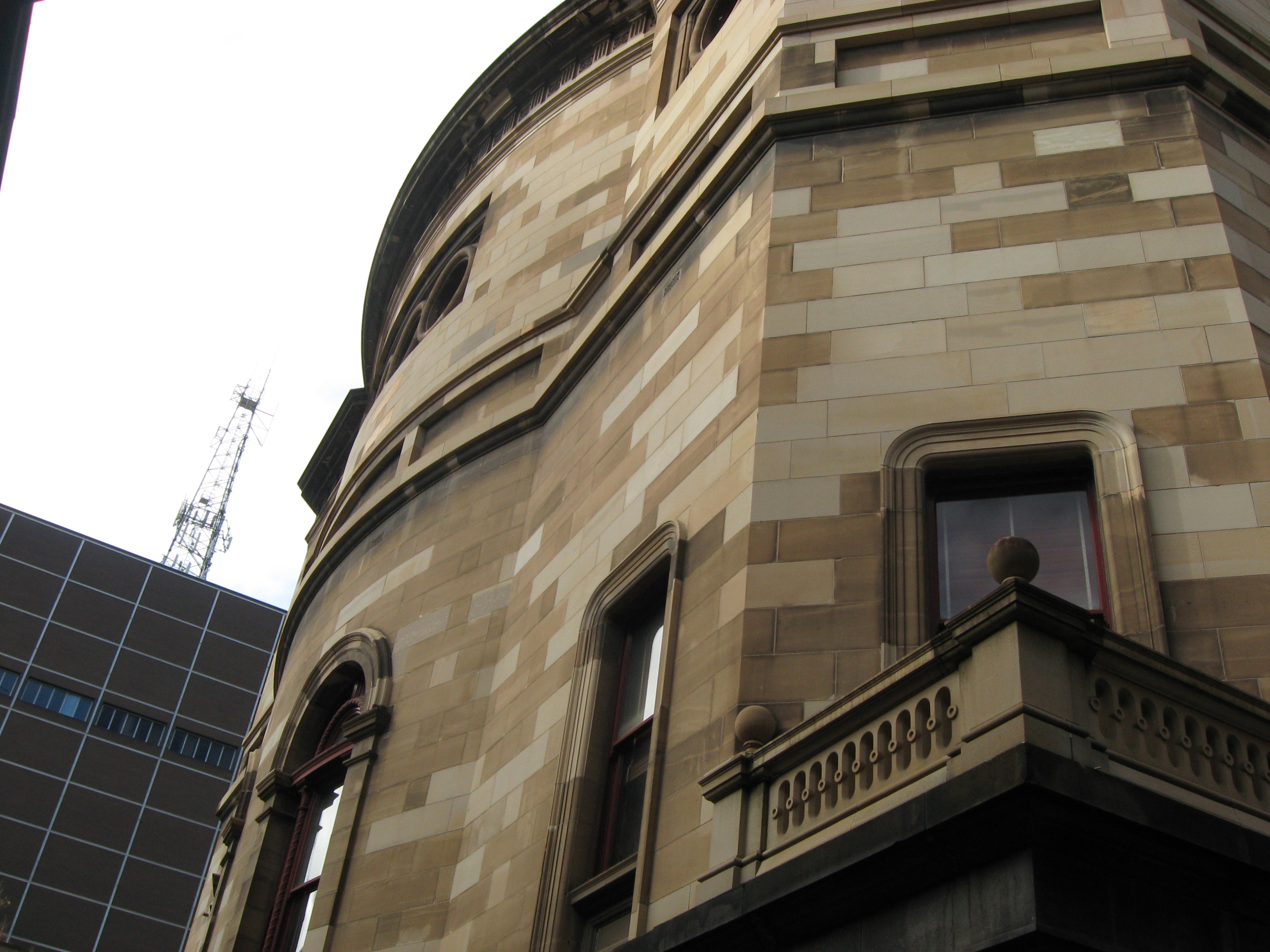
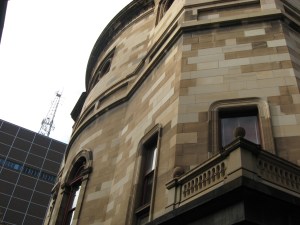
I’d never been inside the Supreme Court building and I’d always assumed that the dome visible from the street covered the courtrooms inside.  I was wrong: the domed building is actually the Supreme Court library and what a beautiful building it is.  You can go in (despite the gold lettered sign on the door that says that you can’t) and it’s spectacular.  Their website has information and a brief history of the library.

Redmond Barry was instrumental in establishing the library which was, and still is, funded by the fees that lawyers pay to be admitted to practice in the Supreme Court.  The library he established was situated in the old, since-demolished Supreme Court building on the present site of the old City Court (now owned by RMIT)- (the court that Judge Willis was so proud of but never sat in because it opened just after he left the colony).  So, too, although Redmond Barry was deeply involved in the design of this library, he didn’t get to see it, because he died before it opened.

Next stop the State Library to see their ‘Free, Secular and Democratic’ exhibition, which is on display until 2 February 2014.  The library was initially established as the Melbourne Public Library, and unlike many other libraries of the time, there was no vetting process and “every person of respectable appearance is admitted, even though he be coatless…if only his hands are clean”.  Redmond Barry was the driving force in establishing this library too, which at the time consisted of the Queen’s Reading Room at the Swanston Street frontage, designed in the style of the libraries that Redmond Barry had frequented in Ireland and England before coming to Australia.  The display has a heavy emphasis on the architecture of the “The Institution” which eventually came to include the library, the museum, the National Gallery of Victoria. The exhibition explores the idea of ‘display’ more broadly, with a section on Exhibitions as well- a real cultural phenomena of industrialised nations, empire, patriotism and competition.  There’s a good slideshow on the SLV site.

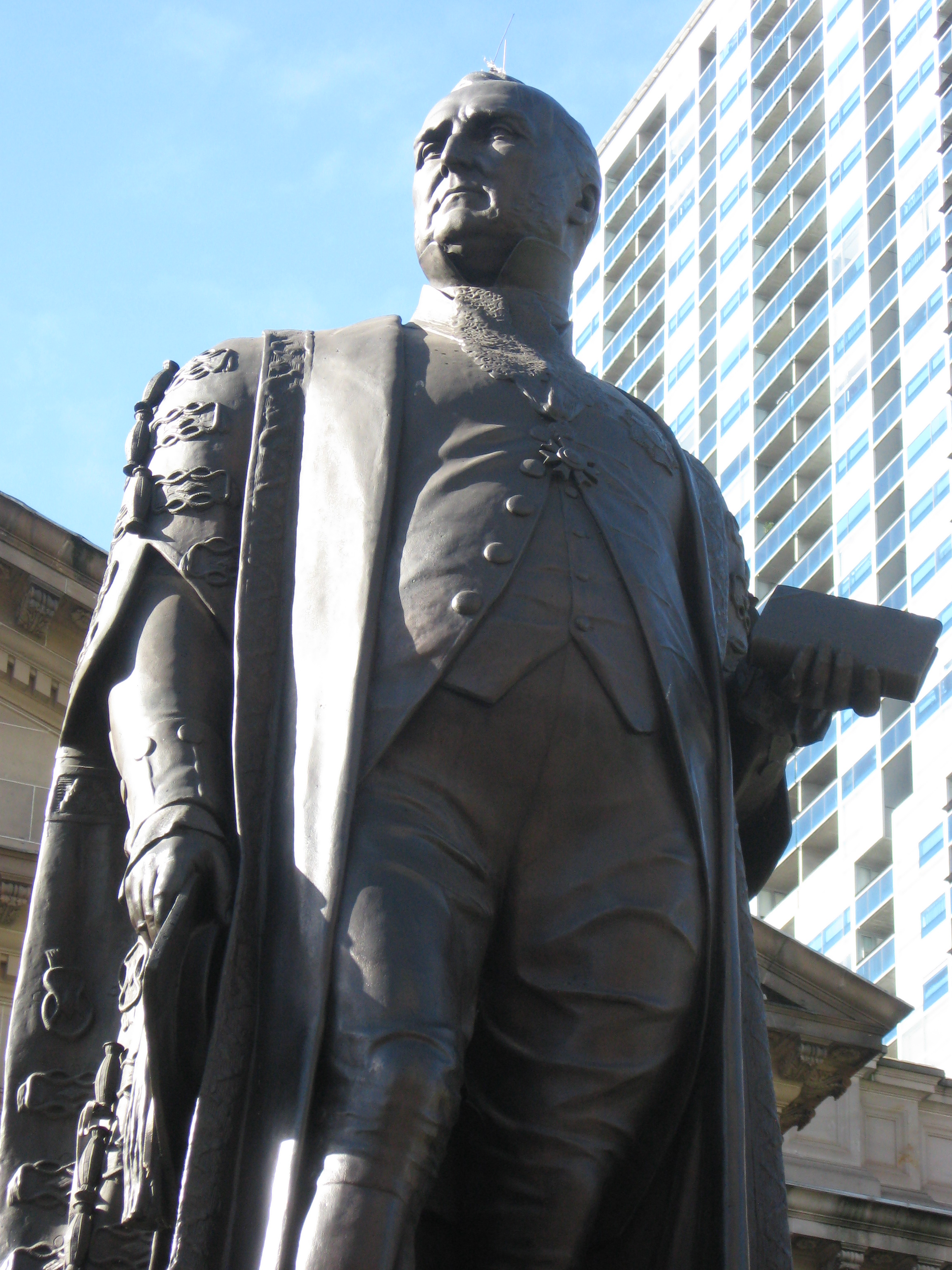
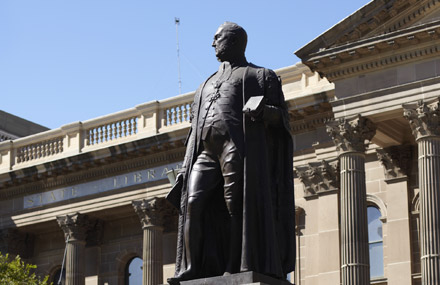
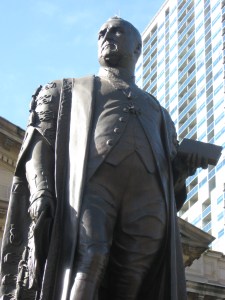
I bid farewell and ‘Happy Birthday’ to the man himself out in forecourt and caught a tram up Swanston St to Melbourne University for the symposium in the Baillieu libarary
IMG_4850

There were four speakers at the symposium, each exploring a different facet of Redmond Barry.  Stuart McIntyre,  Ernest Scott Professor of History, University of Melbourne started with an exploration of Redmond Barry as the inaugural university chancellor.  He portrayed him as a hands-on administrator, with a strong ceremonial presence.  He made the study of the classics compulsory for all student, which was rather old-fashioned at the time, but as the basis of a broader curriculum in the professions like law and medicine.  He battled with the professors and with the university senate, and insisted  that the professors not comment on religion, and later politics, for fear of sectarianism.

John Waugh Honorary Senior Fellow, Melbourne Law School spoke of Redmond Barry’s contribution to legal education. In England  (and in many other places throughout the empire)  at the time, a  legal education was part of being a gentleman, but it was not professional training as we know it.  Lawyers would undertake an apprenticeship with other lawyers and undertake self study. Barry derided the practical, technical nature of this system, although he was later to exhort law students to simplicity and logic in their arguments- something rather at odds with his own love of rhetoric.  In 1857, in his dual role as chancellor and sitting first puisne judge, he ensured that law students from the University of Melbourne were exempt from sitting the examinations of the Board of Examiners. In 1872 university education was made compulsory for barristers, thus in effect delegating entry to the profession to the universities: a very unusual practice that was found only in South Australia.

The Chief Justice, Marilyn Warren spoke about Barry as a Judge.  She noted that Barry’s reputation as a harsh, conservative judge is dominated by the Ned Kelly trial.  She described him as a detached, black letter lawyer, who was a judge of his times.  She suggested that in the Ned Kelly trial, he saw Kelly as symptomatic of an ignorant, ungovernable youth culture that needed to be stamped out.  In other cases, e.g. the Eureka case, he was more liberal. She noted that contrary to popular belief, he was only ever first puisne judge and never Chief Justice. He had good reason to believe that he would be appointed to replace William a’Beckett when he retired, but he was overlooked.  She suggested that this was because he aggravated people; the government could not be quite sure of how he would act in the position, and because his long-term liaison with Mrs Barrow was a matter of scandal.

Finally, Sue Reynolds, Senior Lecturer in IT and Logistics at RMIT spoke of Redmond Barry’s contribution to the four main libraries that he has been associated with: the Supreme Court library, what is now the State Library of Victoria, the Parliamentary Library, and the library at the University of Melbourne.  She has written a book about the early years of the Supreme Court  library called  Books for the Profession.  Barry was a prominent member of the board for each of these four libraries, and very much involved in the sourcing and  purchasing of books and production of catalogues. Being so involved in each of them, he was able to guide the development of their collections to reflect the unique purpose of each one and its relationship with the others.

And so, talks presented and cakes eaten, it was time to head home. On the way out of the Baillieu library, I stopped to look at their display which was drawn from their own archives and which reflected Barry’s wide range of interests.

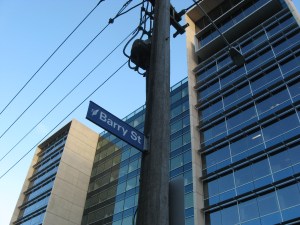
Time for one more- the small display in the Law School library situated- how appropriately, on the corners of Barry and Pelham Streets in Carlton.
IMG_4863

Ye Gods! What is this excessively palatial university building???  (Not from the outside- go inside to the foyer.) I’d seen the beautiful Supreme Court library that day, and I’ve been into Queen’s  Hall at SLV and they too are lavish buildings in their pompous, 19th century way, but this one just seemed too slick, too “look at us-we’re world class”, too corporate- especially compared with the often overcrowded and primitive accommodation given to other faculties.  Needless to say, when I arrived home and saw the three ‘begging’ letters from the University of Melbourne addressed to the three Melbourne Uni alumni who reside at this house, they went straight into the bin.

I wonder what Redmond Barry would make of the building?  I really don’t know. Anyway, happy birthday Sir Redmond.

‘Brooklyn’ by Colm Toibin

brooklyn

2010, 320 p.

There are spoilers in this review

There used to be an online bookgroup called “Who chose THIS book?”, the wail set up after a bookgroup has read a book that members didn’t like much.  When I met Kay from my bookgroup in the supermarket, she didn’t have to ask the question because everyone knew that, yes, I had chosen this book.  And no, they didn’t think much of it.

I had heard good reviews of it and had read Toibin’s “The Master” about Henry James.  I must confess to getting mixed up between Colm Toibin and Colum McCann (whose book This Side of Brightness I absolutely loved) so, yes, perhaps I was confused when I selected this book.

Personally, I didn’t think that it was too bad.  It is set in the  dank, depressed 1950s in Dublin when young Eilis is encouraged by her older sister Rose to emigrate to Brooklyn where there are more employment opportunities.  She goes and lives in a boarding house in Brooklyn, finds a job in a department store and gradually overcomes the homesickness that, even though she doesn’t recognize it for what it is, hollows her out.  She meets Tony, an Italian plumber and becomes swept up into his large, impoverished and noisy family.  When she receives sad news from home, she marries Tony before returning.  He fears that she will not return, and so they marry as a guarantee that she will come back.

Tony was right to fear.  Once she returns to Ireland, it is as if she has never left.  Even though she has been changed by the vitality and relative prosperity of America, bit by bit it all drops away from her as she slots back into the social life of the village.  Employment seems to find her this time (with the help, perhaps, of her mother who wants her to stay), and she starts going out with Jim Farrell.  No one knows that she is already married to Tony, back in Brooklyn.

The book is told in a very Henry Jamesian fashion.  There is no back story; small events are told simply and in detail; every little act is described by a narrator who seems to be hovering up in the corner of the room, watching everything.  There is no interiority, only action, and they are the domestic, quotidian small actions of ordinary life.  In spite of this- even perhaps because of this?- I found myself swayed, just as Eilis was, by the slow unfolding of a good-enough life.  At first I was angry at her family and friends at home for wanting her to stay in Ireland: by the end of the book, I didn’t know whether she should leave or not.  I felt sad no matter which way she moved.

So, even though I enjoyed the book and was moved by it, certainly the rest of my bookgroup didn’t feel the same way.  It was too long, they said; nothing happened, they said- and both these things are true.  But “who chose THIS book?” Well, I did.  Given another chance, I might not have chosen it for a bookgroup, but I’m glad that I read it for me.

My rating: 7.5/10

Sourced from : Council of Adult Education book groups

Read because: I had read good reviews (and I got a bit confused….)

Sydney Review of Books

As a rule, it takes me until Sunday night to finish reading The Age that arrives on Saturday. My favourite section is ‘Life and Style'( which used to be A2) but it seems that the life and style- the restaurants, the interviews, the film tie-ins etc-  are nudging the book reviews into a smaller and smaller space. It will barely worth the anticipation soon.

I used to look forward to the Australian Literary Review that came out at the start of each month with The Australian but it seemed that the reviews increasingly became just a platform for the right-wing stance of the The Australian generally.  So, when it no longer appeared, it was no great loss either.

I subscribe the the Australian Review of Books but to my shame, I often don’t get round to reading them until months later.  My son would eye the unopened magazine covetously (along with the similarly unopened-yet The Monthly, Griffith Review and Quarterly Review) saying “Oh, come on, I just want to read….” but no, I paid for it, so I’m going to open it in my own good time thank you very much.  I subscribed to the London Review of Books, lured by a very tempting  no-obligation introductory subscription price.  But- oh dear- such long articles; so much reading- each one took almost a week! And six month’s worth of London Review of Books have been added, unopened, to the ‘one day’ pile and the subscription has been allowed to lapse.

And now here’s another one- the Sydney Review of Books.  It is edited by James Ley, and here’s what it has to say about itself:

The Sydney Review of Books is an online journal devoted to long-form literary criticism. It is motivated by the belief that in-depth analysis and robust critical discussion are crucial to the development of Australia’s literary culture. We decided to embark on this project because of our concerns about the reduced space for serious literary criticism in the mainstream media, and the newspapers in particular, given their uncertain future. We intend the Sydney Review of Books to be a venue in which Australian writers and critics can engage with books at length, a venue in which to rediscover the intimate connection between the art of criticism and the art of the essay. The Review’s focus is Australian writing, but it also considers the work of significant overseas authors.

Sydney Review of Books has been developed with the support of the Writing and Society Research Centre at the University of Western Sydney. It is also supported by grants from the Australia Council and Copyright Agency Limited. It has been conceived as a free online publication, in order to maximise its reach. We publish new essays and reviews on a weekly basis and, in offering a selection of high quality criticism by some of the best critics and writers in the country, we hope to enlist your support as readers to ensure that the Review can continue as a dynamic contributor to our literary culture.


It looks good.  And it doesn’t have to sit on a pile, wrapped in a cover, shaming me.

Redmond Barry Bicentennial coming up

BarryHeader

Big celebrations over the next few weeks to commemorate the birth of Sir Redmond Barry (1813-1880).  It looks as if 6th and 7th of June are the big days and I’m thinking I might go along for some of it at least.

The official site is here.

EXHIBITIONS:

Redmond Barry Bicentennial Exhibition – Supreme Court Library

210 William St Melbourne 17 May -11 June 2013. Free admission  Mon-Friday 8.30 -6.00  (5.00pm. on Friday)  Inquiries 96039197

You can read about Redmond Barry’s role in the establishment of the Law Library here.

Redmond Barry and the Melbourne Law School Exhibition

Melbourne Law School Library, Level 3, 185 Pelham St Carlton South

18 May- 22 June 2013  Free admission  Inquiries 8344 6177

You can read more about the teaching of law in Melbourne at the Melbourne Law School’s site here.

Evidence of a fruitful life: Redmond Barry and the University of Melbourne exhibition

Ground floor, Baillieu Library, University of Melbourne

4-10th June 2013 Free admission

Sir Redmond Barry was founding father and first chancellor of the University of Melbourne.  There’s a rather clever interactive timeline of the history of the university here.

Free, secular and democratic: building the Public Library 1853-1913

Keith Murdoch Gallery, State Library of Victoria

30 May 2013- 2 February 2014  (so no hurry for this one….) Free admission.

There’s several guided tours during June listed here.

A BICENTENNIAL WALKING TOUR

Friday 7th June 9.30-12.30 starting at the Supreme Court and finishing at Melbourne General Cemetery.  Conducted by Isobel Simpson. $25.00  Inquiries 8344 2016

EVENTS

Redmond Barry: visionary or scoundrel?

Chaired by Damien Carrick from Radio National, the panel includes Justice John Smallwood, historian Robyn Annear and barrister Ken Oldis.

Thursday 6th June 6.00- 7.15 followed by drinks and canapes until 8.30 p.m. Book by Monday 3 June $35 full/ $30 concession/$25 SLV member. 9884 7099.

Redmond Barry symposium

Baillieu Libary University of Melbourne, Friday 7 June 1.30-4.30 p.m. Free admission but RSVP essential – http://go.unimelb.edu.au/6d6n

So much Barry!!! Let’s see- I could do a couple of the exhibitions on Thursday afternoon, then go to the Panel Discussion at the library that night and eat canapes; get up bright and early on Friday morning for a walk around Melbourne to walk off the canapes; then go to the symposium that afternoon.

redmond_barry_statue