Spanish Film Festival: El Reino (The Realm)

Manual Lopez-Vidal is a politician who has been on the take for years, and it has funded his affluent, elite lifestyle. Now that he is about to be exposed, he is determined to bring everyone else down with him.  At first a political movie, it takes on the aspect of a thriller as incriminating flashdrives are sought, found and handed on, and the closing scenes on a television set reminded me a bit of ‘The Hour’ as the tension rises.

Just as well it’s subtitled- I could barely catch a thing.

‘The Maddest Place on Earth’ by Jill Giese

Giese_The-Maddest-Place-on-Earth

2018, 220 p.

In the Epilogue of this book, clinical psychologist and author Jill Giese  writes that she jumped at the rare opportunity of an Open Day at Willsmere, the site of the old Kew Asylum. A little girl asked in that unfettered way that children do, ” If they were all crazy, why did they build them such a nice place to live?” As Giese notes, the most (and increasingly) visible sign of mental illness today is people lying on the streets of Melbourne, wrapped in blankets, begging for small change. Interestingly, it was the urge to give mentally ill people a shelter – an asylum- from the homelessness and penury of living in a blanket, that led to the construction of first the Yarra Bend Lunatic Asylum, and within six years, the construction of Kew Asylum, the first purpose-built asylum in Victoria. Both institutions – though plagued with overcrowding – were not established as the ‘Bedlam’-type places of horror that we might assume them to be.

KEWdraw

English: Engraving of the Metropolitan Lunatic Asylum, Kew. Buildings of Yarra Bend Asylum are seen in the foreground. c 1880. Source: Wikipedia

Victoria had what was perceived to be the highest level of mental illness in the world, hence the title “The Maddest Place on Earth”. In fact, at one of the numerous Royal Commissions held into asylums in Victoria during the 19th century, it was predicted that by 2050 every inhabitant of Victoria would be mad. A number of reasons were put forward: our meat-rich diet, the climate, the effect of the Gold Rush, excessive masturbation (although why Victorians would be especially prone to this was not explained) and the success of the Salvation Army in turning people’s minds to God.  Perhaps a better explanation was the “imported insanity” that arose from families ‘back home’ shipping their mentally-ill family members off to the colonies to avoid the scandal of madness. The Gold Rush could have both attracted and elicited madness in men who threw in everything to travel to the other side of the world, with failure more likely than success.

Giese tells the story of the Yarra Bend Asylum and the Kew Asylum but this is not your usual institutional history. Instead of taking a top-down approach, she uses  two main characters as the lens through which to view the asylum system in Victoria. Her first character, George Foley, was the son of an eminent artistic family in England. He suffered his first episode of mental illness while in art school, and suddenly “found himself” on a ship headed for Melbourne. He moved in and out of Yarra Bend and Kew Asylums, continuing to draw while incarcerated, and trying to hold together a precarious artistic existence when he was “outside”. The second character was journalist  Julian Thomas who, working under-cover as a ward attendant, wrote a series of columns for the Argus under the pen-name of “The Vagabond”.  He writes vividly and with humour, every bit the equal of a Mark Twain, or a nineteenth-century Louis Theroux.  Julian Thomas is well-known to historians of Australian (and particularly Victorian) history, but I hadn’t read his work before, and obviously Giese herself – a psychologist herself, rather than a historian-  was delighted to discover him for the first time.

Through George Foley, we catch a glimpse of the sharp edges of the itinerant artist’s life, even for a man clutching the slender thread of family reputation. At a time when there was no treatment for mental illness, he would be housed, fed and given meaningful work while in the asylum, only to flounder once he was released to his own resources again. He drew portraits of personnel within the asylum, including ‘The Vagabond’, who used a touched-up version of the portrait when he finally revealed his identity.  Through ‘The Vagabond’ we learn of meal-times with poorly cooked food, the dissonant music of the asylum band at the fortnightly balls held for inmates and staff, and the brutalizing effects of institutional life on the Kew Asylum attendants in particular.

Right from the establishment of Port Phillip, the presence of mentally ill people on the unmade streets of Melbourne was noted. Until the changes in asylum practice encouraged by the Quakers in the early 19th century in England, asylums had been dire places. Based on the new philosophy that asylums for the mentally ill should be built out of town, on hills in the fresh air, Yarra Bend quickly outgrew its construction in 1848 and was soon surrounded by a mosaic of cottages and even tents. The nearby Kew Asylum was opened in 1872 in a much grander E-shaped Italianate building,  Within five years Kew was the subject of a Royal Commission, which found overcrowding, disease and mistreatment. This was largely caused by a change in the criteria by which patients could be admitted to a ‘lunatic asylum’, which swelled the numbers of mentally ill patients with chronic patients with intellectual disabilities or dementia.  Despite the grandness of Kew Asylum, Yarra Bend stayed largely unchanged with its small cottage structure and more domestic, less institutionalized approach.  As Giese points out, Yarra Bend (despite its age and comparative neglect) came to be seen as the better model for dealing with mental illness with features like shelter, home-cooked food and meaningful, routinized work, that our mental health system could well emulate today.

Giese’s decision to use Foley and the Vagabond as her focus – one a patient, the other a staff member- is inspired. It would have been easy to have taken a patchwork approach, with small stories and vignettes stitched together into a fairly conventional institutional history, but for most of the book she avoids this methodology.  While she also traces through the career of Edward Paley, Inspector of Asylums, and recounts the numerous commissions of enquiry that, as too often happens today, masqueraded as action in themselves, she maintains her gaze on two individuals.  As a reader, you become invested in these two men. You read with a sinking heart of Foley’s struggle for mental stability and you see through the eyes of The Vagabond, in lengthy italized extracts from his columns.  Moreover, The Vagabond, too, has his secrets as Giese discovers at the end of the book.

This book won the Victorian Premier’s History Award for this book, and it fully deserves it. It is beautifully written, although perhaps a little fervent at times, and it is a deeply compassionate book. By foregrounding the long-term experience of George as patient, the Vagabond as attendant and journalist, and to a lesser extent Dr Paley as administrator, she gives a human face to mental illness as a lived experience. It’s a wonderful read.

My rating: 10/10.

Source: review copy from Australian Scholarly Publishing

AWW2019 I have included this book in the Australian Women Writers Challenge.

‘Imperfect’ by Lee Kofman

Imperfect1140-658x1024

2019, 306 p

In reading this book, I alternated between anger and a vague sense of voyeurism. When I review books, I tend to avoid tackling the author and try to engage more with the words on the page, the research, the planning decisions in mounting an argument. However, sometimes the author insinuates herself so much into the text, and makes herself so much part of the whole endeavour, that it’s impossible to separate the two. The other book that angered me in this way was Caroline Jones’ Through a Glass Darkly (my review here) and the two books are similar. Both books profess to be – and are – very honest but I find myself wondering just why these authors decided to put themselves on the page like this at such a personal level. They have made their book about themselves, quite deliberately. They force the reader to engage with the writer as a person. And in both cases, I think to myself “You know, I don’t think I like you much” and I want to move away. This is different from not ‘liking’ a character in a fiction book: instead, it is the whole premise and world view through which the book is filtered – and this world view is something that, as authors, these writers have decided to foreground.

Lee Kofman has undergone several bouts of surgery during her life. As a young child in the Soviet Union, she was operated on for heart problems, then a bus accident resulted in injuries to her leg that required skin grafts, leaving her with a large scar and misshapen leg. Her self-consciousness about her scars was heightened when she shifted with her family to Israel, where a high premium is placed on body image, before moving to Australia. She adopted clothes that hid what she saw as her ‘disfigurements’, always tentative about the act of revealing her body to friends and lovers. Not only is this a point of vulnerability, it is complicated further by a sense of inauthenticity and evasion – that she has pretended to be something perfect and whole when she is not.

This self-consciousness about her body and its disfigurement has bubbled through her professional life as well. Her PhD was written about concepts of the human body; she has undergone therapy with what she perceives as mediocre success; she has included in her fiction characters who are physically marred in some way. And now this book: an exploration of ‘body surface’ (her phrase) and the way that it shapes the people we become. It all starts with her.

I confess that my brittleness about her use of her own life-story as a rationale and lens springs from my own experience (ah! I’m aware of my own hypocrisy here). But in her exploration of obesity, horrific burns, facial deformities etc., and her assumption of a sense of shared experience, she personally has the luxury of the dilemma of when and if to reveal. That is a luxury denied to most of the people she interviews, whose difference is right there from the start, visible to all- not just to lovers and friends – but the curious, cruel and supercilious alike.

She admits at times that her own curiosity verges on voyeurism about other people’s experience. Her analysis is not just of imperfect bodies, but bodies that have been deliberately manipulated through extreme surgery and piercing, tattooing and shaping. She ranges far, interweaving her interviews with ‘imperfect’ people with academic research encountered as part of her PhD study. In many ways, even though I know that many readers enjoy it, I am uncomfortable with this mixture of the confessional and the academic.

She writes that her own sons have albinism. I do wonder how they will read this book when they are older. Will they see “Mummy’s scars”, which have figured so heavily in her writing and academic life, as a common bond between them, or will they resist? Will they resent being drawn into her analysis? I suspect that they may well.

Kofman gives us plenty of herself, but the voices of the people she interviews are reflected through her lens. I find myself thinking of the excellent ABC program “You Can’t Ask That” that gives time to look, and then listen. The interviewer there is silent because the questions are written on cards, and drawn from a range of questioners. Kofman is not silent.

I will probably let this post sit for a while as I ponder whether to post it. When I dislike a book, I generally don’t write a blog post about it at all. After all, I figure, if the book is a dud, then my piling-on is not going to make the book any better, or the author a better writer.

But neither this book, nor Caroline Jones’ book are duds.  And in both cases, the author herself has made choices. She has chosen to place herself in the centre of her book, not just in terms of the action (as an autobiographer or memoirist might do), but to use herself as the starting point of the analysis, not just in an intellectual sense but asking you to join her in the exploration as well. In this case, I’m not comfortable with her fixation on what she sees as her own failings. Even more, I’m not comfortable with her assumption that it gives her a sense of fellow-feeling with people whose ‘body-surface’ is much more confronting and demanding than hers.

My rating: 7/10 (actually, I found this hard to judge)

Sourced from: Yarra Plenty Regional Library

AWW2019I have included this review on the Australian Women Writers Challenge database.

I hear with my little ear: Podcasts 16-23 April 2019

background_briefingBackground Briefing (ABC). Alex Mann and Background Briefing are doing us all a service by keeping an eye on the Far Right here in Australia and its attempts to infiltrate mainstream politics. Last year they brought us Haircuts and Hate: the rise of Australia’s Alt-Right and now they’ve produced Shitposting to the Senate: How the alt-right infiltrated Parliament. When Fraser Anning starts spewing his bile, we’d better be careful how we react because we may well be playing right into their hands.

The Drawing Room (ABC) I’m not that keen on Patricia Karvelas, and so I don’t often listen to this program. But I just finished reading Jill Giese’s excellent The Maddest Place on Earth and in this segment, Giese is talking about the book with Karvelas.

Giese’s book fascinated me so much that I decided to seek out more about The Vagabond, whom she cites at length. Earshot has a good program about him as one of the very early undercover journalists called “The Vagabond: Digging the Dirt on Melbourne“. As part of their discussion, they go to visit contemporary non-fiction writer Helen Garner, who is impressed with The Vagabond’s keen observational skills and writing style.

Big Ideas. A friend of mine mentioned that they heard a woman speaking on Radio National with enthusiasm and knowledge about Australia’s electoral system. “Ah!” I thought,  “that would be Judith Brett!”, and it was. Recorded at the Avid Reader,  “How Australia got its unique system of voting and elections” is based on Brett’s new book From Secret Ballot to Democracy Sausage.

‘Black Tide’ by Peter Temple

Temple_BlackTide

1999, 356 p.

That’s it. I’m not reading another Peter Temple ever.

In fact, I said that to myself after I had to re-read Truth for my CAE bookgroup earlier this year. I looked back at my original blog post and everything I said there, I say again. Too disjointed. Too much conversation. Too confusing. And definitely not worthy of a Miles Franklin prize.

I’m amazed to find that I’ve read as many Peter Temples as I have. I quite liked The Broken Shore, but by White Dog the appeal had worn off. In the Evil Day was set in Africa, but it had all the same problems (too disjointed, too much conversation, too confusing etc).  He does dialogue well, but why doesn’t (didn’t) he just write plays? At least the speaker is identified in a script and you don’t have to count back to see who’s talking. And who are all these people he keeps bringing in? Or capturing a setting, which he also does well: why doesn’t (didn’t) he just write travel books?

At least Black Tide is a Jack Irish story, and I can see Guy Pearce, the three old blokes at the pub, Cam, Harry Strang and Stan the bartender in my mind’s eye.  Thank God for television, I say. The dodgy betting is here, and the carpentry, and a bit of sex, along with a confusing story about dodgy companies.  But I really have no idea what it was about.

So that’s it. Ned Kelly Awards and Miles Franklin prize be damned. If someone chooses another Peter Temple for bookgroup ever again, I’m just going to say “Nup. I don’t like Peter Temple”.

My rating: 6/10

Read because: ONLY because it was chosen for my CAE bookgroup.

‘The Shepherd’s Hut’ by Tim Winton

winton_shepherdshut

2018, 267 p.

Well, Tony Abbott may have just discovered his local Little Library, but I’m very well aware of mine- both of them- one in the park and the other outside Open House, a local drop-in support centre. They have done dreadful things to my already groaning bookshelves. But how could I go past a brand-new, never-read, hard cover copy of Tim Winton’s recent book The Shepherd’s Hut?

littlelibrary

The thing that strikes you about the book is the strong, confidently-written voice of Jaxie Clackton, young runaway who is fleeing his brutal father and the consequences of an accident. In fact, this is the only voice that we hear for nearly half the book, which is quite an achievement (and one that Alice in Alice in Wonderland didn’t appreciate- the dearth of pictures or conversations in a book). The full picture of Jaxie’s life emerges only slowly: both what he is running away from, and what he is running to. Meanwhile, Jaxie bashes his way through the hostile Western Australian landscape, until he comes across an old deserted hut.

Jaxie is rough, crude but not a bad kid. When he meets Fintan, who seems to be some type of defrocked priest, he is wary of him, although Fintan seems to take Jaxie as he finds him.  The book is violent and seeped through with twisted masculinities.  I found myself sitting up late to finish it and when I went to sleep, I was disturbed by the ending.

After my early love affair with Tim Winton with Cloudstreet (on the page, of course) I haven’t found another of his books that captured the magic of the first Winton I ever read. I have found myself tiring of his books about beaches and waves, and broken people.  There are broken people in this book too, but this book comes closest, I think, to Cloudstreet in terms of narrative control and voice. So thank you, who-ever put it in the Little Library, and now I shall return it so that someone else can enjoy it too.

My rating: 9 (I think)/10

Sourced from: The Little Library in Macleod Park

I hear with my little ear: Podcasts 8-15 April 2019

Russia if you’re listening (ABC) Well, that was annoying. The second series of Matt Bevan’s podcast series about the Trump Russian connection was just about to go to air, and then the summary of the Mueller report was released. In Episode 1, he talks about the Mueller report, Episode 2 looks at Maria Butina, the Russian spy who infiltrated the NRA (very relevant here in Australia at the moment) and Episode 3 looks at the music promoter Rob Goldstein who seemed to be involved at all the sticky moments, but now denies it all. Matt Bevan’s not leaving this story alone, and it unfolds in real time. This second episode seems rather too-overproduced, with little music stings and sound effects. It doesn’t need them.

McNabConversations (ABC)  Richard Fidler is back! In ‘The Secret Life of the Beauty Queen Killer‘, he interviews Duncan McNab, ex-detective, crime writer and author of The Snapshot Killer, the story of serial killer Christopher Wilder who murdered at least twelve people, possibly more,  in Australia and America. A readiness to give him the benefit of the doubt, the financial and family resources for good lawyers, poor policing and the prejudice against the testimony of young women, meant that he killed for over twenty year. Rather graphic, and very disturbing.

Standard Issue This podcast was founded as an online magazine by one of my favourite comedians, Sarah Millican. It ranges across many themes, although it tends to have an emphasis on female performers. Episode 192 Bedrooms of London interviews the curator of the Foundling Museum where between February and May 2019 they have had an exhibition of photographs of the ‘bedrooms’ (many are actually just single living rooms) of children living below the poverty line in London today. You can find out more about the exhibition – including a sample of the photographs) at the Foundling Museum site and a Guardian feature on the exhibition here.

The History Listen. An excellent podcast here, based on the book  Blue Lake:Looking for Dudley Flats, which I reviewed here last year. This is not your normal author-interview; instead it is a dramatization of some of the events, interspersed with current day interviews. It’s excellent, and check about the History Listen webpage too, where you can find a photo of Blue Lake from 1869.  There’s a good article by the author here too, with lots of photos.


Movie: Hotel Mumbai

This movie is based on the 2008 Mumbai terrorist attacks that spanned twelve locations over a period of four days. The film concentrates on the attack on the Taj Mahal Hotel, a dominating landmark in Mumbai that evokes British imperialism and the simultaneous presence of  obscene wealth and obscene poverty. The film reminded me of the disaster movies of the 1970s (Towering Inferno, or The Poseidon Adventure) where, as a viewer, you become invested in a small number of people amidst the anonymous and largely ignored carnage of other people as background. Perhaps we’ve grown up a bit, because not everybody here makes it out alive.

I saw this film at a Crybaby Session at a local cinema. I wondered if the gunshots and explosions would transform the snuffling little bundles into real crybabies, but the noise wasn’t too overpowering (perhaps they had it turned down?). There was a lot of violence here -rather too much perhaps as Wikipedia estimates the number of deaths at the Taj Mahal at 31 and I’m sure that the film depicted many more deaths than that.

My daughter-in-law and I had high tea at the Taj Mahal eight years later (see my travel blog entries here and here). Other than the memorial outside the hotel, there was no sign of the damage and carnage. It didn’t occur to us at the time, and it was sobering to realize, that many of the staff working there had experienced the terror attack.


Podcast: Blue Lake – Finding Dudley Flats

The History Listen on ABC RN has a good podcast based on David Sornig’s excellent book Blue Lake which I reviewed here late last year. This podcast doesn’t so much re-tell the story as bounce off it creatively, and it’s well worth a listen.

And to see an amazing clear photo of the lake from 1869, check out the ABC RN History Listen webpage about the program.

‘Short Walks from Bogota’ by Tom Feiling

feiling

2012, 288 p.

Before I went to Colombia recently, I tried to find books set there. Of course, there’s Gabriel Garcia Marquez but (dare I say it?) many of his books are rather similar and I wanted to read something different.  But everything I read seemed fixated on violence and drug-crime. Are there no other stories to be told about Colombia?

Tom Feiling found a similar phenomenon. He had been in Colombia in its violent decades, but in 2010 he went back, spurred by then-president Alvaro Uribe’s declaration that the country had moved from terrorism to tourism.  Tourists would need a book about the ‘new’ Colombia, he thought, and so he decided to write it.

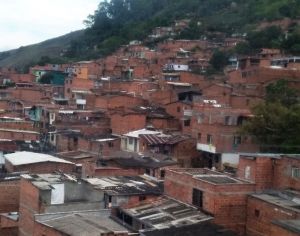
However, he too has written a book that is steeped in drugs and violence, but he bookends this period by accounts of colonialism and twentieth-century history, and a view towards the future. It’s not a ‘walking’ book as such, although he does his fair share of hiking and talking and bumping around on the back of motorcycles and trucks. He visits Bogota (which I did not) and Medellin (which I did), and many other mainly rural places as well, many deep within the ‘orange’ Reconsider Your Need to Travel section of the map on the Australian Government Smart Traveller Website. Even in a book hoping to get beyond drug-violence, he found that it had shaped the Colombia that he found in 2010.

The book is written in a chatty, discursive, self-deprecating style and it paints vivid word-pictures of landscapes and people. It was published in 2012, and I think that Colombia appears to have been more successful than he anticipated in writing a new narrative for itself- although the persistence of so many Reconsider Your Need to Travel regions some seven years later is disturbing.

I finished reading this when I returned, and perhaps that was the ideal way to read this book. I may have been a bit turned off my plans for solo-60+female travel had I read it earlier.

Sourced from: purchased e-book

Read because: I was going to Colombia, but I didn’t finish it until I returned

My rating: 8/10