Category Archives: Uncategorized

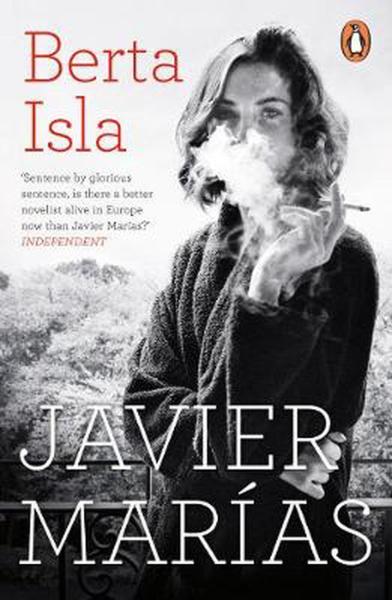
‘Berta Isla’ by Javier Marías

Marias_Berta_Isla

2017, 532 p.  Translated by Margaret Jull Costa

SPOILER ALERT

I’m not really into spy novels, but Berta Isla turns the spy novel on its head, because it’s not really about the spy at all. Instead, it’s about the people he (or she) leaves behind as another operation begins, another identity is adopted  and other deceptions are woven.

Tomás Nevison is Anglo-Spanish, and has a very good ear for languages and mimicry. While over in Oxford, he is ‘approached’ by a tutor who sounds him out about working ‘for the good of the Realm’. He shows little interest. He has his long-term girlfriend, and later wife, Berta Isla waiting for him in Madrid, and it has been just assumed that they will end up together, even though they both lose their virginity to someone else. But when Tomás finds himself accused of a crime he says he did not commit- charged by none other than Inspector Morse, no less!- he finds himself entrapped into working with MI6 after all.

And thus Tomás is launched into a strange half-world where he leaves his wife, Berta, and their children for years at a time. At first believing that he is away on business, Berta soon starts to suspect that Tomás’ other life is more shadowy than she could have imagined, especially when she comes into contact with other equally mysterious characters. She is unable to reach him: he reappears without warning, and leaves just as abruptly. Meanwhile, time goes on. Franco dies, the Northern Ireland Troubles rage, the Iron Lady has her Falklands Island victory, the Berlin Wall falls – and Berta waits.

And waits. And waits.  This is a long book – 532 pages- and I would estimate that half of it is just waiting. It’s a self-consciously literary work, with many references to T. S. Eliot’s Four Quartets. It is told sometimes in the third person, and sometimes from Berta’s first person perspective. Yet, the narrative voice is very much the same – a  prolix, long-winded, introspective voice, where the self is constantly watching and monitoring, and where thought is much the same as the spoken word.

Its wordiness is not just in the content. The sentences are lengthy and labyrinthine, and strangely flat. By the end of the book, you are almost inured to the wordiness, which seems to just clang now, without meaning, not unlike Tomás and Berta’s lives.

I did find myself wondering half way through this book when and whether anything was going to happen. It probably could have been cut by half, without any loss of effect.  I saw the ending ahead of time, although I was unprepared for the hollowness that I felt – and that no doubt Marías intended  – when I finally got there.

My rating: 7.5/10

Sourced from: Yarra Plenty Regional Library

I hear with my little ear: Podcasts 17-24 August 2020

Heather Cox Richardson In her History and Politics Chat of August 4, she returns to the question of the U.S. Postal Service, which she has dealt with earlier, and which has recently become a real issue facing the next election (in fact, she foreshadowed this quite some time ago). She then goes on to talk about why America doesn’t have a national childcare scheme (short answer- it’s ‘communism’ and Nixon rejected it). She encourages people to look at Jonathan Swan’s Axios interview with Trump and exhorts people to keep talking about the Russian Bounty scandal, because it’s important.

In the History of the Republican Party Part 9 video of 30 July, she talks about the liberal consensus that was formed when Eisenhower (Republican) took over from Harry Truman, who himself had taken over from FDR  and his New Deal. He challenged for the Republican nomination when the Republic party was in danger of being taken back to the big-business oligarchy direction under Robert Taft. Heather is obviously a bit of an Eisenhower fan (although she notes that she has been reminded that Eisenhower’s policies were not good for minorities).

Rough Translations I still really can’t believe, when I’m walking around my local shopping centre or in the park (which are the only two places I can walk) that we are all swathed in masks. In From Niquab to N95 two contradictory French laws are explored: the law that says you cannot cover your face, and the law that says you have to wear a mask. Interestingly, they couldn’t find a French woman who wore a niquab to interview, so they had to resort to Australian niquab-wearers instead.

Dan Snow’s History Hit. It’s strange to hear your own country’s history being told from the perspective of another country.  VJ Day: 75 years commemorates the end of hostilities against Japan. His first guest is a British historian (I wish that his show notes said who his guests were) who told this part of the war from very much a British/Empire perspective, where Australia is just one of a number of Far East and African countries fighting for Britain. He makes much of the Indian Ocean war – something Australia rarely focuses on- and Burma looms large. The second guest spoke about the Chinese war against Japan- something, again, which is not high in Australian historiography of WWII and the way that the Nationalists and Communists united to fight Japan- something that the rest of the world did not expect to happen.

Nothing on TV Robyn Annear has crept out of lockdown to talk about Mr Denning’s Umbrage. Mr Denning was a dance master, who ran Quadrille Assemblies in Melbourne in the mid-1850s, constantly battling to keep them ‘respectable’ and hounding his patrons through long advertisements in the Argus. I love this podcast. Narrated in her beautiful, slow Australian accent, there’s a chuckle in her voice and the pop of a champagne cork.

Rear Vision (ABC) How WWII changed Australia has three top-notch historians: Stuart Macintyre, Gwenda Tavan and David Lowe talking about the effect of WWII on Australian history in terms of the economy, immigration and foreign policy. Very good.


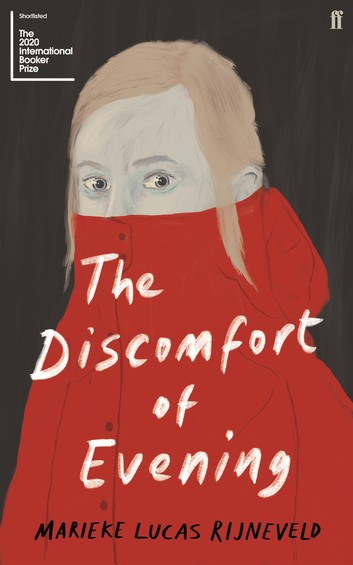
‘The Discomfort of Evening’ by Marieke Lucas Rijneveld

the-discomfort-of-evening

2020,   282 p. Translated from Dutch by Michele Hutchinson

Preamble: I read this because it was shortlisted for the Booker International. I am appalled that it won. Surely there is enough pain and unhappiness in the world.


Ten year old Jas lives on a Dutch dairy farm run by her strict Dutch Reformed church parents. I don’t know if she was disturbed before her family faced a tragedy, but she certainly is afterwards. Not just her: the whole family is cycling into a vortex of wordless despair. She is frightened that her father is going to leave; her mother has collapsed in on herself in grief; her brother is sadistic; her sister is in a similar place to Jas herself.

I spent most of this book flinching from its unrelieved misery and cruelty and self-abuse. Her parents’ Christianity is harsh and emotionally sterile, and it is juxtaposed against a world obsessed with bodily functions. The children are largely left to find their own way through the tragedy, and the depth of mourning over the loss seems unbalanced against the indifference with which the children are treated. In my mind the farm seemed cold, dismal and muddy, with no beauty in anything or anyone.

I found this a really disturbing book, which means that it will probably stay with me. I don’t know if I really want it to. It’s a debut novel: does this mean that it has succeeded? I suppose it does – and it has certainly attracted critical acclaim- but I felt like having a hot shower and seeking out a book to make me laugh, to remove the misery that clung to me as I finished it.

Rating: I have no idea. Would I recommend it? Only for the strong-stomached.

Sourced from: Yarra Plenty Regional Library

Read because: it was shortlisted for the 2020 Booker International Prize.


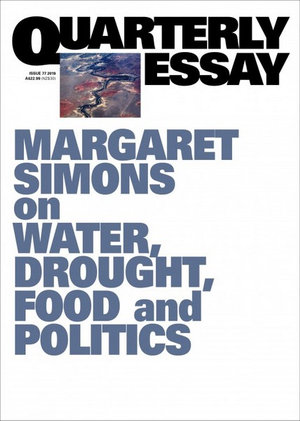
‘QE 77 Cry Me a River’ by Margaret Simons

cry-me-a-river

2020, 109 P.

I find that, on finishing a book, I usually take an image away with me and it tends to be that image that I remember later. Margaret Simons writes evocatively of the Murray-Darling river system in this Quarterly Essay: the variation of farming uses, the high cliffs overlooking a meandering river, the mirages of water in red plains, the sand dunes and crashing ocean at the South Australian end. But what I will take away is the image of an effigy of the then-Water Minister David Littleproud being thrown into the water at Tocumwal and left to bob his way down to South Australia. Fitted with a tracking device, the effigy had acquired glasses and a suit on the way, was fished out near Swan Hill and taken for a drive around Nyah before being launched again, probably to be caught on a snag further downstream. Who knows- he may be there still.

But this is probably the only light moment in this essay, which teases out the politics that make management of the water of the Murray-Darling river system such a wicked problem. Not only are four states involved, but even within New South Wales, there is a Lower Darling (more regulated) and Upper Darling (boom-and-bust) split. There are big bolshie “outspoken” personalities, like Chris Brooks from Barooga in N.S.W or cotton-industry lobbyist Ian Cole; spokespeople for different lobby groups; the quaintly-named Commonwealth Environmental Water Holder Jody Swirepik; indigenous traditional owners; academics like Peter Gell who has fallen out with former colleagues over a study he produced with them;  and politicians who have, for better or worse, left their fingerprints on the policy without actually effecting real change.  Are there baddies? Yes, the water thieves, and possibly some corrupt politicians and bureaucrats who have fallen under the eye of ICAC, and the NSW government, which is threatening to withdraw from the whole program. But, as cotton cultivators, almond growers, and farmers pointed out, people have only done what they have been allowed to do by governments and policy makers.

In the Murray-Darling Basin, the authorities joke, everyone downstream is a wastrel, and everyone upstream is a thief. Only I, the person drawing water in this spot, for these crops, in this way, truly understands the value of the water and how to use it. (p.5)

Dispute over the Murray-Darling was hardbaked into the 1901 Australian Constitution, when the states were given ownership and management of the water, with the Commonwealth having a limited role. The founding fathers left it to the High Court to determine the competing rights of each state- something that still has not happened.  The creation of the Murray-Darling Basin Agreement under several Labor governments in 1987 took advantage of a narrow window of Commonwealth power to give effect to international environmental treaties. This environmental framing of reform continued with Turnbull’s Water Act in 2007, which relied for its constitutional validity on the international RAMSAR wetlands act, and it rather surprisingly passed in the dying days of the Howard government which expected (rightly) that it would lose. Despite all the argy-bargy that has followed, the Water Act still stands, with its rather contradictory aims of protecting the ecological values of ecosystems at the same time as promoting “economic, social and environmental outcomes”.

Under the free-market water licence reforms, the water could be unbundled from the land, and sold separately. With Penny Wong as Water Minister, many irrigators sold their water to the Commonwealth in the “Pennies from Heaven” buyback period. Tony Windsor used water politics as part of his deal with the Gillard government, and no sooner was the guide to the proposed Murray-Darling Basin Plan released, with its recommendation of 3000 to 4000 gigalitres of water returned to the environment, than everyone (including the government and the Murray-Darling Basin Authority itself) began backpedalling from it. A final figure of 2750 gigalitres was ‘fixed’ (literally), even though no-one thought was actually congruent with the science. With a change of government, Barnaby Joyce  moved water buybacks behind the curtain, and to his credit David Littleproud (he of the effigy) at least tried to hold it all together. The National Party in particular has not covered itself in glory but the chances of a Liberal party prising water from the cold dead hands of the Nationals is very unlikely.

This essay is told from a personal viewpoint, as Simons travels throughout the river system, but not in a geographically methodical way from headwaters to mouth. She interviews farmers, lobbyists, bureaucrats and academics, and spends lots of time on country roads, striding over paddocks, scrambling up dams, and in pubs.  After describing the plan and the politics, she starts at what she describes as “one of the saddest places in Australia”, the middle section of the Lower Darling around Wilcannia and Bourke. This is where we get the images of the fish-kills, and the government-purchased Toorale station. She then moves up into Queensland to Cotton Country, where floodwater harvesting has become a controversial practice, and where the ‘old school tie’ still matters. Then she goes down to the Murray that separates Victoria and New South Wales where, perversely, the water efficiencies encouraged by the plan have reduced the run-off which has fed the whole system. Finally, she ends up in South Australia, her own home state, where some believe that the attempt to ‘save’ the Murray should be abandoned and that the sea should be allowed to flood the lakes.

I’m not sure that there is a solution to the Murray Darling and I don’t think that Margaret Simons does either.  Her subtitle is “The Tragedy of the Murray-Darling Basin”, which evokes the idea of the ‘tragedy of the commons’ where individual users, acting in their own self-interest, spoil the shared resource. The Plan, while not perfect, does exist, which in itself is an achievement. The sticking point is its implementation.  The Murray-Darling is never going to return to ‘before’ because it is already a heavy plumbed and engineered water course. She is not hopeful:

Rural Australia, no longer the heart of our national narrative, is too easily neglected. It has been governed piecemeal, and with cynicism, and the National Party has contributed to that. some of the producer groups have made positive contributions, and some have been aggressive and short-sighted- on the wrong side of history. Developing visionary policies for rural Australia would take courageous leadership and enlightened politics. It is hard to find much evidence of either in the history of the Murray-Darling Basin. The exception, perhaps, is the fact that we have a Basin Plan at all. (p. 102)

This essay is valuable for taking a whole-of-system approach, integrating the perspectives and realities of a river that crosses four states and even more landscapes. It includes personal perspectives as well as the politics, and it provides a good background for watching as the next steps in this sorry, conflicted saga play themselves out.

My rating: 8/10

Sourced from: My Quarterly Essay subscription

aww2020I have included this on the 2020 Australian Women Writers Challenge.


‘Cancelled’: Facebook series.

cancelled

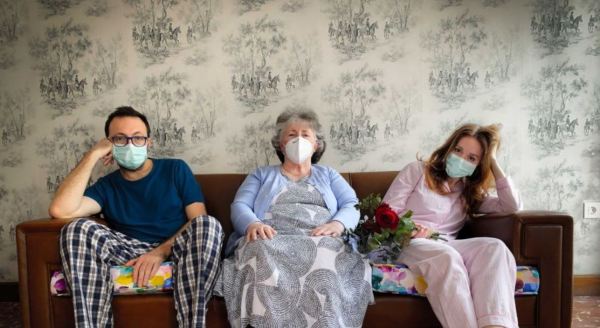
I have been absolutely loving the 10-part series ‘Cancelled’ that is screening on Facebook. Each episode goes for about 8 minutes or so. The whole thing was filmed on an i-phone by the three protagonists themselves (Luke, Maria and Luke’s mother Karen) in their Valencia apartment earlier this year, when Spain went down into a hard lock-down.

Luke Eve is a film director (and it shows) and he and his fiance, Spanish actress Maria Abiñana were planning their wedding in March. His mother Karen had arrived for the wedding, and was staying with them in their AirBNB apartment. As the deaths mounted, and the lockdown was announced, they felt that they had to cancel the wedding. Disappointed and frightened by the rising numbers of cases, they had to negotiate a new relationship with Luke’s mother in a confined space.

This is absolutely beautiful, intimate storytelling, released week-by-week in real time. This video here tells you how it was made. I originally started watching it for the subtitled Spanish, but it drew me in with its honesty and humility. It’s great.

Here’s the Facebook link: https://www.facebook.com/watch/cancelledtheseries/


I hear with my little ear: Podcasts 9-16 August 2020

Heather Cox Richardson Her History and Politics Chat on 29 July was a commentary on the events in Portland and the Republican Jim Jordan’s showing of a manipulated video showing the violence there. She was asked how to respond to REAL fake news like this, and she talked about the importance of changing the narrative back to reality. As far as moving the Feds in, she reminded her listeners of other events, e.g. Waco Branch Davidian siege, and the preceding Ruby Ridge siege, that act as a warning that the optics of a Federal intervention are always bad. She then moved on to whether the Russian bounty scandal is real. She notes that Trump isn’t really engaging with it, and wonders why. Finally, she addresses the question of Trump refusing to leave office. She is not overly concerned about that at the moment, noting that lots of things can happen between now and the election  e.g. Trump’s finances, Portland. etc.

Her History Chat of 23 July continues her History of the Republican Party into the 1930s and 1940s. Now that the Republican Party had allied itself with big business, it was happy to bask in this alliance during the 1920s when things were good (for some). But it backfired in the 1930s, when everything fell apart. There was a philosophical determination to overlay unemployment with moral overtones, and so the Republican Party couldn’t compete with FDR’s New Deal, which was very electorally popular. The Republican Party split between the Taft Conservatives (who wanted to return to the big business led affluence of the 1920s) and the Dewey Republicans (who embraced a lot of the New Deal ideas). The Democrats split too, with the Dixie Democrats from the south objecting to policies that black people were able to benefit from.

The Thread Continuing on with the thread of ‘non violent resistance’, we’ve gone back from Martin Luther King to Bayard Rustin, and now with Turning Enemies into Friends we go back further to Ghandi, who was a direct influence on Rustin.  Ghandi himself corresponded with Leo Tolstoy, who is explored in The Transformation of Leo Tolstoy. What a fundamental spiritual/political shift he made! Then finally we end up with I Will Be Heard, which looks at the abolitionist William Lloyd Garrison, printer of The Liberator newspaper in the 1830s, decades before the American Civil War.

The Latin American History Podcast How curious- a Latin American history podcast from Australia, presented by Malcolm Sargent. I have no idea who he is. But anyway, I enjoyed The First Circumnavigation of the Globe Parts I and Part II about Magellan’s three year circumnavigation journey in  1519. Actually, he didn’t actually make it, because he was killed in a battle with the locals in the Philippines when he became embroiled in political/religious affairs.

Lectures in History C-span. This lecture from 2013 is called Culture and Society in the 1920s. Professor Michael Kazin from Georgetown University (and co-editor of Dissent magazine) discusses Prohibition, the reactivation in the 1920s of the Ku Klux Klan as an anti-Jewish and anti-immigrant movement, the growth of  Hollywood and the Production Codes that led to sanitized bedroom scenes in American movies, and Al Capone.  Interesting.

Latin America in Focus. This podcast in English is produced through the Americas Society/Council of the Americas. Do you remember seeing a few months back those photos of thousands of semi-naked prisoners chained together, crammed together on the floor in rows? That was ordered by the El Salvadorean president Nayib Bukele, Latin America’s youngest president (39) who styles himself as being an ‘outsider’. In The Strange Case of El Salvador’s Plummeting Homicide Rate, the Central American analyst with the International Crisis Group, Tiziano Breda, argues that gangs can choose to dial up or down intra-gang violence for political ends, and that perhaps Bukele’s current very high popularity gives him political capital to institute dialogue with the gangs. I’m not sure that these photos, which Bukele tweeted himself, will help. Breda suggests that he did that to shore up his over-90% popularity, because he is not in a strong legislative position. Mmm. I’m not so sure.


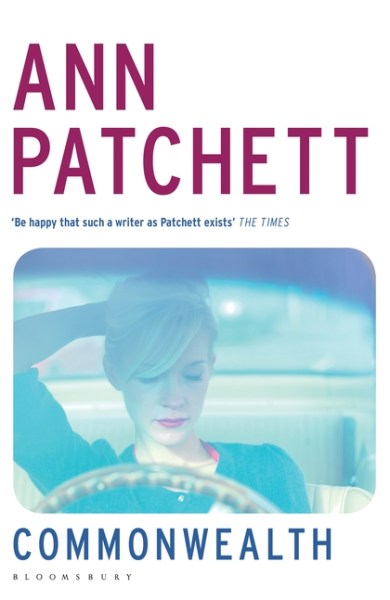
‘Commonwealth’ by Ann Patchett

patchett_commonwealth

2016, 336 p

This book was next cab off the rank after reading Hilary Mantel’s The Mirror and the Light. A damned hard act to follow, and so I was pleased to read something contemporary and not too pretentious. And even though the name suggests something Cromwellesque, it is instead a domestic/family novel set in America spanning the 60s to the present day.

It starts in 1964 at a christening party. Bert Cousins turns up alone, without his wife, to the party held by a barely-known work colleague, ‘Fix’ Keating. There he notices Fix’s beautiful wife Beverly. None of them know it, but soon the Keating’s marriage will be ended, and Bert and Beverly will become a couple. There are children from both first marriages, and despite their anger at their respective parents, the children themselves form a group, at time united, at times jealous and resentful. The book traces the blended families over time, as further relationships fail and the now-grown children move into adult life. Their life story is not their own, and instead becomes publicized through a book called “Commonwealth”- the name of this novel. I don’t really know that the book needed this little metafictional twist: it’s only a minor part of the novel, and the title really doesn’t fit with the book as a whole. Unless, perhaps, you thought of the family as a Common-Wealth, but that’s a bit of a stretch.

As in books by Anne Tyler or Elizabeth Strout, this is a book with complex, contradictory, fully-rounded characters. They are not always likeable, but their actions always make sense, at some level, just as we know that our own actions do, however baffling they may seem from the outside.

This is a very domestic, relationship-heavy novel that captures the intricacies and frictions of blended families. It is noticeably American, bathed in a television hue. If perhaps the cohesion of the children seems too good to be true, it does illustrate the way that ties can continue, though sometimes strained, across the various permutations of family as we know it today.

My rating: 7.5

Sourced from: The Little Free Library at Macleod Station.

,

Six degrees of separation: from How to Do Nothing to…..

odell_nothingSo, another month- another Six Degrees of Separation – see the ‘rules of the game’ here.

I haven’t read the starting book, Jenny Odell’s How To Do Nothing (2019). I think my son read it, but it has really passed me by. I think that the title must offend my Protestant Work Ethic background.

Johnson_cleanstrawBut the title put me in mind of George Johnston’s Clean Straw for Nothing (1969), the second of his David Meredith trilogy, and the sequel to My Brother Jack. Unfortunately, I read it before I started my blog, so you’ll just have to take my word for it that I absolutely loved all three books of the trilogy.

wheatley_cliftSo caught up was I by the trilogy that I became fascinated by Charmian Clift, writer and journalist and, as it happens, George Johnston’s wife. Nadia Wheatley wrote a brilliant biography of her called The Life and Myth of Charmian Clift (2002) which, again, I read before starting this blog.


australian-women-war-reportersClift was a journalist, although more of the domestic kind, with long-running columns in the ‘women’s pages’ of the newspaper. Jeannine Baker explores the world of Australian woman war journalists in her Australian Women Reporters (2015). She traces through the various wars that Australia has been involved in, identifying women reporters who had to forge their own roles in a journalistic genre that lionized male war reporters.

Hotel Florida by Amanda Vaill.jpg

And one of the biggest male reporters of them all is Ernest Hemingway, who is just one of the journalists that Amanda Vaill deals with in Hotel Florida (2014). During the Spanish Civil War, international journalists were based at the Hotel Florida in Madrid, and she traces through the interleaved lives of press journalists Ernest Hemingway, Martha Gellhorn, photographers Robert Capa and Gerda Taro and press officers/censors/propagandists Arturo Barea and Isla Kulscar.

mccamishMentioned in passing is the Australian journalist Alan Moorehead, who was also in Spain during the Civil War. Thornton McCamish wrote a fine biography of Moorehead in his Our Man Elsewhere (2016). This book dealt with Moorhead’s experiences as a war correspondent, then his plunge into popular history with, for example, his book Coopers Creek about Burke and Wills.

murgatroyd_digMoorhead wasn’t the only historian to write about Burke and Wills. English writer Sarah Murgatroyd wrote an eminently readable history in her book The Dig Tree (2002), which again, I read before I started this blog. It was quite tragic to learn that she died of cancer just a few weeks after it was published. It has been republished as one of the Text Classics, which is impressive for a book published so recently.

My, I’ve been non-fiction-ny this month.

I hear with my little ear: Podcasts 16-23 July 2020

Heather Cox Richardson. In her History and Politics Q&A of July 7, she spends quite a bit of time on the electoral college, and reasons that the system is broken. She comments on the letter about cancelling culture published in Harper’s magazine, which rather amazing triggers a cascade of trolling in her comments feed while she’s talking! She also discusses whether Trump will accept defeat, and reminds us that Biden is only the presumptive candidate, and that other Democrat candidates are still in the race in order to influence policy.

In the History of the Republican party broadcast Episode 5, she takes us from the 1870s to the end of the nineteenth century.  The Republican party has cemented itself as the party of big business, it ‘steals’ two elections where the candidate has lost the popular vote but won the electoral college (each time this has happened, it has been a Republican who comes out on top), and it all sounds pretty corrupt. She attributes (rather questionably, I reckon) the 1890s depression to Republican panic-mongering when the Democrats win both the Presidency and Congress (surely this was a worldwide depression- can American politics have that much influence?) – using the trope that the Democrats (read here in Australia- ALP) can’t handle money. This was all pretty detailed stuff.

The Jungle Prince (New York Times)My son recommended this three-part podcast. What an intriguing story- a family squatting on a Lucknow railway station platform for ten years, claiming to be the Royal Family of Oudh; a crumbling 14th century palace in the jungles surrounding New Delhi; a Miss Haversham-like existence inside the palace and a house in Bradford England with a garden full of garden gnomes. Really worth listening to. I listened to The Jungle Prince via Stitcher.

Rear Vision (ABC)  The U.S. election is drawing closer- coronavirus, Black Lives Matter, ‘law and order’ – it’s like watching a movie. The Religious Right- politics and God in the USA argues that Reagan and Trump both won their victories through a disguised racism (less so in Trump’s case) that dressed itself in concern about abortion.


‘Beyond the Ladies Lounge’ by Clare Wright

wright_ladies_lounge

2014, 256 p.

My parents were teetotalers, and even though I’m not  a teetotaler by any stretch of the imagination (cue laughter from my husband), I was certainly influenced by my parents’ distaste for the dull roar and acrid smell of beer that emanated from the corner pubs of my childhood. Growing up in the time of the ‘six o’clock swill’, and with the quaintly lettered ‘Ladies Lounge’ etched into the stained glass of pub windows, the pub seemed a threateningly male place. But as Clare Wright reminds us in this book, this was not always the case. Female publicans have a long history, right back to the earliest days of white settlement, and at the end of the nineteenth century and early decades of the twentieth century, over half of Melbourne’s hotels had a female licensee.

This book, republished by Text Publishing in 2014 has had a longer life than you might think. The original 2003 book was originally drawn from Clare Wright’s PhD thesis from 2002, which itself grew out of her honours thesis which utilized oral histories with female publicans and their descendants. These academic antecedents are still here in this 2014 version of the book, but Wright’s lively writing style, even more pronounced in her later books The Forgotten Rebels of Eureka  and You Daughters of Freedom, ensures that the academic analysis enhances, rather than suffocates, the text.

She starts her book with an evocative pub crawl around Melbourne in 1889, from one hotel to another, where the publican is a woman. Right from the earliest days of convict settlement, the authorities were prepared to condone hotel-keeping by young single women.  During the gold rush, when liquor was ostensibly banned from the diggings, the sly-grog tents that flourished were often owned by women. Some women made sufficient money from sly-grogging to build hotels on the roads to the diggings where they became legitimate, respectable traders.

The legal framework regulating the liquor trade in Victoria was distinctly favourable to women because they were seen to ‘keep orderly houses’, reflected in the language that spoke of the licensee as ‘he or she’.  Most importantly, the requirement for pubs to offer accommodation (something that was not the case in Britain) meant that women were involved in creating a domestic, as well as drinking establishment. Nonetheless, with time, this came under threat.  The 1876 legislation, which aimed at cleaning up the trade after the gold rush, changed the language to ‘he’ and favoured male licensees, and in 1884 there was a courtcase that ruled that married women were prohibited from holding a publican’s licence.  This verdict threw the hotel industry into turmoil, but an Amending Act the next year preserved married women’s rights to renew their licences. Support for married women as licencees came from two unexpected quarters: the Licensed Victuallers Association who were ambivalent at first,  but were swayed by wanting to demonstrate the ‘respectability’ of their profession; and more importantly, the brewing companies who owned a number of hotels outright under the ‘tied house’ system, often using female licensees. In the midst of the temperance campaign around WWI, even the Women’s Christian Temperance Union, which campaigned vociferously against barmaids, was largely silent about female publicans with whom they probably had more in common than they wanted to admit.

‘Respectability’ was used by women publicans as both an attribute to make themselves valuable as licensees, and as a way of embedding themselves and their hotel as integral parts of the community. It was used as a way of controlling behaviour, too, by insisting that men not swear in front of them, and by not drinking with the men (as male publicans were wont to do) in order to maintain a respectable distance.

Because of the requirement for the publican to live on the premises, the pub was a home as well as a business. In the chapter ‘Mapping Elizabeth Wright’, she looks to the inquest records of the aforenamed Elizabeth Wright, who was murdered in her own hotel’s dining room by her business partner. Through these records, Wright (the author, not the victim!) is able to map out the Frankston Hotel spatially, and the dual and ambiguous family/business uses of many of the spaces. Female publicans, bringing up their families within this shared zone, did not have a separate work life but instead their children saw how they operated with authority and efficiency, as oral history testimonies demonstrate. In the final chapters of the book, she brings the female publican into the 21st century, with examples of female publicans in inner-city hotels (e.g. the Curry Family Inn in Collingwood) and  gastropubs (e.g. the Grace Darling, also in Collingwood).

I enjoyed this book. It is written with the same warmth and wit of Wright’s later work on Eureka and suffrage, which tie far more into the bigger historical themes of Australian history. It is not just a paean of praise to female publicans, because it has academic ‘grunt’ as well, although some readers may find this off-putting. There are enough personal vignettes for you to remember that you are reading about real people as well, and the sheer number of examples of female publicans drawn from right across Victoria reinforces that she is writing about a widespread, if overlooked, phenomenon.

My rating: 8.5/10

Sourced from: Yarra Plenty Regional Library e-book