Category Archives: Current events

Election Day

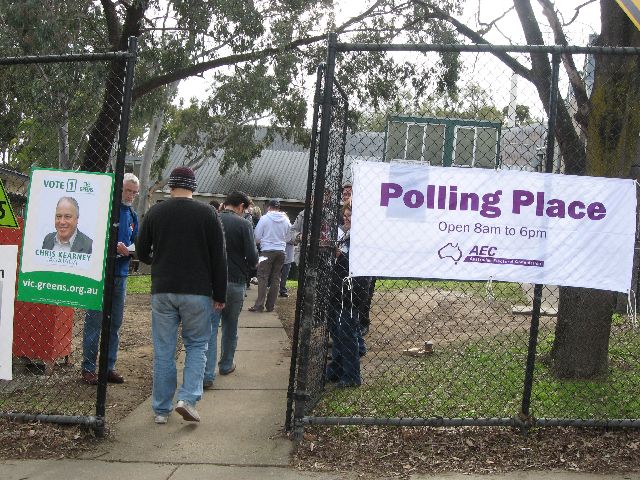
I’ve just returned from doing my democratic duty up at the local school.  It’s election day here in Australia, and one that I feel rather pessimistic about.  Elections are always held on a Saturday and voting is compulsory- something that I have absolutely no problem with.  I think of the bravery of people in other parts of the world who carry around their ink-dipped fingers (how dangerous could that be in some situations!) and I am grateful that I can vote in a country that expects and requires me to do so as a citizen in a well-organized and fully-financed electoral system.   My gratitude and trust in the system stands, no matter what the outcome tonight, tomorrow or maybe weeks down the track.
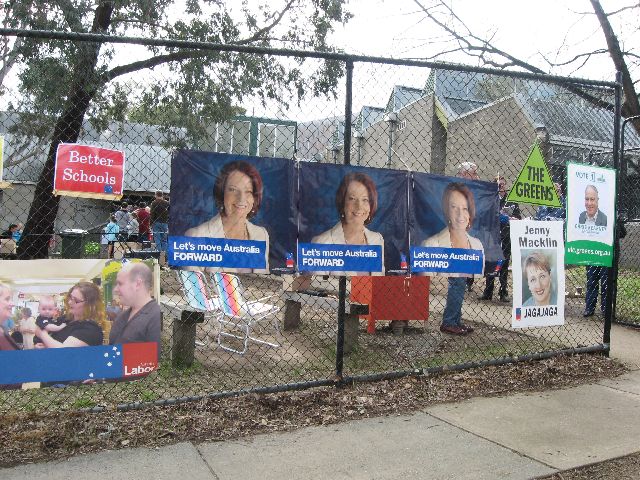
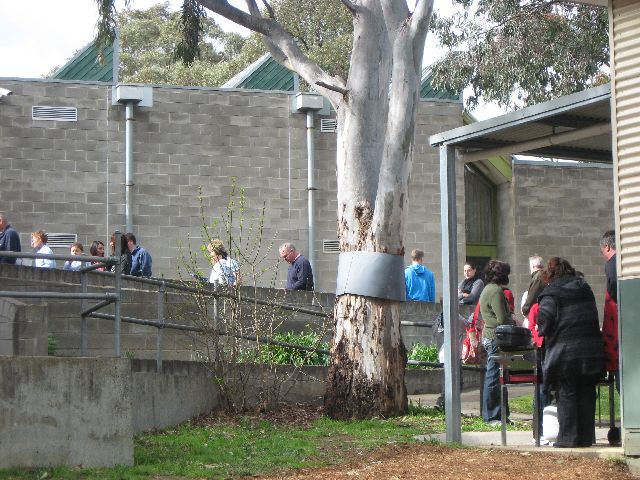
Yes, the sausages are sizzling as the good people of Macleod line up to vote

So what about elections in Judge Willis’ time? Of course, the whole concept of a Federal Election in Melbourne had to wait until 30 March 1901 but the first colony-wide election for NSW was held in 1843.  Until the passing of the 1842 New South Wales Act, the Legislative Council had been nominated by the governor, but the 1842 Act allowed for 36 members, twelve appointed and the rest elected.  The relative lateness of elected representation reflects the penal origins of the colony: Upper Canada had been awarded representative government nearly fifty years early with the Constitutional Act of 1791.

Port Phillip was still part of New South Wales at this stage.  Six members in total would be elected from the Port Phillip district, five from the district as a whole, with one from Melbourne.  There was not exactly a rush: the Council sat in Sydney, six hundred miles away, and few Port Phillip citizens were prepared to travel and stay in Sydney for council sessions.  As a result, of the five district members who were elected, only two – Charles Ebden and Dr Thomson from Geelong- were from Port Phillip.  The rest were Sydney-siders: Dr Charles Nicholson; the merchant Thomas Walker (who did have extensive holdings in Port Phillip and particularly in Heidelberg but was based in Sydney); and Rev John Dunmore Lang.  Two other Sydney residents- Thomas Mitchell, the Surveyor General, and James Macarthur Jnr, the son of Hannibal Macarthur also stood, but Mitchell was not successful and Macarthur withdrew his nomination before election day.  There had been talk earlier that Joseph Hawdon, the wealthy cattler overseer and  builder of Banyule homestead in Heidelberg, would stand but this did not eventuate and he, too, was  Sydney-based.

Certainly the election did not have the immediacy of the Town Council elections which had been conducted some six months earlier. Edward Curr, who had previously been a member of the Van Diemens Land Legislative Council, accepted candidacy for the Melbourne seat.  He was a prickly, forthright character who clashed strongly with Willis, along with many others in Port Phillip, it must be said.  It was his strong Catholicism that prompted the equally prickly and forthright Presbyterian candidate Rev J.D. Lang to cast about for a contending candidate for the Melbourne seat, lest Curr the Catholic be elected unopposed.  Lang and Kerr, the editor of Fawkner’s Port Phillip Patriot (with whom Lang was staying while campaigning in Port Phillip) decided to approach Henry Condell, the Mayor, asking him to stand.  They promised to organize a petition of 200 Melbourne electors by 4.00 pm the next day and Lang offered to write all of Condell’s speeches for him.

Once Condell had been persuaded to stand,  an element of sectarianism was introduced  into the campaign in a town which had, until that point, seen the denominations generally co-operating with each other, although this was being affected also by the changing demographic makeup of immigrants into the colony.  Curr and his letter-writing supporter Alexander McKillop certainly saw the contest in these terms, as did Lang himself. And it is into this contest between Condell and Curr that we see Willis intervening in a way that even today raises eyebrows, just as it did at the time:
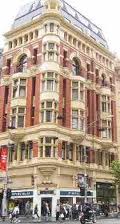
Alston's corner, cnr. Elizabeth St and Collins St today, the site of Willis' shop-bench encounter over the Curr/Condell contest

As a climax to these indecencies, the Resident Judge (Willis) dishonoured the ermine of his high office by requesting the retailers, with whom he did business, to vote for Condell; and one day, whilst on a vote-touting expedition Willis and Curr met face to face in the shop of Mr Charles Williamson, a Collins Street draper (lately Alston and Brown’s) where the Judge waxed so personally offensive that Curr’s forbearance only prevented the public scandal of a pugilistic encounter between the judicial canvasser and the candidate.” p. 333

The election was conducted in four locations. Voting for the district seats took place in Portland, Geelong and Melbourne, while the voting for the Melbourne seat took place in the Gipps ward of Melbourne.  In many regards they were typical English-style elections:  the votes themselves were announced (no secret voting here!), there were placards and ribbons, and the alcohol flowed freely.

The voting went off well enough until the polls closed at about 4.00 pm.  Once it was clear that Curr had been defeated, his Irish Catholic supporters moved to the Golden Fleece Hotel where they hoped to find Condell, then to the main polling site at the Mechanics Institute in Collins Street where the results were to be announced.  The Chief Magistrate Major St John and Dana, Chief of the Native Police arrived on horseback , and in the midst of brawling, the Riot Act was read.  Forming groups of 50-100, the crowds broke up and raged through Little Collins, Collins and Elizabeth Streets with stones and brickbats.  The military arrived, charged the mob with bayonets; hotels were closed and the mounted police patrolled the town.   However, unlike Sydney where similar riots occurred resulting in the death of one man, there was no loss of life. A couple of days later, once the results had been collected from Portland and Geelong, the successful candidates were announced. The Port Phillip Herald 27/06/43 reported:

At the close of the ceremony, Mr Ebden’s horses were taken from his carriage, which containing Mr Ebden, his brother Mr Alfred Ebden, Mr Curr and Mr Foster, was dragged through the town.  The town band paraded the streets from an early hour in the morning til late in the afternoon, but little interest was manifested in the proceedings, the dismissal of the judge having evidently taken possession of the public mind.

And here two of the anxieties that La Trobe dreaded coincided: the unruliness of the election, and the excitement over Willis’ dismissal.  But that’s a post for another day (maybe).

It’s hard to tell how many people were eligible to vote.  The franchise was for males over 21 who owned freehold property worth 200 pound or rented a property worth 20 pounds per annum,  a natural born (British) subject or naturalized.  Those who had committed “treason, felony or infamous offence” could not vote unless they had been pardoned or undergone their sentence- an issue of controversy in regard to the applicability of English law in a former penal colony.  As far as the ‘district’ elections were concerned, the Port Phillip Herald a few days later published full details of the results. The names of the voters were given, the booth they voted at, the time that they attended, and the candidates to whom they gave their votes – no privacy here! The final results were: Ebden 228, Walker 217, Nicholson 205, Thomson 1843, Lang 165 and Mitchell 157 .  In Melbourne, Condell received 205 votes to Curr’s 174 but the names of the voters were not given.  I’m not sure how many votes people had, given that many men owned multiple properties,  and how the practice of ‘plumping’ (i.e. giving all your votes to one candidate)  applied here.  Either way- we’re not looking at a huge electorate.

For myself, I would gladly drag a carriage with my first female prime minister through the town with the town band playing but I don’t know if that’s going to happen…

References:

M. M. H. Thompson The Seeds of Democracy, NSW, The Federation Press, 2006

A. G. L. Shaw  A History of the Port Phillip District: Victoria before Separation Carlton Vic., Melbourne University Press, 2003

Jennifer Gerrand  ‘The Multicultural Values of the Melbourne 1843 Rioting Irish Catholic AustraliansJournal of Historical and European Studies, Vol 1 Dec 2007

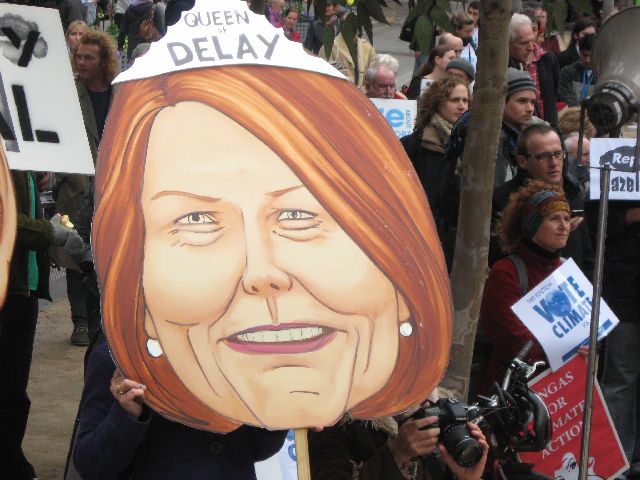
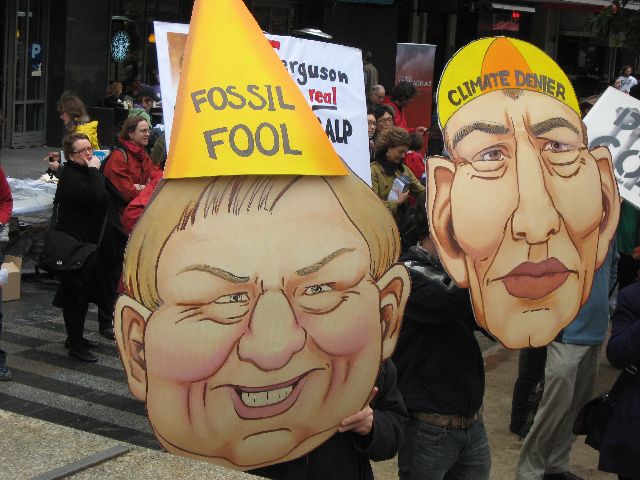
Walking backwards for climate change

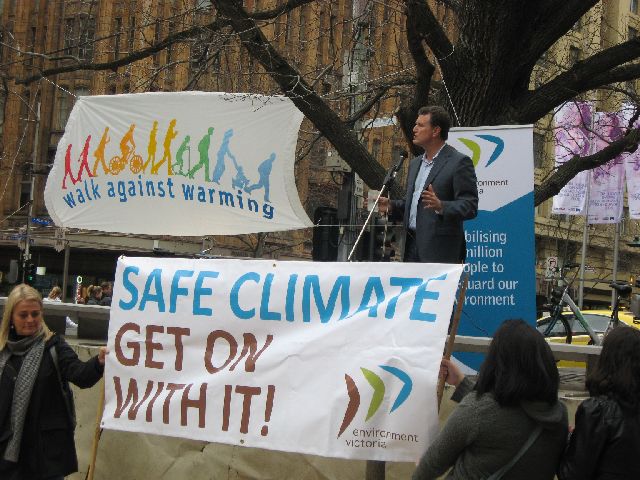
When my presumably yet-unconceived grandchildren say to me “Nanna, what did you do about climate change?” I shall say to them “Well, I bought strange light globes and I walked backwards in the City Square on the weekend before the 2010 election.”

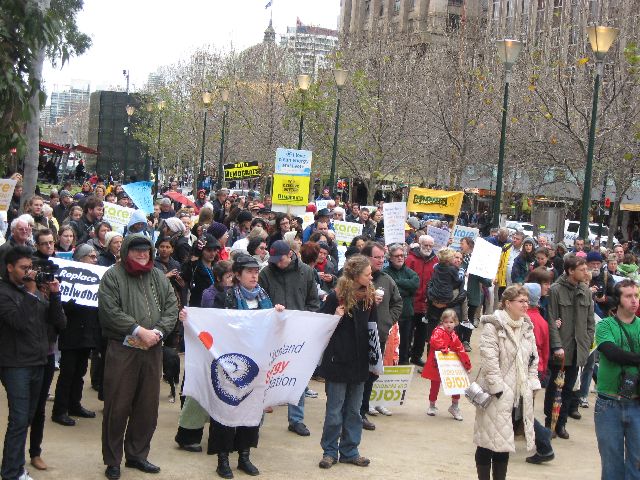
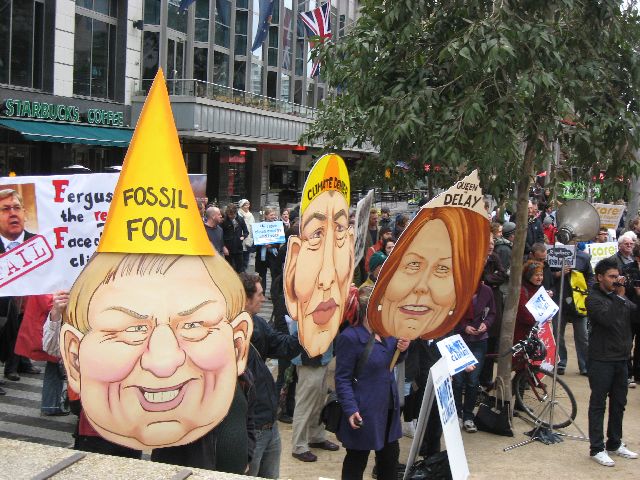
Yes, there we were on a day that seemed particularly un-globally warm, with our hands on the shoulders of the person in front of us, walking back wards along the length of the City Square.

Walk with the people, not the polluters! Climate action now! (Ouch, ouch!)

as the person in front of me (aka Mr Judge) stepped on my toes as we were were “moving backwards” for climate change, as distinct from “moving forward” as we all were at the start of this election campaign a very l-o-n-g five weeks ago.

(There’s Mr Judge looking all rugged up for global warming to the left of the woman holding the white banner).  Back, back we shuffled, “walk with the people…” etc. until I could feel the crowd pressing behind me.  Was there about to be a dreadful crush? “Tree, tree” hissed someone behind me, and sure enough I turned round to find myself pressed up against one of the few spotted gums that survive the blasted heath of our so-called City Square.

Yes, grandchildren of mine (one day), when the planet was there to be saved, your Nanna was there.

Later postscript:

And for those of you who may have arrived at this site through other links, I do want to make it clear that I am deeply concerned about the lack of leadership and mealy-mouthed response to climate change from our major parties- the Labor Party in particular.  I feel disempowered as a citizen by the money and influence of the fossil-fuel and mining corporations.  This was a quirky and in many ways incongruous public event, and I’m glad that I attended it.

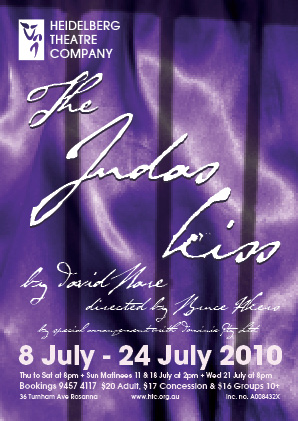
‘The Judas Kiss’ Heidelberg Theatre Company

Once again, I wish that I’d seen this before the final performance so that I could encourage you to go.  Alas, too late (again) .

Written by David Hare, the two-act  play concerns Oscar Wilde and his lover Lord Alf Douglas. Act One is set in a London hotel, just prior to Wilde’s arrest where his friend Robert Ross is trying to persuade him to leave for the continent; the second act is in Naples two years later where Bosie decides to leave the impoverished and broken Wilde to return to London and his family.

I find it hard to see anyone else other than Stephen Fry playing Wilde- surely a part that he was born to play, and there’s a danger that playing such a flamboyant figure can descend to parody. But Chris Baldock, playing Wilde made the part his own, to the point at the end of the play where there was absolute silence as the audience collectively held its breath, then exhaled.  In a wonderful performance,  Baldock as Wilde was on the stage for almost the whole time, burbling forth a stream of dialogue,  then lapsing occasionally into a deep, black silence that in itself spoke volumes.  Tim Constantine as Lord Douglas captured his petulance well, but also his insecurity and jealousy.

There was a warning about nude scenes and cigarettes, and I must admit that the nude scenes were rather more than I expected! Must be a David Hare trademark- wasn’t ‘Our Nic’ nude in her performance of Hare’s The Blue Room?  It’s just as well that the theatre itself is so well heated.

I don’t always go to HTC productions, but I have been to a few. There’s something quite warming about a local theatre: looking around the audience and always spying someone that you know, the sherry before the performance, the squeaky orange seats that, in this case, fell silent too at the end of the play.  This was certainly the best performance I’ve seen there, and I only wish that I’d gone earlier in the season so that I could tell more people about it.

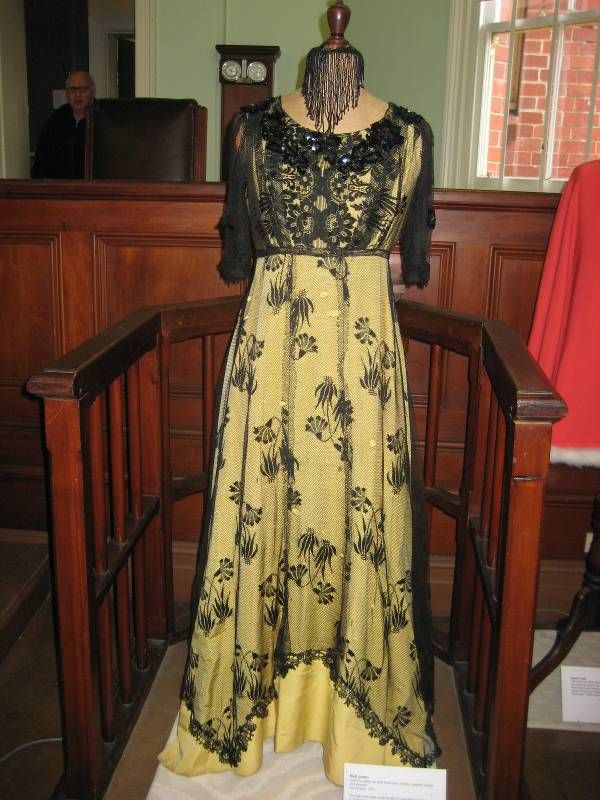
An Invitation to the Ball

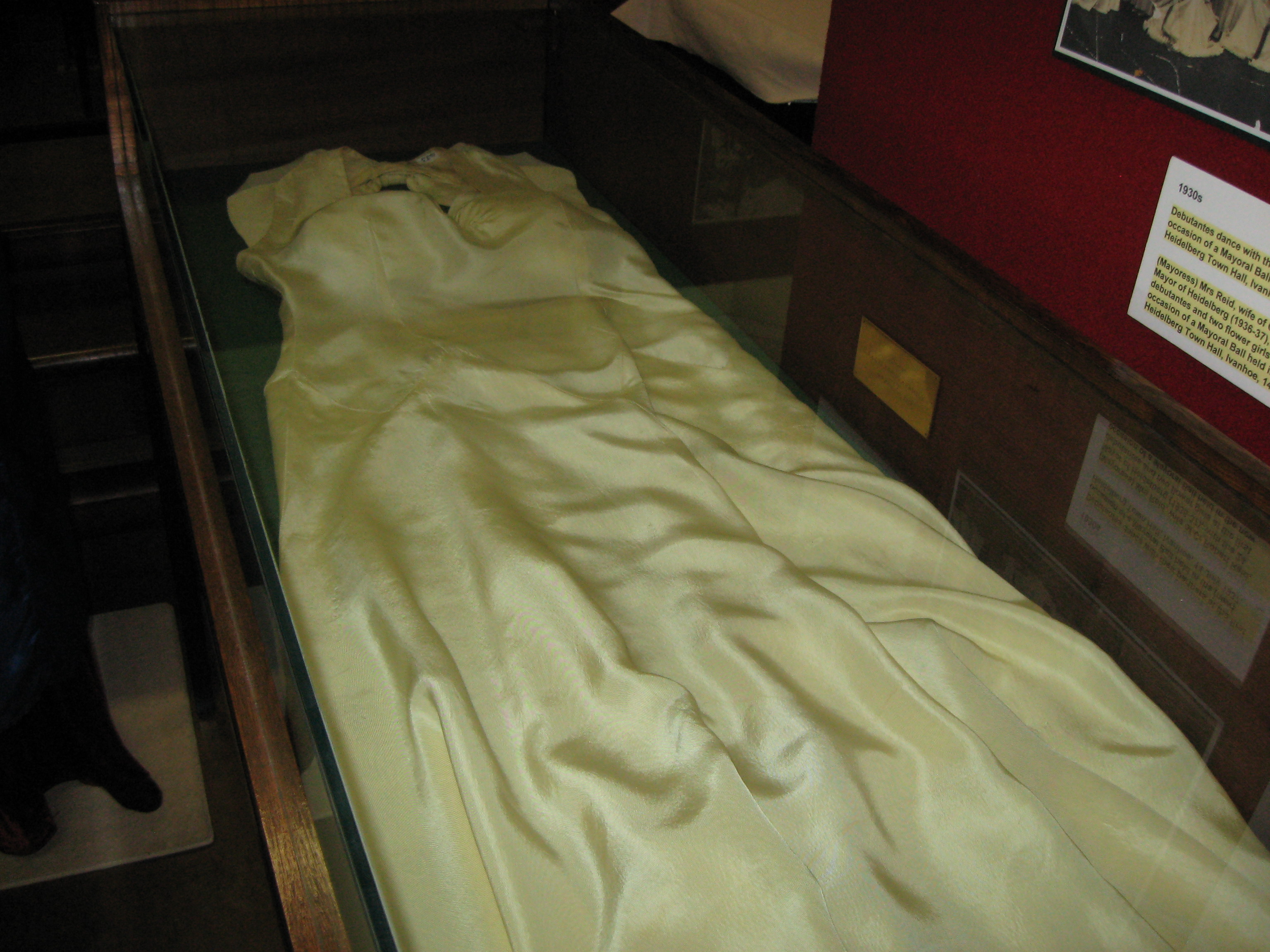
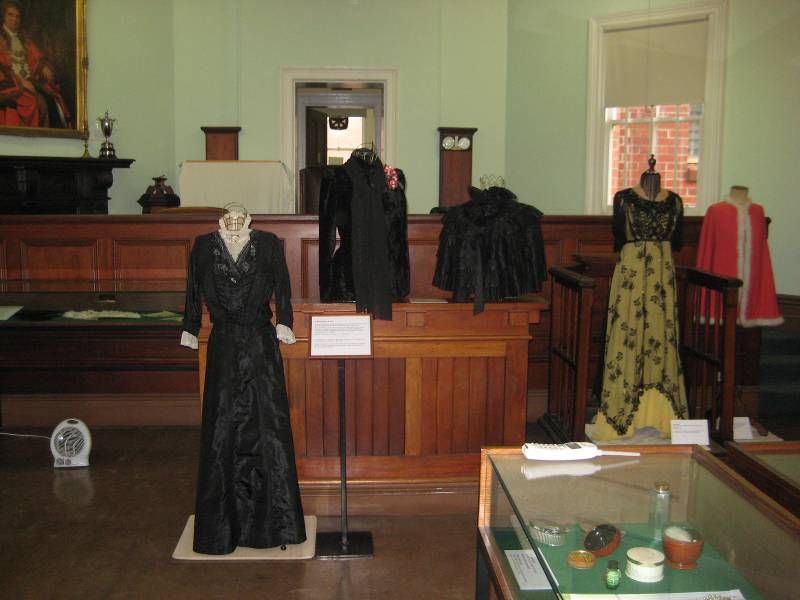
And now for a bit of shameless advertising. My local historical society has been hard at work recently putting together an exhibition called “An Invitation to the Ball”.  The inspiration for the exhibition arose when the curators were transferring our textiles collection into new textile archive boxes.  Many of the items had been donated forty years ago when the Society was in its infancy, and surveyed as a whole, we realized that we had a collection of beautiful objects.

There is, of course, the much more extensive costume exhibition on at the NGV at the moment, but what I really love about this exhibition is that the displays are interwoven into a broader history of the Heidelberg/Ivanhoe area.  The focus is on women’s formal wear between 1850 and 1950, and there are many connections between formal occasions and the nearby Heidelberg Town Hall, the site of many mayoral occasions, debutante balls, concerts – to say nothing of regular Saturday night dances.

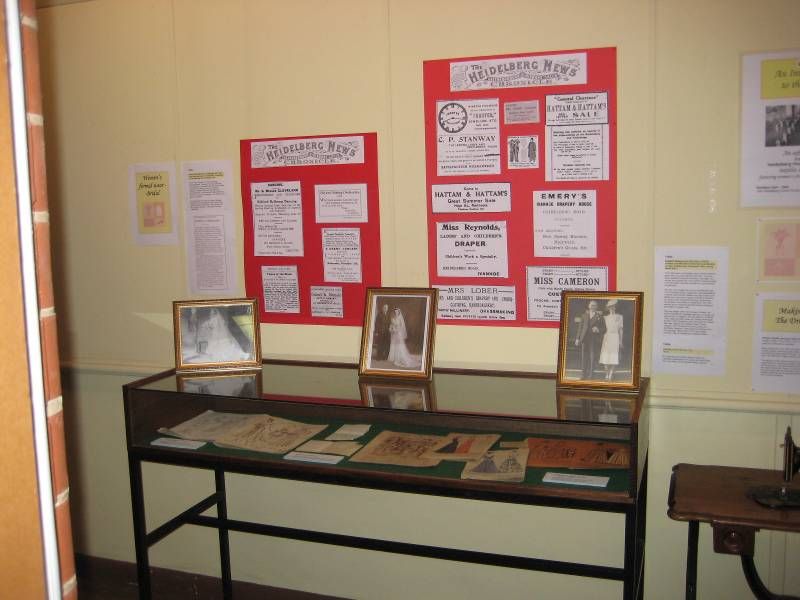
Because these are garments worn locally, we were able to trace through the original wearers and the occasions on which they were worn.  A search through our records and photographs found studio photographs and invitations for a debut ball held in the 1930s which, supplemented by an oral history memoir, are displayed beside the dress itself.  We were able to identify the lady mayoresses who wore particular gowns, and we found records of a number of formal occasions held in nearby facilities including “Sunday afternoons”, concerts and sporting festivals.

We were also able to locate, through our holdings of local newspapers,  advertisements for the web of haberdashers, drapers, outfitters and shoe shops in the local shopping centres- particularly the women dressmakers, all coyly named Miss or Mrs, and often formerly of Collins Street or other addresses.

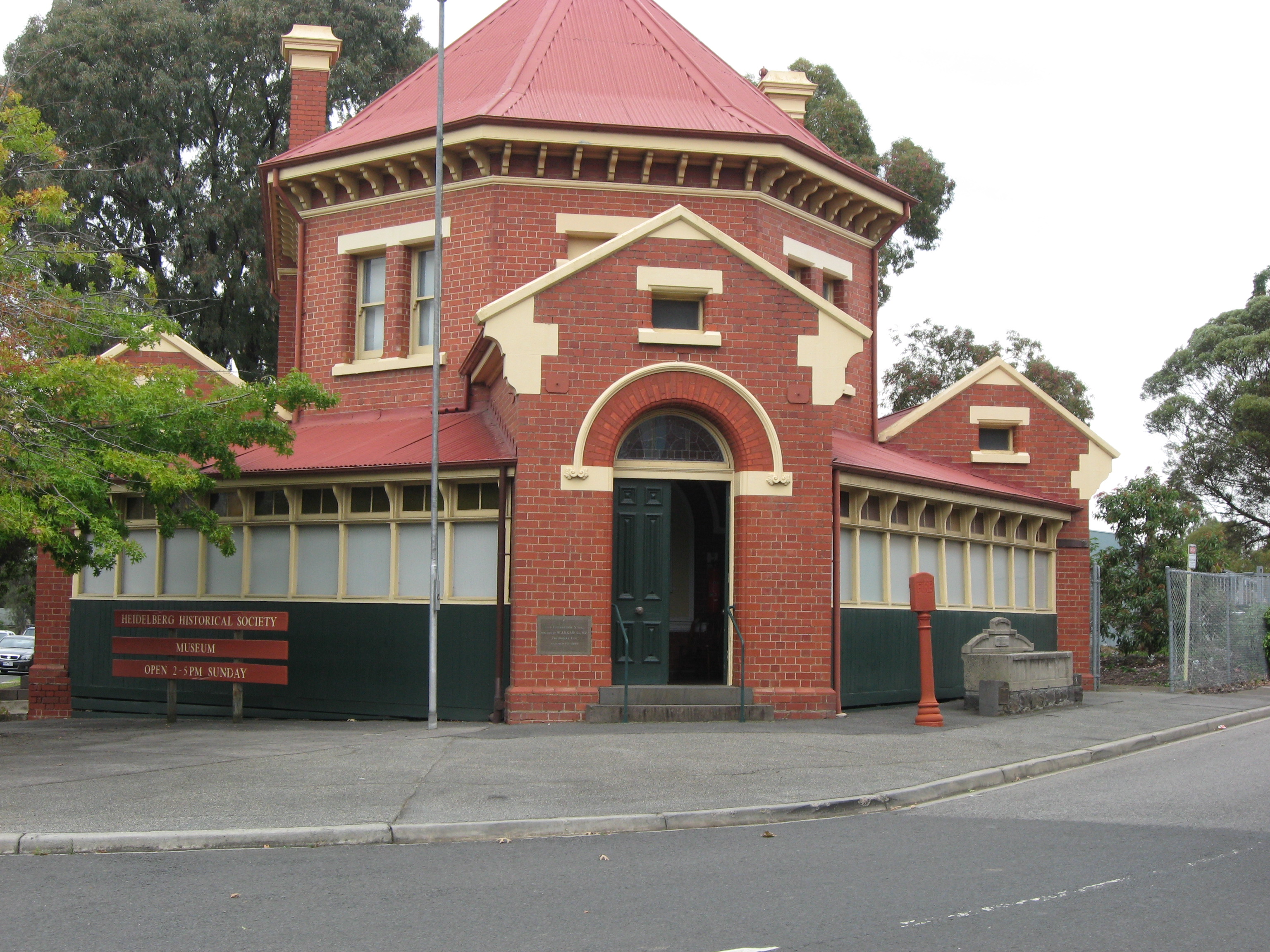
The exhibition is open on Sundays 2-5 and will run until November 2010, so unlike most events that I write about here, it’s not closing soon!  Entry is $5.00 for adults, $2.00 for children under 16.  The Heidelberg Historical Society Museum is on the corner of Jika Street and Park Lane, Heidelberg. If you live in the northern suburbs you’ve probably driven past it dozens of times on the way to Burke Road. And who knows,  you may just even see me there!

Robert Dowling, Tasmanian Son of Empire.

If you put your skates on, you’ll catch the Robert Dowling, Tasmanian Son of Empire exhibition at the Geelong Art Gallery. But be quick- it finishes on 11 July.  There’s a beautiful NGA site about the exhibition here–  go have a look, it’s a stunning site and almost as good as being there.

Robert Dowling was born in 1827 in Colchester in England, the son of a Baptist preacher.  In 1834 he arrived in Tasmania with his parents, who followed their older sons who had emigrated to the colonies some time earlier.  This Evangelical background is important because it influenced the subjects he painted  for the rest of his life.  He was apprenticed as a saddle-maker but did not follow his trade. Instead he set himself up as a painter of commissioned portraits.  He travelled between Hobart and Launceston painting portraits of many prominent figures and personal friends, including John West the Congregationalist minister and other leading Evangelicals.  In 1854 he shifted across to Port Phillip in the hope of capitalizing on the post-Gold Rush prosperity.  However he found it difficult to gain patronage in Melbourne, so he shifted down to Geelong closer to his extended family, and where he was commissioned to paint portraits by the wealthy Western District pastoralists.

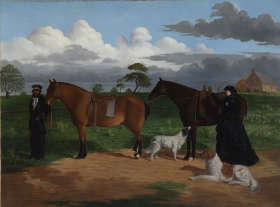
In every exhibition, there’s usually one painting that you linger in front of, and often return to in order to scrutinize it more closely.  For me, it was this painting: Mrs Adolphus Sceales with Black Jimmie on Merrang Station

The catalogue described this as a ‘mourning painting’.  The exhibition catalogue (a beautifully presented book by John Jones) tells me that  Adlophus Sceales died in 1855, leaving a young widow Jane and two young daughters.  Mrs Sceales commissioned the work, and how I wish that I could eavesdrop on the conversation between subject and artist when the painting was being planned!  The riderless horses remind me of the military funeral tradition, but I assume that they were portrayed because he must have loved riding, perhaps with the two dogs shown.  I wonder whose decision it was to include Jimmie, and what his clothes and stance indicate about his role on the station- it looks very formal attire, befitting a manservant for an Englishman.  The emptiness of the picture is striking: the house is not shown, only the stables and it looks rather bleak, empty and cold. The daughters are completely absent.

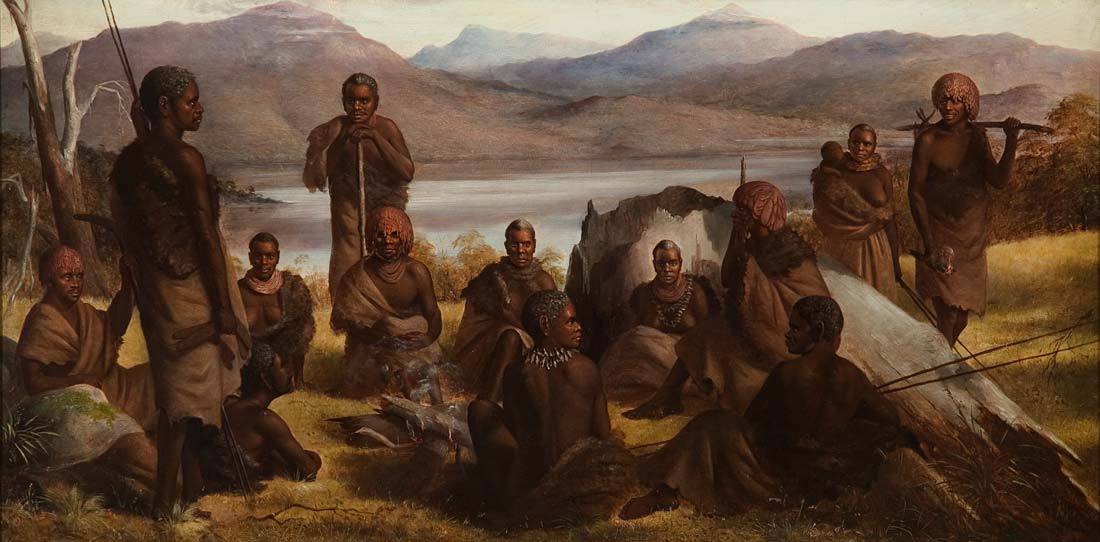
This was one of several paintings that show Aboriginal people in the Western Districts, sometimes in family groupings, and at other times in close proximity to the settler families with whom they lived.

These are the children of his brother-in-law’s family and I’m struck by the easy pose of the little girl draped innocently ( but not entirely appropriately to our eyes today) over the young  aboriginal man.  What does it say about his role in the family? He’s obviously much older than the children- does he have a carer role?

In 1857 Dowling travelled to London to study art, sponsored by the good citizens of Tasmania. He stayed there for nearly thirty years, improving his technique to be sure, and acting almost as a conduit of empire.   He made copies of British paintings for an antipodean audience- a portrait of Queen Victoria, for example was sent back to the colonies as an  important official painting. He sent images of empire home, and he brought images of the colony to the metropole. On the other side of the world, he worked up the paintings of Van Diemen’s Land aborigines painted by the ex-convict artist Thomas Bock, who had possibly instructed Dowling in painting many years earlier.  Bock had died by this time, and Dowling copied Bock’s paintings and inserted them into a range of landscape settings in grand History Paintings.  He made multiple copies, with the same central figures in different groupings and with different backgrounds.

Click on the NGV website about the Dowling exhibition for a zoomable close-up and explanation of the painting.

And, true to form, I can find six degrees of separation (even fewer!) from Judge Willis and this painting.  The smiling figure on the right hand side is Tunnerminnerwait, also known as Cape Grim Jack, who was one of the Van Diemen’s Land blacks who accompanied Protector Robinson across Bass  Strait. He was sentenced to death by Judge Willis and executed in January 1842.  If you have access to academic journals at all, there’s an excellent essay by Leonie Stevens in the June 2010 Victorian Historical Journal called “The Phenomenal Coolness of Tunnerminnerwait” ( a rather phenomenally cool title for the article, too!)

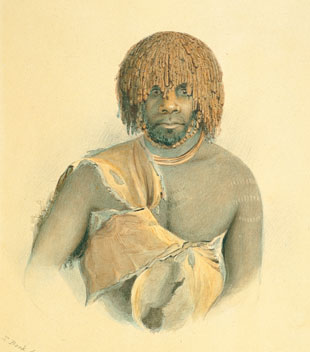
In a world where a few snatched bars of “Kookaburra Sits on the Old Gum Tree” can lead to a lawsuit, we might raise our eyebrows at Dowling’s appropriation of Bock’s images in this way. Here’s Bock’s version of Tunnerminnerwait on the left, and Woureddy on the right. You’ll be able to easily locate them in Dowling’s picture above.

Dowling’s re-presentations of Bock’s images found their way to the Ethnological Society of Britain and the Royal Academy where they fed the interest in anthropology and primitive societies.  Although these paintings were created in London, using sketches from Bock’s originals, they eventually found their way back to Australia as part of the swirl of cultural artefacts throughout the Empire.

Dowling returned to Australia in 1884 and set up a studio in Melbourne.  He returned to England two years later with the intention of packing up and moving permanently back to the colonies, but died suddenly.  As Jones points out, it’s interesting to speculate how he would have responded artistically to the Australian Impressionists and their take on Australian landscapes.

References

Jones, John.  Robert Dowling, Tasmanian son of Empire, Canberra, National Gallery of Australia c 2010

Stevens, Leonie  “The Phenomenal Coolness of Tunnerminnerwait” Victorian Historical Journal, Vol 8, No 1 June 2010 pp.18-40.

Miles Franklin and other stuff

Well, I shall have to be seriously disgruntled, won’t I?  A poor decision in my opinion.

There’s much else to enrage me in the newspaper and news this morning. 

  • Protecting the profits of large energy companies and their distribution networks by not embracing the desire of ordinary householders who want to make use of the sun that streams onto their roof. 
  • Importing trams and trains from overseas: surely the public transport needs of Australia as a whole could justify one major manufacturing centre in the country
  • MisterRabbit looking smug
  • What happened to the photograph of the young woman in that mining executive plane crash?
  • European governments going all hairy-chested over who can cut their deficit the most harshly.  Wasn’t it resistance to this type of economics that averted depression two years ago?  Has the world economy really rebounded that strongly?  Do I dare mention the words “double dip recession”?
  • Just to prove how shallow I am, Stephen Milne (I am a St Kilda supporter). On second thoughts, I should leave this one alone.

Bah, humbug!

The Threepenny Opera

As the final instalment in my art-and-crime festival, we went to see Victorian Opera’s  The Threepenny Opera at the Malthouse last night.   What a sordid week!  I’ve read a crime novel, seen a crime movie and then last night a crime play.  Now I turn my mind to gardening instead.

We decided to go see this production of the Threepenny Opera as soon as we heard about it: fantastic cast- Paul Capsis (who played Jenny), Eddie Perfect, Judi Connelli, Casey Bennetto.  The sets were inventive, singing very strong and, much to the chagrin of the people walking behind us back to our car, it had been updated and rather subverted by pantomime at the end- all thoroughly in keeping, I’d say.

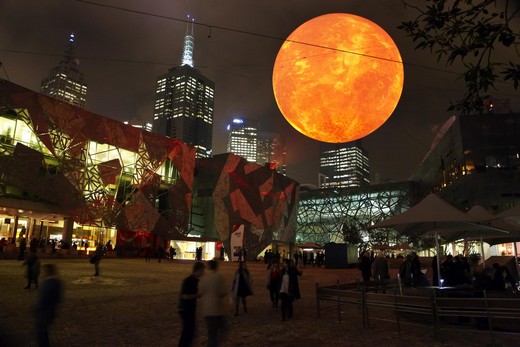
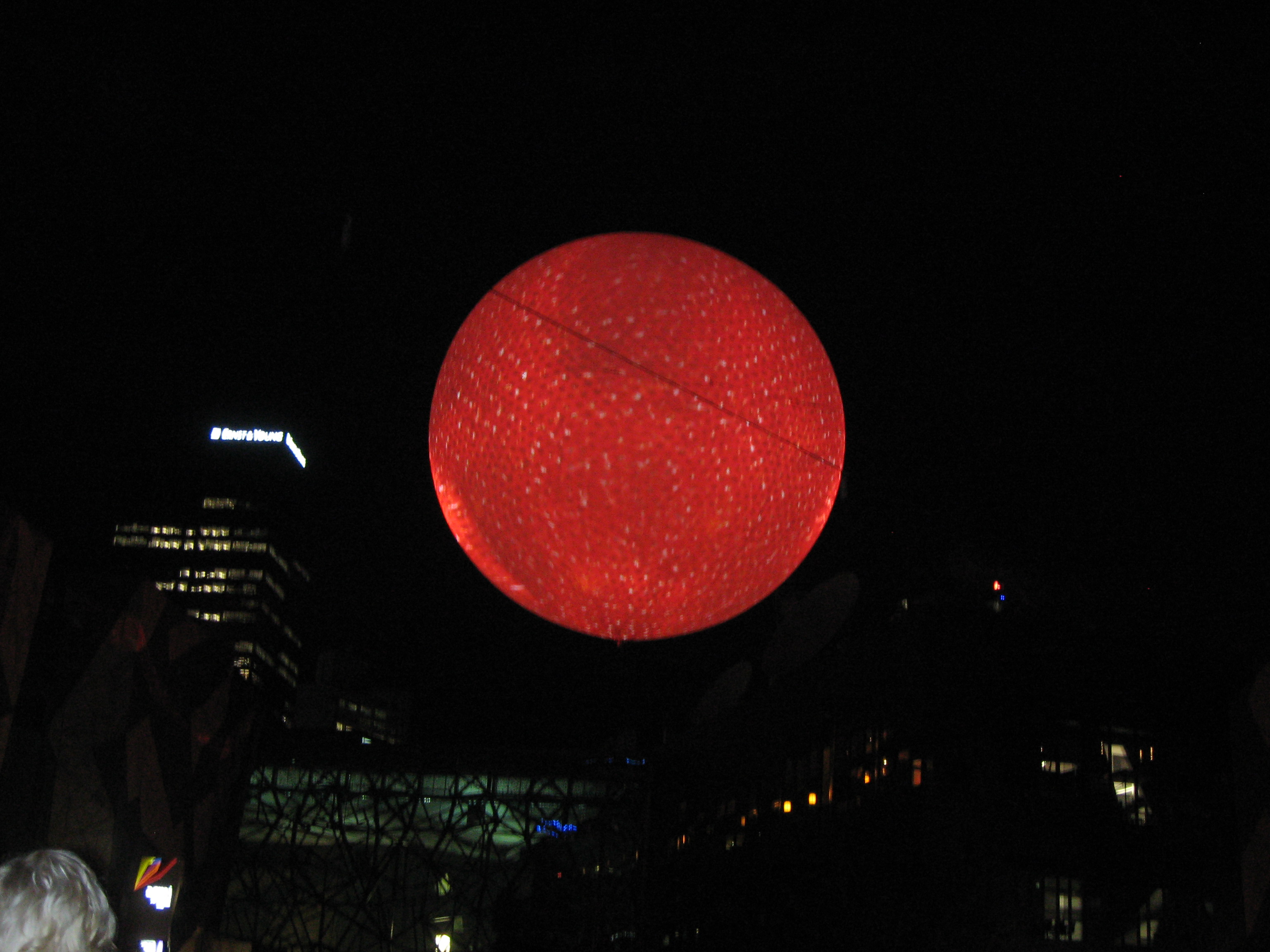
On the way back to the northern ‘burbs we stopped off at Fed Square to see the light installation they have there until the beginning of June.  Beautiful

It’s called Solar Equation.  It’s a huge illuminated disk that hangs over Federation Square with swirls and eruptions of what looks like magma. Apparently the animation of solar flares, turbulence and sunspots is generated mathematically and projected onto the disk from below.  Mr Judge hoisted himself up to peer over the black box to which it had been tethered: it would not have been seemly (nor indeed possible) for the Resident Judge to have done the same.

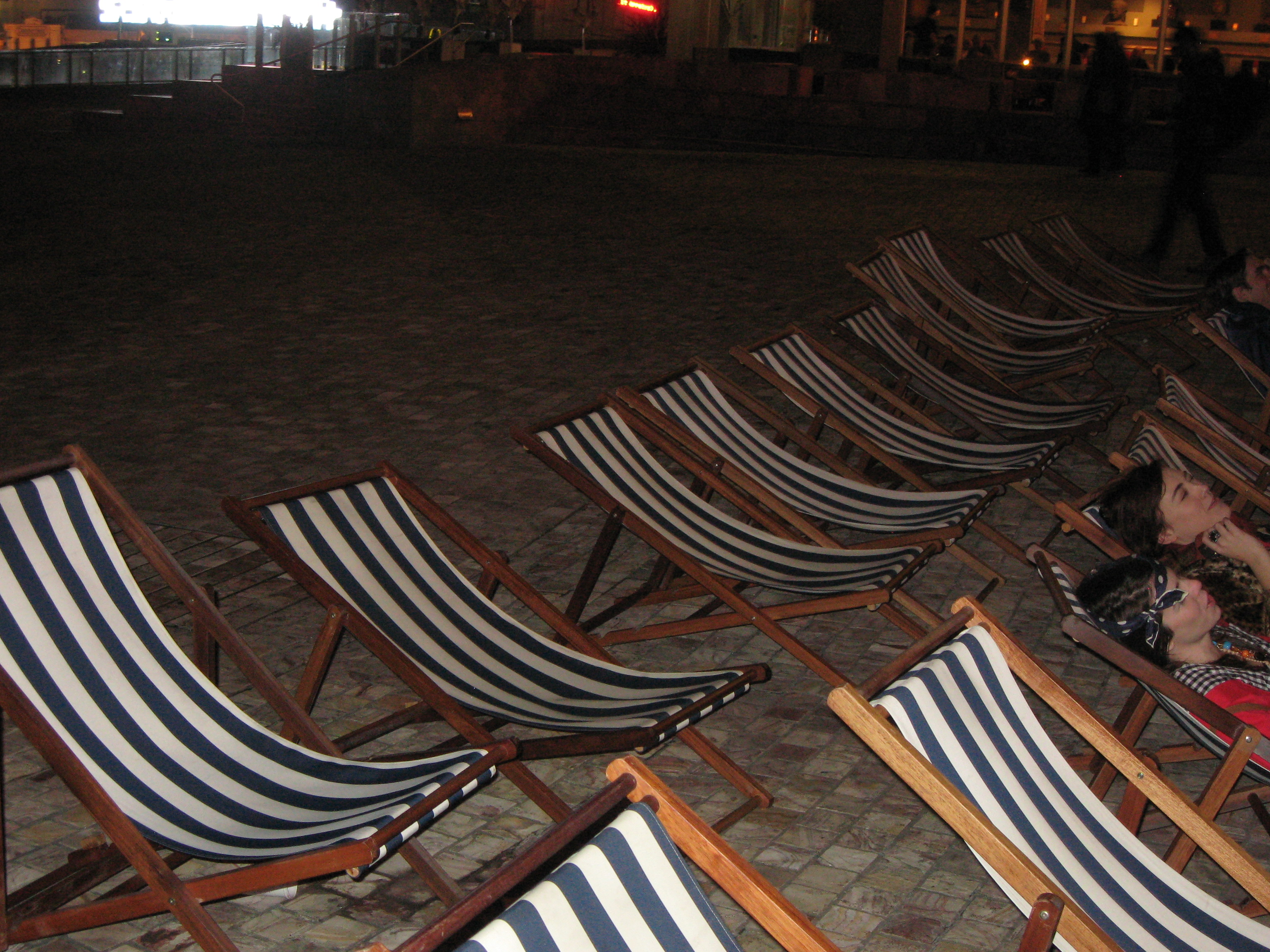
There are deck chairs arranged on the concourse so that you can lie back and watch it.  All rather St-Tropez for a chilly Tuesday night in June.  As you can see, there weren’t too many takers.

Apparently you can change the patterns with your i-phone but as I don’t have one, it’s not really an option.  I don’t understand any of it- the sun or the moon for that matter or telephones really- but it was thing of beauty on a cold winter night.

Commissions and admissions

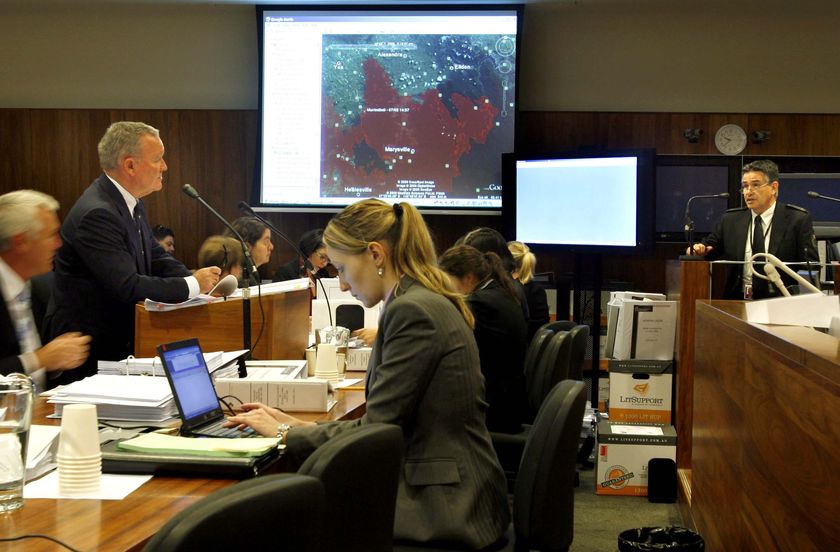
The good people of Victoria have had Royal Commissions much on their mind recently.   The Bushfires Royal Commission has been running for most of the year and high-profile figures have fallen under its scrutiny.  The CFA chief Russell Rees resigned last week, ostensibly to make room for a new chief before the next fire season. I’m not alone,  I’m sure,  in seeing it as a part of a clearing of the decks prior to the state election.

Then in the last few weeks the Police Commissioner Christine Nixon was subjected to a searing examination of her actions on Black Saturday.  Responses to her testimony vary with, I suspect, something of a gender factor at play (although not exclusively).  I do find the extent of her delegation is puzzling – while I understand and applaud delegation to other trusted, highly skilled staff, does she actually ever take a hands-on role for anything?  Perhaps not.  But this was a fire emergency and she correctly deferred to the expertise of the fire services.   If there is blame to be apportioned, then it lies in the CFA’s managerial failure to use its  own expertise that, while not stopping the fires, could have resulted in better warnings that could have saved lives.    For Nixon to have demanded briefings throughout the day- a day when she had delegated her role as State Emergency Response co-ordinator to her deputy-  would have been a distraction.  The CFA leadership themselves did not understand what was happening.  Pulling rank, undercutting and doubling-up on Assistant Commissioner Fontana,  and demanding briefings would not have provided useful information that would have made any  difference at all to the final outcome.  The same cannot be said of the CFA.

Then we had the killing in prison of Carl Williams.  Again, there were calls for a Royal Commission, deflected crudely by the premier.  While I think a Royal Commission is unnecessary, I am troubled by an inquiry headed by the police themselves, albeit led by a “Sir” Deputy Commissioner Jones who is going to bring a fresh pair of eyes and clean hands to the investigation- the whole thing is ripe for being turned into a Friday night BBC cop show.  Meanwhile, I think that I must be the only person in Australia who hasn’t watched a single Underbelly episode.  I hope this doesn’t make me a prime candidate for jury duty in one of the many trials spawned by the whole unhappy episode.

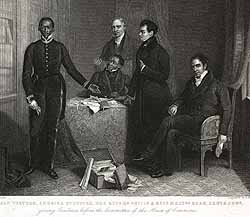
But I’ve also been thinking about Royal Commissions lately because last Thursday I heard Zoe Laidlaw speaking at Melbourne University about the enquiries into empire conducted by the British government between 1815 and 1840.   I’ve often cited Laidlaw’s work, especially her book Colonial Connections and I didn’t realise that first, she is Australian and second that she is so young (although that probably says more about me than her).   It was an excellent presentation. Most of the enquiries she discussed were government sponsored, although some were conducted under the auspices of missionary and religious groups.  Some were conducted in the colonies themselves, for example the Bigge Commission which visited New South Wales between 1819-21,  the Quaker Mission that visited the Australian colonies, Mauritius and the Cape Colony, or the ten-year Commission of Eastern Inquiry that visited Cape Colony (South Africa), Mauritius and Ceylon (Sri Lanka).  Others were sedentary, based in London,  and were often chaired by Thomas Fowell Buxton, the anti-slavery backbencher.  Such enquiries included the Select Committee on Aborigines (British Settlement) 1835-7,  the Select Committee on the Extinction of Slavery throughout the British Dominions (1832), or the Select Committee on Negro Apprenticeship.

What was common to these commissions and enquiries was a desire to reform empire. They were often impelled by evangelism and the politics of free trade and the laissez-faire state, underpinned by the desire for “liberty”.  They were paternalist, and imbued with a sense that Britain, compared with  the other empires of the world, was uniquely fair.  The different parties had their own, often conflicting, expectations and agendas for these commissions of enquiry.  Governors saw them as hostile; settlers saw travelling enquiries in particular as means of making their demands heard at the centre; humanitarians in the colonies often saw local governments as complicit in settler crimes.  The actual voices of the focus of the enquiry- the aborigines, the slaves, the convicts themselves- were rarely heard, but where they are, they are a rich source of information.   For example, only three indigenous people travelled to London to appear before the Select Committee on Aborigines. The voices of missionaries, officials, military officers, settlers and reformers predominated.

The paradigm of commissions and enquiries was driven by a new approach to information-gathering and policy formation.  As David Eastwood points out, during the first decades of the nineteenth century there was increased centralization of information and heightened professionalism as the gentlemen administrators, elderly statesmen, token churchmen and amateur investigators were replaced by lawyers and men of business.

Although there was concern that an enquiry could be hijacked, there was not necessarily the cynicism we have about royal commissions today.  They were obviously expensive and lengthy – ten years for the Eastern Inquiry!!- and there was a merry-go-round of personalities who seem to be permanent fixtures of the commission circuit.  As another of Laidlaw’s articles “Aunt Anna’s Report” showed,  evangelical families involved in commission work often relied on the unrecognized work of their sisters and daughters.

Just as commissions can turn into witch-hunts today, so too could the nineteenth century commission turn feral. She gave an example of the treatment of Aboriginal witnesses  at the 1835-7 Select Committee on Aborigines that made Christine Nixon’s treatment fade into insignificance.

Commissions were not necessarily expected to provide closure, and there was often the expectation that issues would be revisited in succeeding years. But most importantly,  enquiries acted both to drive reform and were agents of reform in themselves and they often came to act as turning points in the historiography of the colonies on which they focussed.   I’m not really sure that they play the same role now.

References

Zoe Laidlaw “Slavery, Bondage and Dispossession: Investigating Empire in Britain’s Age of Reform” presented at University of Melbourne, April 22, 2010.

David Eastwood “‘Amplifying the Province of the Legislature’: the Flow of Information and the English State in the Early Nineteenth Century” Historical Research Vol 62, Issue 149, 2007 pp 276-294

Zoe Laidlaw “Aunt Anna’s Report”: The Buxton Women and the Aborigines Select Committee Journal of Imperial and  Commonwealth History, Vol 32, Issue 2, pp 1-28

And forty years later…

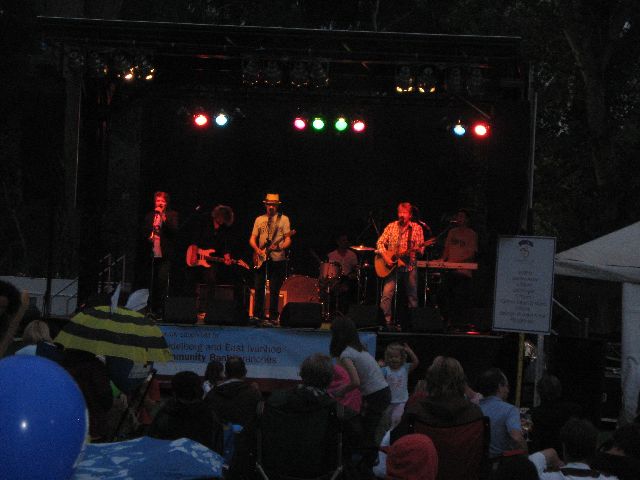
Last night was Twilight Sounds at Sills Bends.  This is an annual event, held at my favourite place in the world- well, Melbourne anyway- Sills Bend by the Yarra in Heidelberg.  I’ve written about Sills Bend before. The Yarra Flats were my childhood playground; now as an adult I just love the deep shade of the oak trees, the old fruit trees and the sense of connection with an older Heidelberg.

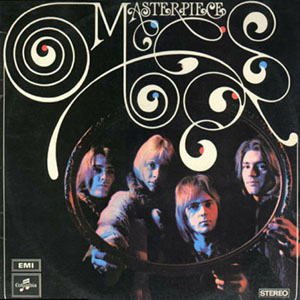
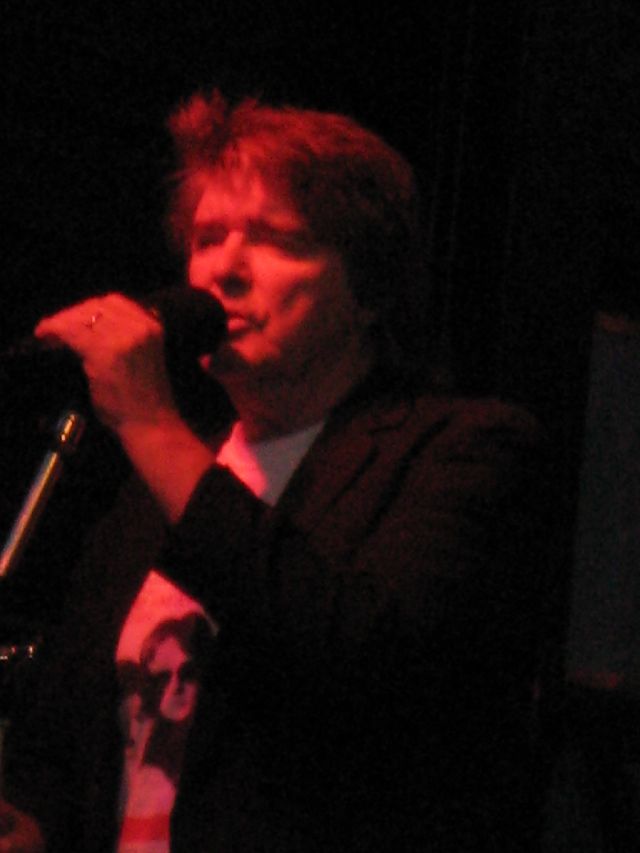
Last night felt particularly nostalgic as Cotton, Keays and Morris were performing.  I spent probably two years of my life between 14 and 16 desperately in love with Jim Keays and the Masters Apprentices.

Their album was the first full-priced album I’d bought- my pocket money only stretched to K-Tel albums with lurid limegreen and orange psychedelic covers- and every afternoon on the way home from school I wondered if there would be a newsletter from ‘Denise and Di and Mrs G” from the Masters Apprentices Fan Club (it was, let us say, a sporadic publication).  They had played at the Scots Church Hall in Burgundy Street for my high school social when I was Form 2 at Banyule High School.

I know that ‘real’ historians are not supposed to admit to such sop, but I’ve always been attracted to time-travel stories.  I wish that I could come up behind that fourteen year old girl, screaming and sobbing at Jim Keays’ feet as, wreathed in streamers and poured into black leather pants, he endured  what was probably another dreary school gig. They sang their new song, 5.10 man and I bought the single the next week.

I wish that I could tell that 14 year old girl that forty years later, she’d be watching this same man.  She would still be the same person deep down, but she’d end up doing many of the things she wanted to do. She’d live a suburb or two away; she’d have a career; she’d have children (who would not deign to accompany her to Sills Bend to indulge such nostalgia).  She mightn’t know it at the time, but she’d find other people who liked the things she did. She’d do well at school and go to university- yep, she’d STILL be at university forty years later!! She’d fall in love properly and people would fall in love with her.  Forty years on, she’d say that she has a very good life.

And he, too, would live a life that he probably couldn’t have foreseen on that stage in 1969 and I wonder if he’d say that he has a very good life too. I hope that he would.

Anyway a good night, a good gig.  And the excitement goes on today too…..

The Resident Judge reckons 28/11/09

that she would have trouble answering the recent Age Poll of 24 November about the ETS that had just been announced the previous day.

The question was:

Do you agree with the deal struck between the Government and the Opposition over the Emissions Trading Scheme?

Yes, or No was the choice.  Some choice.  What about the “I want us to have something concrete at Copenhagen rather than sitting around daring each other to go first”  option?  What about the “It’s a poor effort but better than nothing” option?

I wonder what motivated the 32% to say ‘yes’?  And conversely, the 68% who said ‘no’?  ‘No’ because they didn’t want an emissions trading scheme at all?  or ‘no’ because this one is too weak,  gives away too much to polluters and deflects the need to make changes in the way we do things?

Actually, I felt a little frisson of history-in-the-making when Malcolm Turnbull made his speech about climate change the other night.  I suspect that he will be rolled this week, but I came over all goosey hearing some genuine conviction being expressed, instead of just snarkiness and point-scoring.