Author Archives: residentjudge

‘An Architect of Freedom: John Hubert Plunkett in NSW 1832-69’ by John N. Molony

plunkett

1973, 280p.

The author, John N. Molony signals in his introduction that this biography has its limitations.  John Hubert Plunkett, Solicitor General, Attorney General, politician, and education board member left virtually no personal papers.  As a result,

If he is to be found today it must be through public sources such as the newspapers, the parliamentary reports, the official communications between Sydney and Downing Street and the legal opinions he gave during his twenty-five years as Solicitor and Attorney-General.  It is chiefly on such sources that I have perforce relied in the writing of this book (p xiii) ….It has been my loss as much as it will be to any reader that Plunkett rarely comes alive in the narrative.  No attempt has been made, no attempt can be made to see him in his home, to dwell on his own innermost thoughts and hopes, because Plunkett did not leave any record of these things.  Some scholar of the future may perchance discover Plunkett the man; some scholar, irritated by the gaps in this work, may till this field again and reap a richer harvest…” p xiv

We have been forewarned: this book will focus on actions and decisions at a top-down level, rather than at the level of man and motivation.  However, I think Molony sells himself a bit short here because the book does give an interesting insight into the Catholicism of a man who sensed that he had been enabled, rather than disadvantaged by his faith at a particular moment of English political history.  The Catholic Emancipation Bill provided space for his patrons to further his career, and he was conscious that opportunities were open to him that had not been available for earlier generations of Catholic lawyers.  He therefore had a strong loyalty to ‘the system’ and British law and worked within it as lawyer, then politician.

The book also highlights the theme of personal consistency in the midst societal change.   Two hefty winds of change swept through his world: after the initial co-operation of the different churches in the establishment phase,  their doctrines and personalities became more rigid from the 1860s onward, and sectarian hostilities became more strident.  Secondly, the change to representative and then responsible government  meant that his world view and ways of negotiating with politicians rather than officials, needed to change.  Such fundamental challenges to his world view did not come easily to him, and I closed the book with a sense that the wealth of experience he brought to his political roles was more hindrance than benefit in a changed world.

I was interested in reading this book because firstly, I’m interested in reading biographies about Judge Willis’ contemporaries in NSW at the time (although Plunkett was absent during Judge Willis’ dismissal and, indeed, was spot-on in his predictions of what the outcome of the Privy Council appeal would be).  Secondly, I’m not really sure what an attorney general DID in the  colonial constitutional system of the time. Certainly, Judge Willis clashed with acting Attorney General Therry in NSW, and with the Attorney General in Upper Canada earlier.   Was there something about the Attorney General role that acted as a flashpoint?  Or was it the individuals filling that role?

I don’t know if I’m much further advanced in my understanding of colonial Attornies-General, but I am clearer about the fact that they acted as legal advisors for the Crown- in this case, for Governor Gipps, and if the Governor was acting to discipline or dismiss Willis, then he was presumably acting on the Attorney-General’s advice.  Hence, some tension could be expected!  I was also surprised to read that the Attorney General could act as a Grand Jury in his own right (i.e. he could launch proceedings in his own right).  For example, Plunkett acted as a Grand Jury against cattle-stealers and against a conspiracy of six men “all of substance” who conspired to parcel out land at advantageous prices to themselves.  I wonder if perhaps Judge Willis would have relished having such powers, particularly in relation to the corruption and sharp-dealing that he felt himself surrounded by.  Methinks I need to look at constitutional development a little more closely, although I must admit that my toes curl up at the thought of it.

Reading this book has also made me think about the scope for the “scholar of the future” that Molony envisages “till[ing] the field again and reap[ing] a richer harvest”.  How would/will I do anything different?
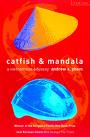
‘Catfish and Mandala’ by Andrew X. Pham

catfish

2001, 341p.

At first I thought that this was going to be yet another of those three-tiered family sagas much beloved by young Asian female writers (think Amy Tan et al) but this is far more about places, identity and memory than duty and relationships.  The author is a young American-Vietnamese engineer, who takes off on his pushbike to revisit childhood places that he has not seen since he and his family arrived in America as boat people.  There’s evocative descriptions of landscapes, places revisited, food eaten, the state of his bowels and the people he meets, but it’s more than this too.

He is not Vietnamese, but Viet-kieu (foreign Vietnamese), resented for making his escape and yet implored for financial assistance and sponsorship by so many people he meets.  Although his intention is to immerse himself in his childhood places and experiences, he is channelled into the more lucrative Western-tourist stream of travel and  accommodation products.  He knows that he is no longer ‘truly’ Vietnamese but he carries with him a deep consciousness that he is not American either: bullied in childhood and stereotyped in adulthood in an America which is itself conflicted over Vietnam, the Vietnamese and their own involvement in the Vietnam War.  He, too,  is deeply ambivalent over the people he meets in Vietnam.  He despises their greed, recoils from their living conditions, feels more at home amongst backpackers and is acutely conscious of the fate that has given him such a different life from what he could have had.

The book is told in three interwoven storylines: that of his parents before their escape; the boat trip to American, then their life in America first sponsored by a Baptist church in Louisana, then moving to California to a larger Vietnamese community.  It is his dead sister Chi who ties the three narratives together, and indeed her alienation and suicide is an unwitting metaphor for the journey in this poignant and insightful book.

Birthday girl

img0811

Happy birthday to me….

And they’re off and racing….

Garryowen lists the germs of an Australian township: first there’s  a waterhole, then a forge, then a store and grog-shop. Then there’s a Wesleyan Church, a Temperance Society, and finally a race club or a cricket club. (Finn, p. 711)

Melbourne developed that way too.  The Wesleyans and Temperance Society had already arrived by the time the first races were held by the Melbourne Race Club on what is now the site of Southern Cross railway station in 1838.  Postboy won the first race- now that’s a bit of trivia we might all need one day.  But wait- there was more!  The races had finished, people were feeling mellow, and then someone suggested a bout of the olde English sport of “grinning”- where men would stick their head through a horse collar, then spend the next five or ten  minutes pulling the ugliest faces they could.  A hat was passed around, and a prize stake of 40 shillings was soon collected.  The winner was Thomas Curnew, fifty years of age, and a carpenter by trade.

The “phizical” pantomime then commenced, and for ten minutes there was a display of physiognomical posturing, difficult to be accounted for by any deductions of anatomization.  The bones, muscles, sinews, and tissues of Curnew’s head seemed as if composed of whalebone and India-rubber.  At one time his tongue looked as if jumping out of his mouth, his lips and palate would be drawn in as if to be swallowed, whilst the chin and forehead approached as if to meet.  His antics evoked thunders of acclamation, in the midst of which he regained terra firma, secured the proceeds of the hat-shaking, and betook himself to the Fawknerian [grog] booth, where the stakes were speedily melted down through the agency of a “fire-water”.  And so wound up the first public race day in Victoria. (p. Garryowen, p713)

Now, that’s what the Melbourne Cup Carnival needs to do- revisit its ‘carnivale’ origins and bring back the “gurning” contests. In fact, there’s a World Gurning Championship too.  I don’t think her Maj is amused, though.

By 1840 the races had shifted to Flemington, named after Bob Fleming, the local butcher.  The carnival stretched over three days, reported in mind-numbing detail by the Port Phillip Herald, and years later by Garryowen as well.

It’s interesting how, for us today, horse racing has been ‘eventi-ised’ in recent years with corporate sponsorship and Government tourism funding etc.  It’s no longer about the races as such.  It seems that the drone of the race-call drifting over the back fence from a neighbour pottering around in his shed is one of the lost sounds of the 1960s.  Even twenty years ago, the news on the television would devote a good five minutes to footage of the races- a time slot gobbled up now, no doubt, by the finance report.

But much is still made of the egalitarian nature of the Melbourne Cup carnival today.  Right from its inception, the races have brought the gentlemen of Port Phillip society to the track to see their own horses run,  cheered on by the working men out for a good time.

Now, you ask yourself, can we possibly insert our Judge Willis into a day at the races?  Yes, we can.  March 1842 was the second race carnival held at Flemington.  It was hot, and in anticipation of crowd unruliness, ticket-of-leave men were called up and sworn in as special constables for the day. (Yes, ticket-of-leave men as constables).  As there was no lockup, those who were somewhat drunk and disorderly were chained up to a log and left in the sun to repent of their overindulgence.  Yet another unfortunate reveller had been apprehended and was being dragged off to the log when two gentlemen rode up, the Honorable James Erskine Murray the barrister, and Oliver Gourlay, “a fast, devil-may-carish merchant of the period”.   They remonstrated over the rough treatment of the man to the constable- “Shame! Shame! Don’t ill-use the man!”-  when Dr Martin the J.P. rode up with another justice of the peace, William Verner, to help control the crowd.  They called out to Murray and Gourlay not to interfere; Murray retorted that he was only giving the prisoner advice.  Three prisoners took advantage of the resulting contretemps to unshackle themselves from the log and disappear into the crowd. The whole thing ended up in the Police Court the next morning.  Gourlay was charged with assaulting a police constable in the execution of his duty, and the constable admitted that he would have charged Murray too, except that he was a gentleman. Gourlay was released on bail.

What does all this have to do with Judge Willis (who was not at the races himself)?  As Resident Judge, and responsible for oversight of both the bar and the magistrates, he wrote to Erskine Murray demanding an explanation for his behaviour.  He then forwarded Murray’s explanation to Verner and Martin for their side of the story.   He was not, perhaps, completely impartial here- both Verner and Martin were Heidelberg neighbours, and were to be strong supporters throughout Judge Willis’ time in Melbourne.  Murray, on the other hand, had clashed with Judge Willis in the courtroom on several occasions.

Murray applied to have Gourlay’s case heard quickly, so that he could clear his own honour.  Willis refused and postponed the case, claiming that the furore needed to die down first.  As it happened, Gourlay made good use of his time on bail.  Bushrangers were terrorizing the eastern and northern outskirts of the town and a number of gentlemen banded together to capture them.  Gourlay was shot in the melee and returned to Melbourne covered in glory.  Charges against the hero were dropped.

So, knowing that there probably won’t be a grinning (gurning) competition, or gentleman justices remonstrating with ticket-of-leave constables as they drag the tipsy off to be chained to a log, what is my pick for the races? Well, I like the young ‘girly’ on Moatize and it’s always a pleasure to see Bart Cummings and his eyebrows.  I can’t be bothered going to the TAB though, so I’ll satisfy myself with entering the sweep down at the street barbeque in half an hour’s time.  But if Moatize DOES win, you heard it here first.

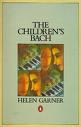
‘The Children’s Bach’ by Helen Garner

1984, 96p.

Don Anderson, in reviewing Helen Garner’s book The Children’s Bach wrote:

There are four perfect short novel in the English language.  They are, in chronological order, Ford Maddox Ford’s The Good Soldier,  Scott Fitzgerald’s The Great Gatsby,  Hemingway’s The Sun Also Rises and Helen Garner’s The Children’s Bach.

Boy- where do you go after that???!!

I think that brevity is an intrinsic feature of this book.  Like a small Bach piece, it is short and self contained, simple and yet complex.  It takes a slice of life in 1980s Melbourne, and in this regard, Garner’s keen observations almost provide an ethnographic (and now historical!) artefact.  Athena and Dexter are 1980s people who feel like people you’ve known and  their house and lifestyle is so well-depicted that you feel you could recognize it if you walked in the door.  As a northern suburbs gal myself, I can recognize many landmarks and events that she mentions almost in passing.  In fact, I reckon you could plot a pilgrimage walk of the book!

The relationship between Athena and Dexter lies at the heart of the novel.  They have two children- an autistic son, Billy, and a bright articulate son called Arthur.  The summary on the back of my edition, and the recent rendering of the novel into an opera both make more of Billy’s autism than I was aware of in the book, where Billy is a stolid presence, but not particularly the focal point of the family dynamics.  It’s not just the strain of Billy that drags at Athena, drawing her to abandon it all: it’s also her husband’s exuberance and obliviousness to her own personhood and the dream of being someone else in another more exciting world than hers.

I’ve read this book three times now, which is easy to do as it’s so short and it tumbles over you like a conversation overheard.  It’s a book to grow up with. As I’ve grown older, I see different things in it, as if I’m revisiting my own young-motherhood at much this same time.  I sense that in Garner’s most recent book, The Spare Room, she’s also revisiting the sort of characters in The Children’s Bach, grown older.

This is not the stuff of crashing drama: it’s lived-in life, with fallible and flawed human people, mess, and making do.  Taking liberties with the final sentence, life as depicted in The Children’s Bach is the steady rocking beat of love and family in the left hand, and the flying arpeggios of “what if’s” and “maybes” in the right.

Port Phillip Apostle No. 4 Alexander McKillop

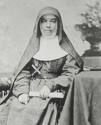
What’s Blessed Mary MacKillop doing here amongst a consideration of Port Phillip entrepreneurs of the 1840s???  I asked myself the same question when researching Alexander McKillop and finding links to Mary MacKillop.  But the Australian Dictionary of Biography helped  things come clear: she changed the spelling of her name, and ‘my’ Alexander McKillop was, in fact, her father.

All of a sudden one of the two ‘settler’ Apostles is catapaulted very much into the public eye, not in his own right, but as part of the story of his daughter, Mary MacKillop.  I found myself reading two hagiographic- in the true sense of the word- narratives of Mary’s life: In Search of Alexander MacKillop by Victor Feehan and Ann MacDonnell, and The Black Dress , a young adult fictionalized biography by Pamela Freeman.  Of course, narratives devised with a view to her beatification or eventual sainthood have their own logic and agendas.  It is to be expected that her life will be framed in terms of a struggle that she overcame, and  Alexander’s financial incompetence fits in well to that theme.  But at the same time, in terms of her own development of character, her parents’ devout Catholicism needs to seen as a facilitating rather than hindering factor, (especially in books written for Catholic teenagers and children).

Alexander McKillop had arrived alone in Sydney from Scotland as a bounty migrant in 1838 and through family contacts, obtained a position with Campbell and Sons, the Sydney merchants.  After his family joined him, he shifted to Melbourne to work in the Campbell and Sons agency in Little Collins Street.  Presumably this would have given him some experience in commercial transactions (Ville’s third category of colonial entrepreneurs included men with previous commercial experience).  He purchased a house in Brunswick Street Fitzroy for 700 pounds in 1841, and is listed by Billis and Kenyon as the owner of a property on the Merri Creek between 1840-1.  But his daughter Mary’s biographers emphasize his fecklessness.  His involvement with the Twelve Apostles imbroglio contributed directly to his insolvency in 1844, on the same day as fellow Apostle John Maude Woolley.   In May 1843 he admitted to losing more than 7000 pounds over two and a half years.  And there was a sixteen month trip alone back to Scotland in 1851 to accompany an old friend that seems curious, if not self-indulgent, requiring him to mortgage his property in Darebin Creek to his brother to raise the fare, possibly unbeknown to his wife.  When his return was delayed, his own brother foreclosed on the property, evicting his sister-in-law and young family (ah, there’s nothing like family!).  There was a string of unsuccessful jobs, futile relocations to Sydney and New Zealand and back, and a slow slide into dependence on family support from his extended family and his children’s wages.  Eventually the family splintered, with Alexander alone in Hamilton; his wife Flora running a boardinghouse in Portland, one son in New Zealand, other sons at school in South Australia and daughters in Penola (South Australia) and Coburg (Victoria).

However, the tension in creating the Mary McKillop narrative lies in balancing this financial and paternal incompetence with the strong Catholicism that Alexander shared with his family.  I’ve been too much influenced by the Scotch Presbyterian and Orange influence in Melbourne, because I initially assumed- incorrectly- by his name that he would be Presbyterian.  Instead, his family came from Lochaber in the Highlands, a region once known as ‘the cradle of the faith’ through the  ministries of  St Columba in 563AD and Coirell around 600AD, and supportive of Bonnie Prince Charlie in 1745.  At the age of twelve Alexander McKillop left for Rome to study for the Catholic priesthood, but was sent home in 1831at the age of nineteen because of ill-health.  On his return to Scotland he studied theology at Blair’s College in Aberdeen for a year, but left without completing his course.

On his arrival at Port Phillip he became deeply involved with the nascent St Francis’ Church and its priest Fr. Geoghegan.  He was a Trustee and Treasurer of the church; Fr Geoghegan travelled to the Darebin Creek to perform Mass for the family, and all family weddings and christenings took place at St Francis’. He instructed his children and encouraged them in their religious vocations.

His strong allegiance to the Church in some way explains his political involvement in Port Phillip at the time.  When the fiery Protestant preacher and politician John Dunmore Lang came to Melbourne as part of his electoral campaign for a seat on the Legislative Council, Alexander publicly remonstrated in letters to the Press against him and his sectarian and divisive attitudes.  Alexander came out in petitions and meetings in support for Edward Curr, Lang’s Catholic opponent for the Legislative Council.  His clerical training- incomplete though it was- gave him the literary and oratorical skills to engage in defence of his Church in the political realm.

But his political and civic involvement was even wider than this.  He attended the Levee to greet Governor Gipps when he visited in 1841, attended the Melbourne Debating Club, served on the committee of the Mechanics Institute and was a member of the St Andrews Society- a fairly pricey society with a one-guinea subscription fee.  He served on juries and occasionally on Special Juries, which is interesting because to qualify as a special juror a man had to be an Esquire or a person of higher degree, a Justice of the Peace, a Merchant not keeping a general retail shop, a bank director of a member of the Sydney or Melbourne Town Council- although the reference to the Town Council suggests that this legislation must have been promulgated after 1842.   He qualified as an elector in the Legislative Council elections of 1843, and stood very unsuccessfully for election in his own right in later years.  He was involved in the major political debates of the time, signing petitions in favour of Curr, George Arden and- most importantly for me- signed several petitions against Judge Willis.

I think that this public involvement is overlooked in the Mary McKillop biographies, and it could hold the key to Alexander’s otherwise puzzling involvement as one of the Twelve Apostles.  Even if he was not in the league financially, his social interactions on juries and committees enmeshed him into the political and financial milieu of the time.  The November 1841 Port Phillip Herald carries a small paragraph about a horse-riding accident at Heidelberg where Mr Boyd, the head of the Union Bank was injured while out riding with Rev Mr Sproat (of whom I know nothing) and Mr McKillop.  It was the Union Bank that lay at the heart of the whole Rucker scenario- was this one of the connections?  There were many other opportunities for McKillop to socialize with Fellow Twelve Apostles:  Chisholm and Carrington both attended the Debating Club; he sat on juries alongside Abraham Abrahams; Power was a Catholic who must have attended St Francis’; Were, Carrington and Welsh were all involved in the push to remove Judge Willis.  This is not merely a manifestation, as depicted by the Mary McKillop biographies,  of Alexander McKillop’s hotheadedness and querulousness : in a province where political “excitement” was making both Governor Gipps and especially Superintendent La Trobe uneasy, the networking and public visibility of this political and civic interaction was an integral part of masculinity in  Port Phillip public life.

So what’s the Entrepreneurial Lesson for Alexander McKillop?  None really, except perhaps that God works in mysterious ways. The whole Alexander/Mary McKillop scenario is ripe for “What if?” history.  Would Mary have been the woman she was had her family not been plunged into penury? How did her financial history affect the way she perceived her vocation?  What if Mary McKillop had not become involved in grassroots Catholic educational provision- who else might have instead?

References:

  • Victor Feehan and Ann MacDonell In Search of Alexander MacKillop
  • Pamela Freeman The Black Dress
  • Edmund Finn (Garryowen) Chronicles….

Port Phillip Apostle No. 8 John Maude Woolley

As part of my consideration of the financial crisis of the 1840s, you’ll be aware that I’m looking at the “Twelve Apostles”, a group of men who backed W. F. A. Rucker’s debt of 10,000 pounds to the Union Bank.  As part of this arrangement, they were committed jointly and individually liable for the debt.  This arrangement was ruinous to many of them personally, and seemed to exemplify the ricketty and precarious state of the Port Phillip economy at this time.

Among the Twelve Apostles that Garryowen listed, two seem to stand out from the rest.  One is Alexander McKillop, of whom there shall be more anon, and the other is John Maude Woolley.  They are the only two Apostles designated as “settlers”, as opposed to the “landholders” and “landowners”, merchants, solicitors and auctioneers who made up the rest of the merry band.  I find myself wondering how and why they found themselves embroiled in all of this.

Woolley in particular seems rather invisible in Port Phillip Society. According to Loyau’s Notable South Australians, he came to Port Phillip from England in 1839, bringing with him a large stock of general merchandise and set himself up in partnership with a Mr Bacchus of Bacchus Marsh.  Garryowen identifies him as a merchant located in Collins Street, but not the Woolley of the Campbell and Woolley firm which seems to have been much more prominent.

Paul de Serville lists him as a squatter and “a gentleman in society”, along with his brother Thomas Woolley, who is listed as a squatter and merchant.  Both belonged to the Melbourne Club (hence, presumably, their designation as “gentlemen”, as de Serville used membership as a basis for inclusion on his Appendix II category).  However, he is not listed as a voter for the Legislative Council elections in 1843, which had a property qualification of 200 pounds freehold or 20 pounds annual rental.  Moreover, so far I haven’t found him sitting as a juror either,  although I’m not sure what the qualifications for that were ( legislation passed in 1847 deemed 30 pounds annual income or 300 pounds property as a qualification).

In any event, things had turned sour by 1844.  On 31 January 1844 John Maude Woolley was declared insolvent, on the same date, interestingly enough, as Alexander McKillop.  Loyau describes it rather more delicately as a “retirement from business” in 1845.  Woolley returned to England, but reappeared in Sydney in 1848, where he brought horses, cattle and sheep overland to South Australia.  He joined the Customs Service in 1850, and in 1858 took up the appointment of Inspector of Sheep for three years.  In 1861 he rejoined Customs and was appointed Sub-Collector at the port of Blanchetown when it opened.

There’s photographs of him and his rather unprepossessing cottage at Blanchetown.

He later held a similar post at Morgan in South Australia, but resigned in 1883 due to illhealth.  He died in January 1885.

Is there an Entrepreneurial Lesson from John Maude Woolley? I don’t really know that there is. He had two bites of the cherry: once as a merchant, and then again as an overlander, but spent most of his life as a public servant.  And I’m absolutely at a loss to understand what could have motivated him to guarantee another man’s debts to the tune of about a thousand pounds.  I’m sure that there’s a lesson of some sort there.

References:

  • George E. Loyau Notable South Australians, published 1885.
  • Finn The Chronicles of Early Melbourne (Garryowen)

Port Phillip Apostle No 2 Thomas Herbert Power

I must admit that T. H. Power isn’t exactly a household name to me, although he did die in Hawthorn so perhaps he is the namesake for Power Street Hawthorn?? (not sure)

It is thought that he was born in Carrick Waterford in 1801? and was Catholic.  His father was a merchant, although I have no further details about that.  He arrived in Melbourne from Launceston in 1839 and established himself as an auctioneer in Collins Street between 1839-1846, his firm becoming one of the three principal station and stock-selling houses in Port Phillip. Garryowen describes his auction rooms as a one-storey store-like structure facing Queen Street, but many of the auctions during the land boom took place in specially-erected tents, complete with champagne refreshments.

He owned property himself:  Mt Misery (!!) at Dandenong Creek 1841-1844 and again Feb 1853, June 1856; Portland Bay in 1842; Eummering 1846-53; Acheron 1848-9; Diamond Creek 1850 and Strathmerton 1856-60.

Entrepreneurial Lesson #1 from T. H. Power: find the silver lining in every cloud.  He formed a depot for cattle awaiting sale and started boiling-down works during the 1842-3 depression. Do not under-estimate the importance of boiling-down: it was the development that pulled Port Phillip out of the 1840s depression.  The process was pioneered by the squatters William Wentworth and Henry O’Brien, who found that a previously unsaleable wether weighing 25kg could be boiled down to 12kg of tallow, which could be sold for 5-8 shillings. Wealthy landowners e.g. Bolden, Ryrie, Curr and Dr Thompson at Geelong soon moved into the industry as did our Thomas Herbert Power.  Tallow works were established along the Yarra, Salt Water (Marybyrniong) and other waterways, regularly swept away by floods and contributing no doubt to the piquancy of the Port Phillip air.  Tallow exports from Port Phillip increased enormously from 56 tons in 1843 to 480 tons the following year, reaching a peak of 1506 tons in 1848.

He doesn’t appear to have had great social visibility in Port Phillip, at least compared to some of the other “apostles”.  He inserted an advertisement in The Port Phillip Herald of March 25 1842 notifying of a reward for the return of a bundle of notes- three five-pound notes and twelve one-pound notes (fat chance, I’d say).  He attended the Separation Ball to mark Victoria’s separation from NSW on 28th November 1850, but “did not hand in the descriptive card” (whatever that means).  At the Victorian Industrial Society Exhibition of 1851, he won a prize for the best hog and the colonial best mare.

His civic contribution was more substantial- indeed, as Garryowen points out, he was one of the few “Knights of the Hammer” who were involved in public life.  He was on the Richmond Bridge Committee of 1850, and served on the National Board of Education.  He was a director of the National Bank 1860-66 and a Commissioner of the Savings Bank of Victoria.  He served as a member of the Legislative Council between November 1856 and September 1864.  He died in Hawthorn on 28th November 1873.

References:

  • Re-member: a database of all Victorian MPs since 1851
  • A. S. Kenyon ‘The Port Phillip Boom and its Results’ The Royal Australian Historical Society Journal and Proceedings Vol XII, IV, 1926 p. 202-223.
  • Finn, Edmund  The Chronicles of Early Melbourne
  • Billis, R. V. and Kenyon A. S. Pastoral Pioneers of Port Phillip

The Long and Winding Footpath

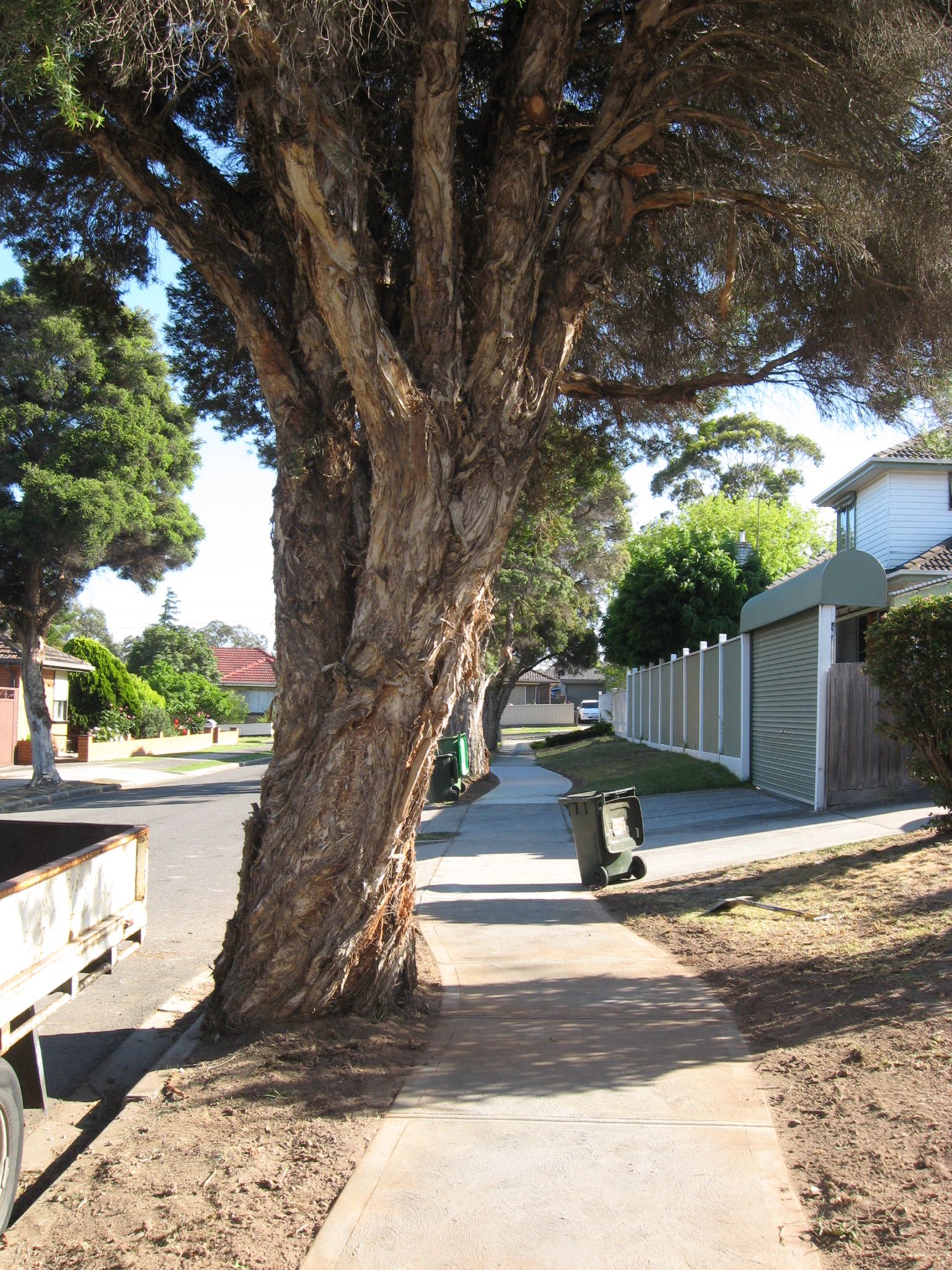
How wonderful!  Banyule council is replacing the footpath outside my house where the tree roots have broken it, and has created a meandering promenade, curving around the trees!

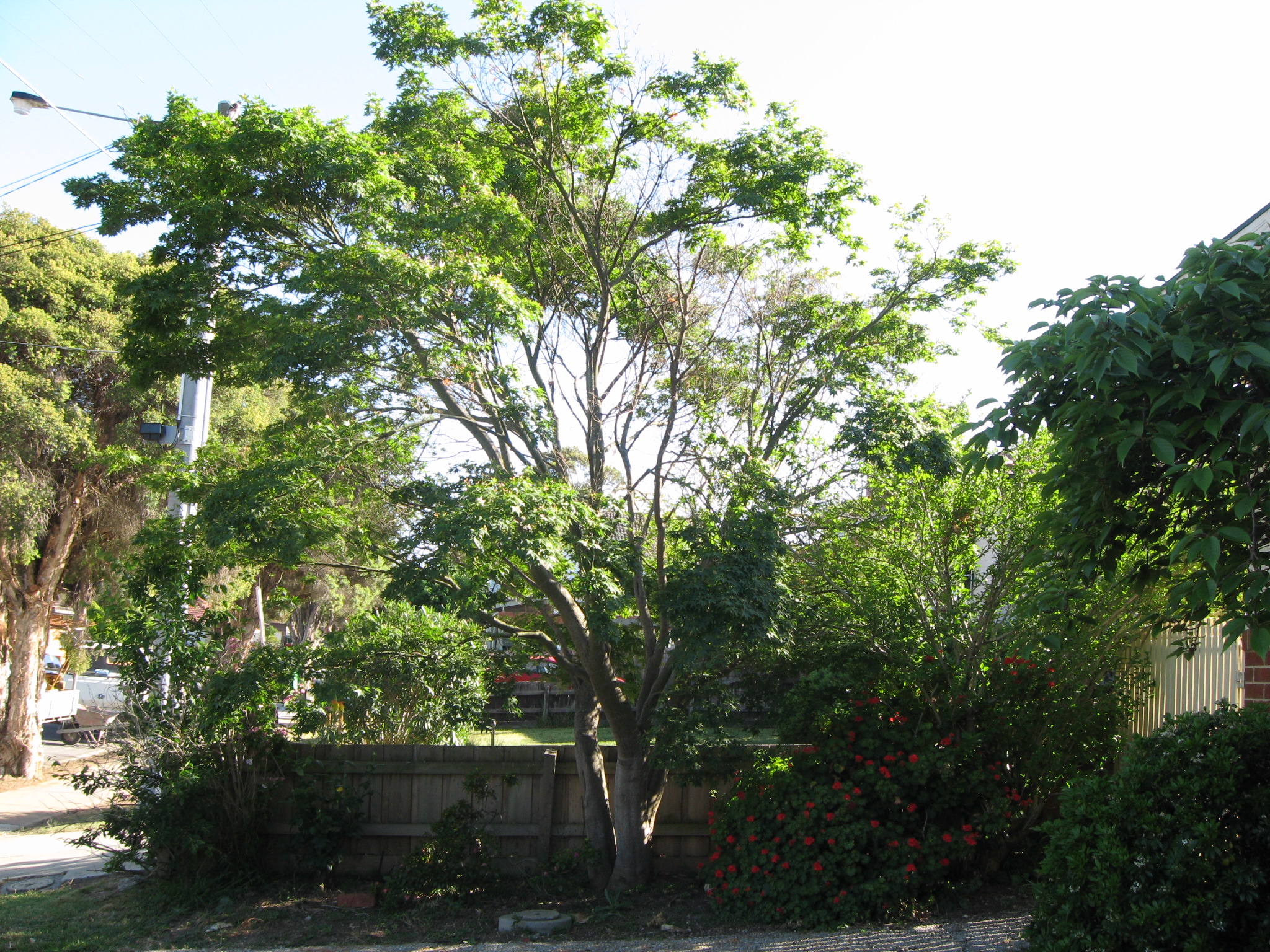
I’m really pleased that they’re keeping the trees in the nature strip, despite their unfortunate similarity to broccoli.  So many trees have been pulled down recently for higher density housing- and yes, we’re guilty here too because we  knocked down a beautiful Japanese maple when building our dual occupancy houses.  But we did manage to save one of them.

The drought has taken its toll too: we have a large maple in the back yard which is looking decidedly unwell. Many trees were lost during the storm earlier in the year, and people who had been eyeing large trees with some trepidation have taken them out for fear that they will fall one day.

All this year the magpies have brought me much pleasure with their warbling and carolling. They’ve taken to our large (sick) maple because a huge tree next door was pulled down for development.  One of the things I love most about my suburb (next to its 1960s-oldfashionedness) is the trees, and I’m pleased to see the council doing its bit!

‘Infidel’ by Ayaan Hirsi Ali

2007, 350p.

I wasn’t really sure whether I wanted to read this book.  I’m aware that the author ended up working in US for the American Enterprise Institute, a group whose philosophies I abhor and methods I distrust.  I knew that she was an outspoken critic of multiculturalism and Islam, and I didn’t particularly want to expose myself to all that.

Having finished the book, I still feel much the same way.  I think that she is naive in aligning herself publicly and politically ,on the basis of her one-issue world view, to organisations and people whose agendas are inimical to her own and are happy to use her own stance to further their own broader purposes.

Her campaign against what, no doubt, Peter Costello would characterise as “mushy multiculturalism” feeds right into right-wing extremism and white/European supremist ideologies, but is confounded and complicated by the fact that she herself is a Somali immigrant. But she is not, however, Islamic any more, and in her atheism she is just as strident and divisive as Richard Dawkins.  I’m not sure that her calls for an Islamic enlightenment are going to be heeded within Islam when she has placed herself so prominently and aggressively outside it.

There is also an impatience and ahistoricity in her exhortations for an islamic Enlightenment.  She holds up the Reformation and Enlightenment as her beacons but these were long, drawn-out, contested movements and reactions across centuries.   There’s an impatience and ahistoricity in her beliefs about immigration as well:  the newest immigrants “won’t” assimilate; “they” won’t let go of their customs and be like “us”.  Perhaps this is different from other waves of migration, but that’s a judgement that can’t be made after ten or twenty years: maybe after 100 and maybe not even then.

There are aspects of exceptionalism that run through her whole life story.   She was the daughter of an activist and exile from Siad Barre’s dictatorship, who had himself lived in America and rejected many aspects of Somali upbringing and practices. ( It was her grandmother who organised the genital mutilation of Ayaan and her sister. )  They lived as refugees in  Saudi Arabia, Ethiopia and Kenya .  She portrays her flight to Germany and Holland as a spur of the moment decision, and can barely believe the ease with which she gains refugee status and housing and income support in Holland. Apparently the policies have changed since, but she doesn’t seem to acknowledge that her experience may have been the exception then, and even more now.

I was interested in the parallels between her increased devoutness as an Islamic adolescent and the experience of evangelical Christian adolescence (and yes, reader, I must confess to personal experience here).  Both have  similar struggles over sin and being worthy; in both there is the hero-worship of particularly devout and charismatic older role-models, and both provide an all-round intellectual and social experience.

The book also gave me a better understanding of clan-based society, and the web of expectation, support and obligations that run like warp-wise against the weft of nationality and party affiliation.

I was looking over some of the other book reviews that I’ve posted here, and I so often come over as conflicted and diffident about the books I read.  Probably it’s a symptom of my indecision about anything really, but sometimes it’s just so damned hard to know what you think.  I don’t know whether perhaps I am slow in coming to a reasoned stance, or whether other people are premature.  I think that’s why I resent Hirsi Ali’s flight to the American Enterprise Institute, whose fellows are so supremely confident of their opinions.  She herself recognises the complexity and contradictions in her position, and I think that she is aware that other people have difficulty with what comes over as her own rigidity and certainty.  I’m not sure that aligning herself with the AEI is going to help, though.