Author Archives: residentjudge

Christmas in Port Phillip 1840s

There is a rather rueful adherence to English Christmas customs in Australia even today. We have Christmas trees, holly, Santa and carols about dashing through the snow. Tomorrow my family will sit down to turkey, ham and plum pudding for Christmas dinner wearing our little paper hats unfurled from Christmas bon-bons; even as I am writing this I am eating a fruit mince pie. Although there is a shift to seafood and ice-cream plum pudding or berries, all the iconography of Christmas decorations evokes a winter Christmas that we just don’t have- unless you have “Christmas in July” which we have done occasionally just for fun.

But what about in Port Phillip in the early 1840s? I had assumed that these early immigrants would have brought over all these English customs intact. However, my suspicions were alerted when I found a letter dated 25 December 1841 that was part of a series of letters between J. B. Were and Farquahar McCrae over a dispute with Judge Willis. “Good grief”, I thought, “do these men have nothing to do on Christmas morning but exchange letters about Judge Willis?”  But, the more I think about, maybe they didn’t have anything else to do because Christmas didn’t have all the trappings that it does today.  This was confirmed looking through the newspapers at the time, which made very little mention of Christmas.

A warning here about methodology.  The three newspapers of Port Phillip were published on regular days throughout the week, and a fourth paper The Melbourne Times was published on a weekly basis during 1842-3.  I have only consulted the Port Phillip Herald (published on Tuesdays and Fridays) and The Melbourne Times, which depending on the day that Christmas fell, varied in their proximity to December 25.  Therefore, in 1840  the Port Phillip Herald was actually published on Christmas day itself; in 1841 the closest issue was 21/12/41; in 1842 it was 23/12/42 and in 1843 22/12/43.  I consulted two issues before Christmas and the one immediately after. The only pre-Christmas Melbourne Times available was dated 24/12/42.

Nonetheless, there does seem to be a dearth of Christmas good cheer.  I wasn’t looking for headlines as such, but I did expect some mention of church services, festivities, excessive drunkenness in the police court on the days following, advertisements for goods and effusive Christmas wishes from the editors.

1840

The Port Phillip Herald was published on Christmas Day itself.  No mention of Christmas at all, but there is a land sale scheduled for 1 January which is styled as a “New Year Gift”, and the Independent Chapel will be opened for services on New Years Day.

1841 (Judge Willis was in Melbourne by this time)

Captain Cole had a picnic and fishing party to which he invited 150 of his friends on 21 December, commencing at 11.00.  Lieutenant La Trobe and his wife were invited, but I’m not sure if they attended- or even if the picnic had anything at all to do with Christmas.

1842 (Judge Willis still in Melbourne)

Port Phillip Herald 23/12/42

A little more here.  There are advertisements for “Christmas Novelties” to be conducted at the Royal Victoria Theatre on  26th December- a Monday evening, which was a popular night to attend the theatre.  “The Vampire or Bride of the Isles” was the theatrical fare for the night.

“The Vampire, the name of the first piece for Monday night’s representation has taken nearly a month to prepare, and will be brought out with a degree of splendour only to be witnessed in the mother country at Christmas time.”

For something a little less secular,  the Independent church may have had something for you.

“Clifton Independent Chapel, Richmond.  On Saturday next (Christmas Day) two sermons will be preached on the occasion of the opening of the above place of worship. 3.00 p.m. Rev Waterfield.  6.30 p.m. Independent Chapel Melbourne Rev. John Ham. “

Meanwhile on 24th December, at the Town Council Proceedings, there was discussion about the timing of the next meeting.

The Mayor wished to gain the opinion of the Council as to whether it would be expedient to hold a meeting of Council next week, it being Christmas time.  He knew several members who had made engagements to go to the country and could therefore not be present.

The next meeting was scheduled for 2nd January 1843 as a result.

Melbourne Times 24/12/42

An advertisement advised that owing to Christmas falling on a Sunday, the following day Monday would be observed as a holiday at all the banks.

The TeeTotallers were to hold a meeting on 26 December

“…for the purpose of celebrating the festivities of the season over a bag of hyson skin…Who, fifty years since, would have contemplated the arrival of that day when the good old Christmas cheer of roast beef and plumb pudding, accompanied by the various spiritous and vinous drinkables, would be exchanged for the meagre fare of tea and toast?”

Even though the tee-totallers were missing out, this does suggest that others, at least, were enjoying good old Christmas cheer of some sort.

In Georgiana McCrae’s diary, she doesn’t mention Christmas Day 1842 at all, but does have an entry for 26th December that Captain Murchison,  Dr Thomas and his wife, Ward Cole, Donald Mackinnon,  Mr Simpson and Jones Agnew Smith all came for dinner.

1843 (Judge Willis was arriving back in England by this stage)

There’s quite a bit more mention of Christmas here.

From 15 December forward, there is a large advertisement for Annard, Smith and Co. for Fruits for Christmas- sultanas, muscatels, and pudding raisins; nuts, walnuts, figs, bottled fruit.  This advertisement appears each issue including 26/12/43.  There’s also an advertisement for currants and raisins by a competing merchant, but this is a small advertisement that only appears on the 15th.

The market report of the Melbourne Market printed on 26th December noted a good deal of animation on 24th December,

but there was not that bustling activity in all the various departments of buying and selling that might have been expected in a town boasting upwards of 10,000 inhabitants on the day previous to Christmas, when it might be supposed that many would be anxious to testify their joy on the advent of an occasion generally dedicated by almost immemorial custom to feasting and festive enjoyment.

On 26th December, the Herald has a bit of a dig at its nemesis, the Port Phillip Patriot which had been published on Christmas Day.

“The Patriot of yesterday, by way of a Christmas Box we presume, has obliginingly furnished its readers with a six column report of the proceedings of the Insolvent Court…”

The court case reported actually took place in August, which the Port Phillip Herald thought rather strange.

The Herald reported that Mr Geoghegan, the Roman Catholic priest, administered the holy sacraments to no less than 250 members of his congregation on Sunday and yesterday (Christmas Day).

The theatrical spectacular of 1842 must have been a success because the Victoria Theatre advertised that “this being Christmas week” the theatre would be open this evening (ie. 26th), Wednesday, Thursday and Saturday.  On 26th ‘The Two Queens or Policy and Strategem’; on Wednesday ‘Michael Erle or the Fair Lass of Lichfield’ and an appearance by The Somnabulist, on Thursday ‘The Bandit Host or  The Lone House of the Swamp’, then again on Saturday ‘The Two Queens’.

1844

This doesn’t come from the Port Phillip papers, but it is  a report of Christmas in Sydney by Mrs Charles Meredith (Louisa Meredith) written in 1844 as part of her “Notes and sketches of New South Wales during a residence of that colony from 1839 to 1844.”
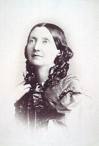
meredith

We now made a few weeks’ sojourn in Sydney, which, could we have laid the dust, moderated the heat, and dismissed the mosquitoes and their assistants, would have been very pleasant; but as it was, my colonial enjoyments were limited to our usual drives, and when able to walk at all, an idle languid stroll in the beautiful Government gardens.  For some days before Christmas, in our drives near the town, we used to meet numbers of persons carrying bundles of a beautiful native shrub, to decorate the houses, in the same manner that we use holly and evergreens at home.  Men, women and children, white, brown and black, were in the trade; and sometimes a horse approached, so covered with the bowery load he bore, that only his legs were visible, and led by a man nearly as much hidden; carts heaped up with the green and blossomed boughs came noddingly along, with children running beside them, decked out with sprays and garlands, laughing and shouting in proper Christmas jollity.  I liked to see this attempt at the perpetuation of some of our ancient homely poetry of life in this new and rather too prosaic Colony, where the cabalist letters L.[pound] S.[shilling]D [pence] and RUM appear too frequently the alphabet of existence.  It seemed like a good healthy memory of home, and I doubt not the decked out windows and bouquet-filled chimney in many a tradesman’s house gave a more home-like flavour to his beef or turkey, and aided in the remembrance of old days and old friends alike numbered with the past.

christmasbush

The shrub chosen as the Sydney ‘Christmas’ is well worthy of the honour (the rough usage it receives rendering the quality of the post it occupies rather problematical, by the way). It is a handsome verdant shrub, growing from two to twelve or fifteen feet high, with leaves in shape like those of the horse-chestnut, but only two or three inches broad, with a dark green, polished, upper surface, the under one being pale.  The flowers, which are irregularly star-shaped, come out in light terminal sprays, their chief peculiarity being, that they completely open whilst quite small, and of a greenish white colour; they then continue increasing in size, and gradually ripening in tint, becoming first a pearl white, then palest blush, then pink, rose-colour, and crimson: the consant change taking place in the, and the presence of all these hues at one time on a spray of half a dozen flowers, has a singularly pretty appearance.  Their scent when freshly gathered is like that of new-mown hay.  Great quantities of the shrubs grow in the neighbourhood of Sydney, or I should fear that such wholesale demolition as I witnessed would soon render them rare.

The ‘Christmas dinner’ truly seemed to me a most odd and anomalous affair.  Instead of having won a seasonable appetite by a brisk walk over the crisped snow, well muffled in warm winter garments, I had passed the miserable morning, half-dead with heat, on the sofa, attired in the coolest muslin dress I possessed, sipping lemonade or soda-water, and endeavouring to remember all the enviable times when I had touched a lump of ice or grasped a snowball, and vainly watching the still, unruffled curtains of the open window for the first symptom of the afternoon sea-breeze.

So, what then can I say about Christmas in Port Phillip?  It seems that the prominence of Christmas seems to be increasing as we get further into the 1840s.  I wonder if the Meredith extract reflects the influence of 1844 more than her experience five years earlier.  It’s important to remember that the trapping of Christmas as we know them- the trees, the carols etc- were themselves being constructed in Victorian Britain at the time.  The term “Christmas Tree”  was first used  in English in 1835; Prince Albert decorated the tree at Windsor Castle in 1841 thus bringing a German tradition to England; Christmas cards first appeared in 1843,  and many of the hymns we know we written in the 1840s and 50s onwards- O Come All Ye Faithful in 1848, or Once in Royal David’s City in 1851 for example.  And then, of course, we have Charles Dickens’  A Christmas Carol, published in 1843 which seems to exemplify everything we think of in a ‘traditional’ English Christmas.

And as for Louisa Meredith’s fear that the Christmas Bush would become extinct- well, I must say that I’m not at all familiar with the Christmas Bush and especially its use as a substitute for holly and evergreens today, but it still seems to grow in the Sydney area at least.  There are certainly other descriptions of Australian Christmases- Henry Lawson,  Edward Sorensen, and many engravings of Christmas activities but many of these seem to date from the 1880s onwards, and probably reflect the spread of the ideal of the Victorian English Christmas across the empire.  But 1840s Port Phillip was part of an early 1840s world with a lower profile of Christmas than in the years following, right up today.

References:

Geoffrey Rowell ‘Dickens and the Construction of Christmas’ History Today, 43, Dec 1993

‘Christmas in the Colonies’ Australian Heritage Summer 2007

The Australian Christmas In Days Gone By

Update:

I did find this reference to Christmas in South Australia in 1836 from The Diary and Letters of Mary Thomas. Mary Thomas wrote up the diary she had kept from early settlement days (Dec 1836) in 1867, expanding her entries with reminiscences- always a bit dangerous because later memories can overlay earlier ones, particularly of an event that occurs on an annual basis:

We kept up the old custom as far as having a plum pudding for dinner, likewise a ham and a parrot pie

Source: Michael Symons One Continuous Picnic: A history of eating in Australia.

(He also notes that Ken Inglis has a chapter about Christmas in  Australian Colonists)
Ships and Whales

Every edition of the Port Phillip Herald has a “Shipping Intelligence” column on Page 2.   We have to remember that Port Phillip was literally a “port” city, and the comings and goings of shipping was the communication thread to the rest of the world.

flagstaff_gardens

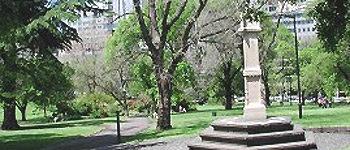
As it happens, I was in the Flagstaff Gardens on the weekend on an absolutely beautiful Melbourne afternoon.  I walked up to the top of the hill and even today you can see right across to the water, in between in the high-rise buildings.  I tried to imagine all the other people who must have walked up this same hill, straining their eyes to see the boats making their way up to Port Melbourne.  A flagstaff on the top of the hill, visible from the village down by the river below, notified of the progress of ships making their way up the bay.

The Shipping Intelligence for 15 July 1842 had no arrivals (which is a bit unusual), but three boats were listed for clearing out.

CLEARED OUT

July 12. Sally Ann, schooner, for Portland Bay and Port Fairy.  Passengers, Messrs Cameron, Phillips and Barnet; ten in the steerage.

14 Ellen and Elizabeth, schooner, for Launceston

14 Corsair, steamer, for Launceston. Passengers, Mrs Doddery, Mr and Mrs Lamb, Miss Gavon, Major Fraser, Messrs. Thompson, and Hill.

The steamers in particular are frequent visitors, plying back and forth across the Victorian coast (Portland and Port Fairy) and across to Launceston or Hobart in Tasmania (then known as Van Diemens Land), as well as up and down from Sydney.  Not a lot of privacy here- everyone knew where you were off to- unless, of course you were steerage. I wonder who these passengers were, going to Launceston. Did they already live there, I wonder?

SAILED

On Tuesday (12th) Adelaide for Hobart Town

On Wednesday (13th) for Portland.

To be honest, I’m not really sure at what point it was considered that a ship had finally ‘sailed’.  Perhaps when it had cleared the Heads at Port Phillip (a fairly treacherous stretch of water that separates the bay from Bass Strait)? There’s always a gap of at least a day- sometimes several- between ‘clearing out’ and ‘sailing’. Often ships had to wait some time to broach the Heads:  the  second shipload from the David Collins expedition down at Sorrento in 1803 had to wait weeks until the conditions were right to get through the Heads and sail on to Van Diemens Land.

EXPORTS

July 12- Sally Ann for Portland Bay and Port Fairy- 9 chests tea, 5 half chests ditto, 4 quarter casks wine, 1 bale slops, 12 cases gin, 16 bags flour, 7 bags bran, 2 cheeses, 1 box, 1 paper parcel, 12 casks porter, 17 bags oats, 16 bags potatoes, 2 tins turps., 1 barrel oatmeal, 1 ditto cheese, 7 cases slops, 10 bags sugar, 1 case split peas, 1 ditto pearl barley, 1 ditto rice, 1 ditto turpentine, 1 ditto oateal, 1 trunk apparel, 7 cases, a press and types, 1 case drugs, 9 cases geneva, 1 chest apparel, 2 trunks ditto, 1 can oil, 2 cans, 3 kegs, 1 case, 1 scraper, 1 keg tobacco, 1 case soap, 1 bag salt, 1 cask whisky, 2 cases glass, 1 keg, 1 case, 1 cask.  For Port Fairy: 4 bags flour, 1 bag sugar, 1 bag potatoes, 3 cans turps.

14- Ellen & Elizabeth, for Launceston- 7 bales wool

16 – Corsair- for Launceston- 310 sheep, 1 bale slops.

We’re seeing the internal economy at work here.  Many of these goods would have arrived earlier either direct to Port Phillip, or by steamer down from Sydney, or across from Van Diemen’s Land- especially things like sugar, tobacco and alcohol (of which there seems to be a great abundance).  The Port Phillip merchants would then forward them on to the smaller ports.  I’m a bit surprised by the sheep going to Launceston, given that during the early Port Phillip years, the sheep were coming from Van Diemens Land.  Perhaps someone bought up big at one of the auction sales.

Actually, this Shipping Intelligence is pretty boring because there’s no international shipping. When a ship comes bearing imports from overseas, the person who ordered the goods it is named, then the goods are listed.  Again- not a lot of privacy.

The real reason I’m writing up this one comes in the SYDNEY SHIPPING section!

ARRIVED- June 30 Rebecca Sims, from South Sea Fisheries

The Lord Saumarez was to have sailed from Sydney for Port Phillip on the 3rd inst.

The American whaler Rebecca Sims, of New Bedford, has been very fortunate, having in 24 months procured 1600  barrels sperm and 300 barrels black oil; but hs been obliged to put into this port in consequence of having lost her rudder and false keel in a severe squall, and for the purpose of having which replaced, she will have to hove down.  She reports of having spoken the following vessels:- October 1, 1841, the Ofley, of London, off Ocean Island, with 900 barrels sperm, out 25 months.  Oct 4, the Onyx of London, six weeks from Sydney, with 100 barrels of sperm oil.  November 22, the Caernarvon of Sydney, with 500 barrells, and a whale alongside, out 36 months (since which she has put into Hobart Town, discharged her cargo, and refreshed).  January 22, 1842, the American ship Francis Hussey, with 750 barrels sperm, out 17 months.  The Rebecca Sims touched at Rotumah, on the 8th February, where she found the American barque, Fortune, with 350 barrels sperm oil, out 17 months; the barque Louisa, Wright of London, with 40 barrels; and the Mary, of London, with 200 barrels, out 9 months.  She afterwards touched at Chatham Island, where she found the Gem, of Sydney, a total wreck, having ran ashone.  Heard of the American ship Franklin being at Chatham Island 22nd May, with 2300 barrels black oil, 10 months out; and of the American ship Chariot also being there,  April 20th, with 1400 barrels sperm; also of the American ship Omega, Captain Gardner, cruising off Chatham Island, 1st June with 1600 barrels sperm oil. Spoke the schooner Kitty, from Chatham Island, bound to Port Nicholson on the 25th May, having lost her anchor and part of the chain inthe same squall that she sustained the damage which caused her to put into this port.

The Victoria is at present refitting off the Commercial Wharf, and is about to proceed to Manilla to be sold; if not purchased there, she will proceed to China.  Her owners are fitting her out in a superior style, and we understand she will carry eight or ten brass guns.- Australasian Chronicle, July 2.

One of the problems of a catch phrase like Geoffrey Blainey’s ‘Tyranny of Distance’ is that it can obscure just how connected Australian ports and ships were into the seafaring, whaling and maritime culture.  The Shipping Intelligence often carries reports of which ships “spoke” to other ships, conveying news of yet other ships that they had each spoken to, wrecks, rough journeys etc.

Here, too, we’re seeing the internationalized  whaling oceans around Australia and New Zealand, with English and American ships, as well as Australian ones.  I can’t really find any hard and fast figures of how many barrels of oil the ‘average’ whale provides (after all, what’s an ‘average’ whale?).  I have figures from the 1900s that had 18, 660 barrels from 559 whales (about 33 barrels per whale); a figure of 60 barrels from the ‘right’ whale ( I’ve seen that they produced the ‘black’ oil, but then another website said that black oil came from the Arctic White Whale); and Save the Whales gave a figure of 47.6 barrels from a sperm whale.

No matter how much oil the whale produced, a load of 1600 barrels is pretty impressive, as is the amount of time that these ships stayed out at sea- up to three years!  But seeing the way that these ships communicated with each other, within the whaling fraternity it wasn’t a matter of sailing off into the wild blue yonder, even though it must have felt that way for the families left at home (shades of Ahab’s wife here).  The seas had their own communications channels.

Whalers had been plying the Victorian coastline since the very early 1800s, and the first temporary settlements were seasonal whaling stations.  It was generally believed that whalers often took Aboriginal women (especially those from Van Diemen’s land) as virtual slaves, but recent work by historians like Lynette Russell suggests that the women brought important survival skills to the whalers, and acted with more agency than previously thought.  (I suspect that this link takes you to a paid site, so I don’t know if you want to follow it).

Then that last little section reminds us that there was an important Asian trade going on between the colonial ports there as well.  There was a Chinese war going on at the time, hence the brass guns, I guess.

‘Men and Women of Port Phillip’ by Martin Sullivan

Reading this book evoked memories of undergraduate history out at La Trobe in the mid-70s:  sitting around the Agora drinking bad coffee from yellow and orange plastic handled mugs; peering through the smoky fug in tutorials held in the tutor’s own room; posters of  Splitz Enz playing on campus;  the sweet waft of marijuana; the opening up of the world in those halcyon Whitlamesque days.

When I see that Martin Sullivan submitted his  Ph D. thesis “Class and Society in the Port Phillip District” to Monash University in 1978, then I realize where all these 30 year old reminiscences are coming from.  The thesis, and this book that no doubt sprang from it in 1985, are all imbued with the language and frameworks of Marxist historiography that look rather – well-  strident, earnest and  somewhat dated today.   In fact, I was a little surprised by the late-ish publication date of this book (1985) because it had the fingerprints of the 1970s all over it.

Which is not to say that it’s not a useful book- on the contrary.  I’m finding myself frustrated that it is so difficult to ‘hear’ the people of Port Phillip who were not middle-class and socially and visible on the one hand, or thrown up from the stews of criminality into the courts on the other hand.  Surely there’s another group of people here.  I think of the school children who marched in the public parade for the laying of the foundation stone to the Supreme Court- who were their parents who no doubt craned their necks to see their children as they marched past?  Who were the people who mobbed around the first public hangings up on the hill above Lonsdale Street? It appears that it was a heterogenous group- who were they?

Sullivan has used much the same sources I have: court reports, newspapers, government dispatches, Garryowen and other contemporary writers.    His focus is different to mine, and he has struggled with it. He wants to draw out  his working-class men and women of Port Phillip from the vignettes of the middle class, public actors that I’m finding myself working with, but they are such shadowy figures that they are easily overshadowed and  don’t ever emerge fully.  So they remain fuzzy, largely unnamed (except for those who turn up in the courts) and largely undifferentiated from the group.

He argues that a capitalist, market-based system was not necessarily found in Port Phillip from its inception, but that it quickly developed once propertyless, wage-earning immigrants and former convicts came to the colony.  Classes emerged fairly quickly, whereby capitalists and wage earners lived out their lives in different ways according to their relationship to the means of production.   However, although the capitalists tried to control the law and the state, they never had complete control over them, or indeed over the labouring population which was, from the start, ungovernable and obstinate.   In this regard- and I don’t know how Martin Sullivan would feel about this- the book leans towards John Hirst’s view of the subversion of authority right from the inception of the colony.   He points out that after 1844 there was a more concerted and political program of protest, rather than the undirected dissatisfaction of  individual men and women previously. It also confirms the feeling that I have that there was a general heightening of the political climate around the mid 1840s, even before the Gold Rush.

This book felt a bit unbalanced in its structure. There is barely an introduction as such, as the book launches straight into an examination of the course of events that led to its settlement by the Port Phillip Association, and its relationship to a market economy.  This is followed by a 73 page chapter about the formation of a labour market, then a shorter 40 page chapter about convicts in Port Phillip which could have easily been a second chapter.  Chapter 4 is another long one- 86 pages, followed by a 26 page chapter on the stuctures of dominance, then a rather thin two page conclusion.  I felt as if the book was lumpy, and that it didn’t draw me along with a clear argument.  I don’t need each chapter to be a homogenized length, but the book felt as if it lacked unity.

Nonetheless, by consciously looking beyond the more easily-accessed public, middle-class realm, he has set himself an ambitious target: I know because I’m puddling around in the same sources as he did.   Those more sweeping “people’s history”-type books have the advantage of a larger timespan to draw and extrapolate from.  It’s much harder to start at the origins of a settlement, as he does, and know that you end up ten years later with a system that has been almost- not quite, but almost- undetectable in its emergence.   We’re only looking at a small society, for a small slice of time- why is it so hard to see it happening?

‘Family and Social Network’ by Elizabeth Bott

bott

Elizabeth Bott Spillius

The historian I admire most, Inga Clendinnen,  once said that

“history requires no special training other than curiosity, sharp wits and scrupulous attention to detail- plus a determination to honour the mysteriousness of the people you are studying”

I like that.  I particularly draw comfort from the worthiness of curiosity, and claim ‘curiosity immunity’ when I am being particularly observant (i.e. nosy) about other people around me.  And I think that ‘Family and Social Network’ by Elizabeth Bott satisfied my [prurient? scholarly?] curiosity about family interactions and networks with the wider community.

The book itself was written in the 1950s and has now taken on a historical edge that it certainly didn’t at the time.  It describes a team-based study undertaken by an anthropologist and psychologist and a team of researchers who aimed to interview twenty ‘ordinary’ families with young children.

It was refreshingly honest about the methodological problems they faced: making contact with their 20 families;  reconciling the different disciplinary perspectives of the two lead researchers;  resolving issues about researcher role and the formality and comparability of the research process.   You don’t often read an admission that methodology that

The anthropological method basically consists of messing about with a lot of variables and bits of information in a condition of acute uncertainty, in the hope that eventually one will see relationships one had not thought of before (p309)

Only one of the case studies was written up in great detail, but it was a fascinating one of a working class family with very strong family roots in a particular street in London.  The wife did not work, and saw her mother on a daily basis, and was thoroughly enmeshed in her kin relationships in a way that her husband was not.  The husband and wife had completely different networks, with no joint friendships or social activities.  This was contrasted with a middle class, more mobile family with weaker kin ties and shared friendship patterns.

In the acknowledgments Bott quoted Dr John Bowlby as remarking “It has the merit of being obvious once one has thought of it.  One wonders why one hadn’t…”, and this is very much true of this book too.  For  instance, she observes (and I find myself thinking I knew that… without actually knowing it) that there are ‘connecting’ people in families who bring together other more separated family members; that if there are two or three generations of mothers living in the same place in the same time, a matrilinear stress is more common; that friendships (especially friendships of men) are ‘trimmed” when a couple marries so that they can be joint friendships; that intense identity-forming friends tend to be absent after marriage so that they do not threaten conjugal loyalty and new friendships tend to be join and diminished in identity.  All the stuff of a million soap operas and novels.

At the end of the 2nd edition of the book is a lengthy chapter called ‘Reconsiderations’ where she returns, decades later, to the original study.  She talks about how her categories and opinions have been challenged, changed or firmed, and the relationship of later research to her original work.

At one level, the book seems far removed from Port Phillip in the 1840s but it’s stimulated my awareness of the effects of migration on kin and friendship networks, and how this might be described.

The rehabilitation of Ben Cousins

cousins

So, Ben Cousins is to be a Tiger now.

I bet you thought that I couldn’t make a link between a footballer and the Resident Judge of Port Phillip, but of course I can.  The original Resident Judge John Walpole Willis was in Melbourne too early to witness the ‘invention’ of Australian Rules football by Tom Wills in 1858.  Ironically Wills ended up suiciding in Heidelberg, which was where Judge Willis had lived some 37 years earlier.  There was another Thomas Wills who lived in the Heidelberg vicinity, down by the Yarra River, while Judge Willis was in Port Phillip, so it’s all rather confusing.

There was speculation that Ben Cousins would be drafted by St Kilda, my favourite team, but it did not eventuate.  I was pleased. To be honest, St Kilda has a lurid enough history of bad boys and there is no need to perpetuate it with Ben Cousins who is described as a ‘recovering drug addict’.  For me, the final straw was when he shaved his head and waxed all his body hair to avoid a drug test in November this year.  This is not the act of a recovered drug addict who desperately wants to play.  It smacked of arrogance and a misplaced sense of invincibility.

So, Richmond has taken him on instead.  Fair enough: their decision.  But I was interested in the front page article in today’s Age that examined the public rehabilitation process that has been set into train, largely driven by his manager Ricky Nixon.  Mention was made of ex-Richmond player and acclaimed coach Kevin Sheedy‘s influence, and more interestingly for me, that of football commentator Gerard Healy.

[Club President Gary] March says Kevin Sheedy’s role in bringing Cousins to Tigerland has been exaggerated at the Richmond end, but that the influence of another Cousins’ supporter Brownlow medallist and media commentator Gerard Healy, has been understated.  Healy is a mentor to Cousins and was one of the five people Nixon had engaged to protect and advise him in the event that he was drafted by the Saints.

Healy’s major role was not simply to lobby Richmond and the league, but to turn the tide of public opinion through his media outlets, especially 3 AW’s ‘Sports Tonight’ which became command centre of a shameless “Give Ben a Fair Go” campaign.  (Age, December 17 2008)

Ah, that’s right, ‘engage’ (i.e. pay) the media to smooth the path.  And when Gerard Healy gets behind a young player next season, shall we assume that he has been ‘engaged’ to promote him, too?  He’s a radio announcer: should he, like fellow radio announcers Alan Jones and John Laws be required to disclose the players that he has been ‘engaged’ to support?

The Drunken Nurse

saireygamp

The Port Phillip papers are certainly full of drunkards.  Judge Willis himself has plenty to say about the perils of alcohol, and the Police Court is dominated by brawls and crimes connected with alcohol.  But I was particularly taken with this  Sairey Gamp character from the Port Phillip Herald 1 July 1842.

AN AFFECTIONATE WIFE.  For several months past, a man of the name of Henry Hayward a much valued servant of the firm of Campbell & Woolley, had been seriously ill, so much so that it was thought advisable by his medical attendant, Dr Campbell, to send for his wife to take charge of him, who, at the time, was following her occupation of monthly nurse in the family of his Honor Mr La Trobe.  This woman had hitherto been engaged as a nurse in some of the most respectable families- Captain Lonsdale’s, and many others.  The poor sufferer, whom we personally knew as an excellent and faithful servant, was at this time in a most precarious state, being attacked with that frightful disease, dysentry, and although a strong robust man, was evidently sinking fast: the attention of his wife, of course, became necessary, and his Honor the Superintendent being apprised of the circumstance, forthwith sent her to her husband, and himself kindly called to see how the sufferer was doing.  At this stage of the disease the doctor was sanguine of success; but to his extreme mortification he found on each visit that the wife, who had hitherto been supported by the first people in the colony in her vocation as nurse, was a confirmed drunkard; and that she was in the habit of not only getting beastly intoxicated and lying on the bed of her suffering husband, but made it a practice to drink the port wine and brandy, which the medical attendant had ordered for his patient, and thus leave the poor sufferer without succour.  Enraged at this atrocious conduct, Dr Campbell, at his own expense, engaged a respectable woman as nurse, to see that his orders were attended to, and that the wretched wife should not ill use her husband, which he had been informed she was in the habit of doing.  The nurse was unremitting in her attentions, but was frequently obliged to flee the house in consequence of the violent and drunken conduct of the dying man’s wife.  Often has Dr Campbell called upon his patient and seen the wife in a state of intoxication, lying almost senseless beside her husband! and often has he endeavoured, by every means in his power, to prevent such heartless conduct; but his exertions were all in vain; the poor man still lingered on, and the depraved wife pursued her unnatural conduct till the sufferer died! and this took place but a few days ago.  We have been particular in mentioning these circumstances to prevent ladies being imposed upon by such a wretch as the wife of Henry Hayward- a woman who has hitherto gained her living in the first circles as  “a monthly nurse” but who ought, in our opinion to be publicly and soundly whipped through the town for her fiendish conduct to her departed, and as far as she is concerned, her murdered husband.  We have the authority of the doctor for stating that had the wife performed her duty properly the deceased would in all probability have recovered!

There’s not many references in the papers of the time to women working- although how much work Mrs Hayward would gain after this exposure is doubtful! I was intrigued to find out what a “monthly nurse” was,  wondering if it was a nurse engaged for “that time of the month” but instead, it seems that a monthly nurse was a kind of mothercraft nurse who would move in after the baby’s delivery to care for the mother and baby for a month after confinement.  There’s a fascinating article called “The Remembrances of a Monthly Nurse”  in Fraser’s Magazine for Town and Country (1836)that manages to combine celebrity gossip with a quite affecting account of the birth of a baby with cleft lip and palate, all from the perspective of the monthly nurse.

I had seen advertisements placed in the Port Phillip Herald by doctors calling for wet nurses, but this was the first mention of a monthly nurse that I had seen.  It appears that she gained her work largely through word of mouth between the “first families” of the colony.  The reference to His Honor Mr La Trobe, the superintendent of Port Phillip, relates to the birth of his daughter Eleanor Sophia La Trobe born 30 March 1842.  It seems, therefore, that Mrs Hayward was still with the La Trobes longer than the usual month, but as Georgiana McCrae noted, her friend Mrs La Trobe was often in poor health, and the La Trobes would have been first among first families!

I wonder how this marriage between the employee of Campbell and Woolley, a prominent mercantile firm in Port Phillip at the time, and a monthly nurse would play out.  No doubt she would be absent from home for extended periods of time. There’s no mention of other family.

It’s hard to tell what the actual outrage is here.  Was it her drunkenness- taking the port wine and brandy meant for her husband, leading no less to her “murdering” him by not doing her “duty” for him?  Was it her slatternly behaviour, lolling around the bed drunk with the dying man?  Was it her violence to the respectable nurse paid for out of Dr Campbell’s own pocket? Or was it, perhaps, the scandal and trickery by which this drunkard had worked her way into the  domestic households of respectable families, placing them all unknowingly in peril?  Whatever- publicly and soundly whip the woman around the streets- that’ll teach her!

References

Dianne Reilly La Trobe: The Making of a Governor

Hans Heysen exhibition, Adelaide

heysen2

As an Australian of a certain age, I am well familiar with the typical Hans Heysen painting of gum trees that seemed to adorn every school corridor during the 1960s and 70s.  I wonder if the Education Department had/has  a warehouse with hackneyed Australian paintings- rows of faded “Shearing the Lambs”, a couple of hundred doleful Dobels and forests of Heysen gum trees.

I’ve been over in Adelaide the last week for the Australian and New Zealand Legal History Society conference.  I intentionally arrived one day early to check out the galleries and museum before the conference began.  I approached the Heysen exhibition with some trepidation, wondering if it would be gum tree after gum tree.

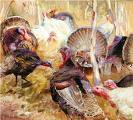
I was pleasantly surprised.  I hadn’t realized how much acclaim Heysen received at the time, winning scholarships and prizes overseas, and following that well-worn path to French art-school.  I particularly liked this painting of turkey bums- a painting which he noted for its complex structure with the movement of the turkeys through the saplings.

heysen

It was interesting to see the way that he had to recalibrate his eye for landscape once he went into the Flinders Ranges which were so different from the Adelaide hills and Hahndorf where he made his reputation.

The exhibition will be travelling to different locations in regional galleries next year.  It’s well worth a look, if nothing else to challenge your weariness over yet another Heysen gum tree.

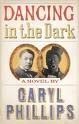
‘Dancing in the Dark’ by Caryl Phillips

dancingdark

2005, 214 p

W. C. Field described Bert Williams, the real-life subject of this novel, as “the funniest man I ever saw, and the saddest man I ever knew”, and this paradox is just one of many in this book.  Bert Williams was a light-skinned West Indian but adopted as his stage persona a black-faced “coon” character.  He consciously adopted this stage identity as he applied his cork makeup, and scrupulously removed both after the performance: something that his fellow negro performers could not do.  Despite the increasing discomfort of his colleagues with his depiction of a shuffling, feebleminded “coon” , he responded to the acclaim of white audiences by continuing to play the character, eventually as the only “blackface” amongst Ziegfield’s Follies.  And yet, his act raised the profile of Negro performers, heading Booker T. Washington to note that “He has done more for our race than I have.  He has smiled his way into people’s hearts, I have been obliged to fight my way”.  And yet, this “smile” is so ambiguous and shallow: white audiences boycotted his attempts to move beyond the “nigger” stereotype, and he was trapped into continuing to play the character in order to maintain his popularity.

This book is told from multiple points of view, particularly from the middle of the book onwards.  I’m not sure if this narrative style was as prominent at the start, but I certainly noticed it as the book went on, and it seemed to mirror the increasing disintegration of his inner personality, marriage and stage success as it was perceived more and more by others.  The narrative is interspersed with film scripts, newspaper reports etc (that I assume are fictional, but I wouldn’t know) in a sort of papier-mache, constructed effect that emphasizes the emptiness of the man underneath.

The tone of the book is fairly simple and direct.  It raises big issues, though, about race, identity, performance and popular acclaim through the story of one man.

A job in Higher Education?

I always have a little browse through the Higher Education columns of the Career insert of The Age.  In an earlier life, I have worked in educational design at university and TAFE level, and I like to just keep my eye on what’s around.

Ah, here’s a job for a Senior Educator.

img432

Senior Educator in hairdressing???  Not instructor, mind, but educator…

And the school of Hair Beauty and FLORISTRY??

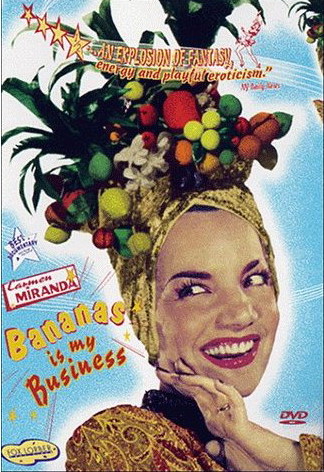
Carmen Miranda, maybe.

carmen_miranda

Or perhaps a little topiary?

topiary

‘Rock and Roll Nerd’

My niece Louise sometimes commented that when she was performing on stage, she could look down and see her poppa’s bald pate reflecting the footlights and a steadily widening smile crossing his face as he sat a little taller in his seat, bursting with pride.  That’s all she could see- the forehead and the teeth.

minchin

I thought of that today, as I sat watching the documentary ‘Rock and Roll Nerd’ grinning away in a kind of maternal pride (even though I do not know the man) and with my eyes welling with tears at his vulnerability, resilience, humanity and the mixture of unfairness, joy,  hard work, exhilaration, edginess and yes, dagginess, of his life.

I’ve always liked Tim Minchin (who physically bears ABSOLUTELY no resemblance to the other Tim Minchin I know).  Ever since I first saw him on The Sideshow, (was it?) I was blown away by his intelligence, talent and outrageousness, even though I’m old enough truly to be his mother.

This is a great documentary- very human and very affirming.  Go see it.