Author Archives: residentjudge

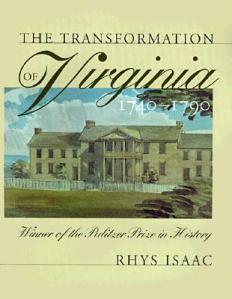
‘The Transformation of Virginia 1740-1790’ by Rhys Isaac

Transformation-of-Virginia-1740-1790-Isaac-Rhys-9780807848142

1982, 357 p

I have promised myself this book as a holiday reading treat.  I’ve been intending to read it for many years.  Rhys Isaac, who died in 2010 was a much-loved member of the history faculty at my university, and was one of the ‘Melbourne School’ of historians that I greatly admire (Rhys Isaac, Greg Dening, Inga Clendinnen, Donna Merwick.)  I would like to write my thesis within their historiographic tradition and approach- well, it’s something to aim for at least. So I approached this book with somewhat of a sense of reverence and with an eye to the writing up of my own work. Continue reading

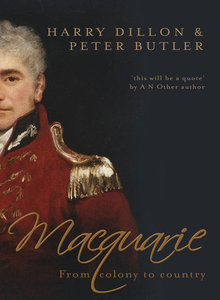
‘Macquarie: From colony to country’ by Harry Dillon and Peter Butler

macquarie

2010, 329 p.

Probably my first introduction to historic argument, as distinct from historic narrative and fact, came in HSC Australian History (yes, I am old enough that it was HSC and not VCE and young enough that it was no longer ‘matric’.)  There I was feeling all soft and fuzzy over Macquarie when along came that nasty Bigge character.  But was it as simple as this? For the first time I realized that historians- Manning Clarke, Ellis, Ritchie- could have a different take on the same event, and that you could talk about historians’ arguments and set them up against each other,  rather than just relate what happened.

And there I was nearly 40 years later, reading another book on Macquarie, nicely timed with my trip to Sydney in December last year.  It evoked a whiff of the goodies-and-baddies sense of history, and Macquarie is definitely in the goodies camp in this book.  It’s a very readable account of Macquarie’s time in New South Wales and his contribution to the shift from ‘New South Wales’ to the entity of ‘Australia’.

The authors argue that Macquarie was the victim of a mismatch between the intended use of New South Wales as both penal settlement and free colony.  His position at the head of a penal colony gave him autocratic powers but he used them to make opportunities for ex-convicts, rather than the elite- which was pretty much the expectation at the time.  He was, at heart, a military man, which expressed itself through his authoritarianism and brittle response to criticism.  The authors emphasize his Scots background as a motivating factor, and indeed call him the ‘laird’ throughout, arguing that his policies sprang from a paternalist mindset.  I’m not convinced that ‘laird’ is the right imagery, and it’s not something that Macquarie himself claimed.  The book is written from a very Australian-centred perspective, and I think that the depiction of the Colonial Office would have benefited from a fuller empire-wide analysis. As it is, the goodies/baddies dichotomy is a little too simple.

Although the biographical details of the authors links them with Charles Sturt University, they both have a background in journalism, and I think that this comes through in the book, which is eminently readable.  They have been granted all the publishing features on a historians’ wishlist- footnotes (not all that many) AND a bibliography (what luxury!), index, and source list for the illustrations.  Many other much more academic tomes than this one are often short-changed in this regard.

I was attracted to read this book after a brief browse at the ‘reduced’ table in my uni book shop. I noted that the book started with a chapter highlighting the heritage of Macquarie today, followed by a chapter that had him returning home ‘under a cloud’.  It then reverted to a more conventional biography, ending with a 2010 visit to his ancestral home.  I’m interested in the way that historians structure biography at the moment, hoping to break out of a strictly chronological form for my own thesis, and so I was interested to see how this worked as a reader.  I think it did, in that it had a pleasing sense of symmetry and that the bookend chapters allowed an argument to be mounted in what is, essentially, narrative history.

Putting history in its place

puttinghistoryinitsplace

Well, well, well- I’m on ITunes U! (and so are some of my fellow LaTrobe-ites who read this blog!) There’s some interesting papers there, and a video of Henry Reynolds on the History of Tasmania.

The full title of my paper is “Global Positioning Systems: Circuits of Empire Large and Small”.  It was delivered at Putting History in Its Place, a conference held at La Trobe University in September 2012.

It’s labelled as “Movement around the Imperial Network” on I-Tunes.  When I played it through I-tunes it seemed to be brutally truncated at the end, but my downloaded version ran through to the end.

https://itunes.apple.com/itunes-u/putting-history-in-its-place/id571785142

More worthies at the Boroondara Cemetery

It surprised me that the Boroondara Cemetery was established as early as 1858.  I’m well aware that graveyards were established on the outskirts of cities because of fears of contagion, but Kew seems so suburban for 1858.  The surrounding houses seem to be Edwardian in design, and the fence and rotunda that give the cemetery such a  High Victorian/Edwardian appearance date from the 1890s as well.

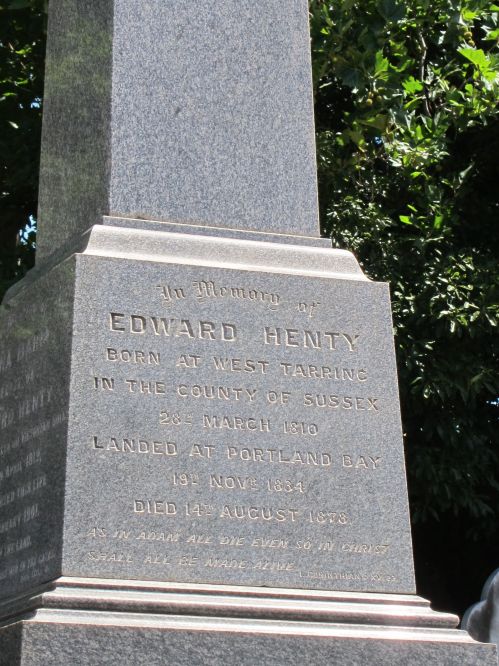
Because of the strong turn-of-the-century aspect of the cemetery,  I was startled to find the graves of very early Victorian settlers there.  Here’s Edward Henty from Portland, one of the earliest permanent settlers

IMG_0173

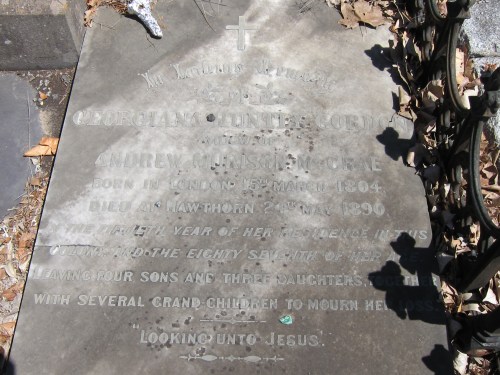
Georgiana McCrae is buried here as well.

IMG_0175

There’s some very large memorials here- none rivalling the Springthorpe Memorial in beauty, but striking nonetheless.

There’s the Syme memorial for David Syme, proprietor of The Age

IMG_0158

IMG_0161

and the Cussen Memorial was erected by Supreme Court judge Leo Cussen for his son Hubert.

Cussenmemorial

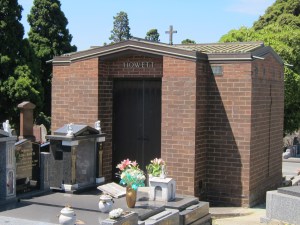
Somehow, compared with these, the Howett memorial looks rather -um- utilitarian.  Still, time may be kind to it.

IMG_0172

I quite liked this one.

IMG_0171

While speaking of death, I noticed this death notice in The Age yesterday.  I do not know the woman at all, and mean no offence by posting this.  I was very touched by it.

WEST Verna Rae. Passed away peacefully at Munday Court, Skye on December 27 2012 aged 88…. A feisty savvy survivor of the Old Beechworth Asylum who never stopped searching for our mother, with whom she was lovingly reunited in 1991.  Moved to a Singleton Equity house in Skye in 1992 with loving care from DHS.  We were glad to be able to embrace Verna in our family.

Therein lies a tale, I suspect.

Love and death: The Springthorpe Memorial at Boroondara (Kew) Cemetery

On a beautiful 24-degree summer afternoon, where more perversely pleasant to visit than a cemetery?  So off we went to Boroondara Cemetery in High Street Kew, primarily to see the Springthorpe Memorial which I’d seen many times in photographs but never actually visited.

Boroondara Cemetery was established in 1858 as a garden cemetery and, with imagination, you can just sense the Victorian conceptions of death and mourning that underpinned its design.  The original plan, since abandoned, was for curved paths and winding roads, but it nevertheless maintains its rather forbidding red brick perimeter wall, caretaker’s lodge with slate roof and a clocktower, and rotunda.  Its most famous monument is the Springthorpe Memorial, completed in 1907 after ten years’ construction and described in 1933 in The Age as “one of the most beautiful and most costly in the commonwealth”.

It was erected by Dr. John Springthorpe to commemorate his wife Annie, who died in childbirth with her fourth child, Guy, who survived to become a well known Melbourne psychiatrist, following in his father’s footsteps.  Dr. John Springthorpe had arrived in Australia as an infant and had a successful career with positions at the Beechworth Lunatic Asylum, the Alfred and the Melbourne Hospitals. He enlisted during World War I with the Australian Army Medical Corps, and on his return to Australia after the war, worked on post-war repatriation and psychiatric care (hence his commemoration in the name of ‘Springthorpe’ housing estate on the site of the old Mont Park/Bundoora Repatriation hospital). The breadth of his professional involvements is wide: training and registration of dentists, nurses, masseurs, ambulance work, maternal and child welfare. He was very much the clubbable man, and a supporter and collector of the nascent Australian artist scene of the turn of the twentieth century.  It’s ironic, then, that a man who had such a rich life should be best known for a memorial that he created to commemorate death.

As a thirty-one year old, he had married the 20-year- old Annie Inglis on Australia Day 1887 and they moved into a house at 83 Collins Street east- the fashionable, doctors’ end of town.  She was a first cousin to the a Beckett family, and hence the Boyd family who are so interwoven into Melbourne cultural life.  Ten years later she died, giving birth to her fourth child.  Disconsolate with grief, Dr Springthorpe sent his children away to live with relatives, and poured his sorrow into his diaries, transforming his house into a shrine to Annie with photographs and paintings to commemorate their married life, and leaving the house just as it was- even to the blood stain where his wife hemorrhaged to death.  In the days immediately following her death, he turned to the artistic circle of Melbourne and commissioned the sculptor Bertram Mackennel to design

a piece of sculpture, all in white marble, a sarcophagus, richly traced, with certain inscriptions on the sides; on the top, a sculptured figure, as much like Annie as she lay in the drawing room as possible

And here it is
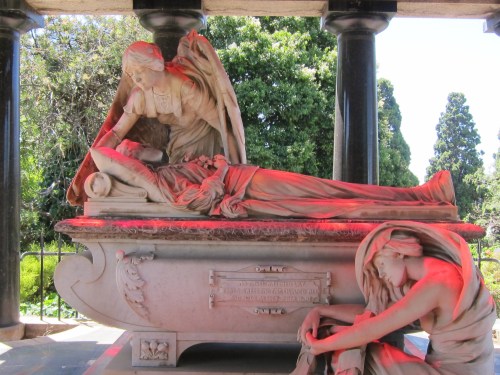
IMG_0163

The memorial took nearly ten years to complete.  The roof, made of red glass that bathes the marble in a rosy glow, was designed by Harold Desbrowe Annear.
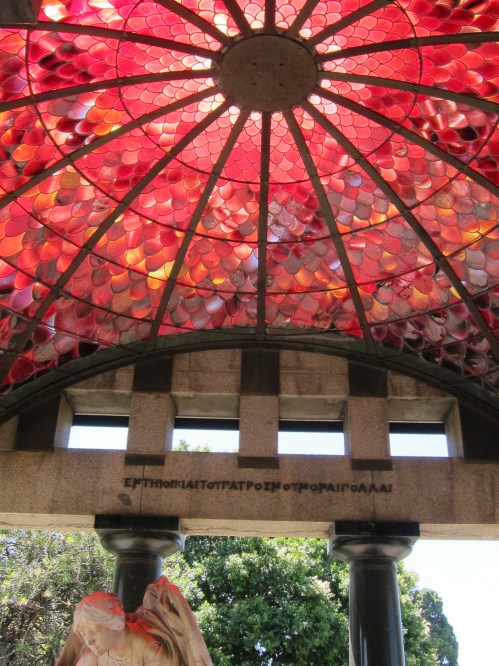
IMG_0164

The memorial was originally surrounded by gardens designed by William Guilfoyle, the designer of the Botanic Gardens.  Later work on the garden saw the installation of two works by Charles Web Gilbert- my husband’s grandfather (and to be honest, our main reason for seeking out the Springthorpe Memorial in the first place).  One of these was of a brolga defending her chicks against a snake rearing up to strike, and the other of a monk.  Neither of these sculptures have survived, and it is unsure whether they were ever positioned where they were intended.  However, this picture from 1929 seems to show some sort of bird with outstretched wings, and interestingly, the marble figures seem to be enclosed in a glass case.  The gardens were subsumed into the rest of the cemetery when, after Springthorpe’s death, it was found that the transactions for the land had not been completed.

[Later insertion: please see the comments below regarding the further design of the gardens surrounding the memorial by Luffman/Loughman]

The whole memorial is heavily freighted with symbolic references, including quotations and adaptations from the Bible, the Greek classics, Walt Whitman, Wordsworth, Dante, Browning, Riley, and Dante Gabriel Rossetti.  There’s something just a little bit creepy about the idealization of his wife- especially given that she is not named anywhere on the memorial:

My own true love
Pattern daughter perfect mother and ideal wife
Born on the 26th day of January 1867
Married on the 26th day of January 1887
Buried on the 26th day of January 1897
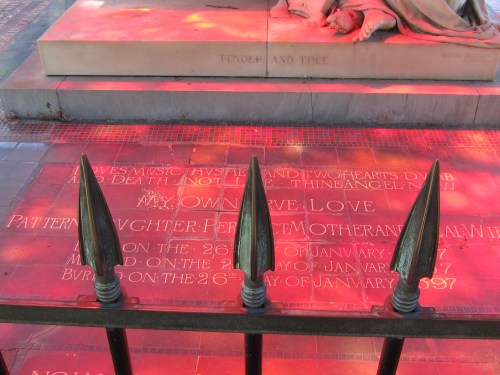
IMG_0165
It is a memorial deeply engraved by text:
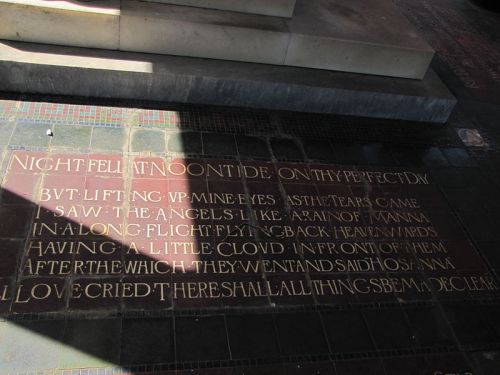
springthorpe_inscription
I found myself thinking of the pre-Raphaelites and their heavy emphasis on beauty and death.  To our eyes today, there’s something rather unhealthy about it all.  Maybe people even then were discomfited by such fervent obsession as well: apparently Mackennell himself warned Springthorpe that the etching of deeply symbolic and overwrought text on every possible surface might be over the top.  The Bulletin concurred:

Turning for a last look, the tremendous monument loads the emotions, insistent, almost blatant, one thinks dully of the dead woman, ten feet below, on whose brow it must press so heavily. Only its artistic beauty, only Mackennal’s consummate genius, could have saved it from descending to the level of a gorgeous advertisement.

The monument cost a huge amount, although it is uncertain what the final cost amounted to with figures ranging  from £4,500 to £8,000-£10,000 bandied about:  in today’s currency, somewhere between $700,000 and $1.3M.

IMG_0178
There’s a fascinating article by Pat Jalland exploring the Springthorpe Memorial as a masculine expression of grief. She wrote Australian Ways of Death. A Social and Cultural History 1840-1918  and you can access her article from The Age here.    And Anne Sanders from the National Portrait Gallery delivered a wonderful presentation on Springthorpe himself and the video and transcript are well worth a look.

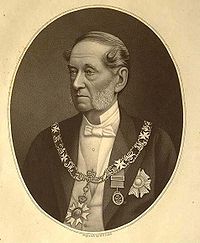
Sir Alfred Stephen

AlfredStephen

The Stephen family is a multi-tendrilled family who weave their way through legal and literary nineteenth century life.  They are truly a well-documented family in the true sense of the word: they wrote frequently and voluminously and this correspondence has been kept by family custodians  who are proud of the family and its contribution to public life.  This is the Stephen family that spawned Leslie Stephen of the National Dictionary of Biography fame, who was of course the father of Virginia Woolf.  Sir James Stephen was the Permanent Undersecretary at the Colonial office during the first half of the 19th century and his influence seeps through colonial affairs through his discursive memos scribbled on Colonial Office documentation- was there a single place on the red part of the globe that he didn’t have an opinion on?  And then there are the ‘legal’ Stephens-  James Fitzjames Stephen in England, but a clutch of Stephens in the antipodes as well:  John Stephen Snr and Jnr, Sidney Stephen who ended up in Port Phillip, Francis Stephen, and Alfred Stephen, Chief Justice between 1844 and 1873. Those of us of a certain age might be aware of Sir Ninian Stephen, the former  governor-general, but he does not appear to be a direct descendent of the Australian Legal Stephens (although there may well be a connection further back).

I spent an extra two days in Sydney after attending the Law and History Conference in December.  I took the opportunity to check out papers in the Mitchell library, most particularly those of Sir Alfred Stephen who was a contemporary of Judge Willis’ on the NSW bench- and what a delight these papers were!  Of course, there’s a winnowing effect at work here- unless every piece of correspondence is kept, much depends on the person wielding the scythe. Business, whimsical, bureaucratic and intimate correspondence might be treasured, or just as easily, given the chop.  It would appear that Ruth Bedford has been the custodian of the correspondence of the Australian branch of the family and she privileges family-based communication, with a heavy representation of the letters sent between the women of the family.

Sir Alfred Stephen married twice.  He had nine children with his first wife, then a second clutch of nine children with his second wife Eleanor (Bedford).  Eleanor’s is the voice that comes through most clearly- a busy step-mother, an absolutely besotted new mother, a woman caught up in the fears of scarlatina, concerned about aging parents, and very much in love with her “dear Judge”. There’s such a sense of humour that comes through this archive: children’s stories, funny little poems written on the bench during a particularly boring insolvency trial (hmmmm…..), the beautiful image of the Puisne Judge ‘dancing’ his new baby up into the air, enjoying his second round of fatherhood.

But for all of the delight of Eleanor’s voice, there’s the rather stenorian tones of her ecclesiastical father from Hobart, very concerned about the bishop and other diocesan doings, and the more restrained voice of Alfred Stephen’s mother.  But even these more sober voices testify to the richness of a large family life as it unfolds over time.  There’s the defalcation of one of Sir Alfred’s brothers, bringing  shame onto the family. Babies seem to pop out with barely an indication that they were expected -perhaps the letters announcing the pregnancy were lost, maybe news travelled by word of mouth through mutual acquaintances or perhaps the announcement is coded in language that I did not pick up.

I must admit that this is the sort of archive work I enjoy most.  ‘Big’ public events come through the correspondence and I ‘know’ many of the people written about.  But there’s also that intimate, shyly humourous family aspect that comes through as well. It reminds me that I’m writing and reading about real people with all their foibles, shortcomings, dimples and guffaws as well.

Source: Alfred Stephen, diaries, letters and family papers, MS 777, uncatalogued MS 211 (State Library of New South Wales) and letter-books (State Library of New South Wales and State Records New South Wales)

Other:  J.M. Bennett Sir Alfred Stephen: Third Chief Justice of NSW 1844-1873. Federation Press 2009

My best reads for 2012

The end of year is the time for lists, no?  Well, here’s my list of my best  10 reads for 2012.  I only give a rating for fiction books generally, although one or two non-fictions crept in here because they were read as an escape from the thesis.

There was only one book to which I awarded a ’10’

1. ‘Good Evening Mrs Craven’ by Mollie Panter-Downes

The other nine received a score of ‘9’.  Three of these were from my CAE bookgroup- none chosen by me- which is a good reason for continuing to participate, quite apart from the friendships there.

2. ‘Drinking Coffee Elsewhere’ by Z. Z. Packer (Yes- a collection of short stories made it onto the ‘best’ list! CAE)

3. ‘Otherland’ by Maria Tumarkin

4. ‘Mateship with Birds’ by Carrie Tiffany

5. ‘Bright and Distant Shores’ by Dominic Smith

6. ‘London War Notes 1939-1945’ by Mollie Panter-Downes  (non-fiction)

7. ‘How To Live’ (A life of Montaigne)’ by Sarah Bakewell  (non-fiction)

8. ‘All That I Am’ by Anna Funder

9. ‘When Will There Be Good News’ by Kate Atkinson (CAE)

10. ‘Water Under the Bridge’ by Sumner Locke Eliot. (CAE)

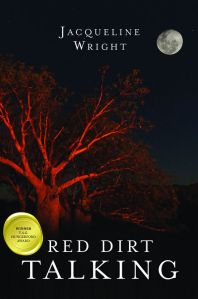
‘Red Dirt Talking’ by Jacqueline Wright

wright_reddirttalking

346 p. 2012

I’m nearly always disconcerted by film footage of aboriginal settlements- the dust, the rubbish, the band of kids clustering around.  Yet I sense, despite the many deficiencies that can be picked out so easily, that there’s another way of living there with priorities and resiliences that I can’t see.  Alexis Wright gave us a glimpse of it in Carpentaria, as did Maria Munkara in Every Secret Thing.

Red Dirt Talking is a whitefella perspective on this landscape.  The small town of Ransom is in outback Western Australia; eight kilometres  out  is the ex-mission station  Eight Mile Creek, smaller still; and 370 kilometres further out again  the Aboriginal communities of Yindi and Breakaway.  Here are all the set pieces of what we understand of outback life today-  the smelter and its fly-in, fly-out workers that distorts the economy of small towns; the art centre co-op that teeters uneasily on the line between exploitation and entrepreneurship; the whitefella managers; the Toyota trucks; the Flying Doctor Service.

The book opens with the first-person narrative voice of Maggot the Garbo whose job takes him round the camps and pubs, the haunts of hard-bitten men and women, hoarders and crazies.   An eight year old Aboriginal girl, Kuj, has disappeared.  He doesn’t know what’s happened to her- no one does- but they all have their theories and suspicions.  The second narrative, told in the third-person voice,  is set some months earlier, focussing on Annie, a 40 year old anthropology postgraduate who arrives at Ransom, tape-recorder in hand and thesis in sight, hoping to collect some quick oral history interviews about a massacre some decades earlier.  Of course, such earnest whitefella briskness is completely the wrong approach.  Annie finds herself drawn into a diffident but increasingly complex relationship with the laconic Mick Hooper, one of the white project officers, and is gradually forced to let go of all the objectives, timelines and academic protocols that the university is trying to impose on her research.  Kuj is one of the constellation of children who swarm around the community, and as time elapses, the narrative takes us up to her disappearance but this time through the web of relationships- marriages, deaths, breakdowns, fosterings- that blur the boundaries between long-term black and white inhabitants of Yindi. Finally, there are the transcripts and contextualizing introductions to her interviews, printed in a different font on coloured paper: white-fella academia that stands apart both visually and as knowledge, from the rest of the book.  The book is called Red Dirt Talking, but it’s even more about silences and listening.

I must admit to becoming rather jaded at all the historian-as-protagonist stories that I seem to have read this year.  There’s a whole string of them- Candice Bruce’s The Longing; Paddy O’Reilly’s The Factory; Anne Summers’ The Lost Mother and Eliot Perlman’s The Street Sweeper.  What’s going on? Is it the influence of all these creative writing courses in universities, so that ‘writing what you know’ starts and ends with an academic?  Is the academic hunt an upmarket version of the ‘journey’ narrative that we all seem to be on these days?  With the increase in tertiary education levels, are we all academics and historians these days? Or am I hyper-aware of this  because my own thesis-clock is ticking away in the background?  I suppose that it’s a common framing device, but it’s wearing a bit thin for me at the moment- and so, I put A. S. Byatt’s The Biographer’s Tale back onto the shelf until I can read it with fresher eyes.

Red Dirt Talking was written as part of a creative arts doctorate, it won the T. A. G Hungerford award for an unpublished debut West Australian manuscript, and the author Jacqueline Wright has worked as a teacher and linguist in outback Aboriginal communities.  I think that you can detect all three influences in the text.  As a debut book, it is probably fifty pages too long and it has far too many characters to remember.  She has acutely depicted the politics and protocols of academia, and I suspect that she has observed other Annies, ( if, indeed, she was not an Annie herself when first arriving in the outback).  I found it hard to keep track of who was black and who was white (in fact, I don’t think that Wright did identify in terms of black/white anyway)- which is probably a good thing; her descriptions of landscape are evocative, and she captures dialogue particularly well.

But most importantly, she cuts through the visual imagery of outback life- the mess, the flies, the rubbish strewn yards, and the people gathered under trees- and picks up on the humour, the complexities of relationships and histories, and the uneasy coexistence of wariness and generosity in a community where she is an outsider.  I found myself perfectly happy to pick up the book to keep reading, and I was drawn along by wanting to know what happened to Kuj.

My rating: 8/10 maybe 8.5

Sourced from: Yarra Plenty Regional Library

Read becauseLisa at ANZ LitLovers reviewed it, and I read a good review of it somewhere (although I can’t remember where!)

Happy Christmas Resident Judge

And how did John Walpole Willis spend Christmas in Georgetown, Demerara in 1833?

Xmas Day. JWW (John Walpole Willis) and JW (Jane Willis) at Church in ye Morn’g very fine day.  Mr and Mrs Price, Messrs Harvey & Cowan called.  JWW and JW rode in ye even’g called at Mr Albany’s gave the servants their dinner Roast Beef & Plum pudding.

Happy Christmas all.

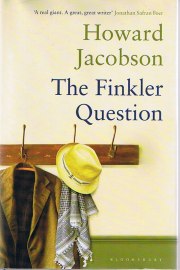
‘The Finkler Question’ by Howard Jacobsen

finkler10082

320 p. 2010

It’s an odd coincidence that the books chosen over the course of a year by my face-to-face reading group often end up having a common theme.   We send in a list of about 40 possible titles, and yet somehow or other there are often connections between the eleven that actually land in our laps. It seemed that one year we read a succession of Asian family-history stories spread over three generations (oh, please spare me another of  those!) and this year we seemed to have stumbled onto a Jewish theme.  One book, Lily Brett’s You’ve Got to Have Balls annoyed me and I was relieved to find that I couldn’t attend the meeting and promptly ditched it.  The second The Full Catastrophe, I enjoyed.  And now this third book The Finkler Question.

It won the 2010 Man Booker Prize.  What was it up against?  Hmm. A Carey, Emma Donoghue’s Room, Damon Galgut, Andrea Levy- I think I like her, and Tom McCarthy’s C. Well, I’ve heard of two of them (Parrot and Olivier in America and Room)  and the longlist had The Slap and a Rose Tremain book as well.  If I’d written any of these books, I’d be pretty annoyed. I really didn’t enjoy this book much at all.

The “Finkler” Question is actually the “Jewish Question”, posed by the protagonist Julian Treslove, retired BBC employee now working as a celebrity impersonator, who decides that after he was mugged by a female assailant who hissed “You Jew” at him (or at least, he thinks that’s what she said) that he really must be Jewish and just didn’t know it before.  And off it goes into a long conversation about Jewishness and Jewish self-loathing and anti-Semitism- on and on it goes; talk, talk, talk.  It’s a bit like reading a British Woody Allen, and I don’t really like him much either.  I find the language overwhelming, and the self-absorption tedious.  This book is promoted as a comic novel, but I barely found anything more than mildly humorous in it.

I don’t know what the other contenders were like, but I sure wouldn’t be awarding it the Booker Prize.

My rating: 6/10

Read because:

Sourced from: Council of Adult Education.