The Rest is HistoryEpisode 261: The Tupumaros I’m doing a presentation on Jose Mujica, the recently deceased ex-president of Uruguay, who was a guerilla fighter with the Tupamaros in his youth. This episode made me realize how anglo-centric ‘The Rest is History’ is because obviously Tom and Dominic (I’m on first name basis with them now) knew little about Uruguay or the Tupamaros until they did the research for this episode. They point out that Uruguay was a small, progressive country known as the Switzerland of South America, but after WW2 the prices of wool and meat declined and inflation and unemployment rose. Raul Sendic, the founder of the Tupamaros, was the bright boy of a peasant family. In 1963 the Tupamaros began a series of bank robberies and kidnappings, most of which ended with the hostage being released after about 10 weeks, before moving on to international figures like the British ambassador and then US advisor Dan Mitrioni. This sparked off mass arrests, and they give a figure of 1 in 5 Uruguayans being arrested (a figure I haven’t found elsewhere). Democracy was suspended between 1973 and 1985 and all the Tupamaros were arrested or exiled. Jose (Pepe) Mujica was one of these prisoners, kept in a horse trough for 2 years, with no toilet, and he was driven half-mad before his release in 1985. On the day that Mujica was elected president, Uruguayans confirmed by referendum that the amnesty for both prisoners and human-rights abusers should remain. After his presidency Mujica retired in 2015 to his farm, where he grows chrysanthemums. (He died recently, hence my interest in him).
Guardian Long ReadsOperation Condor: the Cold War conspiracy that terrorized South America. This podcast by Giles Tremlett was originally broadcast in 2020. During the 1970s and 80s, eight US-backed military dictatorships jointly plotted the cross-border kidnap, torture, rape and murder of hundreds of their political opponents. Now some of the perpetrators are finally facing justice. I like Giles Tremlett, whose book Ghosts of Spain I very much enjoyed. I had heard of Operation Condor, but thought that it was a spy novel about CIA agents! Instead, it was an agreement between right-wing governments in South America to allow friendly dictatorships to cross national borders to arrest their citizens who had fled into exile. Most South American countries passed Amnesty Laws as a compromise for the return of democracy, so few court cases against human rights abuse have been mounted in South American countries (although I note that recently Sydney nanny Adriana Rivas has lost her appeal as part of avoiding extradition to Chile for her role in Pinochet’s regime). Instead, it is European courts who are opening up cases against officials in dictatorships because they are not bound by the amnesty laws. It’s an interesting and rather chilling thought that Western countries were considering getting advice from South American Operation Condor officials, in order to introduce a similar system in Europe during the IRA and the Baader-Meinhof group terrorist campaigns.
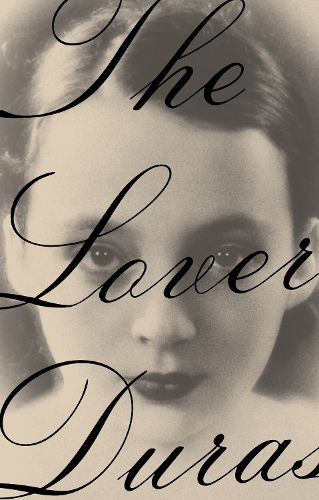
One of the very best things about belonging to a book group is when you go along, thinking that a book is a bit mediocre, and you leave having been introduced to a swathe of subtleties and themes that you just hadn’t thought of before. This is what happened with me at the Ivanhoe Reading Circles’ discussion of Marguerite Duras’ The Lover.
The Lover starts and ends with the reflections of a 70 year old woman, which was the age that Marguerite Duras was when she wrote the book. Although she later distanced herself from the book, claiming that it was a “pile of shit” that she wrote while she was drunk, it closely follows the contours of her own life and could probably best be classed as fictionalized memoir. It is set in Indo-China, then under French rule, in the late 1920s. Both the title and much of the narrative revolve around an affair she conducted with a man twelve years older than her, when she was aged only fifteen. It is a consensual relationship, although she treats her lover with a rather patronizing pity, knowing that as a Chinese man he cannot hope to marry her as a white woman. The 70 year old narrator claims that the girl (who alternates between ‘she’ and ‘I’) is no victim here; that she is hungry for the physical act and that she gains confidence and status through the affair. She does not love him, or at least she claims this, but he is humiliated by the relationship, and later confesses that he has always loved her. I found myself thinking of Nabakov’s Lolita written from Dolores’ point of view, (acknowledging that Dolores was younger, and Humbert was older), in this case without the lens of paedophilia and in this case further complicated by issues of class and colour.
The title and the reputation of the book rest on the affair, but that is only part of the story and on the second reading I found myself even more aware of the other aspects of the novel. The girl is white, her family being French in a French colony. Her mother is a widowed schoolteacher and the family is poor after her father’s death and following the disastrous financial purchase of a ‘concession’ in the rural countryside. The girl’s mother, who suffers from bouts of mental illness, is nonchalant and even complicit in her daughter’s affair with this rich Chinese older man (although twelve years is not an excessive age difference, and in France then and now the age of consent is 15). He gives her money, and the family needs it, especially as her older brother is siphoning money from his own family to feed his opium addiction. Her hatred of her older brother is sustained throughout her life, especially when her younger (but still 2 years older) brother dies.
The book is not easy to read. Many times she returns to the image of the girl on a ferry crossing the Mekong River, dressed in a faded silk dress with a belt belonging to her brother, gold lame shoes and a pink-brown fedora. This is how her lover first saw her, and this is how the 70 year old her sees herself looking back. The narrative is shattered, switching repeatedly between first and third person, interspersed with flashbacks and flashforwards. There is a flatness of tone throughout, as if the book were being narrated at a distance in a monotone.
I’m pleased that I read it a second time. I realized on second reading that the repetition and fragmentary nature of the narrative was not going to resolve itself miraculously at the end, and I slowed down to savour it more. Her affair – or whatever you would call it- as a 15 year old, her childhood in French Indo-China, her yearning to write, the paradox of ‘pleasure unto death’, memory and madness are themes that she returned to again and again in her writing. She might have decried it as a pile of shit, but it’s not.
In the Shadows of Utopia Season 2 Episode 8 Rolling Thunder in Vietnam, Clouds over Cambodia Time Period Covered 1964 – 1967. Despite LBJ’s doubts about the wisdom of escalating the war in Vietnam, it seemed to be set in stone by 1964. The Vietnam War was really the resumption of an earlier war. The Vietnam Workers Party resolved to mobilize large numbers of North Vietnamese and NLF fighters quickly in order to win a victory before the US got involved. In August 1964 the Tonkin Gulf episode was an over-reaction, but LBJ used it to justify his stance on the war and he was rewarded with an increase in popularity. Meanwhile, the Cambodian communists in Vietnam were becoming increasingly resentful, wanting to start an armed struggle back home, but discouraged by the Vietnamese because they were friendly with Sihanouk. Pol Pot found himself feeling sidelined. He visited China on the eve of the Cultural Revolution as a friend of revolution, and he liked the idea of continuous revolution, especially drawing on the rural peasantry, as put forward in the Little Red Book. But although he received the support of Chinese officials, China also did not want to encourage armed struggle as they too were friendly with Sihanouk. In 1966 Pol Pot returned to Vietnam, then on to Cambodia, but his progress home was hampered by heavy bombing. The Cambodian Communists conducted a study session in 1966 where they decided to change their name from the Cambodian Workers Party (which matched the Vietnamese Workers Party) to the Communist Party of Kampuchea (CPK) and moved their office to avoid the surveillance of the Vietnamese. Pol Pot was determined to prepare for armed struggle in the rural areas. But things were changing in South East Asia as the 1965-6 aborted Communist coup in Indonesia led to heavy repression. In Cambodia, Sihanouk was losing his magic, with the stagnant economy, disaffected youth, internal repression and border skirmishes as Thailand and the US pursued the Viet Cong into Cambodia. Conservatives were becoming disillusioned with Sikanouk’s ‘both ways’ approach that saw him rejecting the west and maintaining a relationship with North Vietnam and China. The left never like Sihanouk anyway. There was increasing resentment at Sihanouk’s involvement in film-making and acting- apparently they were bad films, focussing on the elite. In 1966 there was another election but this time Sihanouk didn’t select the candidates, leading to a new assembly that was not completely in his control. Lon Nol was chosen as Prime Minister as he was still loyal to Sihanouk and popular with the army and Buddhists. Sihanouk went off to France, but things changed in his absence.
The Human Subject (BBC)The Farmers and the Goat Testicle Transplants. In 1916 a farmer walked into a Dr John R. Brinkley’s surgery in the small town of Milford, Kansas, complaining of a ‘flat tyre’ (i.e. erectile dysfunction). The doctor suggested a transplant of goat’s testicles as the solution to his problem and Brinkley’s career as a xenotransplant surgeon took off. He had his own radio show, where he spruiked patent medicine, and unsuccessfully ran for government, claiming that the election was ‘stolen’ (sound familiar?) He was engaged in multiple court cases, and ended up losing his licence to practice and was called a quack. Interesting.
I’ve been thinking recently of public displays of grief after a leader has died. Some weeks ago, the ex-President of Uruguay Jose Mujica died, and I was struck by the spontaneous and heartfelt applause that accompanied the journey of his casket from the presidential palace to the National Assembly.
In contrast, I remembered the extravagant hysteria after the death of Kim Jong-il some thirteen years ago.
I’ve been thinking about the deaths of leaders while reading Sheila Fitzpatrick’s The Death of Stalin. Fitzpatrick is an eminent Australian historian of Soviet history, but this small book is written for a general audience.
The title echoes the Armando Iannucci movie of the same name, which Fitzpatrick admires:
In his The Death of Stalin, the British film director Armando Iannucci memorably depicted the death scene as black comedy, with Stalin’s potential successors united only by ambition and relief, milling around distractedly at his deathbed. That is indeed how the main eye-witness accounts describe it, although to be sure these were eye-witnesses with their own agendas. There is black comedy in this [i.e. Fitzpatrick’s] book too, not just in connection with Stalin’s death but also with the fate of his corporeal remains (buried, dug up, reburied) and the subsequent persistent apparitions of his ghost. But not everything about Stalin’s death is comic. It had serious implications for his country and the world in the twentieth century and beyond; this book sets out to unravel them. (p.2)
Chapter 1 starts with a biographical sketch of Stalin. Under the chapter title is a police photograph of Stalin taken in the early 1900s, showing a quite handsome, chiselled young man – quite unlike the pudgy, square man he became in later life. He was involved in the Russian revolution from the start, in fact he made it back to Petrograd before Lenin did after the February Revolution of 1917. Although a member of the Politburo since its inception in August 1917, he became the quintessential backroom man, a role formalized with his appointment as general secretary of the party in April 1922. Despite Lenin adding a postscript to a document that came to be known as ‘Lenin’s Testament’, warning that Stalin’s rudeness rendered him unsuitable as party secretary, Stalin and the Central Committee saw off an opposing faction and he became leader after Lenin’s death. His ascendancy was welcomed by Western observers, who saw him as a centrist. He mounted a program of mass collectivization and industrialization guided by a Five Year Plan. By 1934 he announced a new phase of relaxation, and he introduced the new Soviet Constitution. But he changed direction again at the end of 1934 when his friend Sergei Kirov was assassinated by what turned out to be a lone-wolf actor. Mass terror was released, directed initially against members of the party itself, then to the broader population. He startled the Soviet public and the West by signing a Non-Aggression Pact with Hitler in 1939, which was broken in June 1941 when Germany launched an invasion of the Soviet Union. Despite the huge cost in infrastructure, military and population loss, Stalin emerged from WW2 with enormously enhanced prestige at home and internationally. Within a few years, unfounded fears of Soviet communism (unfounded because Stalin knew that Russia was in no state to launch WW3) settled into the Cold War, fueled by mutual hostility and suspicion, but tempered by the nuclear threat and the use of proxies. By 1949 the cult of Stalin reached a peak as Stalin’s 70th birthday was celebrated.
By early 1953, Stalin would be dead. In Chapter 2 ‘Stalin’s Death’ we see Stalin as a lonely, isolated, paranoiac man who insisted on the attendance of his Politburo colleagues at film nights at the Kremlin, and crude, men-only dinners at his dacha. The day to day running of the business of government was carried out by the Politburo, with sudden interventions by Stalin, and shifts against his erstwhile colleagues. One of these initiatives was the arrest of a number of physicians from the Kremlin hospital, known as the ‘Doctors Plot’. As we know from the film ‘The Death of Stalin’, this backfired somewhat when there was no one to treat him in the dacha when he had what appeared to be a stroke. Actually, Iannucci didn’t have to embellish much in his depiction of Stalin’s death: the fear of finding him dead; him not actually being dead; sending in the housekeeper; having to find a doctor because they had all been arrested; the arrival of his daughter and drunk son. However, unlike in the film, they quickly set up an efficient government, calling themselves ‘the collective leadership’ (p. 37)- a fact that might have undermined Iannucci’s black comedy somewhat. His body lay in state in the Hall of Columns in Moscow for three days and was buried in the Mausoleum, with his name emblazoned under that of Lenin.
Chapter Three examines reactions at home, noting the recorded responses of writers and members of the public, before then moving on to the immediate, radical policy changes that were set in train. First was the announcement of a mass amnesty for non-political prisoners in the Gulag, then the withdrawal of charges against the doctors. There was a change in direction on the nationalities policy and an abrupt halt to the Stalin cult. The first six months of 1953 was described as a ‘cultural thaw’, but this was not necessarily welcomed by the Soviet public. Beria was ousted and put on trial and swiftly executed. This made it possible to put all the blame for the Stalinist terror onto Beria’s shoulders.
Reactions Abroad are dealt with in Chapter 4. The rest of the world wasn’t really sure what would happen when Stalin died. Western intelligence was at a low ebb between the end of the war and Stalin’s death, and so the West missed the signals that the ‘collective leadership’ might be willing to deal. Eisenhower appointed John Foster Dulles, one of the most virulent anti-Communists on the US political scene (p. 65). He and his brother Allen, who headed the CIA, favoured undermining the Soviet Union by making trouble in the satellite-states, rather than provoking a head-on confrontation. It was, as A.J.P. Taylor said, a turning point that failed to turn (p. 71). It was only in 1956, with Krushchev’s partial denunciation of Stalin that there was Western recognition of the thaw.
The closing Chapter 5 ‘Stalin’s Ghost’ looks at his legacy. For the first years after Stalin’s death the terror of the 1930s was the great unmentionable. This was broken in 1956 with Krushchev’s ‘Secret Speech’ to the Congress in Moscow which denounced Stalin, the cult of personality and the Purges and terror under his government. Although writers embraced openness about Stalin’s reign, the reactions of ordinary people varied. Some simply did not believe it, and there was public protest in Georgia, where the speech was seen as an insult. In some of the Soviet satellites, the Soviet Thaw encouraged local Communist parties, including in Hungary, to remove unpopular Stalinist leaders and put in Communists with a reform agenda. The Soviet Thaw didn’t extend that far: Soviet tanks were sent in to Hungary, and reformer leaders were arrested. Krushchev was ousted in 1964, in the wake of the Cuban Missile Crisis, and replaced by Brezhnev who oversaw a replay of Hungary 1956 in the Soviet invasion of Czechoslovakia in 1968. Even though a breach opened up between Brezhnev and the intelligentsia, Stalin was not rehabilitated. That had to wait for Vladimir Putin. The book ends on a rather chilling note.
There is a lot in this small book, which is presented so clearly that it can engage readers who are not particularly familiar with Russian history. The book provides a timeline spanning 1879 to 2000, and a full ten-page ‘cast of characters’ including not only Russian political and cultural personalities, but also Mao Tse Tung (Zedong), Winston Churchill, Franklin D. Roosevelt and Harry S. Truman. The book has endnotes, but they are not footnoted throughout the text.It is liberally illustrated, albeit in black and white (although that echoes the theme of the book quite well), and by bringing it right up to the present day and referencing the Iannucci film it has a contemporary edge. It’s a good read.
Background Briefing (ABC)Agents of Influence Ep. 2 The Billionaire’s New Sport I’d never heard of Len Blavatnik, but apparently he’s the new head of Foxtel and the owner of Warner Music. Is he the person I have to blame for taking AFL off free-to-air on Saturday night? He is one of the oligarchs (although he does not like that term) who made his money through the carve up of Russian state enterprises after the fall of Communism, and somehow he seems to have escaped Western sanctions. He has since distanced himself from Russia, and is strongly pro-Israel and pro-Netanyahu. Yuck.
The Rest is History Episode 554: 1066 The Shadows of War After our little excursion with Harald Hardrader, we head back to 1066 again with three warlords: the Viking Harald, the French Duke of Normanby and the Anglo-Saxon Harold Godwinson. Edward the Confessor died on 5 January 1066 and the Bishops met to choose the next king (which surprised me because I thought that the English crown was hereditary, but it wasn’t. Although family had a good head start). There were quite a few contenders to choose from: 1 Harald Hardrada who had a slight claim, and no one wanted the Vikings 2. Sven, who was King Knut (Canute)’s nephew. Another Viking. 3. William the Duke of Normanby who had been promised the throne of England 4. another descendant of Alfred the Great 5. Edward the Exile in Hungary who arrived back in England in 1057. 5. Thirteen-year old Edgar. 6. Harold Godwinson. The Bishops went for Harold Godwinson, well aware that this would prompt an invasion, and so they crowned him the very next day. Meanwhile Tostig, Harold’s brother was stewing away in exile and he invaded but was not successful. Thanks to feudalism, Harold could command 90% of English men, but he was facing Norman technology and confidence, sharpened by religious reform under hardline Catholic reformer Hildebrand (who was later to become Pope Gregory VII). When bad winds arrived, threatening to delay William of Normanby’s troops, Harold decided to stand down his army which was a big mistake because who should arrive but brother Tostig and Harald Hardrada!
Half Life BBCEpisode 7 The City Forgets Happy to distance himself from his great-grandfather’s half-truths, Joe turns to his great-grandfather Siegfried’s sister Elizabeth who redeemed the family somewhat by establishing a nursery and orphanage for Jewish children in Munich. Once the Nazis came to power, Elizabeth herself escaped to Tel Aviv, and there she read about the gradual deportation, in several tranches, of all the children in her orphanage. In the concentration camps they were gassed by the same chemicals that Joe’s great-grandfather had produced. Episode 8 A Fracture Joe returns to Germany, where eventually a memorial to the Dersim massacre is unveiled, something that would not be possible in Turkey, where all mention of the massacre is suppressed. Kurdish activists are trying to get the German government to take responsibility because the chemicals were manufactured there (which is a bit of a long stretch, I reckon, and they’re probably only pursuing it because the Turkish government won’t admit it). I’m getting a bit sick of Joe making it all about him. It’s about time this series finished.
The Spanish Film Festival has finished here in Melbourne, but as in other years, Palace Cinemas are showing the most popular films after the Festival has finished. El 47 is a Spanish film, set in Barcelona, and it combines both Castilian and Catalan Spanish (distinguished in the subtitles by different colours).
The movie starts in Franco’s Spain of the 1950s as internal migrants, displaced from their own land, move into Torre Barro, in the steep mountains on the outskirts of Barcelona. There they construct chabolas, or shanties, with their own hands. The law allowed any structure with a roof built between sunset and sunrise to remain, but when individual families worked on their own hut alone, they were continually unable to meet the deadline, only to see the authorities pull the hut down again. It is only when they realize that by working together to construct just one chabola a night, that they can manage to build a settlement communally.
Jump forward 20 years, and Franco has finally fallen and democracy has arrived. Those twenty years have seen the inhabitants of Torre Barro improve their houses, but the government has not provided any services in that time, forcing the inhabitants to carry on their backs everything needed to live: water, food, mail. Cars, public transport and emergency services cannot reach the houses, and low-paid workers trudge up and down the mountain each morning and night. Manolo Vital, a bus-driver from Torre Barro, lobbies the government to provide services, but without success. He then decides to hijack his bus, and take it up to Torre Barro, to prove that it is possible for large vehicles to get up the mountain.
This is based on a true story. The movie combines contemporary film footage, and although somewhat predictable, it was a feel-good story that reminds us that Franco’s Spain was another country, where tradition and poverty dominated right up until the 1970s, almost in defiance of the changes that were occurring elsewhere in the world.
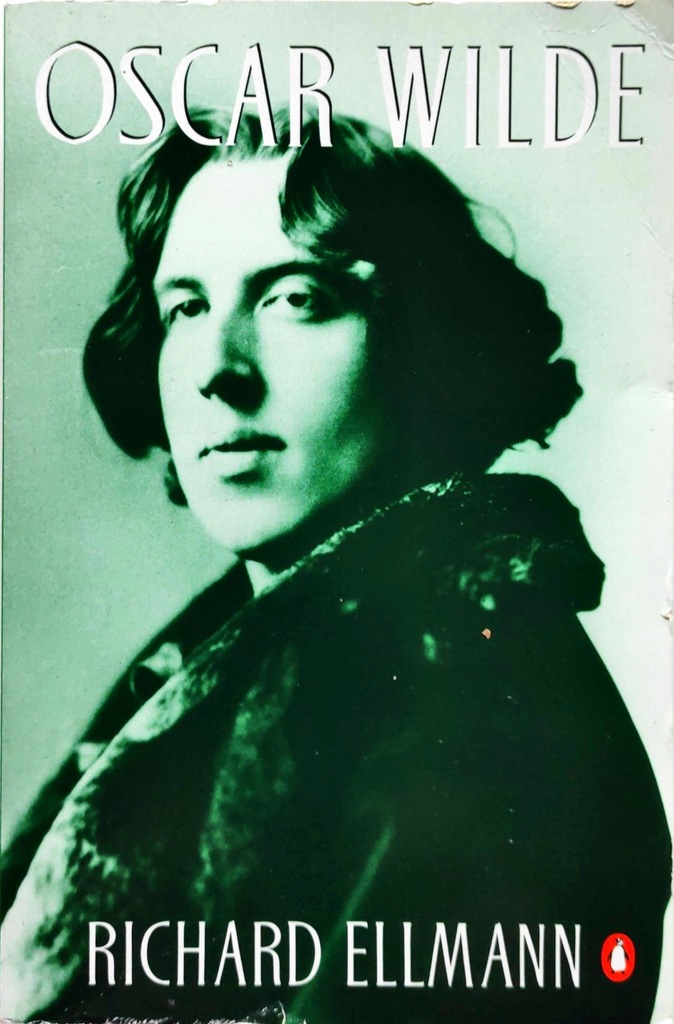
I can hardly believe that I have read this enormous tome not once, but twice. The first time was in 2002, when I read it for an online Literary Biography book group, and this second time was for my former-CAE bookgroup (which I nicknamed ‘The Ladies Who Say Oooh’, which is what my daughter used to call us). The CAE has disbanded its bookgroups and farmed out its book collections to groups, no doubt to save themselves the hassle of getting rid of thousands of books. None of us actually chose this book, but we were happy to read it. That was before the group members realized how long it was, and how small the font was. I think that I was the only one to actually finish it, largely because I knew that I enjoyed it the first time. But I think that I was more impatient with it this time.
Richard Ellman’s biography of Wilde won both the National Book Critics Circle Award and the Pulitzer Prize. It has been described as the ‘definitive’ biography, and I certainly don’t think that another Wildean fact could possibly to be dredged up that hasn’t been included in this exhaustive and exhausting book.
The first time I read it, I was largely unaware of Wilde and his story. I knew that he wrote plays, that he wrote ‘The Happy Prince’, that he was homosexual and that he ended up in jail. Perhaps my enjoyment of the book the first time was that it was all new to me then, although I have since watched Stephen Fry’s wonderful performance in the movie ‘Wilde’, seen an excellent local performance of David Hare’s The Judas Kiss and read Fanny Moyles’ Constance: The Tragic and Scandalous Life of Mrs Oscar Wilde.
Ellmann certainly leaves no stone unturned, starting right back with Wilde’s birth and and going through to rather graphic details of his death. He draws parallels between Wilde’s writing and his own life, and then (as now), I found myself regretting that I have never read The Picture of Dorian Gray. The courtcase that led to his downfall does not appear until about 4/5 of the way through the book, so there is plenty of time for Ellmann to establish Wilde’s large circle of artistic friends – including even Australia’s Charles Conder and Dame Nellie Melba- and Wilde’s conscious creation of ‘aestheticism’ as a cultural movement. In the late 1880s-early 1890s, he seemed to be everywhere: in print, on the stage, amongst the wealthy, the glittering and the cognoscenti. Ellman’s sympathies are clearly with Wilde, although he shows us his fecklessness (especially in relation to his wife Constance), his recklessness and his odd mixture of weakness and doggedness.
This second reading, however, found me impatient at the denseness of the prose and overwhelmed by the minuscule level of detail. It is as if he could not bear to leave a single fact out, and if he couldn’t squeeze it into the text, then he would carry it on in the lengthy footnotes at the bottom of the page. (That said, I was grateful that he included translations of the French in the footnotes as well). I read now that Ellman completed the book just before his death with Motor Neurone Disease in 1987, and that he was not able to revise it or correct errors which have since been corrected by another writer. Perhaps, had he had more time, he might have stripped the book back a bit, which would not have harmed it in any way and indeed may have enhanced it. As it is, Ellmann has covered Wilde’s life so exhaustively that any further biographers could not compete in thoroughness, only in incisiveness.
Half Life (BBC)Episode 5 The Road Through the Mountains Joe travels to the Kurdish region of Tunceli in Turkey, which is the new name for Dersim. Tunceli means ‘bronze fist’ which is appropriate because the area is still heavily miltarized. Poison gas (made by German chemical factories) was used in caverns, and people were bombed from above. In Episode 6 Tranquility Joe’s great-grandfather Siegfried retires to North Carolina in the United States after the war, but by 1957 he was hospitalized in a psychiatric hospital. It was there, as a form of therapy, that he began writing his lengthy memoir, which made Joe question whether that changed the status of the document that had set him off on this whole journey.
Harald Hardrada; exiled prince of Norway and mercenary, has landed in the greatest city on Earth: Constantinople. There he joins one of the most prestigious military organisations in the world, the Varangian Guard, charged with protecting the Emperor. Almost the next ten years of Harald’s young life are spent at war protecting the city from enslaving raiders. But then, he becomes embroiled in the dark and complex political intrigues and plots of the Byzantine court. Zoe, the formidable wife of the recently deceased Emperor Michael IV, who had been exiled by her husband’s successor, recruits Harald to help her seize the throne. Wealthy, influential and renowned in the world’s most glittering city, things have never seemed better for Harald. But then, does he overreach and embark upon a dangerous affair with the empress herself? Imprisoned for his crimes, Harald manages to slay the terrible serpent haunting his prison cell, and escape at last back to Kyiv.
On his return to Kyiv in 1043, greatly enriched, he finds that his nephew Magnus has taken the throne of Norway and Denmark. After a bit of skirmishing, he and Magnus agree to share the kingdom and the wealth, and when Magnus dies, Harald is now the King of Norway, which is what he always wanted. He modernized Norway and introduced Christianity and taxes, and by 1065 and now 55 years old, was known as Harald Hardrada (i.e. hard leader)
Background Briefing Agents of Influence Ep. 1 The PM’s secret strategists Quite frankly I find the whole idea and terminology of an “influencer” offensive: someone who is important for their effect on other people, rather than for anything they actually do themselves. But apparently they’re all the go in politics today, and politicians are falling over themselves to appear on their shows. I’m getting too old for all this.
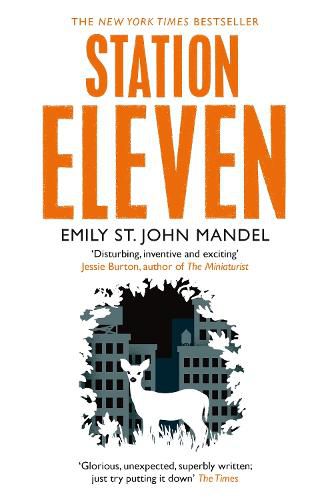
I had heard about this book during the COVID pandemic, and no wonder. Published in 2014, some six years before the world locked down, it describes a world where 21st century Western industrialization has collapsed in the wake of a virulent influenza that has wiped out 90% of the population. What cheering reading during a pandemic!
However, reading it ten years later and with those COVID years behind us, does Station Eleven stand on its own two feet? I think it does. Right from its opening chapter, which starts with a Shakespearean actor, Arthur Leander playing King Lear, collapsing on stage, I was hooked.
As Arthur falls to the floor, a member of the audience, Jeevan Chaudhary, a trainee paramedic rushes to give him CPR, watched by a little girl Kirsten Raymonde who stands in the wings. Returning home, he takes a phonecall from a friend who is a doctor, who warns him that the Georgia flu is rampant, and to take his girlfriend Laura and his brother, and to get out of town.
The narrative then jumps ahead twenty years and takes up again with Kirsten, now an adult, with only scattered memories of that night at the theatre, before everything changed. She is now part of the Travelling Symphony, a rag-tag group of actors and musicians, who move from settlement to settlement to perform music and plays. Electricity, gasoline, the internet and all the things enabled by these had ceased, and in the first years after the pandemic, life had reverted to a light-governed, subsistence struggle against other frightened groups, who were themselves fighting for existence. After twenty years, things had stabilized, albeit at a stagnant level, but a level of menace had been recently introduced by the rise of the Prophet, drawing on a mixture of messianic religion and violence to consolidate his power.
If this sounds at bit like Cormac McCarthy’s The Road, it is. I certainly had the same feeling of dread in the pit of my stomach as I read. But unlike The Road, there is not the same relentless hopelessness. This is a world that is trying to hold onto the best in music and literature, and trying to collect as many artefacts from the old world as possible so that the ‘before’ world is not completely lost. The world still looks for beauty. The book’s ending, while ambiguous, is hopeful.
It is beautifully written with strong control of the narrative, as Mandel slips back and forward between the ‘before’ and ‘after’ worlds, moving from one character to another. How prescient she was, and how chilling it must have been to pick up this book in the early days of COVID. But as a piece of writing, it doesn’t need the experience of the last few years to give it strength: it’s a very human, well-crafted book that celebrates creativity and the best of being human, giving hope without sentimentality.


 The Resident Judge of Port Phillip