Tag Archives: reviews

‘Any Ordinary Day’ by Leigh Sales

2019, 272 p.

Whenever I drive past the flashing lights of ambulances and police at a road accident, I think of the couple of minutes before that collision: the conversation that would have been abruptly cut short, the reason the occupants were in the car, how they would have got up that morning oblivious to how their lives were going to change in the next 12 hours.

This is pretty much the same impulse that led Leigh Sales to write this book. As a journalist, she had been on the media side of many interviews and stories about people whose lives changed dramatically. She had also had her own brush with death when a placental abruption in what had been a normal pregnancy led suddenly to a life-threatening situation, and fears for both her baby’s life and her own. Shaken by the experience, she came to believe that we are all vulnerable to sudden, unexpected change and yet we do not live that way. Why?

Her book revolves around the case studies of various people, some of who became caught up in ‘newsworthy’ events, others who experienced the death of a loved one (something that we all face) or had suffered a catastrophic injury or illness. The chapters are re-tellings of her interviews, interwoven with some ‘easy to digest’ research which veers at times into pop-psychology, and her own reflections of how she would have responded in similar circumstances.

Some of the people and the events described are well-known: Louise Hope, who as well as suffering from MS, was also one of the hostages in the Lindt Cafe siege in Sydney in September 2002; Walter Mikac who lost his wife and two daughters in the Port Arthur killings; James Scott, the ‘Mars Bar’ man who disappeared in Nepal and Stuart Diver, who survived the Thredbo landslide but his wife did not. Others are less well-known, Matt Richell, who died in a surfing accident, Juliet Darling whose husband was killed by her psychotic step-son and Michael Spence, the vice chancellor of the University of Sydney, whose wife died within 3 weeks of her cancer diagnosis, leaving him with five children.

As it happens, the first two case studies are both of people with deep Christian faith. In the case of Michael Spence, it was precisely because of his religious faith that she interviewed him, even though Sales herself is not a believer. As a former-believer myself, I found myself dreading that the book was going to become religious tract. It didn’t, but I still found it strange that she was to organize her case studies in this way, giving such prominence to faith and a belief in a higher purpose for suffering.

She locates herself as a journalist in these retellings, having presented many of the news stories herself. She tells us that she often becomes tearful during her interviews, perhaps as a counter to the perception of the sang-froid of the television presenter. The intensity of media scrutiny led several of her interviewees to engage a publicity agent to manage media appearances. This did not always work out well: you glimpse the newshound in her when she talks about James Scott, dubbed ‘Mars Bar Man’. He was advised by his agent not to name the chocolate that was his only food, in the hope that he could secure a sponsorship deal later. It wasn’t actually a Mars Bar, but instead a Cadbury’s chocolate, but when he fudged (terrible pun) the brand of the chocolate in an interview, the interviewee (Richard Carleton) sensed obfuscation and toughened his questions. Although Carleton came in for criticism for the ferocity of his questioning, Sales admitted that she would have done the same thing once she sensed evasiveness.

She returns several times to the idea that, having had one dreadful thing happen to you, you were inoculated against further trauma. Statistically, this is not logical even though emotionally, it is. She seems to feel that Louise Hope’s MS should have been enough, without the Lindt siege, and she spends some time on the idea of the ‘jinx’ on the women that Stuart Diver (Thredbo) has married, his second wife having died with breast cancer. Diver speaks of being a ‘memory locker’- capturing and keeping happy times for when the bad times come – but Sales seems somewhat resistant to such a stoic and clinical response to pain.

She devotes several chapters to people who helped: Detective Norris who accompanies a grieving wife to the morgue; counsellors Jane Howell and Wendy Liu at the morgue; Mary Jerram at the coroner’s office; pastor Father Steve who has a strong belief that families should see the body.

All of this is told in an intimate, rather confidential tone of voice. I used to listen to Chat 10 Looks 3, the podcast she made with political commentator Annabelle Crabb (still going, I see) and this book had much the same sort of feel to it. Interesting, personal but something that you could listen to (read) without much effort or challenge.

My rating: 7/10

Read because: Bookgroup Ladies selection. Now that the CAE has wound up, we have no identity!

Sourced from: Darebin Libraries Book Group collection.
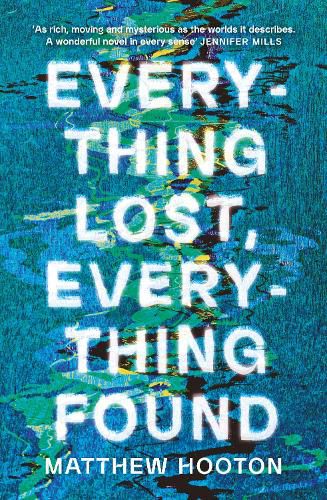
‘Everything lost, everything found’ by Matthew Hooton

2025, 304 p.

Are there more books being published about the slide into dementia and confusion, or it just that I perceive it that way because of my own fears? Writer and academic Matthew Hooton is rather too young to be facing this situation himself, but he captures well the slipperiness of memory in this beautifully written book. If you’re looking up ‘Matthew Hooton’ to find out more about him, you’ll find that unfortunately for him, he shares his name with a former National Party politician from New Zealand. But there’s a certain irony in that because Jack, the narrator of Everything lost, Everything found also shares a name with another Jack in Henry Ford’s rubber plantation in the Brazilian Amazon, where he travelled with his parents in 1929.

There are two threads to this book. One is Jack’s memories of Fordlandia in Brazil, a cookie-cutter American suburb transplanted into the Brazilian jungle, under the control of the morality agents charged with carrying out Henry Ford’s vision for a colonial outpost to establish rubber plantations in the jungle, while gradually easing out reliance on native rubber-gatherers. The second thread is that of Jack’s life in Michigan, in what is now a deserted Ford Factory town, as his wife Gracie is sliding into dementia and a slow death with cancer.

The descriptions of the jungle are just gorgeous, and the jungle itself seems to take on a personality. But it is a malevolent personality: taking Jack’s mother’s life in a caiman attack on the river, and driving Jack’s father into his own madness in searching for his wife’s body in the jungle. A man half-dead from exposure and the jungle’s flesh-eating insects staggers into Fordlandia, and Jack himself is not sure whether it is his father or not. Young Jack himself is forced into a battle with the jungle as he and Soo, a young Korean girl who had worked in the sanatorium laundry, try to escape the morality agents who have shopped her to the Japanese.

I read this book because I had recently read Hooton’s Typhoon Kingdom (review here) and at first I was struck by the difference in setting between his earlier book and this one. But Korea (where Hooton lived and worked for some time) works its way into this book as well, when Soo explains that she is Korean royalty has escaped the Japanese in their takeover of Korea early in the 20th century. I’m not sure whether this strains credulity or not.

But there is no difficulty at all in watching the older Jack, seventy years later, defiantly trying to stay in his family home as his life revolves around visiting his wife in the nursing home. Jack’s relationship with his divorced daughter Jess is strained, and his grandson Nick is a mixture of solicitous and off-hand adolescence as he is trying to negotiate his own relationship with his father.

In fact, one of the things that really impresses me about Hooton’s writing is the way that he is able to emotionally inhabit someone that he clearly is not: a Korean comfort woman in Typhoon Kingdom and an old man here. His characters have an authenticity and layers of complexity, and their dialogue and tone is distinctive and convincing.

The two story lines become increasingly intertwined, as Jack himself becomes more addled, and as the past colonizes the present, not unlike the colonization attempt of Fordlandia. Jack’s narrative voice is comfortable and engaging, and as a reader you want things to be better for him.

I really enjoyed this book. In one of those little twists of coincidence, I read a review from 1925 of Henry Ford’s rather burnished autobiography, which was written before the establishment of Fordlandia and some of the more unsavoury aspects of Ford’s politics. Moreover, I had only recently read Hooton’s earlier Typhoid Kingdom, and so the Korean aspect was familiar to me as well. But quite apart from that, I just enjoyed the beauty of the descriptions, the poignancy of loss and grief, and the sheer humanness of it all.

My rating: 9/10

Read because: I enjoyed Typhoon Kingdom and I saw that he had a new book out

Sourced from: Yarra Plenty Regional Library

‘Breath’ by Tim Winton

2008

Had this been the only Tim Winton book that I had ever read, I too would be throwing every award that I could at it: last night it was announced that it had won the Age Book of the Year.

Like the swell of ocean waves, you think that it’s building into a surf-story, then all of a sudden you realise that you’re into the full-blown coming-of-age story complete with betrayal, sexual experimentation, parental estrangement, empty dreams and disillusionment. It has it all: beautiful writing that just takes you along with it, a wry narrator whom you almost instantly like, a love for the ocean, and an ease of telling that is sure without being pretentious.  Much like the public persona of Tim Winton himself, it seems.

And I guess that here lies my problem with it.  I’ve read several Tim Winton books, and I feel as if I’m reading the same story again and again.  His evocation of his Western Australian roots, his Christian background, his middle aged male protagonists, his collection of broken, betrayed and disillusioned people…they’re all there in The Riders, Dirt Music, The Turning and now again in Breath.  The sheer exuberance of Cloudstreet- probably my favourite Australian novel- seems a long time ago, and it was. He does Angelus, and his nostalgic male protagonists very, very well.  But I think of other authors- Peter Carey, Margaret Attwood, Joyce Carol Oates- who really stretch themselves and their writing into new shapes and places and I wish that, perhaps, he was a bit braver.