Tag Archives: books

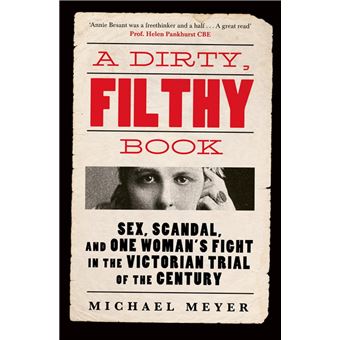
‘A Dirty, Filthy Book’ by Michael Meyer

2024, 331 pages & notes

Some people seem to live not just one life, but many. Annie Besant was one such woman who went from parson’s wife, to public speaker and publisher, social worker and activist, to university student and Theosophist. Michael Meyer’s book, subtitled ‘Sex, Scandal and One Woman’s Fight in the Victorian Trial of the Century’ focuses particularly on the court case in which she and her colleague Charles Bradlaugh were charged with “unlawfully wickedly knowing wilfully and designedly” printing and publishing “a certain indecent lewd filthy bawdy and obscene book called Fruits of Philosophy” which would bring the subjects of Queen Victoria into “a state of wickedness lewdness debauchery and immorality”, as well as offending against the peace and dignity of the Queen. (p. 140)

Neither of the accused had actually written the book, which was quite an old text written forty years earlier by an American doctor, Charles Knowlton. In fact, Charles Bradlaugh didn’t think much of the book at all, but it was more the principle of making knowledge available at a cheap price (sixpence) that drove Annie and Charles to defend publishing the book in court. They wanted a high profile case, and they got it. Conducted in Westminster Hall (before it burnt down), it was a jury trial held before the Lord Chief Justice Sir Alexander Cockburn. Already an accomplished public speaker, albeit completely untrained in the law, Annie conducted her own defence, and from the extracts published in the newspapers in this widely-discussed trial, she did a damned good job of it too.

She, even more than her co-accused Charles Bradlaugh, had a lot to lose. She had married a clergyman, Rev. Frank Besant at the age of 18, without actually loving her husband but hoping, as a devout Christian, that the role of minister’s wife would be a way through which she could serve the Church and her fellow man. It was an unhappy marriage from the start. She had two children, a son Digby and daughter Mabel, and managed, through her brother, to procure a separation from her husband but he kept custody of her son, and refused a divorce. If found guilty, Annie would lose custody of her daughter as well.

She had lost her faith during her marriage, and after her separation became heavily involved in the National Secularist Society, where she met Charles Bradlaugh. They were very close, although Meyer does not explore whether their relationship was sexual or not. Both were still married, and as public figures, could not expose themselves to scandal. She wrote numerous articles for the National Reformer weekly newspaper published by the NSS and was an accomplished public speaker. It was this experience of debate and public discourse that stood her in good stead in the courtroom at Westminster Hall, but did not shelter her from the fallout of the case. Charles Bradlaugh went on to have a successful political career, being repeatedly re-elected and repeatedly refused being able to take his seat in Parliament because, as a secularist and atheist, he refused to swear on the Bible. As their lives split off in different directions, the obloquy of her atheism prevented her from being able to graduate from the University of London, once they accepted female students, even though she was clearly a brilliant student. She threw herself into social activism in the East End, particularly in leading the Match Girls strike about working conditions and the use of white phosphorous in making lucifer matches at Bryant and May. Over her life, she had been a devout Christian, a strident atheist, and eventually she moved into Theosophy, to which she devoted the latter part of her life. She abjured her earlier publications, and especially the book about birth control methods that she wrote after the court case which was even more explicit than Fruits of Philosophy. It really is as if she had several careers.

In the book, there are parallels drawn between Besant and two other women. The first of these is circus performer Zazel (Rossa Richter) who drew fame for being shot out of cannon, night after night. The second is Queen Victoria herself, who had a much happier experience of married life than Annie Besant did, and whose politics were diametrically opposed. Queen Victoria was not particularly aware of Besant, but she did record her disapproval of Bradlaugh in her diaries.

When I first started reading this book, I enjoyed its breezy tone and discursive narrative but I soon tired of it. In trying to contextualize Besant and her various campaigns, he draws on newspapers to illustrate what else was occurring at the time, and in the end it became a distracting lack of attention- as if he couldn’t bear to let a juicy tidbit pass, without reporting it. I enjoyed his reporting of the court case itself, but the lack of discipline elsewhere in the book detracted from his analysis of the case and its aftermath. Like the court case itself, it all felt a bit tabloid.

The author is a travel writer, which did not surprise me. He is also Professor of English at the University of Pittsburgh, which did.

Nonetheless, it’s a really interesting story and, despite his digressions, Meyer tells it in an engaging and entertaining style. I just wish that there had been a little less ‘colour’ and more analysis.

My rating: 7.5/10

Read because: I heard a podcast about the book

Sourced from: Yarra Plenty Regional Library

I hear with my little ear: Podcasts 25- 31 December 2023

Expanding Eyes Episode 51 The Embassy to Achilles deals with Books 9-11. The three men sent to encourage Achilles out of his man-cave all used different approaches: self-interest, guilt and just bewilderment. Achilles responded as if he had been holed up an reading existentialism: that nothing mattered anyway. The Achilles Heel story does not appear in the Iliad, although there is a prophesy of a double fate facing Achilles- either dying in glory or having a long and unremarkable life. Note that Agamennon’s list of gifts to encourage him back does not include an apology for running off with Achilles’ wife (probably the one thing Achilles wanted). Although it seems very to-and-fro, there is a pattern to the interminable fighting in Book 10. Book 11 reveals the aristeia (i.e. high point) of Agamennon’s role in the battle. By now the main people in the Achaean army had received injuries which take them out of the battle. It’s in fact Nestor who first suggests that Patroclus take Achilles’ place on the battlefield.

Episode 52 The Horrors of War and the Value of the Heroic Code There’s a speech about the Heroic Code in Book 12, but it’s hard for me to find anything to admire in it. Michael Dolzani suggests that perhaps one good thing that comes out of it is a sense of competition, but it also spurred countless thousands of British men into the meat grinder of the WWI trenches. William James once suggested that we need a moral equivalent to war. Zeus decides to “look away” and the gods intervene, helping out their favourites, but the battle is going the Trojans’ Way. Meanwhile, Hera, who favoured the Greeks, distracts Zeus with sex.

The Rest is HistoryThe Fall of the Aztecs: The Night of Tears (Part 6) This episode focuses on the night of 30th June 1520, La Noche Triste, when the Spanish tried to break out of Tenochtitlan. Montezuma had been killed and they were surrounded by angry Mexica. They made their escape at night and were successful, but it was a bloody event. The Tlaxcalans rejected the Mexica’s pleas to join forces with them to get rid of the Spanish, and instead they joined forces with the Spanish. But another enemy was stalking: smallpox which had already wiped out the Taino people in the Caribbean (necessitating the importation of Africans as a replacement labour force- but that’s another story). It was probably introduced by Narváez, rather than Cortez. The harvest collapsed because there were insufficient workers, so when more Spaniards arrived, the place was deserted. Cortez was determined to wage a European style War, but the Tlaxcalan’s sacrificed and cannibalized their Mexica captives- but Cortez was powerless to stop them. In late 1520 ships were arriving all the time. Meanwhile, in Europe, Charles V was showing off the gold that Cortez had sent to him. A shipbuilder, who had survived La Noche Triste arrived with 12 ships that he had built and had carried overland, and so Cortez was set….

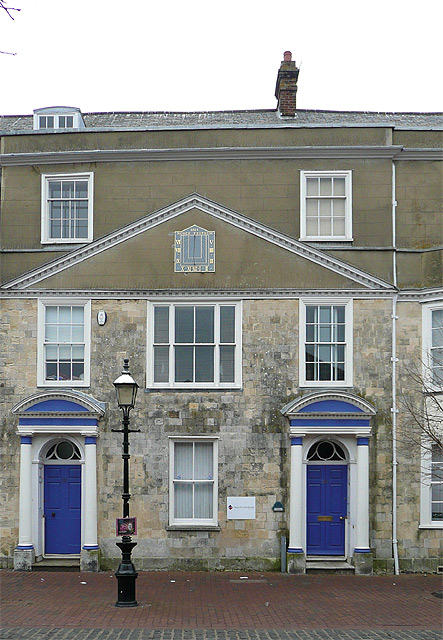
Roger Kidd Georgian House, Lewes, East Sussex https://www.geograph.org.uk/photo/1111791

History ExtraGeorgian Grand Houses: the forgotten women who built them. Featuring Amy Boyington, the author of Hidden Patrons: Women and Architectural Patronage in Georgian Britain, this episode highlights the autonomy of heiresses, mistresses and widows in directing the design and construction of houses. Although the men in their families usually paid the accounts, a different picture of women’s involvement emerges from their correspondence (often with other women) where they display their practical concerns over, for example, where the sun would be shining in a dining room on a summer’s night, or how cold a room might be in winter etc. She gives many examples of women and houses, many of which were unfamiliar to me, but would probably be well known among British listeners.

The Philosopher’s Zone (ABC). Richard Rorty and America. I don’t often listen to this program, because it’s often too heavy for me, but I was attracted to the episode on Richard Rorty. I didn’t (don’t) know much about Richard Rorty, but I had heard of him because Inga Clendinnen responded to one of his books where he omitted history from his list of genres which could encourage the growth of our imaginative capabilities. (Inga’s essay Fellow Sufferers is available here). This episode features Chris Voparil who has co-edited a recent collection of the late Rorty’s essays (he died in 2007) called What Can we Hope For: Essays on Politics. In an essay that Rorty wrote in 1996 called ‘Looking Back from 2096’, he predicted the rise of a Trumpesque strongman. He was critical of identity politics, and especially compulsory college courses to raise awareness of Black, Women’s and LGBT identities, pointing out that ‘Trailer Trash’ was never seen as a marginalized group to be championed. Nonetheless, he argued that we get our moral stance from the group that we identify with- literally a form of ‘identity politics’.

Literature and History Episode 11 Who Was Homer? looks at Books 17-24 before then addressing the question of who Homer was and if he even existed. Aeneas pops up in the battle before being whisked away by Poseidon, which went down a treat with the Romans who were to later claim Aeneas as their own. We need to remember that Hector didn’t kill Patrocalus (instead the minor character Euphorbus did), but he did steal Achilles’ armour from him and disrespected his body. The funeral games, which seem to us to be completely incongruous and which take ages are part of a set piece to break up the narrative, and such a device appears in other similar epic poems. The ending is very inconclusive, but that’s because what we know as The Iliad is part of an 8-book poetic cycle, of which we have only Books 2 and 7. From flashbacks in these two books, we know that in Book 3 Achilles is killed, in Book 4 the Trojan Horse appears, in Book 6 Agamennon and Menelaus return, Book 7 is the Odyssey and Book 8 deals with Odysseus’ later adventures. He then moves on to the question of Homer’s identity, something you might have thought he would have done at the start. He suggests that Homer was probably not one man, but the works instead spring from a collective oral tradition. There are many narratives where a band of mates sack a wealthy trading city (Cortez and Tenochitlan spring to my mind) and it is in effect the story of the collapse of the Bronze Age in miniature. Troy was probably part of the Hittite empire. There have been many attempts to date The Iliad, using archeology of weapons mentioned in the narrative; linguistic patterns and the meter of poetry. Although there might not be one Homer the writer, it’s possible that there was one Homer to reciter. Milman Parry (the so-called Darwin of Homeric studies) basing his approach on Yugoslav oral folk songs, looked to the use of formulaic descriptions, rhythm and repetition as a mnemonic aids to remember such a long oral poem.

‘Breath’ by Tim Winton

2008

Had this been the only Tim Winton book that I had ever read, I too would be throwing every award that I could at it: last night it was announced that it had won the Age Book of the Year.

Like the swell of ocean waves, you think that it’s building into a surf-story, then all of a sudden you realise that you’re into the full-blown coming-of-age story complete with betrayal, sexual experimentation, parental estrangement, empty dreams and disillusionment. It has it all: beautiful writing that just takes you along with it, a wry narrator whom you almost instantly like, a love for the ocean, and an ease of telling that is sure without being pretentious.  Much like the public persona of Tim Winton himself, it seems.

And I guess that here lies my problem with it.  I’ve read several Tim Winton books, and I feel as if I’m reading the same story again and again.  His evocation of his Western Australian roots, his Christian background, his middle aged male protagonists, his collection of broken, betrayed and disillusioned people…they’re all there in The Riders, Dirt Music, The Turning and now again in Breath.  The sheer exuberance of Cloudstreet- probably my favourite Australian novel- seems a long time ago, and it was. He does Angelus, and his nostalgic male protagonists very, very well.  But I think of other authors- Peter Carey, Margaret Attwood, Joyce Carol Oates- who really stretch themselves and their writing into new shapes and places and I wish that, perhaps, he was a bit braver.

‘Aphelion’ by Emily Ballou

2007, 493 p

There is such a thing as too much.  Chocolate, for example. Or wine. Or, as in the case of ‘Aphelion’ by Emily Ballou, too much scenery, too many storylines, too much thinking, too much talk, too many themes, too much imagery, too many pages, too much ‘luminous’ prose.

The book is set in the Snowy Mountains, in a small town that has been relocated as part of the hydro-electric scheme.  Four generations of women live in the family home- the 101 year old Hortense, her 80 year old daughter Esme, Esme’s niece Byrne (about 50) and her own daughter Lucetta (20 plus).  Into this seething mass of mother/daughter/aunt entanglement comes young Rhett from next door, returning to the family home after the death of his mother, bringing with him Hazel the American museum curator who barely speaks to her mother.   You can probably imagine the multiple themes here: motherhood, regret, what-ifs, relocation, dislocation, nostalgia etc. etc. etc.

This book felt like a Sunday evening serial on the ABC with lots of Australian scenery (just in case it can be flogged off to British television), iss-ews that we can all identify with, and multiple storylines.

But it wasn’t all bad.  In fact, even though the book was overdue and I was accruing a daily penalty, I wanted to keep it until I had finished it.  Perhaps, in spite of all these qualifications and criticisms, the fact that I wanted to reach the end is the most important response of all.

David Roberts PATERNALISM IN EARLY VICTORIAN ENGLAND

1979, 278 p

One of the frustrations that I’ve faced in trying to understand Judge Willis has been to try to understand his mindset. Why did Port Phillip society of the time find him so unacceptable and demand his dismissal? Was he too radical? Was he too conservative? Was he neither of these things? This book focusses on early Victorian England which, although a hemisphere away from Port Phillip, was the milieu that informed the thinking of colonial judges and civil servants and was the lens through which their patrons and superiors back in the metropole viewed their actions.

In this book, Roberts attempts the heroic in trying to define and illustrate the workings of an unnamed-at-the-time set of varying beliefs and attitudes which he, along with other 20th historians, identifies as ‘paternalism’. He argues that, bolstered by Romanticism and literature, paternalism reached its apogee in 1844. It’s a slippery concept, though, despite his attempts to pin it down through analysis, for example, of the backgrounds of the contributors to the major ‘paternal’ journals and quarterlies of the day, or by the speeches and voting patterns of ‘paternalist’ MPs in the 1840s. He divided these parliamentarians into 6 categories: the Romantics, The Peelites, The Churchmen; the Country Squires; The Whigs and the Anglo-Irish, but even he admits that there is no consistency between their espoused position in speeches, and their actions. Paternalism, it seems, is only one of several influences. In fact, his concept is so hemmed in by qualifications and disclaimers that you start to wonder if what he is describing exists at all.

But, despite his difficulties in defining it, he posits that after 1848 ‘it’ was no longer functional: rendered less relevant by the rise of urbanisation, a self-conscious middle and working class and the mid-century intellectual developments of science, rationalism, empiricism and belief in progress.

I’m not sure that this book has taken me much further in understanding Judge Willis. It’s interesting that his major patrons are categorized as either Peelites or Whig paternalists- but I’m not really sure yet what, if anything, that means.

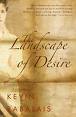
Kevin Rabalais THE LANDSCAPE OF DESIRE

2008, 280 p.

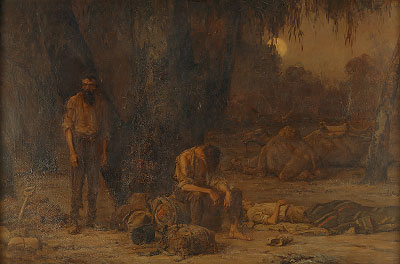
As a newcomer, you’d have to be pretty brave to write a fiction book about one of another country’s iconic stories. The author of this book is American-born and now living in Australia. Quite apart from the narrative draw of the Burke and Wills expedition in its own right, it’s obviously the sort of story that attracts writers from other countries. The English writer Sarah Murgatroyd with The Dig Tree also mined the Burke and Wills story with, I think, more success than Rabalais has had. And of course, Alan Attwood with Burke’s Soldiers and Alan Moorehead ‘s Cooper’s Creek also tell the Burke and Wills story- and they’re just the ones that I’ve read! Generations of Australian school children have heard the story; the highly glorified Burke and Wills statue has been shuffled to and fro around Melbourne streets and now overlooks the corner of Swanston and Collins Street, and the imagery is strongly reinforced by the Longstaff painting in the National Gallery of Victoria.

So how then, does a writer who has not grown up immersed and inured to all this mythologizing deal with the story? This is a fictional account, and focusses on the love interest between Robert O’Hara Burke and the actress Julia Matthews which he expands by having William Wills fall in love with her as well. I’m not aware of this twist- but hey, it’s fiction. The story is told in small snippets, disconnected in time and location and has the feeling of being at times over-written. As an Australian reader, it is familiar to me: I can’t imagine how a reader new to the story could possibly follow it.

If he is writing for an Australian audience whose knowledge of the expedition can cope with these narrative discontinuities, then he has even more responsibility to get things right. I always understood that they reached the mangroves of the Gulf of Carpentaria, observed the tidal flow, then turned back. I have never heard, as Rabalais asserts, that they stood in the foamy sea. This gives the expedition a triumph that it was denied, and there’s something very Australian in that. We are comfortable with our heroic failures- we like them that way.

There’s a sniff of the writing exercise about this book. Many sections are only 3 or 4 pages long (a good length for ‘workshopping’), and there is an appalling, anachronistic interjection of an authorial reflection about photographs which, thankfully, starts and ends abruptly never to be seen again.

The Moorehead book is the ur-text of Burke and Wills stories. Sara Murgatroyd, who died of cancer at the age of 34 just after her book’s publication, gets a good look in and has left a strong legacy. Other than that, I don’t really think the world NEEDS another Burke and Wills story.

Rose Tremain RESTORATION

1989, 371p

I have rather mixed feelings about historical fiction.  On the one hand, it was probably historical fiction that led me to my love of history in the first place, and the type of history that attracts me always has a strong human and imaginative thread to it.  When there is a basic fidelity to the setting and the mentalities of the main characters, then I love it.  It can be playful with the facts, but not earnestly wrong.  I really relished Peter Mew’s Bright Planet set in- surprise, surprise- 1840s Port Phillip, and Patrick White’s historical fiction (e.g. Fringe of Leaves, Voss ) is solidly grounded in research and yet nuanced and sophisticated in its themes.

But I have my reservations too.  I agree with Inga  Clendinnen (my heroine) with her qualms over Kate Grenville’s The Secret River and the issue of historical fiction attempting to contribute to a historical debate. I am annoyed when something is just plain wrong- the research has been done and exhibited, but it’s WRONG! I dislike the arrogance of projection of modern mentalities onto characters set in the past.  I sometimes feel as if the story is suffocated by meticulous research that the author can’t bear to let go of.

Which leads me to Rose Tremain’s Restoration.  It is set, as you might guess, in Restoration England, complete with Charles II, the Great Fire and the Plague.  There’s a certain predictability about this- of course they are all such write-able events that no author writing a book set at the time could resist them!  I thought that Tremain captured the voice of a 17th century male writer well, and my admiration for it increased even more when I returned, as I do from time to time, to www.pepys.diary.com to read Samuel Pepys’ diary entry for the day.

But of course, ventriloquism is not the same as creation, and it added to my sense that I was reading a set piece, with hackneyed settings and events and a reproduction of a 17th century voice.  This probably sounds more scathing than I mean it to be: I enjoyed it well enough, happily persisted to the end, but I only rate it as a  ‘good enough’ read.