‘What are they feeling?’ game

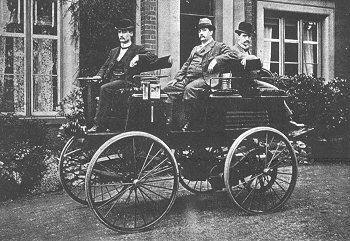
The Queen Mary Centre for the History of Emotions in the UK has a rather fun little game on their website. What are they feeling? presents you with historical images that you’re asked to interpret in terms of the emotion that is being conveyed.  I did fairly well on the human figures, but very poorly with the animal images. Just as well I’m not a vet.

You can find it at The Emotions Lab website.

They have a good collection of audios and videos on the site, too.

I hear with my little ear: Podcasts 1-7 September 2019

Podcasts about Snyder’s Road to Unfreedom. Having finished reading Timothy Snyder’s book The Road to Unfreedom, I listened to three podcasts where Snyder is talking about his book. Boy- the guy can talk! Certainly he’s going over the ideas that he has already written in his book, but he can talk articulately about tangential issues as well. He comes over as more optimistic in person than I felt he was on the page. On April 9 2018 he spoke at the Free Library of Philadelphia  and answered, not always successfully,  some interesting questions. He made a particular effort to speak about Russia, Ukraine, Europe and America all within the same frame.  It’s notable that he emphasized that the Mueller investigation, which had not reported at that time, would be about the rule of law and not other issues.  In Dan Snow’s History Hit, he speaks more as a historian, about the role of history in reclaiming the importance of time. Finally, Snyder is interviewed in a program titled “Liberal Democracy’s Misplaced Faith in the Future” on Trumpcast, which is a more blatantly politically partisan (i.e. anti-Trump) than the other programs, and this interview is far more U.S. oriented

Rear Vision (ABC) I listened to two podscasts that really tie in with current events. Trump, Greenland and the longer tale of American real estate talks about previous times when America has purchased land – from the French with the Louisiana Purchase, from the Russians when they bought Alaska, from Spain when they bought Florida, and Arizona and New Mexico from the Mexican as part of the Gadsden Purchase. However, in recent years America has been able to exert hegemony through the construction of bases without having to buy the whole country – some 500 of themacross the world. It is suggested that Trump’s plan for purchasing Greenland betrays his real estate developer tendencies, rather than a strategic plan.

The second podcast  Kashmir in lockdown was about Kashmir and India’s revocation of Article 370. The two academics here tell of their perspective of this action from the point of view of their own country (Pakistan or India) although they do have quite a few commonalities.  I’m uneasy about Indian assertiveness here, especially with two nuclear-armed countries.

Rough Translation Two good ones here. DIY Mosul is about the phenomenon in post-war Mosul (in Iraq) where people started volunteering to clean up the city- something almost unheard of after so many years of war. Yet an act that seems so benign wasn’t necessarily perceived that way by the post-war Iraqi government.

We Don’t Say That is about language in France -in particular, language for talking about blackness. There are two related stories here: one about a woman of French/American/Congolese origin who is trying to get a particularly offensive French term changed, and running up against the strict official controls on the French language. The second story is about claiming the word “black” in French, in a culture where race is not spoken about (even though it might operate powerfully). Really interesting.

Saturday Extra. Continuing with her series on Latin America, Geraldine Doogue talks with Gustavo Flores-Macias from Cornell University about the militarization of the Southern Border of Mexico/Guatemala, at the behest of the United States in Mexico Under Pressure. Mexico is beefing up its National Guard, an organization introduced in 2006 to deal with gangs, but which coincided with a higher murder rate in Mexico. Now the National Guard is controlling the Southern Border in a political ‘deal’ where U.S. chooses not to impose tariffs yet, as long as Mexico stops migrants coming through.

‘The Road to Unfreedom’ by Timothy Snyder

snyder_road_to_unfreedom

2018, 279 p & 60 p. footnotes

Perhaps it’s a function of geography and economics, but here in Australia at this time we are more concerned about the rising power of China than we are about the rising power of Russia. Nonetheless, we’ve been aware of it through reading about the U.S. election and the Mueller Report, through watching with curiosity the Maidan protests in Ukraine, and more tragically through the shooting down of Malaysian Airlines MH17, which prompted particular Australian attention because of the large number of Australians on board.

The subtitle of this book is ‘Russia, Europe and America’ and with its very current focus, it seems a little incongruous that it should be written by a historian, rather than a political scientist.But historian Timothy Snyder is, and he was a close associate and friend of the late Tony Judt, another acclaimed 20th century historian. Echoing the title of F.A. Hayek’s treatise on market liberalization, The Road to Serfdom, Snyder’s book explores the danger posed to the Enlightenment values of reason and reasonableness through two linked historical narrative forces: the politics of inevitability and the politics of eternity.

The narrative of inevitability is the sense that the future is just more of the present, with nothing further to be done, as exemplified by Francis Fukuyama’s hubristic and premature claim of the triumph of Western-style liberal democracy marking “The End of History“.  Communism prior to the collapse of the Soviet Union in 1991 had its own politics of inevitability: “nature permits technology, technology brings social change; social change causes revolution; revolution enacts utopia”. (p.7)

When the politics of inevitability collapses, as it did in 1991 for the Soviet Union and in the wake of the GFC for Western economies, it ushers in the politics of eternity. He focuses on Russia, but any country could slip into the politics of eternity (and indeed, perhaps several other countries are already doing so). The politics of eternity places one nation at the centre of a cyclical story of victimhood (p.8), where progress gives way to doom, crises are manufactured and manipulated, and citizens experience elation and outrage at short interval (p.8). In both forms of politics, history and facts are used in particular ways.

Inevitability and eternity translate facts into narratives. Those swayed by inevitability see every fact as a blip that does not alter the overall story of progress; those who shift to eternity classify every new event as just one more instance of a timeless threat. Each masquerades as history; each does away with history. Inevitability politicians teach that the specifics of the past are irrelevant, since anything that happens is just grist for the mill of progress. Eternity politicians leap from one moment to another, over decades or centuries, to build a myth of innocence and danger. They imagine cycles of threat in the past, creating an imagined pattern that they realize in the present by producing artificial crises and daily drama. (p. 9)

Snyder argues that Russia was the first 21st century power to reach into the politics of eternity, and that it has been increasingly successful in exporting it to other countries.  He points to Vladimir Putin’s championing of the fascist philosopher Ivan Ilyin, an early critic of Bolshevism who was expelled from Russia in 1922. Impressed by the ideas of Hitler and Mussolini, Ilyin proposed a lost, innocent “Russian Spirit” which would throw of the Bolshevism inflicted on an innocent Russia by the West, which would be rescued by a manly, virile redeemer who would unite his people to welcome God to return to the world and help Russia bring an end to history everywhere.  Vladimir Putin identified Ilyin as his chosen chronicler of Russia’s past (even though Ilyin was no historian); he organized the repatriation of Ilyin’s remains from Switzerland to Moscow for reburial in 2005, and he ‘brought home’ his papers from a university in Michigan. His essays were reprinted and reportedly, given to all Russian civil servants.

The purpose of his book, Synder claims, is “an attempt to win back the present for historical time, and thus win back historical time for politics” by “trying to understand one set of interconnected events in our own contemporary world history, from Russia to the United States, at a time when factuality itself was put to the question.” (p.9). His book moves roughly chronologically from 2011 onwards in six chapters titled as opposites: Individualism or Totalitarianism; Succession or Failure; Integration or Empire; Novelty or Eternity; Truth or Lies; Equality or Oligarchy.  He identifies two of Ilyin’s strategies at play: first, identifying enemies to the Russian spirit – homosexuals, Muslims, Jews, separatists, and second, exporting to other countries an attack on truth and facts by outright lies and manipulation, with the aim of using disinformation to divide and polarize democracies (most particularly U.S. Europe and Britain).

We saw the first of these at play in the Breslin school massacre and the Moscow theatre siege, which were blamed on Chechen separatists. With the invasion of Crimea, the poisoning of Alexander Litvenenko and the Skiprals in London, the ‘intervention’ in Ukraine, and the shootdown of MH17 we saw outright lies as the Russian government denied all involvement despite clear evidence to the contrary. We have seen how Vladimir Putin models himself as a hyper-masculine, horse-riding, shirtless ‘redeemer’- and indeed, with the exception of Angel Merkel and Marine Le Pen, women have no place at all in Snyder’s book. And with the Mueller report (which had not been released at the time of publication of this book) we see Russian influence in American politics, even if Mueller did not directly link it with Trump personally. Snyder suggests that Russia is content to use Trump as a ‘useful idiot’, pumping him up as a ‘successful businessman’ and allowing him to sow his own distrust and manipulation of facts. Russia is happy for the European Union to turn on itself and splinter through Brexit,  and it has the computer networks and resources to give prominence to far-right politicians in the West and prod these forces into action.

This book is meticulously footnoted, drawing both on newspaper articles (as one might expect in such a recent history) and academic texts. It is a fairly complex read, and in joining the dots it ranges across countries and events. In doing so, he takes the time to explain the event before weaving it into his broader argument. I found this book chilling and depressing. I’m not sure that individuals are going to have the strength to resist such powerful forces, and everywhere I look – America, Britain, Europe – I find even more reasons to despair.

Perhaps he didn’t want to end up at such a bleak destination because he closes his book by arguing the importance of truth; distinguishing between the true and the appealing, and resisting cynicism. “To seek the truth means finding a way between conformity and complacency, towards individuality.”(p 278)

If we see history as it is, we see our places in it, what we might change, and how we might do better. We halt our thoughtless journey from inevitability to eternity, and exit the road to unfreedom. We begin a politics of responsibility. (p.279)


Sourced from: Yarra Plenty Regional Library
My rating: 9


I hear with my little ear: Podcasts 24-31 August 2019

In Our Time (BBC) This episode The Gordon Riots has been hanging around on my phone since May this year. These anti-Catholic riots were triggered, the speakers suggest, by the French-British wars in Canada during 1780, which put the status of Catholics in British territories under the spotlight. Whipped up by Lord Gordon, head of the Protestant Association,  these riots reached their peak on 7th June 1780 as troops fired on the crowd outside the Bank of England. At a time when we’re debating legislation about religious discrimination, these riots started off as a protest against the relaxation of discrimination against Catholics under the Popery Act of 1698. Just saying.

Heart and Soul (BBC) Long time readers will know that I’ve spent some time in Nairobi, and so I was interested to listen to this podcast Religion and Climate Change in Nairobi, recorded in the Nairobi National Museum (I’ve been there!) Kenya is a very religious country and in this symposium, people of faith explore how that affects their response to climate change. I was interested to learn that in one language spoken in Nairobi, there is no single word for ‘climate change’, using instead a whole sentence like ‘things are getting hotter and nobody knows what to do’. Some speakers spoke about conspicuous consumption as a visible symbol that God approves of you, especially amongst self-appointed preachers. Some of the accents are fairly heavy, so you need to concentrate.

Revolutionspodcast After a lengthy introduction (8 episodes) into Marx and Bakunin, Mike Duncan finally embarks on the Russian Revolution. Episode 10.9 The Third Rome is a very quick skate over centuries of Russian history, up to the Romanovs. Episode 10.10 The Russian Empire looks at Peter the Great and Catherine the Great. So, 1000 years of Russian history in just two episodes. That’s the way to do it.

Tristan_Albatross_(1)

By michael clarke stuff – Tristan Albatross, CC BY-SA 2.0, https://commons.wikimedia.org/w/index.php?curid=7416727

Offtrack (ABC) Gough Island is in the middle of the South Atlantic Ocean, 3000 km from South Africa and 3000 km from South America. It is a nesting place for birds- most particularly albatrosses- and is overrun by mice. This rather distressing episode  Where Giants Nest highlights the critically endangered status of the Tristan Albatross. You can find out more about Gough Island and its proposed mouse eradication program at https://www.goughisland.com/

‘Brisbane’ by Matthew Condon

Condon_Brisbane

2010, 314p.

I’ve been in Brisbane for the last week, and it seemed a perfect time to read Matthew Condon’s Brisbane, part of New South’s suite of books  about Australia’s capital cities written by established literary authors who had grown up in that city.  This is the first time I’ve read one of these books about a city other than my own, and you can read my response to Sophie Cunningham’s take on Melbourne (my city) here.

These books are not history books in themselves, but are instead a literary response to the city.  The author can choose her/his own approach.  But history is almost inevitably drawn into the analysis, and I was a little surprised that Condon didn’t draw more on his own work into Joh Bjelke-Petersen’s Brisbane of the 1970s and 1980s, which informs his own trilogy of the time (Three Crooked Kings, Jacks and Jokers and All Fall Down– none of which I have read).

Instead, there are two motifs that Condon uses in his book.  The first is ‘the boy’, who I strongly suspect is Condon himself, who hidden under his Queenslander house in Brisbane in the 1960s, draws a map of the city in the dirt, marking his own significant places.  The second motif is an obelisk placed in the city under the aegis of Frank Cumbrae-Stewart, then president of the Royal Historical Society of Queensland, as part of the centenary of the settlement of Moreton Bay. The odd thing is that the obelisk is placed in a most inhospitable place that is not the right spot anyway. You can read about my own adventures trying to find the damned thing here.

The book moves slowly in a roughly chronological fashion, but there are lots of flash-forwards and backs, with the memories of ‘the boy’ interwoven throughout. The writing is beautiful and evocative, steeped in Brisbane sunshine and a little abashed at Brisbane’s try-hard attempts at sophistication and modernity.  I suspect that this whole series is aimed at readers who are very familiar with the cities described, and I found myself a little frustrated at the lack of a map and the easy assumptions made by the author that a stranger would immediately know suburbs and locations.   But this insider-ism honours the intent of the books to be travel-books-without-leaving-home, written for those ‘at home’ rather than visitors. They are impressionistic rather than instructive.

That said, I think that my experience of Brisbane was enhanced by having read this book, despite being an outsider, and next time I go to another city featured in the series, I’ll read that city’s  book too.

My rating: 8.5

Sourced from: ebook from SLV.

I hear with my little ear: Podcasts 16-23 August 2019

The Documentary (BBC) The Spy of Raspberry Falls is the real life story of the American CIA agent Kevin Mallory, who was sentenced to 20 years jail for selling state secrets to the Chinese.  A former student of Brigham Young University, this member of the Latter Day Saints gradually started making mistakes, leading to his unmasking by the FBI.

Saturday Extra (ABC) Over the next few weeks, Saturday Extra is going to focus on Latin America. This week it is Venezuela, paralysed nation, where La Trobe Uni lecturer, Raul Sanchez-Urribarri who is Venezuelan, gives a picture of day-to-day life in Venezuela today.  You can read an article that he wrote in 2017 about everyday life here too. I can only imagine that things have become even worse.

Earshot (ABC) The Western Australian state government has formally committed to seeking World Heritage status for the Barrup Peninsula, but in a remarkable balancing act, also wants to continue industrial development. Singing the Stones: Can Industry and Ancient Rock Art co-exist on the Barrup Peninsula , I’d have to say no- I don’t think so. I hadn’t realized that when the earliest rock art was created here, the sea was over 100 km away. Nor did I realize that the original owners were wiped out in the Flying Foam massacre, meaning that the battle for Barrup has had to be taken up by neighbouring traditional owners.

Rear Vision (ABC) This podcast starts off with Jared Kushner’s Peace to Prosperity plan (that sort of died, didn’t it?) It then backtracks to the King Crane Commission: America’s First Intervention in the Middle East, which took place in 1919 to inform the Conference of Versailles immediately following WWI. King and Crane were two American commissioners in what we would now call a focus-group inquiry. They were supposed to be joined by British and French investigators as well, but Britain and France had their own agendas and largely sabotaged the investigation. An interesting lost opportunity.

10-translationsEspanolistos.  Among the many Spanish videos on the web, Spanishland School is my main online learning resource. I did their intensive course last year and I travelled to Colombia earlier this year with them for a 5 day immersion trip. I have paid to join their Parceros program which gives structure and damned good teaching, but Andrea also has many freely-available videos on YouTube and  Espanolistos is their free podcast. It’s all in Spanish and if you go to their website, you can get the transcript. This week’s episode 139, called 10 Translations has Andrea asking her American husband Nate to translate a number of sentences using the past tense. He might be married to the teacher, but she doesn’t let him get away with much.

Duolingo Podcasts (Spanish). This is an old one that has been floating around on my phone for about a year ‘Shakespeare en la Montana‘.  A young university graduate is infatuated with a fellow student and follows her up to the highest mountain in Venezuela where they work with village children in putting on a performance of A Midsummer Night’s Dream, reinterpreted by the children. The Spanish in this podcast is very slow and very clear, supplemented by English commentary that makes it very easy to follow

Heart and Soul (BBC) When I was in Rwanda, I went on a walking tour of the Muslim district of Kigali, which had gained much more acceptance after the Muslim community generally refused to be involved in the genocide, and indeed even sheltered people from it. Unlike the Catholic Church. This episode, Rwanda’s Muslims 25 years after the genocide explores the increasing size of the Muslim population, many formerly of Christian origins, who were disgusted by the Catholic Church’s response and have been attracted by the evangelical-like techniques of newly converted Muslims.

‘Constellations: Reflections from Life’ by Sinéad Gleeson

Gleeson_constellations

2019, 242 p.

It’s strange that the book that annoyed me most this year, Lee Kofman’s Imperfect, and one of the best books I’ve read this year, Constellations deal with very similar subject matter. Like Lee Kofman, Sinéad Gleeson had a childhood marked by illness, and then six months to the day after her wedding, she was diagnosed with leukemia. With a major operation to fuse her severely arthritic hipjoints, she (like Kofman) would have her share of scars, and she, too, has considered other women whose bodies have betrayed them. But where I felt that Kofman’s book was self-indulgent, bitter and almost voyeruistic  in its observations on her own and other peoples’ flaws, Gleeson’s book is deeply human and ultimately optimistic. Reflecting on the metal implants, stitches and  surgical interventions on her own body, she writes

I have come to think of all the metal in my body as artificial stars, glistening beneath the skill, a constellation of old and new metal. A map, of tracing connections and a guide to looking at things from different angles. (p. 17)

And so, with this title, each self-contained chapter is marked out by a star map of the constellations that reference, often obliquely, the content. While certainly some of the chapters deal with her illnesses, she ranges further into a consideration of motherhood, friendship and Alzheimers. This collection of stories looks forward as well as back, with a concern not about the ‘body surface’ as Kofman would call it, but an honest and deeply compassionate appreciation of – and she does appreciate, value, honour – the person inside.

She uses interesting constructs to structure her narratives. In ‘60,000 Miles of Blood’ – the length of all the blood vessels in the human body- different sections of her writing are titled by blood group:  A+, A-, B+, O etc.  In this story she reflects on her own diagnosis of leukemia, blood donation, periods, Blood of Christ, DNA. In ‘Where Does It Hurt?’ she uses the adjectives in the McGill pain index to verbalise pain (Hot/Burning/Scalding vs. Wretched/Blinding) as the headings for small reflections on pain, some in verse, some in prose. ‘Panopticon: Hospital Visions’ is actually written in hospital, a series of very short paragraphs, observing the ward around her.

It’s not all illness. In ‘On the Atomic Nature of Trimesters’ and ‘The Moons of Motherhood’, she writes about pregnancy, birth and early motherhood. She observes other people and their relationships to their bodies- Frida Khalo, Lucy Grearly and Jo Spence in a chapter similar and yet so different to Kofman’s work. There’s a chapter about the Irish referendum campaign to amend the constitutional ban on abortion (which I heard about in a podcast) and she gives us one of the most insightful and respectful stories about Alzheimers that I have ever read in ‘Second Mother’.

These are beautiful stories, detached and yet deeply human, written in crystalline prose. With Kofman’s Imperfect, I could feel myself taking a step back from the author, not wanting to associate with her. My response could not have been more different with this book. Here is a  breathing, loving, compassionate human – ‘body surface’ and deeper – and one that I wanted to stand closer beside, to hear more.

My rating: 9.5 /10

Sourced from: Yarra Plenty Regional Library

Up in the Land of Increasing Sunshine again

Melbourne has had a dearth of sunshine lately, but there’s plenty in Queensland, so I have popped up there for a few days.  You can read about my brief, and much more local, adventures at my travel blog Land of Increasing Sunshine (https://landofincreasingsunshine.wordpress.com/)

Movie: Never Look Away

This film is loosely based on the life of the German artist Gerhard Richter, although he personally distances himself from it. Born into a German family, Kurt’s father is a reluctant member of the Nazi Party, and his family suffers from the policies of Hitler’s Germany during Hitler’s time, and suffers again afterwards.  It’s a very long movie (3 hours) and I must confess that I was aware that it was a long movie and found myself checking my watch. The baddies are very bad – in fact, despicable- and it is beautifully filmed with moments of real tension. It is German with English subtitles.

My rating: 3 and a half out of five.

‘I built no schools in Kenya’ by Kirsten Drysdale

Drysdale_BuiltNoSchools

2019, 339 p.

This book leapt out at me from the library shelves as I was walking past – Kenya!! I’ve been there! I didn’t build any schools either: instead I just enjoyed the company of my son and daughter-in-law who were living there at the time, for probably a two month period over four separate visits. And Kirsten Drysdale- I know her! She was on ‘Hungry Beast’ and ‘The Checkout’ on the ABC, and recently on Crikey’s INQ team.  So even though it’s not my usual fare, I snapped it up and found myself devouring it.

In 2010 Kirsten Drysdale had just finished working on the first series of ‘Hungry Beast’ and it was not certain whether there would be a second series. A friend contacted her and invited her over to work with her as a carer for a rich old man in Nairobi. Drysdale’s parents had come from Zimbabwe, and Africa had always been a mysterious part of family lore; the job sounded easy; all expenses and accommodation were provided, and there would be free time to go off on safaris or do some freelance reporting.  So she accepted.

When she got there, all was not as it seemed. Stepping out of the driveway of a fenced, low slung stone house with a large well-cared-for garden, she found herself in a colonial time-warp, as if the Mau Mau were still at the gate and the Brits had never left. [I can identify with this completely. When I was in Nairobi in 2014 we went to Lake Naivasha and visited a conservancy where they filmed Out of Africa. The woman there, beautifully coiffed, white blouse and khaki shorts, seemed to exemplify the old British elite with her clipped English accent and obvious nostalgia for the old Keen-ya and disdain for the new. You can my blog post about her here.]

The old man, Walt, his wife Marguerite and adult daughter from an earlier marriage were locked in a claustrophobic, paranoid battle with each other. The daughter, Fiona, lived in England but micro-managed her father’s care through daily Skype calls and more nefarious surveillance. She was convinced that her stepmother Marguerite was not looking after her father properly, and so charged the ‘carers’ with spying on Marguerite and reporting her shortcomings to Fiona back in England. Walt himself was an old bigotted Kenyan resident, who according to Fiona, would not accept a black carer. Hence, Fiona employed three white women (including Kirsten and another Or-stray-yen) who Walt, in his befuddlement, would think were house guests or perhaps granddaughters. None of these people are particularly likeable, especially Fiona, and it is no wonder that the family dynamics were well known amongst the expats in Nairobi. Walt’s life is very much manipulated by his family and carers, at Fiona’s behest. His condition is worsening, and he exhibits and evokes all of the frustrations associated with dementia.

Alongside this description of life within Walt’s family is Drysdale’s own response to Nairobi itself. I kept feeling little leaps of recognition as she mentioned places and sights that I had also seen. Crime and terrorism are both present, but she also revels in the busy-ness of Nairobi and the dignity and generosity of the Kenyan community that we rarely notice or acknowledge here in Australia.

This is not high literature, and it is not meant to be. I found myself laughing out loud in places, and the whole thing  rang completely true to me – even the dynamics of a family struggling with dementia, which is its own form of madness.  She has an acute eye for the absurd, but also is a keen and thoughtful observer of what is going on around her. Of course, part of my delight in this book was that I was familiar with what she was writing about – a bit like reading a book set in your home town- but I really enjoyed it.

My (admittedly biased) rating: 8.5/10

Sourced from: Yarra Plenty Regional Library.