Off to the Writers Festival

I’m off to a Writers Festival tomorrow (Saturday). A marquee or two; rows of plastic seats; people lining up; sound systems that crackle; the book shop selling all the books talked about…..

Nup. It’s online. It’s the Yarra Valley Writers Festival. I bought my ticket some weeks back, when it seemed as if the prospect of a writers festival  of any type was far distant. Who knows- it may still be far distant. But good on them for making the decision to go online early and I hope it’s successful for them.

Historians on the coronavirus pandemic #1: Frank Bongiorno

As part of my work with Heidelberg Historical Society, I write a column for our newsletter about local events one hundred years ago. During 2019 I wrote a lot about the 1919 Spanish Influenza epidemic, but most of the local information about it was scattered in various newspapers, often in the column advertisements or in reports of council meetings. Our museum holds no local artefacts whatsoever about the epidemic in our collection- no pamphlets, no vaccination papers, nothing.

That’s not likely to happen with this current coronavirus pandemic, with museums and collecting organizations gathering together material, images and reflections right now, for their collections in the future. It’s as if we have a heightened consciousness of being in a historically significant event, no doubt underlined by the constant repetition of ‘unprecedented’, and probably bolstered even more by the news cycle and the ready availability of images worldwide of empty cities and crowded hospital corridors.

I’ve been interested in reading what historians have to say about it all. The factual parallels between this and other epidemics are relatively easy to identify, but I’m interested in what historians have to say about what it all means. And who better to start with than Australian historian, Professor Frank Bongiorno from A.N.U.?

On 29 April Frank, along with Professor John Quiggan  gave a Zoom talk to the Victorian branch of the Australian Fabian Society on the topic ‘Socialism and the Australian Progressive Movement’.

You can access it from the Australian Fabian Facebook page at https://www.facebook.com/australianfabians/videos/619066028823088/

Or Inside Story has a very interesting article drawn from Frank’s talk called “Is history our post-pandemic guide?”  He looks back to WWI/Spanish Flu, the Depression and World War II. For those of who hope that perhaps some good will come from of all of this today, he warns that progressive change never comes from conflict, only from bipartisan consensus, however lukewarm. It’s well worth reading.


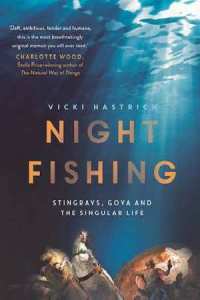
‘Night Fishing’ by Vicki Hastrich

Hastrich

2019, 246 p.

What a powerful pull holiday places returned to year after year have on our hearts! For me, it’s the family’s time-capsule caravan down at West Rosebud…oops, Capel Sound. Sixty years. We shared in the oft-returned familiarity other people’s holiday places too. There was our neighbours’ fibro house down at Dromana that accommodated three branches of the extended family at one time in the ‘boys’ room’ with three bunk beds, the smaller girls’ room (because girls were scarce in the family).  The house was still owned by Nana, who had her own bedroom and septic tank toilet (when everyone else had to use the dunny). As a nation, we all sighed at “Ah, the serenity!” when Darryl Kerrigan takes his family up to the house under the electricity pylons at Bonnie Doon in the Australian film The Castle.

Then there was my cousins’ holiday house on the Hopkins River out of Warrnambool, in an old electricity power station, rising up out of the river against a steep embankment. Being a power station, it was a cavernous building, with no natural light. But what a spot- surrounded by bush, and with no-one else around.

It was my cousin’s holiday house that came to mind in reading Vicki Hastrich’s Night Fishing although in her case, it was a cottage against a steep hill that could only be accessed by  water on a Brisbane Water estuary at Woy Woy. Her parents and their friends would take six kids, food, ice and pets to Woy Woy and the continual return there each holiday encapsulated her happiest times, attuned to the tides and the water, drawn to the solitude and unpredictability of fishing and ensconced in the familiarity of returning year after year.

This is a series of essays that have elements of memoir, although there is no over-arching structure to tie them together. At first, not quite sure what is was that I was reading, I wondered if it was a bit like a non-fiction version of Elizabeth Strout’s Olive Kitteridge books, where an oblique reference in one story is picked up by another. It seemed for a while as if that was the organising principle of the essays, but then it didn’t seem to work for the last quarter of the book.

What does tie the collection together is, as the title suggests, the theme of fishing and water. The initial and final stories are both about fishing. In the opening story ‘The Hole’, she and her brother Roger return to a fabled family fishing spot as adults, and in the final story ‘Bucket of Fish’ she heads into her little fibreglass boat The Squid to use up the last bits of fish in the freezer as summer subsides into late autumn.  The eponymous ‘Night Fishing’ story appears half way through, where she decides to go out in her little boat for some night fishing, and loses all sense of direction and location in the darkness.  Others are more discursive, but still with a fishy theme. ‘The Tomb of Human Curiosity’, she and brother Rog go out in The Squid again, this time with a bathyscope, which leads her into a reflection of Galileo. ‘From the Deep it Comes’ starts about about catching salmon, but then diverges into a discussion of Zane Grey.

Not all the stories are about fishing.  In ‘Things Seen’ she reflects on the act of being a witness to things seen, recollecting a family story about Uncle Ev, a returned WWI soldier with PTSD, and moving on to Goya’s 82-plate work The Disasters of War, drawn during the Peninsula War between 1808-1814. The theme of ‘seeing’ is taken up in ‘My Life and the Frame’, where she discusses her work as an ABC camera operator, merging into a discussion of Tiepolo’s painting Allegory of the Planets and Continents, and her sense of failure over writing what she describes as a ‘baroque Australian novel’. Her ‘History of Lawn Mowing’ starts with a tribute to the late Australian writer Georgia Blain, who had her first seizure in her backyard. It then shifts to a reflection of the dirt under the house where she keeps the mower, where asbestos and the shellfish midden of the indigenous people of the place mingle in the dusty dark.

I always find it hard to review short stories, and I guess that books of essays fall into the same category. Explaining them makes them sound flat and trite: they are better read on the page rather than in a review. I do confess to becoming a little bored of the fish, but I loved the sunlight that suffuses her memories of childhood and a treasured place.  I liked that when starting a story, you were not ever quite sure where you were going to end up. And I loved her eye, that was caught by the beauty of the ordinary, and the way that her writing captured it so sharply that you could see it too.

My rating: 8/10

Sourced from: Yarra Plenty Regional Library.


aww2020

I have included this on the database of the Australian Women Writers Challenge 2020.


I hear with my little ear: Podcasts 25-30 April 2020

podcast

The Eleventh. I’m furious! I maintain the rage! I’ve just listened to Episode 6 The Eleventh, that goes through the events, the machinations and the deceptions of November 11, 1975. Forget that cuddly image of Fraser that he curated during his later years: the man was ice-cold.

Heather Cox Richardson. Her ‘politics and history’ talk on Tuesday  21st looked at the history of impeachment, the nature of the executive order, the difference between debt and deficit and how to convince someone to stop watching FOX news (short answer, you can’t). Her American history talk on 23 April took us to the 1880s and 1890s – a time that I know virtually nothing about in terms of American history. That was when the small states of North and Sth Dakota, Montana etc. were created as an attempt by Republicans to ensure that they could keep power. She talks about the importance of the West, and the use of anti-Chinese legislation to shore up political support. She finishes with the invation of Cuba and the Phillipines and the idea of non-citizen nationals.  This lecture was a bit too detailed and politicy-y for me. Check her Facebook page.

Rough Translation  I’ve had the two-parter, The Search  Part I and Part II on my phone for a while. It’s about the disappearance of Iraqi photo-journalist Kamaran Najim, who became a photographer against the wishes of his religious family. When he was kidnapped after a shoot-out, his family initially joined forces with his westernized friends to search for him. There’s real-life sound here of the attack (I assume that it’s authentic?) and it’s a good, if sad, story.

Judith Lucy- Overwhelmed and Dying  She’s been flogging her misery in her trademark drawl for years, but I have a new appreciation of her since she’s been appearing on Charlie Pickering. She has a new podcast series which is more of the same, but I’m enjoying it. In Episode 1 Blindsided, the sudden breakup of her relationship caterpaults her back into the misery-stakes.

RevolutionsPodcast  Still going with the Russian Revolution, although it’s going to be stretched out even further because Mike Duncan is planning on taking about a four month break between the 1905 Revolution in April and picking up again in October for the 1917 Revolution. He’s going to work on his book on Lafayette between May and October. Anyway, Episode 29 10.30 The SRs looks at the difference in viewpoint between the Socialist Revolutionaries and the Marxists regarding the kulaks and their role in the coming revolution. But they didn’t give up on their assassination activities.  In Episode 10.31 A Big Mistake he examines the Russian-Japanese War, which didn’t go well, especially when Europe decided that they’d leave Tzar Nicholas to hold the line against the Yellow Peril which meant that they didn’t have to worry about Russia on their own doorstep.


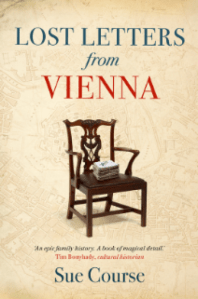
‘Lost Letters from Vienna’ by Sue Course

course_lost_letters

2019, 250 p.

When I finished this book, it seemed to me that it spoke much about legacy.

First, there’s the legacy of family heirlooms, letters and stories that filter through from one generation to the next.  Sometimes they are dispersed amongst many members of the family, or more often, deposited with the family member who cares about them most (often much to their own children’s chagrin when faced with the problem of what to do with them). Some families are richer in such legacy than others, and that is certainly the case with Sue Course’s family. If you’ve seen the furniture from the Viennese apartment of Jakob and Melanie Langer and the Gallia furniture in at the National Gallery of Victoria, then you’ve seen the physical legacy of this large, wealthy Viennese family that, as part of the diaspora during the Nazi era, ended up dispersed across the globe.  Then there are letters, and these lie at the heart of this book, written between these separated families over the years and eventually relegated to the top of a cupboard in a modest Melbourne suburban home where they sat undisturbed for 31 years.

When her favourite aunt died in 2000 , the now-retired Sue Course assuaged her grief by cleaning and clearing.

So there I was, getting into the cupboards, pulling out old bags, books, hats and clothes, my husband Laurie’s briefcase, missing since 1962, and there was the cookbook I was looking for in 1965. Squashed in behind all this were hundreds of letters and war accounts, some handwrittten and some typewritten, and all written in German.  The cardboard box collapsed as I removed it from the cupboard, the letters dropping like shot birds falling from the sky.  I began leafing through the skin-thin airmail papers. My German was rusty; I could read it but not scan it. However, what I could determine was that the letter I was holding was written by my mother, Hertha Langer, in 1938, and that others were from her parents, Arthur and Sofie Kary, from that year forward. I was completely overwhelmed. (p.2)

On both her maternal and paternal side, Sue’s family were wealthy industrialists, owning multinational corporations. On her mother’s side there were the Bohm family, who owned one of the biggest hat manufacturing companies in the Austro-Hungarian empire, and the Kary family who were the biggest manufacturers of silk textiles in Europe. On her father’s side, the Gallia family were influential in the gas lighting business and keenly involved in the Secession art movement in Vienna. There were writers, musicians; her great-aunt is preserved in a Klimt portrait. Four generations of Sue’s family lived on the Ringstrasse, in a palatial building divided into large apartments for members of the family.  Her parents were secular Jews, and Sue herself was baptised in an Anglican Church in Vienna, just as described in Elon Amos’ The Pity of It All. But in March 1938, when the Nazis invaded Austria to unite it with Germany in the Anschluss, all this changed.

Sue, who was at that time four years old, and her family escaped early, in September 1938, bound for Australia. Others went to America; others again to England and France. Others stayed, resisting the inexorable stripping away of the privilege they had enjoyed. Theirs is not a story of cattle trucks and concentration camps (although one uncle did end up in Thereseienstadt). Through contacts and planning, the family was able to deposit money in branches of their enterprises in other countries, so that when they finally admitted defeat, and submitted to the wealth-stripping of the Nazi government, there was sufficient money placed elsewhere that they could start again in a much more straitened, safe but hostile environment.

The stories of different groupings in this tightly-woven family network are told in fairly short chapters, arranged thematically whilst moving forward chronologically.  Several members of the family might be dealt with in the same chapter which I found at first a little disconcerting, until I realized that I was listening to someone tell family stories, which often jump between generations and family branches.  The family tree at the start of the book was a welcome addition, and I found myself consulting it frequently. Of course, because she knew it best, she spends quite a bit of time on her Melbourne family, which was probably most distant from the rest of the extended family and most removed from European culture. It’s a perceptive, and faintly damning account of suburban life in the 1950s and 60s, in a society that was wary and hostile towards ‘foreigners’, from the perspective of a family that had known -and no doubt expected to continue to enjoy – a much more privileged and comfortable lifestyle and significance.  As Sue becomes a nurse, marries an English academic, has children and becomes a 1950s housewife, the book becomes a picture of suburban life and changing roles, especially amongst women. She is surprisingly candid in some places, more diplomatic in others. The shift to the 1970s and 80s is a change of direction in the book, and one that moves away from the letters and the family diaspora into the realm of memoir. That brings its own problem of how to finish a memoir- something which could perhaps have been avoided if she finished her book with the arrival of the NGV furniture in Melbourne.

But there’s a second aspect of legacy in this book, too. Sue Course does speak about her work with the Darebin Parklands, but probably only a resident of Alphington/Ivanhoe would know just how significant this work is.  For all of my childhood, the stench from the Alphington tip permeated the suburb, drifting in through train windows, and lying heavy over the Darebin Creek. Through Sue’s work, and that of other Darebin residents, that blighted place is unrecognizable today with trees, billabongs and grasses.


There’s a subtle irony that Sue’s own legacy will be bushland, while her extended family’s legacy has been beautifully worked woodwork. Both legacies have moved into the public realm, in different ways.

Sue is not an academic; she was a nurse. Her telling of the story of her family is told through relationships, with an increasingly suburban, Melbourne-based perspective as the book moves on. Cultural historian and  environmental lawyer Tim Bonyhady, who is Sue Course’s cousin, also wrote about their shared family heritage  in his book Good Living Street. I haven’t read his book (and I want to, once I’ve let this one settle for a while), but I should imagine that they are quite different books.  For a family whose sense of place in Vienna and its bourgeois society was ripped away from them, their granddaughter is very much interwoven into a less constrained, less affluent and less illustrious community in suburban Melbourne. Using the family letters, she paints a rich picture of a Vienna world that is lost, but she also paints a domestic picture of a family re-establishing itself in a newer world, very close to my home.

Sourced from: A friend

My rating: 7

aww2020

I have included this as part of  the Australian Women Writers Challenge



My non-trip in the time of coronavirus # 18: Amazon River Cruise

Well, if I ever do this trip with my son, daughter-in-law and grand-daughter, it won’t be before 2021 (if that) and Baby Nina will be two years old. Which means that we can (perhaps) risk malaria to go on an Amazon River Cruise.

So, we’ll catch a bus to Juliaca Airport and then a flight to Iquitos which will have two stops along the way. My daughter-in-law will love it -all those takeoffs and landings!  There are no roads into Iquitos. The main form of transport within Iquitos is via“motocarro”, a motorcycle with a small, rickshaw-like passenger cabin in the back.

The main reason for going to Iquitos is to embark upon an Amazon River Cruise. I could only find one tour that allowed children under nine years old, so Maniti Eco Lodge it is!  Three days and two nights should be right, I think .

We drive from Iquitos to the port town of Nanay (Bellavista) then travel the 70 km by boat on a two-hour trip. We’ll visit Monkey Island, look for pink dolphins and maybe swim with them in the Amazon River (as if….), go for a nocturnal hike, and sleep in our bungalow by kerosene lamp. Next morning we’ll watch the sunrise over the Amazon, go by boat on a morning wildlife observation trip, go fishing in the afternoon to catch piranhas (in the same river that the pink dolphins are in!), go on a sunset canoe excursion with the opportunity to touch and hold a caiman (what’s a caiman?- of course, an alligator!). Another night in the bungalow, another early morning jungle hike, then back on the boat for a 2 hour trip back to Nanay.

Hmmm.  My Nana-Antennas are quivering. This is no place for a toddler.  No place for a Nana either. Nup. It’s time to come home.

I hear with my little ear: Podcasts 17-24 April 2020

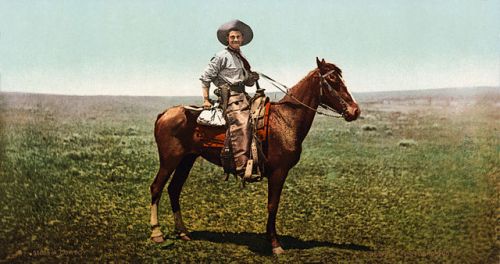
cowboyHeather Cox Richardson. In her Tuesday video (14th April) she talks at length about the history of the American Postal Service which I gather is a topic of some controversy at the moment. In the Thursday 16 April American History video she looks at Reconstruction and the rise of the cowboy in the west. I never did understand cowboys and now I do. This is really good. Access it through her Facebook page  https://www.facebook.com/heathercoxrichardson/

In Our Time. Melvyn Bragg can  be an annoying twat, and is particularly on this program about the Scottish Covenanters in the 16th and 17th century.  As presenter, Bragg just rushes his guests through at breakneck speed, so much so that I barely understood a word. Just as well I’m doing a free online Future Learn course on the Highland Clans.  I’ll come back and listen to the In Our Time program once I’ve finished.

Saturday Extra (ABC) Some interesting segments on Geraldine Doogue’s Saturday Extra program recently. She interviews bestselling historian Tom Holland who writes big fat history books where his name is in a font the same size as the title- something that makes me wary. He has a recent book out called ‘Dominion’ which I must confess does interest me, especially after hearing her interview with him on Christianity’s Modern Legacy.  She also spoke with medical historian Howard Markel about the history of vaccines Part I and Part 2. 

Rough Translation. I’m trying not to listen to much coronavirus stuff on podcasts. There’s enough of it in the newspapers and on the television news. But I was interested in The Coronavirus Guilt Trip which looks at how shame and stigma is being used to combat coronavirus. The first story, from America, sounded too precious and first-world-problemish for me, but the second and third stories were really interesting. The second story was from South Korea, where NPR’s correspondent explains the app that is being used there: a very obtrustive app which reveals far more information than I think Australians would be comfortable with on a publicly-available page, where you can see where the infected person lives, where they worked, when they worked, where they visited etc.  The third story was about Pakistan, where retrenched craftsmen and workers have begun assembling on a street corner with their tools, in order to distinguish themselves from beggars.

My non-trip in the days of coronavirus #17: Lake Titicaca

Puno doesn’t look the most prepossessing town in Peru.  Like all other Peruvian cities, it has a Plaza de Armas, and taken from this drone footage, it has more high-rises than I would have imagined. I wonder how they would stand up in an earthquake- do they have earthquakes there? Oh yes, they do-  they had a magnitude 7 on 1 March 2019.

But the real appeal of Puno is that it is the gateway to Lake Titicaca. You can do a tour which includes a night on Taquile island in a homestay. I must say, viewing all these videos from the comfort of my desk, that there is a much stronger emphasis on the tourist economy here than other places that I’ve been to. I know that people’s livelihoods depend on the sales they make, but it seems to have such a distorting effect on the economy.

So how would I feel about a homestay? Here’s an interesting article about the experience.  I think I’d probably do it- I don’t envisage that I’d be coming back here.  Do they speak Spanish, I wonder? Or Quechua?

My non-trip in the days of coronavirus #16: Cusco-Puno

Would I really subject a 15 month old baby to a 10 hour rail journey? Probably not. But as I’m not really doing this, let’s enjoy the train trip from Cusco to Puno

or if you want a 3 minute video instead (although it is travelling in the reverse direction)


My non-trip in the days of coronavirus #15: Machu Picchu

The reality is that if we had gone to Peru in April 2020, we would have had to miss this whole Machu Picchu leg because we were advised that we shouldn’t take 15 month-old Nina to such a high altitude area.  But given that we didn’t go…… let’s go now.

You could hike for four days…or you could catch the train. I’d catch the train. There’s a few options, but I think I’d go on the Vistadome with the windows in the roof.

Why are all these people called ‘Cody’ and ‘Rory’? Here’s Cody, rudely interrupted by advertising exploring Machu Picchu. What I liked was how he showed the train trip up, waiting for the bus, then puffing and panting to be one of the first people on the peak (my eyes are rolling). Anyway, he got some good shots.

And a slightly more formal National Geographic video. I just can’t imagine what Hiram Bingham would have thought when he saw it for the first time.