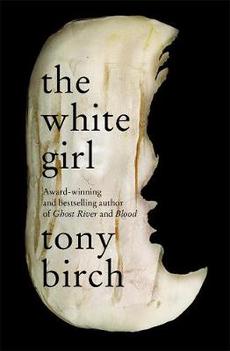
Love and fear. Those are the emotions that permeate this novel by Koorie writer Tony Birch, each heightened by the other.
Set in 1960s rural Australia, prior to the 1967 referendum, Odette Brown is bringing up her granddaughter Sissy after Odette’s own daughter Lila ran away, leaving the year-old baby with her grandmother. Lila had never divulged who the white father was, and Sissy, now 13 years old, has no memory of her mother. All that Odette has of her daughter is a few hastily written letters from Lila from years earlier, saying that she has a job in a restaurant in the city. Odette and Sissy live in a small, rudimentary house in Quarrytown, an abandoned mining camp where Aboriginal men from the mission had lived with their families while they worked the nearby quarry, after the mission was closed. Quarrytown is on the outskirts of Deane, itself a dying town, a place of dirt roads and junk-yards, peopled by broken men (there do not seem to be any white women) whose employment prospects plummeted once the mine closed.
Odette and Sissy lie low. The local policeman, Bill Shea, grew up in Deane himself, and he doesn’t want to stir up trouble curbing the troublemakers in town, most particularly the Kane boys, themselves brutalized by their father. Shea’s lazy, alcohol-infused passivity does not protect Odette and Sissy, but it doesn’t threaten them either. This changes when Shea is replaced by a new policeman, Sergeant Lowe who, imbued with his authority as ‘local protector of aborigines’, is determined to clean the place up and ‘sort out’ the problem of half-caste children. A blackboard in his office records the living arrangements and conditions of every Aboriginal family in Deane, with Sissy the only child unaccounted for. When Odette falls ill, she realizes that she needs to locate Lila to care for her daughter, in case she can no longer do so herself. Odette applies for a permit to travel to the city, which is withheld by Sergeant Lowe but provided by Bill Shea, and grandmother and granddaughter take the train to the city, pretending to be an Aboriginal ‘auntie’ escorting a young white girl.
One of the many things that rings true in this book is the network of connections between Odette and Sissy and the aboriginal people they meet – often overlooked and insignificant – who co-exist quietly in the white world, keeping their heads down. They recognize each other instantly. One of the most affecting parts of the book is when Wanda, the receptionist in the Temperance Hotel in which they are staying, sees through their ruse and tells Odette of her own life as one of the Stolen Generation.
‘Can I have a hug?’ she asked, in a tone so hushed Odette could barely hear her.
Odette smiled. ‘Yes, Bub. Yes’.
The women embraced. Wanda savoured the scent of Odette’s hair, the touch of her skin and the warmth and strength of the older woman’s body against her own. She listened for Odette’s breathing and the rhythm of the older woman’s heartbeat. It was the first time Wanda had felt the touch of an Aboriginal woman since the day she had been taken away from her own mother
p.139
Another Aboriginal man, Jack Haines, is hiding in plain sight too but this time protected by the Exemption Certificate he carries. They meet on the train journey down to the city, and at first Odette recoils from Jack’s decision to eschew his family links in order to escape the legislation that both she and Sissy are fleeing. How odd- I only just became aware of these Exemption Certificates recently in Black, White and Exempt, and here they are again, just as fraught with perceptions of betrayal and compromise as I thought they might be.
This is a simply told story of love, that hums with the tension of fear. Fear of ‘the welfare’, fear of the police, fear of the Kane brothers- all of these things keep Odette’s eyes down. Sergeant Lowe is like Inspector Javert in Les Miserables in his dogged determination to pursue Sissy, but his pettiness and bureaucratic paternalism is no exaggeration. Yes- “the torment of our powerlessness”, as the Uluru Statement puts it. But just as importantly, there is love: the intimate, all encompassing love of a grandmother for her granddaughter and her grief for her own daughter. There is the network of kin that stretches across town and country, ruptured by government policies that Sergeant Lowe relishes, but instantly recognizable in a look, a face, a name.
Birch tells his story straight, with little commentary. His descriptions of the fictional Quarrytown and Deane evoke visions of those outback towns that can be found right around the coast, and the menace of Sergeant Lowe and the Kane boys is palpable. Dialogue carries much of the action, and Birch has a good ear for it. He captures ‘outback gothic’ well, but there is a deeply human aspect to it. He brings to life the shameful history of the Stolen Generations and the Exemption Certificate section through characters whose dignity and resilience exemplifies the strength of love over fear.
China if you’re listening (ABC) Huawei and the new technology Cold War looks at the rise of Huawei as a global technology giant, and the fall-out from Australia’s decision to ban Huawei from the 5G network, a stance that America, NZ and Britain also took. Personally, I think it was a good call.
Rear Vision (ABC) I can remember protests at uni about the ‘Timor Gap’. I didn’t really know what it was (nor did I try very hard to find out, I confess) but what I have learned about Australia’s maritime borders with Indonesia and East Timor does not reflect well on us. How to carve up the riches of the sea- Australia, Indonesia and the sea boundaries looks at the advantageous treaties that Australia signed under the claims of the Continental Shelf, a policy of international law which has changed over recent decades. It doesn’t mention Witness K, but it will be interesting to see if Australia renegotiates with Indonesia, and it was pressured to do with East Timor.
The History Listen (ABC) How hypnosis brought the CIA to Australia. Martin Orne was a world-famous psychologist dealing in hypnosis and in the 1960s he came to the University of Sydney to conduct experiments there. He didn’t let on to his Australian colleagues that he was funded by the CIA, who were interested in mind-control as part of the Cold War arsenal. He may have taken their funding, but he largely acted as a brake on the CIA’s application of hypnosis by his emphasis on the scientific method.
Archive on 4 (BBC) I haven’t read Edward Said’s ‘Orientalism’ but I certainly have heard of it. Covering Edward Said: 40 years of Islam, media and the West looks at Said’s contribution as a public intellectual. He was originally a literary theorist and ‘Orientalism’ looked at the way the West defined ‘the East’ through art and literature. After the Iranian Embassy hostage situation, he turned his attention to the way the media conceptualized Islam, and continued to speak out as a counterbalance to the ‘othering’ approach of the Western media. When the fatwah was pronounced on Salman Rushdie after the publication of The Satanic Verses, he took a more nuanced approach than many others.
Saturday Extra (ABC) Once a month, Geraldine Doogue has a segment ‘A Foreign Affair’ where she looks at events in a particular country. Political shifts in Latin America features two commentators from American universities, discussing recent events in Colombia, Peru and Chile. In Columbia, it has been in response to a right-wing government’s attempt to repair the budget after coronavirus; in Peru it is a closely contested election between right and left wing extremes, and Chile it is a constitutional process to change the Pinochet-era constitution.
Latin America in Focus (AS/COA) I must admit that I’m not sure about the impartiality of this Free-Trade, private-enterprise-oriented group but they do have quite interesting podcasts. What Happened to Latin America’s Anti-Corruption Push looks at a recent study which ranks the capacity to combat corruption across Latin America. It identifies Uruguay, Chile and Costa Rica as the most robust, with Brazil, Mexico and Colombia declining over the last year. Bolivia and Venezuela come bottom of the pack.
Españolistos Speaking of Colombia, I don’t very often include the Spanish-speaking podcasts that I listen to, but Españolistos, produced by Spanishland School with whom I learn Spanish online, has a good 2-part series on current events in Colombia, Andrea’s home country called ¿Qué Está Pasando en Colombia? (ie. What is happening in Colombia?) You can ask for a transcript in Spanish.
History Hour (BBC) This is a magazine-type podcast that has four or five different segments dealing with recent (i.e. 1950s onwards) history. In the episode The Confederate Flag and America’s Battle over Race, they look at the young woman who pulled down the Confederate flag flying in the South Carolina state house, in protest at the Charleston church shooting in 2015, long before the recent protests involving flags and statues. It then examines the history of the East German Trabant car, the development of Mindfulness, and a ground-breaking documentary screened in the 1980s that changed many attitudes towards rape. There is also an interview with Liang Hong, the author of the best-selling (in China) book China in One Village: The Story of One Town and the Changing World which deals with the urbanization of China over the last 40 years. It sounds good.
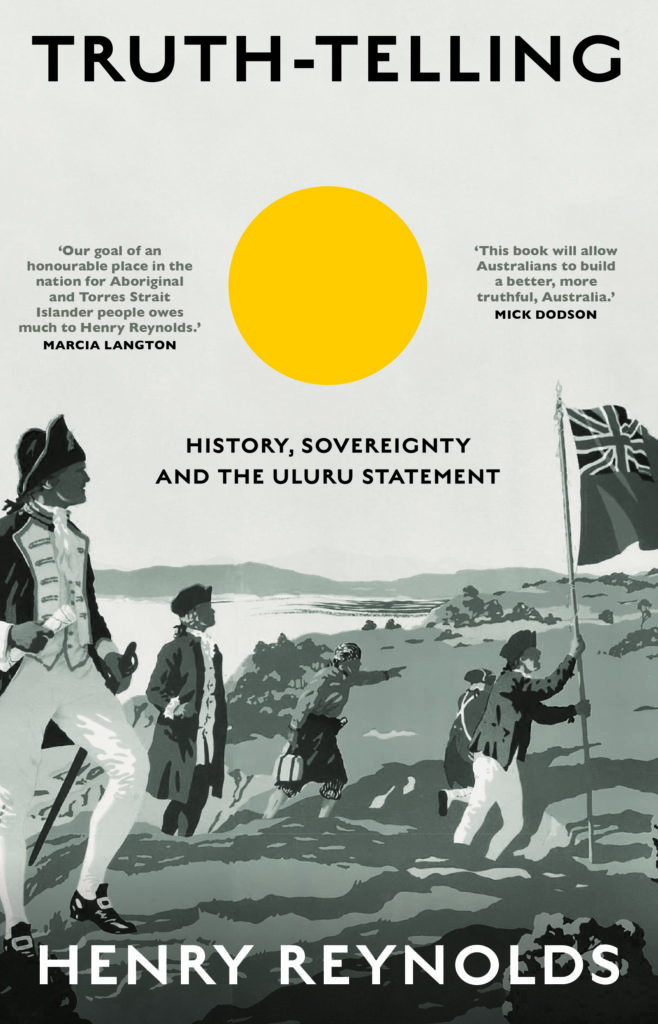
It’s fitting that this book should start with the Uluru Statement from the Heart, written out in full. I wonder if in decades to come, this statement will be as well known to Australians as the Gettysburg Address or John of Gaunt’s ‘This Sceptred Isle’ speech. I’d like to think that it will be.
In his foreword, Reynolds notes that there was not universal Indigenous support for the statement, but that it was undoubtedly the most widely canvassed document addressed to the wider community by First Nations representatives, drawn from over 1000 participants, meeting at 12 locations around the country.
It was also a masterpiece of forensic advocacy – succinct, with scarcely a wasted word, utilitarian where necessary, elegant, even poetic in places. It is a document that will endure. But its lasting political impact is yet to be determined.
p. 2
He points out that most of the political discussion so far has been about the Voice to Parliament, which reflects the strategic choice of the Referendum Council to go for Voice- Treaty – Truth. The response by the Australian government was quick and dismissive. (I wonder how Malcolm Turnbull feels about that now?) In this book, however, Reynolds concentrates on the starting premise of the Statement: the issue of sovereignty.
Our Aboriginal and Torres Strait Islander tribes were the first sovereign Nations of the Australian continent and its adjacent islands, and possessed it under our own laws and customs… This sovereignty is a spiritual notion: the ancestral tie between the land, or ‘mother nature’, and the Aboriginal and Torres Strait Islander peoples who were born therefrom, remain unattached thereto, and must one day return thither to be united with our ancestors. This link is the basis of the ownership of the soil, or better, of sovereignty. It has never been ceded or extinguished, and co-exists with the sovereignty of the Crown.
How could it be otherwise? That peoples possessed a land for sixty millennia and this sacred link disappears from world history in merely the last two hundred years? With substantive constitutional change and structural reform, we believe this ancient sovereignty can shine through as a fuller expression of Australia’s nationhood.
The Uluru Statement from the Heart, reprinted p. viii and ix
Now, I admit that sovereignty is not exactly the most gripping topic. It is mired in the 17th and 18th century international jurisprudence that was triggered by Spanish, Portuguese and British colonization in the Americas, Africa and Asia. Even the names are offputting: Grotius, von Pufendorf, Heineccius, de Vattel. This international law formed the basis of American court cases in the 1820s and ’30s when settlers were moving across the American continent. It’s a pretty specialized area, and doesn’t lend itself easily to the much-vaunted and Americanized ‘water cooler conversation’. But in essence, Reynolds argues here that Britain stuffed up colonization in Australia from the very start, acting in ways that were inconsistent with received international law at the time. Despite some hand-wringing from the Colonial Office as a result of humanitarian pressure-politics, the error was perpetuated and entrenched when the Australian colonies achieved self-government. It is was inconsistent then, and it is inconsistent now with the United Nations Declaration on the Rights of Indigenous People, adopted by the General Assembly in September 2007 and ratified by Australia in 2009. If blame has to be apportioned, it can be directed at the British government up until 1856 but from then on, it lies at Australia’s feet.
In the introduction Reynolds explains his own ignorance of the fraught relations between White Australians and the Aboriginal and Torres Strait Islander people until he went to teach at James Cook University in Townsville, where his students were living this history. From there, the book is divided into 2 parts.
Part 1 ‘The First Sovereign Nations’ explores different aspects of sovereignty. Chapter 1 ‘Taking Possession’ looks at Captain Cook’s ceremony on Possession Island off the NW coast of Cape York in August 1770 where he took possession of the country in His Majesty’s name, together with all the bays, harbours, rivers and islands situated on the coast. Right here we have a glitch: according to his secret instructions of 30 July 1768 he was instructed to ‘with the consent of the natives take possession of convenient situations’ or if he found it uninhabited, ‘take possession by setting up proper marks and inscriptions, as first discoverers and possessors’. He did not find it uninhabited, nor did he seek or gain consent. When the First Fleet landed in 1788, Arthur Phillip’s commissions on 12 October 1786 and 2 April 1787 made no mention of consent. Immediately on arrival, Phillip wrote back that there were far more Aboriginal people than Sir Joseph Banks and James Matra, who had advised the Colonial Office, had suggested. Nor was inland Australia uninhabited.
Chapter 2 ‘This Ancient Sovereignty’ explores the dawning realization that Aboriginal people lived in tribal groups, in specific districts with known boundaries, and that there were no ‘unpeopled’ lands. Each First Nation contested the encroachment on their traditional lands, and fought for their own country and nowhere else. By the time Ralph Darling was appointed as governor to NSW in 1825, his instructions were to treat Aboriginal nations no longer as British subjects but ‘as if they proceeded from subjects of any accredited State’.(p. 41) This stance was reversed in 1837 when they were again ‘considered as Subjects of the Queen’ (p. 72).
Chapter 3 ‘Whose Land?’ looks at the concept of terra nullius and the acceptance within Australia that, even if this was a mistaken characterization, it was an understandable and even appropriate decision on the part of the British government as a consequence of the failure of Aboriginal society to reach a designated level of ‘civilization’. However, this flew in the face of late 18th and early 19th century international law and the recognition of Native American property rights elsewhere in the Empire, especially in the American Supreme Court led by Chief Justice John Marshall between 1801 and 1835 and in New Zealand courts in 1847. By the mid 1830s, humanitarian reformers, previously involved in the slave trade, turned their attention to the fate of Indigenous peoples in British colonies, especially through James Stephen, the permanent under-secretary. Aboriginal protectors, governors (particularly George Arthur in Tasmania, to whom Reynolds gives credit) and eventually the Secretary of State argued that pastoral leases should not allow the driving off of the ‘Natives’ who “have every right to the protection of the law from such aggressions”. (p. 68) Once the colonies gained self-government, this stance was largely ignored.
Chapter 4 ‘Effective control?’ highlights the concern that the Australian government had over the ’empty’ north. The question of ‘effective control’ was important in international law and applied by the British government elsewhere in the world. Britain refused a Portuguese claim to territory in central Africa between Angola and Mozambique because there was no sign of Portuguese jurisdiction or authority and no real occupation. The same issue arose in Nicuargua, when claims of being a successor state to the Spanish Empire were rejected. If the standards of international law as they were understood at the time of Australian federation were applied, neither the states nor the federal government exercised effective control over large areas of Australia.
Ch. 5 ‘Australia and the Law of Nations’ returns to international law. There is, Reynolds claims “clearly more support in international law for the Uluru Statement than many Australians likely imagine.” (p. 90) He turns to the Australian cases of R. v Murrell in 1836 (and I’m surprised that Reynolds did not reference ‘my’ Justice John Walpole Willis here at all) and Cooper v Stuart (1889), both of which cast long legal shadows. He then jumps ahead to the Mabo case of 1992.
Ch. 6 ‘Treaty yeh, Treaty now’ looks at George Augustus Robinson’s ‘peace treaty in all but name’ that brought the Black Wars in Tasmania to an end. Reynolds is dismissive of John Batman’s attempt at a treaty in Port Phillip, pointing out that treaties can only be negotiated by the Crown. The British government, however, abandoned the policy of treaty-making in Australia, even though it ratified treaties in North America, thus condemning hundreds to violent deaths (p. 122). This did not mean that there were not informal ‘treaties’.
There seems to have been some common characteristics of successful negotiations, including understandings about access to water, and about hunting parties avoiding sheep and cattle. In exchange, animals were regularly slaughtered and given to the local band in return for a promise not to spear them out on the range…But an even more significant factor was the provision of young men, who quickly acquired the new skills that, when added to traditional bushcraft, made them valuable additions to any station’s workforce. Young women were provided to be trained in domestic work and to provide sexual comfort. It was often done with reluctance but with an understanding that if not mutually arranged the women would be taken by force. But a frequent underlying consideration was that with a negotiated settlement the station in question became a relatively secure haven away from ambient violence. The ‘white boss’ became a defender of ‘his’ blacks, even able at times to protect them from violent neighbours and marauding police patrols.
p.116
But if we are to move beyond the informal, ad-hoc and contingent, as the Uluru Statement urges us to do, a treaty is needed. To a certain extent, some state governments are picking up the baton after Bob Hawke promised to negotiate a treaty at Barunga in the NT thirty years ago. But, despite state-level treaties, there will still need to be a treaty between the national government and First Nations.
Only then will the vexed problem of how to deal with what in the Statement from the Heart was called ‘this ancient sovereignty’ be resolved
p.125
Part II of the book is titled ‘Searching for Truth-Telling’ takes the reader into the politics within which the Uluru Statement from the Heart has been launched.
Chapter 7 ‘The Truth about 26 January’ deals with the almost-annual controversy that emerges every January, and points out that the date has been problematic for some time. It was clearly on display in 1938 (150th anniversary) when the Sydney re-enactments were accompanied by a Day of Mourning in Victoria and New South Wales. Claims that 1788 brought the rule of law are inconsistent with the subversion of existing international law represented by Phillip’s instructions and later actions.
Chapter 8 ‘Settlement, Conquest or something else?’ points out that although the term ‘settlement’ suggests coming to rest, or establishing tranquility, it is a term far removed from the “gritty, turbulent and often bloody business of colonisation.” (p. 143) Although within a generation, observers in NSW and Tasmania recognized that the distinct First Nations had their own forms of law and government, a conceptual dissonance developed between the way the law was understood on the frontiers, and the way it was dissseminated in books, newspapers, speeches and sermons. This chapter describes this conceptual dissonance, which has bubbled along quietly for the past 150 years.
Chapter 9 ‘The Cost of Conquest’ highlights the widespread knowledge of the violence of the frontier, contrasted against the ‘great forgetting’ described by WEH Stanner in the 1960s and 1970s. Here he returns to his own ignorance of the violence, and his attempts to enumerate the deaths on the frontier. His first attempt was in a Meanjin article in December 1972 (perhaps 10,000-12,000 as a guess), followed by The OtherSide of the Frontier in 1981 where he hazarded 20,000 deaths for the country as a whole, a number which remained unchallenged until the ‘history wars’ between 1996-2002. Of course, in 2002 Keith Windschuttle’s The Fabrication of Aboriginal History whipped up a storm of controversy.
In Chapter 10 ‘Queensland was Different’ he points out that there were two distinct phases in the conquest of Australia. The first unfolded over the first 70 years, the second played out in the second half of the 19th century as colonists pushed into the top third of the continent north of the Tropic of Capricorn. Although Queensland had been settled in the first phase, the conquest of the second phase took place as an Australian project, not a British one. The squatters of this second phase took with them the attitudes shaped by violent conquest in NSW. They rejected the idea that Aboriginal people were British subjects, and that killing an Aboriginal person left one open to a charge of murder (p.179). The most egregious departure from the rule of law was the deployment of the Native Police force from NSW, with the purpose “to kill Aboriginal people in sufficient numbers to terrorize them into submission” (p. 184). Raymond Evans and Robert Orsted-Jensen have sampled the remnant records that ended up in other government documents and came up with a figure of 40,000 Aboriginal men women and children killed by the Native Police, and another 20,000 violent deaths at private hands. It is true that this is Aboriginal people killing other Aboriginal people, and Reynolds points out that the truth-telling called for in the Uluru Statement will need to deal with this as well (p. 198)
Governors and settlers had long characterized this conflict as ‘warfare’ and in Chapter 11 ‘Remembering the Dead’, Reynolds contrasts this silence about frontier violence, and unwillingness to recognize Aboriginal warriors as patriots (in the truest sense of the word) with Australia’s remembering and commemorating of Australian citizens who have died in overseas wars. This is exemplified by the expense lavished on the Australian War Memorial, and its steadfast refusal to include frontier wars under its aegis. He suggests that a formal ceremony of placing a tomb for the unknown warrior in the heart of the War Memorial next the the grave of the unknown soldier would have been an event of “immense national importance, a symbol of respect, inclusion and reconciliation”. (p.207) He acknowledges that there is little chance now that this will ever happen.
Chapter 12 ‘The Consequences of Truth-Telling’ looks at the removal and replacement of statues in South America, the southern states of the United States, the University of Cape Town in South Africa, Georgetown University and in Britain. He looks at the daubing of statues in Sydney’s Hyde Park in 2017, and a new statue of Lachlan Macquarie erected in 2013 which received similar attention. This chapter includes a potted summary of the rest of the book from p. 215 – 219 which seems rather oddly placed so late in the narrative. He points out that Australians have been ready to call the early governors – Phillip, Macquarie, Brisbane, Arthur and Stirling – to account, but less likely to pay attention to Sir John Forrest (WA), Sir John Downer (SA) and Sir Samuel Griffith (Qld), who as premiers and attorney-generals in the late 19th century and early 20th century oversaw the violent suppression of Indigenous resistance. They have suburbs and universities named after them; in some cases their families are still prominent in political and legal circles.
He continues this train of thought in Chapter 13 ‘Inescapable Iconoclasm’ where he particularly looks at Sir Samuel Griffith. Reynolds has read the foreword that appears in every volume of the well-regarded Griffith Review, praising Sir Samuel Griffith as ‘one of Australia’s early great achievers” and claiming that their publication emulates Griffith’s ‘sceptical eye and a pragmatically reforming heart and a commitment to public discussion”. (p. 226) What about Griffith University? The Australian Electoral Commission removed the names of Batman and McMillan as Victorian electorates on the basis of their involvement in frontier warfare – what then about the Brisbane seat of Griffith?
[Griffith] oversaw far more bloodshed than the two frontiersmen. But is it a case of it being much easier to take symbolic action against the foot soldiers than against the high command and knights of the realm?
p.231
I think he’s right: it’s easy to attack ‘early’ perpetrators, especially when they are clothed in British imperialism, but less easy for more recent, ‘home-grown’ public figures, whose names are attached to institutions and intellectual endeavours that we value.
His final chapter ‘Conclusion: The Resurgent North’ returns to the Uluru Statement. It will always be associated, he suggests, with “its peremptory rejection by Prime Minister Malcolm Turnbull”, a rejection that was unexpected and “profoundly disrespectful”. (p. 237) The claim in the Statement that sovereignty had “never been ceded or extinguished, and co-exists with the sovereignty of the Crown” was more than a rhetorical flourish, and “it sits there unanswered in the inboxes of the nation’s leaders in both our parliaments and our courts.” (p.245)
This is a timely book, given the insistence of the Referendum Council in pushing the Uluru Statement forward, despite the wish by many politicians to sweep it away. In many ways, the book encapsulates many of the ideas that Reynolds has been putting forward over many years in his other publications, including The Other Side of the Frontier, Why Weren’t We Told? and This Whispering in our Hearts(which I see has been recently republished). Like his other books, it is quietly and doggedly argued. Reynolds is a historian, not a legal scholar, but by necessity this book has had to deal with a great deal of legal argument in order to underscore the illegality, in international law terms, of what we have long taken for granted. It is quietly but passionately argued, from a deep conviction. It raises important questions that, if we are to tell the truth, we will need to face eventually. The questions can be forced upon us by international bodies and treaties, or we can stand up ourselves with First Nations people who, through the Uluru Statement, have invited Australians “to walk with us in a movement of the Australian people for a better future”. I know which I’d prefer.
Sourced from: Yarra Plenty Regional Library
My rating: 8/10 (It feels a bit odd even giving it a rating).
The Thread. Actually, even though I heard this 3 part series on the Election Day Massacre on The Thread, it is actually part of the Flashback series. Episode 2 picks up with the white mob outside July Perry’s house in Ocoee, Florida, wanting to send a message that black people shouldn’t vote. There were gunshots exchanged- no-one really knows quite what went on- but two white men were killed, and this was why the massacre achieved national and international attention. Meanwhile, fifty car-loads of white men drove into Ocoee. Perry escaped, but was found in a cane field and later lynched. Norman was never found. Episode 3 looks at how the black population fled Ocoee in what can only be called ethnic cleansing, and did not return for about 50 years. They left their orange groves, which were sold off to white buyers with the stipulation that they could not be sold to blacks. This land was later taken over by Disney World and is worth a fortune. It is only really with the centenary that the story is being told, and a freeway was named after July Perry.
Latin American History Podcast And finally I come to the end of the Conquest of Mexico series. Episode 13 points out that even though the Spanish conquest of Mexico and Central America was complete, it was a very tenuous conquest, better seen as a series of islands of Spanish influence, rather than the takeover than the word ‘Conquest’ suggests. He follows through some of the descendants of Cortez and Moctezuma – in fact, the House of Grau-Moctezuma de Toleriu still exists in Spain today. Moctezuma’s daughter Isabel had quite a life, being married off six times, to 3 Aztec emperors and 3 Spaniards and also had an illegitimate daughter with Cortez himself.
99% Invisible I must admit that I hadn’t noticed it, but at many of the Black Lives Matter protests there have been Red Black and Green flags flying. Flag Days: the Red, the Black and the Green looks at the history of this flag, which was created by Marcus Garvie in 1918. The podcast talks about the clash of ideologies between W.E.B Du Bois and Garvie, who believed that people of African descent all over the world should reclaim Africa from colonialism and create a new society there. There’s also a coda to the podcast about the Juneteenth flag, which I hadn’t seen before. Really interesting.
The History Listen (ABC) There’s a series of programs called ‘An Object in Time’ presented by Sarah Percy from the University of Queensland (but obviously of North American background). In the episode An Object in Time: The Umbrella, she looks at the use of a poison-tipped umbrella to silence a Bulgarian dissident named Georgi Markov during the Cold War. Hmm. Things don’t change.
The Documentary (BBC) Continuing on with their series on Syria during the civil war and beyond Syria’s decade of conflict: The battered champions of Aleppo was recorded in 2016 when the narrator looked at a photo of a football (soccer) team from Mare’a, in Aleppo in the 1980s. During the 1980s Assad’s father was still in control, and your success in soccer depended on your connections with the government. By 2016, when this was recorded, Syria was plunged into civil war, and those boyhood friends were often on different sides. As with the other programs in this series, they then follow up again from 2016 to the present day. Many of the men had moved to other countries, and it really doesn’t sound all that much better yet.
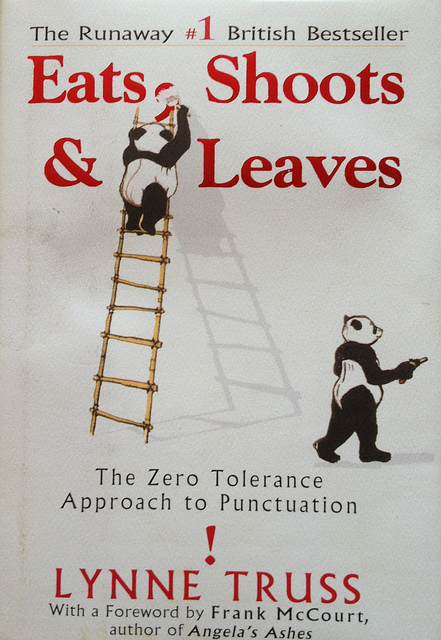
It’s the first Saturday of the month, so it’s Six Degrees of Separation time. This meme, hosted by Kate at Booksaremyfavouriteandbest involves Kate choosing the starting book (in this case, Lynne Truss’ Eats Shoots and Leaves) and then linking six reviews to books that spring to mind.
I have actually read the starting book Eats Shoots and Leaves, but I read it before I started this blog. So off we go… the links will take you to my reviews.
Eats Shoots and Leaves is a tirade about the parlous lack of knowledge about punctuation amongst “people these days”. A similar book is Don Watson’s Death Sentence where he bemoans the managerial sludge which has taken over public life.
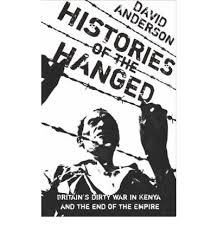
Don Watson just wanted to string ’em up for crimes against clarity, but a retribution of a far more serious kind is in David Anderson’s Histories of the Hanged . This is a history of the Mau Mau rebellion in Kenya between 1952 and 1960, which he describes as “a story of atrocity and excess on both sides, a dirty war from which no one emerged with much pride, and certainly no glory.”
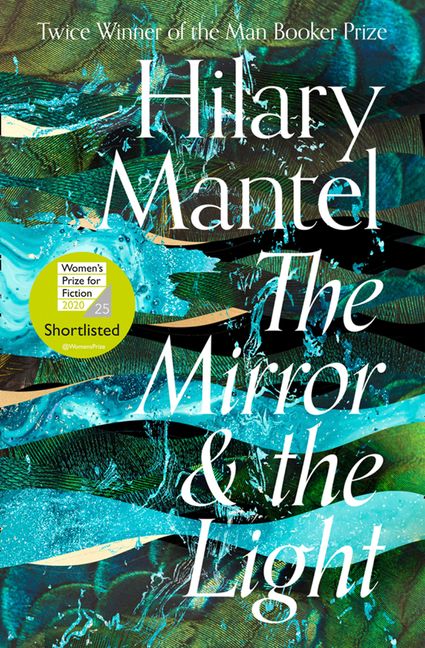
Thomas Cromwell wasn’t hanged, but he was beheaded in Hilary Mantel’s trilogy. I just loved all three books, and I marvelled at how well Mantel brought her project to such a skillful end in The Mirror and the Light.
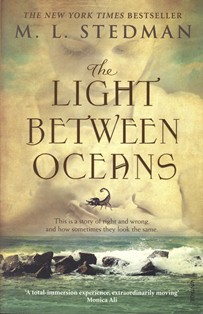
I read M.L.Stedman’s The Light Between Oceans years after everyone else had read it- they even had time to make the movie by the time I got round to it! It is set in the 1920s on a lighthouse off the Western Australian coast, with a sort of Jodi-Piquoltesque moral dilemma.
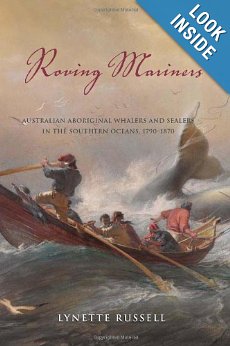
A different Australian coastline, a hundred years earlier, is explored in Lynette Russell’s Roving Mariners, a history which explores the whaling and sealing industries of the Southern Oceans, an ethnically diverse industry with a strong representation of ‘coloured seamen’: African and Native Americans, Native Canadians, Pacific Islanders, Maori and Aborigines. She explores in particular the relationship between whalers and sealers, and the indigenous women who lived on the islands in the Bass Strait.
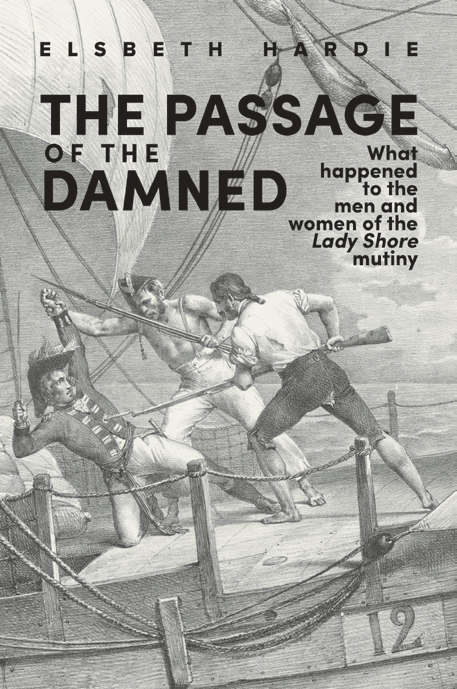
Those crashing waves take me to Elsbeth Hardie’s The Passage of the Damned which starts off as a journey of the convict-shpi, the Lady Shore, to New South Wales. Suffice to say, they never got there but ended up in a country far away. You’ll have to read the book to find out where.
I seem to have taken on some rather odd themes here in my links to four non-fiction and two fiction books. Death sentences, hangings, beheadings, damnation, – or more benignly, lots of ocean waves. Perhaps it’s because it’s winter and I’m missing the beach.
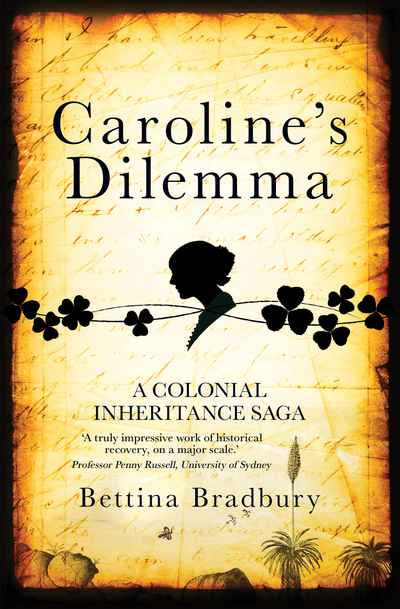
‘Ruling from the grave’ seems a particularly insidious form of personal power, as Caroline Kearney found out as a 31 year old widow with six children. She had immigrated to Australia with her family from England as a 17 year old, and married Edward Kearney, a Catholic Irishman who had left his family back in Ireland when he settled in Australia. After farming in South Australia and then the Wimmera in Victoria, Caroline expected that her sons would inherit the family property. It was only when her husband died in October 1865 that she learned that the inheritance, for both herself and her children, depended on her shifting to Ireland and raising the children there as a widow, under the guidance and oversight of her very Catholic -inlaws. She was English: she had never been to Ireland, and all her children had been born in Australia. A dilemma indeed.
It says much for this book that I’m not going to tell you any more. The decisions made and tactics deployed by both Caroline and the Kearney family lie at the heart of this narrative, and I don’t want to spoil your enjoyment by telling you what happened.
Bettina Bradbury is a New Zealand-born historian, who spends much of her time in Australia. She has spent much of her academic life in Canada, writing women’s and family history and her most recent book Wife to Widow: Lives, Laws and Politics in Nineteenth-Century Montreal won multiple awards. It was in widening her lens to look at marriage, property and inheritance in the British Empire more generally that she encountered Caroline Kearney. She found the reports of Caroline’s contest against the will in the Victorian Law Reports, and scrawled “Wow, draconian patriarch” and “controlling father too” across her copy. Fascinated by the case, and the ways in which it embodied the themes she wanted to explore, she put aside the broader book she planned, and concentrated on Caroline instead.
Although she acknowledges the assistance she received from two great-great-grandchildren of Caroline and Edward, this is not your usual family-history search narrative, freighted with family identity and identification. That is not to say that Bradbury was not emotionally invested: her loyalties clearly lie with Caroline and other women whose financial rights were circumscribed by property and inheritance law until Married Women’s Property Acts were legislated across the British Empire. But she brings to this case study her historian’s eye, conscious of context and the norm, and alert to the anomalous and unusual. Her extensive bibliography (how lucky she is to have footnotes AND index AND separate bibliography!) reveals the breadth of her sources: newspapers, genealogical information, legal documentation, secondary sources and an unpublished family history, written by one of Caroline’s sons explaining his family upbringing. These sources enable her to focus in closely on Caroline’s case, but then step back to take a wider perspective. In this way, we roam across emigration history, pastoral history, 19th century legal principles, sectarianism, social history, women’s rights, paternalism and history of the family more generally.
Bradbury is present throughout the narrative, interjecting “I” observations at various places. She is open in admitting where the sources fail her, and where she has had to turn to imagination and empathy instead. While her sympathies clearly lie with Caroline, she is not unaware of her foibles. From the perspective of more than a century later, mis-steps and wrong turns become clearer, but not more explicable. In some of the twists and turns of the story, Bradbury is incredulous – wondering whether the person named in a document really is ‘her’ person because their actions seem so discordant. I guess that it’s the difference between a life lived, with all its contradictions and compromises, and a life documented in the flat and abbreviated historical record.
Bradbury has hit the sweet spot between an engaging narrative history and insightful analysis with this book. Because the two are interwoven so seamlessly throughout the text, I was a little disappointed in the ending, which was a ‘what happened next’ follow-through with the members of the family. While I did want to know what became of the children, this section was necessarily more cursory in its treatment, and became rather too much of a genealogical run-through. There was a short, more analytic summary in the closing pages, but I would have preferred that it was longer, with a wider scope.
This book was shortlisted for the 2020 Ernest Scott History Prize, which is awarded to “the book judged to be the most distinguished contribution to the history of Australia or New Zealand or to the history of colonisation published in the previous year.” Its span and its strong tethering in the carefully-documented sources give it historical “chops” but it’s a very human, sensitive story as well, told with discernment and compassion.
Booktopia I’ve just finished re-reading Helen Garner’s The First Stone and while looking for current reviews of the 25th Anniversary edition, I see that Virginia Trioli has also had her riposte, Generation F republished. In We Forget More Than We Remember, Trioli talks about why she wrote the book originally, and how it has been vindicated by recent events with the MeToo movement.
Dan Snow’s History Hit. Wooahh! This is weird! The History of Head Transplants tells the story of a series of successful head transplants on monkeys during the 1970s conducted by Dr Robert J. White. Brandy Schillace, the author of Mr Humble and Dr Butcher tells of how these experiments, which were prompted by Soviet advances during the Cold War, resulted in head transplants in monkeys where the monkey’s brain survived for 9 days with signs of brain activity (but not sensory activity). Interestingly, when White and other scientists spoke of transplanting heads on monkeys, they talked about it as a ‘head transplant’; if they were talking about a tetraplegic human, they would call it a ‘body transplant’. Really weird.
The Thread. We’ve heard quite a bit about the Tulsa Race Massacre, which happened 100 years ago last month. But I haven’t heard anything about the Election Day Massacre on Election Day 1920 in Ocoee, Florida, just a few kilometres from Disneyland. They are running a three-part series on the Thread, and Episode 1 sets the scene for the election. The 14th amendment had just been passed, and women were voting for the first time. Black servicemen were returning from WWI, and there had been a concerted voter registration drive, led by wealth African-American businessmen Mose Norman and July Perry. Before the vote, the Klan had paraded through the streets, and direct threats were made against the Republican (white) candidate, who was encouraging blacks to vote. When Mose Norman turned up to vote, he was accused of not paying his poll tax (as if!- he’d been paying the poll tax for many black people who couldn’t afford it). Norman returned to the polling booth with a shot gun, but was driven away again. After the polls closed, a white mob formed and went looking for Mose Norman at July Perry’s house. And that’s where Episode 1 leaves us.
The Documentary (BBC) Continuing on with the series Syria’s decade of conflict: Islamic State’s most wanted this episode tells of four young Syrian men, fond of drinking, music and chasing girls, who began writing and filming the reality of daily life in Raqqa, Syria to counter the propaganda that ISIS was putting online. ISIS put a bounty on their heads, and when they couldn’t get them, ISIS went for their families. This was produced some years ago: the men are still in hiding in Europe and America.
China If You’re Listening (ABC) I think that I have a Nana-crush on Matt Bevan (eeeyyyyeeewww! he would surely say!) I make sure that I’m awake by 6.40 every morning so that I can hear his analysis on some piece of the news, and I have followed his earlier podcasts Russia If You’re Listening and then America If You’re Listening. Now he turns his attention to China, and it’s fascinating. Episode 1 Xi Jinping: the ‘Man of Destiny’ looks at the lifestory of Xi Jinping and how it interweaves with 20th century Chinese history. Episode 2: How Tiananmen is being repeated in Xinjiang goes over the Australian response to the Tiananmen Square Massacre, and the Australian response. Who can forget Bob Hawke’s response? – well, perhaps it wasn’t all that it seemed in the bonus episode The story behind Bob Hawke’s mysterious Tiananmen Cable. Episode 3 The iron chain between Australia and China he explores the Great Leap Forward – I had no idea that the famine it prompted was so brutal – and how it prompted Australia’s iron ore boom. I must confess to being not particularly attracted to Asian history, but this is fascinating.
Aboriginal and Torres Strait Islander people are respectfully advised that this publication contains names and images of deceased persons and culturally sensitive information.
Wow. It is June, but I predict now that this will be the best book I read all year.
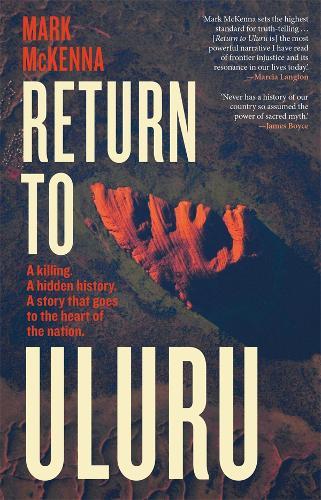
In 1934, when the events in this book took place, white Australians didn’t speak of Uluru. Instead it was Ayers Rock, and few people ever saw it. Since then, it has loomed large in the Australian imagination: Lindy and Azaria Chamberlain, that Qantas advertisement “still calling Australia home” filmed on top of it, the controversy over the closure of the walk, and most recently the Uluru Statement from the Heart (which we seem content to praise for its lyricism while the government and conservative media sidle away from its content). Uluru is seen as the ‘heart’ of the Australian desert and an immediately recognizable image.
But it has a darker history, that McKenna explores in this book. In 1934, Anangu man Yokununna was shot in a cave nestling within Uluru by Northern Territory policeman Bill McKinnon. McKinnon was lauded by those purveyors of the image of the Wild Outback – think Frank Clunes, think Northern Territory politicians – as a ‘man’s man’ from the days when ‘the blacks’ needed a strong hand.
A Board of Enquiry was set up into the shooting. It had an interesting composition. It was headed by John Cleland, Professor of Pathology and the University of Adelaide; Vin White, recently appointed Assistant Chief Protector of Aborigines in the Northern Territory; John Sexton, Baptist preacher and secretary of the South Australian Aborigines’ Friends’ Association, Charles Mountford, amateur anthropologist, and Ted Strehlow, the young linguist (p.84). Amazingly, this Board of Enquiry actually travelled to ‘Ayers Rock’ and the site of the shooting, an arduous journey by jeep and camel over sandhills, staying at camps and stations along the way. Even more amazingly, along with his aboriginal tracker, McKinnon himself accompanied them as accused, cook and guide. By the campfire at night, he would regale them with his stories of the outback by camel. At the rock, he exhumed Yokununna’s body and packed it for return to Adelaide, a process that appalled Strehlow, and shaped his views of British justice for the rest of his life (p.96). The Board of Enquiry came to its decision. It was the 1930s: I think that you know the result, although it was more nuanced than you might think.
The story of the shooting and Bill McKinnon takes up a large chunk of this book, with the ‘Lawman’ section taking up 90 pages. Here McKenna tells McKinnon’s story, painting for us the picture of a hard-bitten, laconic, tough policeman not opposed to roughing-up the men he arrested, punctilious in his record keeping, and a keen photographer. It is followed by another weighty section ‘Uluru’ which is 60 pages in length. Here McKenna himself steps into the picture, an academic historian, alternately drawn to and repelled by McKinnon’s ‘type’. I sometimes bridle at the historian-as-detective trope that is used to pump up the narrative in order to make a history more ‘saleable’, but here it is absolutely justified. Coming to a case some 80 years later, and in a world where the politics of indigenous history are changing but still contested, McKenna tracks down some interesting leads and sources, some of which make him reflect on the sheer, remorseless plunder of indigenous country, others which challenge the ethics of doing history. I think that it says something about the power of this book that I don’t want to tell you about the twists and turns his research takes- I want you to read the book yourself.
In a way, the murders in this book feel a long way away. They seem encapsulated by the shorts and pith helmet that McKinnon adopted, and the racist “dying pillow” tropes of the past. Then you see a video of one of the witnesses on YouTube and you realize that this is not so far away.
This is a beautifully written, and beautifully presented book. I didn’t expect a page-turner, but I found one. Nor did I expect to find so many photographs, some taken by McKinnon, others taken by McKenna himself and so many beautifully produced maps. In his afterword, McKenna explains that in embarking on the book, he intended to write a companion book to his earlier From the Edge: Australia’s Lost Histories. That 2016 book explored four places on the littoral edge of the continent, that also hovered on the edge of Australia’s historical consciousness at the time. With this book, he moved from the edge into the heart of the country- until McKinnon’s story ‘hijacked’ his intention. He promises a third book, more personal in focus, about places he has lived in Australia and overseas, encapsulating his research and thinking over the last decade (p.215). I suspect that it will be worth waiting for. In the meantime, this book should win the Prime Ministers Prize for Australian History. I won’t hold my breath for that one.
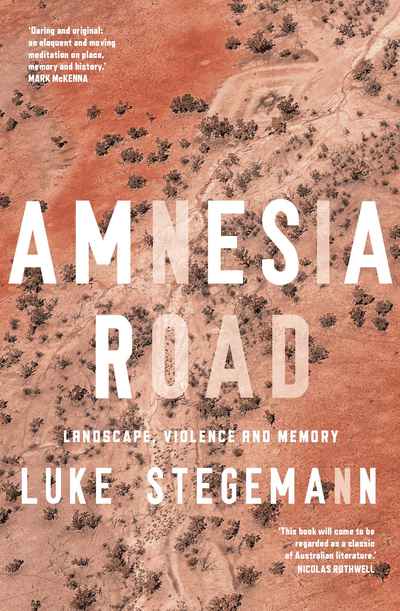
South-western Queensland and the rural backlands of Andalusia in Spain are two landscapes and histories that rarely mentioned in the same breath. However, they are not dissimilar to look at: indeed, the image on the front cover could be of Australia’s red centre or the arid desert regions of Andalusia. I suspect by the red tones that suffuse the photograph that it is of Australia, but blood is red too, and it has soaked into the landscape of both settings. In Queensland there were the barely acknowledge massacres of indigenous Australians as settlers moved westward; in Andalusia, there were the bloody atrocities on both sides during the Spanish Civil War.
There are few other people whose knowledge spans both locations, apart from fleeting visits by most travellers. This is where Hispanist and cultural historian Luke Stegemann comes in. He travels the backroads of Queensland as a boxing referee, while he refers to Spain as his ‘second patria‘. Deeply familiar with both, he brings them together in what is described as a “literary examination” of landscape, violence and memory in the two places.
He doesn’t actually describe what a “literary examination” or a “literary meditation” is, but I assume that it is a drawing together of the visions of other writers about an event or place. Certainly, he does reference other authors, but this is no mere desktop activity. He physically visits many of the places that he writes about, mainly as an outside observer. He marries the literary and experiential into a discursive, poetic, beautifully shaped exploration of questions about the memories that a landscape can hold, and the tenacity with which those memories take hold, despite the tacit or overt agreement to deny them.
This book employs two scenarios- the mid-nineteenth century pastoral frontier of south-west Queensland, and a series of early twentieth-century civilian massacres in southern Spain – as pathways towards examining the ways history is turned over and inspected, sometimes with fascination, sometimes with disgust, and its angles then polished for specific cultural and political purposes. Both scenarios are at the centre of contemporary debates around the need to tell, and approved methods of telling, troubled – perhaps better to say infamous – aspects of national history.
p.6
The opening chapters wrestle with the ideas of memory and forgetting, memorializing through graveyards and forgetting through unnamed massacre sites. He shuttles between Australia and Spain, using the writing from one culture to illuminate the other. In places this seems like a linguistic game, with chapters titled ‘The verb that has no name’ or ‘The Language of Eden’. The passing of generations and their knowledge is described grammatically:
The past tense soon closes down the present perfect nature of that claim: people have seen becomes, forever, people saw. Descendants remain, but the last of the witnesses are gone. The final death is often unremarked for who knows who is the last of the witnesses?…Each day, each year, each decade, periods of history move further away and we are left with an imperfect detritus. Windows are closed, doors shut, voices silenced, graves sealed.
p.34
The book is mainly based on the Australian experience, with the Iberian example used as a point of both comparison and contrast. The heart of the book lies in the two long chapters ‘Threnody’ (which I confess I had to look up – it means “a wailing ode, song, hymn or poem of mourning composed or performed as a memorial to a dead person”) and ‘Iberian Hinterland’.
The ‘Threnody’ chapter, at 50 pages, has the structure of a guided tour across the landscape of south-west Queensland. At each stop, he gives us a description of the landscape and a short history of the ‘interactions’ that took place there. He intersperses this with the local and amateur histories of these places, which generally celebrate the ‘progress’ of settlement and the ‘success’ of ‘dispersal’.
We have a duty to look unsparingly at the acts committed. We can now both see and understand the absurd vanity of the acquisitive graziers, to say nothing of the wretched illegality of their land grabs; nevertheless our contemporary morality is of limited use in grappling with this history. Unavoidably, the expansion of the Europeans across south-west Queensland involved tremendous cruelty and episodes of outright violence that mark our national history, though this fact must be tempered with the knowledge of acts of tenderness and attempts at understanding on both sides, and what were often immediate and close relationships between Indigenous people and settlers.
p. 85
Nonetheless, as he points out, in order to considered these acts of goodwill, “it is first necessary to climb over the bodies. The toll cannot be avoided.” P. 118 On the Massacre Map produced by the University of Newcastle, the area of South West Queensland is not studded with dots (as the coastal areas are) but when you do click on the massacres, they are of huge numbers of people. I have read of frontier violence before, but it was generalIy deployed against small groups of warriors, or family groups of women and children. I hadn’t imagined 300 people being massacred, as at Bulloo River. Imagine it. The vision is horrifying.
In the succeeding ‘Iberian Hinterland’ chapter, at 63 pages in length, he takes a similar approach, although here he overlays the bloody Civil War history with the tourist itinerary, which exists largely oblivious to what happened less than a century before. I remember reading in the guide book that I took with me to Andalusia just a few years ago, there was still sensitivity about the Civil War, and to not ask pointed questions. But unlike the anonymity and paucity of Indigenous deaths in Australia, there is “a paper trail and a line of bones” that testify to a national total of some 115,000 murdered behind nationalist lines, and 55,000 behind Republican lines (p.135). With the passing of the Law of Historic Memory in 2007 there has been a deliberate political decision that the tacit silence about this slaughter will be broken; that bodies will be exhumed; that Franco will be shifted from the Valley of the Fallen to a private family vault.
Just as there is no turning away from the brutal slaughter of Indigenous people in south-west Queensland, there is no turning away from the indiscriminate killing of tens of thousands of innocent people in the first months of Spain’s civil conflict. And it has been the slow revelation of these details, the political environment into which they have been released, and the arguments they have triggered around questions of memory, truth, justice, compensation and reconciliation, and where these might find their place in a modern democracy, that have added weight to what might otherwise have been just one more collection of twentieth-century bones- anonymous, roadside or forest-deep- abandoned to their violent quiet.
p. 137
Stegemann sees a similar movement at work here in Australia too, as the Great Australian Silence (in Stanner’s words) is finally being broken down. In particular he points to the Uluru Statement (awarded the 2021 Sydney Peace Prize but still shamefully suspended in limbo four years later). But he points out that reconciliation is hard work. The passing and implementation of the Law of Historic Memory in Spain has been fraught, and is likely to become even more so with the rise of populism. In Australia, the ideological ravine scours ever deeper with social media and a shrill press.
This really is a beautifully written book. You could open any page and find a paragraph that is beautifully crafted and insightful. It has high expectations of the reader. The dual emphasis on Indigenous Australia and Andalusia particularly appealed to me because my interests align along those tracks as well, but also because it illustrates the way that our learning in one field illuminates and enriches the other fields of knowledge that we encounter.
New Books Network. It doesn’t occur to me often to look for Australian histories on this site, but there are some! This podcast Australian Jurists and Christianity features Prof. Wayne Hudson, who co-edited the book along with Geoff Lindsay. He doesn’t so much talk about individual jurists featured in the book (from Macquarie, James Stephen, Higgins, Higinbotham, Gough Whitlam, Michael Kirby) but more about the relationship between religion and politics in Australia. I found him rather patronizing and sweeping in his pronouncements, and it didn’t particularly encourage me to read the book – and at $99.00, I’m not likely to buy it.
The Latin American History Podcast. We’re getting near the end now. In The Conquest of Mexico Part 12 there’s a whole string of people whose names I can’t remember, one of the remaining chiefs is accused of treachery and killed, and really…it’s just looting and conquest now. I’m glad there’s only one more episode. I’m a bit lost, to be honest.
The Documentary (BBC) There’s going to be a series of these replays of broadcasts Syria’s decade of conflict. I have Syrian neighbours and I know so little about their previous life. This episode Syria’s Secret Library was recorded in 2016, when the town of Darayya was besieged by Syrian government troops. There was a secret library hidden in a basement, and in the midst of hunger and the dropping of barrel bombs, people went there to read. In an update at the end we learn that, once the siege ended, the library was discovered and the books sold off in markets.
Travels Through Time In this podcast, a historian chooses a particular year and three dates within that year in order to talk about their recent book. In this case, it’s The Lost History of Mary Davies, who at the age of 6 months, inherited the Manor of Ebury after her father died in the Plague. This Manor included Park Lane and Mayfair. When she married Sir William Grosvenor at 12 years of age, her lands were merged with his properties which now comprise central London. When he died when she was about 35, she had already converted to Catholicism and went off to Rome, became entangled in a spurious marriage, and became mentally ill. A rather sad story, told in the speaker, Leo Hollis’ book Inheritance: The lost history of Mary Davies. Actually, I’m hearing about lots of good books in this series.
Heather Cox Richardson And there I was, thinking that Barack Obama’s ‘pivot to Asia’ was original. There was an earlier ‘pivot to Asia’ after the Civil War, when the Republicans had the pip with Europe because they felt that they had supported the Confederates. So, they decided with the Burlingame Treaty of 1868, to give each other Favoured Nation status to China. But it was pretty much gutted by the passing of the Chinese Restriction Act which passed on May 6, 1882, which is why she did this podcast on 7th May. Actually, it was interesting listening to the American response to the Chinese, both during the Californian goldrush and then in the 1880s and compare it with Australia’s racial policies.
Rear Vision (ABC) I’m glad that there is more attention being paid to Morrison’s Pentecostalism. As an ex-born-again myself who sometimes attended Pentecostal gatherings, I know that the world-view of Pentecostalism leaches into all aspects of life. I felt chilled by the idea of Morrison laying hands on unwitting citizens. The history of Pentecostalism is explored in Pentecostalism- the fastest growing religion on earth.
Psychedelics- the curious journey from medical lab to party drug and back again delivers just what it says- a study of how psychedelics started out as a pharmacologic treatment for mental illness until they were taken up by the counter-culture and came into the crosshairs of the Republican party. In recent years, they are again being investigated as a form of treatment.