It’s first Saturday of the month (already!) and so it’s time for the Six Degrees of Separation meme, hosted by Kate at Booksaremyfavouriteandbest. The idea is that she chooses the starting book, and then off you go on a riff of your own choosing, linking to six other books for whatever reason you decide.
This month the starting book is ‘Wintering’ by Katherine May which, although published in 2020, I haven’t even heard of. Nonetheless, where is it going to take me?
Naturally enough, if one thinks of ‘winter’, the mind leaps immediately to ‘summer’. I’ll go even further, thinking of all four of the seasons in Ali Smith’s Seasonal Quartet. Ali Smith wrote and released each book in successive years, starting with Autumn, and they were written in real time (i.e. each set in the year in which it was written). I really wanted to enjoy this quartet, but I found myself a bit disappointed in it. You can read my review of Summer, the final book in the quartet here.
Have I read any other quartets? I don’t think I have. If fact, the only quartet I can think of is Lawrence Durrell’s Alexandria Quartet, published between 1957 and 1960. I haven’t read it/them but am tempted to do so, especially after the soft Saturday night viewing of ‘The Durrells’ where Josh O’ Connor plays Lawrence Durrell- (and hasn’t he done well?) Even though he seems a rather pretentious prat in ‘The Durrells’, his writing has survived his younger brother’s skewering of him.
But I have read Naguib Mafouz’s Cairo Trilogy, which was written just a little earlier than Durrell’s books (i.e. 1956, 1957), but not translated into English until the 1990s. I really loved its perspective on traditional Egyptian life and the repercussions of the political upheaval in Egypt in 1919.
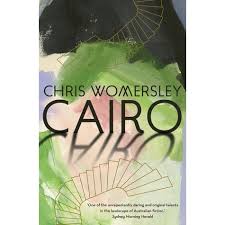
And thinking of Cairo, let’s jump to 1980s Melbourne with Chris Womersley’s Cairo, which refers not to the Egyptian city, but to the Cairo Flats that still stand opposite the Exhibition Buildings in Melbourne. We had a friend who lived there! (See my review here) I see that Womersley has recently released a followup, The Diplomat, which follows on from the very Melbourne story of the theft of Picasso’s ‘Weeping Woman’ from the National Gallery of Victoria.
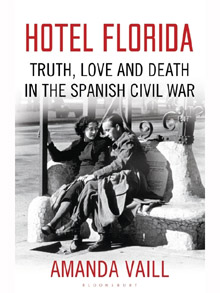
Picasso is best known for his painting ‘Guernica’ which brought the Spanish Civil War to world consciousness. It was a war that drew writers and intellectuals from the world over. Amanda Vaill’s Hotel Florida describes itself as a ‘narrative, not an academic analysis’ of six real-life characters: writer Ernest Hemingway and journalist Martha Gellhorn, war photographer Robert Capa and Gerda Taro, and press officers/censors/propagandists Arturo Barea and Isla Kulscar. All six stayed at the once-deluxe Hotel Florida in Madrid. (See my review here).
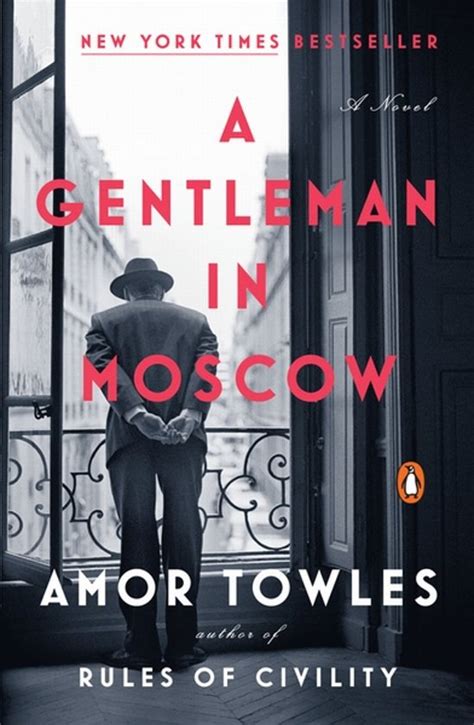
Another famous literary hotel is the Hotel Metropole in Amor Towles’ A Gentleman in Moscow. Like the Hotel California of the Eagles’ song, this was a hotel where “you could check in any time you like, but you can never leave”- if you’re Count Alexander Ilyich Rostov. As the vast history of twentieth-century Russia unfolds outside the walls of the hotel, he is under a form of house-arrest which means that he cannot leave the hotel and his world becomes encapsulated in the varying fortunes of the people who live and work there. (See my review here).
Well, I seem to have travelled quite some distance – UK, Alexandria, Cairo, Melbourne (!), Madrid and Moscow. Not quite ‘Rest and Retreat in Difficult Times’, eh?
History of Rome PodcastEpisode 150 The Perils of Mismanagement. After the shock of the British uprising, Valentinian wanted to reaffirm Roman power. He started with the Allamani, near Heidelberg. He tried to get another tribe, the Burgundians to fight the Allamani but that didn’t work, so he sent Theodosius Snr. (again) to sort it out. Then there was Africa where Romanus, the Roman appointee was busy extorting taxes and threatening the citizens that he would set the Moors on them. In 372 a Berber Numidian prince named Firmus led an uprising, and Theodosius again was sent to sort this mess out. Even though Firmus was justified in leading a rebellion against the venal Romanus, he suicided after being betrayed. As part of his plan to reaffirm Roman power, Valentinian ordered that Roman military bases be established in Quadi lands on the upper Danube. They were not happy, so Marcellianus was sent to calm things down, but instead he killed their King. The Quadi were so enraged that they chased the Romans back over the Danube. Valentinian launched a punitive expedition in response, but eventually there was a peace treaty contracted with the Goths.
Episode 151 Bursting a Blood Vessel. Over in the east, the Goths had allied themselves with Procopius (Julian’s cousin) in Constantinople. Valens wanted to teach them a lesson, so that if he needed to leave Constantinople, he needed not fear an uprising in his absence. Meanwhile, Sharpoor was causing trouble in Armenia again, so the Romans appointed Prince Pap (what a name!). Unfortunately he was a bit of a dud so Valens arrested him, which brought Sharpoor back into Armenia. Meanwhile, Valentinian died of a stroke while was berating the Quadi ambassador. He had ruled over a transitional period, and although sort of successful in suppressing uprisings, there would never again be a powerful emperor.
Episode 152 The Storm before the Storm When Valentinian died, the troops anointed his 4 year old second son Valentinian as emperor. The older son, Gratian, who was 16, did not fight it, as he was no soldier. That meant that there were now three emperors: Valens, Gratian and Valentinian II. Meanwhile, there was a huge influx of Goths into the empire, who were fleeing the Huns who had come down from the Central Eurasian Steppe on their horses, with their powerful composite bows. The massing Goths on the border were treated badly by the Romans who rounded them up into refugee camps, where they were forced to sell their children into slavery, their leaders were arrested and the people were starved.
Things Fell Apart This is the final episode and ironically, Jon Ronson himself becomes part of the culture wars that he has been describing when parents starting protesting against his book ‘So You’ve Been Publicly Shamed’. Episode 8 A Mock Slave Auction looks at a social media racial pile-on at a majority-white secondary school in Michigan which prompted the school to pass a policy that they were going to address the issue. This became hugely contentious, and the resultant public meetings dragged up many of the things that Ronson has discussed: child pornography, gender identity, abortion and now the question of structural racism and unconscious bias. He interviews Robin DiAngelo, the author of ‘White Fragility: Why It Is So Hard for White People to Talk About Racism’. Wow- she is very confronting.
The Comb (BBC) I usually hear this advertised in the middle of the night while I’m listening to BBC World when I can’t sleep. Escaping the City looks at the phenomenon of admittedly middle-class, educated Kenyans moving out of Nairobi after lockdown. I was interested to hear the interviewee, Mugambi, talking about the changes in Nairobi during the 1980s and 1990s which saw it become ‘Nai-robbery’ and the resultant construction of glass-topped security walls and frisking on entry to any public building. This is the Nairobi that I knew when I visited my son over there, and it was interesting to hear that it hadn’t always been like that.
Soul Search (ABC) A friend told me about this interview with Joan Chittister on renewing community in a changing world. She is a Benedictine sister, and a feminist. She talks about her life, her spirituality and community, and her views on feminism.
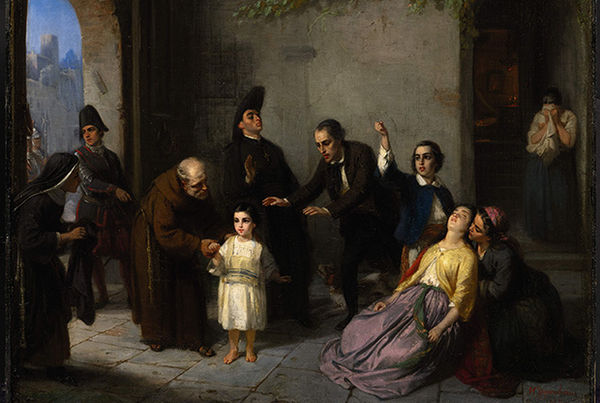
The highly inaccurate depiction of the ‘rescue’ (abduction) of Edgardo Mortara by Moritz Daniel Oppenheim, 1862 Source: Wikimedia
History This WeekThe Church Kidnaps Edgardo Mortara tells the story of a six year old Jewish boy, Edgardo Mortara, who is kidnapped by the papal police in 1858, on the grounds that he has been secretly baptised and thus must be removed from the corrupting influence of his parents. His parents fight back, challenging the claim and attracting international attention. It doesn’t look good for Pope Pius IX, who is fighting for his own authority in the heaving political scene of the Risorgimento, the political movement that led to the creation of the Kingdom of Italy. Even though the Pope’s power as a secular ruler was eroded, at a personal level, you’d have to say that the church won, as Edgardo ended up a Christian priest.
I started off the day early (8.30 a.m.) with a session on Jimmy Blacksmith/Jimmy Governor. Grace Brooks started off with a paper on Indigenous Labour History on Film which focused on Schepisi’s ‘The Chant of Jimmy Blacksmith’ (1978) and Warwick Thornton’s ‘Sweet Country’ (2017). This is part of her PhD research into depictions of labour relations more generally in Australian film. She argues that while not expecting film as a genre to be strictly historically correct, both films were successful in depicting indigenous labour history, rupturing the myth of Australian egalitarianism promulgated by blokey films like ‘Sunday Too Far Away’ or ‘Waterfront’. She notes that ‘Jimmy Blacksmith’ challenged the myth of indigenous indolence, and she suggested that the schoolteacher McCready acted as a mouthpiece for Schepisi’s own political views. She sees Thornton’s film, set in 1929 Northern Territory as a subversive form of the western, but without a musical score until the final credits. It utilizes non-linear storytelling, reflecting a First Nations approach and historically, it captures well the pastoralist and domestic service settings of Indigenous employment. Interestingly, both Schepesi and Thornton’s film depicted featured fence-building as the labour undertaken by their protagonists- a particularly resonant task given the appropriation of indigenous land. She suggests that Thornton’s film is more nuanced- that we are all angels and bastards. It seemed to me that Brooks was largely unaware of Keneally’s book (as distinct from the film) and his present-day discomfort with its telling of the story of Jimmie Blacksmith from the black perspective.
The second paper by Richard Evans was titled Jimmy Governor: Revisiting a Story of Murder and Consequences. As a criminologist and historian, he looked at Jimmy Governor as a historical/legal case, and focussed on Jimmy Governor rather than the fictionalized Jimmy Blacksmith. Like the earlier speaker, he does not expect film to live up to historical accuracy either, but he noted that Jimmy Blacksmith (both in film and book) did not feature the murder of the heavily pregnant Elizabeth O’Brien and her son, and the fairly credible allegations of rape that were not tested in court. He suggested that the victims of Governor’s crime tend to be pushed to the background, and that there is perhaps a degree of “what-about-ism” that arises when you are talking about violence within a colonial-violence environment. He noted the particular grudges that Governor held, and suggested that the shootings fit into the American “spree shooting” phenomenon that we speak of today. Rather refreshingly, he commented that he had hoped to mount an academic study of Governor but then found that it had already been done by Laurie Moore and Stephen Wilkins in their The True Story of Jimmy Governor (2001) some twenty years ago. At this point, I remembered that I have read this book (which is quite difficult to find today although can be print-on-demand) so I headed back to my own Reading Journal from 2003 to see what I thought of it.
I read this more for its connections with Keneally’s Jimmy Blacksmith than anything else. Written by a family descendent who lived in Jimmy Governor’s neighbourhood- in fact, a family ancestor actually arrested him- I think that this in some way compromises the authors. They are certainly restricted to white documentary sources but they are, to their credit, aware of this.
Main differences in the accounts of Jimmy Blacksmith vs. Jimmy Governor:
1. There is no spiritual dimension in the Governor story at all- no mission, no Rev. Neville, no ‘womb’, no initiation
2. The relationship with Governor’s wife Edith was far sounder than Keneally suggests, and the child was his son
3. There was no school teacher, kidnapping etc. as depicted in the Blacksmith story- was this just a vehicle for Keneally to give a potted white/black history?
4. The murders were, if anything, worse- and there was a rape.
I found the lack of footnotes disconcerting, but it was a readable and interesting account in its own right, with good maps, and the book acknowledged the lack of indigenous input
My reading Journal March 2003.
Evans remarked on this latter point too, but noted that (white) researchers have encountered a real and understandable reluctance by indigenous groups to engage in the question of Jimmy Governor/Jimmy Blacksmith- and this, he suggests, is perhaps a research area for another person at another time.
I was able to follow this early-morning session with the next session titled ‘Pandemics and Vaccines’. Gabrielle Wolf started with a paper ‘From Black Death to COVID-19: Infectious Diseases and Legal Challenges‘. She noted that neither epidemiologists or legal historians were surprised by COVID and the legal responses it spurred, as we had seen this story before. The Black Death in the 1350s saw the legally-enforced introduction of trentina, and then quarantina (30 days and 40 days respectively) of isolation. In the wake of the labour shortages caused by so much death, the Statute of Labourers was introduced in 1351 which limited wages and worker mobility, fixed prices and created the crime of vagrancy. During the smallpox epidemics of the 18th century, vaccine mandates were introduced, leading to anti-vaccination resistance. [At this point my new washing machine arrived, and so I missed the part on legislative responses to the 1918-9 Influenza epidemic.] During the HIV epidemic, stigmatization led to anti-discrimination laws on the one hand, and the criminalization of behaviour likely to spread HIV on the other. In 1951 the United Nations introduced International Sanitary Regulations, renamed the International Health Regulations in 1969, a revised edition of which operates today. Pandemics and epidemics are seen at the time as seismic events with which the law must wrestle, but the laws produced are often challenged because of their effects on individual rights, social cohesion and scapegoating.
Chi Chi Huang gave the next presentation ‘Preventing Smallpox in Australia’s North: the politics of who to vaccinate’. Smallpox was seen as a disease that came from ‘over-seas’, and as a result there was concentrated surveillance of coastal areas with interaction with shipping, fishing and pearling. The various states of Australia had differing smallpox vaccination programs, but these programs were all largely ineffective and ended by the early 1920s. There was a state-based reluctance to implement mandates, and they may not have been necessary anyway as NSW had a similar rate of vaccination to the other states, even though it was not compulsory there. Two compulsory smallpox vaccination programs in the early 20th century took place in the Northern Territory, where the Federal Government did not have to engage with state politics (shades of 2020). The first was conducted by John Elkington in the Torres Strait Islands in 1912, where he vaccinated the Thursday Islanders on the mission. The second was on Bathurst Island and in Darwin in 1933 where Dr Cecil Cook, the Chief Protector of Aborigines and Quarantine Officer for North Australia, and Dr. J. H. L Cumpston, the Director-General of the Department of Health vaccinated 212 Aboriginal people out of concern that smallpox would be passed on by ‘alien’ pearl shell workers- but they did not vaccinate the pearl fishers themselves, largely through a lack of jurisdiction.
The third paper was titled Bacterial Vaccines during the 1918-19 Influenza Pandemic and it was given by David Roth. I was interested in this, because while writing my ‘Hundred Years Ago’ column for the Heidelberg Historical Society newsletter, I had noticed a council-administered vaccine program during 1919, and I wondered what was in the vaccine. Everything that I had read (written both at the time and later) had suggested that the vaccines were largely ineffective, but this appraisal is challenged by David Roth who argues that the doctors of the time recognized the role of secondary infection and that there were vaccines that reduced morality significantly. Using the studies at the time, Roth argues that these vaccines had an efficacy/efficiency rate of about 30%, which is similar to the influenza vaccines sometimes administered today against particular strains of influenza.
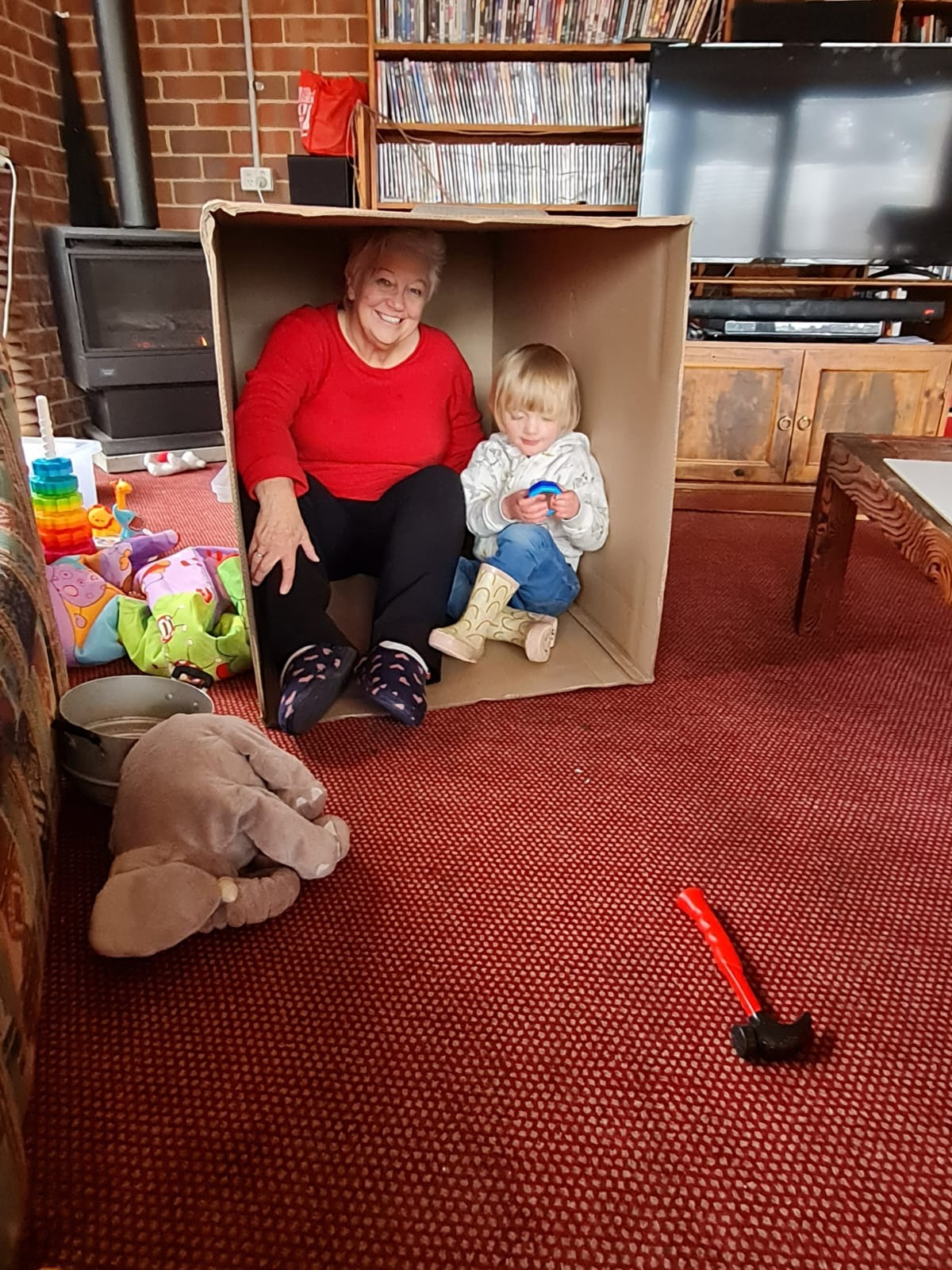
And by this time, we had connected up the new washing machine and I wanted to see how it worked! Besides, another grandchild had arrived and we spent the afternoon playing in the box that the washing machine had arrived in. So that was the end of my Day 2.
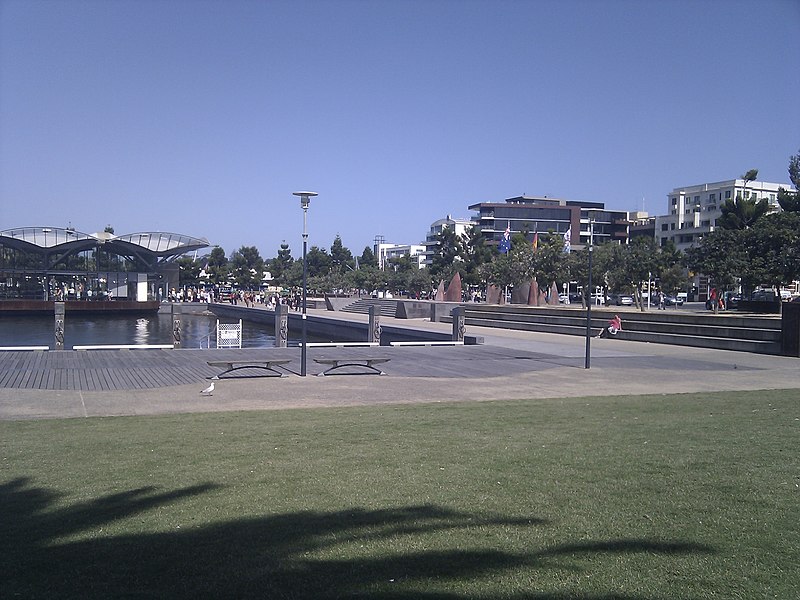
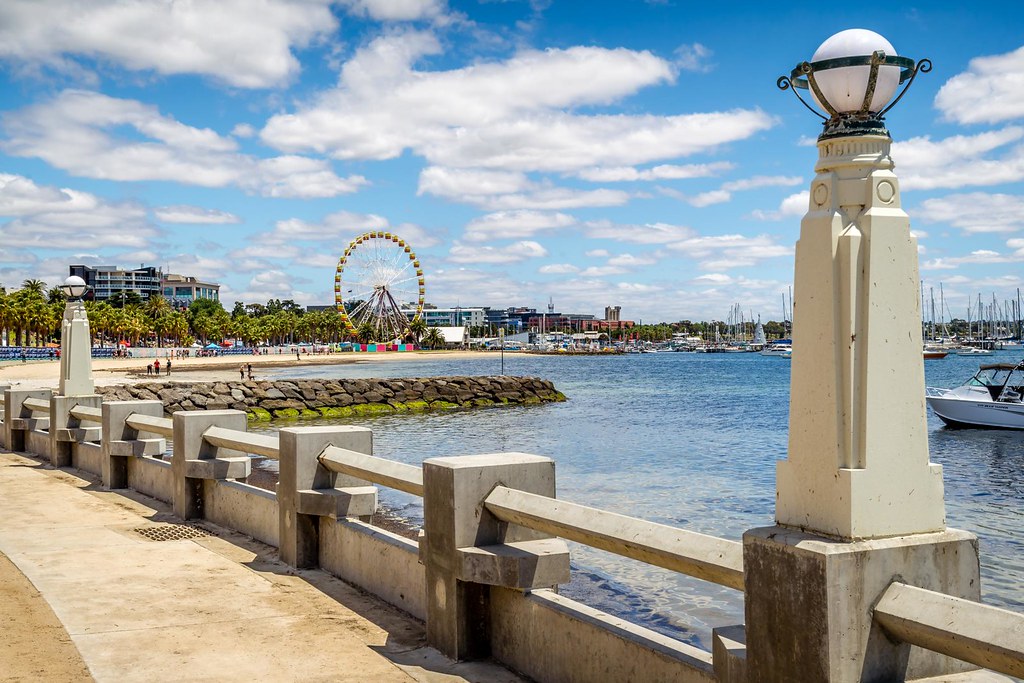
Am I in Geelong for the AHA (Australian Historical Association) conference? Why no, I’m right at home here in Macleod. During lockdown I was craving the whole conference experience: the plenaries, the decision about which session to attend, the regret at not attending the other session instead, craving stewed coffee, muffins, sandwiches. But somehow when the AHA conference rolled around again this year, I just didn’t think that I could be bothered going down to Geelong- it’s too close but it’s also too far. So I opted for the online ticket instead, and am squeezing it in between lunch with friends, online exercise classes, grandchildren and Spanish conversations. I don’t know that I’m going to be able to carve out much time, but I’ll catch what I can.
And what’s the .5 day, you ask? Well, it’s the Presidential Address given on the first evening of the conference, after a day of sessions for Early Career Researchers etc. This year the address was given by outgoing AHA President Melanie Oppenheimer, who after talking about the achievements of the AHA in a suitably presidential style, then went on to talk about volunteerism which has been a long-term research interest of hers. She mentioned that she had written a book about volunteerism years ago, where she had posited that there was an Australian way of volunteering, drawing on our British origins (where there was a tradition of voluntarism) and informed by Indigenous concepts of obligation and reciprocity. She pointed out that many in the audience were volunteers and that despite the ageist, gendered view of ‘volunteers’ being little grey-headed ladies (like me) or Lady Bountiful or Mrs Jellyby-like women, the largest group of volunteers are in the 39-45 age group. However, when she started her research, many historians saw volunteerism as a ‘light-weight’ topic, and the third-sector is still under theorized and at times seen as in conflict with feminism, or seen as unproductive. She recalled her early research into volunteer organizations in WWII, and it was only when she stumbled on the term ‘patriotic funds’ that the wealth of resources opened up before her. She finished by talking about the changes to concepts and locations of work (especially casualisation), and speculating about how that will change volunteering especially when people are less willing to make a regular volunteering commitment, oting instead for episodic volunteering.
Then this morning (my Day 1) I started off with the Keynote address on Historicizing Domestic Violence given by Zora Simic. She is part of a team working on an ARC grant on domestic violence, with her area of interest in the 1970s onwards, with an emphasis on the 1980s and 1990s. She noted the opening of the Elsie Women’s Shelter in 1974 and the Royal Commission on Human Relationships between 1974 and 1977. She identified important books like Tor Roxburgh’s ‘Taking Control’ in 1989 which was written for women escaping violence or to protect their children; O’Donnell and Saville’s survey on Family Violence in Australia which emphasized the relationship between financial dependence and violence, and Jocelynne Scutt’s ‘Even in the Best of Homes’ in 1983 which pointed out that domestic violence was not only physical. A survey by the Office of Women in 1988 found that 22% of respondents saw domestic violence as justified in a range of situations, and the Personal Survey has illustrated the intractability of domestic violence. (And then a grand-child arrived, so that was the end of that for me).
The grandchild left with his grandfather to go to Bunnings, so I was able to catch Rebe Taylor talking on ‘Extinction, survival and resurgence: European Imperial and Indigenous Histories‘. She started by talking about cultural diversity loss, especially through languages, which is even more stark than species diversity loss. However, as language reclamation projects have shown, languages can be recovered, and the reported ‘extinction’ of cultural groups is instead a history of resurgence and resilience. She went on to talk about four ‘last women at the end of the world’ – none of whom really were last women: Fanny Smith in Tasmania, Santu Toney in Newfoundland, Dolly Penreath in Mousehole, Cornwall, and Christina Calderon in Patagonia. She noted the role of gender and geography in these cases. She finished by talking about the way that ‘extinction’ on account of climate change is now being framed as something that faces us all (however ‘us’ is defined).
The next paper in the session was Annemarie McLaren talking on ‘Indigenous Intellectual History? Black People, White People and the Process of Racial Estrangement in early Brisbane‘. Unfortunately it was really hard to hear her, but I did understand that she drew on the diaries of German missionaries who were working in the Brisbane area. These missionaries, who spoke a heavily accented English, noted beliefs about skin colour – i.e. the belief that when Indigenous people died, they would go to England and become white- and the bestowal of ‘brother’ relationships between blacks and whites. However, when strychnine-laced flour was distributed in the Kilcoy Massacre, this led to a hardening of indigenous attitudes towards the profound differences between those with white skin and those with black. But it was really hard to hear what she was saying – wouldn’t you think after two years of Zoom, that sound would be better (I often think that when listening to podcast interviews conducted over Zoom too.) Then it was time to go meet a friend for lunch, and the grandchild had been joined by his sister, and a Spanish Conversation session beckoned…so that was it for me!
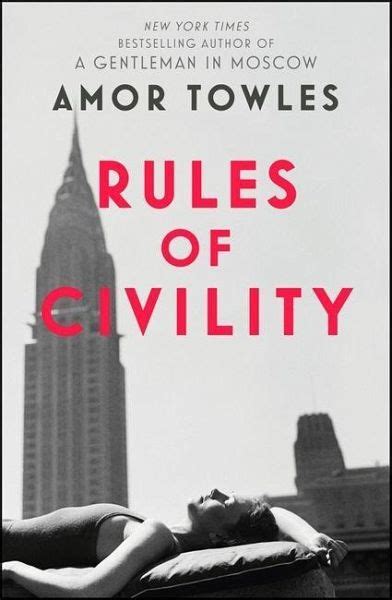
I had to wait for a long time for this book to become available at the library, and it was well worth the wait. I just loved it, and didn’t want it to finish. The story is set in New York in 1937, and is evocative of all those black-and-white films with the Empire State Building in the background and imbued with New York glamour. There’s shades of Gatsby here too, through the first-person narration of a young woman of humble background who is drawn into the milieu of fabulously wealthy people.
The frame story introduces us to Katey Kontent on the 4th October 1966 who, along with her husband, attends a photographic exhibition ‘Many are Called’ at the Museum of Modern Art. This exhibition features never-before-seen portraits taken by Walker Evans with a hidden camera in the late 1930s on the New York subways with a hidden camera. These black-and-white images are of just ordinary people, taken without their knowledge or consciousness. One image in particular attracts her attention. She knows that well-dressed, urbane business man, and she knows that an image of a gaunt, disheveled man is him too- it is Tinker Grey.
And thus we are taken back to New Years Eve 1937, when Katey, along with her room-mate Eve Ross, first meet Tinker in a nightclub, as they try to eke out their money for drinks to see them through to the new year. Eve, is blonde, with dimples “so perfectly defined that it seemed like there must be a small steel cable fastened to the center of each inner cheek” (p.15) Tinker is rich and good fun, and both girls – neither of whom is rich – are swept up into a life of parties and nightclubs until it all comes to a sudden halt. Despite Katey and Tinker’s attraction to each other, life goes off in a different direction. Katey takes us through the year of 1938, each time taking care to note the exact date, as she changes her job, and negotiates her way around a wealthy, dissolute milieu with Wallace Wolcott, Dicky Vanderwhile, and Anne Grandyn. Meanwhile, Eve and Tinker go off on other trajectories. One one level, Katey learns that wealth and power can influence events and give people the wherewithal to manipulate and intervene in other people’s choices: on another level, there is still that aspect of chance and unexpected event that sends everything awry.
The title of the book comes from the Young George Washington’s Rules of Civility and Decent Behaviour in Company and Conversation which Katey discovers amongst Tinker’s possessions. She realizes that these 110 homespun maxims are more influential on Tinker than she at first thought, especially the last one: “Labour to keep alive in your Breast that Little Spark of Celestial fire called Conscience”. And it was that last one that brought Tinker to the dishevelled state that the photographer Walker Evans captured in his photograph.
At the end of the book, and looking back on that year of her life, the older Katey says:
It is a bit of a cliché to characterize life as a rambling journey on which we can alter our course at any given time- by the slightest turn of the wheel, the wisdom goes, we influence the chain of events and thus recast our destiny with new cohorts, circumstances, and discoveries. But for the most of us, life is nothing like that. Instead, we have a few brief periods when we are offered a handful of discrete options. Do I take this job or that job? In Chicago or New York? Do I join this circle of friends or that one, and with whom do I go home at the end of the night? And does one make time for children now? Or later? Or later still?…
Life doesn’t have to provide you any options at all. It can easily define your course from the outset and keep you in check through all manner of rough and subtle mechanics. To have even one year when you’re presented with choices that can alter your circumstances, your character, your course- that’s by the grace of God alone. And it shouldn’t come without a price.
p. 323
I’ve been oblique about the plot, because I don’t want to spoil it for you. Suffice to say that I really enjoyed reading this book and feel as if I have been in the hands of a master storyteller.
History of Rome Podcast Episode 147 Capitulation. So Julian was dead, with the Sassanids heading for victory, and with no successor named. The officers turned first to Praetorian Prefect Salutius, but he declined because he said that he was too old. Then they went for Jovian, the 39 year old and largely unknown Captain of the Imperial Bodyguard. He was openly Christian, but this hadn’t hurt his career as Julian the Apostate didn’t particularly care what your religion was, as long as you did your job. Jovian accepted capitulation to the Sassanids in order to keep his army intact, but the troops opposed this surrender and he lost all authority amongst them. He annulled the anti-Christian legislation and brought back the anti-Pagan legislation. But after 8 months, he suddenly died. Was it an accident? Who knows. But Mike Duncan thinks that it was a blessing because it brought Valentinian and his brother Valens to the role of Emperor. When Jovian up and died, they were the right men at the right time.
Episode 148 The Cousin´s Cousin. For the first time in ages, we had two emperors who didn´t hate each other. Valentinian and Valens embedded the idea of the East-West division, with Valentinian taking the western provinces and Valens the east. Valentinian generally treated the Gauls and Allamanni with contempt, and when Julian´s cousin Procopius, the last of the Constantinian dynasty, seized Constantinople, Valentinian left it to Valens to deal with. But Sharpoor was on the rise again in the east, so Valens headed off to Syria until he received news of Procopius´seizure of power, then returned to Constantinople to fight him, and won. Meanwhile Valentinian was engaged with the Allamanni and was in a good position to finish them off, but had to leave off battle because the Saxons were on the rise in Britain.
Carol Raddato, Flickr, Creative Commons
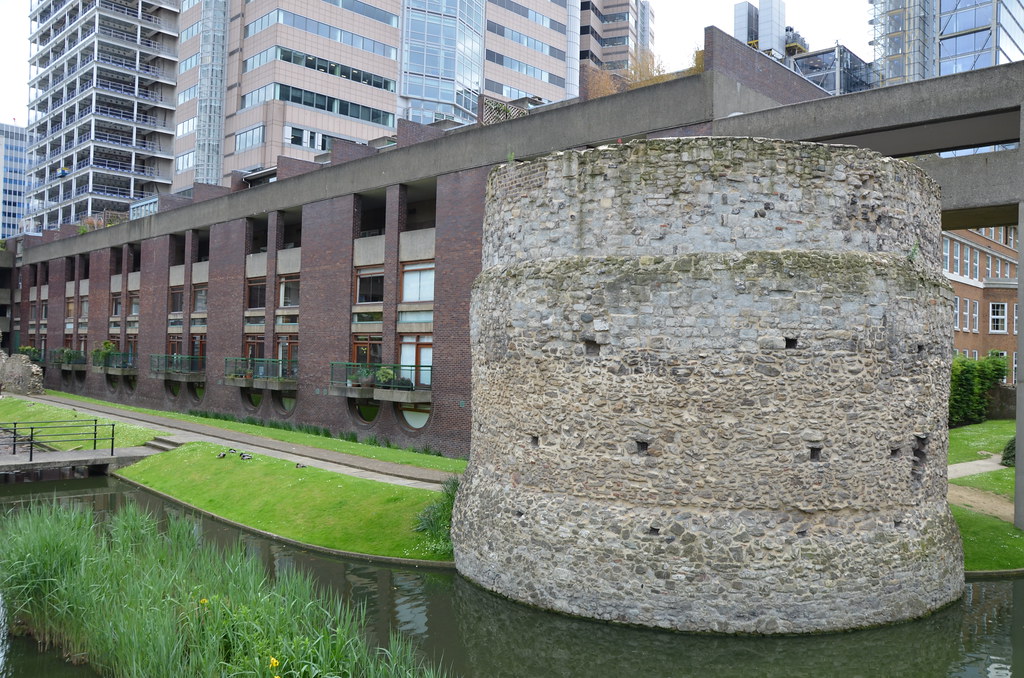
Episode 149 The Great Conspiracy takes us to the co-ordinated uprising in Britain where, on account of the neglect and stagnation that had set in, the Picts, Hiberian tribes from Ireland, the Franks on the coast and loose, unorganized Saxon tribes from Jutland all joined together against the Romans. The Romans were quickly overcome. There was no real political agenda: it was just plundering. Valentinian didn’t head over to Britain in person because defeats were politically dicey so he sent off Theodosius Snr instead (the father of the future emperor) who was a supporter of the Nicene Creed. He quickly cleared Londinium and announced an amnesty for Roman soldiers who had gone AWOL (as many had done) in order to boost the numbers of Roman troops. Valentinian was sick, so he elevated his son Gratian to full Augustus in order to secure the succession.
How It Happened (Axios) Putin’s Invasion Part V: The Fight for the Donbas picks up on Putin’s redirection of troops to the Donbas, which Putin claims is taking place on Russian soil. Many Ukrainians speak Russian, and one of the interviewees (news producer Kateryna Malofieiva) talks about how life changed once the Russians annexed the region in 2014- the currency changed; the food brands changed. There has been a complete breakdown in her family between pro-Russian and pro-Ukranian relatives. Ukraine wants to return to the 1991 borders (i.e. get back the Donbas region and Crimea) and is relying on its 44,000 battle-hardened troops who have been fighting on the Russian border since 2014. One of those is Ukrainian Cpl. Andrii Shadrin, born in the Crimea and who had never even heard Ukrainian spoken (only Russian). He joined one of the units that Putin would say was ‘Nazi’, and his parents too believe that he has been brainwashed. He thinks the same about them.
The Little Red Podcast is hosted by Graeme Smith, China studies academic at the Australian National University’s Coral Bell School of Asia Pacific Affairs and Louisa Lim, former China correspondent for the BBC and NPR, now with the Centre for Advancing Journalism at Melbourne University. Shanghaied: Living with COVID Zero was really interesting. We were all appalled by scenes of Wuhan citizens being bolted into their homes, and two years later it is happening again as Shanghai is locked down again in pursuit of COVID Zero- something that the rest of the world seems to have given up on. Shanghai residents had reassured themselves that they were so economically important that they couldn’t be shut down, but they were wrong. Two months later, upper and middle-class Shanghai residents are now aware of the power of censorship and arbitrary decision-making as their building-specific group chats were closed down on the internet, and they were being told things that they could clearly see were not true. Food handouts from the government depended on where you lived, and those factories that did remain open in effect became labour camps. Now they are ramping up their testing, with compulsory tests every couple of days, but so many low-paid workers have left Shanghai for their villages, that there are insufficient people to do the testing at such low pay.
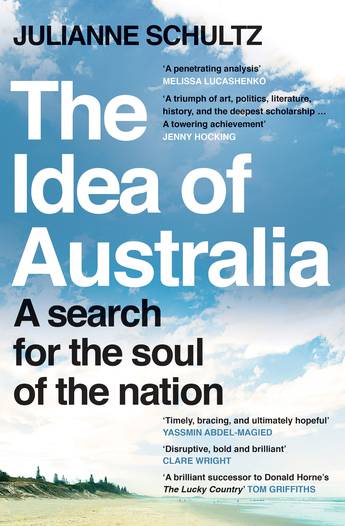
I must confess that I’ve never really engaged in discussions of Australian identity. It has always seemed to me to be a topic that can too often by hijacked by the ra-ra Akubra mob, and infused with the whole Anzac, flag, fair dinkum rhetoric. But I was encouraged to read this book, largely on the basis of the many positive blurbs on the cover, but also by the inclusion of that little word “soul”. Leaving aside its religious connotations (which Schultz does too), she is probing beyond the surface and the image to consider something more personal, more integral to the idea of Australia and Australians, as distinct from the performance of Australian-ness. As a commentator she is well placed to do so: she was the inaugural editor of the Griffith Review which, over and beyond the 64 volumes she edited, has explored various features of Australian life in essays, poetry and story.
In many ways the chapter headings in this book echo the titles of the Griffith Reviews that I have on my shelves: From Somewhere; Making the Nation; Remaking the Nation; People Like Us; From Little Things. Like a Griffith Review volume, these discursive chapters weave together strands of her own biography, history, literature and politics.
She has a number of themes that she returns to across different chapters. One of these is the idea of the ‘Covid X-ray’ which revealed the fault-lines within Australian society. Another is Linda Colley’s idea that, without catastrophe, most change takes ‘three score years and ten’ to move from idea to reality- an oddly reassuring thought. Schultz references this ‘three score years and ten’ often during her book, giving it an oddly ponderous, almost religious tone at times. She refers several times to the Sydney Olympics and the feeling of pride that many of us, ready to sneer, felt at its irreverent and insouciant depiction of our country on a global scale. Where has that Australia gone? Finally, and most importantly, she returns again and again to the Uluru Statement, that call to Australia’s soul, that she feels will “sooner or later, fundamentally reshape the idea of Australia” (p. 146).
This book is unashamedly a product of the twenty-first century. Her chapter-by-chapter references (unfortunately the book lacks a compiled bibliography) favour recent publications and the rather excessive long list of laudatory paragraphs at the start of the book embed the book within a progressive intellectual milieu. So far, I have not read reviews of the book from The Australian or Quadrant, which ordinarily would leap on a book about ‘Australia’s identity’- one of their favourite topics despite their deprecation of ‘identity politics’. In a way this book is timely, given that we faced a general election in the wake of strange times. But I also have hopes that, given its historic span that draws from historians and events across Australia’s history, it might transcend that short-termism. I suspect this book may well stand the test of time, as Donald Horne’s The Lucky Country, Hancock’s Australia, Bernard Smith’s Boyer Lecture The Spectre of Truganini and Stanner’s phrase ‘The Great Australian Silence’, each of which she references repeatedly, have managed to do. At least, I hope that it does. By talking of ‘the soul of the Nation’ she steps beyond the economy and politics into something more intimate and powerful and inspirational.
History of Rome Podcast. Episode 144 The Road to Constantinople Even though he had not been brought up in the military, Julian had good success against the Germans and Franks- so much so that he was acclaimed as Augusta by his troops. But, at this stage, he declined the offer, saying that Constantius was the only Augusta. Instead of stripping the Gauls of everything in order to pay for his victory, he had the idea of cutting taxes on them, but actually collecting them, instead of allowing them to accrue debt and then write it off in a fit of debt-forgiveness. Meanwhile, over in the east, Sharpoor and the Sassanids became active again in Syria, so Constantius ordered Julian to send his troops east. But his troops didn’t want to go and Julian wasn’t prepared to force them, and this time when they urged Julian to be Augusta, he accepted, thus setting himself up for war against Constantius. Constantius was becoming increasingly paranoid after his wife (who had always championed Julian) died. Constantius was en route to engage in battle with Julian, when he died, leaving Julian as sole emperor. Once Julian arrived in Constantinople in
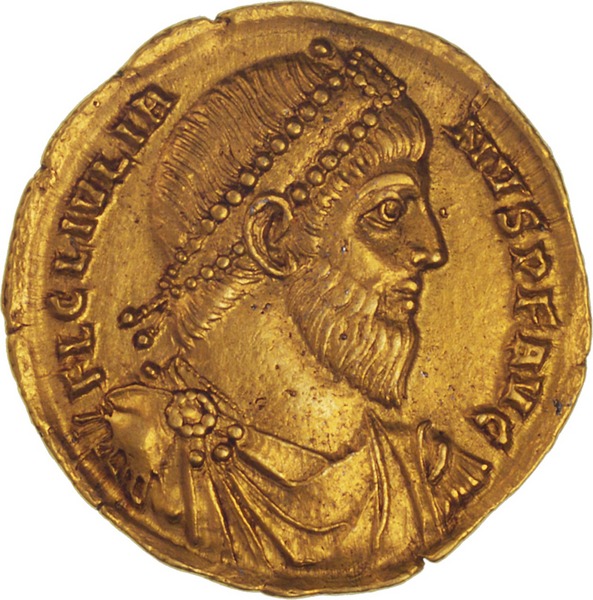
Episode 145 Julian the Apostate, he cleared the imperial court of his enemies, after appointing an ostensibly ‘independent’ commission. He looked back to the 100s C.E. and the Antonine dynasty as a model, cutting the bloat in the court and administration, and abandoning all that talk of “Living God” stuff. He kept control of defence and taxation but devolved power back to the local magistrates. He had always been a pagan behind the scenes, having rejected the Christianity of his upbringing, but now he embarked on re-paganizing the Empire. Despite his name, he didn’t make Christianity illegal. However, he opened up the civil service to pagans, and sacked the Christians, and announced that all religions were now seen as equal, which set the Christians against each other as now all sorts of heresies could arise. He didn’t actually ban Christian schools, but he banned the use of classical texts by Christian teachers, and Roman families who wanted their sons to get ahead withdrew them from Christian educators so that they could receive a proper education. Julian looked at the community and social support aspects of Christianity and tried to emulate it by uniting pagans into one Paganism- but that was never going to work. In Episode 146 The Spear of Destiny Constantius was dead, but Julian was determined to go to war against Sharpoor and the Sassanids. At first he was quite successful, but then he failed. The Sassanids engaged in a scorched earth policy, which led to starvation amongst Julian’s troops. However, he continued to lead, and it was while leading that he was speared (no-one knows by whom) because he rushed out without wearing his armour. He probably didn’t think that he was going to die, but after lingering a couple of days, he did- without appointing a successor. He was 31 years old, and had ruled for about 18 months. He dreamed big, and died young. Superficially, he was like Elagabalus in that he tried to reform religion, but he was more important than that. It’s one of the big ‘What Ifs’ of history- if he had ruled for longer, would Christianity ever re-established itself? Would the whole of European history changed?
The Real Story (BBC)China vs. the West in the East is interesting because it takes a European/BBC approach to the ‘Far East’ , which is of course Australia’s closest area of influence. It features Jonathan Pryke – Director of the Pacific Islands Program at the Lowy Institute, an Australian think tank; Dr George Carter– A Samoan Research Fellow in Geopolitics and Regionalism at the Department of Pacific Affairs at the Australian National University (ANU) and Judith Cefkin – Former US Ambassador to Fiji, Tonga, Tuvalu, Nauru and Kiribati. All speakers were keen to emphasize the multiplicity of languages, cultures and states within the Pacific, and the inappropriateness of China wanting to deal with them as a block. Dr Carter pointed out that there is no Pacific immigration at all into China, and that these family ties are important in relationships with Australia and New Zealand.
Things Fell Apart (BBC) Episode 7 A Secret Room behind a Fake Wall tells the story of Isaac Kappy, a film producer from Albuquerque whose career fell apart and ended up in Hollywood. Always attracted to conspiracy theories, he became engrossed in Pizzagate, and then went onto Alex Jones Infowars to claim a widespread Hollywood pedophilia network. He died by falling from a bridge, obviously troubled and probably by suicide, but his cause was taken up by QAnon and lawyer Lin Wood, one of Donald Trump’s ‘outside’ lawyers.
History Extra Podcast There have been fairly muted celebrations of the Queen’s 70th Jubilee here in Australia but I did listen to Britain’s transformation during the Queen’s Lifetime, featuring historian Dominic Sandbrook. Starting off with the Queen’s birth in 1926, he and interviewer Rhiannon Davies give us a picture of British life and politics decade by decade of the Queen’s life. There were no Roaring Twenties in Britain, where the ’20s were largely an extension of the pain of WWI. Perhaps that’s why the Depression did not figure as much in people’s consciousness as it did in US, although there were very different experiences in the North and South. WWII in the 40s was a seismic event, and Princesses Elizabeth and Margaret became patriotic icons. The 50’s -especially the second half- were marked by consumerism, brighter clothes, youth culture and full employment. Televisions and washing machines in particular changed society. The 60’s for families in the suburbs were not particularly ‘swinging’, and were more an extension of the 50s. Large-scale immigration from the Caribbean and India/Pakistan began in this decade, and it was unpopular from the start. The 1970s were marked by strikes, discontent and IRA bombings, co-existing with increasing affluence. The arrival of Thatcher during the 1980s accelerated changes which were already under way, but de-industrialization and austerity deepened social divisions. The 90s brought New Labor, and in many ways Thatcher had fought many of the battles for them. With the death of Diana, the Queen seemed to be a bit of a relic, but Brexit and the Queens neutrality about it, was good for the Royal Family. She was embraced again with her COVID speech, and I think that Paddington Bear endeared her to us further.
99% Invisible. Divining Provenance examines the looting of Syrian artefacts since the start of the Syrian War. Syria, of course, is replete with archaelogical sites, which have been looted for decades. But with the arrival of ISIS (many of whom were not Syrian), this looting and trafficking became a major source of funding. Over the last ten years, ordinary people have been doing it too. The UN introduced Provenance law in 1970, which made trade of anything uncovered since 1970 illegal, but different countries apply the law differently. Although buyers will turn themselves inside out proving authenticity (because who wants to buy a fake) but provenance is another matter, especially when goods are presented in a job lot. Facebook, where much of the selling takes place, claims to have a take-down policy, but it in effect leaves the whole question of provenance (or not) to the seller.
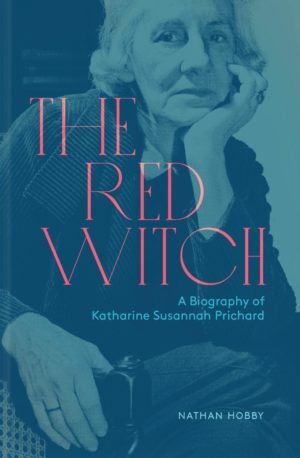
Near the end of her life, the author Katharine Susannah Prichard was sorting through her papers and correspondence, threatening to burn “while there’s still time”. Her friend Catherine Duncan wrote back to her
I can understand that you should want to put a time limit on giving students access to personal papers, but in fifty years, dearest Kattie, the KSP you are now will have become someone else- she will have escaped you…Perhaps in the end it’s better to surrender the truth to posterity rather than allow one’s self to be deformed by supposition.
p.378
Well, fifty years have passed and here is Nathan Hobby’s biography of Katharine Susannah Prichard. I wonder what KSP would think of it? She was, after all, very conscious of posterity and it was the attempt of early biographer Cyril Cook to apply a Freudian lens to her biography that led her to write her own autobiography Child of the Hurricane. Time and politics have not been kind to some aspects of her legacy: for example, Coonardoo needs to be read within the time it was written and would never appear on school reading lists today, and her staunchly pro-Stalinist political views, controversial then, would appeal to an even smaller group of adherents now. But I think that she would embrace the roundedness of Hobby’s biography, which combines beautifully the personal, the literary and most importantly, the political in presenting her life.
What a complex thing it is, constructing a person’s personal life from the outside and at fifty years’ remove! What she herself said about her relationships with men, and what her son, who was her literary executor, might have written are not necessarily what an outsider decades later might have said. What we think or write ourselves about our relationships (retrospectively in a memoir, or contemporaneously in correspondence) is refracted by our need to have an emotional coherence to the story we tell ourselves and others about our choices and actions. A biographer looks for coherence too, but is more tolerant of ambiguity and inconsistency. And so, Prichard’s relationship with the older married man William Reay reads now as a compromised, rather questionable entanglement, the relationship with Guido Barracci is tinged with betrayal and her dalliance with Hugh McCrae seems opaque and puzzling. Reading from the outside, her marriage with Hugh Throssell seems an enigma. To the end of her life, in her letters to her son and friends, she declared her love for him and mourned his ongoing absence in her life. Yet they seemed to share little of her literary life (although it did sustain them financially), they spent quite a bit of time apart, the family suffered on account of his financial ineptness and I suspect that Hugh was never as politically active as she wanted him to be. Did the circumstances of his death colour the story she told herself about her marriage? And then there are her other friendships. What was it like to be her friend? There are obvious falling-outs with many friends, despite the effusiveness and overtly literary tenor of her correspondence.
To be honest, I was completely unaware that she had written so much. Certainly, this was her working job, and, especially during the Depression years and later, she needed the money from her novels, short stories and newspaper stories. But this is a lifelong job, and the to-and-fro with publishers and editors continued throughout. Competitions play a bigger part in her writing life than I would have imagined, although I guess awards (a ‘competition’ under another name?) play a similar role in our literary scene. She received a Commonwealth Literary Fund grant in 1941, but I am not at all surprised that the security service recommended in future that the names of applicants for fellowships be submitted to them “for comment” to prevent any other writers with Katharine’s political leanings from being considered. A literary biography needs to accommodate both readers familiar with the subject’s works, and those who have not read them at all. I felt that Hobby did well, giving enough of the flavour of her work for those unfamiliar with it, drawing together his own evaluations with those of readers at the time, but not labouring the work either. That said, the only one of Prichard’s works that I am tempted to read after reading this biography is the goldfields saga (The Roaring Nineties; Golden Miles and Winged Seeds). Her frequent trips to the places in which she set her novels reflects her emphasis on authenticity (within limits, of course), although the outback seems to held more allure than urban settings.
The strongest part of this biography, as reflected in the title The Red Witch, is Hobby’s examination of her politics, which enriched but complicated her life enormously. It seems to me that she projected her political commitments onto her husband Hugh, who showed only fitful involvement in politics. She both gained and lost friends through differences of political opinions. Her politics could have cruelled her career (her receipt of a Commonwealth Literary Fund grant probably stymied the chances of Communist writers who followed her) and certainly many readers and reviewers felt that the vehemence of her politics straitened her novels. Her unshakeable admiration of Stalin, when so many other colleagues dropped away, can be variously read as loyal, steadfast, inflexible or willfully blind. But her politics were so interwoven with her friendships and her writings that it is impossible to cut them out and make a judgement of her life and writings without them.
The book is arranged in five chronological parts: Kattie 1883-1907; Freewoman 1907-1919; Mrs Throssell 1919-1933; Comrade 1934-1949; Katya 1950-1969. Within each part there are multiple chapters- possibly a few too many, when some were as little as seven pages in length. The preface plays the part of the literature review, and is probably the most evident sign of the PhD thesis that preceded this book. I really enjoyed the Afterword, set in Prichard’s former home in Greenmount W.A. in 2019 when the author comes on stage properly. Nathan Hobby has been present in the book throughout, especially in his appraisals of Katharine’s writing, but it has always been behind the scenes, which is the way I prefer it. But I was glad that he stepped forward at the end.
He has been well-served by Miegunyah Press, which has given him expansive footnotes, an excellent index and a bibliography as well- something that is much appreciated instead of having to hunt through footnotes for the first reference to a source. The footnotes reveal the rich archive of correspondence that underpins Hobby’s work, and the variety of newspaper sources from which has drawn.
It is probably true that, as Catherine Duncan predicted, some fifty years after her death, ‘KSP’ has become someone else but I think that she would recognize herself in this book. The KSP of the future may have escaped her, but I don’t think that she escaped Nathan Hobby. He has presented her to us in all her aspects – as lover, mother, wife, comrade, writer, companion and public figure – with diligence, empathy and tempered admiration. No subject could ask more of her biographer.
My rating: 9/10
Sourced from: review copy Melbourne University Press
History of Rome PodcastEpisode 141: Blood and Water looks at the ten years of co-existence between Constans and Constantius. The religious culture wars were not dead, and the two emperors became caught up in them: Constantius leaned towards Aryanism, while Constans was pro-Nicean. Constans in the west began losing touch with reality, spending all his time hunting and banquetting, and neglecting the army for an archery corps. This isn’t going to end well. It didn’t because he was overthrown and killed by Magnentius. Constantius took on the usurper Magnetius in 350AD, finally triumphing over him in 353 when Magnetius did the right thing and committed suicide. To ensure that a rebellion didn’t break out while he was on the other side of the empire doing this, he appointed Gallus, one of the two survivors of the Massacre of the Princes, which would free him to go after Magnetius. Episode 142: You’ve Earned It. Gallus was unpopular because he cut the food supply to the citizens in order to supply the army instead, and he was persecuting pagans as a fundraiser. In the end, Constantius killed first Gallus in 354 and then Claudius Silvanus in 355. That left him the last man standing, which was good until he started looking for a successor. There was only one male blood relative left, his cousin Julian. Episode 143 Julian the Pre-Apostate traces through the early life of Julian before he became Julian the Apostate. He was a studious lad who had been orphaned when Constantius killed his father, and he was allowed a fairly free education in the Greek-speaking East until he was summoned to Milan so that Constantius could check him out. Constantius didn’t see him as a threat, so he gave permission for him to keep travelling around for his education. When he was 23 years old, he was made a junior Caesar and Julian decided that if he had to be a Caesar, he’d do it well. Despite not being well supported by his generals, he had a good victory over the Germans at the Battle of Strasbourg, which of course made Constantius a bit twitchy again. Never a good thing.
Conversations (ABC) The Caving Time Lord introduces us to Australian geochronologist Dr Kira Westaway who has been involved in archaeological discoveries of ‘the hobbit’ (Homo floresiensis) in Indonesia, and more recently, the molar from a young Denisovan girl in Laos. And to think that for so long, we thought we were the only ones here.
Rear Vision (ABC)Sri Lanka: Failed State When Ceylon became Sri Lanka in 1948 it inherited an economic completely geared to British interests. Exports of tea and rubber to Britain brought in foreign exchange but this was directed entirely towards buying in products produced elsewhere (especially Britain). Sri Lanka has teetered on the edge economically for much of its history, forced to take IMF loans with their iniquitous hard-right political policy prescriptions. Politics has been dominated by the Rajapaksa family who dominated all the major political positions, and the war against the Tamils led to a bloating of the army at huge cost. Recent events like the abrupt suspension of imports of fertilizer, the collapse of tourism, and the decision to reduce (!) taxes has led to acute shortages of food and fuel. Although many accuse China of increasing Sri Lanka’s indebtedness, the major creditor is in fact Japan.
Things Fell Apart (BBC) Most of the issues of the culture war just wash over me, but I find the issue of the relationship between transgender rights and feminism less comfortable. I’m troubled by how quickly any discussion becomes sharp and painful- but I guess that’s just because this particular ‘culture war’ topic is one that does engage me. In this episode Many Different Lives, Jon Ronson revisits the MichFest women’s festival in Michigan in 1991, where conflict arose over whether a trans woman could attend a women’s festival run completely by women, for women. The issue splintered further- what about pre-trans women? He discusses second and third wave feminism, and the origin of the term TERF (trans-exclusionary radical feminism), which was not intended to be a term of abuse.
Wikimedia
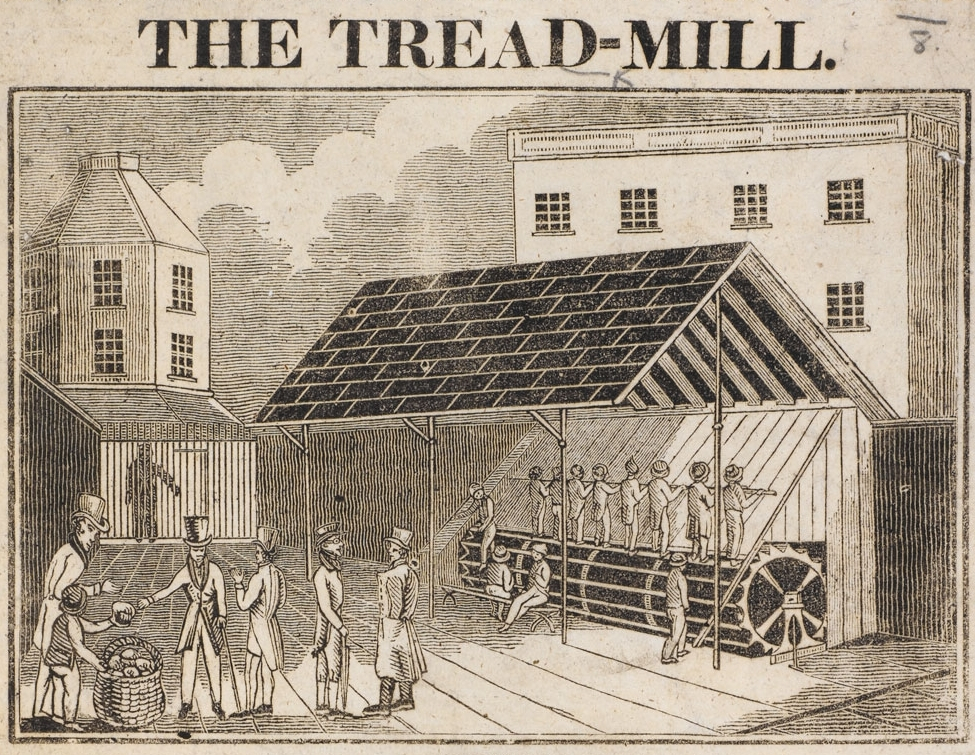
History Hit It’s rather ironic that people pay to go on a treadmill at gymnasiums. This episode The Treadmill features Rosaline Crone, a Senior Lecturer in History at the Open University who has specialised in nineteenth-century criminal justice history. The treadmill goes back to Roman times, when it was used by slaves and labourers as a form of crane for lifting heavy objects. The treadmill in a penal setting was invented by William Cubitt, who saw it as a way of giving work to prisoners in the Bridewell. He had the idea of turning the ‘hamster wheel’ type of treadmill inside out, so that the steps were on the outside. It could be- and was- used as a mill, particularly in Sydney but not in the UK. In the 1830s and 40s there was a backlash against its use, but it was revitalized from the 1860s to the early 20th century, when men could be sentenced to 6 hours on the mill. The movie ‘Wilde’ was wrong in depicting Oscar Wilde on the treadmill: like 50% of other prisoners in the 1890s, he received a medical exemption.
Australia if you’re listening (ABC) It’s not just that Australia has finally rid itself of the Coalition government, but this final episode sees light on the horizon too. The 49-year-old energy prophecy that is finally coming true goes back to 1973 and Professor John Bockris of Flinders University, who saw the dangers in the runaway production of carbon dioxide and predicted that Australia would become an energy exporter in the future, using solar energy to transform hydrogen for export overseas. This episode points out that Australia has been at the forefront of technology that has been picked up by other countries- NASA, China- but that we have sustained reputational damage from the Coalition government’s stance on climate change. In his final words of the series, Matt Bevan notes that nearly everyone he spoke to for this series said that Australia would get there in the end, but that we need vision and consistency over several decades. Perhaps, in the 2022 election, we have finally made a start.