Emperors of RomeEpisode CIII Old Age in the Roman World. Professor Tim Parkin (Elizabeth and James Tatoulis Chair of Classics, University of Melbourne) is so careful to point out that the sources deal only with wealthy Roman men, that I don’t know that I learned much here. It’s hard to say what ‘old age’ was: people lived into their 60s and 70s in Rome, and people and headstones often exaggerated people’s age. There was variation in perceptions of old age across the Empire: in North Africa, for example, there was more openness about peoples’ ages on their tombstones. He talks about ideas of medicine at the time, with the four humours, and it was generally seen that during old age, the humours ‘dried up’. Tell me about it.
History ExtraChivalry: Everything You Wanted to Know. Featuring medievalist Lydia Zeldenrust, this episode talks about the changing perception of chivalry from its origins in the post-Carolingian world – about the 11th or 12th century as a way of knights treating other knights; through the Crusades; its adoption during Tudor and Elizabethan times (thinking of Henry VIII’s Cloth of God knightly games) and then its 19th century manifestation as manners. There is always an interplay between the warrior-reality and literature. The idea of the strong protecting the weak was not extended to peasants, and it does have a dark side, sliding at times into misogyny (women are there for kidnapping and rescuing) and colonialism (the Spanish Conquistadors drew on the language and imagery of chivalry to justify their actions).
New York TimesA Guilty Verdict for a Mass Shooter’s Mother This was fantastic. In Michigan, Jennifer Crumbley, the mother of a 16 year old mass shooter at his school, was found guilty of criminal manslaughter for the shooting. She didn’t do the shooting: her son did. However, she purchased the gun for her son and took him to a shooting range (legally); she did not take him out of school when she and her husband were called in because her son had drawn pictures of shooting and guns on his geometry paper (but then again, none of the other adults in the room, who were all under mandatory reporting rules, allowed him to stay at school) and she did not seem to take seriously strange messages texted to her by her son (which she says have been taken out of context). The reporter on the story, Lisa Miller (no, not ‘our’ Lisa Millar) obviously has concerns about the case, which legal experts said was unlikely to end up with a guilty verdict- but it did. Really interesting.
I Was a Teenage Fundamentalist. So was I. This podcast, which started in 2021, is hosted by two other men who were part of the big evangelical churches during their adolescence/early adulthood, but as middle aged men, no longer attend. It’s a story-based podcast, and each episode is pretty much self-contained. I went right back to the starting episodes, where they were rather coy about their identities, referring to themselves by the letter of their first name only, but that has obviously gone by the board as their website now names them openly. Episode 1: Brian’s Conversion Story and Episode 2: Troy’s Conversion Story are just what the name says: they talk about how they came to ‘give their lives to Jesus’ – something that I had done some ten years earlier than did, but which seemed to be very much the same experience. Now in its third year, there are more episodes here than I’m likely to want to listen to (there is, after all, a sameness about them) but as an ex-fundamentalist, I find them interesting. I like that it’s Australian.
Democracy Sausage. I was always bemused by the term ‘water cooler conversation’, given that I had heard of the expression before I even knew what a water cooler was, in those days when we didn’t feel compelled to lug water bottles everywhere and got water from a tap if we were thirsty. Anyway, the recent ABC documentary Nemesis has certainly gained ‘water cooler conversation’ status among my circle of left-leaning, politically-engaged friends. In the episode Do Unto Others Emeritus Professor Paul Pickering, Dr Marija Taflaga and Professor Mark Kenny discuss the recently-completed ABC Nemesis program. Interesting to get other perspectives on it.
Things Fell ApartSeason 2 Episode 3 Tonight’s the Night Comrades Continuing on with Jon Ronson’s exploration of culture war skirmishes in 2020, this episode looks at a family who were going on a short camping holiday in their converted white camperbus, only to find themselves in a small town, surrounded by heavily armed townfolk. Locals had been riled up by media reports of ‘Antifa’ plans to move out of the city centres into the countryside, and they were ready.
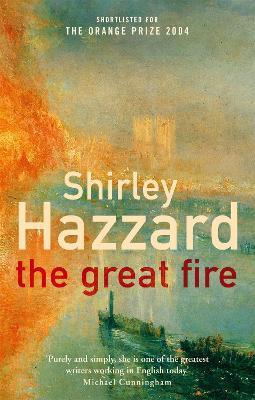
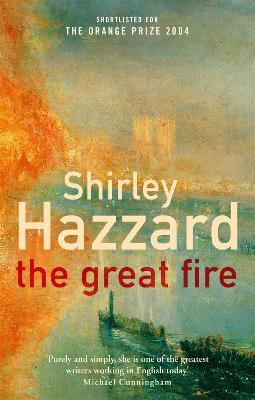
I was disappointed by this book. It won the Miles Franklin and the National Book Award for Fiction in 2004, and was short-listed for the Orange Prize. So why, 150 pages in, could I not remember or care about any of the characters? why was I exhausted by her pretentious prose, re-reading sentence after sentence thinking “what on earth does THAT mean?” To deny the external and unpredictable made self-possession hardly worth the price (p. 10) or a place being differently aware in that murmurous season (p. 59), or That vulnerability should make a man strong. That there could be thought without helplessness; without that very helplessness in which their women were marooned, as if, by existing at all, one had become a victim. (p. 292). Oh mercy.
You might think from the title that this is about the Great Fire of London, but it’s not- instead the Great Fire is the conflagration of two World Wars.
The 1947 setting, in post World War II Asia, is an interesting one from an Australian perspective. The English protagonist Aldred Leith, who had sustained injuries during the war, has been dispatched to write reports on China, and then occupied Japan; while Australian Peter Exley, whom he had met during the war and rescued, is working as a war crimes lawyer after the dropping of the bomb on Hiroshima. The story traces through their progress through Japan and Hong Kong. Aldred falls in love with the 17 year old daughter of the Brigadier in charge of the army base in which he is staying. She is devoted to nursing her chronically and fatally ill brother Benedict, but she reciprocates Aldred’s feelings, and yearns to join him, especially when her parents, who disapprove of the relationship, take her to New Zealand. It was at this point that I began to be interested in the book and the characters fell into place.
The book, written in 2003, has captured well the stiff formality of language of the 1940s, and is replete with small details of clothing, setting, communication etc. The theme of Empire runs throughout, especially in the ashes of World War II which has devastated England and will wrench apart the Empire on which the sun never sets. Hazzard generally sees Australia as a parochial outpost, to which people are exiled- a reflection of her own attitudes to Australia, I suspect.
But her descriptions are so laboured and unnecessarily complex, and I felt as if I was drowning in a sea of unnecessary, pretentious words. And no Miles Franklin winner should take 150 pages to engage its reader, and even after finishing the other 150 pages, I really don’t know if it was worth the effort.
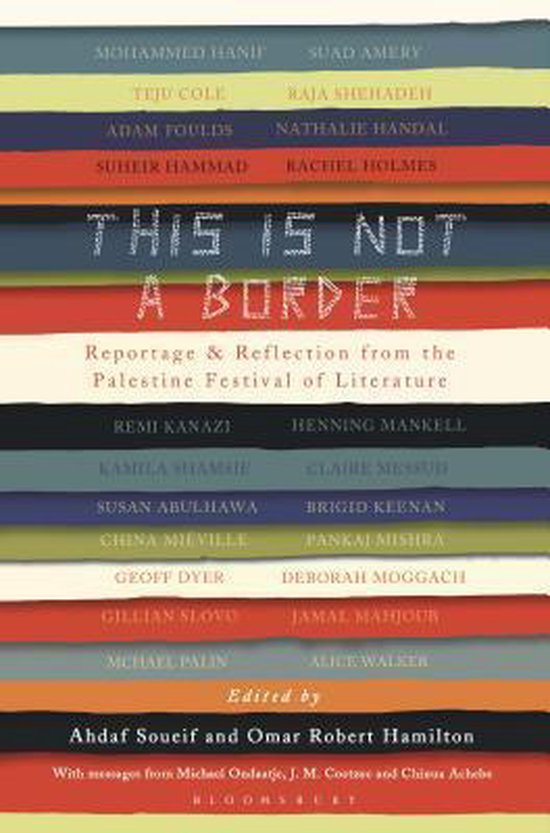
The first Palestinian Festival of Literature was conducted in 2008, and this volume of writing was produced to celebrate its tenth anniversary. We in Australia take for granted that if we want to go to a writing festival in our own city, or regional area, or interstate for that matter, then there is nothing to stop us. That isn’t the case for the residents of the Gaza Strip (especially now) or the West Bank, who face checkpoints and turnstiles and outright prohibitions against travelling from one place to another. So the founders decided that if people couldn’t go to the festival, then the festival would come to them. Attracting noted Western authors, the presenters were bussed from region to region, intentionally exposing them to what the Israeli government does not want outside visitors to see, with the hope and expectation that these authors would return home and use their words – their tools of trade- to expose what is happening.
So who are some of these authors? Among others: J. M. Coetzee, Geoff Dyers, Alice Walker, Deborah Moggach, Henning Mankell, Michael Ondaatje, Michael Palin, Chinua Achebe, and China Mieville, and many other Middle Eastern writers I am not so familiar with.
Most of the contributions are only about 4 pages in length, or else single-page poems, and I must confess to feeling a bit as if I were reading a lot of “What I Did on my Trip” responses. As you might expect from writers of this calibre, they are all well written, but the length constraint (and perhaps the task itself) imposed a sameness and almost a banality in most of the short chapters. In spite of this, certain images repeated: the Allenby Bridge and Qualandia checkpoints where unseen young Israelis surveil the waiting lines through CCTV; the wire netting constructed over markets where settlers in high rise buildings throw their rubbish, urine and faeces onto the street below; the incessant tunnelling conducted by Jewish settlers (facilitated by the Israeli government) under Palestinian homes and mosques, with the risk (expectation?) that the honeycombed land will collapse completely. For me, the power of a book can be measured by how much I tell other people about it, and I have been bailing up anyone who will listen with “Hey, there’s this book I’m reading and did you know….?”
The most powerful pieces in the book for me where when the author was able to exceed the word limit, particularly China Mieville’s piece that was actually illustrated with photographs of the checkpoints, even though photography at checkpoints is prohibited. It was followed by a longer chapter by one of the current trustees of the festival, Omar Robert Hamilton who speaks of the importance of J. M. Coetzee’s short half-page contribution where, after resisting attempts to urge him to name the situation ‘apartheid’, he defines South African apartheid then describes Palestine in exactly the same words and invites us to “draw your own conclusions” (p. 35). Hamilton highlights the importance of words in describing what is happening in Palestine, resisting the neutrality of language that we use for fear of being labelled ‘anti-Semitic’.
I’m struck by the injustice and the sheer vindictiveness of small power plays against the Palestinian people, carried out over and over again, day after day. This book was published years before October 7, but it’s all of a piece. I’m so far trying to resist seeing what is happening in Gaza in binary terms, but it’s becoming harder to do so, and this book has largely contributed to this.
My rating: Hard to say. As individual stories, perhaps an 8/10 but taken as a whole, and in terms of impact on me, 9.5/10
Sourced from: Yarra Plenty Regional Library
Read because: of my distress about what is happening in Gaza
Expanding Eyes. Continuing on with A Midsummer Night’s Dream before going to see the play in the Botanic Gardens, Episode 99: Night Rule goes through the scene of Puck and the “love juice” which he manages to place on the eyes of the wrong people: on Titania, who instantly falls in love with Bottom wearing his ass’s head, and Lysander who is woken by the treacherous Helen, and instantly falls in love with her. Helen, who is infatuated with Demetrius, gives a rather pathetic speech where she begs him to treat her like his dog. He’s not worth it, Helen.
Episode 100 A Milestone, the Lovers and Fairies’ Conflicts Resolved. Michael Dolzani starts this episode by talking about imagination in Shakespeares’ work and the difficulties in trying to pin Shakespeare down to a specific theological approach. Duke Theseus’ oration about imagination here reflects Hamlet’s “there’s a divinity that shapes our ends” but it’s not as clearcut as that. There are many opposites in this play, and when Dolzani was teaching this play, he would get his students to identify them: reason/desire, order/chaos, masculine/feminine, reality/imagination. At the end of Act III, everyone is asleep and Puck and Theseus get the opportunity to undo the mischief they have caused. In Act IV, Oberon has ‘won’ and he has taken the child that Titania wanted to protect. Act V returns to Theseus, and it is here that he gives his speech about imagination.
Episode 101 A Midsummer’s Night Dream: What is the purpose of Act V? Good question, because this is where the lovers are all back with the people they are supposed to be with, and the rude mechanicals put on their play. Dolzani reminds us that this is a festive comedy, and the slapstick in their production of the play is a crowd-pleaser. However, at the end, Bottom asks whether the whole thing is a dream- a theme that Shakespeare addresses often. Is life real? Are we all just puppets, and who is the puppeteer? Dolzani reminds us that the play put on by the rude mechanicals has multiple audiences: the court, the fairies and us. Is someone watching US? (cue spooky music)
[By the time I’ve written this, I have seen the play and gained much by listening to these lectures – because that’s in effect what they are, complete with the rustle of paper as he turns the pages. He repeats himself a bit, so much so that I wondered if I was listening to an episode I’d heard before, but the repetition worked well for me in keeping the continuity when I was listening to episodes several days apart.]
History Hit I’ve finally finished the series on Napoleon. Episode 4 Napoleon: The Myth features Andrew Roberts (who appeared in the first episode) as he traces through Napoleon’s exile on St Helena, 2000 miles from any other land. He had 29 people in his entourage, and he spent his time writing The Memorial of Saint Helena where he himself crafted the ‘great man’ personae. He died after 6 years, and there are suggestions of arsenic poisoning, but tests have shown that all his family had high levels of arsenic as well, which could be ingested through many number of environmental sources. He was buried on St Helena, but in 1840 he was disinterred by Louis-Phillipe who was hoping for some reflected glory. Roberts thinks that Napoleon kept the best bits of the French Revolution, but there was such bloodshed. He thinks that Napoleon is unfairly stigmatized by the “Napoleonic Wars” because five of the seven such wars were started by the anti-Napoleon coalition. The coat, the medals, the bi-corn hat was all part of a carefully cultivated image on Napoleon’s part- and in promoting this visual image, you’d have to say that he succeeded brilliantly.
Prohibition. This episode comes from the American History Hit series. Under the Prohibition legislation passed in 1920, it was made illegal to manufacture, transport or sell alcohol, although not to actually drink it. Featuring Sarah Churchwell, Professor of American Literature and Public Understanding of the Humanities at the School of Advanced Study, University of London, UK. [Public Understanding?? Whatever happened to HISTORY?] she identifies prohibition as one of the three political movements that arose out of second wave Revivalism in America, the others being abolition and the suffrage. In 1920, 90-95% of the American population identified as being Christian, and so prohibition was framed as a moral campaign, led by women concerned about the link between alcohol, poverty and domestic violence, and the Anti-Saloon League, a powerful lobby group. It was spectacularly unsuccessful. New York ended up with 100,000 speakeasys, and organized crime moved into the trade. The government ended up adding poison to ‘rubbing alcohol’ to deter people from drinking it, which was not a good look, and with the coming of the Depression, the government became aware of the taxation revenue it was foregoing. So the Prohibition legislation was repealed in 1933, the first time a constitutional amendment was amended by a later amendment.
Sydney Writers Festival. Diary of an Invasion. I’m not really sure why this turned up in my podcast feed because events have largely overtaken it. Ukrainian novelist Andrey Kurkov has been writing about daily life in Kyiv, and here he talks with Matt Bevan who, much though I like him, doesn’t do a particularly good job of posing questions to him (in fact, he sounds surprisingly nervous). Kurkov emphasizes that there are many Russian-speakers in Ukraine, but many of them have distanced themselves from their Russian identity as Putin insists that there is no such thing as ‘Ukrainian’ history or language. The head of the Wagner group, Yevgeny Prigozhin was still alive at that time, and Kurkov discusses his role as an alternative political persona to Putin- but we all know how that ended. Badly.
Things Fell Apart (BBC) Episode 2: We’re Coming After You Honey. In 2006 a barmaid in a yachtclub was befriended by the Wittermore family, whose daughter was very sick with Chronic Fatigue. The barmaid (Judy) had worked as a medical researcher, and the family set her up in a research facility that they funded in order to search for a cure for CFS. She found traces of XMRV, a mouse virus, in the blood samples of CFS sufferers, and her research which she presented with 13 other authors, was published in ‘Science’ magazine. However, other researchers were not able to replicate her findings and the study was retracted. Judy angrily asserted that Big Pharma was attacking her research as an outsider to the medical establishment, and when she refused to hand over her cell lines on which the research was based, the Wittermore family sacked her. She stole the cell line and her notes from the laboratory, and ended up arrested and bankrupt. Eight years later, in May 2020, she appeared in the viral (haha) video ‘Plandemic’ accusing Big Pharma and Fauci of collusion in inflecting the population in order to sell vaccines. Interesting.
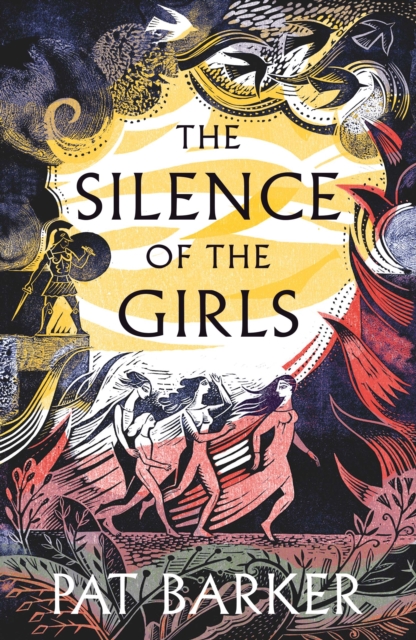
I have come late to The Iliad, only having just completed reading it (well, listening to it) for the first time. I had picked up bits and pieces of it over time, and read David Malouf’s Ransom some years ago, without having read the source material. I know that Pat Barker is not the first writer to approach The Iliad from a woman’s perspective, but after having been drenched auditorially in the gore and the testosterone of Homer’s work, I really enjoyed reading this book soon after reading the original, although I found the ending too neat, as if she was scratching around to end on a positive note.
It is mainly told from the viewpoint of Briseis, who had been captured when Achilles took Lyrnessus and slaughtered her whole family. She is his trophy, taken nonchalantly at first, until his commander Agamennon claimed her as his own after being forced to relinquish his own trophy sex-slave, Chryseis, when her father had called down plague on the troops encamped around Troy. Achilles bridles against this humiliation, not out of any great affection for Briseis, but because of the challenge to his own status as prized warrior by his commander. Briseis finds herself appropriated by Agamennon, who treats his women with violence, and then surrendered against back to Achilles who had previously treated her with nonchalance and disdain. As the war between the Trojans and Aecheans swings in the balance, so swings too her own future should she align herself with the Trojan women who are likely to meet the same fate as the women of Lyrnessus.
Perhaps it is because the reading of The Iliad is so fresh in my mind that Silence of the Girls seemed so powerful. The pathos and emotional depth of the final book 24 of The Iliad helps you to forget that you have sat through book after book of gore and vain-glory. Women are a by-product of that: either a disposable receptacle for lust, or valued mainly for their status as a trophy to be won or traded at the price that the enemy is willing to pay. I think, in a current-day context, of the Boko Haram “brides” kidnapped from Nigerian rural boarding schools (see a recent Amnesty International report here), and enslaved as a sexual convenience yes, but also as a challenge to the other side to fight or pay to ransom them. As in all hostage situations, the abductor is bringing into his – and yes, I will say “his”- ranks a resentful, frightened, angry enemy who, at first at least, must be terrorized into submission .
The women of Lyrnessus are slaves, outnumbered amongst violent men who, in this case, have the weight of military tradition and their kingdom, behind them. Women are the plaything of their Aechaen master, who can do what he will with them. ‘Unallocated’ women have an even more abject existence, available to any man in the camp. There is rape, violence and subjection, but I found myself particularly revolted by Agamennon’s act of deliberately spitting into Briseis’ mouth: there are, after all other fluids that a man can force into a woman. I don’t know why this disturbed me so much: perhaps it was the slow deliberation of the act. Resistance and agency, as a matter of survival, will be subtle, covert and “in the mind” despite what the body is forced to do.
Barker tells Briseis’ story in the first person, but with a twenty-first century viewpoint. The conversation and language, too, is twenty-first century. Often in historical fiction I am critical of such infelicities, but I have enough respect for Pat Barker as historical fiction writer to know that this would be a deliberate decision on her part, rather than ignorance or a lapse in concentration. I was disappointed in the ending though, because a writer of her status has no need to neaten things up, or end on an uplift.
At many times when listening to The Iliad I wondered why I was listening to so much boasting, repetition and gore. The final books made me forgive all that. And reading Barker’s The Silence of the Girls made me forgive all that boasting, repetition and gore too, because it provided a counterpoint to it, another reality more sobering and sordid and barely mentioned.
My rating: 8.5/10
Read because: I have a copy of Women of Troy (the next in the series) and I wanted to read the first book before embarking on it.
Sourced from: Yarra Plenty Regional Library Service (who I am horrified to see no longer hold any copies of the Regeneration trilogy. Surely a library service of this size could have one copy. This obsession with ‘chuck out the old and bring in the new’ is ridiculous.)
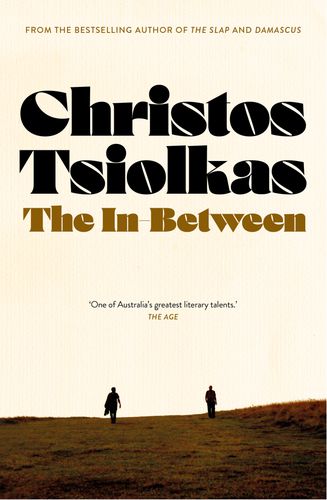
Whenever I read a Christos Tsiolkas novel, I come away wondering whether it’s him or me. Does everybody else think constantly of sex, appraising every random interaction as a possible liaison? Are everyone else’s eyes drawn immediately to groins or other sexual parts? Or is it me? Do I lack that whole sexual lens through which to view the world? Or am I too old? Have I forgotten? Was I ever like this? It’s as if the entrance price to a Tsiolkas novel is forced viewing of scenes that would certainly be designated for mature audiences only.
Yet, I think that there is a shift here as Tsiolkas himself, now in his late 50s, is ‘in between’ the shock value of his earlier novels, and something more mature (older) and reflective. The two main characters in The In-Between are middle-aged too, and embarking on a new relationship after both being burnt by previous relationships. Perry’s relationship in Europe with the urbane, educated Gerard ended when Gerard, largely because of his daughter, decided to commit himself exclusively to a heterosexual marriage with his wife, with whom he had a strained relationship. Back in Australia, Ivan’s relationship with Joe had more a suburban tenor, as the landscape gardener is ‘taken to the cleaners’ financially by Joe, much to his ex-wife’s fury. Both men are starting again, nervously and warily.
The book is told in five long chapters. Chapter 1 starts with Perry, 53 years old, catching a tram to their first date. Their restaurant meal leads to lovemaking at Parry’s inner-northern suburbs apartment. Chapter 2 focusses on Ivan, who is househunting in Frankston with his daughter Kat, who is planning her own daughter’s birthday. She wants Ivan to invite Perry, but her mother Dana, still furious about the financial shakedown by Joe, does not want Perry to attend. We follow Ivan to two of his landscaping jobs: one to an elderly Greek woman being bullied by her son, and the other to Clarissa and Simon in their Californian Bungalow, who make him feel dismissed and put down. Chapter 3 returns to Perry, and a dinner party held by lesbian friends Cora and Yasmin. This egg-shells dinner party, pure Tsiolkas in its incisiveness, sees Ivan being appraised by Perry’s friends, and the presence of straight couple Jed and Evelyn leads to too much drink, loose words and a confession. Chapter 4 has the most graphic and rather gratuitous sex in the book, I thought. Ivan breaks up with Troy, a long term male prostitute who he has been seeing for many years. Chapter 5 mirrors the previous chapter’s letting go of the past as Perry and Ivan travel to Europe to meet with Gerard’s daughter Lena. Lena has found a letter that Gerard wrote to Perry, but never sent but, receiving it years later, Perry decides not to read it.
When you’re in-between, things need to shift, and this book captures well the process of making space for a new person. It involves re-evaluating friendships, changing priorities and establishing new priorities. As Tsiolkas does so well, he captures Melbourne life crisply, with its suburbs and class distinctions played out through language, politics, interests and location. But there is also the element of age and maturity which, I think, is less often addressed in books with men (as distinct from women) as main characters – and often from an end-of-life backwards reflection rather than from this in-between stage. [ However, as I write this, a whole lot of other examples spring up: George Johnson’s books? Phillip Roth? ] In keeping with the title, this book looks both backwards and forwards; to letting go and building. It’s not just the sex: this is a book for grown-ups.
The Rest is HistoryEpisode 411 The Man in the Iron Mask Have I ever read this? I don’t think I have, although I knew roughly what it was about. I always assumed that it was fiction, but there was in fact a real d’Artagnan and a real Saint-Mars and indeed a real man in the iron mask (although it may have been black velvet, rather than iron which rather changes the scenario somewhat). Tom and Dominic go through several scenarios. Several theories about the identity of the man in the iron mask were prompted by the fact that Louis XIV was rather a miracle baby, born after years of infertility. Was it Louis XIV’s older brother, fathered by a commoner? Or the commoner father himself? Or his identical twin brother born a few hours after Louis (which is often the case with twins), given that according to the beliefs of the time, the second twin born was actually the first conceived? Or was it a political prisoner, who knew too much? A valet for a famous man who knew things that he shouldn’t? Tom and Dominic seem to plump for the latter.
Unraveled (ABC)Firebomb I’ve been listening to this seven episode podcast for some time. It features actor Crispian Chan, who teamed up with investigative reporter Alex Manne to go back to investigate the fire-bombing of Crispian’s family’s Chinese restaurant in 1980s Perth. It was part of a neo-Nazi vigilante movement at the time, although it took the police some time to realize that. The two investigators catch up with men who were involved in neo-Nazi activities in the 1980s, then go in search of the ‘mastermind’ himself, before turning their attention to the rise of neo-Nazis in Australian politics today. This is all terribly drawn-out and could have been encapsulated in two or three episodes, and becomes rather too touchy-feely for me at the end.
The Daily (New York Times) The Mother Who Changed: A Story of Dementia I have dementia in my family history, and I’m frightened by it. This is a fantastic podcast about two middle-aged daughters and their mother with dementia, and the court battle that ensued after their wealthy widowed mother embarked on a most-unexpected relationship with one of the daughter’s former father-in-law, a three-times divorced man with few financial resources. It raises lots of questions about whether loved ones have a responsibility to the pre-dementia person of the past, and the wishes they expressed then, or the happiness of the person who is sitting in front of them now, who may be quite a different person. Really interesting.
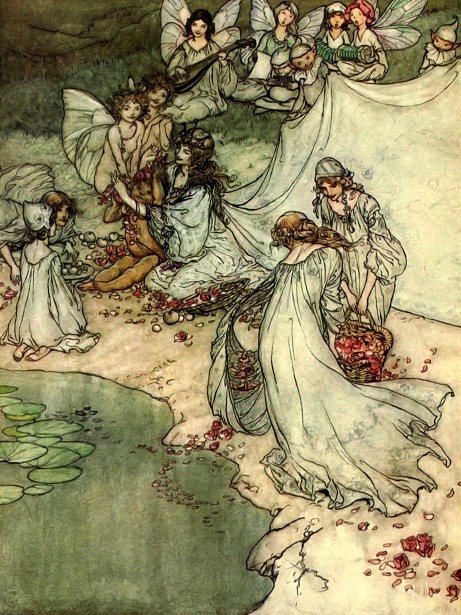
Expanding EyesEpisode 96: Shakespeare’s A Midsummers Nights Dream Act One We’re going to see this at the Botanic Gardens on Friday, so I thought I’d listen to Michael Dolzani’s series on A Midsummers Nights Dream. I have seen it before but to be honest, I thought it was a bit silly, so I thought it would be good to listen to a commentary on it first. So far Dolzani hasn’t disappointed. AMSD (my abbreviation) is one of a series of plays written by Shakespeare after the theatres re-opened after the Plague – resonances of COVID!- and it marks a change in Shakespeare’s use of rhyme and run-on in his narrative. Thematically, it is seen as a ‘festive play’ linked thematically with Romeo and Juliet and Richard II. It has four interlinked sub-plots, three of which represent social class distinctions: the ruling class (Theseus and Hippolyta), the well-born elite (the lovers), the working class (the “rude mechanicals”) and the fairies, and these story-lines play out contrapuntally. In this episode he deals with the first two. He points out that Shakespeare gives very rudimentary stage directions and little information about appearance, which is why Shakespeare’s plays can be reinterpreted so freely. The first grouping (Theseus and Hippolyta) is taken from Greek mythology which is a bit anachronistic. Hippolyta is an Amazon woman, taken by Theseus in victory (shades of the Iliad?) and they are about to marry in four days time. The second grouping, still upper class, sees the father Egius insist that his daughter Hermia, who is in love with Lysander, marry Demetrius, whom he has arranged for her to marry. Hermia and Lysander, star-crossed lovers- arrange to run away together (shades of Romeo and Juliet) but Hermia’s best friend Helena is going to spill the beans to Demetrius.
Episode 97 Acts 1 and 2 continued goes on with the other two plotlines. The mechanicals plan to put on a play for the wedding of the Duke and the Queen based on the story of Pyramus and Thisbe, from Ovid’s Metamorphoses, a fore-runner to Romeo and Juliet in that they both die needlessly, thinking the others dead. In Ovid’s story the metamorphosis occurs when their blood stains the white mulberry flower red. Shakespeare is not at all politically correct in his portrayal of the mechanics, making them out as dullards and fools. The name ‘Bottom’, which always amused me as a child, actually refers to weaving. Finally, there is the Fairy realm, where Shakespeare draws on Celtic mythology as well as Greco/Roman mythology, making much of the moon (modern readers/viewers are prompted by the other meaning of ‘moon’ with Bottom). Oberon, king of the fairies, is fighting with his wife Titania, and he decides to pay her back by arranging for her to be victim of a magic potion from a flower called ‘love-in-idleness’ which turns from white to purple when struck by Cupid’s arrow (shades of Ovid’s Pyramus and Thisbe). He finishes this episode by pointing out that AMND is often presented as a puff-piece- and I agree, this is how I have always seen it- but he’s certainly finding a lot of complexity in it.
Episode 98 The Green World AMND is one of Shakespeare’s “Green World” plays, which starts in a building, then goes outside into a forest, then returns inside with all the problems solved. This model was used in Two Gentlemen of Verona, in AMND, then in As you Like It and The Winters Tale. It continues to draw on Ovid’s Metamorpheses. Returning to the play itself, Oberon and Titania are fighting over a young boy. Oberon wants the boy to show his power, whereas Titania feels a sense of obligation to the boy’s mother, with whom she was friends. Puck – more strictly The Puck- is an English, rather than Irish character, and he plays the role of trickster.
History HitWhat If Hitler Had Invaded Britain? As you know, I’m partial to a bit of counter-factual history, although this is more a discussion of Britain’s preparedness for a German invasion, featuring Andy Chatterton, author of Britain’s Secret Defences. Nine months after WWII started, Hitler was looking for an armistice, but Churchill was opposed to a truce so Hitler doubled down and planning started for Operation Sea Lion. This plan for a flotilla-based invasion was not put into place because of the power of the RAF. It was common knowledge that there were ‘auxiliary units’ on the coast, who were being trained to sabotage and resist any invasion, but they now know that they were throughout Britain, with their participants sworn to secrecy under the Secrets Act. Despite the fun made of “Dad’s Army”, these were actually trained saboteurs, with the details of their actions informed by the rapid fall of France and the Low Countries. They trained 16 year old suicide assassins, and respectable looking women as part of the resistance. I found myself thinking often of 16 year olds in Palestine….
History Extra Nicholas Winton: The ‘British Schindler’. I recently saw the film ‘One Life’, and this interview is with Edward Abel Smith, the author of The British Oskar Schindler: The Life and Work of Nicholas Winton (a title which the author admits Winston would have hated). He said that he was pleased to see that the film acknowledged Doreen Warriner and Trevor Chadwick who worked alongside Winton. Smith points out that, unlike the Kindertransport (which this was not part of), Winton’s attention was on all children, not just Jewish children. He had a list of 5000 children, and managed to bring out 600, which he viewed as a failure. Once war began, he was a conscientious objector and worked as an ambulance driver. However, he later joined the RAF where he worked as a trainer because of his poor eyesight, and after the work worked on recouping reparations for the Jewish community from the extracted gold teeth- a pretty gruelling job. In the television show that features in the film (it was actually two separate episodes), many of the ‘children’ themselves did not know how or who had saved them.
Not Just the Tudors. As I’m going to see A Midsummer’s Night Dream this coming weekend, I was interested in Transgender Fairies in Early Modern Literature. Dr. Ezra Horbury, lecturer in Renaissance literature at the University of York, talks about the transformation at the end of the 16th century and early 17th century where fairies were transformed from the rather scary threatening folklore creatures into something small, sweet and delicate. This, she argues, was because of the ‘literariness’ of plays for the theatre, which drew on the child actors to play the parts. She discusses the appropriateness of using the term ‘transgender’, suggesting that many historical terms like ‘medieval’ are just as anachronistic. Children were viewed as being of no gender until they were about 7, right through to the early 20th century. She talks about the slipperiness of gender in fairies, and the misogyny and misanthropy in depictions of witches and old people. Much of this podcast went past me, because I was not familiar with the stories she was describing.
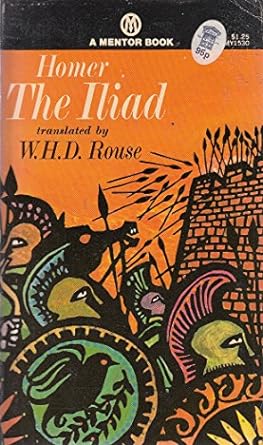
I’ve never read The Iliad. I knew bits of it, most particularly the final scenes where the enraged Achilles is dragging the body of Hector around behind his chariot, but I’ve never read the whole thing. I’m not a big audio-book listener either, but in this case I decided to listen to it, knowing that it was originally an oral story. I had audios of the Fagles translation downloaded from who knows where, but they were many separate files and I kept getting lost. So in the end, I succumbed to the prose version by W.H.D. Rouse which felt a bit like cheating. However, I had first been drawn to finally tackle it after listening to a podcast on Achilles, where extracts from The Iliad were read out, and if that narrated version was not prose, then it certainly sounded that way. (The show notes don’t reference the translation). At the same time, I listened to an excellent series of lectures by Michael Dolzani at the Expanding Eyes podcast Episodes 44 to 56, which I have referenced in my I Hear With My Little Ear postings between 23 Oct 2023 and 16 January 2024.
It took me several weeks. Was it worth it? For much of the time, I would have said ‘no’. There are whole books devoted to call-outs to various warriors and their families: you can just imagine the listeners sitting, waiting for their family’s name to be called out, and their triumphant glances when it was. There are many chapters devoted to battles as men are run through the shoulder with swords, eyes plucked out etc etc etc. There are oddly placed chapters that describe ceremonial games held to celebrate a fallen warrior, with the results told in tedious detail.
Above all, there is the image of the hero: brave, fearless, unswervingly loyal. The obverse of the coin: proud, arrogant, stubborn. The image of hero has lured whole contingents of men to their death in its wake.
But there are also moments where we see the heroic ideal held up against other more human traits, most particularly the bond of father and son. This plays out most strongly in the last books of the epic, and these books alone make the rest of the testosterone-driven gore worthwhile.
This month the Six Degrees of Separation meme run by Kate at BooksAreMyFavouriteandBest is a bit different. Instead of her choosing the starting book, she has invited us to start with a book that we have just finished, or read in the last month.
Well, the last book I read was Shirley Hazzard’s The Great Fire and even though I know that some people love it and have read it multiple times, I wasn’t particularly impressed. But I haven’t posted my review yet, so you’ll just have to wait to find out why.
But, my disappointment in the book notwithstanding, where did it take me?
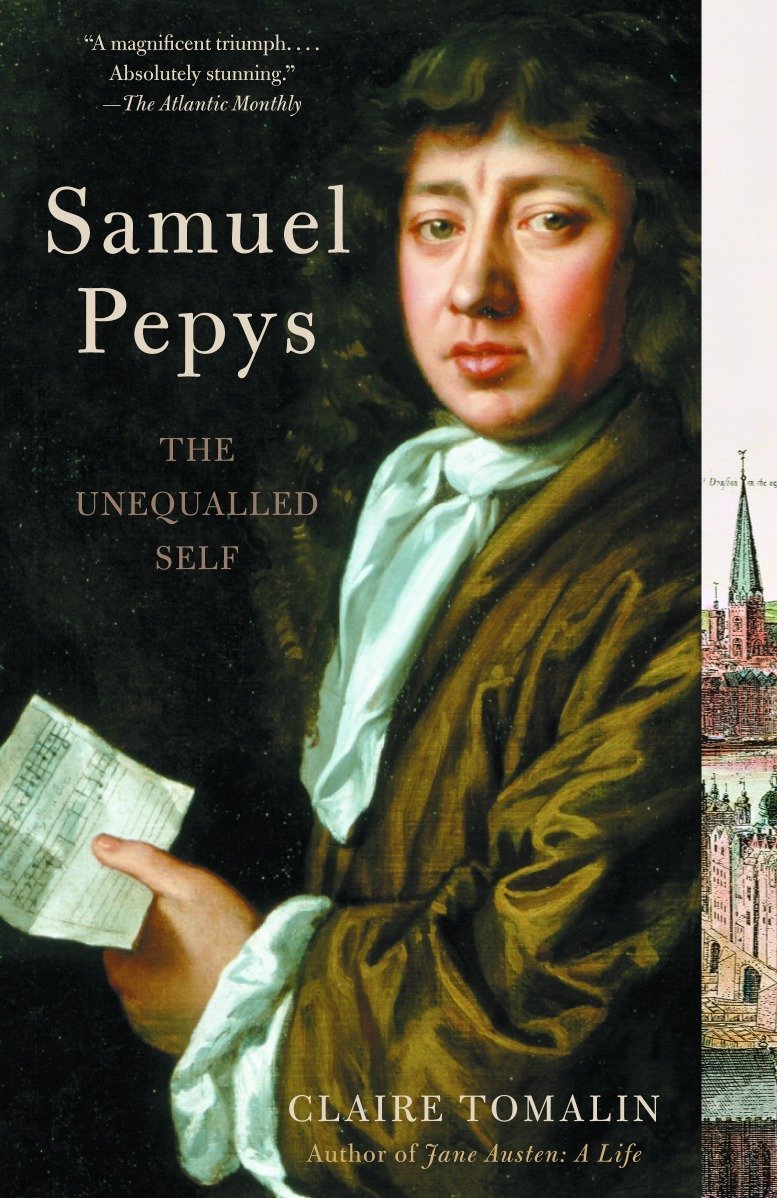
Despite the title, Hazzard’s book is not about the Great Fire of London at all- instead it’s set in Japan, Hong Kong and China in 1947 as the victorious Western powers occupy the territory. But Claire Tomalin’s Samuel Pepys: the Unequalled Self does deal the Great Fire of London because diarist Samuel Pepys wrote about it. In her biography, Tomalin gives us a rounded view of this 17th century Londoner and although many others have written about Pepys, I don’t think that anyone else could do it better than she has. My review is here.
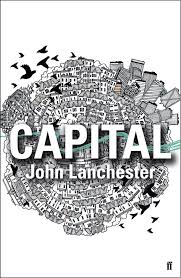
John Lanchester’s Capital is set in Pepys Road South London in December 2007, just before the Global Financial Crisis. The book follows the little dramas of the inhabitants of Pepys Road in short chapters of just a couple of pages each. Somehow Lanchester filled over 500 pages largely about ordinary lives where nothing much happens and yet left me wanting more. I just loved it, and my review is here.
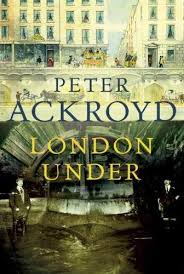
While we we’re in London, who else should we turn to but Peter Ackroyd, who has written several books about the city. London Under is atmospheric and erudite, steeped in literature and popular culture, especially that of the nineteenth century as he explores the river systems and infrastructure existing like a network under London Streets. The language flows seductively and smoothly in a very easy, beguiling read. My review is here.
Colum McCann’s This Side of Brightness is set underground as well, but this time amongst the men tunneling under the Hudson River for the subway system in 1919. I read it before I start blogging, but I really enjoyed it.
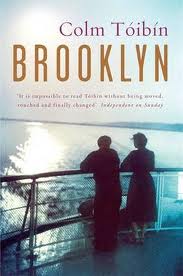
And thinking about New York leads me to Colm Toibin’s Brooklyn. I enjoyed the book enough the first time, but I absolutely loved the movie, and I went back and enjoyed the novel much more on a second reading. There is no back story; small events are told simply and in detail; every little act is described by a narrator who seems to be hovering up in the corner of the room, watching everything. It’s about a young girl who emigrates from Ireland to Brooklyn, and I felt that he described homesickness so well . My review is here.
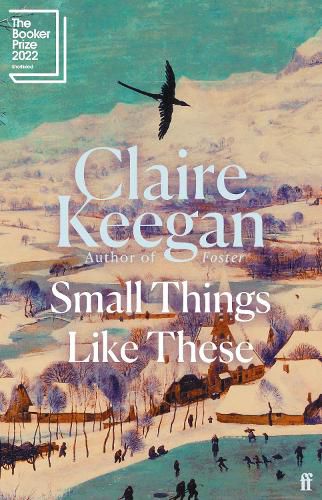
The main character in Brooklyn left Ireland, while Claire Keegan’s books are firmly set there. They are only short- they’re novellas really- but they’re so beautifully crafted. She wrote the short-story, expanded into a novella that became The Quiet Girl movie which I howled the whole way through. Small Things Like These is set in 1985 as Bill Furlong, a fuel merchant with five children who has lived in his small village all his life, becomes aware of the convent and its power over the children in its ‘care’ and the complicity of the village in turning a blind eye. My review is here.
So, although I might have been less than enamoured with The Great Fire, it has certainly taken me all around the globe!


 The Resident Judge of Port Phillip