‘Auld Lang Syne’ at the Art Gallery of Ballarat

Well, it’s not quite over yet! You can catch this exhibition at the beautiful Art Gallery at Ballarat before it closes on July 27th 2014.
img166

When we talk of ‘British’ settlement in Australia, we often glide over the fact that this included English, Scots, Irish and Welsh settlers and officials.  Hidden in plain sight is the fact that Scots permeated the empire, both as agents of colonialism through their Scottish enlightenment skills in botany, surveying and art, and as settlers in their own right.  Once you’re alert to this, you find them everywhere in colonial Australia- and in my own research into Upper Canada and British Guiana, they’re there as well, as this Slaves and Highlanders site conveys.  Their Scots ties were not left behind, and they were reinforced in new colonies by the church (both Presbyterian and Catholic), Scottish organizations and the familial networks between new settlers.

This exhibition of artwork and artefacts underscores the importance of the Scottish artists who accompanied the First Fleet (think Sidney Parkinson), and those officials who dabbled in artwork in the early Port Jackson settlement (think John Hunter).  Their education and scientific learning , to say nothing of toughness), fitted them well as explorers (think Stuart and Sturt and Major Mitchell) and their financial acumen and entrepreneurial nous served them well as merchants (think Robert Campbell) and agriculturalists (think William Anglis).  They were governors (think Lachlan Macquarie) and firebrand preachers ( think John Dunmore Lang) .  When Queen Victoria adopted Balmoral into her ‘brand’, Australians did too, and Robert Burns and Highland games became incorporated into the Britishness that colonial Australians held onto while at the same time developing their own variation.

All these aspects are explored in this exhibition which covers the First Fleet to Federation.  There is, as you might expect in an Art Gallery, an emphasis on artwork which is drawn from many collections, including the Natural History Museum in UK.  (I liked the fact, conveyed through one of the information panels, that a wombat skin sent ‘home’ by one of the early Scots settlers is displayed standing on its two back paws). But there are some objects as well, including a silk scarf commemorating the Scottish Martyrs who were sent here as convicts (an EXCELLENT Radio National podcast on Thomas Muir here).  An introductory panel warns that women are not heavily represented in the display, but Georgiana McCrae had a presence.

The dearth of women might have been ameliorated by a stronger focus on family connections, which was hinted at with the displays on Thomas and James Mitchell, but not really brought to the forefront.  It could likewise have been drawn out further with Georgiana McCrae whose brothers-in-law popped up in different aspects of Port Phillip Society.  Family connections, the networks across colonies, and chain migration as one son, then another, then the whole family came across, ensured that the Scots spread across Australia and the empire generally.  They became part of, and shaped their new communities but retained still an emotional attachment to their Scots identity.

I would have loved to have purchased the book that accompanied the exhibition but it was just SO expensive.  It was available in hardback only, at $79.95.  I’d gladly buy a softcover book for $40.00 if it were available (even though the glue binding them is often inferior) but double the price is just too much.  The same applied at the Bendigo exhibition we attended recently.

I’m pleased that the regional galleries are mounting such well curated and well publicized exhibitions.  And we certainly weren’t alone in our enjoyment. It was a bitterly cold Ballarat Sunday afternoon, and the gallery was comfortably full.
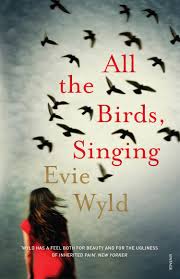


‘All the Birds, Singing’ by Evie Wyld

wyld_allthebirds

2013,  229 p.

Well, it’s won the Miles Franklin. The author was included on the once a decade Granta Best of Young British Novelists List. Her earlier book After the Fire, A Still Small Voice was acclaimed everywhere. So why was I underwhelmed by All the Birds, Singing?

It certainly starts with a jolt:

Another sheep, mangled and bled out, her innards not yet crusting and the vapours rising from her like a steamed pudding. Crows, their beaks shining, strutting and rasping, and when I waved my stick they flew to the trees and watched, flaring out their wings, singing, if you could call it that. I shoved my boot in Dog’s face to stop him taking a string of her away with him as a souvenir, and he kept close by my side as I wheeled the carcass out of the field and down into the woolshed. (p.229)

Jake is a sheep farmer on a remote, unnamed British Island, where she lives in a dank farmhouse with only Dog for company. We do not know how she came to be there, and why she is there unfolds gradually during the book.   It’s a visceral book, with not only carcasses of sheep and the bloodied life on the land, but the bodily violence of her other life- the one before this- as an abused prostitute in remote outback Australia.

The book is told in alternating chapters, with her life on the island told in first person past tense, and the Australian chapters told in first person present tense. It took some time into the book for me to realize that the Australian chapters were being narrated in reverse chronology. And so the author juggles two questions from the reader: ‘what happens next?’ as Jake gradually opens herself up to the company of an itinerant rambler who somehow ends up staying at the farm, and ‘what happened before?’ to bring her to such a lonely, cold and harsh environment.

The author is a master of setting. The whipping rain and inky darkness of the island is a stark contrast to the dessicated, searing light of the outback that opens the book. The motif of birds runs throughout the book like a soundtrack.

Part of my problem with this book might have been that I read it so quickly after finishing After the Fire, a Small Still Voice. When I look back at my review of After the Fire, I find that I could apply most of my observations about that book to this one as well. It’s almost the same story, with variations. Both books interweave two narratives. Both involve trauma and separateness that is heightened by isolation. In both, the setting is rendered carefully.  Even the titles are structurally similar and almost interchangeable.  Yes, there are differences- there are two characters in the first book and one in the second; the first book deals with the issue of masculinity, whereas there is a female main character in the second.   But I just couldn’t shake the feeling that I was reading variations on the same basic structure. Is this deliberate? Are these books elaborations on the same structure, rendered with different characters and scenarios? Is this part of a bigger project?

This year I didn’t get round to reading the other short-listed titles for the Miles Franklin. I think that I might just have to think “Well, interesting choice….”

awwbadge_2014 Posted to the Australian Women Writers Challenge 2014

Janet McCalman on the Founders and Survivors Project

A couple of weeks ago, Heidelberg Historical Society was delighted to welcome Professor Janet McCalman to our open meeting to speak about the Founders and Survivors Project.  This is a fascinating partnership between historians, genealogists, demographers and population health researchers who are using the convict records of the 73,000 men women and children who were transported to Van Diemens Land (VDL) between 1803-53 to create a collective biography of the transportation experience as it played out through succeeding generations.   Not particularly “Heidelberg-y”, you might think, but you’d be wrong: from among the records she found three ex-VDL convicts who settled in the Heidelberg/Diamond Creek/Whittlesea district, and in many ways their lives illustrated the ‘lifestories’ approach of the project as a whole.

The Van Diemens Land records are one of the most complete databases of the bodies and lives of an entire population in the world- so unique that it has been placed on the UNESCO Memory of the World Register in 2007.   The Founders and Survivors Project links them with another parallel database: that of those who served in the AIF in World War I.  These two data banks form the bookends of a project that looks at the convicts as a population, rather than as individuals, gathering data on their lives before sentence from which to infer their early life influences, examining their progress through the penal system in VDL, then tracing their lives after sentence.  It moves onto succeeding generations, looking at the  occupations, life span, families, mobility and social location of their descendants ending up, if possible, at the AIF records.

Using the methodology of prosopographical demography, it is a project built up from small records into an over-arching collective biography.  The convict indents are a starting point, but it widens out to genealogical records, shipping records, newspapers and institutional records as these individuals move through different life stages.  As you can imagine, this is a hugely labour-intensive process, involving records from all over the world.  In a way that just would not have been possible twenty years ago, the grunt-work of the project has been crowd-sourced, with local historians, family historians and genealogists from all over the world making their contributions.

You can see a video and read a transcript of Janet giving a talk similar to the one she gave us here at the State Library of Victoria website.

The people of Port Phillip during Judge Willis’ time liked to pride themselves on belonging to a ‘free’ society rather than a penal colony.  However, as I wrote about here, there were many convicts in Port Phillip, and through the Founders and Survivors project,  they have established that many of them were attracted to either Melbourne and its suburbs or the goldfields.  I was not surprised to learn that of the ex-convicts they were able to trace to death (just under half), the majority of men did not marry, but I was surprised to learn that 30% of women did not marry either.  Moreover, the majority of the women they have traced did not have children, although as Janet explained, a large tranche of the earlier female transportees were street-walkers whose venereal disease may have affected their fertility.   One of the criteria that the project has used for ‘success’ in later life is the presence of grand-children. Grandchildren suggest that the former transportee was able to carve out a life that was sufficiently secure to raise children to adulthood, and that those children, in turn,  were able to find life partners with whom to start their own families.  It puts the present-day pride in convict ancestors into another light: as far as VDL convicts are concerned, those who went on to sprout forth large family trees were very much the exception rather than the rule.

Two comments that she made struck me in particular- probably because they have resonances with events today.  The first was that of the punishments inflicted during transportation, solitary confinement seemed to be correlated most strongly with poor life outcomes, with fewer marriages and children afterwards.   Physical punishment (e.g. lashing) declined over time, as the system moved towards more psychological punishment.  Women in particular suffered from transportation (or the life prior to transportation), with their life expectancy some ten years lower than that of  free settler and native born women.

The second observation that Professor McCalman made was that it was government activity that gave many of these ex-convicts a leg-up.  Many were employed on the railways, and moving beyond WWI, those who served in the AIF and received returned-service homes managed to avoid the worst of the depression.  Many from later generations worked on the large infrastructure projects- Yallourn power station; roads etc.  In a world today of for-profit, public-private partnership, it underlines the importance of government activity in infrastructure, not just in its construction but its ongoing operation as well.

This project combines big-picture analysis with fine-grained family stories. There’s a wonderful, beautifully-designed  site called Founders and Survivors Storylines that presents these family stories through video, song and words.  Well worth a look.


A damned big ‘small’ business

According to Mike Seccombe in the Saturday Paper of June 7-13, the Abbott government has a rather expansive view of what constitutes a “small” business.  As a result, they have announced their intention to revise section 25-90 of the tax act, the “thin capitalisation” rules.

The previous Labor government had announced steps to limit the process by which companies could structure their operations to load up a subsidiary with debt borrowed from a related company off-shore, and then claim the interest as a tax deduction.  Under this scenario,  once the debt to equity ratio passed 1.5 to 1, and total interest repayments exceeded $250,000, the tax man would start asking questions.

Not any more.  The Abbott government will increase the threshold for interest repayments eightfold, from $250,000 to $2 million, in order to “spare small business compliance costs”.   Somehow, a small business borrowing enough to incur interest repayment costs of $2 million each year, and then writing it off as a tax deduction, doesn’t quite sound like a small business to me…..

Just sayin’.

“Belle”: A Movie

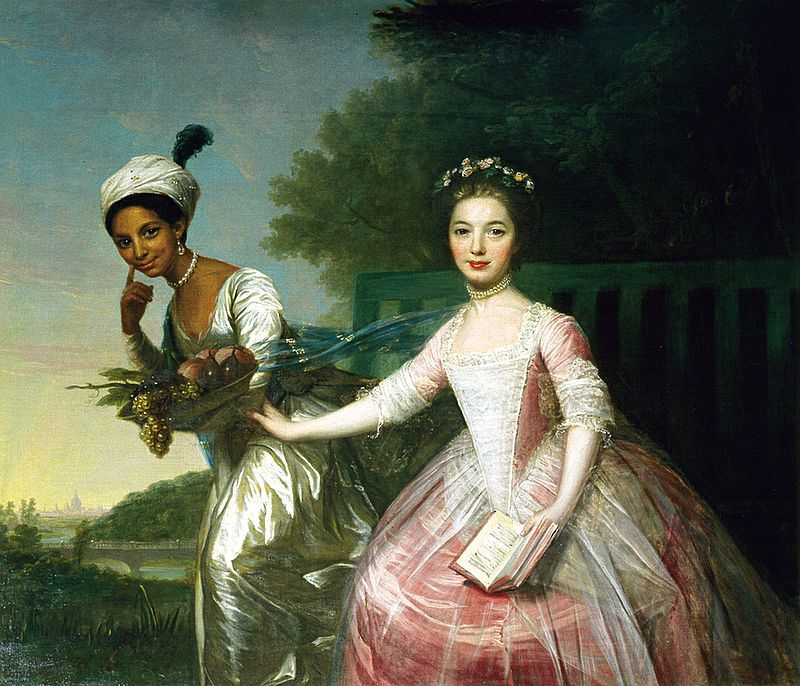
There is a painting  held at Scone Palace, the ancestral home of the Murray family that shows two beautiful young ladies, Lady Elizabeth Murray and Dido Elizabeth Belle, in the garden of Kenwood House, with the dome of St Paul’s Cathedral just visible in the background.  Formerly attributed to the portraitist Johann Zoffany, it picks up many of the tropes of 18th century femininity and social life. It contrasts the peaches and cream complexion of Elizabeth and the opulent detail of her dress, with the simple ‘natural’ dress and exotic headgear of the mulatto Dido who holds the obligatory fruit. But this portrait does not show the grinning servility of  little mulatto boys bearing pineapples  or the turbanned otherness of male servants who crowd the corners of other portraits of the time.  Instead, Dido is assertive and confident, pointing rather ambiguously to her cheek, and Elizabeth’s hand at her waist suggests companionship and affection.

Dido_Elizabeth_Belle


This painting features in the movie Belle, which I saw yesterday in its dying days at the Cinema Nova.  I absolutely loved it.  The settings and costumes were lush, there was a story line that worked at several levels, and I came out of the theatre saying “What a terrific movie!” instead of feeling underwhelmed, short-changed and wondering if I actually ‘got it’, which is what I often feel these days.

Dido and Elizabeth were the great-nieces of William Murray, better known as the first Lord Mansfield, the Chief Justice of England.  Born to different nephews, they were both taken into the home of Lord Mansfield, where they were brought up and educated together.  Dido, despite her mulatto heritage and illegitimacy, was treated as Elizabeth’s ‘sister’, in itself a controversial decision on the part of Lord Mansfield and his wife.  There were limits, of course: Dido did not eat dinner with the family, and her prospects on the marriage market were much different from those of her cousin.

As Chief Justice, Lord Mansfield made two landmark decisions which, although narrow in scope and largely leaving the structure of slavery intact, were taken up by later abolitionists and arguably contributed indirectly to the dismantling of slavery in Britain.  The first of these was the Somerset case in 1772, where Lord Mansfield ruled that chattel slavery was unsupported by the common law in England and Wales, and that a slave could not be removed from England against his will.  The second was the Zong Massacre case in 1783, which was actually an appeal by an insurance company against Mansfield’s earlier ruling over the  loss of slave ‘cargo’ when approximately 142 slaves were thrown overboard from the Zong, a slave ship owned by a Liverpool slaving syndicate.  The Zong case lies at the heart of this film.

I was particularly attracted to this film because of my own research which involves a judge- a nineteenth century one this time- and my interest in the intersection between a man’s abstract principles of law and his private life and experience.  Of course, there are infelicities in this film, all in the cause of a good story: Dido was not in fact left a fortune by her father; her place in the household was more ambiguous than that depicted by the film.  But the theme of humans, be they slaves or women, as property that can be traded is well-made, and the film does not disguise the narrowness of Lord Mansfield’s decision in the Zong case.  You can read more about Dido and the case here.

And if it’s still on in a theatre near you, go see it!

Update: I’ve found this excellent post on the film Thoughts on Belle on Miranda Kaufmann’s blog. It references a Guardian article that also points out the historical embellishments on the film.


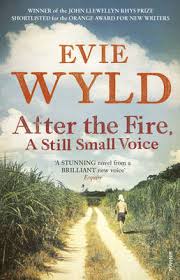
‘After the Fire, a Small, Still Voice’ by Evie Wyld

wyld

2009, 296 p.

For some reason, this book seemed to take me an age to read. Perhaps it was the structure of alternating chapters as it swung between two related men, forty years apart, which made it rather too easy to put down.  Once put down, its dual-narrative structure also required more back-tracking than usual to pick up again.

Frank has left Canberra after breaking up with his girlfriend, moving to a shack amongst the canefields on the north-east coast that was originally owned by his grandparents. He’s a damaged, angry, fragile man, estranged from his widowed father, with few apparent friends. It takes him some time to tentatively reach out to his neighbours and their daughter, and settle uneasily into sporadic work.

Forty years earlier, Leon was growing up in Sydney, the son of a pastrycook and Jewish refugees. His father had felt compelled through gratitude to his new country to join the Korean War, but came back home a shattered shell of a man. Leon, in turn was conscripted to Vietnam, and when he returned from Vietnam, he too was a damaged, angry, fragile man, traumatized by his war experiences and unable to settle.

These men feel much, but do not – can not- verbalize it. They are largely unreachable, encasing themselves in a masculine armour and a restlessness that deflects any attempts by others to reach the softer part of them. Women here are either idolized or uglified. There’s a hum of violence that runs underneath their stories.

The real strength of this book is its depiction of place, which is so crystal-sharp that you can picture it in your mind. Flipping through the book, I find myself surprised that there is as much dialogue as there is, because to me it seemed a very intense and silent book.

But I don’t think that I actually engaged in it at an emotional level although perhaps the writer has intended that, by mirroring the brusqueness of the male characters. With my disjointed reading of the book, it took me an inordinate time to work out the relationship between the two men, and it became an intellectual rather than emotional challenge to see how the two stories intersected. I’m not sure that I actually liked the book. I admire the writing; I doff my hat to such a strong debut performance; and her rendering of setting is very accomplished, but it just left me a bit like her characters- cold.

awwbadge_2014I’ve posted this review at the Australian Women Writers Challenge.

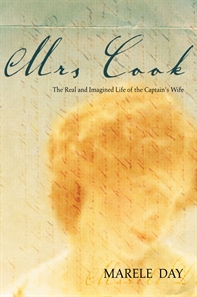
‘Mrs Cook: The Real and Imagined Life of the Captain’s Wife’ by Marele Day

mrscook

357 p. 2002

Marele Day has subtitled her book “The Real and Imagined Life of the Captain’s Wife”, signposting that this is not a straight biography, but nor is it pure fiction either.  The book is organized around a fairly large collection of existing Cook artefacts which, from the the notes at the back of the book, are located in various museums, libraries, churches and parks across the world.  Some of them are documentary, but several of them are domestic objects like drinking glasses, teapots, fans.   She uses these real-life objects as the tethering posts to which she attaches her fictional narrative, complete with conversation and internal speech. The narrative unfolds chronologically, with each chapter named for the object which appears somewhere in that chapter.

However, given that many of the objects are rather domestic in nature, it means that the narrative is even more quotidian than it would already have been, given that it is examining the life of the woman left behind by one of the world’s great navigators.  At times, too, the narrative becomes quite contorted and unnatural in trying to bring the object into the story- for example, in devoting a whole chapter to the act of buying a teapot.

The ‘imagined’ life in the title mainly revolves around Elizabeth’s emotional and sexual life.  A explorer’s wife spent years not knowing whether her husband was dead or alive, and somehow life had to be lived at two speeds: the long years of waiting, reunion and waiting again,  and at the same time the day-to-day accumulation of  rather banal, land-based, domestic detail. Elizabeth Cook  endured the tragedy of outliving her husband and all six children, and the book makes much of her sorrow.

Day has decided to remain true to the main facts of Elizabeth’s life – thus the ‘real’ Elizabeth stays firmly rooted on solid ground, waiting for James to return, with no imagined affairs, imagined illegitimate children, or imagined crimes of passion.  The ‘imagined’ part of the book is most clearly seen in the sexual passages, of which there are several.  I found them all rather uncomfortable, I must admit. Somehow, looking at that picture of James Cook sitting  in his skin-tight white breeches looking at a scrolled map on the table before him will never be the same again:

He would start at the nape of her neck, gently blowing aside the wisps of her hair, and making a place for his lips.  He began the journey south, each vertebra rising to the moist warmth of his mouth.  The long channel under which lay the reef of her backbone descended to her buttocks, two plump hillocks with a dimple either side.  Elizabeth lay with her arms by her sides, and when she shifted, bent her elbows to make a pillow of her hands, James saw the shoulder blades rise up like the beginnings of angel wings….When she was ready, she turned to face him and their desires would meet… Gradually, James’s gentle perseverance awakened Elizabeth’s pleasure.  How wonderful that her body opened to him, moistening the pathway he would take.  Then he lifted her into rapture and Elizabeth became a wave.  (p. 102)

I was never convinced of the emotional and sexual authenticity of this eighteenth century woman, who seemed to me to have a very twentieth century head on her shoulders (and other parts of her body).   I was put off by the awkward, didactic tone of the text when the author explained the context and use of particular artefacts, and its juxtaposition with  the heavy-breathing, purring tone of passages describing their intimate life.

Nonetheless, the decision to integrate real-life artefacts into the story is an interesting one, and I find myself wondering if there are other ways that it could have been done more successfully.  Could the author have inserted herself into the text more  in describing the artefact and its provenance in a strictly non-fictional way at the start of the chapter, then moving to the imagined story? Could the artefact and associated information  have been marked out typographically from the fictional text?

This book was a bookgroup selection, and I must confess that I would have abandoned reading it had I not felt an obligation to read to the end.  It was probably one of the most divisive books we’ve read in recent years: some absolutely loved it; others were distinctly underwhelmed.  I’m afraid that I was one of the latter.

awwbadge_2014I have posted a link to this book on the Australian Women Writers Challenge.

Vale Jim Keays

Vale Jim Keays. You signed your name on my left wrist about forty years ago, and for weeks and weeks afterwards I kept it there, with the occasional touch-up to keep it legible. I don’t remember ever washing it off- perhaps the summer spelled the end of it, or perhaps it began to look so over-written that it lacked authenticity. When I heard of your death last week, I realized that though the signature has faded, my affection for you hasn’t.

masters

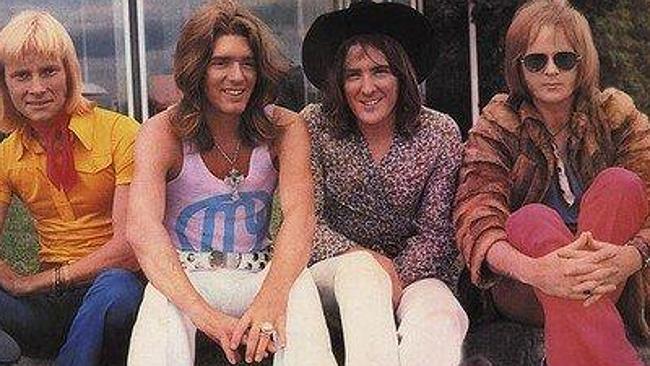
Left -Right: Glenn Wheatley, Jim Keays, Colin Burgess, Doug Ford

You burst into my life at the Banyule High School social, held at Scots Church Hall in Burgundy Street in 1969. Looking back, it must have been the junior social because Scots Church Hall was a small, rather unprepossessing hall where I had bumbled my way through calisthenics two years previously, and it couldn’t possibly have accommodated a school social for a school nearing 1000 students. Nor do I remember the presence of those impossibly cool 4th, 5th and 6th formers who drifted through the corridors so confidently who, had they been there,  would have dominated any whole-school social event.

In your autobiography “His Master’s Voice” you described the mad rush on Friday and Saturday nights between locations at town halls and venues all over Melbourne in a manic round-robin with other bands of the day: Zoot, Town Criers, Axiom etc.. This mid-week gig wasn’t like that: you were the only act on stage and you stayed all night. You’d just released ‘5:10 Man’. And there I was, probably too shy and inhibited to dance, pressed up against the stage watching you gyrate in your skin-tight black leather outfits. In your book, you explained that you saved a fortune by not having your clothes ripped off every night. All I can think of now is that those leathers must have absolutely reeked. It was probably my first exposure to raw adult male sexuality, flaunted so provocatively.

keays

And so began my Tuesday night ritual, walking around to the St James Rd shops to pick up Go Set to find out where your songs were on the charts and what you were up to this week. The St James Rd shops at that time boasted two milk-bars (the ‘top’ milk-bar and the ‘bottom’ milk-bar), a wool shop, a two-aisle grocers, a butcher, a hairdresser and a fruit shop. [Today, beyond a massage centre and a closed reptile shop, it’s all just small offices.] I received 25c pocket money a week, with which I could buy Go Set for 20c and twenty Tarzan jubes at four a cent. I’d walk home slowly, reading Go-Set as I went, with its very wonky printing, manic layout and its columns by Lily Brett and Molly Meldrum. Apparently, a friend tells me, I was enraged enough to write to Molly to take him to task for attacking you- something I have no memory of at all. Occasionally there would be a colour poster, and it would join the other pictures of you that I had sticky-taped onto the inside of my wardrobe door because I wasn’t allowed to sticky-tape pictures to the wall lest I damage the pink paint.

You’d appear on television, all decked out in your leathers, miming away to your own songs on Up-Tight and Happening 70, shambolic four-hour shows on a Saturday morning that became a much-missed feature once I got a Saturday-morning job at a hardware store.

I joined the Masters Apprentices fan-club and each afternoon arrived home from school hoping that there would be a newsletter. There rarely was, although when one finally did arrive, it was a bulky, typewritten, black-and-white roneo-d and stapled production that gave much pleasure. At one stage ‘Denise, Di and Mrs G.’ put on a function at their house in the eastern suburbs somewhere (Bayswater maybe?) and what seemed like hundreds of girls crammed into their small house, spilling out into the backyard with a fibro garage. Some time later there was another function, this time at Croydon Park, and this time I achieved my dearest wish- you kissed me (along with hundreds of other clamouring fans).

keays2

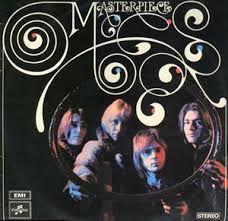
I bought your 45s as soon as they were released and eagerly awaited your L.P. Masterpiece – the first full-price  ($5.95) L.P I ever purchased (having been lured until then by the K-Tel Happening Hits compilations). But I must admit that a little bit of the magic must have been fading by now. I can remember listening to the track ‘Titanic’, with the unforgettable chorus

Ti-tan- IC! Ti-tan- IC! Ti-tan- IC!

The unsinkable sank.

The sound of bubbles being blown into a glass of the water as the song faded out was a whimsical touch that even then struck me as rather ridiculous.

Then you went to England, and although Go-Set continued to report on you, you sailed out of my life. But I still always followed your career, and was delighted to re-encounter you at Melbourne Zoo as part of Cotton, Keays and Morris, and again right in my own home territory at Sills Bend, just down the street from that Scots Church gig some forty years earlier. By now you were one of the elder statesmen of the 1970s rock scene, and performing in combination with Darryl Cotton (now also deceased) and Russell Morris (who just keeps getting better and better), I think that I was more appreciative of your talent than I ever was at the time.  You’ve been ill for a number of years, but still rocking on, almost right to the end.  You recently described your music as ‘garage punk’ and I look back at myself in wonder that I could ever have enjoyed such a genre.

So, thank you Jim Keays. My fourteen-year-old self adored you; my fifty-something self admires you,  and we both regret your passing.


Mirror, mirror

There was an interesting article in the New Scientist from 2 November last year.  It describes a Halloween party trick that involves quite simply looking at your face in the mirror.

As I prepare the room, it feels as if I’m getting ready for a seance.  I close the curtains to block out most of the light and place two chairs about a metre apart.  I prop up a large mirror on one and sit in the other so that I can just see my reflection in the near darkness.  Then I set a timer for 10 minutes and wait patiently for the faces to appear.

When they do, it is startling.  At first the distortions in the mirror are small: a lifted eyebrow, a twitch of the mouth.  But after seven minutes my reflection suddenly looks fake, like a waxwork.  And then it is no longer my face.  For a few seconds an old man with a thickly wrinkled brow and down-turned mouth stares back at me.

Apparently these visual illusions are quite common. Giovanni Caputo, a psychologist from the University of Urbano in Italy came across the phenomenon by accident when conducting an experiment looking at self-identity in a room entirely enclosed with mirrors.  The experiment was usually conducted in normal lighting, but one day he decided to dim the lighting, and found that many people experienced a distortion in what they saw after about 10 minutes.

Since his chance discovery, Caputo has found that most people perceive some degree of eerie distortion to their face if they stare into a mirror in low light for at least 10 minutes. “Usually, after about 1 minute of mirror-gazing, the eys start to move or shine, the mouth opens, or the nose becomes very large,” he says. “If you continue to gaze there are very big changes, until completely new faces appear.”  And it’s not just human faces that are seen-” some report seeing animals and others fantastical or monstrous beings….You are suddenly conscious that there is another person behind the mirror.”

The article offers a number of explanations for the phenomenon. One is that the incomplete view of the image disrupts the way that the brain binds together features to make a recognizable face, and so it patches together a ‘photo fit’ of features.  Another suggestion is that it is a form of dissociation, which is apparently heightened by looking in mirrors.

I must confess to being a little frightened to try it myself.  But it did bring to mind many of the those Victorian horror-stories and reports of seances conducted in dimly lit rooms.  Of course, darkness hides a plethora of tricks and manipulations by unscrupulous shysters, but it’s an interesting thought that perhaps some of the effects are generated within the brain of the perceiver as well.

Source: “Mirror, mirror” by Douglas Heaven. New Scientist, 2 November 2013

Queens Birthday

It’s the Queens Birthday holiday in Australia today.  I know that only naughty bloggers recycle old posts, but I did write this years and years ago…..

And I suppose that I should mark the day in some fashion.