
From a time when summers were more innocent and less menacing…
I think all of Australia is holding its breath.
From a time when summers were more innocent and less menacing…
I think all of Australia is holding its breath.
Posted in Uncategorized
The “Resident Judge of Port Phillip” has been missing in action recently, engulfed in the minutia of organizing the upcoming Law and History Conference. Never again will I take for granted the abundance of material in a conference pack, the elegance of the design of the conference theme, or the elegant logic of the conference program (until late withdrawals bring it down like a pack of cards!). I’ll see you, no doubt, on the other side of all this.
Posted in Uncategorized
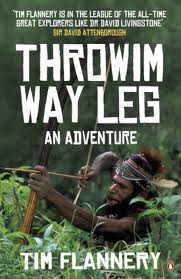
1998, 326 p.
I’m not sure about Tim Flannery’s writing, or Tim Flannery himself for that matter. I was astounded when he was proclaimed Australian of the Year under the Howard government. Although I don’t know how much influence a government has over the Australian Day board, it seemed to me during the Howard years that the government’s conservative influence was pervasive across all institutions. Tim Flannery with his 2006 book The Weather Makers certainly seemed at odds with the Howard government stance on climate change at the time . But there seem to be many contradictions – or more charitably, nuances- in Flannery’s views on a whole range of topics: whaling, nuclear energy, restoration of ecosystems. Is he a brilliant, wide-ranging thinker? Or does he not think widely and carefully enough?
It’s hard to classify Throwim Way Leg. It’s organized geographically around different locations in New Guinea and Irian Jaya where Flannery had worked over an extended period of time, going back to the 1980s. At times it reads like an extended set of case notes, at other times it is more autobiographical and even political in places.
There is a rather juvenile and somewhat disconcerting fascination with penises- although the sight of the penis gourd does tend to attract one’s attention somewhat. There is a whiff of self-absorption in his cataloguing of his illnesses and discomforts, and I don’t know whether I’d find him a particularly amiable travelling companion. In fact, he comes over rather as he does in “Two Men in a Tinnie” with John Doyle- full of information and lessons to be conveyed, but a bit wooden.
His work is steeped in blood. He no sooner arrived in a location than he had dispatched his hunters off into the jungle to bring back bodies for him which he skinned, boiled down for their bones, and bundled up to send to an Australian museum back home. I felt uncomfortable at the undercurrent of colonialist appropriation- all in the name of science, of course- and the sheer profligacy of killing even rare animals for specimens. It did not seem too far removed from the Hunters and Collectors of the nineteenth century so well captured in Tom Griffiths’ book.
At the same time, there is a naiveté about his work as well. He admits, to his credit, the assistance he received from the Ok Tedi mine but one wonders whether the company has bought his silence about their environmental and commercial practices. Not so for the Freeport mine, however, which he speaks out strongly against. In this regard, I can forgive him many of his other shortcomings. I look at a map of West Papua (he calls it Irian Jaya) and I shake my head at how Indonesia could make any claim to it on either geographic or ethnic grounds, and even the historical argument based on earlier Dutch colonialism seems rather dubious to me. I think that Australia, along with the Western world generally , is spineless in its acquiescence to strident Indonesian rhetoric over their claims to West Papua. At least Flannery calls it as he sees it.
I read this book with the Ladies Who Say Oooh, several of whom really enjoyed it for its depiction of adventure and discovery occurring within the last thirty years in a world that we think of as fully mapped and known. I, on the other hand, was frustrated by the plodding prose and the “well done those men”- type of masculine back-slapping often found in military histories. I note that Flannery’s first degree was in English literature before embarking on a more science-based academic journey. There’s not much of the poet here.
By looking at pictures. Beautiful, clear, intimate, sensitive colour pictures. They were taken by the Farm Security Administration/Office of War Information (and I find myself wondering about the conjunction of the names here) during the late 1930s and early 40s. Wikipedia tells me that the Farm Security Administration was set up during the Depression to improve the conditions of sharecroppers, tenant farmers and very poor landowning farmers by resettling them in group farms on more suitable land. My! this all sounds rather socialistic, and obviously the Conservative Coalition thought so too, as the program was reshaped to help poor farmers buy their own land.
Anyway- look at these beautiful colour pictures, and here’s an even larger black and white collection at the Library of Congress. I’m off to indulge….
Posted in Uncategorized

Weston Bate gave a presentation at the Royal Historical Society of Victoria a couple of weeks back. It was called “How I Became a Local Historian” and you can listen to it here.
He studied history at Melbourne University during Max Crawford’s time, and although he had done well in essays, did not perform as well in his honours exam as he had hoped. He jumped at the chance of writing a history of Brighton, commissioned by the Brighton mayor, largely because of the sense of place that he himself had developed growing up in suburban Melbourne.
He started off with the rate books, utilizing the “birds eye” view of the RAAF pilot he had been during WWII, mapping out the streets, the type of building constructed and the people who lived there. He tramped the streets of Brighton too, getting a feel for the place. He took a slice approach with the newspapers, reading at ten year intervals (and ruing, with hindsight, that he didn’t align his reading with the censuses). Brighton as a suburb was a rich field- it threw up Dendy’s special survey and the involvement of J. B. Were; the development of the resort town; market gardening; the influence of Tommy Bent; the nature and contribution of the ‘middle suburb’. It was a local history, but it illustrated big themes.
He speaks of the academy’s condescension towards local history, and the sidelining of the Royal Historical Society of Victoria by the University of Melbourne for some time, reciprocated by the local historians’ disdain of “academic” historians for their lack of interest in primary sources.
A good, well-constructed talk- and I do love being able to catch up on things I have missed through podcasts!
2009, 354 p
There are spoilers here, so if you haven’t read the book you might not want to read this yet…
So what IS a lovesong, after all? It’s a performance, a creation with words and music, written sometimes for a particular person, or sometimes as a fantasy on the experience of being in love. Alex Miller’s book is called “Lovesong” and I think it falls into this final category. It could just as easily have been called “Love Story” – although I think that someone already has used THAT title! – because it’s a love story in its own right, but it’s also a story about love stories. We all have our own story about love, but we can’t all turn them into lovesongs.
The frame story has an aging writer, not unlike Miller himself, who has returned to Carlton in Melbourne after an extended stay in Venice. Like Miller, whose last book “Landscape of Farewell” was well received, the author Ken’s last book was called “Farewell” and he expected that it would be his final book too. But he finds himself at a loose end, and the writer in him begins observing the owners of the pastry shop that has opened up in his small Carlton strip shopping centre. The wife is Tunisian and exotic, the husband Australian. He watches and gradually strikes up an acquaintance, then friendship, with the husband who tells him his story.
The story of Sahiba and John is the love song of the book. They met in Paris where she lived and worked in her aunt’s restaurant and after the aunt’s death they worked there together. Like all love stories, it was complicated by other desires- for home, for a child- promises and secrets.
I read this book along with others in an online reading group, and several of us had a similar response at much the same place in Sahiba and John’s story – “hold on- how does he know all this?” I’m still not sure whether this is a failing or sheer artistry on Miller’s part. Instead of the love story, which is tender and sad and real, you become aware of the telling of the story itself.
While Ken is drawing out and shaping John’s story, there’s his own domestic life in Carlton with his daughter who turned up after her marriage broke down five years ago, and has just continued living with him. She has recently started a relationship with a stand-up comedian who embodies the footy-loving, commercialized parochialism of suburban Melbourne. Where the love story of Sahiba and John is burnished and somehow sacred, his daughter’s relationship seems banal and shallow.
And so John tells his story, Ken says,
so he could understand it himself and move it on. I had no active part in it. I was not his prompt. It was his confession and he didn’t need to be told what to say by me. (p. 208)
But Ken was listening, writing up his notes after they met, having “my own secret life of his story.”
I am aware that with my notes I am, in my own customary way, making something other of John and Sabiha’s story than they know. Shaping it, if you like, to my own imagination. I don’t know how not to do this. (p.209)
But he’s not the only one writing up notes: John is writing his story too, and is almost pathetically grateful to Ken for being “the perfect listener”. There’s an imbalance in the power relationship of storyteller and writer that I find rather disconcerting and chilling. There’s also a sterility and elitism in it too. John and Sahiba continue to live their lovesong, while Ken, unconvinced that John will ever write his own version, moves to the next story:
Sabiha’s story had come out of her and been carried to me; now after I had lived in it jealously myself for a while, I would carry it to others, and in the end would let it go and be done with it, like all the other stories I have carried. (p. 354)
I’m always pleasantly surprised by Miller’s books. I come to them with an expectation that they’re going to be difficult- probably because in interviews he comes over as a fearsome intelligence himself- and each time he cuts through my trepidation with simple, clean prose that captures a setting or a feeling with a ‘click’, like a lens. Miller makes many references to Aschenbach in ‘Death in Venice’, and certainly Ken is an aging, world-weary narrator. I feel as if he’s offering this book to us, as a lovesong to love itself.
Posted in Uncategorized

From my pin-up biographer, Richard Holmes in his book Footsteps: Adventures of a Romantic Biographer. He speaks about the biographer’s feeling of being haunted by their subject as being part of the essential process of writing biography:
As far as I can tell, this process has two main elements, or closely entwined strands. The first is the gathering of factual materials, the assembling in chronological order of a man’s “journey” through the world- the actions, the words, the recorded thoughts, the places and faces through which he moved: the “life and letters”. The second is the creation of a fictional or imaginary relationship between the biographer and his subject; not merely a “point of view” or an “interpretation”, but a continuous living dialogue between the two as they move over the same historical ground, the same trail of events. There is between them a ceaseless discussion, a reviewing and questioning of motives and actions and consequences, a steady if subliminal exchange of attitudes, judgments and conclusions. It is fictional, imaginary, because of course the subject cannot really, literally, talk back; but the biographer must come to act and think of his subject as if he can. (p.66)
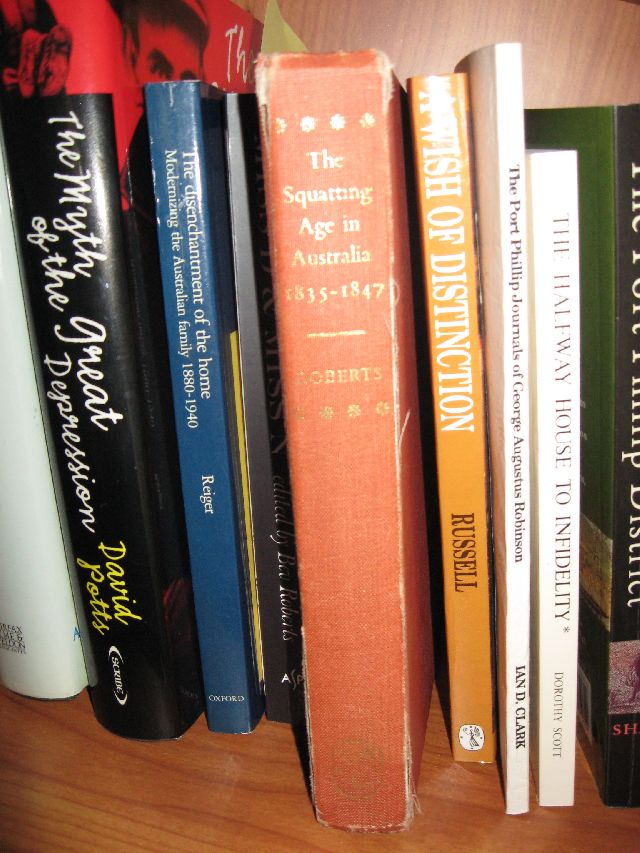
1935 first edition; 1964 second edition. 358 p.
…a book dealing with the thirties and far more important than its unpretentious exterior would indicate (p.273)
This is Stephen H. Roberts talking about another book entirely, but the same could be said of his own book “The Squatting Age in Australia 1835-1847”. That’s it up above on the bookshelves- the rather drab burnt-sienna coloured one. It’s been around for decades and decades; it is cited in many other works, but oh- even the title induces in me a rather shrivelling distaste. I was astounded to find a recent blogpost about the book written in November 2009 by another reader and smiled at the thought of possibly travelling on the same train and our eyes meeting (across the top of our bi-focals, I suspect) over our respective copies of ” The Squatting Age in Australia” (Nah, not likely, as he seems to be based in Armidale, NSW). Still, a whimsical little thought.
I have to say that I was surprised by what I found inside. Perhaps the most striking thing is the language: not at all the dry-as-stubble, stiff and factual voice that I expected but instead a rather “purple” narrative voice written often tongue-in-cheek (or at least, I think it is) and more exclamation-marks than a Facebook page!!! Yes!!! Really!!!
Stephen Henry Roberts– that’s Sir Stephen was Vice Chancellor of the University of Sydney and Challis Professor of History there. His Australian Dictionary of Biography entry describes him as “empirical, research oriented, with a concern for international trends and an ability to place Australia in a wider colonial context“. The empiricism in his work certainly comes through: there’s very detailed maps, budgets and statistics peppered throughout the book. His first publication was History of Australian Land Settlement 1788-1920, based on his masters thesis, and after moving to London, he moved to more international studies with publications on French colonial policy, modern British and European history and Far Eastern history before returning to Australian history with The Squatting Age written in 1935. In this book he brings his international approach to bear most powerfully in Chapter 2 ‘The Wool Trade’ which I found to be a fascinating account of how Australian wool production fed into the broader European wool industry that burgeoned and changed after the Napoleonic Wars. He also has a good analysis of the 1840s Depression in New South Wales and its context within the broader international economy.
Born of working-class origins, Roberts did not restrict his intellectual efforts to academe alone. As a leading interational analyst, he gave public lectures, wrote for the Sydney Morning Herald and broadcast for the ABC. In 1936 he travelled again to England on study leave, spending three months in Germany where he met with Nazi leaders and attended their rallies. His next book The House that Hitler Built (1937) exposed the dangers of appeasement, warned of the war intentions of the Nazi regime and condemned the persecution of the Jews. The book was translated into a dozen languages and reprinted many times.
According to the ADB, the “Sydney school” of historians that coalesced around Roberts was:
proudly a ‘hard school’, not merely because of its declared standards of data, but in its overt hostility to what it conceived as romantic or literary approaches to the past
This description surprised me. In this book he presents a highly romantic and idealized view of the pastoral industry and the squatting project as a whole, albeit with a rather more grounded view of the boredom and dirt of the shepherd’s lot. Like other books of its time it is interspersed with stanzas of poetry- a rather quaint stylistic touch to modern eyes. He places strong emphasis on personality and it is here, in explaining motivations and character, that perhaps his flights of fancy betray him. I found the sweeping statements to support his grand rhetorical flourishes even more troubling. There appears to me to be a contradiction in his large claims: he makes much of the “quietude” in politics in the early 1840s and yet spends much time on the Great Crisis between 1841-44, and the “struggle” with Sir George Gipps. Crisis and quietude seem to be mutually exclusive, to me.
His work has been criticized for textual errors and sloppy proof-reading and these were still evident, even in the second edition which, according to his preface had undertaken “obvious correction of misprints” and “elimination of errors”. In a chapter in The Discovery of Australian History, edited by Stuart Macintyre and Julian Thomas, Deryck Schreuder (the author of the ADB entry) writes:
[Roberts] wrote voluminously, but also hastily. At one stage he produced four studies (in five large volumes) in the six years between 1923 and 1928, all based in archival sources, and all covering areas where he had to pioneer a research path. Not surprisingly, the works show signs of haste: some incorrect footnotes, faulty transcriptions, errors of fact, gaps in the documentary sources, assessments which have not always stood the test of time….Roberts never wilfully manipulated his sources to make an argument, and he did work extraordinarily hard to cover all the primary and secondary sources involved, often indeed finding the major archival source for the first time. …Whether his innovative studies, and the power of some of his studies, outweighs these defects is another matter for consideration: he is not always given the benefit of that balancing perspective. (p. 131)
The book is very much of its time, and it is too easy to deride it for its easy dismissal of aboriginal resistance and environmental heedlessness. His use of the bland terms “dispersal” and “expansion” obscures a whole other history that took another fifty years to emerge. That doesn’t make it any less confronting, as Geoff Page’s poem “A Classic Text”, published in Arena Magazine in April-May 1993, remarks. I can’t think of a way to quote the poem without producing it in its entirety- and that surely would be a breach of copyright- so you can see it for yourself at The Great Forgetting: poems . (The link will take you to Google Books- the poem is on p.61-5.)
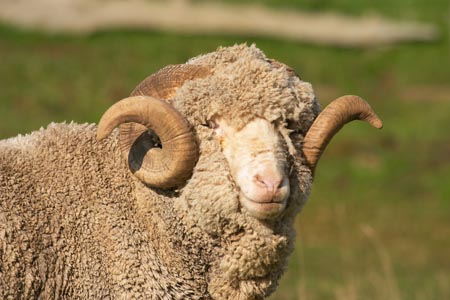
And yet there is a sense of humour that comes through the book- and that truly IS surprising given the worthy and rather stodgy subject manner. I’ll leave you with a little observation he makes about the dominance of pastoral demands on Gipps’ administration-, complete with Roberts’ own exclamation mark, and remember HE said it, not I!!
It was all the song of the sheep- money for the sheep, land for the sheep, labour for the sheep, roads for the sheep, merchants for the sheep, ships for the sheep one long ruminant refrain! (p.96)
References:
S. H. Roberts The Squatting Age in Australia 1835-1847
Deryck Schreuder ‘An Unconventional Founder: Stephen Roberts and the Professionalisation of the Historical Discipline’ in Stuart Macintyre & Julian Thomas (eds.) The Discovery of Australian History (1995)
Deryck Schreuder ‘Roberts, Sir Stephen Henry’ http://adbonline.anu.edu.au/biogs/A160125b.htm
Geoff Page and Pooaraar ‘A Classic Text’ in The Great Forgetting (1995) p. 61
Posted in Uncategorized
…that a “fully automated table game” in a casino is a poker machine. It’s a poker machine if it’s in Bayswater or Box Hill or Melton, but somehow or other if it’s at Crown Casino, then it’s ta-da!! a “table game”. How convenient, seeing that Crown Casino has a limit of 2500 poker machines. Let’s just read that again. Two thousand, five hundred poker machines.
Posted in Uncategorized
Well- not reckons, but does wonder.

The pre-sentence hearings are currently underway for the men accused of the bashing murder of Liep Gony. The case is being reported in considerable detail in the newspapers. Surely these two men could then turn around and claim that they could not get a fair trial in Melbourne. Why are pre-sentence hearings reported anyway?
Posted in Uncategorized
 The Resident Judge of Port Phillip