Category Archives: Uncategorized

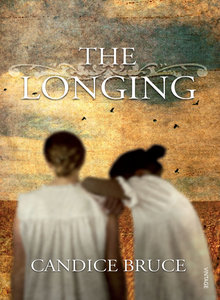
‘The Longing’ by Candice Bruce

2012, 354 p.

In her acknowledgments at the back of this book, Candice Bruce names Jan Critchett’s book A Distant Field of Murder (see my review here) as one of the sources that deeply influenced the writing of this book.  I suspect that I know exactly the paragraph in Critchett’s book that encapsulates what Bruce is trying to do in her book:

The frontier was in fact a very local phenomenon, the disputed area being the very land each settler lived upon.  The enemy was not on the other side of neutral ground.  The frontier was represented by the woman who lived near by and was shared by her Aboriginal partner with a European or Europeans.  It was the group living down beside the creek or river, it was the ‘boy’ used as guide for exploring parties or for doing jobs now and then.  The ‘other side of the frontier’ was just down the yard or as close as the bed shared with an Aboriginal woman.

Jan Critchett, Distant Field of Murder (p. 23)

It is this shared domestic frontier that Bruce examines in The Longing: a paradoxical space that was intimate in terms of physical proximity and yet at the same time also a yawning gulf.  Ellis MacRorie is a young Scotswoman, who had been shipped off to marry the older, dour Alexander MacRorie, a pastoralist in the Western District of Victoria.  The homestead is one of the grand mansions described by Margaret Kiddle in her wonderful (if flawed) Men of Yesterday, where shearers and workers mingled with the aboriginal servants and farm labourers.  Leerpeen Weelan, known as Louisa, is one of these domestic servants, and in her loneliness and unhappiness, Ellis believes that Louisa is a confidante and friend.  Leerpeen keeps her distance, impassive and silently mourning the loss of her daughter, her tribe, and her country, and rather derisively judging the infatuation that develops between Mrs MacRorie and the American artist Sanford P. Hart who comes to stay at Strathcarron homestead.

And here we run headlong into one of the narrative dilemmas of twenty-first century narrative writing: presenting the aboriginal voice.  Kate Grenville felt that it would be inappropriate to “step into the heads” of her Aboriginal characters in The Secret River; Tom Keneally has said he wished that he had had a greater sensitivity to the ownership of words and worldviews when he wrote The Chant of Jimmy Blacksmith and that he would be more “diffident”  about writing from the Aboriginal perspective today. But the author of this book, Candice Bruce, in an interview with the SMH does not seem to share their qualms:

Surely we have all moved on from then and can see the value in having multiple voices?…We have a shared history, which is not the preserve of only one group, and so to go back to a time where political correctness decrees who is allowed to write from particular points of view is anathema.

I’m not sure that it’s the preserve of one group alone to make this decision.  I personally am not comfortable with the glib ‘move on’ attitude that this quotation (which may well be out of context) suggests. Perhaps, as Kate Grenville found with The Secret River, Candice Bruce may find the commentary that a writer generates as part of the publicity round can overtake the work itself.  But does it matter what an author says about how they approach their work? After all, works of art existed before and long outlive all this publicity flummery that is frothed up by modern marketing.  In the final analysis, a book should stand or fall in its own right, (shouldn’t it?)  irrespective of the author’s intentions or personality- although I’m not sure that the two can always be disentangled.

I am, however, aware that trepidation over the presentation of Aboriginal characters in some ways maintains “otherness” and that fear of causing offence causes the Aboriginal presence in Australian historical fiction to be sidestepped altogether. I don’t know how you get over that- or indeed whether it is possible or presumptuous to attempt to do so.  I’m mindful of Paul Keating’s exhortation in the Redfern speech about “our failure to imagine” the murder, child theft, discrimination and exclusion faced by Aboriginal people if it happened to us. Perhaps this book is what this “imagination” looks like.  The author says that she was encouraged to write this book by Vicky Couzens, a well-known Gunditjimara author from the Western District in which this book is set, who assured her that any controversy would be short-lived if she wrote with accuracy and respect.  I think that Bruce does both these things, but the wariness that she dismisses as “political correctness” exists on both sides, and for good reason.

Leaving aside the question of the wisdom of adopting an aboriginal narrative perspective, how well does she do it?  As well as giving her encouragement, Vicky Couzens also gave Bruce a copy of the Dictionary of Keerray Woorong and Related Dialects, and perhaps this exemplifies the approach that she takes in presenting Leerpeen’s voice.  There are words, naming and labelling, but there’s none of the rise and fall and flow of Kim Scott’s language in That Deadman Dance, or Alexis Wright in Carpentaria.  Words, but not language.

The second narrative arc of this story involves the young art curator Cornelia Bremer who, 150 years later, is researching an exhibition on S. P. Hart for the National Gallery of Victoria.  When the lead researcher is involved in a car accident, she is dispatched to Strathcarron to evaluate the suitability of an S.P. Hart painting in the possession of the MacRorie  family who still live in the family homestead, which is falling into disrepair.  She stays with the family for a couple of days,  learning of the jealousies and rivalries among the remaining family members, and uncovering art work and provenances that are completely unknown to the art world at large.

Here Bruce is on surer ground, because she is herself an art historian who curated the Eugene von Guerard exhibition at the National Gallery of Australia in 1979-80 and contributed to the catalogue of the more recent ‘Nature Revealed’ touring exhibition at the National Gallery of Victoria in 2011 (currently on show at the National Gallery in Canberra until July 2012).  On Candice Bruce’s own website, she shows the images in particular that inspired her, most especially the paintings of Lake Purrumbete and the homestead.  In this regard, I was reminded of Robert Dowling, who also worked as a travelling artist, moving from property to property painting homesteads and livestock as a way for settlers to celebrate their good fortune. When Bruce writes about the excitement of hunting down and reading handwritten correspondence and diaries, and uncovering artwork unknown to the academy, you know that she is writing from first hand experience.   I recognize the wealth of research that underpins this book, because I’ve read much of it myself, but it weighs the book down.  There is a slightly didactic tone to the present-day section, especially in relation to issues over aboriginal artwork and heritage. The  addition of a thwarted extramarital affair added a discordant, even somewhat chick-litty note that made me squirm a bit.

The juxtaposition of these three stories- Leerpeen and her stolen daughter and lost country, Ellis MacRorie and the painter, and Cornelia the art investigator – traverses 150 years.  Bruce emphasizes common humanity and the universality of love and loss, but in so doing hits a few false notes. I found myself becoming tired of the frequent flashbacks, and some of the dialogue, particularly in the present-day section was weak. I enjoyed the section written as Ellis’ diary, and overall enjoyed the historical 1855 thread more than the present-day one.  As a piece of historical fiction, it works well.  It fleshes out those images of the past that are so often formed by film and television, and in this case it draws our attention to colonial domestic relationships that are often overlooked completely. There was, after all, a market for those mission-trained Aboriginal girls (for example, the Cootamundra Domestic Training Home for Aboriginal Girls), yet there is little acknowledgement of their presence.  The imaginative space that historical fiction provides can be one where the imagination that Keating called for can work on us.  In this regard, the book succeeds admirably.

What Bruce does really, really well is landscape, and here her art historian strengths come to the fore.  Her descriptions of landscape are so evocative that you can see it as a painting in your mind’s eye. It’s as if she helps you to ‘frame’ the country yourself, while at the same time reminding us of the aboriginal sense of country, exemplified by the Deborah Bird Rose quote at the start of the book.

Vicky Couzens told her to be accurate and respectful. Candice Bruce gives us accuracy in spades: the depth of research in this book is prodigious, and she brings a wealth of professional experience to the present-day component of the book.  Respectful- yes, I think that she is, but I don’t know that I’m the person who can make that judgment.

My rating: 7.5 -8/10

Sourced from: Yarra Plenty Regional Library

Read because: Lisa at ANZLit Lovers reviewed  it, and I like books set in Colonial Victoria.

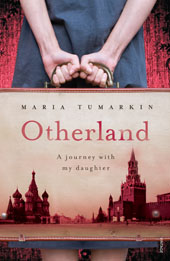
‘Otherland’ by Maria Tumarkin

2010, 301 p & notes

“What IS this book?” I wondered half-way through. Travelogue; a reflection on literature and historical methodology;  a history of nations and a history of family; a reflection on the mother/daughter relationship- how would all that be summed up in the one-word descriptor that you often find on the back cover of a book?

“Memoir” .  It seems a little incongruous to me that anyone born in 1974 could write a memoir yet, but if a memoir is a literary construct through which the writer represents a lived experience, then yes, this is a memoir- but I’d qualify it by adding “and much more”.

The author is a Melbourne-based historian, who emigrated from the Ukraine with her parents and sister in 1989, a month after the fall of the Berlin Wall,  at the age of fifteen.  She had returned to Russia  previously, but had not made it to the Ukraine.  On this trip she takes her twelve- year old daughter, Billie, largely because she feels that it is the last chance she will have to do so:

Right now is my last chance to go back with her and still be the centrifugal force of our journey, exercising the course-setting and veto powers.  It is, in other words, my last chance to have Billie follow me around, however begrudgingly, as her mother’s tail.  In a year, maybe a few months, the tail will drop off, or the tail will be wagging the dog, and such a trip, if even possible, will be a different proposition altogether. (p. 28)

It is the journey that ties this memoir together, but it is a layered journey. Mother and daughter are travelling, but Tumarkin is making her own journey back to the relationships that were ruptured when she and her family left so abruptly, and she is making a journey into her own parents’ and grandparents’ experiences as well.  But it is not her story alone: she interweaves the journey with the stories and observations of writers, historians, poets and political dissidents.  In this way, it is an intellectualized endeavour- indeed, I had not heard of many of the writers she cited- but it is also highly personalized.

It is much more than the story of a mother and daughter, and yet this is important too. We read excerpts from Billie’s diary- am I the only one who felt slightly grubbied and complicit in this?  The mother/daughter relationship generally is often fraught, and here I found myself judging the author rather harshly for her own intrusion into her daughter’s perceptions of her experience, where she so much wanted her daughter to see and feel certain things. Ah, but in terms of judgement and criticism Tumarkin was often there before me, aware of her own shortcomings.  There is a stringent honesty in her writing, as when she describes her daughter opening up the piano to play in the apartment of an elderly woman herself the cultured, brilliant daughter of a revered dissident:

In this apartment at the very heart of Moscow, metres away from the Mossovet and Statira Theatres and the Tchaikovsky Concert Hall,  Billie sits down at the old piano.  She plays what she usually plays- Tori Amos and Coldplay.  How alien they sound inside these walls.  Not in Adorno’s ‘no poetry after Auschwitz’ kind of way, no.  And not in a vulgar popular-culture way.  It is just that here these songs, which evoke places and times that make no sense in the world of this apartment, sound thin, flat and inconsequential in the extreme, like a mobile ringtone underneath a cathedral dome. Momentarily I feel ashamed. Ashamed for both of us. (p. 76)

There are several mothers and daughters here.  It is also a history of a Jewish family, who were part of a much bigger history, and here I found myself hampered by my lack of late twentieth-century history: who came first again? Gorbachev? Yeltsin?  I craved a factual chronology, to juxtapose against this very personalized history.

This is a very carefully constructed memoir.  It opens with a cliff-hanger that is not resolved until after half-way through the book.  The writing is reflective and scholarly in places, and confessional and all too human in other places.  Like all journey narratives, it moves forward and there is a homecoming, in more than one sense.  It is quite a journey.

My rating: 9/10

Sourced from: Yarra Plenty Regional Library

Read because: I read it as my third book in the Australian Women Writers Challenge

Moving Here- 200 years of Migration in England

www.movinghere.org.uk

Another good way to while away an hour or two or three- I found a fascinating website about migration to Britain.  Being on the receiving end of wave after wave of British migration, we tend to forget that Britain itself was- and still is- a migration destination.  The National Archives are the lead partner in a consortium of other British heritage organisations and museums, and the site contains photographs, stories and timelines of Caribbean, Irish, Jewish and South East Asian migration to Britain.

www.movinghere.org.uk

Albert Nobbs

We went to see Albert Nobbs. I know that it’s receiving only lukewarm reviews, but I really enjoyed it.  Glenn Close plays a repressed, reclusive little wisp of a man who is, in fact a woman.  He works as a waiter in an Irish  hotel in the late 19th century, painstakingly saving enough to realize his dream of one day owning a tobacconist shop, and terrified of exposure.

It’s a sad little story, and for much of the film, I feared for Albert.  There have been criticisms that Glenn Close is wooden, but I don’t agree.  It’s a very tense, coiled performance and the character of Albert is so repressed and taut that his emotions can only be portrayed as minute gradations, tightly controlled.

Apparently Glenn Close first played the role off-Broadway in 1982, and she and John Banville wrote the film adaptation.  It doesn’t surprise me that John Banville was involved: the film is bleak and sharp, as much of his writing is.

Critics be damned! I liked it.

Judge-chasing

Entries might be a little light-on here for a while.  We’re over in Canada for the next month, then the UK after that.  If you’d like to follow my travel blog for a while, you’ll find it at

http://janineandsteve.wordpress.com

Those Mild Colonial Boys of the Law

Two young men, both working in the law, in two British settler colonies in different hemispheres, both diarists.
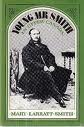
Mary Larratt Smith Young Mr Smith in Upper Canada, Toronto, University of Toronto Press, 1980, 184 p. & notes.

J.M. Bennett (ed) Callaghan’s Diary: The 1840s Sydney Diary of Thomas Callaghan B. A. of the King’s Inns, Dublin, Barrister-at-Law, Sydney, Francis Forbes Society for Australian Legal History,2005. Available here.

Young Mr Smith in Upper Canada- what a terrific title!  It has echoes of “Mr Smith goes to Washington” and I was hoping that it might be an impassioned expose of Upper Canadian life, albeit a decade or two after the time I’m interested in, but no such luck.

Instead “Young Mr Smith” was Larratt William Violett Smith, who went to Upper Canada in 1833 with his family as a twelve year old boy and pretty much stayed there.  His diaries, transcribed and annotated here by his grand-daughter, cover the years 1839 (when he was aged eighteen) up to 1858 and aged thirty eight.  The author and granddaughter, Mary Larratt Smith, who shares half his name- has (or rather had- surely she’s not still alive?) one clear memory of her grandfather when she was taken to see him in the summer of 1905 when her grandfather was 85 and she was not quite three.  He lived in a large, early Victorian house called Summer Hill in what is now the Summerhill area of Toronto, with its own eponymous subway station.  It took her about ten years to transcribe his journals and a small collection of letters which now rest in the Canadian History Department of the Metropolitan Toronto Library.  The author/editor has embedded the journal entries and letters into her own explanatory narrative, and her occasional references to ‘my grandfather’ remind you that she has an emotional stake in this work.  I did find it annoying that the journal entries were not typographically marked out from her own surrounding material.  There was an italicized date at the start of the extract, but then she would sometimes slip between Larratt Smith’s words and her own with no clear visual marker of the difference.  The letters, at least, were presented in a smaller font, and much more clearly distinguished.

In 1833, “Young Mr Smith’s” father, Captain Larratt Hillary Smith from Devonshire, took advantage of the land grants offered to veteran law officers, and took up a large tract of land at Oro in Simcoe County.  He undertook the 38 day journey with his wife and four children, arriving in York where they stayed long enough to enroll Larratt and his younger brother George as boarders at Upper Canada College, before shifting the rest of the family to take up their primitive farm some distance away.  The farm land was stony and unproductive, the family was unhappy, and after four years the family moved closer to Twickenham Farm, closer to Toronto, leaving the Oro property behind.

Larratt and his brother continued at Upper Canada college. After serving as a  17-year old Lieutenant in the Home District militia during the 1837 Rebellion, Larratt then went to England. His Uncle George, with no sons of his own, had proposed training his nephew in the wine business with a view to eventually making him his heir.   But Larratt didn’t like it, returned to Canada, and his brother George went in his stead- probably not a good move as brother George ended up a very wealthy man.  Larratt decided to go into the law instead, and so he was articled to William Henry Draper, the solicitor general, and lived in Toronto as a young man-around-town.

And here we find him, attending the various balls in Toronto, hooning around climbing greasy poles and chasing pigs at the ‘Olympic Games” celebrated in Toronto in June 1843, stealing cats, shooting, singing, acting.  There are many similarities with small colonial life in Australia- assemblies, debating club, church etc. He lived in what sounded like a 19th-century share house with other young lads his own age, and had to shift lodgings several times.  Although he lived and worked as an independent young man in Toronto, his connections with his family at Twickenham Farm were strong. His father would often come into town and Larratt would often visit them and stay several days with them on holidays.

The journal entries are fairly short (although no doubt they would have appeared longer written in long hand)  with rather a preoccupation with the weather- although from what I read of Upper Canadian winters, who wouldn’t be obsessed with it.  [I’m slightly- very slightly- regretful (for about two seconds)  that we won’t be visiting there during the depths of winter as I just can’t imagine what such cold weather would be like.] He is interested in several girls, but eventually his attentions focus on Eliza Thom whom he marries on 23rd December 1845 on a day that was 18 degrees below zero at 7.a.m., and “a very fine day”.  There are not many intensely personal entries in his diary, and when they do occur, it is at a time of great distress: the loss of their first baby at four weeks from whooping cough, and six years later the death of Eliza herself.  The cause is not specified, but she died from what started as a cold a week earlier.  His two children are sent to live with their maternal grandmother, his own family having returned to England some years earlier.

In the second half of the book, Smith’s grand-daughter editor is able to supplement the fairly terse entries with a number of personal letters, and here Larratt Smith comes over as much more affable.  It’s in the letters, though, that you glimpse the Victorian attitudes towards marriage, sociability and money coming through in a letter to his father, when he is considering the idea of looking around for a second wife, three years after Eliza’s death:

I must have a house of my own before long.  I miss my boys dreadfully.  At the same time I have made up my mind (unless a pretty face makes a fool of me) that my better half that is to be ‘must bring some grist to the Mill.’  Now don’t imagine that I crave Fortune’s arrivistes, for I detest the species, & I could not marry the richest woman in the world if I could not win her affect, but I feel that the chain once broken is not the same, & that, bringing as much love as one can, there may be other qualifications not wholly to be disregarded.

Larratt Smith did remarry, a girl called Mary Elizabeth Smith, 18 years his junior and they went on to have eleven children together.  Larratt Smith paddled around in the shallows of political and legal life.  He was certainly known to many of the figures that I’ve been reading about- the Robinsons, the Jarvises, the Baldwins and the Boultons- although in many cases they were the sons of the men who were there when Judge Willis was in Upper Canada.

Although his parents had returned to England from their sojourn in Upper Canada, the family connections remained strong.  His father came over for a surprise visit- Larratt Smith had not received the letter telling him of his imminent arrival- and his sister came over to join him.  Larratt himself traveled home for a while, and there was much talk, at least, of visiting.

__________________________________

BUT This was not the case for a second Mild Colonial Boy of the Law, Thomas Callaghan   who arrived in Sydney in 1840. You can see a picture of him here.

His father had died when he was young, and although his mother managed to give her children a good education, she had had to flee to France to escape her creditors.  Thomas found himself at the age of 22 to be a briefless barrister in Dublin with bleak prospects.  In order to distance himself from his mother’s disgrace, and in hopes of “eventually securing my own fortune and acquiring wealth” young Thomas left Ireland  for Sydney.  He arrived without family and friends and established himself amongst the expatriate Irish legal community in Sydney.   His Catholicism brought him into contact with Roger Therry and John Herbert Plunkett in particular as prominent Catholic lawyers, but he also made contacts amongst the Supreme Court judges as well. Chief Justice Dowling turned up on his doorstep one morning, and, in what seems to be forming into a pattern, Judge Stephen as well:

I lay down on the bed, when a knock came to the door and Judge Stephen stood before it.  I was quite in undress, however he came in and stayed with me for some time. He is a man of quick and intelligent mind, but of a delicate and nervous frame.  He is a gentleman and rather unaffected, though having a very good opinion of himself. (10/3/1844).

In rather more decorous circumstances, he also came into contact with William A’Beckett and Richard Windeyer who assisted him in his career. He struggled to find his feet at first, and kept body and soul together by court reporting, which he did not enjoy.

How long am I to continue this work? To sit all day in a nasty court, side beside the greatest vagabonds under Heaven! Polluted by this contact and sickened by their breath, while I am performing an office of comparatively low and laborious drudgery.  This have I done for nearly six weeks and I know not how long I may have to continue it.  (24/6/41)

His contacts pulled on their strings of influence, but he had to wait several years until eventually being appointed a Commissioner in the Court of Claims, and then acting Crown Prosecutor.  Once promoted to Crown Prosecutor, his diaries trail away.

Callaghan’s journals, which apparently were penned in execrable handwriting, have been recently released with a introduction by J. M. Bennett.  Bennett provides a sound introduction, but then leaves us in Callaghan’s very capable hands.

This book is a terrific resource, not just as a window onto Sydney itself, but more particularly onto the legal community at the time. Callaghan himself has been likened to Samuel Pepys, and although this volume is only 196 pages compared with Pepys’ weighty tomes, I can see the likeness. Like Pepys, he is full of gossip and observation about the people he meets, inconsistent in his friendships, sociable and waspish at times. He is at times downcast about his decision to come to Sydney

I am beginning to think that I have been sadly mistaken in my plans for happiness here.  I have come to a barren soil, to a dreary land, to a wide country: I thought I was coming to a fine colony where wealth abounded, and where I should in a short time realize a fortune that would fit me for enjoying every comfort.  But now I find that I am in a poor, petty, profligate place where I may live perhaps by my own labour, but where I can scarecely hope ever to realize an ample fortune without resorting to all the vicissitudes of gambling in land an in similar speculations.  Here everything is extravagantly dear and every item is extravagantly expensive so that little can be saved of what is hardly earned.  The country in itself has no charms for me and its present people have few traits after my heart.   I am alone here and I doubt very much whether I could ever think of now staying or settling here. (27/11/41)

But he did: he married in 1848, had two sons and a daughter and developed a lucrative private practice and ended up a judge of the Quarter Sessions. He died prematurely at the age of 48 after being kicked in the head by a horse that he had just bought.  But let’s not end so gloomily.  He was a generous, if fitful, journal-writer, berating himself as many do for his inconstancy in writing:

September 2, 1843.  My last entry of June the 20th! This is improving in regularity with a vengeance!

Sills Bend 2011

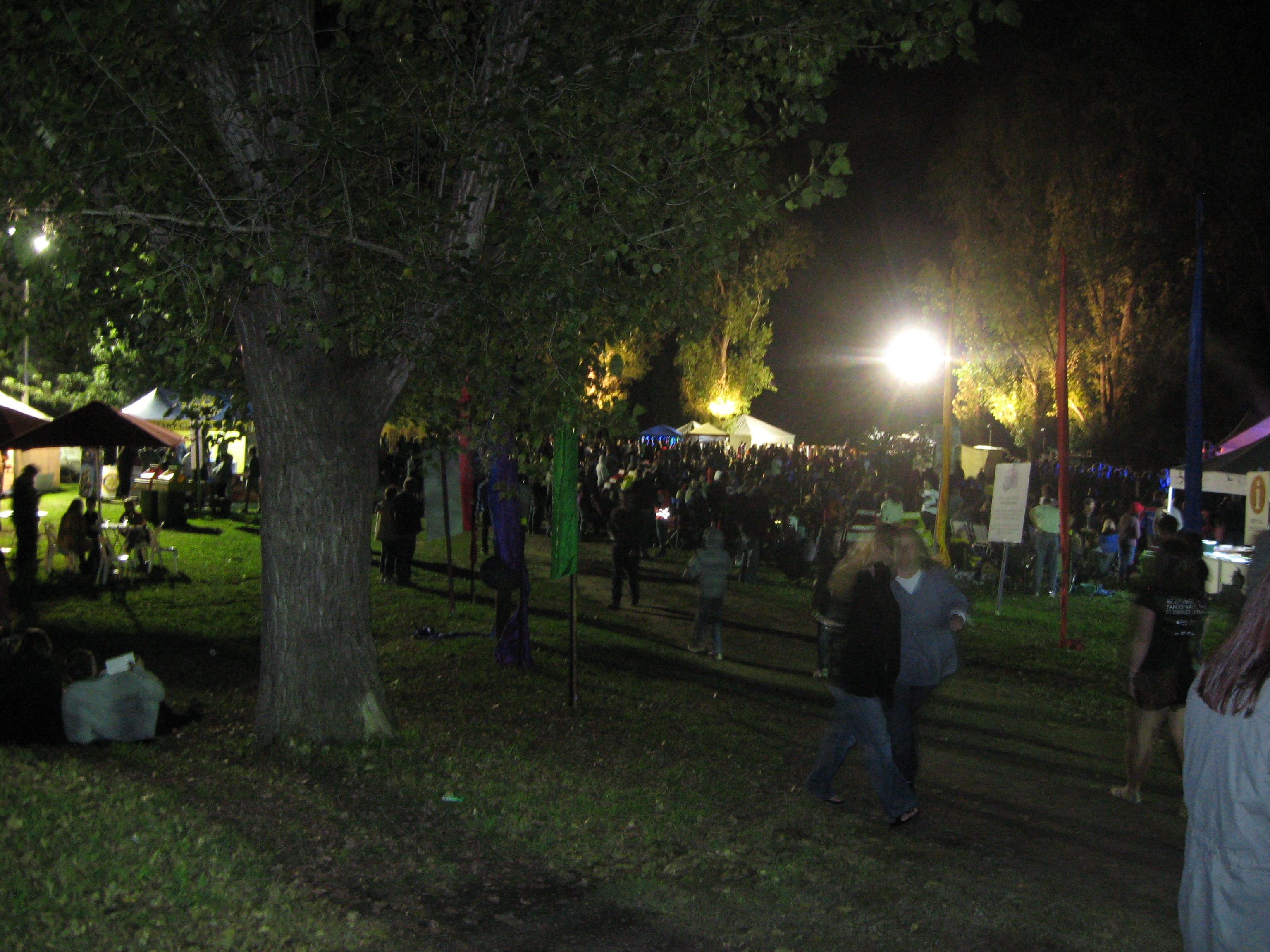
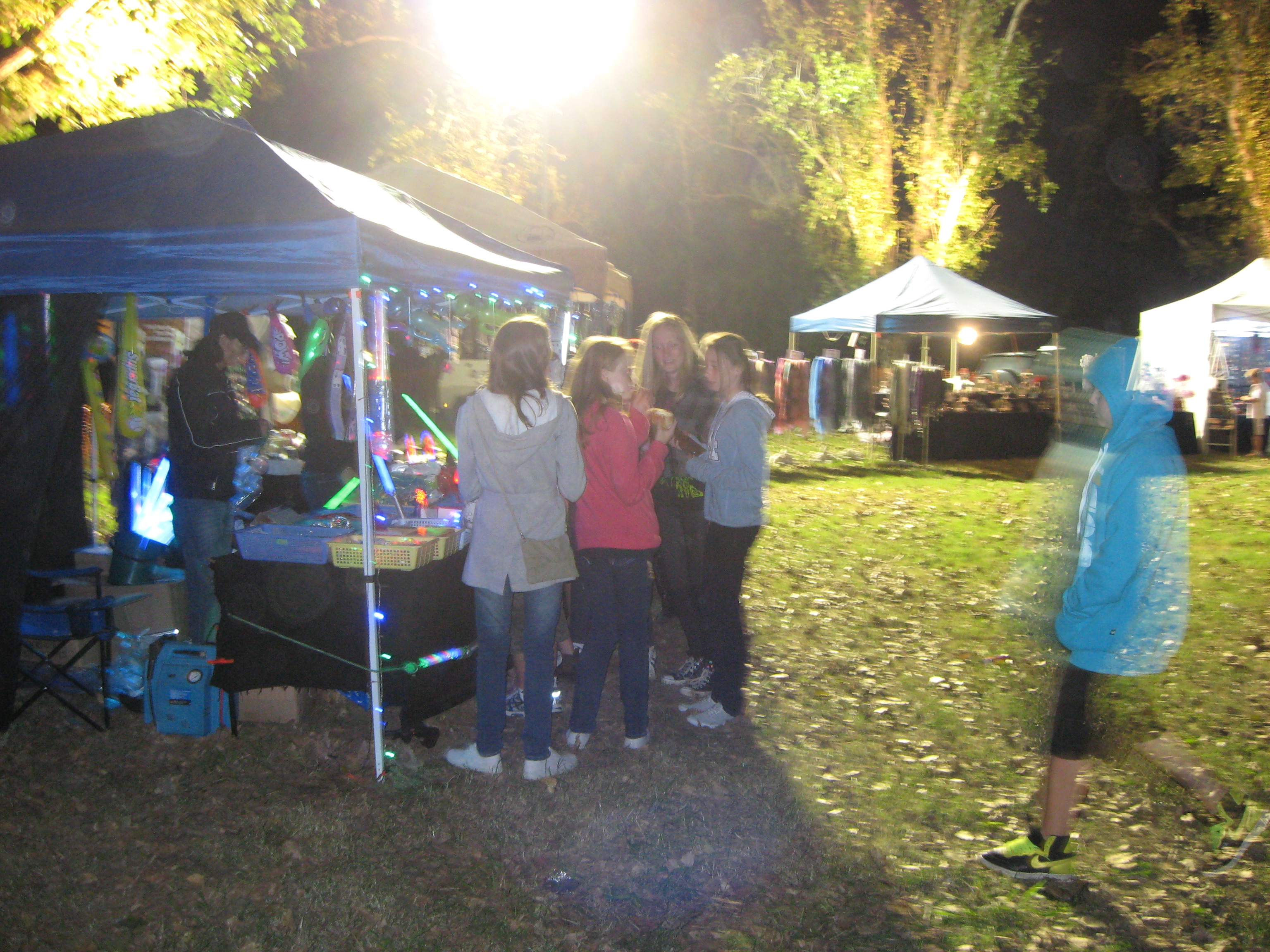
It’s March so it’s Banyule Festival time again, and off to Twilight Sounds at Sills Bend for another year.  I think we’ve been lulled into winter-think because it was a much smaller crowd this year- very easy to park right next to Sills Bend and none of the long snaking lines for food.

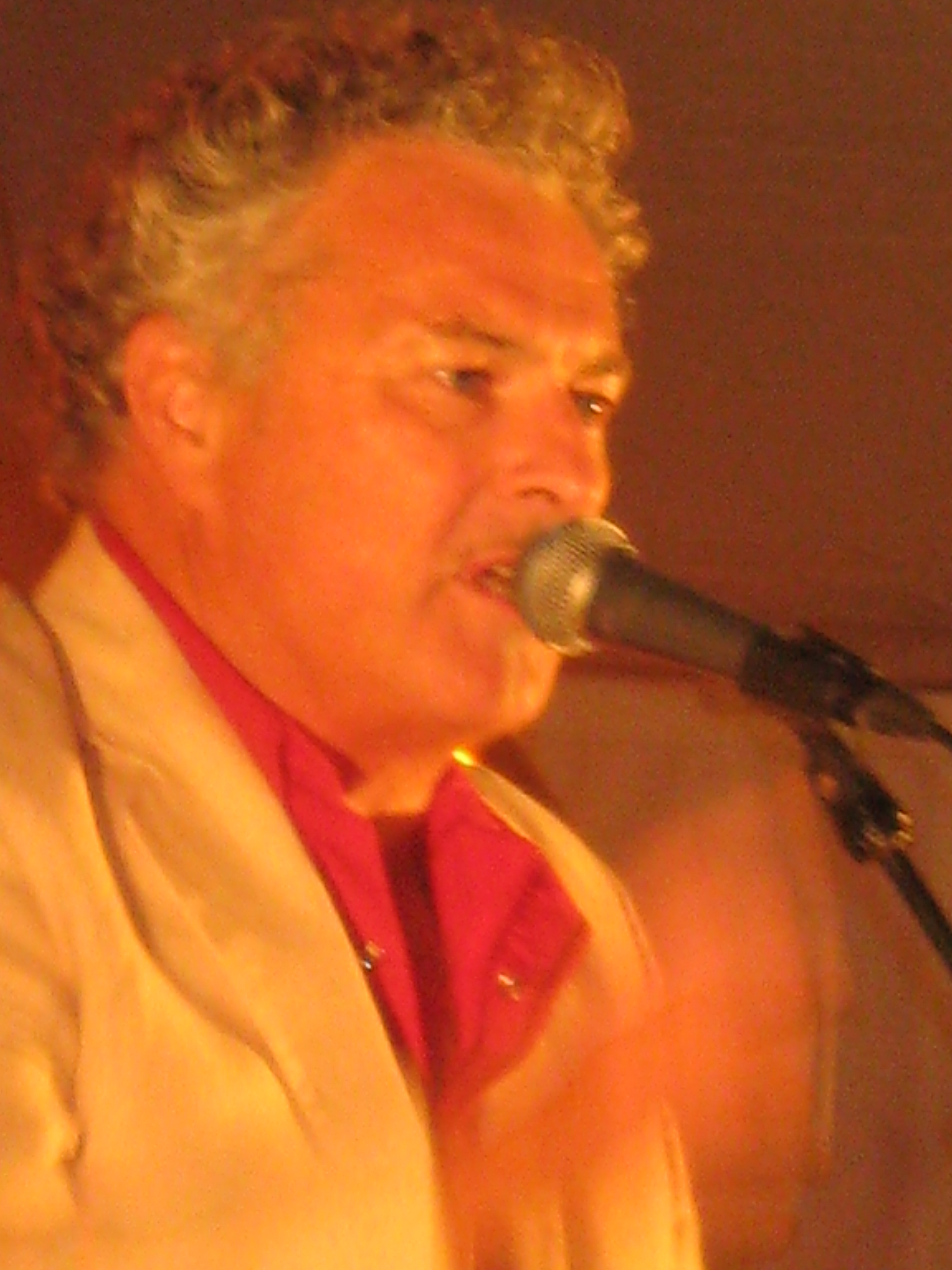
As usual, a baby-boomer headline act. No doubt our children cringe with embarrassment at seeing their 50+ parents grooving out the front. Does it count as a mosh-pit when you’re worried about breaking your hip or people standing on your toes?  Ross Wilson this time, a little rounder than he used to be.  Somehow, singing songs about “she was just seventeen” sounded a little creepy from a man in a white suit.  But what a showman! It struck me how many Daddy Cool/Mondo Rock songs are just part of my mental soundtrack. A good night.

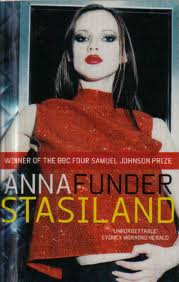
‘Stasiland’ by Anna Funder

2002, 288 p.

(4/5)

Every year for the last five or so years I have put Stasiland onto my list of selections for my face-to-face bookgroup (AKA ‘The Ladies who say Ooooh’). Every year for the past five years, the year elapsed and Stasiland wasn’t chosen.  Ah! But this year IT WAS!!!

I was a little tentative about subjecting The Ladies to yet another of my gloomy selections after subjecting them to The Land of Green Plums about Ceausescu’s Romania last year- what would they think of the Stasi in East Germany this year?  I need not have feared: the narrative was more straight-forward here, and having a young Australian journalist as the first person narrator introduced a familiar voice and viewpoint onto something that, fortunately, is not within the experience of most of us.

Funder, working as a journalist in Europe after reunification, was first attracted to investigating East Germany when a request for a program on the “puzzle women” was brushed aside by the television producers she worked with. There was, it seemed, an embarrassment about the East Germans, as if it would all just disappear if no-one spoke about it.  These “puzzle women”, she later discovered, were employed to reassemble the papers shredded by the Stasi as the wall was falling, a task that would take over 300 years at the current speed.  Methodical to the end, the papers had been shredded in order and shoved into a bag together, and so it was possible to piece them together and reveal the banality and the all-pervasive intrusion of the Stasi into the lives of East Germans.

In East Germany, it has been estimated, there was one informer for every six people.  Some of the surveillance was the stuff of farce, like the  ‘smell samples’ that purported to capture every individual’s smell for later reference.  Other surveillance was more insidious: the reports that were given to potential employers who later changed their mind about the offer of a job; the insistence that there was no unemployment when, as a result of such reports,  one could not get a job; the  warning that a rock group singing subversive lyrics would no longer exist, only to disappear completely from all public view and hearing.  Escapes that were thwarted, imprisonment, blackmail, and the withholding of contact for years with a sick baby on the other side of the wall- by such means the Stasi dabbled in one’s very soul.   There was physical torture as well, but she broaches this only at the very end of the book.  By this time the claustrophobia, vindictiveness and degradation of such minute surveillance seemed on a par with physical torture.

But of course, such intrusion and cruelty leaves no physical trace.  She comments on the memorialization- or more correctly, the distortion of memory regarding East Germany.  She notes the way that East Germans distanced themselves from the Nazis immediately after the war, as if Nazi ideology had flowed from the West and engulfed them, then withdrawn completely afterwards, leaving them innocent of it completely.  She comments on tourist industry that has arisen around the physical fact of the wall- the remnant sections, the tours- that co-exists with a nostalgia amongst some East Germans for the simplicity and security of a life without the bombardment of consumer ‘choice’ and capitalist pressure.  When she places an advertisement seeking ex-Stasi operatives for interview, she encounters men  holding onto the shreds of a Communist dream,  in denial of reunification, and hopeful of the re-emergence of the Stasi.  She finds men who have mounted their own museums to East German life; she speaks to others who have their own justifications for their actions which ring hollow and rather pathetic in a changed world.

The stories of the Stasi operatives and their victims are important, because the Stasi’s reach was not so much in physical things but in the more intangible  sense of safety, identity and autonomy.  There is no museum to hold such things.

I was particularly interested in this book because of the role of the narrator in it.  It is not an academic book as such, and I was surprised to find notes related to specific pages at the end as there had been no footnotes to alert me to their existence.   The narrator is front and centre in this book: we see through her eyes and filter through her consciousness.  At times you need to read against her prejudices- for example, with one man who, as perfect East German man, was moulded this way through his own father’s well-founded fears and insecurities as a dissident, and was to a large extent, a victim as well as perpetrator.  I’m aware of a trend in academic history,  to make oneself part of the story as well, and to use one’s own doubts, questions, misconceptions and false trails as part of the intellectual journey.  I can see its allure as narrative device, but I’m wary.

Funder is not, though, offering this as academic history.  She is upfront about her outsider status, and she documents rather than explains.  It is powerful, chilling reading nonetheless.  Timely, too, as we hear of the Egyptians gaining access this week to their files, many of which had been hastily shredded.  Just as the East Germans before them, they are becoming aware of the size and pervasiveness of the secret police and the complicity of family and neighbours in their midst.

Possessions

I  bought a netbook this week- a very cheap, basic one that I will not mourn too much should I lose it – purchased from the home of the interesting junk-mail catalogue, Aldi.  This is the…let’s see…sixth computer I have bought.  The first was a hulking monster that my father bought me for $1000 second hand with two 5.5 inch floppy disks, running on DOS.  Then I replaced it with another desktop which took 3 inch floppies (that were by then no longer floppy) and may have even had a CD perhaps.  I had a laptop in between- an enormous thing that made you go all lopsided and walk in circles when you hefted it over your shoulder.  It was later replaced by a smaller Compaq which still works but doesn’t have a single USB port.  Then an ASUS laptop that I paid close to $2500 for because I wanted a light model with an 80gb hard drive ( which I’ve just noticed is almost full) and really does need to be replaced sometime very soon.  And now my very el-cheapo Netbook with a 250gb hard drive, purchased very much as a second computer.  And all this within the last twenty years, I’d say.

I’ve been particularly struck by this  cavalier obsolescence  having just finished reading Behind Closed Doors. The purchases that she describes there were carefully considered, repaired when broken,  and often handed down from generation to generation.  Vickery points out that there were fashions in things, and people were quite specific in describing their orders.  Her chapter on wallpaper focuses on fashion and the language for describing it. Wallpaper was valued because it provided a quick and relatively inexpensive decorative effect, sometimes used to decorate rooms that had been leased  for ‘the season’ amongst the aristocracy in fashionable locations.  She particularly mentions women’s handicrafts and challenges the dismissive perception that they were merely inconsequential and a way of keeping women quiet by having them sitting, stitching away at their embroidery.  Instead, she notes that the handicrafts were often handed on, so much so that modern Georgians complained about the heavy embroideries of the previous century with which their houses were decorated.  They did replace them with something lighter and more fashionable, but the fact that 17th century hand-worked decorations were still being used during the 18th century suggests that they certainly didn’t have the “ditch it” mentality we do.

She also notes that renovations (as distinct from just wallpapering a room)  took decades and decades, especially to country houses when Gothic architecture was modified and extended for a more Palladian appearance. There was a strong familial imperative but often the generation that had initiated the renovation died before seeing it completed.  It brought to mind our penchant for renovation “blitz” television shows, where everything is tacked up over a weekend.  I think that with our demands for immediacy, especially when we are paying for other people to perform the work,  we would wilt under a renovation that might take years, let alone decade after decade.

Summer

From a time when summers were more innocent and less menacing…

I think all of Australia is holding its breath.