
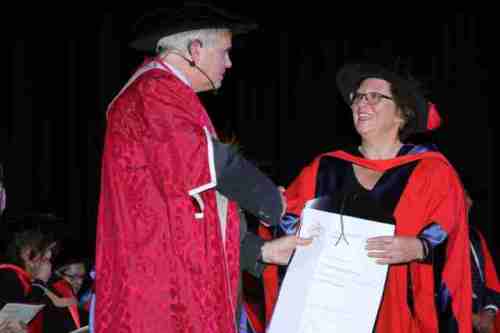
Who IS this ridiculously happy person?
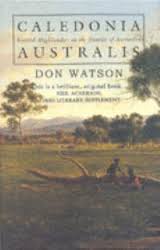
1984, republished 1997 (this review) and 2009. 255 p. & notes.
Actually, I hadn’t intended reading this Don Watson book at all. I was reading the first chapter of his more recent, award-winning book The Bush and found myself reminded that before Watson was a Monthly correspondent, a commentator on public discourse or Paul Keating’s speechwriter, he was a historian. His book Caledonia Australis was already on my bookshelves, and having recently had the experience of reading two books from the edges of a historian’s career as I did with Michael McKernan (see here and here), I decided to put the more recent book aside in order to return to Watson’s earlier book. After all, I reasoned, it would do a disservice to the earlier book to read it after the larger, more mature work, honed by over thirty years of writing. My assumptions were unfounded. I haven’t yet returned to The Bush but Watson’s Caledonia Australis, a more consciously historical work, stands proudly on its own two feet. Watson was a damned good writer in 1984, just as he’s a damned good writer in 2016.
We see in this 1984 book the subtlety that Watson would later display in his exploration of Paul Keating in his Portrait of a Bleeding Heart. It does not have the trappings of an academic text: it does not have footnotes or an index and its reference list is only loosely tied to the chapters. It does, however, make a strong historical argument which has maintained its currency- has indeed become stronger- since its initial publication in 1984 and reissue in both 1997 and again in 2009.
The first part of Watson’s book is not about Australia at all, but instead the Scottish Highlands. I’d heard of the Highlands clearances, but I’d assumed that people were shifted directly from their Highland ancestral homes onto ships to the New World as part of a global diaspora. But, as Watson points out, there was an in-between period where Highlanders were forced onto the coastal edges where they were forced to work in kelp-harvesting. Kelp was prized as an industrial additive for the soap, linen and glass industries and had become lucrative when imports of Spanish barilla (a salt-tolerant plant) were heavily taxed during the 1790s. The shifting of the Highlanders to the coast and the attempted suppression of the language and culture of this ‘backward’ people was seen as an ‘improvement’ measure that, fortuitously for the large lords, freed up the land for the importation of sheep. When the duties on barilla and salt were reduced in the 1820s, the kelp market collapsed, and it was at this juncture that the ‘improvers’, especially on the isles of Skye and Mull, looked to emigration and particularly the large, clan-based Scottish emigration schemes in Canada and Australia.
And so, by Chapter 4, we have ‘Highlanders at Large- the Kurnai at Home’. Both by an accident of timing and also as a result of clan networks, Scottish settlers explored and appropriated the lands of the Kurnai people of what we now know as Gippsland but which Scottish explorer Angus McMillan christened ‘Caledonia Australis’. Across the seas come the Highlanders, a clan-based culture, where the land was the basis of their identity, where history and legend were passed through song and dance, where the supernatural world co-existed with the natural one. And here in Chapter 4 they meet the Kurnai with a parallel culture, with similar qualities to their own: clan-based, with land as the basis of their identity, history and legend passed through song and dance, with a co-existent supernatural and natural world. There was, however, no recognition of these affinities. Charged with their Calvinistic faith, the former Highlanders dispossessed the Kurnai, turning over their land to sheep just as had happened to them in Scotland.
In the second half of the book Watson hones in on Angus McMillan, who has been lionized as one of the pioneers of Gippsland in both myth and physical memorials. McMillan is, in effect, the Highlander in Caledonia Australis writ large.
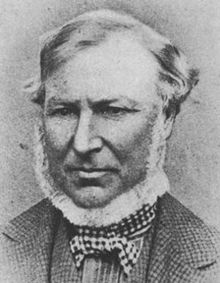
Angus McMillan Wikipedia
Watson traces the rivalry between McMillan and the driven, publicity-conscious professional explorer Strzelecki in their competing claims to have ‘discovered’ Gippsland. The Highland temperament manifested itself in both exploration and frontier settlement behaviour. Clan connections and a shared sense of righteousness drove the Scots settlers into their dogged but ultimately fruitless search for the White Woman of Gippsland. Their prickliness, pride and sense of mission had a much darker side as well.
Watson writes:
There were three types of squatters on the Australian frontier: those who thought that their right to the land was qualified by an obligation to treat the Aboriginal inhabitants with kindness; those who believed that their right was conditional only on extermination; and those who combined murder with kindness. (p. 223)
The squatters of Gippsland, Watson writes, were fickle and dangerous and McMillan exemplifies this third type of squatter. McMillan
-half steering his way, half being blown-arrived in the new province and from that moment seemed to embody every paradox the frontier could throw up: making its history and being made by it, writing its story and engineering its secrets, living through all manner of triumph and torment and leaving a legend which put his life beyond our reach, ending up a cliche, a block of stone (p. xix)
When the nephew of his patron Captain Macalister was killed by Aborigines, McMillan was most probably responsible for drawing together the ‘Highland Brigade’ of his neighbours and retainers who, bent on revenge, massacred between 60 and 150 Indigenous Australians at the Warrigal Creek massacre, and beyond. Yet, this same man was also lauded for his “sympathetic interest” in indigenous people and became in the last years of his life the Aborigines’ protector. Murder and kindness: a chilling combination.
In his introduction to the 1997 edition of this book, Watson writes that his original intent in writing this book was
to give a more sympathetic portrait of the pioneers than any I had ever encountered. I wanted to give them blood as well as bones; religion, motives, choices, memories, identity, ancestors, an inheritance of their own (p.xxvii)
This doesn’t sound like the aspirations of a historian whose work, through this book, became associated with those derided by the New Right as promoting ‘black armband history’. We know, from Watson’s later work on the deadening effect of managerial language and ‘Weasel Words’ that he is impatient and dismissive of ‘political correctness’. But, he argues, “It can hardly hurt a mature society to know that its founders were capable of evil as well as good. An immature society can only benefit”(p. xxvi)
Hence the importance of McMillan:
The harder we look at McMillan the more we see the patterns of our collective experience and the elements of our contemporary dilemma. The harder we look at him the more signs we see of the kindness and brutality, self interest and charity, memory and amnesia, decency and hypocrisy that has characterised public and private dealings with Aboriginal Australia from the beginning to the present day. And the harder we look at the society McMillan came from the more we see how the dispossessed everywhere tend to follow the same path to material and spiritual poverty: in the nineteenth century the Australian Aborigines were not the only ones to be first cast as dangerous and unruly savages, and then left stranded between pity and contempt- and then thrown still further adrift from humanity by Social Darwinism. (p. xxviii)
No: this process had engulfed Highlander society, which in turn subjected the Kurnai people to the same fate. The last words of Caledonia Australis are “..the irony was lost”. Irony, at its most powerful, does not need a spotlight or announcement, but emerges quietly and insistently out of the material itself. Just as it does in this book.
I only just caught this at Cinema Nova before it disappeared. It’s a documentary memoir by feminist film maker Margot Nash, based on her own family story. In her voice-over that opens the film, she explains that after her mother died, she and her sister couldn’t agree on the epitaph to put on her grave. They both had a very different view of their mother, and this is Nash’s reflection on the ambivalent feelings she holds towards her mother and the secrets that lay within their family.
Visually, the documentary is a montage of images from photograph albums and clips from Nash’s other films, and it relies heavily on Nash’s voiceover to provide the narrative thread. What power a story-teller has in her hands, to expose others and mould a story to make it hers! And yet, just as when reading a book with an unreliable narrator, I found myself resisting her questions and her reworkings, largely because I was uncomfortable with the self-centredness of her endeavour. While seeking nuance and adult explanation, there is still a childish, underlying protest at being locked out and being given only partial knowledge. The film maker, who is very present in this documentary, is older than I am. Does she not have (as I do- along with most older people, I should imagine) an accumulated store of regrets, elisions, utterances and actions that she, too, might want kept secret- or at least, private? Can there be no generosity in respecting others’ secrets? I found myself feeling complicit and disturbed by this movie, although I’m pleased that there was no pat solution, but instead a very human ambivalence.
Posted in Movies, Uncategorized
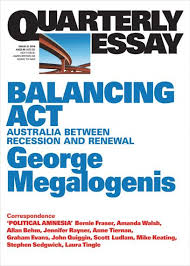
Balancing Act: Australia between Recession and Renewal
Quarterly Essays, with their generous word length of about 25,000 words often provide a deeper analysis of current topics than you’re likely to find in newspapers and magazines. The most recent Quarterly Essay, however, didn’t really offer me much that I hadn’t already read in other progressive-side publications like Crikey, the Monthly or the Saturday Paper.
George Megalogenis starts with a quick overview of the past thirty years of Australian politics and the imposition of the “open model” of the economy during the Hawke/Keating years. His aim, Megalogenis says, is to explore how to augment this open model in a time of transition. In particular, he looks critically at the past fifteen years, with six wasteful years under Howard as the proceeds of the mining boom were squandered and six combative years under Abbott.
History, he claims, shows that the governments that transformed the economy were generally Labor ones and not conservative- in particular Curtin and Hawke. He notes that in both these cases, Labor had remade itself after a period of opposition: something that the current Liberal/National coalition has not done with Abbott on his wrecking-ball spree during his time in opposition. He notes that the rapid change of prime ministers is not necessarily a present-day aberration because in the first ten years of Federation there were seven changes of Prime Minister. However, the crucial difference was that there was continuity of policy rather than the “throw it out” mentality with each swing of the electoral pendulum that we have sen in recent decades.
Rather than harking back to the golden reforming days of Hawke and Keating so beloved of economic writers, he turns instead to the post-war reconstruction activities of Curtin, Chifley and Menzies as exemplars of policy-driven and infrastructure-led responses to changed circumstances. Such policies were not the preserve of any one side of politics and similar policies, he suggests, might hold the key to the shift from recession to renewal so heavily promoted by our ebullient Prime Minister.
Posted in Uncategorized
NEVER A MORE EXCITING TIME TO BE…A BUTCHER!
On the 4th May, the butcher, George Jackson, advertised that he would be opening up his premises in Queen Street:
The undersigned begs respectfully to inform the inhabitants of Melbourne that he will commence business This Day, Tuesday the 4th Inst as a Butcher in that new shop, next to the stores of Messrs Thomas Enscoe and James in Queen Street, where he hopes by strict attention to business and always keeping the best of meat on hand at the lowest renumerating price to merit a share of public approval’ GEORGE JACKSON. (PPH 4/5/41)
According to the editorial of the very same paper, there was no more lucrative time to be a butcher, although the editorial writer characterized it more as price-gouging than ‘agility’. Sheep averaging 60lbs in weight could be purchased at 12/6d a head, and after deducting the value of head and pluck, suet and skin at 2/6d, the cost would be 10s. The meat was retailed at 5d per pound, the whole carcass thereby producing 25s or 150% profit. Likewise cattle averaging 700lbs could be purchased for £8/15/- and retailed at 6d per pound of £17/10/- thus leaving a net profit of £8/15/- or 100% profit.
But what about expenses? The Port Phillip Herald editorialist estimated the staffing and ongoing costs of a butchering establishment to be:
Mr Jackson seemed to make a go of it. There was still a George Jackson, butcher, in Queen Street in 1847 (although its not clear from the Victoria before 1848 website whether it’s the same George Jackson or not).
…OR A MILLER!
Mr John Dight from Campbelltown in Sydney arrived in Port Phillip in early May and announced that he would be building a water-driven mill at what is now known as Dight’s Falls. He had purchased land in the district in 1838 and had already established a successful milling operation in Sydney. He used the same name, Ceres, for the Port Phillip mill. Construction of the mill from bricks from Van Diemen’s Land also involved the construction of an artificial weir which forms the ‘falls’ today.
Mr Dight who arrived in Melbourne on Hans from Sydney, a few days since, intends erecting a water flour mill on the banks of the Yarra Yarra at “Gardiners Falls” about two miles from town. At starting, two pairs of stones will be worked, but an extra pair may be added should it be found necessary. A mill of this description has been long wanted, and will be found a valuate acquisition to the town. Operations are to be commenced forthwith.
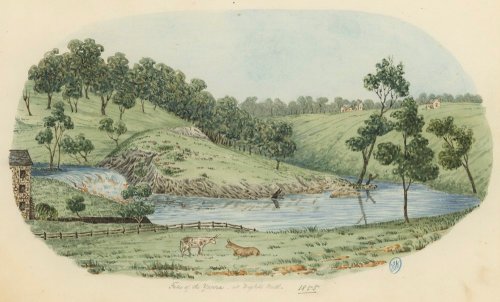
Fall of the Yarra at Dight’s Falls by Charles Norton 1855, State Library of Victoria
http://handle.slv.vic.gov.au/10381/50610
TWO DEATHS
In the Supreme Court sitting at the end of April, Judge Willis announced that he wanted to clear out the jail of unresolved cases that had been in abeyance waiting for his arrival. His attention fell on two indigenous men who had been held in custody for murder since August 1840, awaiting the transmission and return of depositions to Sydney. By this time, both men were gravely ill. Willis read to the court a despatch from the Secretary of State to Governor Gipps dated 31 December 1839 relating to the treatment of Aborigines, and read extracts from the Report of the Select Committee of the House of Commons 1837. Willis attributed their illness to their long period of confinement and pointed out that there was as yet no evidence and there had been no cross-examination of witnesses. He asked that the men be taken to hospital and put under the care of the Aboriginal Protectors. (PPH 30/4/41)
It was too late:
Yesterday another inquest was convened at the Lam Inn, Collins-Street, upon view of the body Kongho Marnee, an aboriginal, who died in the Government Hospital on Saturday last. The deceased was one of the blacks committed in August last year, on suspicion of murder. The unhappy creature, from the time of his commitment, appeared labouring under an impression that he would be hanged, and had been pining away from the time of his commitment until the period of his death. Dr Cussen who examined the body, gave it as his opinion, that deceased had come to his death from the confinement he had undergone, combined with a broken spirit. The body exhibited no tangible disease. The Jury returned a verdict of “Died by the visitation of God.”
And then, days later another death:
On Monday night an inquest was held at the gaol, before Dr Wilmot, Coroner, on view of the body of an Aborigine, named We-na-baer-nee, brother of Kohoga Marnee..who died at the hospital on Sunday morning, almost immediately after hearing of the death of his relative: the sympathetic affection even in the bosom of this savage appeared too finely strung to bear up against the loss. The Jury returned a verdict of ‘Died by the visitation of God.”
Visitation of God indeed.
A RUCKUS IN THE STORE SHIP
My, my- I think that there’s mischief afoot between the Captain and young Eliza:
Eliza Baynes or Collin, assigned to Captain Passmore of the Samuel Cunard, store ship, was charged by her master with entering the cabin of that vessel on Sunday night about eight o’clock, having between her lips a short dudeen [a short tobacco pipe made of clay], the fragrance from which rose in mimic clouds and penetrated to the most secret recesses of the cabin, rendering it anything but pleasant to the nostrils. Captain P. not approving of this course of proceeding, requested she would proceed on deck, and there inhale the perfume and bestow its fragrance on the desert air; no sooner were the orders given, that Eliza seized a tumbler from the table and discharged it at the head of Captain P. who fortunately avoided the missile by a dexterous shifting of his position- his starboard whisker only being grazed as it whizzed by. The interesting Eliza, not satisfied, danced a pas scul on a wash-hand-basin, which was quickly reduced to fragments, upon which she was given in charge. In defence the virago hinted something about “the Green Eyed Monster: but took nothing by her motion
The Bench expressed surrpise that, being an assigned servant, she had been allowed to come to Port Phillip contrary to regulations. After all, Port Phillip was ostensibly not a convict colony, but there were in fact many assigned servants attached to settlers who had come from Sydney or Van Diemen’s Land. Capt P replied by Mr Eyde Manning had signed the permission and that the prisoner had come down with Mrs P in the Clonmel (you’ll remember that the Clonmel was later wrecked on the Gippsland coast)
Captain Passmore would not have to put up with her smoking in his cabin in future. She was returned to the Female Factory in Sydney at Capt. P’s expense. (PPH 7/5/41)
HOON DRIVING
On Friday a drunken drayman named Welsh, while in a state of intoxication and seated upon his dray, flogged his horse most violently; the animal started off down Williams-street at the top of its speed, and in its career narrowly escaped running over the Rev Mr Orton and two other gentlemen; rounding into Flinders Street, at the wharf, the draw came in contact with a large stone and was capsized, jerking the driver within a few inches of the Yarra Yarra. Upon being brought before the Police Magistrate the following day, he was fined 20s for the furious driving (PPH 7/5/41)
AND THE WEATHER?
The highest temperature for the week was 78 (25.6) and the lowest 41 (5 celsius). There were light winds on 1st and 2nd and a gale on 3rd. [Odd- this sounds very much like this week in 2016, which also had a gale on 3rd and temperatures this week of 25 degrees] The weather was damp and cloudy until 4th, afterwards bright and clear.
Posted in Uncategorized
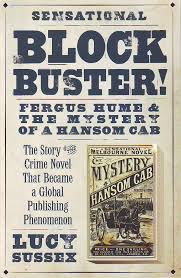
2015, 257 p. & notes,
Fergus Hume’s book The Mystery of a Hansom Cab (my earlier review here) has the dual ‘honour’ of being both the best selling detective novel of the nineteenth century and the ultimate one-hit-wonder in a career that generated over 130 novels and numerous stories and articles. Self-published in 1886, it became an instant best-seller both locally – and more importantly for an Australian book at the time- internationally. Lucy Sussex’s book Blockbuster is a book about the book. You don’t even have to have read The Mystery of a Hansom Cab because Sussex’s work is far more focussed on the author and his milieu, the commercial trajectory of the book and the provenance of the remaining copies, rather than the book itself.
As she points out in the introduction, Hansom Cab is a thoroughly Melbourne book, starting as it does at the thoroughly respectable corner of Russell and Collins Street outside Scots Church, passing the thoroughly respectable streets of East Melbourne and meandering its way through the slums of Little Lonsdale Streets and shabby-genteel St Kilda. Its author, however, was not Melbourne-born but was originally from Scotland, having emigrated to New Zealand as a child when his father took up a position as a master of a lunatic asylum, a job he had also undertaken in Scotland. Despite a yearning for the stage – a yen that both his sisters were allowed to fulfil- Fergus was channeled into the law by his father, until he ‘escaped’ with his sisters ‘across the ditch’ so that they could further their stage careers. Once in Melbourne and freed from paternal oversight, he tried to get his scripts accepted for theatrical performance but to no avail. He wrote The Mystery of a Hansom Cab as a novelistic attempt to get noticed in order to further his theatrical career. It was an unintentional best-seller that somehow failed to make him a rich man, or substantially boost his theatrical profile.
I was surprised to learn that The Mystery of a Hansom Cab is one of a trilogy of Melbourne novels (the others being Madam Midas, a Realistic and Sensational Story of Melbourne Mining Life [1888] and Miss Mephistopheles [1890]). The retailing and licensing of the book is a tawdry tale, with Hume selling the international copyright for only 50 pounds to promoters who certainly promoted it well and made their fortune from it. In trying to work out the numbers of volumes actually sold, it is hard to tell what is puffery and what is fact. I found the information about the provenance of the remaining collection of editions held here in Australia fascinating.
Although Hume’s books reflect the milieu in which he circulated, there is not a large archive of personal correspondence or autobiographical writing for Sussex to draw on beyond his book When I Lived in Bohemia. She looks, therefore, for resonances of his personal life in his writing and speculates about his homosexuality from the lives of men around him.
Even though I read a lot, I am a stranger to the world of Literary Studies (with capital letters) and I found myself nonplussed at times at the wide-ranging and digressive nature of Sussex’s writing. Sussex has written on the previously-undiscovered Australian writer Mary Fortune, and at times I found myself lost as she turned her attention to other writers and theatrical figures of the time before returning her focus to Hume. The historical parts of the book follow the usual historical conventions of footnoting and referencing but when she interviews present-day writers, their commentary is woven into the narrative as a source that she assumes you’re familiar with. It’s almost as if the reader is overhearing a conversation among a group of people who all know what they’re talking about together, but from which the listener is rather excluded. Certainly one can enjoy the book without having read Hansom Cab but I felt rather short-changed in the frequent references to the other two Melbourne books which I (among many many others I should imagine) have not read.
The book has a large number of short chapters, which usually I would find annoying, but in this case the short chapters maintained the forward chronological thrust of the narrative. However, I did find the ending of the book untidy, with a postscript, followed by epitaphs of the minor characters and reviews and opinions of Hansom Cab over time. I wasn’t quite sure where the book ended.
That said, though, I did enjoy the book- a lot. I suspect that my reservations are grounded in my unfamiliarity with Literary Studies, rather than the book itself. It was awarded the History Publication Award in the 2015 Victorian Community History Awards.and as a historian, I very much enjoyed the way she captured the theatrical and intellectual climate of boomtime 1880s Melbourne and the economics of literary publication within the colonial book-trade.
 This review has been posted in the Australian Women Writers Challenge 2016
Posted in Book reviews, Uncategorized
I love summer. Once the weather turns, I grab hold of every warm autumnal day and try to make the most of it, fearing that it might be the last warm day we have (although with our unusual weather at the moment, who knows what the weather will be like next week). Today had a forecast top of 27 degrees and looked beautiful, so off to the beach we go!
Over the last few years there’s been a new bus service that runs the semi-circle around Melbourne from Altona in the west to Mordialloc in the east. Heidelberg Station is in the middle, so that’s where we started the journey.
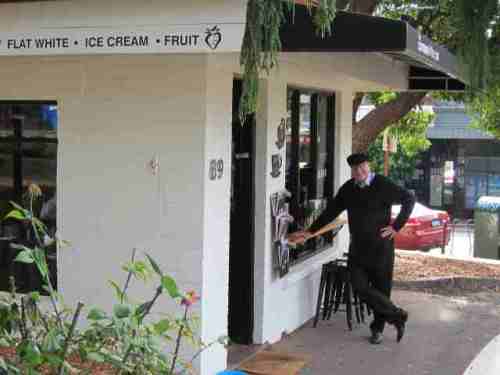
We needed coffee before we started of course, so we stopped at a new little coffee shop in the Fred Laslett Reserve near the station. And very nice coffee it was too!

And within ten minutes, the bus arrived.
I’ve been curious about this bus line for a while. When you see the buses at Heidelberg they never seem to have many people on them, but it certainly filled up and emptied several times on the two hour and ten minute ride to Mordialloc. Shopping centres and railway stations are the main drawcards, and the bus made many stops to pick up people from rather closely distributed bus stops. Still, when the bus runs as often as this one does (approximately 15 minute frequency), the whole purpose is not so much to get to Mordialloc as a destination bang on time, as to act as a service that passes the major shopping centres along the way. The bus driver was very good, watching carefully to make sure that the many elderly people using the bus (us excepted of course) were seated before the bus took off.
Finally we arrived- and isn’t it beautiful. If I’d had my bathers, I would have been tempted (although I note that not many other people were indulging).

The water was pearlescent and completely still.

“The sea wall and boulevard was erected from funds raised by Mordialloc Carnival Committee 1925-6” There were sea baths from 1886, but they were demolished in 1934.
We walked along the pier and marvelled at a huge stingray which looked to be about one metre across. The creek is lined with small boats. The carnival that yielded the funds for the sea wall was held on the land beside the creek for many years.
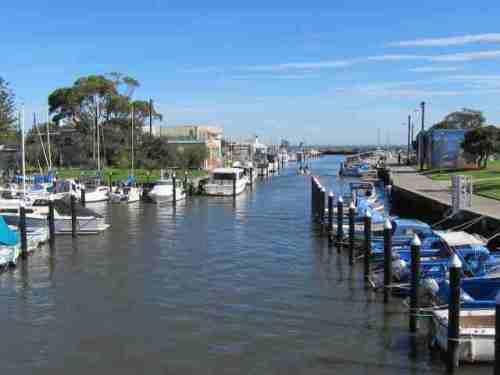
Small boats moored along the creek

Mordialloc Creek

An interesting mural in the park where the carnival used to be held
Time for lunch out in the open, overlooking the creek. Flathead tails, calamari and chips- and very good they were too.

Now for some serious historic walking. Indigenous people from the Boon Wurrung (Bunurong) people often camped alongside the creek in what is now Attenborough Park, on the edges of the Carrum Swamp. Their territory lined Port Phillip Bay, the Mornington Peninsula, Western Port Bay and Wilson’s Promontory. In 1852 they were allocated 340 hectares along the creek as a distribution depot, but it was revoked ten years later because it was now considered too close to Melbourne. The Boon Wurrung people were sent to Coranderrk near Healesville instead- how different it must have been to their coastal territory.

These rather hacked conifers are on the Signficant Tree register. I’m pleased that they’ve planted new replacement trees nearby because I suspect that these are on their last legs.

A WWI memorial. Interesting that it only commemorated WWI and not later wars
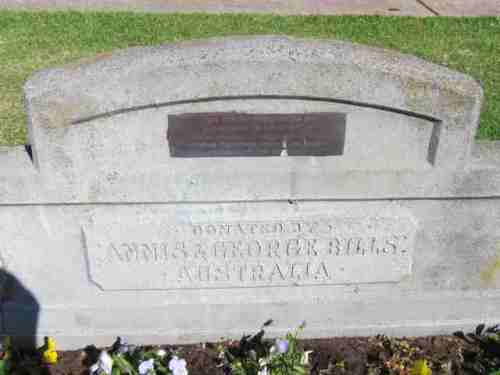
A Bills Water Trough. Over 700 Bills Troughs were constructed for working horses throughout Australia, funded through a trust established by Annis and George Bills who made their fortune through mattress manufacturing. You can find out more at https://billswatertroughs.wordpress.com/

The Masonic Hall, built 1926 and used in 1926 as a courthouse. It was sold in 2008 with the buyer intending to use it as a family home, but was sold to the Council in late 2011

I peeped through the letterslot, where you could see the hall, probably much as it was left
And what is THIS? It’s the Mordialloc Railway Water Tower, built in 1910 with a capacity of 20,000 gallons. It has a National Trust rating but we couldn’t read the plaque because it was surrounded by scaffolding.

We could hear a train approaching and even though we enjoyed the bus trip, the train seemed much more appealing. So we bid farewell to the water and headed back to Macleod, hoping that it’s not the last warm day we have this autumn.
Posted in Uncategorized
Well, the 175th anniversary of the opening of the Supreme Court has been and gone. There’s an exhibition at the RHSV until 7 June; there was an excellent one-day conference at VU in the city; and then last night was the official launch of the book Judging for the People at the Supreme Court library. Given that ‘my’ judge, as the first Supreme Court Judge for the district, had a foundational role, I feel a little bit like I did as a child on Christmas night, realizing that everything’s over.

But just like Christmas time, there’s a present for the good people of Melbourne in the form of illuminations of the Supreme Court until 22 May 2016.


Posted in Uncategorized
Justice John Walpole Willis and his biographer-of-sorts (i.e. me!) are about to have an exciting few days. Tonight (Friday 8th April) is the opening of the new exhibition at the Royal Historical Society of Victoria 175 Years of Judging for the People, which is on show between 11 April and 7 June 2016 (details here) .
Then tomorrow, Saturday 9th April is the RHSV Conference marking the publication of a new book Judging for the People: A Social History of the Supreme Court in Victoria 1841- 2016 at Victoria University in the city. I’m giving a short paper on the Bonjon case and its relationship to the Mabo judgment 151 years later.
Finally, on Tuesday 12th April, the book Judging for the People is being officially launched by the Chief Justice of Victoria on the very day of 175 Anniversary of the opening of the Supreme Court of New South Wales in the district of Port Phillip. I wrote the first chapter of the book which starts off with the Resident Judges, who were the forerunners of the Supreme Court here in Victoria.
So, JWW and I had better both frock up for a few days of commemorative excitement!
Posted in Judge Willis, Port Phillip history, Uncategorized
What a wonderful world we live in! The Public Records Office of Victoria (PROV) has now digitized and made available VPRS 19, the inward correspondence to Charles La Trobe, the Superintendent and later Lieutenant-Governor of Port Phillip.
To see an interactive introduction to the letters, see PROV’s site here.
“What would I want with La Trobe’s Inward Correspondence?” you may ask. Well- there’s just so much here. There’s reports from civil servants, letters of complaint, petitions, queries- in effect, anything formal that the people of Port Phillip wanted to convey to Governor Gipps in Sydney had to go through La Trobe here in Melbourne. Although La Trobe had very little scope and authority to act independently, all requests had to go through him. Family historians might find letters by or about their forebears; the plans for the newly-established organizations and buildings for the new Melbourne settlement are all here; the debates and controversies in the public sphere are funnelled through here as well. It’s an incredibly rich resource.
I really can’t start to describe how excited I am that these letters have been digitized and made available in this way. Oh that they had been available five years ago when I was spending hours at PROV, although I think back on that stage as my favourite time in writing my thesis. You still have to dig around to find what you want (and I must confess that it’s taken some fiddling for me to find the transcripts) but oh! this is fantastic! Fantastic, fantastic, fantastic! [You probably gather that I’m rather excited….]
Postscript
Thanks to Lenore Frost who has alerted me to an index to VPRS 19 which can be found on the Royal Historical Society of Victoria website under its ‘Collections‘ link. You can get directly to the index here.
 The Resident Judge of Port Phillip