
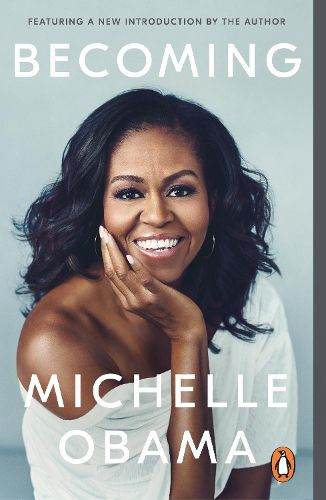
I had not had much interest in reading this book, deterred perhaps by the glamour shot on the front cover. Even though I very much enjoyed Barak Obama’s Dreams From My Father, I wasn’t particularly drawn to reading a First Lady’s life story, thank you very much. But it was a Book Group selection, and conscientious Book Grouper as I am, I resolved to read the book and I am so glad that I did. There was much more in this book that I might ever have anticipated.
The preface started with really good writing. It’s post-Presidency, and Michelle is alone in the house for almost the first time (excepting the security guards down in the garage). Her daughters are out, Barak is not at home, and she decides to make a grilled cheese sandwich. There’s no one to make it for her, no-one to say “Mrs Obama, let me get that”, no one to look askance at her desire for such homely comfort food. She sits on the back doorstep, and eats the sandwich.
The book proper is divided into three parts: Becoming Me, Becoming Us, and Becoming More. Becoming Me traces her early upbringing on the South Side of Chicago, where her remarkably hands-off parents bring her up to be an intelligent, independent young woman, super-organized and conscientious, ambitious and methodical. Becoming Us chronicles her relationship with Barak Obama, and her switch from corporate law to the non-profit sector. The ‘us’ expands to include her two daughters, born through IVF, and the tension she feels between being a professional woman, and a mother. Barak is becoming increasingly involved in politics, first as a state congressman, and then as presidential candidate, although she is often angry and resentful of the demands that politics make on their relationship. Becoming More takes us into the Obama presidency, and the weird home-life this imposes on their family. She needs to carve out her own identity as First Lady, even though this is a role that is not of her choosing, and she struggles to keep some sense of normality for her daughters.
The book is very honest. Barak comes over as a highly intelligent if selfish man, infuriating in his messiness, chronic lateness and lack of attention to detail. She for her part comes over as rather controlling and chronically insecure about whether she is good enough. The awareness of being a black woman in a predominantly white political milieu accompanies her always. She talks about the strains in their marriage as her life is subsumed into his ambitions, and her eventual decision to keep some sort of family routine of dinner and bedtime which Barak has to accommodate to, instead of the other way around. Her mother is a saint: I don’t know that I would get up at 5.00 a.m. to mind my grandchildren while my daughter went to the gym- if fact, I know that I wouldn’t (just in case any of my children get ideas).
She does not even try to hide her contempt for Donald Trump, which hardened even more when he won the Presidency. Trump’s actions in demolishing the East Wing seem even more egregious now, after reading about an engaged First Lady who opened the White House up to many people, through that very East Wing that no longer exists.
At first, I was so impressed with the writing in this book that I was rather disappointed when I learned that it had been ghost-written, or at least written with other people. Does that matter, I wonder? For me, probably yes, because I feel that her writing has been mediated through the other author, and I feel disappointed that the words are not hers. But this doesn’t detract from the honesty that pervades this book. She doesn’t once mention the word ‘feminist’ but the tensions between motherhood, professionalism and politics reflect the viewpoints of a modern, engaged intelligent woman that the world was lucky enough to have as First Lady for eight years.
My rating: A rather surprising 8.5
Read because: Reading Group Book
Sourced from: Darebin Library as part of their reading groups program.
 The Resident Judge of Port Phillip