Author Archives: residentjudge

‘The Other Side of the World’ by Stephanie Bishop

bishop

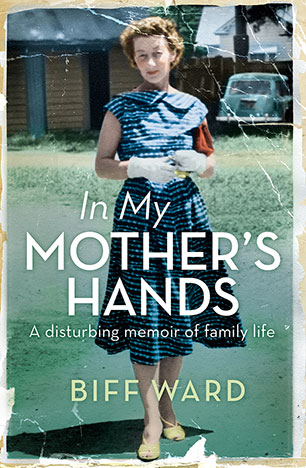
2015, 279 p

I put a hold on this book some time ago, having heard good things about it. I was startled to find that I was number 30 on the waiting list but when I actually picked the book up from the library some weeks later, I was prepared to be disappointed.  “Don’t judge a book by its cover”, we are told- but I do.  The gold embossed font suggested genre fiction (as Lisa from ANZLitLovers learned recently) and the pastel colours suggested romance. The sickly-sweet blurb “The only thing harder than losing home is trying to find it again” was not encouraging, either.

But this book is poorly served by its cover, because instead of fantasy or romance, this is a beautifully nuanced book about nostalgia, motherhood and the sense of ‘home’.   It is written in the present tense, a stylistic choice that I usually bridle against (despite writing nearly all this blog in the present tense myself!) In this case, however, I barely noticed, as was the case in Black Rock, White City which I read recently too: perhaps I’m moving away from my prejudice against present-tense narratives?

Set between 1963 and 1966, Charlotte has been plunged into rapid motherhood, long before she feels ready. She lives in Cambridge with her husband Henry, an Anglo-Indian academic and she is suffocating under what we would now probably diagnose as post-natal depression. Ground down by the sheer mindlessness and fatigue of dealing with babies, she acquiesces in Henry’s dream of emigrating to Australia and ends up in stark, hot, sun-drenched Perth, where he gains a position at the university.  She hates it and wants to return home but he resists her unhappiness, convinced that the opportunities that Australia offers their children and time will overcome what he assumes is temporary homesickness.  She resents Henry and is drawn to a fellow artist, Nicholas, who understands better the nature of the sacrifice that this move to the other side of the world has cost her.

Although  Henry rests in the assurance that he has done the right thing by bringing his family to Australia, as an Anglo-Indian he faces his own challenges in 1960s White Australia Perth. When he is called to India where his mother is dying, he leaves Charlotte alone with the children.  Back in his childhood home and increasingly conscious of his parents’ choice to send him back to England for his education,  he is brought up against his own concept of ‘home’.

A couple of years ago I was fortunate to work as research assistant for A. James Hammerton, who along with the noted oral historian Alistair Thomson, wrote Ten Pound Poms, a fascinating book about the experience of post-war English migrants who emigrated to Australia under the assisted migration scheme that ran between the 1940s and 1970s.   He was working on a second book (not yet published as far as I know) about mobility between the UK and her former colonies especially after the assisted emigration schemes had drawn to a close, and the interviews that I read as part of my work for that project, along with those in the earlier book Ten Pound Poms very much echo the experiences of the characters in this book.  It rings absolutely true.

Not so true, however, are some of the small infelicities which arise, I’m sure, as a result of the youth of the author.  Refrigerator freezers in 1965 barely contained an ice-cream brick let alone a loaf of bread; playgroups didn’t emerge in Australia until the 1970s and the smacking of children- at least in many families- didn’t have quite the connotations it has now.  I suspect that the author has spent much time examining the copies of the Womens Weekly available on TROVE but the references to it are awkward and jangly.

Charlotte has the eye of an artist and the author, Stephanie Bishop, has the voice of the poet.  This comes through most strongly in the descriptions of setting and place that run throughout the book and which underpin Charlotte’s longing for England.  At the same time, the book is minutely domestic with well-observed (if perhaps a little too lengthy) descriptions of parenthood with small children in the absence of a family or community network.  Overall, it’s a very assured, mature and nuanced second novel by a clearly talented young writer.

aww-badge-2015-200x300I have posted this review on the Australian Women Writers Challenge site.

‘The Way Home’ by Rose Tremain

roadhome

2007, 384 P.

It took me some time to realize the cleverness of the title of this book, which seems far more a journey away from home, rather than towards it.  Lev is an unemployed lumberworker and what we’d call today an  ‘economic migrant’ from an unnamed Eastern European country who travels to England from his economically-hollowed out town to make enough money to carve out a better life for his family back home.  He is not, as he emphasizes, “illegal” under the then-current Worker Registration Scheme that made it possible for workers from the central Europeans and Baltic A8 states  to work in the UK, but he quickly moves towards that eddy of marginal casualized workers that underpin the hospitality and agricultural sectors of the UK economy.

Lev is a widower, with a young daughter after his wife Maria died with cancer a few years earlier.  The daughter has been left behind with her grandmother. On the bus that bears him across Europe towards England he is fortunate to be seated beside Lydia, a teacher with similar dreams of economic advancement, whose English is much better than his. As Lev moves through a succession of poorly paid jobs, Lydia finds a job as a translator to a world famous musician and shifts into a different social and cultural milieu.  But she continues to come to Lev’s assistance, even though he does not, in truth, treat her well.

His other piece of good fortune was to find lodgings with Christy, an Irishman reeling from the breakdown of his marriage and the loss of his daughter.  Lev sleeps in a bunk in the daughter’s bedroom, surrounded by the pink plastic detritus of children’s toys.  He and Christy drink too much, but they are good for each other.

Lev is a complex character.  In many ways, he is a good man, but he is also proud, jealous and inclined to violence.  He is also hard-working and quick, and when he gains a job as a dishwasher at the upmarket restaurant G K Ashe, he uses the opportunity to watch and learn.  He becomes involved with Sophie, one of the other cooks, but when their relationship becomes too messy, it is Lev who is sacked.  Sophie, like Lydia, is drawn into the celebrity culture of London when she becomes involves with the pretentious artist Howie Preece, but Lev continues to visit the aged care house where Sophie volunteered even after she had flitted into a new life.  He works hard and gradually an idea coalesces for a new life back home, with his friend Rudi, his mother and daughter.  It is at this point that I realized that this exile was all part of the way home- hence the title.

This book was my choice for my face-to-face bookgroup, chosen largely because I’ve enjoyed Rose Tremain’s work before and because I was aware that it had been awarded the Orange Prize in 2008.  Such responsibility! (no-one likes to hear the words “Who chose this book?”)  I feared that “the ladies” might think it too slow moving and at times I wondered where the book was going.  I must confess to fearing with each page that something tragic or dreadful was about to happen, but instead Lev’s progress was slow and prosaic.  But, along with my bookgroup ladies, I found the ending far more emotionally satisfying than I thought it would.

I’ve read critiques of the book where reviewers criticize the lack of specificity of Lev’s origins (thereby suggesting that all Eastern European countries were the same), or the political neatness of sending Lev ‘back home’ .  Neither of these things bothered me. I remember being disturbed by the open prejudice voiced against Eastern European migrants in England when I visited in 2007 – precisely the time that this book was published-  and the images we now see of young African economic migrants waiting at the Calais tunnel are challenging.  I found that Tremain’s book put a human back into the images and stereotypes.  She held back in the right places: there was no fairytale ending, but not did the whole thing descend into squalor or outright degradation.

And yes, the bookgroup ladies enjoyed it too.

Banyule Homestead: Fit for an Ex-PM

We’re about to be invited inside Banyule Homestead for Shaun Micallef’s new 6-part series The Ex-PM, starting on ABC1 on 14 October (tonight). And a thoroughly appropriate setting, I should imagine!

My website on Banyule Homestead still floats around in the ether. Why not pop over and have a look?  It’s at https://banyulehomestead.wordpress.com/

‘The Boyds: a family biography’ by Brenda Niall

boydsfamilybiography

2002, 387p.

In this book we are in the hands of a master biographer.  Not many biographers would have the courage to take on a whole family as a unit, but Brenda Niall does here. The sprawling, artistic Boyd family has representatives in nearly every branch of the arts (literature, painting, architecture, sculpture) and its family tree is studded with seemingly endless iterations of ‘Boyd’ and ‘a’Beckett’ in their names.   Only an experienced biographer would even attempt such a complex group biography across five generations and nearly two centuries,  and she   handles it with consummate ease.

She owes much of her success to the very careful structuring that she has used to organize this unwieldy and voluminous information. She starts with four men: the emancipist-entrepreneur brewer John Mills; the wealthy pastoralist Robert Martin (of ‘Viewbank’ and ‘Banyule’ fame); William a’Beckett the Chief Justice of Victoria; and Captain Thomas Boyd, career militarist and settler. Even though the first section of the book is called ‘The Matriarch’ (referring to Emma Mills, later a’Beckett), Niall firmly embeds these four patriarchs as the founding fathers, so to speak, of the Boyd dynasty.  She takes forty pages to do so in her opening chapter, and she returns to them as touchstones throughout the book. The tainted convict source of the money that Emma a Beckett (nee Mills) brought to the family was a secret, but it  bestowed on its members the time and space to explore their artistic passions across multiple generations.

The second thematic device she uses is that of the house.  Houses were important to the Boyds. Emma’s husband W. A. C. Beckett had the ‘a Beckett coat of arms emblazoned on two houses: the first was The Grange in Berwick (since demolished for a quarry), the second was the lost manor Penleigh House in Wiltshire, England (later sold out of the family). Above the front door of the Grange he placed a stained glass window with the motto “Immemor Sepulchri Struis Domo” (Forgetful of the Tomb, You Build Houses).  Niall uses the house as an organizing device for her narrative, but it was one suggested through the family’s actions rather than the biographer’s imagination.  It works well, both as a means of organizing such an unruly venture, but also in highlighting the paradox that the Boyd family, so embedded and synonymous within Australian cultural life, were also drawn ‘home’ to an earlier ancestral myth of gentry glory. There is a string of Boyd Houses: the light-filled Grange so beautifully captured in Emma Minnie Boyd’s paintings,  the tatty, faded grand Penleigh in UK, Tralee in Sandringham, the architect’s home in Walsh St South Yarra; Open Country in Murrumbeena and Bundanong in Nowra NSW.

The focus is firmly on the Boyds, but it is just as much an exploration of Australian, and especially Melbourne, cultural life as well.  There are connections with other artists and their colonies, architectural commissions for major cultural figures, and networks branching across Melbourne society. At the same time, there is that siren call of “overseas”. Women are certainly present, even if they sometimes subjugated their role as muse behind that of wife and mother.

This is a marvellously complex but disciplined biography. This is how a group biography is done!

aww-badge-2015-200x300I have posted this review to the Australian Women Writers Challenge  site.

Exhibition: Masterpieces from the Hermitage

hermitageNGV

Well, it’s not Winter anymore but the NGV exhibition of Masterpieces from the Hermitage is on show at NGV International until 8th November 2015.

I must confess that I wasn’t particularly anxious to see this exhibition and I came away from it feeling somewhat jaded.  It evoked in me that ambivalence that Australian tourists tend to feel when you’re visiting one of the ‘big’ Art Galleries overseas. You’re all too conscious that you’re not likely to pass this way again soon so you mentally ‘tick-off’  the famous pictures that you’ve seen in books all your life. Eventually you feel deadened by the surfeit of masterpiecedom (another Rembrandt?) and you too quickly leave, thinking that you’ve “done” that gallery.  Well, that’s a bit how I felt after the Hermitage exhibition without even leaving my own home town.

That said, the focus in this exhibition is not so much on the paintings (famous and masterpieces though they may be) but on the act of collecting itself.  Catherine was a patron of the arts, but was not an artist herself. Her buyers sourced collections that in many cases had been collated by others and bought them as a job-lot,  if that’s not too crude a term to use for such magnificence. The first room contains her collection of cameo gems, architectural drawings and her 797-piece Sevres dinner set. Thereafter the exhibition rooms are organized by country of origin: the Italian Room, the French Room, the Flemish Room.  There is a beautiful website that follows the layout of the exhibition and features particular objects under the ‘Themes’ heading on the exhibition website: http://www.ngv.vic.gov.au/exhibition/masterpieces-from-the-hermitage/

My favourite pieces were found in the China room, most particularly the silver filigree work in (one of) her dressing table sets.

hermitage_set

The label said that Catherine had ordered that diamonds and pearls be added to it. Were they real diamonds on it? It felt strange to catch sight of my own reflection in the mirror and to realize that Catherine would have seen herself in it too.  Of course, this was just one of her dressing-table sets. Such wealth; such excess.

You can download Virginia Trioli’s commentary on the website. It’s not particularly closely tied in with the exhibition, focussing more on Catherine herself and her collecting habits.  It’s an engaging podcast nonetheless.

‘The Happiest Refugee’ by Ahn Do

ahndo

2010, 240 p.

This was a bookgroup selection, which I would never have chosen for myself.  Comedians’ autobiographies are not a must-read for me: I’ve read Judith Lucy and um…… surely Clive James is more than a comedian?  So let’s just say that I’m drawing from a very small puddle of familiarity with the genre.

Ahn Do is a young Australian comedian of Vietnamese heritage. I must confess that while I know who he is, I can’t remember actually seeing him perform, as he tends to work on commercial channels and aimed at a younger demographic than I.

The book reads like a series of stand-up routines, with very few of them extending beyond two pages (and sometimes much shorter) often with a rather inflated hook sentence to draw you in, and a soft punchline at the end.   I must say that it’s not a structure that particularly satisfied me because it left you skating across the topic without tunnelling very deep. The book was organized chronologically as Ahn Do told his story of travelling to Australia from Vietnam as a ‘boat-person’, his family’s striving for financial security, the break-up of his parents’ marriage, the progress of his own career and marriage, and his reconciliation with his estranged father.

The story was far better than the telling of it. At a time when our government has twisted the language to conflate ‘asylum’ and ‘illegal’, it was instructive to read of the fear and precariousness of their trip by sea to Australia, and their deep gratitude to the then-government for offering a new life to the family. In many ways the family acted in the ways that most evoke fear and disdain for the Australian population- the extended family living in crowded conditions in a factory, the domestic sweating of female family members, the buying up of property- but all these activities made complete sense within the cultural world-view and history of this Vietnamese family.

What shines through is Ahn Do’s love for his family, and his gratitude for his mother in particular who worked so hard when the family broke up.

There’s so much we don’t know when we sit in the back seat of a taxi, wary perhaps of the driver; when we scowl at large family groups at auctions ‘taking over’ the suburb; or when we see veiled mothers and children at shopping centres. I, at least, feel shy about asking and yet there is probably so much that I could learn, and this book is such an experience.

That said though, Ahn Do should probably stick to stand-up comedy.

Celebrating a new public holiday

I bet that Victoria’s premier, Daniel Andrews, was watching the weather forecasts rather anxiously this week. After all, I don’t think that the weather gods favour the Labor Party. I only need think back to the election day in 2010 that brought the Liberal Party’s Ted Baillieu into power.  The rain absolutely bucketed down, breaking the long drought that had dessicated the nation for about fifteen years, and gifting to the Liberal Party an endless source of much glee about the desalination plant that the Labor government had urgently commissioned. (Mind you, I am positive that there will be summers ahead when we all say “Thank God for the desalination plant”)

But the weather gods were kinder on this inaugural Grand Final Public Holiday.  Had it rained, or been one of the bitterly cold days that spring can buffet us with,  it might have been an absolute flop. Certainly the employer groups were grumbling about it and Prime Minister Mal was gloating about the lack of crowds early in the morning.   But instead, the skies were blue, the sun shone, the crowds came out after a sleep-in and a new tradition has started, I suspect.  It was lovely to see so many Dads with their kids on this day, whether they went to the parade or not.

As for us, we caught the train to the ‘other side’ to Williamstown. I felt like quite the tourist, noticing the benighted Melbourne Star ferris wheel (was it working or not?) which can’t be seen from the northern suburbs; marvelling at the size of the cranes on the docks, and wondering which old factories or stockyards had been levelled to yield all this new housing.

Williamstown6

I was surprised that the train carriage still had the configuration of 3-across seats. On the Hurstbridge line (my line) they have removed the third seat so that more people can stand.

Williamstown is only 8km from the centre of Melbourne but somehow it feels like a completely different place, with Melbourne visible across the water.

Williamstown9

When Governor Bourke came down to the embryonic Melbourne village in 1837, he ordered surveyors to lay out two towns: Melbourne after the British Prime Minister and Williamstown (or Williams Town) after King William IV. With its deep harbour, it became the centre of maritime activity. The Alfred Graving Dock and State shipbuilding yard was completed there in 1874, one of the most expensive infrastructure projects undertaken by the Victorian colonial government. Prison hulks were stationed at Williamstown and this was the site of the murder of the infamous John Price, Inspector General of Penal Establishments.

Williamstown7

This is the bluestone morgue, now in Ann Street, moved from its original position on Gem Wharf. It was constructed in 1859, only a short time after the first morgue was fully completed in Melbourne, possibly at the Western end of Flinders Street (an earlier morgue started near Princes Bridge in Melbourne in 1853-4 was never completed). The Williamstown morgue was built using convict labour from the hulks and it was sited on the wharf where the tidal waters could wash away the…um…waste.

Many hotels (many now disused) catered for the port labourers. However, it was notable as we walked around, reading the plaques attached by the Williamstown Historical Society and the Hobsons Bay Council, that many of these pubs were built from the 1860s onwards, replacing earlier buildings.  There’s a lot of new development happening down there again, and I posted earlier about an old house that didn’t survive.

Hotel tricked up to reference the Titanic. I guess someone thought it was a good idea at the time.

Hotel tricked up to reference the Titanic. I guess someone thought it was a good idea at the time.

Williamstown3

The first hotel on this site was the Royal Oak, built in 1852 but it was replaced in 1893 with this rather grand edifice. It has been used as a boarding house for many years.

Williamstown4

This hotel had a picture of the Shenandoah, a Confederate ship which arrived at Williamstown in January 1865 for repairs after damage received while chasing Union whaling ships. The Confederate sailors were feted by the citizens of Melbourne, and protected from arrest by Governor Darling. There’s been quite a bit of interest in the ship for the 150th anniversary of its arrival

No sign of the Shenandoah,  but there was another controversial ship- the Steve Irwin, part of the  Sea Shepherd fleet.

Williamstown11Williamstown10

The Williamstown Tower was built in 1849, originally as a lighthouse, then after it was taken over by the Williamstown Observatory, a timeball was fitted and  it served as a timeball tower between 1861-1926. At precisely 1.00 p.m. each day the timeball would descend, marking the time exactly for ships anchored out in the bay so that they could adjust their chronometers.  Wikipedia tells me that it’s the second oldest lighthouse in Victoria.

Williamstown2

We had a very good lunch at Tick Tock Cafe, followed by an ice-cream sitting in the park, then headed for home.  The train was filled with people who’d been in at the Grand Final parade and good feeling abounded.  The first Grand Final Public Holiday has been a resounding success, I should imagine.

And Hawthorn won.

Movie: Mr Holmes

I’ve been taking advantage of the cheap day to go to the movies but  I didn’t pay any price at all for this movie because I received two free tickets as a prize in a Council of Adult Education competition.

It’s good. It’s worth going to see for Ian McKellan alone, who is just brilliant with that wrinkled, earnest face registering a flood of emotions at times, and taking on the blankness of old age at other times.  The young boy, Milo Parker, is excellent as well and looks the quintessential Edwardian schoolboy. It’s beautifully filmed, with evocative music.

Shall I channel Margaret Pomerantz? 4.5 stars for mine.

‘Kin’ by Nick Brodie

brodie

2015,  365 p.

In her wide-ranging book on DNA and history, The Invisible History of the Human Race Christine Keneally spoke of the interaction of highly personalized ‘Who Do You Think You Are?’ -type family history with the Big-Data digitization processes currently being undertaken by libraries and genealogical companies across the globe.  No longer limited to Births, Deaths and Marriages, both family and professional historians now browse  Trove (the Australian online newspaper library) and ancestry.com finding within minutes details that would have taken years of research to uncover.

It’s interesting that within the past couple of months two professional historians have released books that contextualize their own family histories into the broader Australian story: one by Emeritus Professor Graeme Davison, and the other by a young historian, Nick Brodie. I heard and very much enjoyed Nick’s paper at the recent AHA conference (in fact, I awarded it my ‘Packer’s Prize’ for the best paper). He struck me as a particularly enterprising and forthright historian and just the sort that television producers would be looking for: young, good-looking, articulate, intelligent.  (As an aside, I note that his book is marketed by SBS….)  I’m interested to see how these  two histories compare, written as they are by historians born forty years apart and at the two extremes of an academic career. Continue reading

Movie: Far from Men

Yep, the setting of this film sure is far from men. Far from anything, really. And yet, somehow children line up outside this small rural (the word doesn’t do justice to the isolation!) Algerian school, nestled between the bare Atlas mountains, where they are taught by their quiet, self-contained teacher.

But Algeria in 1954 is a dangerous place for anyone to be, even in this god-forsaken place.  When Daru the teacher is coerced into assuming custody of Mohammed, an Arab villager accused of murder, the lines between jailer and prisoner dissolve and both are forced to make decisions.  There’s lots of shooting and violence in this starkly beautiful setting. It’s based on a short story “The Guest”  by Camus, and it felt deceptively like a Western, but with layers, just as you’d expect from a Camus story.