Author Archives: residentjudge

Six degrees of separation: From ‘Long Island’ to…

At last! I have actually read the book with which Kate at BooksAreMyFavouriteandBest has started her Six Degrees meme this month. The idea is that she chooses a book, then you identify six titles that are linked either to the starting book or to each other: you can see the instructions here. The starting book is Colm Toibin’s Long Island (and you can read my review here)
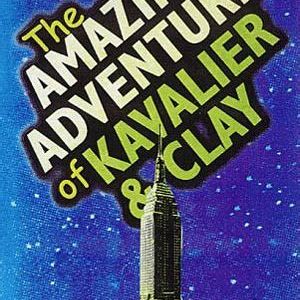
So where does Long Island take me? Well, the main character Eilis leaves Brooklyn to return home to Ireland, and so this catapulted me to Michael Chabon’s Kavalier and Clay, which is also set in New York- but I read it before I started my blog. One of the images that stayed with me from Chabon’s book is of the young girls jumping to their deaths from the burning building of the Triangle Shirtwaister factory.

There was industrial bastardry on the other side of the globe in the early twentieth century too, and Annie Besant (pronounced to rhyme with ‘pleasant’) agitated on behalf of the London matchgirls working for Bryant and May. But this was just part of her amazing, varied life, described by Michael Meyer in his book A Dirty Filthy Book (see my review here) which focuses on the obscenity trial that Annie Besant and Charles Bradlaugh faced over their re-publication of a sex-education book. Annie was later to distance herself from this book when she embraced Theosophy.

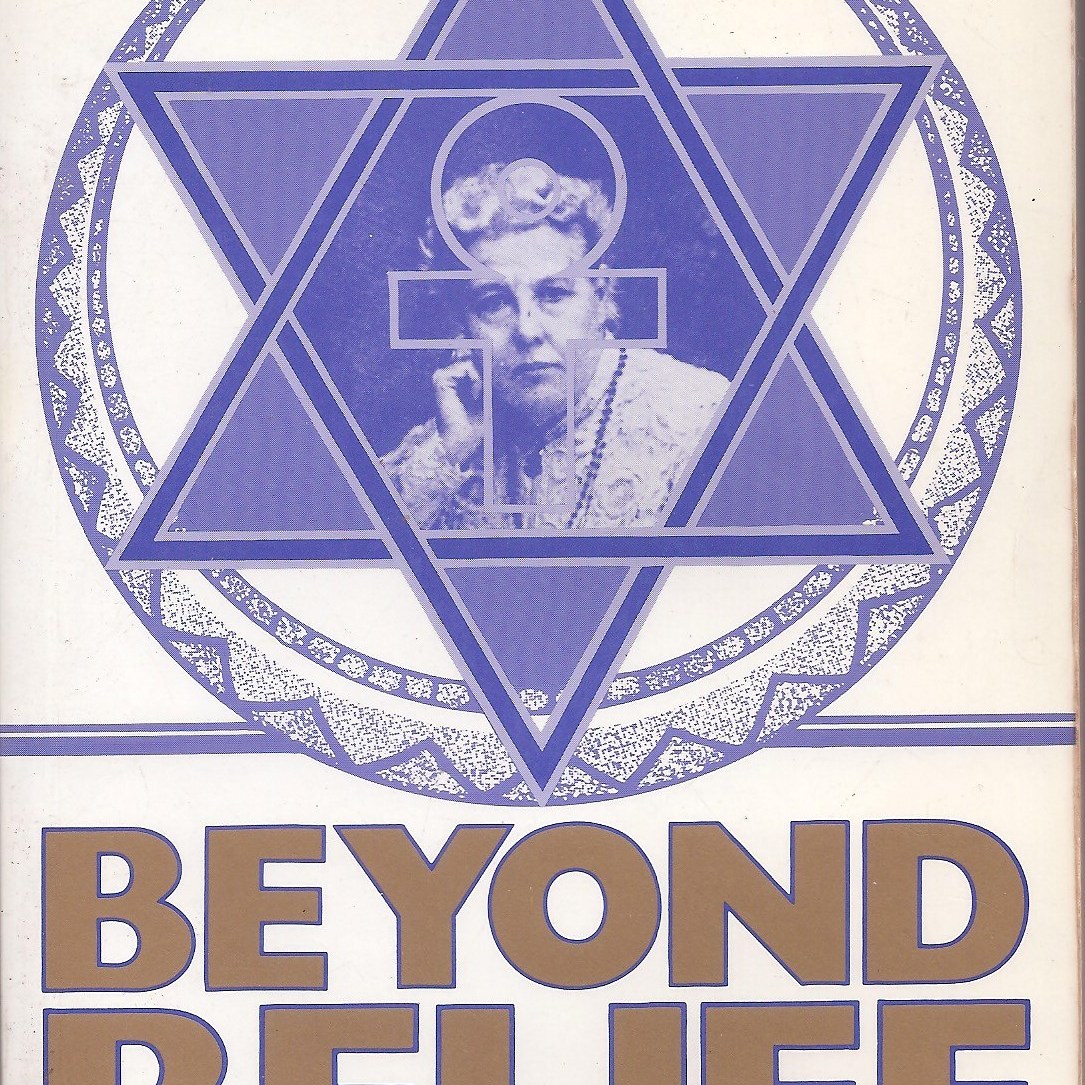
As an important figure in Theosophy, Annie Besant has a starring role in Jill Roe’s Beyond Belief: Theosophy in Australia 1879-1939 (see my review here), a 1986 book which I’m pleased to see has been republished as Searching for the Spirit: Theosophy in Australia 1879-1939.

Theosophy sparked the publication of a number of novels based on a belief in Lemuria- an Atlantis-like mega-continent encompassing the Himalayas, Madagascar, Tasmania, Greenland and Siberia before sinking into the sea because of volcanic activity. In these Lemurian novels, the centre of Australia was not desert, but instead an inland sea. Michael Cathcart talks about them in his book The Water Dreamers (my review here) .

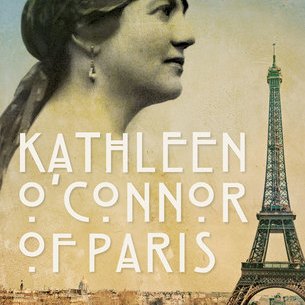
A man who dreamed of bringing water to Central Australia was C. Y. O’Connor, who committed suicide when the water in the Goldfields Pipeline did not arrive when it was expected that it would. His daughter Kathleen saw herself ‘of’ Paris, even though she was born and died in Australia, after a long sojourn in Paris. Amanda Curtin tells her story in Kathleen O’Connor of Paris (my review here)

Poum and Alexandre: A Paris Memoir is Catherine de Saint Phalle’s memoir of her parents. The book is written in three parts: ‘Poum’ dealing with her mother Marie-Antoinette, nicknamed ‘Poum’ because of a childish game in bouncing down stair ‘poum, poum, poum’; ‘Alexandre’ dealing with her father; and then a final short coda involving both parents. The author was raised in England, away from her parents, and when she rejoined them in Paris, she could barely speak French and was thrown back into dependence on her eccentric and rather irresponsible parents. My review is here.

So I guess that I’ve globe trotted a bit here: from New York, to Australia, and then over to France. Where did your Six Degrees take you?
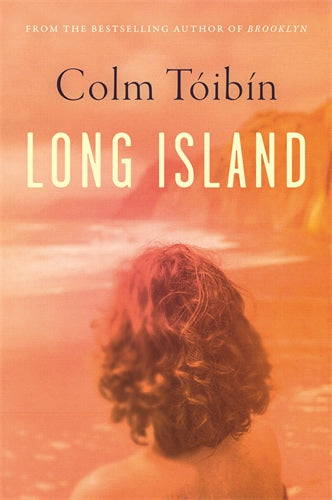
‘Long Island’ by Colm Toíbín

Spoilers below:

2024, 288 p.

Good grief. Have we become so Netflixed that we can´t have a definitive ending any more? Is everything written with an eye to the next installment in the series? In a video prepared for Oprah’s Book Club, Toíbín speaks of a writer’s pact with the reader not to spell out everything, but to allow the characters to have a life after the events of the book come to a close. Not this reader, Mr Toíbín. I felt cheated by the ending and as if I had been toyed with. I have read the ending several times, and I’m still no clearer on what happens.

I very much enjoyed Brooklyn, which Toíbín claims was not written with a second book in mind. Reading back on my own review, I obviously enjoyed it more than my book group ladies, but I think that I enjoyed it even more after seeing the movie, which left me in floods of tears and which was perhaps more explicit in the ending than the book was. With Long Island (rather oddly named, as most of the action does not occur there) we take up with Eilis more than twenty years after Brooklyn. She returned to marry Tony, and now has two adolescent children. On the surface, everything is just as Brooklyn presaged: the family did build four adjacent houses and the brothers and parents live close to each other in a cul-de-sac in Lindenhurst on Long Island; Tony is still a plumber and Eilis has not returned to Ireland since she left so abruptly, leaving behind the other option of marriage with Jim Farrell. Then a man turns up on her doorstep – no spoiler here: it’s in the blurb- furious that Tony has impregnated his wife and insisting that he will take no responsibility for the child, which he will leave on her doorstep.

I wasn’t completely convinced by Eilis’ response. She is furious that Tony has brought this problem into her life, and insists that she will not allow the baby under her roof. I can certainly understand that, but it seems odd to me that she does not seem to feel hurt, or betrayed. I acknowledge that, with age, the desire for continuity and comfort can quash flashes of wounded pride or anger (although Eilis is not that old). Is it because she has always felt superior to Tony? Is that why her response is more “You stupid boy” rather than one of hurt at Tony’s disloyalty and faithlessness?

She certainly feels betrayed by the rest of the family. She thinks that they don’t know, but she soon discovers that they do, and that Tony and his mother have cooked up a scheme by which her mother-in-law will care for the child in the house next door, and that Tony will eventually adopt it. The Italian family ‘closeness’ has become suffocating, and there is no room here for her own opinions and preferences. She has not, for some time, attended the regular Sunday lunches where the conversation level grows higher and higher, and where she is firmly put down when expressing thoughts contrary to the family. And so she packs up and leaves for Ireland, ostensibly to attend her mother’s 80th birthday, which her children will come across later to attend.

In a repetition of Brooklyn, she arrives back in Enniscorthy, marked out by her Americanness and her glamour. Enniscorthy is just as suffocating as Long Island is, abounding in intrusive eyes and vicious tongues, and with everyone knowing everyone else’s business, . Her mother is as manipulative and dreary as she ever was, living in a house barely touched by the second half of the 20th century without refrigeration or laundry appliances. Jim Farrell, who had been blindsided by Eilis’ sudden departure twenty years earlier, has not married although he is in a private relationship with Nancy, Eilis’ erstwhile best friend. Nancy and Jim are moving towards making their relationship publicly know… and their Eilis arrives.

And so, as a reader you find yourself back where you were while reading Brooklyn: aware that someone is going to get badly hurt, able to see and sympathize with all sides, and despairing that it is all such a bloody mess. This is what I loved most about Brooklyn, and it’s what I loved about Long Island as well, but the lack of definition in the ending made me feel that the book is trafficking in this emotional turmoil.

How would I rate it? I just relaxed into picking up on Eilis’ life once more, and Toíbín has drawn his characters so clearly that you feel as if you are watching a real life. I was both discomfited and intrigued by the situation in which they had all found themselves and how it was going to be resolved. But- oh- the ending! Toíbín would go down in my estimation if I thought that he left it just so that he could squeeze out a third novel- I think, I trust, that he is a better writer than that. I know that real life doesn’t have definitive endings either (beyond the ultimate definitive ending) but the scope (responsibility?) of the author to create an ending is part of the pact with a reader, too. Otherwise, it’s just soap opera.

My rating: Who knows. 9 for the enjoyment? Or 6 for the ending??

Sourced from: Yarra Plenty Regional Library

Read because: I loved Brooklyn so much.

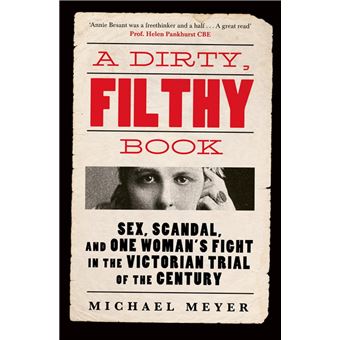
‘A Dirty, Filthy Book’ by Michael Meyer

2024, 331 pages & notes

Some people seem to live not just one life, but many. Annie Besant was one such woman who went from parson’s wife, to public speaker and publisher, social worker and activist, to university student and Theosophist. Michael Meyer’s book, subtitled ‘Sex, Scandal and One Woman’s Fight in the Victorian Trial of the Century’ focuses particularly on the court case in which she and her colleague Charles Bradlaugh were charged with “unlawfully wickedly knowing wilfully and designedly” printing and publishing “a certain indecent lewd filthy bawdy and obscene book called Fruits of Philosophy” which would bring the subjects of Queen Victoria into “a state of wickedness lewdness debauchery and immorality”, as well as offending against the peace and dignity of the Queen. (p. 140)

Neither of the accused had actually written the book, which was quite an old text written forty years earlier by an American doctor, Charles Knowlton. In fact, Charles Bradlaugh didn’t think much of the book at all, but it was more the principle of making knowledge available at a cheap price (sixpence) that drove Annie and Charles to defend publishing the book in court. They wanted a high profile case, and they got it. Conducted in Westminster Hall (before it burnt down), it was a jury trial held before the Lord Chief Justice Sir Alexander Cockburn. Already an accomplished public speaker, albeit completely untrained in the law, Annie conducted her own defence, and from the extracts published in the newspapers in this widely-discussed trial, she did a damned good job of it too.

She, even more than her co-accused Charles Bradlaugh, had a lot to lose. She had married a clergyman, Rev. Frank Besant at the age of 18, without actually loving her husband but hoping, as a devout Christian, that the role of minister’s wife would be a way through which she could serve the Church and her fellow man. It was an unhappy marriage from the start. She had two children, a son Digby and daughter Mabel, and managed, through her brother, to procure a separation from her husband but he kept custody of her son, and refused a divorce. If found guilty, Annie would lose custody of her daughter as well.

She had lost her faith during her marriage, and after her separation became heavily involved in the National Secularist Society, where she met Charles Bradlaugh. They were very close, although Meyer does not explore whether their relationship was sexual or not. Both were still married, and as public figures, could not expose themselves to scandal. She wrote numerous articles for the National Reformer weekly newspaper published by the NSS and was an accomplished public speaker. It was this experience of debate and public discourse that stood her in good stead in the courtroom at Westminster Hall, but did not shelter her from the fallout of the case. Charles Bradlaugh went on to have a successful political career, being repeatedly re-elected and repeatedly refused being able to take his seat in Parliament because, as a secularist and atheist, he refused to swear on the Bible. As their lives split off in different directions, the obloquy of her atheism prevented her from being able to graduate from the University of London, once they accepted female students, even though she was clearly a brilliant student. She threw herself into social activism in the East End, particularly in leading the Match Girls strike about working conditions and the use of white phosphorous in making lucifer matches at Bryant and May. Over her life, she had been a devout Christian, a strident atheist, and eventually she moved into Theosophy, to which she devoted the latter part of her life. She abjured her earlier publications, and especially the book about birth control methods that she wrote after the court case which was even more explicit than Fruits of Philosophy. It really is as if she had several careers.

In the book, there are parallels drawn between Besant and two other women. The first of these is circus performer Zazel (Rossa Richter) who drew fame for being shot out of cannon, night after night. The second is Queen Victoria herself, who had a much happier experience of married life than Annie Besant did, and whose politics were diametrically opposed. Queen Victoria was not particularly aware of Besant, but she did record her disapproval of Bradlaugh in her diaries.

When I first started reading this book, I enjoyed its breezy tone and discursive narrative but I soon tired of it. In trying to contextualize Besant and her various campaigns, he draws on newspapers to illustrate what else was occurring at the time, and in the end it became a distracting lack of attention- as if he couldn’t bear to let a juicy tidbit pass, without reporting it. I enjoyed his reporting of the court case itself, but the lack of discipline elsewhere in the book detracted from his analysis of the case and its aftermath. Like the court case itself, it all felt a bit tabloid.

The author is a travel writer, which did not surprise me. He is also Professor of English at the University of Pittsburgh, which did.

Nonetheless, it’s a really interesting story and, despite his digressions, Meyer tells it in an engaging and entertaining style. I just wish that there had been a little less ‘colour’ and more analysis.

My rating: 7.5/10

Read because: I heard a podcast about the book

Sourced from: Yarra Plenty Regional Library

I hear with my little ear: Podcasts 1-7 September 2024

The Rest is History Custer v Crazy Horse: The Winning of the West (Part 2) After the Civil War drew to a close, Custer was sent to Texas, which had never actually been conquered by the North and where there was fear of the Mexican War. This wasn’t what Custer wanted. He wanted either to be in New York and be a tycoon, or failing that, to go to Mexico to fight Maximilian but his next deployment was to Kansas instead with the 7th Company. There he got involved with the political campaign of the new anti-Reconstruction American president, Andrew Johnson which put him offside with other Republicans. The troops in Kansas were largely untrained, rough and very multicultural. He made an enemy of Frederick Benteen, who I gather is going to pop up in this story again. There was a looming conflict with the Cheyenne (Plains Indians) who had come down from the south and feared the coming of the railway. Custer, William Tecumseh Sherman and Scott Hancock were sent to crack down on them. There were some familiar names among the soldiers including Henry Morton Stanley (who later met Livingstone), and Wild Bill Hickock. Much violence on both sides ensued, especially committed by the Dog Soldiers, a group associated with but not part of the Cheyenne. The Cheyenne agreed to go onto reservations, but the Dog Soldiers continued fighting. Winter had come, when hostilities generally ceased, but Custer led a raid on a village at night, crushing the men and taking the women and children as hostages. The 1869 campaign finished when the Dog Soldiers were defeated. President Grant, thinking that the wars were over handed the reservations over to the missionaries, in what looks like a similar Protection policy to that tried in Australia too.

The Shadows of Utopia Cambodia After Angkor (Part 1) This episode covers the time roughly 1431 to 1800 CE. The date 1431 is perhaps not an accurate starting point, as the Angkor kingdom transformed rather than collapsed. The royal family shifted to Phnom Penh, where the confluence of the Mekong and Ton Le Sap gave access to trade, and changed the emphasis from rice-growing to trade. In around 1371 there was the rise of the Thai kingdoms (Siam), originally from China. The Thai and Kymer kingdoms blended together culturally, with movement of people, ideas and rulers – although that didn’t stop the frequent wars between them. During the 16th century Cambodians had their first contact with the outside, with the visits of Portuguese traders. In the Siamese-Cambodian war in 1591-4 the Cambodians sought help from Spanish and Portuguese mercenaries, which led to the introduction of western military techniques and technology. Longvek, which had been the capital of the Kingdom of Cambodia from 1529 to 1594 was overrun and 90,000 Kymer soldiers were captured. Meanwhile, to the east Vietnam was becoming more powerful from the middle 1600s, after shaking off the power of China. The Vietnamese kingdom started moving south, defeating the Islamic Champa in 1471, a conflict that sputtered on for decades, leading to the eventual flight of the Cham to Cambodia in 1692. The Vietnamese expanded into Cambodia, taking over the Mekong Delta which cut off sea access. Cambodia was caught between two powerful competing powers: Siam and Vietnam. The status of the Royal Family had declined, the provinces remained barter economies, with subsistence farming and no road network. There was growing resentment towards Vietnam, encapsulated by the rather lurid and gory folk tale ‘The Master’s Tea’ where 3 Cambodian men are buried, with only their heads showing above the dirt, and the Vietnamese lights a kettle on the tripod of their heads and forbids them to move lest they spill the master’s tea. By 1810 both Siam and Vietnam were similar in size, and both saw Cambodia as a weak and dependent child.By 1840 Cambodia ceased to exist when it was administered by Vietnam.

Emperors of Rome Episode CCXXV – The Exile of Cicero (The Catiline Conspiracy VI) Now that Catiline was dead, Cicero promoted himself as being the ‘Warrior of the Senate’ and the saviour of the Empire. But he’d made lots of enemies, and they weren’t about to forget the execution of senators that he had ordered, and so the Senate refused to allow him to make a farewell speech when his consulship came to an end. Instead of going off to be a governor somewhere, which is what usually happened after being consul, he bought a big house on the Palantine Hill- it must have been big because it had previously belonged to Crassus. He tried to get historians to write up the story of his consulship as history, but they all refused; then he tried to get it written up as an epic by poets, but they refused. In the end, he had to do it himself. Catiline might be gone, but the populares continued, and now Clodius Pulcher took up their cause. Clodius was Tribune of the Plebs, and close to Julius Caesar. In 58 BCE Cicero was summoned to face trial in the Senate and, realizing that neither Caesar nor Pompey were about to come to his aid, he fled. He wasn’t actually exiled at this point- that came later. Clodius confiscated his house, demolished it, and gave the land for a temple. In the end, the exile only lasted 15 months when a new Tribune came to power, and Pompey finally supported him. In 57BCE Cicero returned to Italy, not ever really acknowledging that the Republic would need to change.

History Extra An Audacious Escape from Slavery. This episode features Ilyon Woo, the author of Master Slave Husband Wife: An Epic Journey from Slavery to Freedom which tells the story of Ellen and William Craft, a married couple who escaped enslavement in 1848. They both held rather anomalous positions as slaves, as William was an independent craftsman who could earn his own money, and Ellen had good seamstress skills. Ellen disguised herself as an ill male slaveholder and her husband acted as her (his?) manservant. Even once they reached the northern states, they could still be recaptured and sent back to enslavement. After a journey of over 1000 km, they became speakers in the abolition cause, and moved to the UK where they were feted in anti-slavery circles.

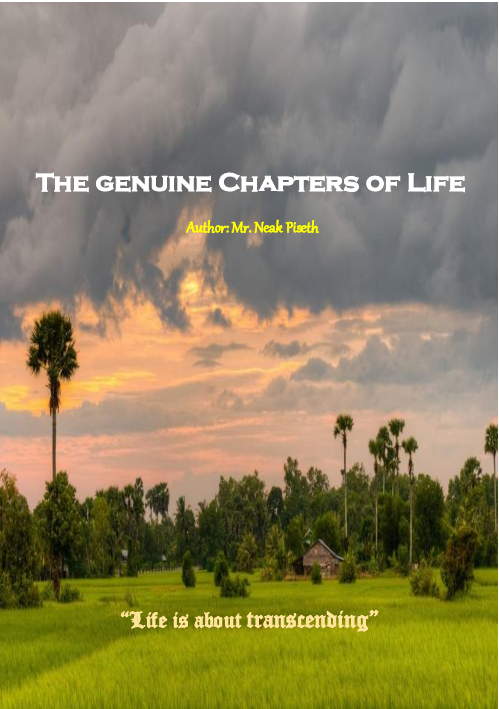
‘The Genuine Chapters of Life’ by Neak Piseth

2016, 116 p.

I’m not sure how I stumbled on this e-book which you can access through academia.edu or through issu. In fact, I’m not really quite sure what it is: on one level it is a memoir of a young man growing up in rural poverty in the 1990s to attain his dream of high education at the Royal University of Phnom Penh. But at another level, particularly near the end, it seems to become a scholarship application document where he outlines his vision for changes that he would make to his society were he successful in studying overseas. It must have worked, because he received a scholarship to pursue his master’s degree in Non-Formal Education at Chulalongkorn University in Thailand in 2019, continuing on as a PhD candidate from 2022. He has been working as an English Lecturer and as a lecturer in the Faculty of Education at the Royal University of Phnom Penh and has a number of publications under his belt.

His grandparents died under the Pol Pot regime and he was born to poor parents in 1994 with, at that stage, only one older sister. His father, an illiterate orphan, had inherited a one-hectare plantation in a village, and the family lived in a crumbling cottage while his father worked as a motor taxi driver in the city. In 1999 they received a contract to grow rubber trees on their plantation, but this necessitated moving to another dilapidated thatched, earth cottage closer to the trees. After the contract expired, they used the money they had earned to move back into the village where the author and his sister began attending school. They walked the three kilometres to school, and had to help after school looking after their three cows, while their parents worked in a small business, arriving home at midnight. In 2003 his mother had another daughter, who was often sick, and his father had to stop working to assist his mother at home. This meant that, in order to keep attending school, the author and his sister had to sell banana cakes after school to support the family. The family remained in poverty, especially after an accident on the rubber plantation resulted in his father’s blindness. Despite his father’s violence against his mother, the author deeply respects his father, and craves his approval.

He gives a fairly damning view of education in Cambodia. Teachers often took on private students as tutors in order to get additional money, which meant that they often did not teach the full curriculum at school, or charged for teaching and examination materials as a way of gaining extra students. The tutored students often received passing grades, to encourage their parents to continuing paying out for tutoring. Some students’ parents bribed the teachers, and many teachers arrived late.

Despite these difficulties, he was a very conscientious student, spending hours at night rote-memorizing his work. He really struggled to learn English- and indeed, this text is clearly written by a second-language learner- and he lacked confidence to speak in English, even when he knew the answers. By sheer hard work, and the good and well-earned fortune of a scholarship, he was able to attend Western International School in Phnom Penh. He lived in a small, dark room, continuing to rote-learn as much as he could. By the end of the book, his hard work is paying off, despite the discrimination against poor kids from the provinces.

I hadn’t expected to encounter Jane Austen and Bill Gate (i.e. Gates) in this book, but each chapter closes with an inspirational quote that he has gleaned as part of his studies. Beyond this, though, I’m really glad that I read this book while I’m here in Phnom Penh. I’ve found myself looking at the school children walking to their schools, and tuk-tuk drivers who are possibly working for their families in the provinces, with new eyes.

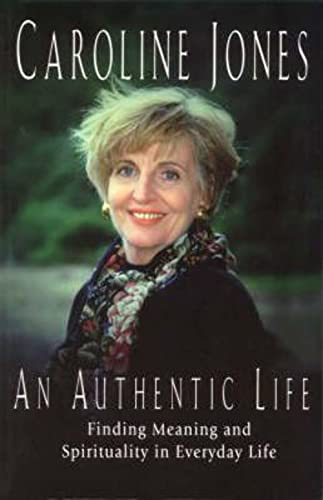
‘An Authentic Life: Finding Meaning and Spirituality in Everyday Life’ by Caroline Jones

1998, 307 pages

Could there possibly be a worse way to read this book than as a selection for a book group? I doubt it. It has to be read by a certain date; you have an implicit obligation to at least attempt it as a ‘good’ bookgroup member; it’s a book that someone else has chosen in their time, and not yours.

And in my case, it’s by Caroline Jones to whom I developed a deep antipathy after reading her book Through a Glass Darkly (you can see my snarky review here). I can hear her rounded vowels and caramel tones in my head, see her slightly tilted head, and so bloody earnest. She annoys me so much.

It’s odd, because under different circumstances (and that’s the crucial thing) I would probably quite enjoy this book. I am drawn to a spiritual life; my identity as a Unitarian Universalist is important to me; in fact, I spend Sunday mornings a couple of times a month exploring exactly the things that she does in this book.

But that’s on my terms: I can ‘think myself’ into a spiritual mindset before even embarking on thinking about things of the spirit; it’s a commitment that I have made with myself, by myself. It’s not a reading assignment I have to have completed by a certain date, like homework. All of this book feels like hard work. It was because I knew that 300 pages with Caroline was going to be so tedious that I actually started reading the book a fortnight before our bookgroup meeting, instead of my usual practice of starting three nights before the meeting and finishing the book at some ungodly hour on the Thursday morning before the meeting on Thursday afternoon. I knew that one chapter at a time of this book would be as much as I could handle, and I was right. I feel as if I have been harangued and bible-bashed for 300 pages.

So, wrong book, wrong author, wrong mode of reading it.

My rating: 4/10

Read because: CAE bookgroup choice.

I hear with my little ear: Podcasts 24-31 August

The Rest is History Custer vs. Crazy Horse: Civil War (Part 1) I have never been into ‘Cowboys and Indians’. I never watched them on TV as a child, and do not remember them at the movies. And so, I didn’t know whether I really wanted to embark on this series, but I did anyway. The podcast starts in 1876 at the Battle of Little Big Horn, which was seen as the last moment of the old world of the American South. News of the battle reached the east coast on the very day of the centenary of Independence Day. Custer is often seen as a romantic figure, redolent of the Old South, but he actually fought for the Union. He was born in Ohio to a Methodist family and was politically aligned more with the Democrats than the new Republican party. He liked dressing flamboyantly, had a high sex drive, and was more into ‘japes’ than military strategy at the West Point academy where he accrued 726 demerits. When the Civil War was declared, most of his friends went off to fight in the south, but Custer stayed. He finally graduated as the most junior officer of the US army, was by 1863 was promoted to brigadier-general when he was still 23. Was he a good soldier? He certainly was willing to take a gamble, and he had the killer instinct. He married Libby Bacon, the daughter of a judge who initially refused his permission. He as appointed to serve under the modern and unheroic Ulysses Grant, Sherman and Sheridan. He was there at Appomattox, and in fact his wife had a walk-on role when she was given the surrender papers.

Guardian Long Reads My Family and Other Nazis This was actually written as an edited version of the Krzysztof Michalski Memorial Lecture, given by Martin Pollack at the Institute for Human Sciences in Vienna in June 2024. It is beautifully read by James Faulkner. Pollack was born in 1944 into a German Austrian family, which always saw themselves as more German than Australian. His whole family was strongly anti-Slav, seeing them as a demographic threat, and strongly anti-Semitic. The author was in his late 50’s when he began researching his family history, when he discovered that he had a different father than his sisters did. His mother had embarked on an extramarital affair with his father, who had freely joined the SS Gestapo (as, indeed, all of the author’s extended family had done). After a hunting accident his father was sent to Poland, where he was involved in putting down the Warsaw uprising, then on to Slovakia. His mother’s marriage had broken up, and so his parents married. Post war, his father escaped to Europe and he planned to take Martin and his mother to Paraguay, but he was shot by the guard taking him over the mountain pass in expectations of finding the Nazi gold that ex-Nazis were suspected of hiding. His mother then remarried her first husband for a second time. This is beautifully written, with the narrative shuttling back and forth- well worth listening to.

In the Shadows of Utopia Interview 1: Tom Chandler In this episode Lachlan interviews Australian graphic designer Tom Chandler, who has been involved in the Virtual Angkor project. This fantastic website has recreated Angkor at its peak – a city thought to be the size of Los Angeles although not as dense- moving away from the temple-centric approach to depict Angkor as a living city. They have relied heavily on the fragments of observation from the Chinese envoy, Zhou Daguan, who visited Angkor in 1296–97, supplementing it with sounds and movement in a type of “home movie” of the ancient city. The soundscape on the site is just so effective in bringing it to life. Tom Chandler is the son of Cambodia expert David Chandler, and he had no intention of following in his father’s footsteps, but after a career doing many other things, he has found himself contributing to this project. Go to the Virtual Angkor site- it’s fantastic.

The site is at https://www.virtualangkor.com/

Emperors of Rome Podcast Episode CCXXIII – The Championship of the Oppressed (The Catiline Conspiracy IV) Catiline arrived in Florence with the fasces, the symbol of authority, thus setting himself up as emperor (i.e. “I didn’t lose that election”. Sound familiar?) He was declared an enemy of the state, and Cicero was given emergency powers for a crisis and he made sure to use them. He tried to get the Gallic tribe the Allobroges to fight alongside him, but they doublecrossed him by going to Cicero and reporting Catiline’s approaches to them. Cicero gave another speech to the Senate and the people, then arrested the magistrates and co-conspirators who were still in Rome. A very rushed trial was held with the Senate, already convinced of their guilt, to decide between mercy or death. Caesar argued for life imprisonment and leniency, while Cato drew a hard line, arguing for old-fashioned Roman values. The conspirators were executed that same day. Meanwhile, Catiline up north with 3000 troops, fought with the Roman army but was slain fighting to the end. to be honest, both Cicero AND Catiline had abused their authority, and the underlying social problems were still unsolved. And to get to this point, Cicero had made enemies.

History Extra The Abbasid caliphate: everything you wanted to know The heyday of the Abbasid caliphate was between 750 and 950 AD, although they continued to play a political role until 1258 and the Mongol siege of Baghdad. (It just occurred to me that this was at the same time as the Angkor empire) At its peak their influence stretched from Tunisia, through the Khans and into Pakistan. Their capital was in Baghdad. They were not direct descendants of Muhammad, and they challenged the ruling Umayyad dynasty to take power and institute the ‘Golden Age of Islam’. The Abbasid court was very hierarchical, with palaces, uniforms and seclusion of women. The caliphate was divided into provinces with governors and troops, similar to the system used by the Roman Empire. The Byzantines, who took up the mantle of the Roman Empire were their most hostile and intellectual challenge, and after a period of consolidation in the 900s, the Abbasid caliphate began to fragment, with power flowing to Iran and Egypt. It was a multicultural society, happy to import textiles, knowledge (e.g. numbers) and science from other cultures. They were tolerant of Jews and Christians, as long as they accepted their secondary status. With the breakdown of the irrigation system, the government was unable to raise sufficient taxation, and so the 10th century elites moved to Egypt. With the Mongol capture of Baghdad in 1258, the last Abassid caliph was executed and the caliphate came to an end.

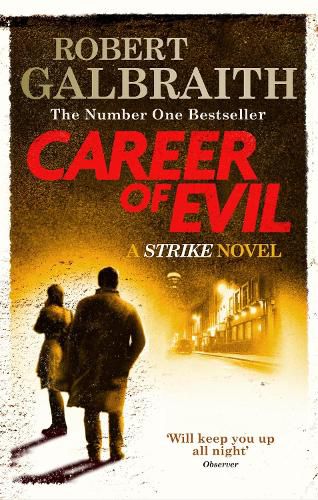
‘Career of Evil’ by Robert Galbraith

2016, 592 p.

A post that has been sitting in my ‘Drafts’ folder for quite a while….

I’ve been rather underwhelmed by the last few books that I have read recently, so I decided that I’d go for something that would draw me in instantly and engross me for a while. And even though I’m not a great detective-fiction fan, what better than the next Robert Galbraith novel in the Cormoran Strike series? So I purchased the third book Career of Evil as an e-book (yes, purchased!) and within five pages I was completely hooked. After all, how could you ignore a woman’s leg, carved off at the knee, arriving in the post onto the desk of Robin Ellacott, Cormoran’s off-sider. Although addressed to Robin, Cormoran is convinced that it is a way to get at him, and he has a short-list of four possible suspects. Two are men that he met during his career in the Special Investigations Branch of the army; another is a gangster against whom Cormoran had testified in the past; and the final, more personal one, is his own step-father, whom he blames for his mother’s death. Of course, because private investigators always need to be in conflict with the police hierarchy, Cormoran’s theories are dismissed, even when the number of gruesome murders and mutilations mount up. So he and Robin embark on surveillance and investigation of their own.

It is a rather well-worn trope that the investigators -especially young female investigators- themselves become the target of the suspect- after all, how many times can Nicki in Prime Suspect be threatened, blackmailed and kidnapped?- and Robin herself is unwittingly in peril as the unnamed murderer begins trailing her, dubbing her “The Secretary”, and planning her murder as another way of bringing Cormoran undone. The murderer is a revolting, sick man. The narrative is interspersed with thankfully short chapters where he gloats over the body parts he has hacked from his victims and where he reveals his repugnance for ‘It’, his partner, who is a foil for his sordid activities. Meanwhile, the Unresolved Sexual Tension between Cormoran and Robin is still unresolved, as Robin’s wedding day to the rather wet Matthew draws closer.

This book is rather dark and graphic, with its mutilations and perversions and I found myself feeling quite sickened by the short chapters from the murderer’s point of view, and glad to turn the page and leave them behind. I am wearying a little of hearing about Comoran’s prosthetic leg and the pain in his stump, although in this case, these descriptions had a plot purpose. And one of the delights of Unresolved Sexual Tension is the fact that it is unresolved, although we are left with quite an emotional cliff-hanger.

I wanted something that would draw me in, and this book suited perfectly. As it turned out, I ended up with COVID, which gave me an excuse to sit and just read. I found myself consciously choosing not to read it before falling asleep because, in spite of feeling exhausted, I knew that I’d keep reading just one more chapter when I really wanted to go to sleep. Rowling (who writes as Robert Galbraith) is such a skilled story-teller that there’s no faffing about for fifty pages while you decide whether you want to make the investment of reading nearly 600 pages. One chapter and I’m in, and relishing the opportunity to return to the next book in the series.

My rating: 9/10

Read because: I wanted something engrossing

Sourced from: purchased Kobo e-book.

Off to Cambodia again

Grand-daughters are growing up, so I’m off to Cambodia again to make sure they don’t forget me! You can follow me at https://landofincreasingsunshine.wordpress.com/

Six degrees of separation: From ‘After Story’ to…

It’s the first Saturday of the month so that means that it’s Six Degrees of Separation day. This meme, hosted by Kate at Books Are My Favourite and Best involves her choosing a starting book, then you linking the titles or themes of six other books. The starting book this month is Larissa Behrendt’s After Story which, true to form, I haven’t read. I’m not feeling particularly inspired, so I’m going to take the easy way out by linking six books that each have the word ‘after’ in the title.

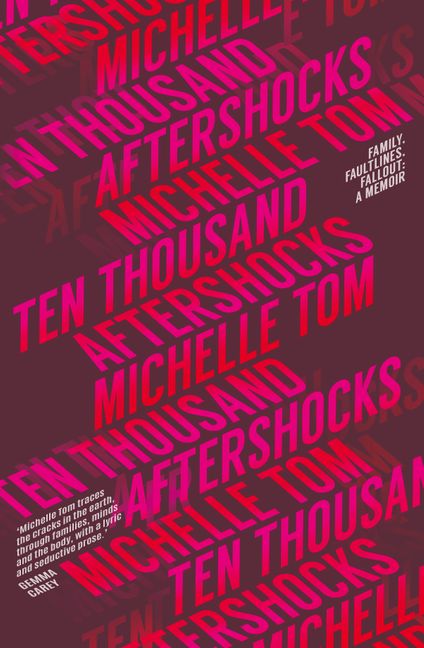
Ten Thousand Aftershocks by Michelle Tom is about the 2011 Christchurch earthquake. Tom uses the five stages of an earthquake as the organizing structure for her memoir of family trauma, but only the fourth stage deals directly with 22 February 2011. Actually, I wasn’t particularly impressed with this book, which was a series of splintered vignettes, and it almost turned me off reading memoirs. Almost, but not quite. You can read my rather snarky review here.

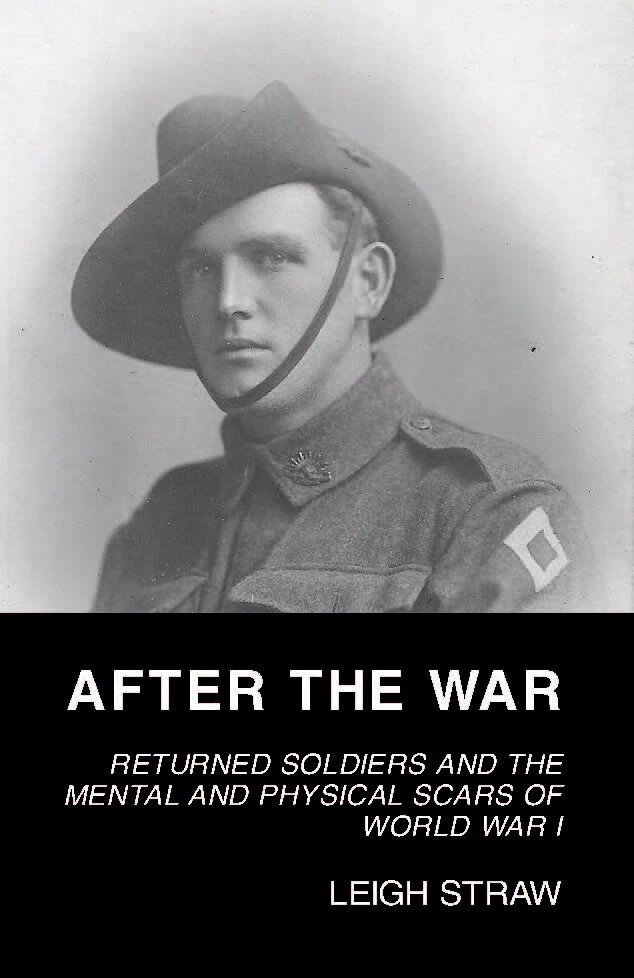
Leigh Straw’s After the War uses a family history connection to explore the mental and physical scars of World War I soldiers on their return to Australia. A newspaper report of a murder committed in 1929 by a man who shared the same name as her husband inspires her to explore the stories of fifteen men who enlisted in the war from Western Australia. Her book takes us through enlistment, fighting, and their return to Western Australia, with a particular focus on the difficulties they faced when returning to their families in a society limping through indifferent economic conditions towards the Depression. This is an easy book to read, despite its difficult themes. It is an academic text, but with its grounding in the lived experience of men and their families, it wears theory and argument lightly. My review is here.

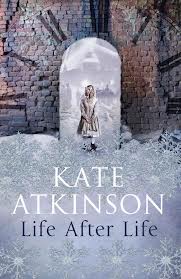
Kate Atkinson is one of my favourite writers, but I had my doubts about Life after Life. It ticked all my boxes as far as books are concerned: time travel (my guilty pleasure) and London during the Blitz. The book focuses on Ursula, who lives multiple lives, each marked by the falling of snow before the next life begins. I wasn’t convinced by the opening scenario, and I didn’t feel that the character was developed particularly well. I think that I saw a television series based on this book, and I enjoyed it much more than I did the book (which is unusual for me- it’s usually the other way around). My review is here.

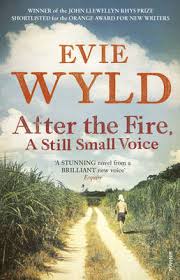
What a bad-tempered lot of reviews I have here! Evie Wyld’s After the Fire, a Small Still Voice was a very assured debut novel, but with an alternating story line between two men set 40 years apart, I found it too easy to put down. Both men are sent to war – the father to Korea, the father to Vietnam- and both men return damaged. They are both largely unreachable, encasing themselves in a masculine armour and impelled by a restlessness that deflects any attempts by others to reach the softer part of them. Here’s my review.

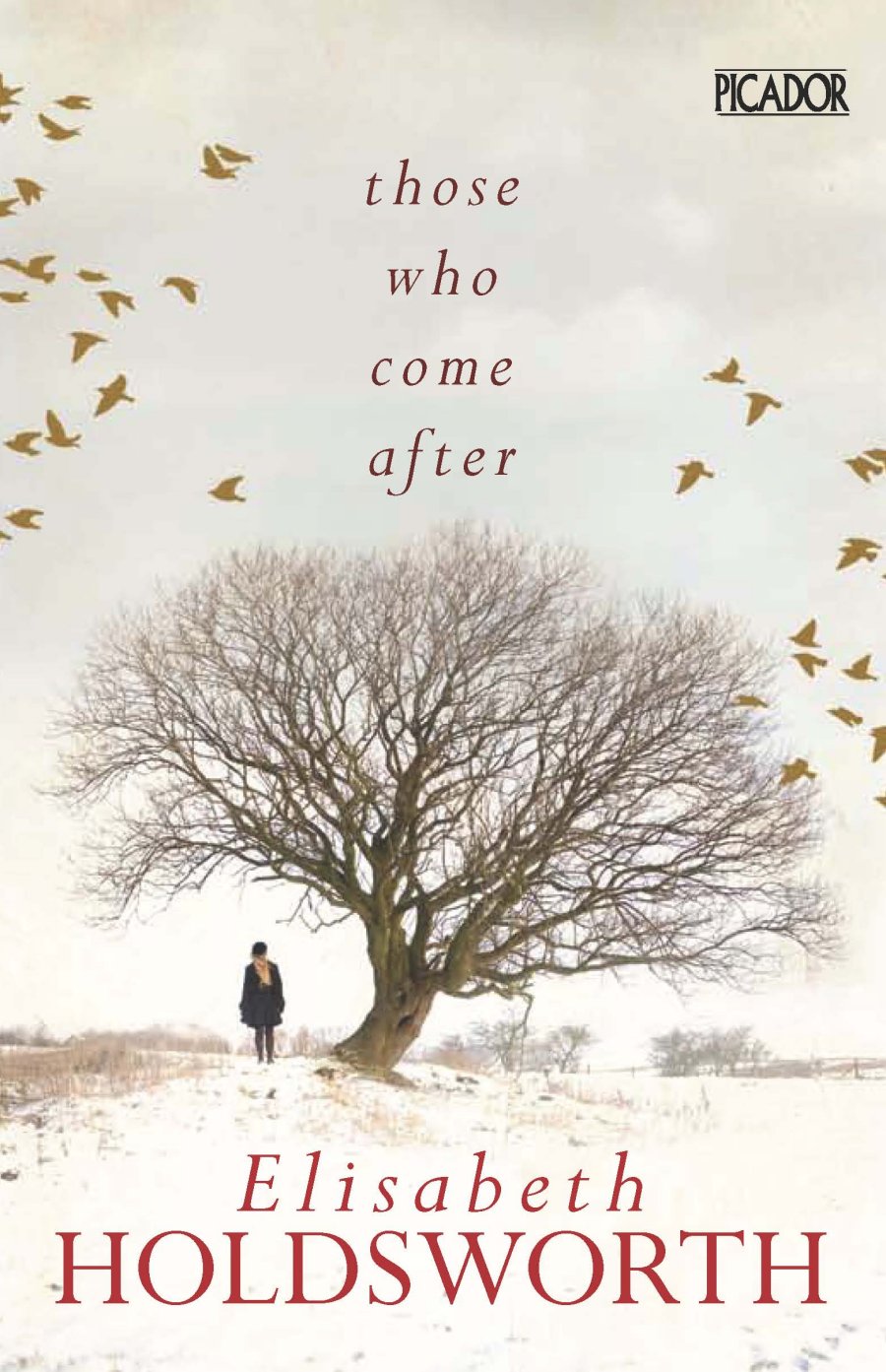
Did Elizabeth Holdsworth’s book Those Who Come After fare any better with me? I read this book largely on the strength of Holdsworth’s Calibre Prize winning essay in the Australian Book Review. It was a powerful read that combined history, memoir and reflection as a middle-aged, Dutch-born, now Australian narrator returned to her childhood home in Walcheren, a flat island sheltered from the sea by a network of dykes off the coast of Netherlands. But on reading the book, it seemed as if I was reading the essay again, except in a longer form. Here was the child, the old aristocratic family, the Jewish mother, the dykes, the flooding again, but now intertwined with a longer travel narrative and a migrant story as well. It was fuller, but somehow seemed emptier. My review is here.

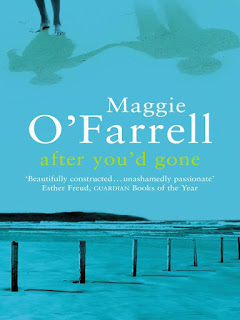
I read my final ‘after’ book, After You’d Gone by Maggie O’Farrell before I started writing this blog. Like many of these other books that I’d grumbled about here, there are shifts in narrator and tense and I couldn’t work out if the author was sloppy and undisciplined, or very good. By the end I plumped for the latter and even though it teetered on the edge of Mills and Boon, the quality of the writing anchored it.

What a lot of ill-tempered reviews! Perhaps I should avoid any book with ‘after’ in the title in future. If you’ve read any of these books, hopefully you enjoyed them more than I seem to have!