Author Archives: residentjudge

This Month in Port Phillip 1842: March 1842

Another month-long summary, in a vain attempt to catch up. I think I’ve been too ambitious with weekly summaries and unless I find myself with too much spare time, I think my summaries will be monthly from here on.

The mad boy in the watchhouse

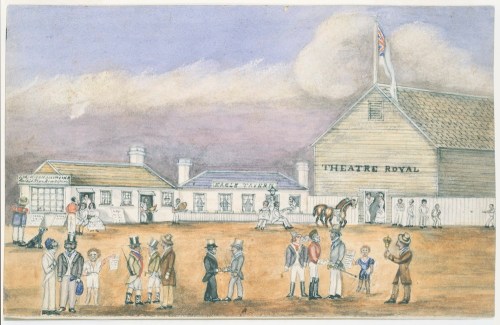
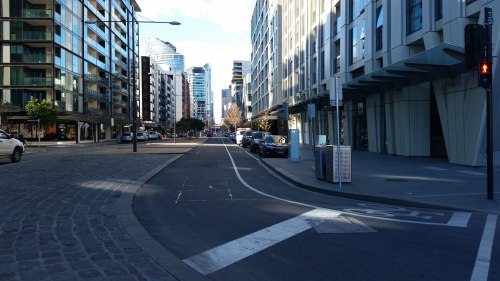
You’ll remember that at the end of February we left the young editor of the Port Phillip Gazette, George Arden, cooling his heels in the Eastern Watchhouse, situated on the south-west corner of what is now Exhibition Street and Little Collins Street.  He had been sentenced to twelve months jail and a £300 fine for an article he wrote criticizing Judge Willis. Perhaps a comparable analogy might be Julian Assange cooling his heels in the Ecuadorian Embasssy in London.  In both cases, the men remained highly visible, despite their incarceration, through their untrammelled access to media outlets (in Arden’s case, his own newspaper the Gazette ) and through the support of other ‘friendly’ media outlets. The Gazette made sure to publish every bit of pro-Arden and anti-Willis commentary that was written in the newspapers of adjoining colonies.

Well, Arden’s still in gaol throughout March too, but the unanimity in criticizing this trampling of the freedom of the press had broken down amongst the three newspapers in town.  The Port Phillip Gazette and the Port Phillip Herald continued to publish articles supporting Arden, while the Port Phillip Patriot, owned by John Fawkner and edited by William Kerr broke away from the other two papers and turned on Arden. Now he was “the mad boy in the Eastern Hill Watch House” who “continued to belch from the  distance upon all who have opposed his mad career, his semi-weekly collections of watch-house filth…” [PPP 7/3/42]

Reflecting this largely media-driven controversy, two opposing petitions were drawn up. The first, more properly called a ‘memorial’ was a statement of support addressed to Judge Willis, circulated and promoted by John Fawkner and the Port Phillip Patriot. According to them, it was launched on a Thursday night and quickly signed by

magistrates, clergymen, merchants, professional gentlemen and settlers from all parts of the country; the remainder comprises the great majority of the respectable shopkeepers and tradesmen in town (PPP 21/3/42)

It was presented by William Kerr to Judge Willis in his courthouse, and Willis most conveniently had an eloquent speech ready to give off the top of his head.  I must admit that I find it hard to imagine a group of people trooping into the Supreme Court today to deliver a signed statement of support from the populace- but who knows?

Meanwhile, on the other side, there was a petition being circulated by Judge Willis’ opponents, spurred by articles in the Port Phillip Gazette and Port Phillip Herald. This petition, addressed to Her Majesty was scorned by the Patriot as being a ‘hole-and-corner’ production, and in fact it was held back for months before it actually saw the light of day.

Add to this a civil case brought by Fawkner against the publisher of the Gazette for posters designating Fawkner as being under pecuniary obligation to Judge Willis [a claim, which we will see, is not as far-fetched as it might seem]. Oh happy days!

18C in 1842?

It was in the context of George Arden’s imprisonment that the Melbourne Debating Society conducted its March debate on the question “Ought there be any restriction on the publication of opinion?”. This nineteenth-century version of our 18C debate [i.e. about ‘freedom of speech’ or, as our Attorney General put it ‘the right to be a bigot’] drew on similar arguments to the ‘debate’ to which we’ve been subjected recently  [i.e. the right to free speech- although the Port Phillip arguments pertained to British rights guaranteed through the Magna Carta rather than Human Rights], and both ‘debates’ were equally rarified and self-absorbed.

Mr Smith then opened the question, referring to the benefits accompanying the investigation of public men and measures, by promulgating and analysing their probable tendency and results; he then alluded to Magna Charta [sic] in illustration of his opinions; his address insensibly fell into the unavoidable channel of the press, which he brought forward as the best and ablest corrective of public abuses (hear, hear) and deprecated the suppression of freedom of discussion and public opinion as one of the most serious invasions of constitutional right.  The press contained the greatest “expression of public opinion” and to that source, therefore, would the debate insensibly tend…. The strongest argument brought forward by the speaker was that adducable from the precedent afforded by the House of Commons, where not only the public measures and conduct of the highest officers are fearlessly canvassed, but even their private character and domestic relations aspersed. Yet there the public good promoted by the guardianship of the press, which if objectionable on one point, amply compensated by its public benefits of the other.  The speaker’s sentiments were well received and drew forth merited applause.

Actually, the question was a bit of a fizzer, because everyone agreed with the speaker and those speaking against the question “seemed little smitten with their side of the question”.   Unlike the 18C debate, the question kept coming back to freedom of the press in a political sense:

The members, as might have been anticipated, limited themselves to the sole consideration of the freedom of political discussion – one member certainly alluded to the promulgation of religious opinions, commenting on the various dangerous creeds existing in England, but like a bent bow the argument rebounded to its former political tendency.

No surprise, then, that when “at 10.30 the Chairman put the question to the vote, it was unanimously carried in the affirmative” [PPH 15/3/42]

A Day at the Races

The Port Phillip Gazette in particular was a hunting’ and racin’ paper, and so it expended many column inches to describing the March races which extended over several days. The first day seemed to be a rather rambunctious affair, exacerbated by the hot weather which in turn deterred the ‘gentle sex’ who might have been a moderating influence (or maybe not)

The first day was unhappily most ill-suited to the occasion- a hot wind set in at an early hour, and although deprived- owing to the lateness of the season, of much of the usual fierceness of our Australian Simoons [i.e. a dust-driven wind of the deserts of Arabia and North Africa], it could not but have a sensible-effect on the violent exertions of the horses, the excited motions of the men.  The heat and dust prevented the appearance of the usual number of carriages and of course of that fashionable attendance of ladies, to which we must admit the attracts of the fete owe half their grace.  At the hour for starting we may guess the numbers to have been at least three thousand, the mounted portion of which shewed appointments in horses and person of a decidedly good character.

The mounted portion, yes, but there was obviously a rabble there as well. Some of the earth-tethered individuals were soon the worse for wear and on being arrested, were tethered to a log in the sun.  Oliver Gourlay, riding past, expressed sympathy for the men shackled there, and ended up being arrested for his troubles. I’ve written about this in more detail previously. But I am interested in the sympathy that Port Phillip Gazette managed to muster for them, too (especially in the face of rather less sympathy extended to the indigenous prisoner Harlequin who was walked 153 miles while chained around the neck)

In the most public portion of that thronged area, a stake was driven into the ground, from which a bullock chain attached thereto by a ring was passed to a neighbouring tree; to this were dragged, as if with sacrificial terrors, the more unfortunate individuals who, earliest overcome with heat and exercise, were either drunk or noisy; handcuffed by the wrists, they were fastened on to the main chain and left to vent their ravings to the air under the rays of a sun, the heat of which on that that day attained the measure of 135 degrees! Picture to yourself, reader, a dozen human beings bound body and limb to a huge chain, their clothes rent, their faces begrimed with dirt and sweat, and streaked in many cases with the blood received in some previous fray- the beastly hiccoughs of intoxication mingled with the curses of brains maddened with drink and heat. The imagination can scarcely supply a more revolting scene. (PPG 5/3/42)

However, there were limits to the Gazette‘s sympathy and it recommended that the races be abolished completely unless they could be shifted to a location

[at] a distance, where the lower orders cannot so easily mix in their proceedings…. Race meetings should be encouraged, in order to encourage the breeding of horses, but if such scenes and such results destroy their advantages, LET THEM BE ABOLISHED.” [PPG 5/3/42]

People arriving: Sickness on the Beach at Pt Gellibrand

Even though  emigrant ships were flooding into Port Phillip, there was no formal quarantine station at this stage, and there would not be until the Point Nepean Quarantine Station opened in 1852.  When  the Manlius arrived on 16 February, Drs Patterson and Cussen embarked to inspect the ship, as was customary, only to find that 44 passengers had already died with fever. The surviving passengers were landed at Williams Town and taken by cart to Pt Gellibrand where they were accommodated in tents for two months [ a good report, about maritime infrastructure generally can be found here]. At first it was supposed that the disease had lost its virulence, but on 2 March, the Port Phillip Gazette reported that some previously healthy passengers had been taken ill, including the surgeon of the vessel.

A woman, otherwise in good health, left the tents to get water from the sea and was found, when her absence excited alarm, in a state of convulsion lying among the rocks. (PPG 2/3/42)

A further 17 passengers died, and were buried at Williamstown cemetery.

People leaving: Goodbye Rev Orton

In March 1842 the Wesleyan Methodists of Melbourne bade farewell to the Rev Joseph Orton when he returned to England.

Orton

https://www.wikitree.com/wiki/Orton-264

Rev Orton had been in Australia for eleven years, working in both New South Wales and Van Diemens Land. Previous to that, he had served in Jamaica in 1825, where he fell foul of the law “through the arbitrary acts of certain magistrates, who determined to uphold the slave interest, sacrificed every other feeling of duty to that end”. (PPG 9/3/42) Refusing to obey an instruction not to preach the gospel at night to his slave congregation, he was imprisoned. The imprisonment broke his health, necessitating a return to England in 1829. After recovering his strength and “full of zeal for his avocation”, he sailed to  New South Wales, where he served for three years before his appointment to Van Diemens Land.  Learning of Batman’s excursion to Port Phillip in 1835, he visited Port Phillip the following year where, aware of the numbers of indigenous people there, he applied for and received orders to select a suitable reserve for the formation of a mission station. This was at Buninyong, near Geelong. Although he became increasingly critical of the running of the mission, he was persuaded to stay in the Port Phillip District to take over ministerial duties as first resident pastor until a replacement arrived. But by March 1842, in poor health, he had received permission to return home. The Port Phillip Gazette of 2 March reported that a sit-down dinner was held at the Wesleyan Chapel in Collins Street, attended by 150 people, followed by a religious service. Rev Orton was presented with a gold watch, but because he had lost his voice, he was not able to respond to the speeches given in his honour.(PPG 2/3/42) He didn’t have long to wear it, though,  because he died on the journey home. That was not the end of the Orton family connection with Australia, however, because his widow and children returned several years later.  Alex Tyrrell, who wrote a biography of Rev Orton, has written an interesting article in the La Trobe Journal (available here)

Speaking of ships…

I’ve long been aware that the ships moored out in the bay, unable to negotiate the shallows of the Yarra. Passengers either travelled out to the ocean-going ships by steamer or else by lighters.  I must admit that my imagination quails at the idea of unloading the cargo of ocean-going ships and their passengers onto such small craft. I was interested to see this scale of fees for transport to and from ships in the bay, Williamstown and Melbourne (PPG 9/3/42)

fees

Suburban Melbourne begins

Modern Melbourne is characterized by its ‘urban sprawl’ spanning 9,900 km2 (3,800 sq mi), according to Wikipedia.  In 1842, the spread of suburbs was greeted with pride. In March 1842 the area known as ‘New Town’ was announced as Collingwood (although parts of New Town are also in Fitzroy):

COLLINGWOOD. The suburb known as New Town, is to be, as already announced, properly laid out in the divisions of a town and streets aligned in a regular plan; opportunity has been taken of this act to give it a name, which displays on the Superintendents’ choice better taste than is usually adopted in colonial nomenclature. “Collingwood” is not only good, but singular and ejects at once the former commonplace designation. [PPG 9/3/41]

Later that month, the Gazette marvelled at the ‘villages’ surrounding central Melbourne:

VILLAGES AROUND MELBOURNE. In various directions the stranger may visit villages, which like offshoots from the town are springing up the beautiful suburbs of Melbourne. The oldest and largest of these, Collingwood, which from its proximity to Melbourne was long called New Town, will shortly be erected into a township. Continuing the course of the Yarra Yarra, in the direction that Collingwood lies, east of the town, Heidelberg presents, in its romantic name, an attraction which is enhanced by its pretty natural position, its productive qualities of soil, and its unobjectionable society. Pentridge lies to the north, on the line which is marked out for the principal road to Sydney- the small farms in the neighbourhood are numerous, and fill the fertile valley of the Merri Rivulet. To the south, on the seacoast of the harbour, Brighton has been lately founded, having been laid out on a portion of the first special survey taken in the province.  For invalids requiring the benefit of sea air and bathing this spot will possess qualities superior to inland localities. [PPG 30/3/41]

Stop thief!

My word- fancy robbing the Supreme Court itself!  It appeared that more than one daring thief forced open the window of the Judge’s chamber that overlooked the court yard of the Clerk of Works’ office.  They located the iron box of the Registrar, carried it through the court hose and made their exit by the folding doors in front, the key of which was inadvertently left inside. The safe was taken to Batman’s Hill and the cash taken, but not the documents. Unfortunately for Mr Pinnock the registrar, he had to make good the loss of about sixty pounds by this nefarious transaction (I wonder when it was deemed that employees no longer had to cover the cost of robberies?)  It appeared that the robbers had searched the Judge’s desk too, a half burnt tallow candle having been left close to the place where the judge sits.  (PPG 30/3/42)

Another robbery was perhaps less carefully thought through:

CURIOUS ROBBERY. On Monday night, between seven and eight o’clock some thieves walked into Mr D’Orme’s yard, the back of which runs upon Little Flinders-street and walked off with a tub full of dirty clothes put out there to soak before undergoing the regular process of manipulation. The fellows in their eagerness to secure the booty neglected even to run off the water, but succeeded in decamping without the smallest suspicion.  This is certainly the most curious instance of covetous taste that we have yet had to notice. [PPG 30/3/42]

Bedtime reading for the littlies

The Port Phillip Gazette of 2nd March carried an advertisement for the first children’s book written in the colony.

A MOTHER’S OFFERING. A copy of a little work, the production of a lady resident in Sydney, entitled “A Mother’s Offering” and intended for the use of children, was forwarded to this office by the Seahorse. Its chief merit is that it is the first attempt to write in the colony a work for children similar to those which in England are now looked upon with so much respect, as conducive to the cause of infant education. Its contents are in the shape of dialogues, and are well and easily supported between the mother and her family of boys and girls. Some natural phenomena peculiar to the colony are explained and a lively description of several shipwrecks which have happened on the Australian coast are detailed in an interesting style.[PPG 2/3/42]

It carried an extract from the book on 12 March which you can read here.  (The whole text, should you decide to read it, is here). It’s certainly a stilted way of writing for children, and the subject matter of shipwrecks and cannibalism seems a curious choice for children for whom any journey ‘home’ inevitably involved a long sea-journey.  For an absolutely fascinating account of the writing and authoress of this book, read Kate Forsyth’s blog post  about it (yes, the author Kate Forsyth). A great story on so many levels – probably better than the book itself, I should imagine.

And the weather?

The hottest day of the month was, as you might expect, on 1st March when the thermometer reached 90 (32.2), but it stayed warm right through March with 88 (31.1) being reached in the last week as well.

As the Port Phillip Gazette reported on 30th March:

After a long “spell” of delightful weather the falling season seems to have revived for a few days, and resumed all the heat of summer. On Friday last the atmosphere attained a degree of closeness which gradually increased through Saturday, Sunday and Monday, to a height of sultriness that was hardly exceeded in January; the north wind which blew during a great part of the time was not so intensely heated as in the earlier part of the season, but was equally oppressive. As it is now upon the verge of April, it may reasonably be calculated that we have fairly bid the Summer adieu and that the heat lately suffered is but the expiring gasp of his hot, unwelcome breath.


‘Badge Boot Button: The Story of Australian Uniforms’ by Craig Wilcox

badgebootbutton

NLA Publishing, 2017, 141 p & notes  $44.99 RRP

It’s a paradox that even though a uniform is supposed to mark its wearer out from the general population, we often become so inured to them that they become invisible.  Craig Wilcox’s book Badge Boot Button brings the uniform to our focus as an expression of institutional intent. Covering 200 years of Australian history, from convicts to Olympic Games volunteers, Wilcox casts a wide net in his analysis of uniforms, describing their design and manufacture and probing the purposes for which they were prescribed.

On the basis of his association with the War Memorial, and through his work on the Boer War, it’s not surprising that military uniforms appear multiple times during Wilcox’s  chronological account.  Wilcox has written several books based on military themes and he mounted a spirited , and I think completely appropriate, challenge to the historically anachronistic attempts to ‘pardon’ Breaker Morant. However, in this book he ranges further to discuss school uniforms, airhostesses, nurses and sportsmen.

As Wilcox explains in his introduction:

Uniforms are authority’s signature, its sartorial sound bite, speaking to a local community, a city or state, sometimes the entire world. And like any language, they reveal origins, status, aspirations and insecurities…. But there are always two voices speaking at once- that of authority, naturally, but also that of the individual. Unofficial variations in uniforms, or simply the angle at which a hat is worn, hint at personal attitudes to school, to an employer, to work, to life itself.  (p.1)

The book is structured chronologically. The first chapter ‘The Age of Livery’ starts with the military red coat that  constituted authority in convict-era Australia but which, as he points out, was often not worn on a day-to-day basis.  There were, after all, no army inspectors to enforce dress standards, and soldiers themselves began to modify their costume.  Nonetheless,  when governors and troops needed a display of authority, they donned their red coats and gold epaulets. Think, for example, of the picture of Governor Bligh being hauled out from under the bed by three members of the NSW Corps in full dress. Bligh was in his ceremonial outfit too, although as he himself admitted, he had put it on just before his arrest. “Just before I was arrested, on learning [of] the approach of the regiment, I called for my uniform”. Think too of Bungaree, Governor Macquarie’s go-betweeen with the Kurringgai people, in his red army coat.  Convicts wore a uniform too, the degrading motley of the ‘magpie’ convict uniform of grey and yellow.  The red coated soldiers were there at Eureka too, that conflict between uniformed upholders of the established order and their un-uniformed challengers.  Meanwhile, naval officers wore blue (think James Cook), and this was adopted by the mounted police seconded from the military garrison as a type of cavalry and the military pensioners who were used for civil policing on the goldfields.

In Chapter 2 ‘Civic Authority & National Identity’ Wilcox traces through the adoption of uniforms by civilians. The ‘Volunteers’ local citizen army, part of a world-wide movement in English-speaking countries during the 1860s,  adopted the grey uniform chosen by their English counterparts. A civic blue uniform was worn by police and railway staff, and increasingly by post-men and firemen.  When NSW sent a military contingent to the Sudan in 1885, their red coats were quickly substituted  with the empire-wide  khaki by their British army quartermasters.  The khaki was not enthusiastically adopted by all and the slouch hat seemed alien at first, with some describing it as “the worst and ugliest” military costume, strongly resisted by citizen soldiers in the cities.  However, during WWI it became visual shorthand for the AIF and it took on “some of the aura of an athlete’s laurel wreath” (p. 65).  The AIF was disbanded after the war “but there seemed no question of the militia wearing anything other than the uniform that had just toured the world” (p. 69).  But uniforms extended beyond the military. Sporting teams adopted uniforms: footballers wore caps and coloured jerseys and guernseys (including Melbourne Football Club in their startling magenta) ;and cricketers’ whites were enlivened by a sash around the waist and necktie. Nurses wore veils evoking the nunnery, and adopted the British red cape or tippet- much to the resentment of British nurses.  Australian maid-servants – always a more contingent and undisciplined class than in Britain- resisted wearing the mob-cap because it was perceived as a sign of servility.

Ch. 3 ‘Loosening up’ notes the waning of the authority of the policeman, priest and school master  as uniforms became more practical. Sports gear changed as footballers adopted shorts, women began playing tennis, and bathers became common.  However, khaki maintained its sway, although during WWII it shifted towards camouflage gear for fighting men. Groups like Boy Scouts and even the Girl Guides wore khaki between the war, and during WWII women in the Australian Land Army were dressed in masculine army attire above the waist.  Early air-hostess and pilot uniforms had a military influence at first. Although nurses’ uniforms remained uncomfortable and in need of careful ironing (itself a form of discipline), school uniforms and the uniforms of transport workers became less formal. Although the liberalization of uniforms may have moved slowly, the image of Sir Robert Menzies receiving his gong as Lord Warden of the Cinque Ports highlighted how antiquated the naval outfit with its tail coat, cocked hat and ceremonial sword had become.

In Ch. 4 ‘Promotion, Protection and Equality’, Wilcox moves to the second half of the twentieth century and the rise of designer-created corporate livery.  Now extended to commercial costume – think airhostesses, banks, hotels- he attributes the spread of corporate uniform to several factors.  First, publicity units began driving changes in organizations. Second the clothing industry wanted industry contracts  and, especially with trade liberalization and the flight of the TCF sector to Asian countries, was happy to make the Australian-made uniform a marker of patriotism.  Third, commercial emulation meant that  if one company adopted a corporate uniform, others were sure to follow.  Fourth, taxation law made the cost of providing and laundering uniforms a deduction for companies and employees. Fifth, the idea had the imprimatur of overseas practice and here I think of fast food companies. Finally, a corporate uniform was ‘sold’ to employees as a ‘wardrobe’ from which employees could ‘choose’.  Sportspeople have become a virtual working billboard for their sponsors. After a trend towards abolition, school uniforms have again become a marker of educational earnestness, supported by Julia Gillard’s statement that “Part of a high-quality uniform is learning how to present yourself to the world and that’s what a school uniform is all about”(p 133).  Meanwhile, when authority figures want to exert a frisson of menace, they turn to dark uniforms- and here I think of the Border Force uniforms and Victoria Police’s eschewal of the pale blue shirt for a dark blue one evoking New York coppers (both choices that I find sinister). While even judges’ costumes (I think they’d baulk at the term ‘uniforms’) have liberalized, they still remain set apart. His discussion of the semiotics of the vestments worn by Bishop Barbara Darling at her consecration was instructive.

The book is generously leavened with photographs and illustrations, with ‘break out’ displays every couple of pages that gave the feeling of looking at an exhibition rather than reading a book. While they lightened the reading experience, I did find that they disrupted the reading of the narrative.  Sometimes I’d stop and read the break-out then and there; other times I’d follow the narrative and then go back and read the break-outs later.  I suppose that it’s a book design that mirrors hypertext, but I found it disruptive. The book concludes with an encouraging list of further reading, references and sources for illustrations.

However,  I was rather non-plussed by the ending of the book, which seemed abrupt and overwhelmed by break-outs- almost as if  the author had been shunted out of the room by examples.  It was a pity- I’d enjoyed the presence of Craig Wilcox as a friendly and informed guide, and I felt that the end of the narrative deserved better.  My awareness of the uniforms depicted in historical images and around me in everyday life has been piqued by this book as another way of ‘reading’ history and society more generally.

Source: Review copy Quikmark media

Movie: Hidden Figures

I’ve had to forego my guilty pleasure of sitting in a darkened cinema each Monday so far this year because I’ve been too busy working on an exhibition at the Heidelberg Historical Society (exciting details to come!)  But it’s all bedded down now, and so I can return to my beat into the city, onto the tram up Swanston Street to Melbourne Uni, down to Lygon Street and into the cinema Nova to catch a movie that is almost inevitably on its ‘last days’.

Not this time though- it was the garish Northland Hoyts, in order to use up free tickets that Mr Judge had won in a footy tipping competition last year. (Not only do I only catch exhibitions and films just as they’re closing, but we often find ourselves using up coupons and vouchers the day before they about to expire.) I’d heard good things about ‘Hidden Figures’, and so catch it we would.  It is based on the experiences of three African-American women who worked at NASA in 1961.

It is a good story, massaged though it is for film-making purposes.  For example, although the three real-life women in this film did indeed work for NASA, they did not all start work there at the same time or travel to work together. Many of the white characters were invented or a composite, and the toilet-sign smashing scene never occurred. Perhaps I should let go of my discomfort at such narrative practices, although I think that NASA might have felt a little miffed, given that they had desegregated in 1958.   However, even if the most egregious elements of segregation had been eliminated,  the pettiness and degradation of small acts of both deliberate and unconscious prejudice is pervasive.  And as my friend Lynne pointed out when we were discussing the movie over lunch, it was interesting and unusual to see middle class African-American families in the 1960s depicted on the screen.

I did find the tone of the movie a bit saccharine, though. Maybe that’s to be expected, given that the whole NASA enterprise was shot through with American patriotism – an emotion and a political stance that I’m not personally comfortable with.  I was also conscious that this film would have been conceptualized and produced during Obama’s presidency, and wondered how the politics of pre-Trumpian American fed into it.  Nonetheless, a good film that brings three unknown African-American pioneers right to the front of stage, hidden no longer.

‘The Case Against Fragrance’ by Kate Grenville

grenville_fragrance

2017, 173 p & notes.

The genesis for this book was Kate Grenville’s own increasing sensitivity to the fragrances of perfumes, room fresheners, cleaning products and cosmetics.  She found herself overwhelmed by the perfume of a fellow audience-member at the opera; she reeled back from women’s scent at book signings and book festivals, and covered her face with her scarf as she sprinted through scented hotel lobbies.  (I must confess that part of me whispered “first world problem” at this stage.)

It was when she went looking for an accessible, user-friendly book about fragrance that she found there was none. This, then, is the book she wanted for herself: “straight-up, reliable information- a book for the general reader that gathered together what people knew about fragrance” (p. 13). She turned to published studies in scholarly journals where she could, and used science reviews funded in the interest of public health by the United States, EU and other governments.

This book aims to balance things out, not by trying to persuade, but by presenting some of what’s known about fragrance.  Armed with a bit of information, readers can make up their own minds.  Using fragrance is a choice, and my hope is that this book might give people the chance to make that choice an informed one. (p. 15)

Yes- but there is a tone of the wagging figure that pervades this book.  Her studies- and they are exhaustive in this footnoted but confidently and engagingly written book – make much of the chemical complexity of the products she is examining with the full, multi-syllabic names written out in full, as if to emphasize their foreignness. I found myself reflecting, though, that the whole world examined at molecular level like this is a convoluted jumble of unpronounceable and convoluted terms.  I turned to my fragrance-free moisturizer and its tongue-twisting list of ingredients, and it sounds just as chemically-daunting as the fragranced cosmetics and perfumes she describes.

I am not a scientist, and neither is she. I don’t know how to talk back to her description of these studies and the conclusions she takes away from them.  For that reason, I was interested in Ian Musgrave’s (Senior Lecturer in Pharmacology at University of Adelaide) commentary on the book in the Conversation. While generally positive about the book and especially its accessibility, he provided qualifications about some of the claims in the book, especially in relation to hormone disruption.

Yes, it is true that fragrance is produced and pushed by industry, and supported by its own lobbyists and funded research bodies. It is true that we layer one fragranced product over another, probably skewing any tests of side-effects conducted on a single product alone by compounding it with countless other similarly-fragranced products.  Yes, I agree that, just as we look back in bewilderment at how meekly we accepted having cigarette smoke blown all over us, one day wearing a strong perfume will be seen as similarly inconsiderate.

aww2017-badge

I have posted this review to the Australian Women Writers Challenge website.

An online exhibition – Another Night

There’s an interesting curated story on the Victorian Collections website called ‘Another Night’. Inspired by Geoffrey Blainey’s Black Kettle and Full Moon, this narrative links different objects on the Victorian Collections website related to lighting and night-time.

Victorian Collections is a repository for digital images from different museums and historical societies in Victoria. It includes both paper-based images and photographs of catalogued physical objects.

The curator, Kitty Owens, has put together a selection of postcards and photographs and images of candles and lamps.  There’s a fascinating photograph of the inside of the Richardson’s house at Harmony Vale in the Dandenongs around 1895. It’s a fairly humble house, with the family gathered around the fireplace and the light spilling in from the window.  It’s very different to the image of Villa Fortuna, an opulent mansion stuffed with furniture and objets d’art, lit by (curiously mis-matched) chandeliers. There’s photos and an artefact from a ‘switching-on’ ceremony when the electricity came through. I’m not aware of local NBN-switching on ceremonies- perhaps we’re all too jaded.

Well worth a look!

https://victoriancollections.net.au/stories/another-night

Exhibition: ‘Remembering the ‘Burbs 1850-1960’

I know that I always write about exhibitions just as they’re closing the door and turning off the lights, but with this one, there’s still a month to go see it. It’s at the Royal Historical Society in a’Beckett Street (close to Flagstaff Gardens) and it’s called ‘Remembering the ‘Burbs 1950-1960’

2016-remember-the-burbs-425x600

It’s a tie-in with the book that RHSV released just prior to Christmas ‘Remembering Melbourne’, which draws on images from RHSV’s own collection and the collections of twenty suburban historical societies to capture ‘Lost Melbourne’.  As their website says,

Remembering the ‘Burbs showcases the images supplied by these historical societies.
The images of suburban housing, work, industry, commerce, community service and
recreation – collectively trace the development of Melbourne’s suburbs between 1850 and 1960 as its population expanded from the city’s confines.

The exhibition has a snapshot of each of these twenty suburbs. Walking around, you can do a historic perambulation of suburban Melbourne, all in the same room!

Well worth a look if you’re in Melbourne in April.  It closes on the 28th April – see! plenty of time!

‘1787: The Lost Chapters of Australia’s Beginnings’ by Nick Brodie

brodie1787

2016, 304 p.

When you see Nick Brodie’s book on a bookstore shelf along with other Australian titles, with its dominant ‘1787’ emblazoned on the front, you tend to do a bit of double-take. Did someone make a mistake? Wasn’t it 1788?  There has been a constant and increasing uneasiness with 26 January being celebrated as Australia Day (something I’ve written about several times in this blog) but in this book Brodie bumps all this debate to one side, exhorting us that “‘If we broaden our gaze, our story will get bigger”. 

There are some history books where, having read them, you know there has been a shift in your awareness.  You return to ideas and concepts that you had never questioned before, and see them anew.  I’m thinking, for example, of Bill Gammage’s The Biggest Estate in the World and to a lesser extent Bruce Pascoe’s Dark Emu; I’m thinking of Greg Dening’s Mr Bligh’s Bad Language,  Zoe Laidlaw’s Colonial Connections or the first of Henry Reynold’s work that you might read. Tom Griffith’s book Hunters and Collectors changed my mind about museums, and as a more distant example,  I suppose that Geoffrey Blainey’s The Tyranny of Distance would have had a similar effect at the time of publication.  To this list, now I’d have to add Nick Brodie’s  1787.  He eschews the idea of our continent sitting isolated at the bottom of the globe and instead knits Australia into  Eurasia and a trading network frontier that connected the northern and southern hemispheres. Although the book is called ‘1787’ (a curious choice given his challenge to what he calls  “the arbitrariness of epochs”) it spans the seventeenth and eighteenth centuries, and expands its view to the  current peripheries of Australasia, including New Zealand (have I offended?), Tasmania, New Guinea and the Torres Strait.

He does seem rather fixated on the emphasis on 1788, or rather, he keeps asserting that ‘we’ are. Certainly the Australian history I was taught did include the Dutch and the Macassans and  I suspect that his somewhat conspiratorial view of the ‘lost’ness  these ‘hidden documents’ is a little overblown.

However, what Brodie does in this book is create a narrative from the writings of Spanish, Dutch, Portuguese and French mariners and contextualize those encounters into a broader Eurasian trade and Enlightenment-culture picture. He starts his book with the narrative of Don Diego de Prado y Tovar, an officer under the command of Pedro Fernandes de Quiros, who travelled the Pacific during 1606 and encountered the fringes of New Guinea. He highlights that  Islamic, European and Chinese powers converged in the islands to the north of Australia, and spends quite a bit of time on Tasman’s expedition for the VOC (Dutch East India Company). He shows that Dampier led not one, but two voyages to New Holland, and while respectful (as one must be) of Cook’s seamanship, he writes a detailed narrative of Cook’s largely unsuccessful attempts at interaction with the indigenous inhabitants . He is very aware of the constructed nature of the documents he works from.   He looks carefully at Cook’s corrections and amendments between the drafts and published copies of his journals, and considers them against Banks’ writings as well.  He cites directly from primary texts; he slows down for particular episodes; he makes pithy and stop-you-in-your-tracks observations.

I had not realized that Cook went to Van Diemen’s Land, and for me the really new part of this book came in the section ‘Forward Operating Bases’ which places Van Diemen’s Land and New Zealand as the bases of repeated encounters. The usual post-1788 narrative is that both VDL and New Zealand were settled from Sydney, but his enumeration of repeated visits by English and French expeditions that deliberately sailed for Adventure Bay( 1773 and 1777) and Frederick Henry Bay (1772) in Van Diemen’s Land and Ship Cove in New Zealand (1770, 1773 -several times-1774, 1777) challenges that view.  Ships in an expedition became separated from each other; they returned to shelter in the hope that the other ship would do likewise; they deliberately let loose farm animals in the hope that they would breed and form a land-based food supply, and they tried to encourage agriculture.

None of these journeys are accidental drop-ins: instead they are a manifestation of both the trade and knowledge networks that criss-crossed the globe.  Nor were the indigenous people they encountered always completely ignorant either: knowledge spread within Australasia as well.

Brodie has an engaging, easy tone and he sustained the energy of his writing throughout.  I do wish that there had been a map beyond the  16th and 17th century reproductions he includes within the colour plates in the middle of the book.  It’s written for a general readership, with no footnotes.

There is much to admire here, but as I found when reading his earlier book Kin, there is a brashness and self-promotion in his approach that does not sit well with me. He doesn’t need to engage in the sniping at unnamed historians who have ‘duped’ their readers and colleagues by fixing only on 1788, and I find his condescension towards other historians, their readers, and anyone who has ever studied Australian history, unpleasant. ‘Dupe’ can be a noun as well as a verb, and no-one likes to be told that they have been stupidly misled.   It is a stance spelled out in the ‘not-a-prologue’ (his chapter heading, not mine),  repeated over again in opening each chapter and reiterated in the ‘not-an-epilogue’. His insistence on his contrarian, “me against the historians” argument becomes wearing after a while.  I had thought, with Kin, that it was a reflection of his young age and impatience.  Perhaps it still is.  Despite his sneering at ‘historians’, he is an academically trained and recognized historian himself, and he’s too good to engage in such blatant self-promotion.  He’s a prolific worker (with already another book in the wings), stunningly telegenetic, and good at publicity.  It amazes me that he hasn’t been snapped up for television work.

That said, this is one of those books that makes you see things differently.  By shifting the frame to Van Diemens Land and New Zealand, he shifts Australian history subtly on its axis, and he does, it’s true, reframe the whole Captain Cook/ 1788 story. That’s quite an achievement.

‘Bush Studies’ by Barbara Baynton

baynton

1999, 140 P

A funny thing happened on the way to reading this book. I’ve been aware of it for some time, and always thought that I’d read it sometime but I never actually did anything about doing so. Then, last December, it turned up as our read for CAE bookgroup, even though no-one had selected it. When the secretary for the group rang to complain, she was told that another book that we had selected would be sent if it returned on time.  We’d have two books to read over Christmas, but that was no problem. When the second box of books arrived she opened it, only to find another book we hadn’t selected (Reading in Bed reviewed here). And so, here I was finally reading Bush Studies, even though I didn’t really mean to.

The version that I read started with an introduction by Elizabeth Webby. I often don’t read the introduction until I’ve finished a book, figuring that I need to read the book first before I want to engage with someone else’s opinion about it.  However, in this case I did read the intro, and I’m glad that I did so, as Webby’s introduction was followed by a memoir of Barbara Baynton written by her grandson in 1965.  In Webby’s introduction she follows Sally Krimmer and Alan Lawson in virtually debunking the whole of the family story that Baynton had put about and that her grandson had swallowed.The effect of this debunking was to put me on my guard as a reader, and alert me to the fact that this was one slippery woman.

Bush Studies is a compilation of short stories, and as I have said many times, I struggle to review a volume of short stories, aware as I am that what I am reading has been consciously curated from a selection of material that was written as stand-alone stories.  The first story, A Dreamer, was about a daughter returning home to her mother in a storm.  It was all very dramatic and Wuthering-Heights-y, and rather predictable.

The second story, Squeaker’s Mate is probably her best known story and one of the strongest in the collection.  The woman, unnamed until the end of the story, has been the mainstay of a timber-cutting partnership, hardworking and stoic and quite frankly taken advantage of by her feckless partner, Squeaker. When she is injured, it doesn’t take him long to find a substitute. There’s no freedom in this bush: it’s grey and harsh, just like Squeaker’s Mate’s prospects.

In Scrammy ‘And  an old shepherd is left to mind the selection. He talks to the dog to quell his fear that Scrammy ‘Hand- a bushman thief- would rob him. I found myself reading this book as a historian, mindful of John Hirst’s work on ex-convicts and their place amongst small selector society.  She’s writing from experience here, and it’s historically pitch-perfect.

The story I admired most was Billy Skywonkie, where a Chinese girl travels out to a selector. Racism is an unsettling undercurrent that runs through the story, and there’s no heroic bushman here. The story thrums with menace.

I have no idea how to read Bush Church at all. Is it a comic piece?

The final story The Chosen Vessel reminded me, as it does most readers, of Lawson’s The Drover’s Wife in the isolation and stoic vulnerability that being left behind in the bush engenders.  It’s not a snake she’s frightened by, but a man – not unlike the old convict in Scrammy Hand, but she has more to fear that mere robbery. I’m not sure about the Virgin Mary twist at the end though, and the story was chilling enough without it.

No wonder Barbara Baynton has been placed in the constellation of late nineteenth-century ‘bush’ writers but it’s a different bush that she’s writing about in her stories. There’s no ‘legend’ here. There’s isolation, racism and menace in this bush, and it brutalizes men who brutalize women in turn.

Sue at Whispering Gums has written several separate posts on Bush Studies, where she writes far more thoughtfully than I have done, as I’m writing some two months after I read the book. Both Squeaker’s Mate and Billy Skywonkie have stayed with me, which speaks to their strength I think, because short stories tend to wash over me a bit. and I must say that I’m glad that I’ve finally read Bush Studies (even though I didn’t mean to!)

Source: CAE bookgroup

aww2017-badge

I’ve posted this review to the Australian Women Writers Challenge.


‘State of Wonder’ by Ann Patchett

patchett

2011, 353 p

I don’t often think of films while I’m reading a book, but I did this time.  A few months back I went to see ‘Embrace of the Serpent’ (my short review here). I was rather nonplussed by the lack of plot in the movie at the time, but it complements this book beautifully.

Marina Singh is a 42-year old research scientist, working on cholesterol drugs for a pharmaceutical company.  Like Barak Obama, she was the daughter of a white American mother and, in this case, an Indian graduate student who returned to India.  When a research colleague, Anders, dies suddenly on the Brazilian Rio Negro, Marina is encouraged by her boss (with whom she is having a clandestine affair) and Anders’ widow, to go to find out what happened and, indeed whether Anders is even dead- something that his widow cannot believe. Anders himself had been sent by the pharmaceutical company to find out what happened too, but in this case the object of his enquiry was the intimidating Dr Swenson, who had been ensconced in the Brazilian jungle for years, working on a bark-based fertility potion observed amongst the Lakashi tribe. Lakashi women gave birth right throughout their lives: a burden to them, but a honey-pot to any Western pharmaceutical company catering to infertile Western women.  Dr Swenson had been funded by the company to undertake her research in Brazil, but she was not forwarding her results or progress to them.   Now that Anders had died, Marina was sent to follow up.

Marina knew, and feared Dr Swenson.  She had encountered her during her hospital internship as a doctor, when Dr Swenson castigated her for a surgical error, prompting her to leave medicine for good.  Now Marina meets her again, unsure whether Dr Swenson even remembers her.  Dr Swenson has surrounded herself with protectors, intent on blocking the company’s inquiries.  The doctors who work in her research program alternate between love and fear of her, and all the tribespeople obey her. Almost against her will, Marina finds herself being drawn into Dr Swenson’s orbit as well.

There are echoes of Conrad’s Kurtz here (can any book about the jungle ever escape parallels with Kurtz?) and it raises questions about the pharmaceutical industry and the ethics of fertility treatment in the face of other more urgent public health demands.

This book reminded me very much of Patchett’s earlier book Bel Canto which I read in 2002 and then again in 2014 for my bookgroup (but oddly enough, did not review in a blog post). Bel Canto, set in Latin America, involved a group of opera-lovers at a house concert being taken hostage by terrorists.  There was an opera element in State of Wonder too, but the most striking similarity is that in both books the author placed a group of people in an isolated setting, feeling powerless but increasingly coming under the thrall of those exerting power over them.  However, where in Bel Canto she managed to move between characters and fill them out, in a rather cinematic fashion, in this book there was really only one really robust and memorable character- Dr Swenson.  The other doctors in the group never really emerged as individuals, and even Marina as the main character seemed rather ‘thin’. It’s not clear why Marina was satisfied enough with the affair with her significantly-older supervisor Mr Fox, and there were too many pages spent in the Brazilian metropolis of Manaus, where Marina was deflected from travelling to the jungle by a young married Australian couple, Mr and Mrs Bovender, who are house-sitting Dr Swenson’s city apartment. There is much attention paid to Marina’s vivid nightmares, induced by the anti-malarial medication Lariam, a plot detail which takes on more significance by the end of the book.  It’s a relatively long book, and it meanders almost as much as the river that dominates the setting.

That said, I did find it rather compelling and did want to keep reading it. It was a book that was more rewarding during the act of reading, rather than thinking and discussing it afterwards.  In this case, I arrived at bookgroup having quite enjoyed it, but by the time we’d finished pulling it apart, the ‘State of Wonder’ seemed a little less wondrous after all.

My rating: 7/10

Read because: CAE face-to-face bookgroup


This Month in Port Phillip 1842: February 1842

The year is getting away from me and I’m so behind that I’m going to write just the one entry for February.

George Arden gets into trouble again.

George Arden, the young editor of the Port Phillip Gazette had a particularly ‘troubled’ relationship with the resident Judge, John Walpole Willis. You might remember that in September 1841 Arden had been ‘bound over’ against adverse comments about the judge prompted by a letter that he published signed ‘Scrutator’. Arden was required to stump up £400 in recognizances (i.e. a type of good-behaviour bond). Then Governor Gipps arrived in town, and as bonhomie spread throughout the town, Willis released Arden from his recognizances once Arden made a public apology.

But now it all flared up again when Arden published another very critical article, prompted by Willis’ commentary from the bench in a civil case involving the editor of the Port Phillip Herald and his solicitors. I’m finding myself thinking of Trump’s attacks on the press in recent weeks, and although I wouldn’t want to push the analogy too far, there are some parallels. Here we have a powerful judicial and (although he wasn’t supposed to be) political figure, determined to get the press under control.  However, we’re also talking about a colonial town, with an absent governor, no representative political bodies, and without a tradition of satire or a strong philosophical commitment to ‘freedom of the press’.  Nonetheless, following the analogy as far as it can take it, the Port Phillip Gazette and the Port Phillip Herald generally supported each other (and perhaps gave each other more overt support than segments of the U.S. media are giving each other today), while the Port Phillip Patriot generally remained strong in its support for Willis (the FOX news of Port Phillip, so to speak). So when Willis savaged George Cavanagh the editor of the Port Phillip Herald in court, George Arden’s editorial next day described Willis as an ‘infuriate’, suggesting that he was not of ‘blameless life and irreproachable character’ and there was crime past and present:

crime in married life and in single- of crime in office and at home- of prejudice, passion and pride… of violence of language, of bitterness of expression, and of thoughtlessness of carriage (PPG 12/02/41)

Not surprisingly, Arden found himself before Judge Willis again and was sentenced to twelve months gaol, a £300 fine and imprisonment until the fine was paid.  As a 21st century tweet might say: “Bad!”

Arden was well-connected within the networks of Port Phillip public life. Not only did he have his newspaper to report on his progress in jail and agitate for him during his imprisonment, but groups like the Debating Society signed a ‘testimonial of respect’ in Arden’s favour. An announcement was made at the theatre (especially as Arden was supposed to star in an upcoming play!); people talked on the streets.  A judge sentencing an editor for a newspaper column about himself was not a good look. And this time, all three papers were united in their condemnation, and even the Port Phillip Patriot, which usually leaned towards the judge lent its support in a letter signed by ‘Junius’ (a commonly used pen-name when criticizing the judiciary- a long story) even though it took pains to state that it was only printing it “to afford the utmost facility to free discussion”. (PPP 24/2/42)

Botanical Gardens….but not as we know them

. The government authorized Mr Hoddle to mark off as a reserve about 50 acres at Batman’s Hill for botanical gardens. The area was bounded by Little Collins to the north, the Yarra to the south, the east at the fence of the premises currently used as a survey office, and the west by the abrupt declivity into the swamp. It encompassed the whole of the hill and garden recently in possession by Mr Baxter. The land was set aside, but no one appointed to lay out the gardens, and nothing much was done with the site.

Not only was there to be a botanical garden on Batman’s Hill, but there was talk that La Trobe had plans for Batman’s cottage too, which he’d taken over as his own office  shared with the sub-treasurer.  It was rumoured that he wanted to turn it into a Colonial Museum and Library. That didn’t happen either.  It could have been quite a promising spot really. Batman’s Hill was later bulldozed for the Spencer Street (Southern Cross) railyard, but when the gradient was still there, it would have overlooked the water down where Docklands is today.

Dudding the wet-nurse

I’ve been interested in looking for hints about women’s experience of childbirth and motherhood in the Port Phillip newspapers. It is no surprise that these male-dominated papers are largely silent on the matter. But here’s an exception.

Elsewhere in my blog I wrote about Mrs McDonald, who gave birth to triplets on 30 December at the Crown Hotel, having had twins 18 months earlier.  Five under 18 months!! I wondered in that posting what happened to Mr and Mrs McDonald and the five little McDonalds, and here they are on 2 February back in the news!

A Wet Nurse, — On Wednesday a most respectable female, named Quigly, brought before the Police Bench a Mr. M’Donald, whose wife, it may he remembered, brought forth three children at one birth, at the Crown Inn, Lonsdale-street, on a demand of wages due for her services in attending his lady as a wet nurse. Mrs. Quigly had been engaged, it appears, for the sum of forty guineas. On the expiration of some weeks Mrs. M’Donald thought fit to discharge her; when she applied to Mr. M’Donald for payment of her wages, he told her to ” Be off” she went accordingly and summoned Mr. M’D., whose only defence was, that he did every thing in his power to persuade Mrs. Quigly to return, whose services were still urgently wanted, but that she refused. Mrs. Quigly said that although she had only agreed to nurse one child, yet she suckled two of the little strangers, from a wish to relieve the  mother. The Bench, after expressing their astonishment at the conduct of Mr. M’D., intimated their regret that Mrs. Quigly had not sued in the Supreme Court, when assuredly she would have recovered the forty guineas, which were justly her due. Mr. M’Donald was ordered to pay the sum sued for without delay. (PPG 2/2/42)

Public works

There was a flurry of public works activity during the early months of 1842, largely as a way of mopping-up all the emigrants who continued to flow into Port Phillip.  Although the emigration scheme was supposed to be self-funding, once the tap had been turned on, it was not easy to turn it off and those ships just kept arriving. Despite government squeamishness at public works (even then being strongly into entrepreneurialism and privatization), something had to be done with these displaced, unemployed new arrivals. As a new settlement, there was plenty to be done to ensure that the water supply was protected from sea-water contamination. A decent road was needed to facilitate easy travel from the beach to the town, and they needed a better wharf to unload goods that had been transported up the Yarra.  The gaol mentioned is the first section of what is now Old Melbourne Jail; Queen’s Wharf was at the end of King Street; the breakwater was level with Market Street and separated the salt and fresh water; the road was (I assume) City Rd  crossing the river at what was to become Princes Bridge, heading towards Bay Street Brighton.

Public Works. — The commencement of the year 1842 sees several fine and useful public undertakings progressing with ordinary despatch. The New Gaol built on the hill on the northern boundary of the town, near Latrobe-street, is in the course of erection of the most durable material, and of a size and convenience that will amply meet the wants of the district. The building at present used for the purposes of a gaol will be converted into a watch-house for the Western division. There will then be the central one near the General Market, another on the Eastern-hill, and a third at the opposite extreme. New Town will, we presume, now that the act for the alignment of streets has been extended to that suburb, be provided with a constabulary establishment and lock-up. The Queen’s Wharf enclosing the north bank of the Yarra Yarra, and extending from the head of the basin to the Steam Navigation Company’s Yard, is nearly complete; it is constructed with piles driven a considerable depth under water, and faced towards the river with pine hoarding. A platform of hardwood, placed on blocks level with the heads of the piles, and covered with hard woodplanks, affords, what was long wanted, a convenience for landing and keeping dry the cargoes discharging from the river. If we understand rightly, the space of ground stretching behind the wharf will be levelled up and metalled for the traffic of drays to the foot of the Custom-House door. The pier or breakwater is another most useful work, and is designed to form a barrier between the salt tides and the fresh water in the bed of the river; it is now being carried across the stream at the head of the basin on the north bank to the ferry house on the opposite side or south bank. When finished, the sea tide will be prevented mingling with the river water above, and the element will thus be kept pure for the consumption of the town’s inhabitants. The road to the beach has been lately marked out, and large gangs of immigrant labourers are employed in its construction; it will ultimately, we believe, be made a street, as the land on each side will be sold in building lots ; it will be, when complete, a safe and easy mode of conveyance or passage from the town to the beach, and will form the best mode of communication with the shipping. It will start from the south bank at the point where the government bridge across the Yarra Yarra is to be erected, and following a straight line to the lagoon near the sea, will diverge to avoid the impediment, and come out on the hill to the east of Liardet’s Hotel, where several parties have been accustomed to make their summer residences.

Eat your veggies…

As I write this is March 2017, our own garden here in Melbourne in 2017 is yielding cherry tomatoes by the bucketload, and it has bestowed a bounty of cucumbers and peaches upon us. Of course, with cold storage we can have any fruit or vegetable we want at any time of year, depending on how much we want to pay for it.  But in 1842, what was available in the market?

MarketvegsFeb1842

The Debating Society

You’ll remember that on 2o January two indigenous prisoners, Tunnerminnerwait and Maulboyheener were executed. A fortnight later the Debating Society chose a very topical theme when they debated the amenability of indigeous prisoners to British law.  I’ve copied the whole report of the debate, which was dominated by two Reverends and Mr Smith. This, of course, is a debate performance, where the speakers do not necessarily need to believe what they are arguing. Nonetheless, I think that it’s interesting that, intellectually at least, people could argue that indigenous people had been dispossessed and had justification for resistance.

Debating Society.— According to previous notification the proposition involving the propriety of holding the aboriginal inhabitants of New Holland amenable to the same laws which govern the white population, was opened by Mr. Smith in the affirmative. The British laws had been pronounced by the most able commentator upon the jurisprudence of Great Britain as the “pe fection of reason,” an assertion which their various excellencies strongly merited : applicable to all sorts and conditions of men, justice was denied by them to none ; impartial in their administration, the poor equally with the rich derived a reciprocal benefit, and whilst the innocent were protected the guilty rarely escaped from punishment. Such being the nature and benefits derived by Britons from the exercise of those salutary regulations, it was perfectly consistent with justice and polity, that Europeans should introduce their observance along with their habits and customs, and that they should apply their enforcement towards the aboriginal inhabitants of any portion of the Globe, where the British standard had been planted and possession taken in the name of the Sovereign power. Here the speaker entered into a dissertation respecting the right of nations to found colonies, and seize upon the uninhabited territory of weaker powers, justifying the exercise of such right, by reference to national laws, divine permission, and imperative necessity, and in conclusion adverted to the present condition of the aboriginal population of this Island — their savage state, ignorance and ferocity, showed the absolute necessity of restraining their passions by punishment, and that, consequently, unless the British possessors of this colony, could revert to the state of barbarism in which the natives were now placed and could adopt those laws which were in use amongst them, they must in order to prevent aggressions hold the black offenders amenable to the British laws. In reference to the case of the two blacks who lately suffered the extreme penalty of the law, the speaker maintained that they richly deserved the punishment inflicted, and that, the power of recommending mitigation of punishment being vested in the hands of the presiding Judge, had the least doubt been entertained of the propriety of the sentence, their punishment would have been commuted.

The Rev. Mr. Forbes, in reply, could not refrain from an expression of dissent from the sentiments promulgated by Mr. Smith, he could not understand the propriety or justice of holding a savage amenable to a law which he could not understand ; first make him acquainted with the law before punishing him for breaking it. The natives of this colony, (the Rev. gentleman said,) looked upon the white population as intruders — in former times every aboriginal family possessed a certain portion of land which he considered his own, and which at stated periods he visited for the purpose of hunting — this inheritance descended from father to son, and continued as an heir loom to succeeding generations. The usurpation of the white man had, however, materially affected the happiness of the native, who, driven by force from his domestic enjoyments, brooded over the injuries which be had received and upon every fitting opportunity availed himself to wreak his vengeance upon the aggressors. Thus was the aborigine justified in resorting to means whereby he satisfied his vengeance at the expense of the oppressor, and nurturing within his savage breast, a remembrance of inflicted wrongs, sought to obtain satisfaction by wreaking his passions upon every European who came within his reach.The Rev. gentleman then explained his views regarding the treatment which an enlightened policy dictated, and expressed a confident hope that the time would soon arrive when the moral condition of the black would be greatly benefitted and improved.

The Rev. T. H. Osborne followed on the same side, expressing his pleasure at finding the society taking an interest in questions, which in his opinion were of the greatest importance ; he in common with the last speaker could not agree in the inference which Mr. Smith had drawn from his arguments ; no British law had as yet been framed, but, to use a homely simile, a coach and six could be driven through it, education must precede coercion, and until the native became instructed, it must be unjust to punish him with that severity which was used to European offenders ; until, therefore, some scheme was devised in order to ameliorate the condition of the aborigine, or by a wise and prudent application of the land fund, an adequate sum was devoted to their support, he could never be brought to sanction their being held amenable to the British laws. The gentleman concluded his very able address, by declaring that, in his opinion, if laws were necessary, our present system must be greatly modified and improved ere it could be made applicable to the circumstances of the New Hollanders.

It being past ten o’clock, Mr. Smith was called upon by the president to reply. The sentiments (he said ) expressed by Mr Forbes did credit to both his head and his heart ; but unfortunately they were impracticable to carry out, Ignorance was no excuse. Let man be ever so degraded, he must know that when guilty of theft, or murder, he was committing an offence which deserved punishment. It was absurd to suppose that he (Mr. Smith) meant to hold the aborigine amenable to the moral or civil law, it was only in cases of wanton aggression that he advocated punishment; kindness and conciliation had signally failed in inducing the savage to respect the rights of the white man, forcibly illustrated by the two men lately executed, and also by the fact that firmness and severity were more efficient protection than indiscriminate indulgence. Government had done all in their power to ameliorate the condition of the native tribes, reserves had been allotted, missionaries sent amongst them, protectors appointed, food, clothing, &c. supplied; but all had been found useless in inducing them to abandon their erratic mode of living, or to prevent their committing outrages upon the British settler, consequently it was consistent with justice and policy to hold them amenable to the laws. The society then divided, when the question was decided in the negative. The question for next evening’s discussion is — Are literary and scientific pursuits suited to the female character. The honourable Mr. Murray opens and is to be responded to by the Rev T.H. Osborne — the Rev. Mr. Forbes supports the proposer, and will he answered by Mr. Smith. An animated debate is expected. A Stimulant for Eloquence. [PPP 3/2/42]

How’s the weather?

I haven’t been able to find the monthly compilation for February in the Government Gazette, which is where it was normally published some two months or so after the event. I’ve only been able to find a weather report in the Port Phillip Patriot of 21 February which recorded between 13-19 February. It was pretty mild, with a top temperature of 76 (24.4) and a low overnight of 50 (10 C).

The Port Phillip Gazette said of the weather (and this doesn’t seem to tally well with the Patriot’s temperature readings):

The Weather has latterly been subjected to those violent changes of temperature which usually mark the height of the summer. On the whole, the season has been far less oppressive than that of last year, but still sufficiently hot to convince the new comer that he is in a new country, bordering on a tropical climate. The state ‘ of the river, the reservoir, from which the inhabitants of the town are supplied with water for consumption, has, with the exception of a few days, been uninfluenced by the sea water, which usually at this time of the year is forced up the bed of the stream, and imparts an unwholesome brackish taste to the river water. So mild have the few last weeks proved that people began to reckon upon the summer having past, when the wind suddenly re-visited them from the interior, and during three days drove them into the coolest recesses of their houses, there to feed on hope and lemonade. (PPG 19/2/41)