Monthly Archives: November 2025

Heather Cox Richardson on Thanksgiving

Thanksgiving Day in America has just passed. We do not celebrate it, or anything like it, here in Australia, although as it happens I participated in a Thanksgiving lunch with American and Australian friends last Saturday. Historian Heather Cox Richardson posted a video about Thanksgiving which she was undecided about leaving up, so I’m posting about it now while it’s still there. You can find it here:

In this video, she returns to one of the primary documents, Mourt’s Relation to describe the First Thanksgiving, and it’s quite different to the story as I understood it. There’s no starving Pilgrims here: instead they were surrounded by food:

Our harvest being gotten in, our governor sent four men on fowling, that so we might after a special manner rejoice together after we had gathered the fruit of our labors. They four in one day killed as much fowl as, with a little help beside, served the company almost a week. At which time, amongst other recreations, we exercised our arms, many of the Indians coming amongst us, and among the rest their greatest king, Massasoit, with some ninety men, whom for three days we entertained and feasted, and they went out and killed five deer, which they brought to the plantation and bestowed on our governor, and upon the captain [Myles Standish] and others.

Mourt’s Relation was a document published in 1622 to reassure investors that the colony was a successful (and that they hadn’t ‘done’ their money) and to encourage others to come. There is another similar document called Of Plymouth Plantation written between 1630-1651 CE. Of Plymouth Plantation doesn’t have any starving Pilgrims either:

They began now [fall of 1621 CE) to gather in the small harvest they had, and to prepare their houses for the winter, being well recovered and in health and strength and plentifully provisioned; for while some had been thus employed in affairs away from home, others were occupied in fishing for cod, bass, and other fish, of which they caught a good quantity, every family having their portion. All summer there was no want. And now, as winter approached, wild fowl began to arrive [and] they got abundance of wild turkeys besides venison. (Book II.ch.2)

HCR (ie. Heather Cox Richardson) points out that there is a difference between the Pilgrims and the Puritans although they are often conflated in the public imagination. The Pilgrims were separatists, who wanted to leave the Anglican Church, whereas the Puritans were prepared to stay in the church and transform it from within. The Pilgrims went to America from Leiden in the Netherlands, where they had escaped in the hope of establishing their own independent congregation. However, when their children were not doing as well as they hoped, they headed off for America as a form of ‘tough’ love to turn their grumpy adolescents into god-fearing responsible young people.

She also points out that the Pilgrims were not the first Europeans to arrive in New England. English cod fishers had been plying the New England coast to avoid competition in the North Sea, and they had established relations with the local tribes, as well as exposing them to contagious diseases that plunged the indigenous population into crisis.

What really interested me were the parallels and differences between the early contact in New England and in New South Wales. The fishers were followed by explorers, like George Weymouth, who was struck by the straight pines which he immediately saw as potential masts for the British navy – a very early hope with the NSW settlement as well. The Pilgrims were struck by the ‘park-like’ appearance of the land, which as in Australia, had been managed by firestick farming by the local tribes. ‘Park-like’ was a common description of the Australian explorers as well. The difference was that the Pilgrims saw this as proof that God had prepared this new land for them: Australian explorers just saw the commercial potential. And in both cases, the spread of disease decimated indigenous populations and de-stablized their politics.

HCR recorded this for an American audience, but this Australian listener found it fascinating.
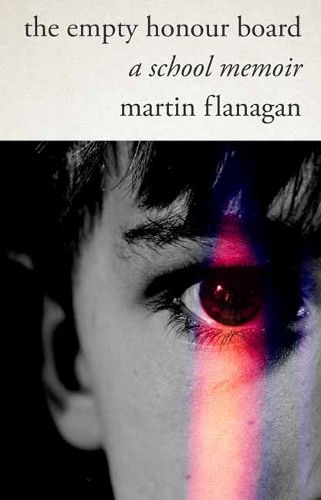
‘The empty honour board: a school memoir’ by Martin Flanagan

2023, 208 p.

When it comes to the Catholic Church and sexual abuse of children, there is little space for nuance without it being mischaracterized. However, nuance is what we find in Martin Flanagan’s memoir of his school days at an un-named Tasmanian Catholic boarding school between 1966-1971. As he says in his opening line “I was warned against writing this”. Not only was there the danger of stirring up pain and controversy, but there was the danger of being forced to rethink one’s own story that had seemed certain.

By the time you get to my age-67 at the time of writing- people’s sense of their personal history has taken a mythological turn. Most of us cling to the notion that there is meaning in our lives and, whether we know it or not, arrange the furniture in our minds- our memories- accordingly. We acquire a personal mythology, and personal mythologies, when they clash can do so violently. This is a region where demons lurk. (p. 2)

But as a stream of claims from former student from his school surfaced, the demons found him:

Each disclosure took me back to a time in my life when I thought I inhabited a concrete reality. Now that concrete reality was bending and breaking like buildings in an earthquake. (p.3)… Behind the issue of what actually went on at my school on an island off the southern coast of the world’s most southern continent, global forces were at play- ancient controversies to do with the Catholic church, the Pope, the authority of priests, celibacy, the Vatican’s exclusive maleness and the epidemic of sexual abuse that has followed it around the world. Somewhere inside all that of that, being thrown about like a leaf in a storm, was me, my story. (p.8)

Flanagan was not sexually abused himself – or at least, he did not perceive that he had been sexually abused. But at the age of sixteen he was invited into the room of one of the priests where the priest, Eric, gave him a massage with his pyjama bottoms removed, face down on the priest’s single bed, nude from the waist down. After a vigorous massage of his legs with oil, he rolled over and the priest glanced at his limp and uninterested cock. “End of story” (p. 86)

Completely inappropriate though this clearly is, Flanagan did not consider himself to have been sexually abused, even though other people thought that he had been. As far as he is concerned, “to be abused you must surely feel as if you’ve been abused”. He feels that he was inoculated from a strong response because he never did believe in the Catholic church, and because by then he was already quite certain in his own sexuality.

However, he knew other boys who were sexually abused by the priests. At much the same time as this happened to him, he was the school captain, and he was led by another boy to where he found a 12 year old shaking and shuddering in his pyjamas, with a spray of semen up his back. He and other boys reported the priest to the school rector. Some thirty years later, he gave evidence against one of the three priests from the school who were charged with sex crimes.

Flanagan may not have been sexually abused but he was abused by the ingrained cruelty of the school that filtered down through the priests and bubbled up among the boys themselves. He felt ashamed of many things: his abject begging not to get the cuts for some minor misdemeanour, his failure to intervene when he saw other boys being bullied, his desperation to appease the bullies who had decided that he was a ‘teller of stories’ as a ‘fear like a sort of radiation illness infiltrated my being’. (p.74). Years later, he began having panic attacks at night. For about six months he was in mental tumult until

In the end, one hot day I was standing beside a blackwood tree in the paddock beside our little home, when a shadow hurried across the grass towards me. With it came a great fear that I was about to be extinguished or swallowed up, and I cried out ‘I have a right to be!’. Pure madness, I know, but I’m glad I did it. Glad I shouted at my shadow. At the negative imprint of those early years. I have a right to be, everybody has a right to be. What do I believe in? Human dignity. (p.102)

What saved him was sport, especially football, and writing about sport. It was through sport and writing that the boys he had gone to school with, now men, circulated back into his adult life. These men came with their own stories, their own pain and the author’s response and reconciliation with this shared, and yet so private, experience takes up the last third of the book. The report that he had made as school captain on discovering the shivering boy in his pyjamas all those years ago resurfaced as part of the controversy over the school 43 years later. He reads the letter from the rector to the head of the order detailing the report that Flanagan himself had made, which the rector described as ‘fooling around’. Here he learns about the evasions and plans to withdraw the priest from classes, to move him around the state, or divert him into working on the school magazine. As a result of the Royal Commission into Institutional Sexual Abuse that he learns about ‘Father GMG’, sent to his school to avoid the repercussions of another interaction of a sexual nature, who is moved from one school to another. There is a pattern here.

Over the years, the author attends three Catholic ceremonies. The first was a vigil at St Ignatius, Richmond as 25 year old Van Tuong Nguyen was hanged in a Singapore jail for drug running. The second was Ned Kelly’s funeral in a Catholic Church in Wangaratta in January 2013. The third was a Ritual of Lament in 2021 run by his old school. He struggled over whether to go: he didn’t like ceremonies; he feared inauthentic emotion; he feared doing it the ‘wrong way’. He went.

What is striking about this book is the way that Flanagan holds many things in tension: acknowledgement that the same men who whipped him also imbued in him a love of literature and writing; disgust at the sexual abuse and yet compassion for the situation that, at least for the priest that he gave evidence against, he

could be well described as a maladjusted, sexually immature, lonely individual… [who] had virtually no possibility of a sexual relationship with a woman given his living circumstances. (p. 7)

He accepted the word that two of the priests at the school were unaware of what was going on amongst their brother priests. He did not characterize what he observed at his school as a long display of cynical behaviour. Instead,

[W]what I see at the core of this whole business is abject human isolation surrounded by a floundering belief system. (p. 142)

The book is not divided into chapters, and although it moves forward chronologically, it is divided into dozens of small shards, separated by asterisks. It’s almost as if the truth he is grappling to explain is also fragmentary, without an overarching structure that can be imposed onto it. There is some sort of resolution – not ‘closure’- with the Ritual of Lament performed by the now-coeducational school, no longer an all-boys boarding school. He sees this book, which was almost finished at the time of the Ritual of Lament, as his way of honoring the experience from 40 years ago as he sees it now. He speaks only for himself.

The old school’s honour board doesn’t have an entry for my last year. Perhaps it’s because the following year the school started a new era by going co-ed, perhaps it’s because my last year ended in a scandal. The tide of golden print records the year – 1971- but after that are empty spaces of varnished wood. The real names in this book are my honour board, although the list, I must add, is far from complete. (p.11)

My rating: 8/10

Read because: Ivanhoe Reading Circle August selection

Sourced from: own copy

I hear with my little ear: Podcasts 1-8 November 2025

Let’s just jump ahead, shall we? I have been listening to podcasts between September and November, but many of them have been current affairs podcasts, which just come and go.

The Human Subject (BBC) The Gay Man and the Pleasure Shocks From the website:

This is the story of patient B-19, a 24-year old who, in 1970, walks into a hospital in Louisiana troubled by the fact that the drugs he’s been abusing for the past three years are no longer having the desired effect. He claims he is “bored by everything” and is no longer getting a “kick” out of sex. To Dr Robert Heath’s intrigue, B-19 has “never in his life experienced heterosexual relationships of any kind”. Somewhere along the way, during the consultations, the conclusion is drawn that B-19 would be happier if he wasn’t gay. And so they set about a process that involves having lots of wires sticking out of his brain. Julia and Adam hear from science journalist and author, Lone Frank, author of The Pleasure Shock: The Rise of Deep Brain Stimulation and Its Forgotten Inventor.

Actually, I wasn’t particularly shocked by this episode. It was the 1970s after all, time of ‘Clockwork Orange’, and brain stimulation and operant conditioning was all the go. While most of us wouldn’t see being gay as something that had to be ‘cured’, I do wonder if truly deviant behaviour that would otherwise see a person incarcerated for life (an inveterate child abuser?) might not still turn to methods like this?

The Rest is History Episode 606: Enoch Powell Rivers of Blood With Nigel Farage on the loose, it seems appropriate to go back to revisit Enoch Powell and his ‘Rivers of Blood’ speech. As Dominic and Tom point out, Enoch Powell is better remembered than a lot of Prime Ministers are, and he influenced Thatcher and inspired the Brexiteers. He was born in Birmingham in 1912 and was a precocious child who seemed destined to be a classics scholar. He had no interest in women, but he was obsessed by Nietzsche. He was a Professor of Greek at Sydney University by the age of 25 (I didn’t know that!), but he really wanted to be the Viceroy of India (as one does). He fought in WW2 but not in a combat role. He was a Tory, but he was often critical of the party, and championed English nationalism in Parliament in his hypnotic droning voice. He decriminalized homosexuality, was anti-Vietnam, anti-US but economically very dry. Despite the influx of Windrush and British/Pakistani immigrants in the late 1940s, immigration was seen more as a regrettable necessity rather than a national issue. At first Powell did nothing about the reported ‘white flight’ from areas like his electorate of Wolverhampton, but by 1964 it was recognized that immigration had to be controlled to avoid the ‘colour question’, a question supercharged by television of unrest in Montgomery and Alabama in the US. Why did Powell change? He argued that he was representing the views of his electorate, and he held up an ideal of the English people and became more radical as a way of distinguishing himself from Heath. In 1967 there was an influx of Indians from Kenya after Kenyatta expelled them and an Act was passed to restrict immigration. The Labour government introduced a Racial Relations Bill in 1968 which prohibited racial discrimination in areas like housing. When the Tories decided to quibble over the details but accepted the principle of the bill, Powell was furious and this was the impetus for the ‘Rivers of Blood Speech’, which was publicized beforehand, so television crews were there to record it. He was sacked as Minister for Defence, but he had strong support on the streets. He never distanced himself from violence, but he was wrong- there were no rivers of blood. And until now Tories wouldn’t touch the issue again.

The Rest is History Episode 577: The Irish War of Independence: The Violence Begins (Part 2) After their largely ceremonial electoral victory in 1917, Sinn Fein established an alternative shadow government which had cabinet positions, courts and issues a Declaration of Independence. It wanted to attend the Paris Peace Conference, but it didn’t get a seat at the table. The IRA was recruiting heavily, but the majority were more involved with logistics and protection rather than firing guns. The conflict hotted up in the early 1920s when the IRA began attacking police barracks and courts. There was a mass resignation of police, and they were replaced by ex-army soldiers, the notorious ‘black and tans’ and auxiliaries. In 1921 the Flying Columns and IRA intelligence ramped up, with localized violence. But this violence was not necessarily a sectarian war, but it certainly had sectarian aspects.

In Our Time (BBC). Apparently Melvyn Bragg is stepping down from In Our Time after 26 years. He is 85, after all, and he was starting to sound a bit quavery. So, they’re dipping back into the archives and they replayed an episode on Hannah Arendt from 2017. She was born to a non-observant Jewish family in Hanover in 1906, a family that was so non-observant that she was surprised when she found herself singled out as being Jewish. She had an affair with Heidegger, but then he became a Nazi. She was a classicist, and she maintained this interest throughout her life. She escaped to America in 1941 as a refugee, where she developed English as her third language. In her book Eichmann in Jerusalem, she warned of a new sort of atomized evil, like a fungus, and she saw Eichmann as thoughtless, rather than evil. Actually, I hadn’t realized that she was anything other than a political writer: she was just as focussed on the human condition as politics.

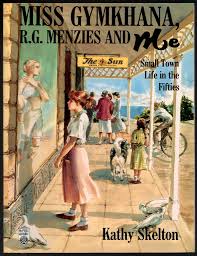
‘Miss Gymkhana, R. G. Menzies and Me’ by Kathy Skelton

1990, 153 p.

I hadn’t heard of this book, which was sent to our former CAE bookgroup as part of their mop-up operations, now that the CAE no longer runs its bookgroup program. Apparently my group read it about 25 years ago, but I hadn’t joined at that stage. I am the youngest (!!) in the bookgroup, and as the book is about ‘small town life in the Fifties’, my fellow bookgroupers probably recognized even more in the book than I did. But even for me, born in the mid-50s, there was much that was familiar but is lost now, in a world that is much more complex and hurried today.

I guess you’d classify it as a memoir, but it is more a memoir of a time rather than events. The author, Kathy Skelton, was born in 1946 and grew up in Sorrento, a sea-side town that still has its tourist season and its quiet season. It’s a strange place, Sorrento: there have always been very wealthy people there, but also just ‘ordinary’ small town people there as well. In her introduction, she reflects on the nature of memory. Reflecting on famous people that she was aware of at the time- President Nasser, Archbishop Mannix, the voice of Mr Menzies, the young Queen Elizabeth and the Petrovs- she reflects:

Have I printed their images, acquired much later, on a childhood, half grasped and half remembered? Have I overlaid fragments of memory with layers of stories, recounted by others, stories that in turn are their fragments of memory?

I have done all these things, yet still believe I know these events and people intimately, that I have remembered accurately, and that these memories are shared with others who did and did not live in our town. (p.4)

Her book is centred on Sorrento, but she takes a wider view as an observer. She has a child’s-eye view of politics. Her father’s family were Liberal voters: her mother’s family were Labor, and even Communist. The arrest of the Petrovs made an impression on her, although she thought that they looked a lot like Cec and Una Burley, who lived around the corner. Cec was the school bus driver, and Una Burley was the local gossip, and many paragraphs are prefaced with “According to Una Burley….”. Robert Gordon Menzies, the Prime Minister, seemed to be an immovable fixture of the 50s and early 60s, almost beyond politics to the eyes of child (I remember feeling the same way). As with the Queen, political figures were just there, unquestioned. The school turned out to see the Queen, catching the bus into Melbourne to line up along Toorak Road, only to see a “white-gloved hand and a pale face below a thatch of violets” (p. 98). The next Sunday it appeared that the Queen might be coming down to Sorrento to visit prominent resident M. H. Baillieu, but these ended up being put aside because the Royal Couple were resting “their shoes off, stretched out on a spare bed in Government House. Their intended visit was nothing more than a rumour started by persons unknown.” (p. 99)

Likewise, she observes but does not participate in the sectarian split that divided 1950s Australian society, played out at the political level through the ALP/DLP split, and at the personal level through family allegiances to either the Catholic or Protestant churches. As the child of a ‘mixed’ marriage, she attended both the Catholic and Anglican churches. She writes of the Billy Graham crusade at the MCG on 15 March, attended by 130,000 people, 15,000 more than had watched the Melbourne 1956 premiership. She was there: she made her decision for Christ, but “I knew already that I didn’t want to enter into correspondence about God and Jesus and whether I was leading a Christian life, with anyone” (p. 63)

Her description of school life, marching, grammar classes, the march through Australian history of Explorers and Sheep are all familiar to me: obviously school rooms didn’t change much in the 50s and 60s.

Her family was not rich, and her father was a “drinker”. She feared the Continental Hotel (still prominent on the hill in Sorrento) and wished that her father was one of the Men Who Were Not Interested in Drink.

The men who were interested were in the front bar of the Continental every evening, drinking more desperately and rapidly as six o’clock approached. I tried never to go past the Conti after five because of the frightening noise, the hot air, and the beery smoke that might rush out to engulf me as the door opened with men going in and out. But more than the small and the noise, I feared looking up through the golden letters on the window, PUBLIC BAR, into my father’s eyes. (p. 132)

They only had television for two weeks in 1958 when they borrowed another family’s television and kelpie while they were on holidays. They went to the movies, they listened to the radio. They had purchased a refrigerator on hire-purchase, but her father forgot to make the payments and a note was left warning that it would be repossessed unless the money was found. As a result, her mother never bought anything else on hire purchase, and so it took years for the wood stove to give way to the white electric stove, the Hoover to take over from the straw broom, or the wireless to give way to the television.

From her child’s eye viewpoint, she observes her mother’s anger and bitterness towards her father, his family and small town life, but it is somehow separate from her. She sees the young girls who win beauty contests, marry the local footballer, and suddenly are saddled with children and shabby cardigans, all the glamour gone from their lives.

Sex, politics and religion: she sees all these but they are not questioned or challenged. It’s a world that has been congealed in aspic, with certainties and truths, petty triumphs and small luxuries. A very different world. I think that much of the appeal of this book is the nostalgia and sense of safety that it evokes. You can understand why conservatives turn to the past to go ‘back on track’ or making America/ or whatever country you choose ‘great again’. There’s not a lot of analysis, but it’s not completely local either: Skelton has, as she said, evoked memories that are both local to Sorrento, but also common to other Australians at the time. At times I felt as if I were suffocating in mothballs and tight clothes, at other times I yearned for the simplicity and innocence of earlier times. I do wonder how someone born in the 1980s or 1990s would read this book. I suspect that it really would seem, as L.P. Hartley said, like a foreign country, where they do things differently.

My rating: 7/10

Read because: Bookgroup

Sourced from: Left-over CAE book.

I hear with my little ear: Podcasts 16-23 September 2025

The Shadows of Utopia Season 2 Episode 13: Tet- Part 1 Hue Time Period Covered 1968

This episode covers the Tet Offensive of early 1968. Lachlan links the media coverage of the event, with the extreme scenes in Saigon, to the reality of the offensive and what the communists hoped to achieve. It was a failure of intelligence, and the Viet Cong intended it to be the start of a revolution. Five or six major cities were taken, and there was a 6 hour fight in the US Embassy, but there was no follow-up.In Hue, perhaps the most stunning battle of the offensive took place, as for four weeks the city was occupied by the NVA and NLF. During this time, as a brutal campaign of house-to-house combat took place, the communists embarked upon a reign of terror to reshape the city they had taken, at least 2800 civilians were murdered. The US held off bombing for the first 10 days, but then they smashed the city. In the second week the US still hadn’t taken it back, but by the third week the US and South Vietnamese took it back. Hanoi admitted that expected uprisings had not occurred. The US media emphasized the surprise North Vietnamese victory and there was a turning point as Walter Kronkite described the situation as a stalemate.

And with that… I was off to Vietnam myself.

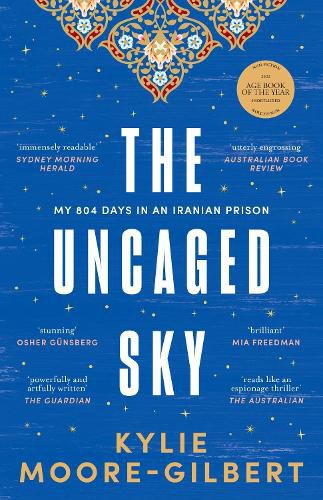
‘The Uncaged Sky’ by Kylie Moore-Gilbert

2022, 403 p.

It is a paradox that repressive penal systems try to break an individual in two opposed ways. Either they quash the individual through impossible labour in a mass dehumanizing project (I’m thinking here of the long-ago-read The Gulag Archipelago or One Day in the Life of Ivan Denisovich) or they annihilate prisoners’ identity through enforced idleness and solitary confinement. University of Melbourne academic Kylie Moore-Gilbert was arrested in September 2018 on charges of espionage, and spent over a year in solitary confinement during her 804 days in the Iranian Evin and Qarchak prisons.

By its very nature, it’s hard to write about solitary confinement, because just like the space and the endless nothingness, there’s only so many words in which to express it. When the stream of days is broken by Ramadan for a second time, she is struck by the waste of her life:

Thinking about Ramadan a year later meant the unbearable realisation that I had wasted another twelve months of my life in 2A. Twelve months in a world whose total inhabitants could be counted on both hands. Twelve months in a world which had to be navigated in darkness, via touch and sound and slivers of light through the edges of a blindfold. Twelve months in which time did not exist, in which each day was both a minute and a decade, in which each week was both a second and a hundred years. Last Ramadan felt like it was only yesterday, because so little had happened in the interim. But then again, everything had happened. Everything and nothing. (p. 249-50)

I seem to have read or watched a couple of accounts of imprisonment lately (the film The Correspondent – review here– and books and articles about Jose Mujica). What comes over strongly with both Peter Greste and Kylie Moore-Gilbert is their utter bewilderment as the framing of charges seems to change over time and comes long after the initial arrest. Both Australians feel poorly served by many of the embassy officials dealing with them at first (although this seems to shift with time) and both feel that nothing is being done at an inter-government level to seek their release. The advice given to families at home to keep quiet and leave it to the government flies in the face of what both Greste and Moore-Gilbert felt they needed in the situation, and in both cases hunger striking and intransigence attracted more attention – not always welcome- than compliance and silence.

For Moore-Gilbert, the experience of solitary confinement, and having to return to it for a promised 96 hours that stretched into months, was almost intolerable. At times she urged that her behaviour, which at times was unwise, be considered as a symptom of mental illness and she was certainly dosed up with anti-depressants and sleeping tablets.

The most unnerving and treacherous aspect of her imprisonment was the complex relationship she had with her main interrogator Qazi Zadeh from the Iranian Islamic Revolutionary Guard. Saturnine and powerful, she claims that he began flirting with her, while incredibly having his wife appointed to supervise her. She needed to walk the tightrope of resisting his advances, while trying to leverage them to her advantage. Just as freedom was within her grasp, she found herself blocked by him, in a bizarre attempt to keep her in jail so that he could continue to contact her. It must have been a lonely, high-stakes situation where she could trust no-one, and in a mis-step she told his wife that the relationship was not of her volition. It only made it worse for her.

What made it possible to continue with the book was the knowledge that she did, eventually, gain release in exchange for three Iranian prisoners held by the Thai government. Was everything possible done by the Australian government for her? At the end of the book she is grateful to Nick Warner and the Australian ambassador Lyndall Sachs, although she has raised questions about the softly-softly approach.

She notes that 43 years of Islamic Republic rule has plunged Iran into a “crisis of human rights of unfathomable proportions” with the country becoming an open-air prison of 84 million people (p. 403). As occurred with Peter Greste, and with other political prisoners, she finishes the book with a plea for other political prisoners who have not been released.

I can’t help but be profoundly affected by what I witnessed inside some of Iran’s worst prisons. I feel it is my duty to speak up for my friends, as it is to tell the truth about what happened to me. If the events I have recounted in this book have similarly touched you, dear reader, I ask you, too, to use your voice. When you are a prisoner, knowing that there are people on the outside who support you and care about your plight truly can be the difference between giving up or continuing the fight. (p. 403)

We can only take her word for it.

My rating: 8/10

Read because: I had been aware of her imprisonment and wanted to learn about the experience from her perspective as an academic.

Six Degrees of Separation: from ‘We Have Always Lived in the Castle’ to…

It’s literally the first Saturday of the month, which makes it Six Degrees of Separation day. This meme, hosted by Kate at Books Are My Favourite and Best involves Kate nominating a book I have rarely read (in this case, We Have Always Lived in the Castle by Shirley Jackson) and then nominating six other titles of books that spring to mind.

  1. With ‘castle’ in the title of the starting book, what else could I go for but I Capture the Castle by Dodie Smith? In Grade 7 and 8, I just loved this book and kept reborrowing it from the school library. I saw the film, but it didn’t have the magic for me now that it had as a young girl. I have a copy on my shelves, but I don’t know if I want to re-read it or not. Perhaps some books are best left as memories.
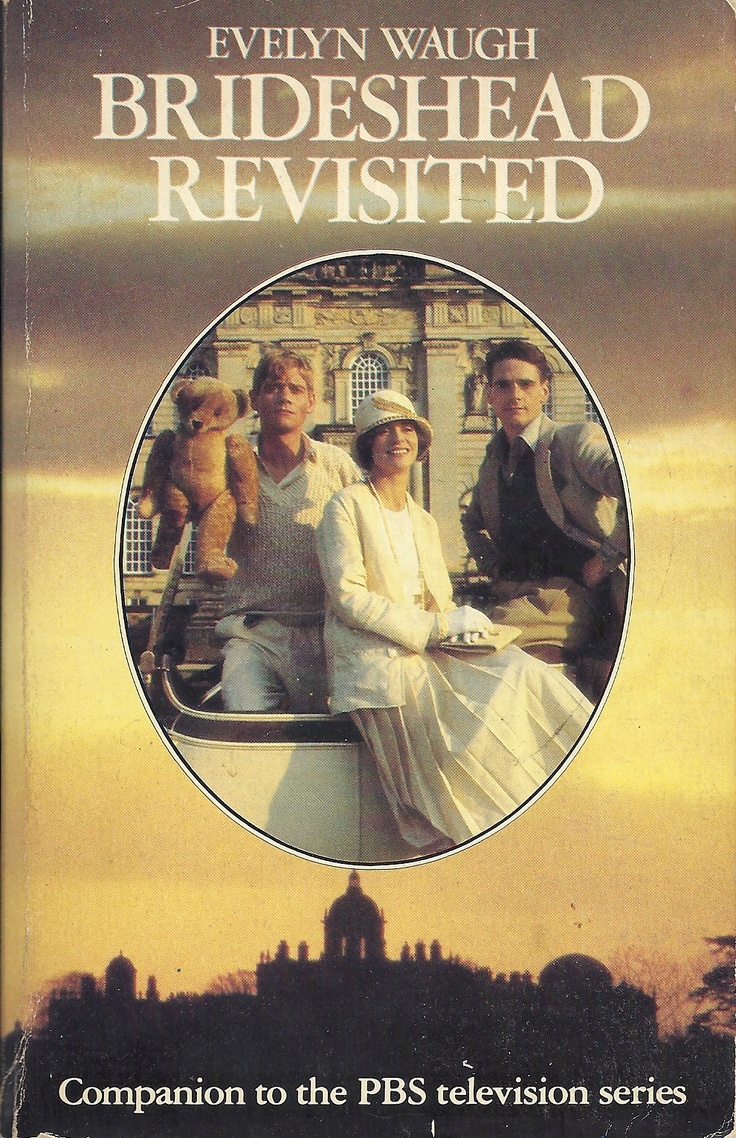
  2. Brideshead Revisited had a castle in it too. I loved the series with Jeremy Irons. I know that I read the book too, while I was at university.
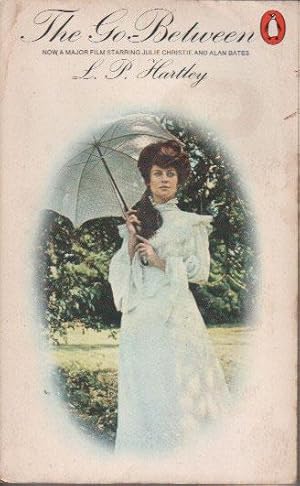
  3. L.P. Hartley’s The Go-Between was set in a big house as well, told from the perspective of a visitor from a lower class who doesn’t know the ‘rules’ of the gentry. We read it in Matric (yes, I’m that old), and I think that it has one of the best starting lines in literature: “The past is a foreign country. They do things differently there.”
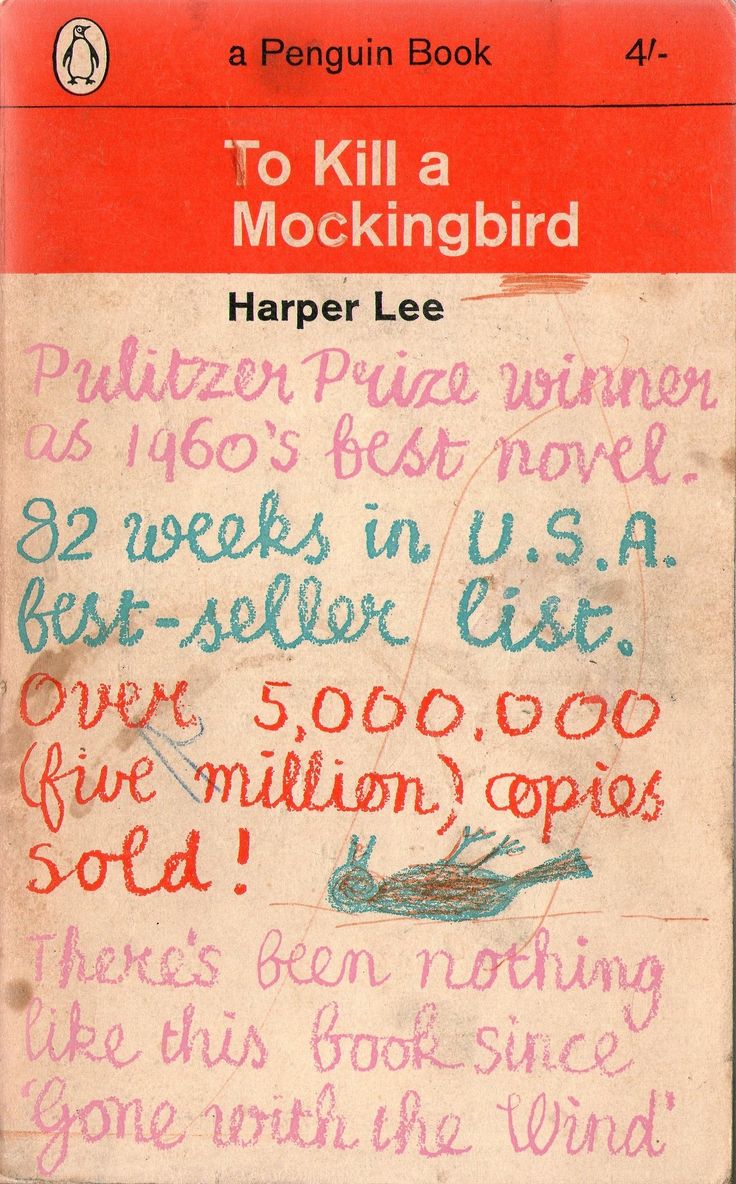
  4. Like everyone else in the world, we read To Kill a Mockingbird at school too. I have re-read this one, many times, and every time I hear the music to the absolutely perfect movie, my eyes fill with tears. To me, this book is emblematic of the Deep South
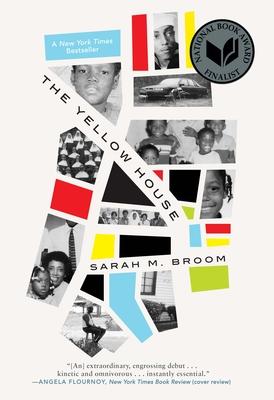
  5. Another book set in the South- New Orleans this time- is The Yellow House by Sarah M.Broom (my review here). The youngest of twelve children in a working class family, she tells the story of her family home in New Orleans, interweaving national and local history, family stories and her own story of place and identity.
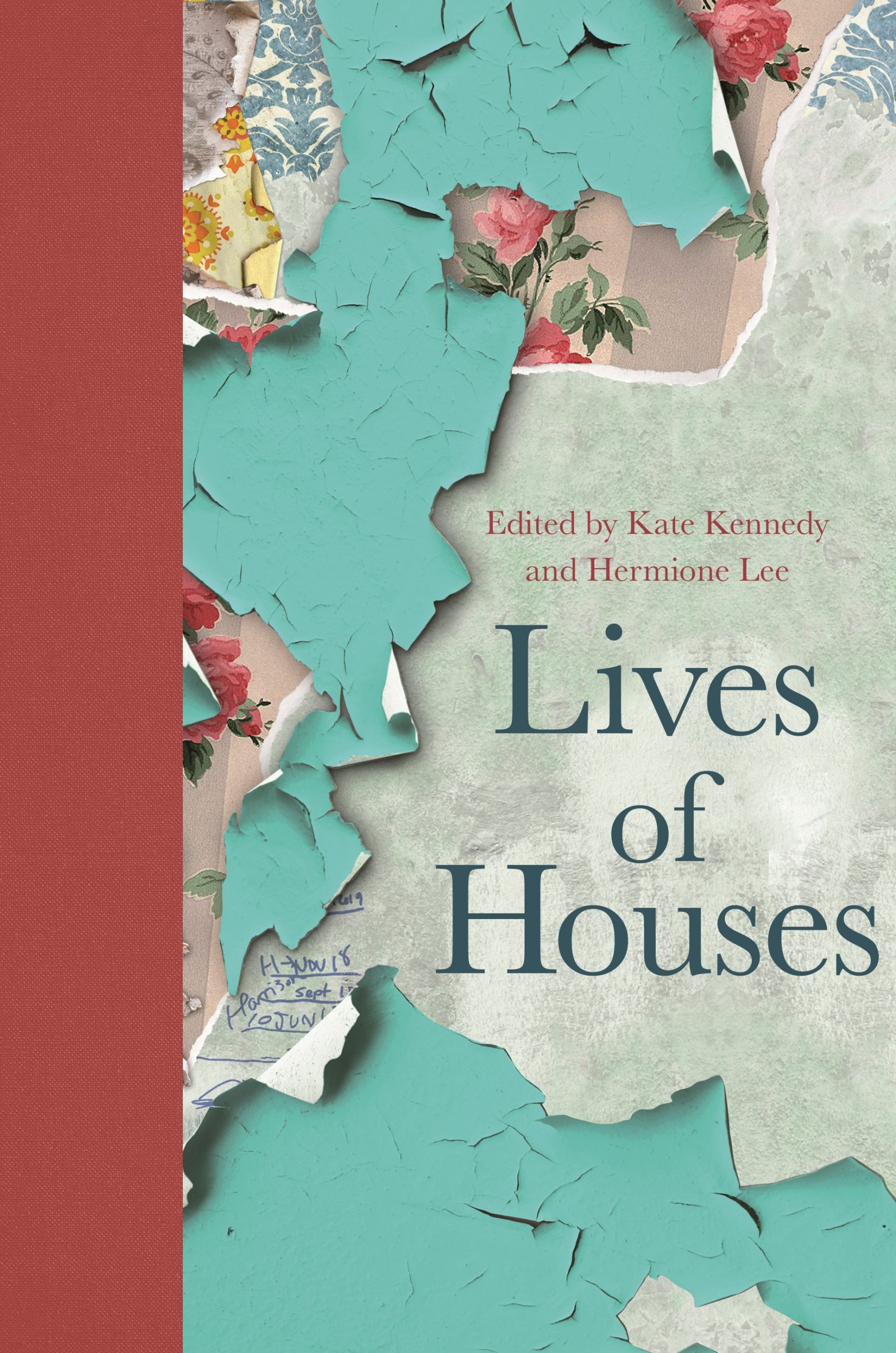
  6. The Lives of Houses, edited by Kate Kennedy and Hermione Lee is a collection of essays that emerged from a 2017 conference titled ‘The Lives of Houses’ held at the Oxford Centre for Life-Writing at Wolfson College, Oxford. This conference brought together scholars from different disciplines and professions, with an emphasis on British, Irish, American and European houses. The ‘big’ names include Hermione Lee, Margaret Macmillan, David Cannadine, Jenny Uglow, Julian Barnes, and it focuses on 19th century British writers and a peculiarly British form of being ‘the writer’ in a mixture of eccentricity and domesticity. (My review here)

So somehow or other I started off with a castle and ended up in a house.