
It’s Six Degrees of Separation Saturday, the meme hosted by Kate at Books Are My Favourite And Best (see here). The idea is that she chooses a starting book, in this case Anthony Bourdain’s Kitchen Confidential, then you bounce off six other titles that spring to mind. Very rarely have I read her starting book, and this month is no exception.
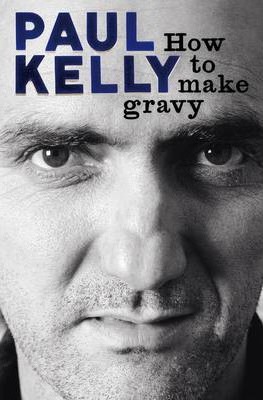
Well, you make gravy in a kitchen, don’t you? (I’m obviously stretching for something to connect with ‘kitchen’). Paul Kelly’s book How to Make Gravy is fantastic. The book is a written version of his A-Z stage show, which extended over four nights, where he would choose 25 songs each night from his repertoire of over 300 songs. The book is in four parts, reflecting the four nights of the performance. The songs are presented alphabetically and the lyrics precede each chapter, bolstered at times by poetry by other poets (Yeats, Donne, Shakespeare), quotations from books, and definitions. Some of the chapters directly relate to the song; others are a form of mental riffing on his childhood and adolescence, a succession of marriages and breakups, drug addiction, diary extracts while on the road, reminiscences of concerts seen and performed. You can just dip into the book, put it aside, and come back to it later. I loved it. My review is here.
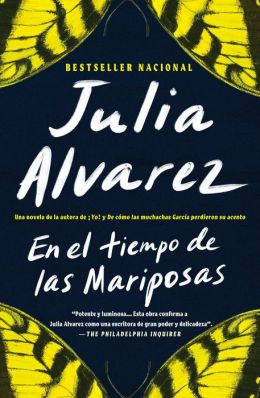
As Australians will know, the song ‘How to Make Gravy’ is about a man in prison ringing his brother a couple of days before Christmas, anticipating the family Christmas lunch that he will miss because he is in jail. My mind skipped to other books about people in jail. I read En El Tiempo de las Mariposas (In the Time of the Butterflies) by Julia Alvarez in the original Spanish, and it was such a strong story that I enjoyed- and understood!- it in spite of my language limitations. “Las Mariposas” was the code-name for the four Mirabel sisters, Patria, Minerva, Maria Theresa and Dede who, for different reasons and to differing extents, were involved in clandestine actions against the dictatorship of Rafael Trujillo (El Jefe) in the Dominican Republic in the 1950s. The whole of the family came under official suspicion, and two of the girls and their husbands and father were imprisoned at various times. The narrative of the book switches between 1994 in the voice of the remaining sister, Dede, and chronological chapters told in the varying voices of Minerva, Maria Teresa and Patria. Although based on historical fact, it is fictionalized. My review is here.
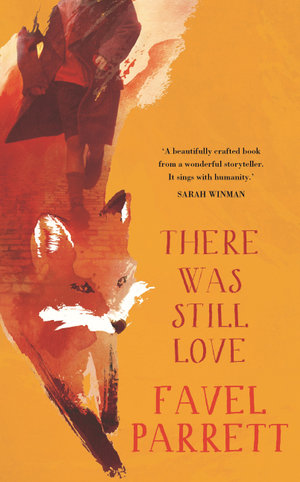
Sisters don’t always have to be geographically close, and that is the case in Favel Parratt’s There was Still Love which seems to be about two cousins in 1980 :- Malá living in Melbourne with her Czech grandparents, Mána and Bill, and Ludek, also living with his grandmother Babi in Prague, completely unaware of his cousin’s existence in Australia. It’s only at the end of the book that you realize the link between these two stories of grandchildren, wrapped in the love of their grandmothers. The two grandmothers were sisters, and by sheer happenstance, one ended up in the West and the other in the East. (My review here).
There are any number of books set in post-war Europe that I could have chosen, but I have gone with Anna Funder’s Stasiland. Funder, working as a journalist in Europe after reunification, was first attracted to investigating East Germany when a request for a program on the “puzzle women” was brushed aside by the television producers she worked with. These “puzzle women”, she later discovered, were employed to reassemble the papers shredded by the Stasi as the wall was falling, a task that
would take over 300 years at the current speed. Methodical to the end, the papers had been shredded in order and shoved into a bag together, and so it was possible to piece them together and reveal the banality and the all-pervasive intrusion of the Stasi into the lives of East Germans. (My review here).
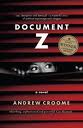
Bringing the world of espionage back to a more mundane Melbourne setting is Andrew Croome’s Document Z. ‘Document Z’ opens with an image instantly recognizable to Australians-of-a-certain age, even if we were not born at the time. It’s the image of Evdokia Petrov on the tarmac of Mascot Airport, flanked by a burly man each side of her, clutching her handbag, hand across her chest as if she is heaving, with one shoe lost. The book is a fictionally reimagined telling of the Petrov defection from the perspectives of the participants- Evdokia, her husband Vladimir, Michael Bialaguski the doctor go-between and the various agents on both sides. Croome has obviously done his homework (occasionally a little too obviously) and I marvel at his courage in describing a time long before he was born that is still within living memory today- lots of scope for slips and false notes there. He captures well the sterility of 1950s Canberra with the claustrophobic and enmeshed atmosphere of the Soviet Embassy enclave. (My review here).
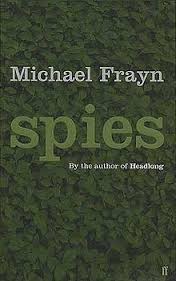
The Petrov Affair was very much an adult, politicized affair, but a more personalized view of espionage is found in Michael Frayn’s Spies. It is imbued with wistful, golden glow of L.P. Hartley’s The Go-Between or Ian McEwan’s Atonement. As in those books, the narrator (Stephen) in Spies also sees too much and yet doesn’t know what s/he is looking at when his friend Keith announces that his mother is a spy. So the boys snoop in her writing desk and follow her, and find more than they had bargained for. The story is told with humour and humility, and the adult Stephen is affectionately kind to his younger self and withholds judgment from him. It’s a very clever book. (My review here).
Well, given that I know absolutely nothing about Anthony Bourdain or Kitchen Confidential, I have travelled to 1950s Britain, East Germany, Czechoslovakia Australia and Dominican Republic- and an Australian prison coming up to Christmas. How fitting.
 The Resident Judge of Port Phillip
Ooh, you’ve got some of my favourites here: Stasiland (infinitely better than anything she’s written since); Document Z and Spies, such excellent reading, both of them!
Pingback: Six Degrees of Separation:‘Kitchen Confidential’ to…. | Becky's Books –
A great chain, that travels a great distance from fine dining! I’m very attracted to what you write about Julia Alvarez’ work. I’ll look out for it.
Not too much of a stretch, but a very creative one!
Enjoyable chain. Very much enjoyed There Was Still Love which you’ve neatly linked to Stasiland.
Enjoyable chain! Very much enjoyed There Was Still Love which You’ve neatly linked to Stasiland.
Wow – you read Julia Alvarez in another language! Kudos! The fact that you hadn’t read Bourdin has led to a great chain but I bought it and it is hugely enjoyable…
I am not familiar with Paul Kelly but I laugh at the title because all everyone does in the US mid-November is discuss whether they should try to make gravy for Thanksgiving, buy it, or do without!
I have read and enjoyed other Julia Alvarez but not that one. I must say I have not tried to read fiction in another language since university, so I am impressed.
I think Stasiland was the starting point for a Six Degrees some time ago as I recognize the title but have not read it.