Monthly Archives: May 2020

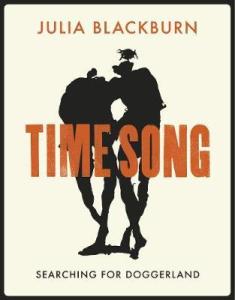
‘Time Song’ by Julia Blackburn

blackburn_time_song

2019, 284 p.

Disappeared places have their own special allure, especially when they have sunk to a watery death. I think of towns shifted or submerged during the building of a reservoir (like, for instance Bonnie Doone which was covered by the Eildon Dam or Tallangatta which reappeared when the Hume Reservoir sank so low). Then there are the ‘lost’ lands covered over by the waves. Think Atlantis, or the Theosophists’ Lemuria: huge land masses, supposedly supporting sophisticated civilizations, which are now the stuff of legend.

Rather less legendary, however, is Dogger Bank, which is mentioned every morning on that strange, soporific radio item, the Tide Report on the BBC in England. Dogger Bank is the last remnant hint of Doggerland, which existed in the North Sea and English Channel 18,000 years ago, making what we now know as the United Kingdom a contiguous part of Europe. It was not a land ‘bridge’, which suggests a narrow and tentative link between UK and Europe. Instead it was a fertile plain, with its own coastlines and rivers, with humans roaming across it. It was not a route from one place to another, but a territory in its own right.

People have known about Doggerbank for centuries. Particularly low tides have exposed the remnants of old forests, and the continual calving of the eastern English coastline reveals an ongoing array of fossilized remains and flints. But recent developments like windfarms and extractive industries tell us more today about Doggerbank than we have ever known before. Huge machines have been scooping up the ocean floor, bringing up bones and artefacts, and oil exploration companies have made their geological surveys available to academic archaeologists and palaeontologists, a source of information that they could never, ever have afforded themselves. (So maybe there is something to be said for oil exploration after all).

Julia Blackburn is not a geologist, palaeontologist or archaeologist. She is a poet and author, but in this book she walks the Suffolk and Norfolk coastland of the eastern UK, picking up stones, shells, bones and flints as she walks. She is not alone in this: people have been picking here for years. She talks to these collectors, who show her their hoards, giving her bits and pieces. They exist in a wary relationship with academics, who they often perceive as being too keen to sweep up artefacts to store them away in universities, where they may remain almost as hidden as they were under the ocean for years. But sometimes there are finds which transcend this uneasiness, when the collectors realize the significance of what they have found for the human story, and it becomes a shared endeavour between collector and academia.

This is a beautifully presented book, which has colour plates showing the ice, coastline and river formation of Doggerland 18,000 years ago; the receding ice and flat plain, fractured with rivers and tunnels at 15,000 years ago; the gradual encroachment of water 13,500 years ago; the emergence of a recognizable UK at 10,000 years before present; and the remnant Dogger Island in the middle of the North Sea at 7,000 years ago, the connection between UK and Europe severed. It’s a human story too, that stretches back 1.8 million years, through Homo Erectus, Homo antecessor, Neanderthals and Homo Sapiens, some signified by a few stone tools or human footprints fossilized into the land surface.

There seems to be a spate of beautifully written environmental histories and essays that have been published recently. I’m thinking of Annie Dillard’s Pilgrim at Tinker Creek, David Sornig’s Blue Lake (my review here) and Vicki Hastrich’s Night Fishing (review here).

But it’s also a very human story because of the way she tells it. Her search is narrated almost as a conversational journey, as she meets with this person and that, and as she relates her own reminiscences of places and items she has herself found. Collectors and academics share their enthusiasms with her, and indirectly with us too. There is a lot of science in this book (and her list of acknowledgments at the back of the book demonstrates her debt to academia) but it’s written very much in layman’s terms. Her response to the academic literature is expressed in 18 ‘Time Song’ poems, which intersect the text, each preceded by a black and white drawings by Enrique Brinkmann.

There’s another story here too, a deeply personal one. She tells us in the preface that her second husband died a few years ago. We learn that she had met him when she was eighteen. He was Dutch, and for four years they crossed from one side of the North Sea to the other. They broke up, she married someone else and had children with him. After an absence of 27 years, they met again and married. During their first year of married life they again criss-crossed that North Sea to each other, him living in Amsterdam, her in Suffolk. Like Doggerland he was present, then disappeared; reappearing again and then absent for ever. In many ways, this book is a love poem to him and he is always just below her level of consciousness, just below the surface. Her final, beautiful Time Song is written to him. ‘Time’ is elapsing, but her exploration of Doggerland shows her that things can pass and yet persist, and that the universe has its own rhythm and trajectory, quite independent of us.

There was a pale and almost transparent moon in the sky this morning. The air has become very autumnal. It will soon be my husband’s second death year but because of the strange mathematics of absence, his age no longer increases with the passing of time. At night I sometimes stretch out my hand towards him and wait until I am almost convinced that an answering hand is there, even though I cannot feel it. I’m sure this is quite usual. It’s what people do. (p.11)

This is a beautiful book, contemplative and wise.

My rating: 9/10

Sourced from: Yarra Plenty Regional Library
Off to the Writers Festival

I’m off to a Writers Festival tomorrow (Saturday). A marquee or two; rows of plastic seats; people lining up; sound systems that crackle; the book shop selling all the books talked about…..

Nup. It’s online. It’s the Yarra Valley Writers Festival. I bought my ticket some weeks back, when it seemed as if the prospect of a writers festival  of any type was far distant. Who knows- it may still be far distant. But good on them for making the decision to go online early and I hope it’s successful for them.

Historians on the coronavirus pandemic #1: Frank Bongiorno

As part of my work with Heidelberg Historical Society, I write a column for our newsletter about local events one hundred years ago. During 2019 I wrote a lot about the 1919 Spanish Influenza epidemic, but most of the local information about it was scattered in various newspapers, often in the column advertisements or in reports of council meetings. Our museum holds no local artefacts whatsoever about the epidemic in our collection- no pamphlets, no vaccination papers, nothing.

That’s not likely to happen with this current coronavirus pandemic, with museums and collecting organizations gathering together material, images and reflections right now, for their collections in the future. It’s as if we have a heightened consciousness of being in a historically significant event, no doubt underlined by the constant repetition of ‘unprecedented’, and probably bolstered even more by the news cycle and the ready availability of images worldwide of empty cities and crowded hospital corridors.

I’ve been interested in reading what historians have to say about it all. The factual parallels between this and other epidemics are relatively easy to identify, but I’m interested in what historians have to say about what it all means. And who better to start with than Australian historian, Professor Frank Bongiorno from A.N.U.?

On 29 April Frank, along with Professor John Quiggan  gave a Zoom talk to the Victorian branch of the Australian Fabian Society on the topic ‘Socialism and the Australian Progressive Movement’.

You can access it from the Australian Fabian Facebook page at https://www.facebook.com/australianfabians/videos/619066028823088/

Or Inside Story has a very interesting article drawn from Frank’s talk called “Is history our post-pandemic guide?”  He looks back to WWI/Spanish Flu, the Depression and World War II. For those of who hope that perhaps some good will come from of all of this today, he warns that progressive change never comes from conflict, only from bipartisan consensus, however lukewarm. It’s well worth reading.


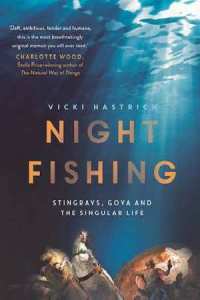
‘Night Fishing’ by Vicki Hastrich

Hastrich

2019, 246 p.

What a powerful pull holiday places returned to year after year have on our hearts! For me, it’s the family’s time-capsule caravan down at West Rosebud…oops, Capel Sound. Sixty years. We shared in the oft-returned familiarity other people’s holiday places too. There was our neighbours’ fibro house down at Dromana that accommodated three branches of the extended family at one time in the ‘boys’ room’ with three bunk beds, the smaller girls’ room (because girls were scarce in the family).  The house was still owned by Nana, who had her own bedroom and septic tank toilet (when everyone else had to use the dunny). As a nation, we all sighed at “Ah, the serenity!” when Darryl Kerrigan takes his family up to the house under the electricity pylons at Bonnie Doon in the Australian film The Castle.

Then there was my cousins’ holiday house on the Hopkins River out of Warrnambool, in an old electricity power station, rising up out of the river against a steep embankment. Being a power station, it was a cavernous building, with no natural light. But what a spot- surrounded by bush, and with no-one else around.

It was my cousin’s holiday house that came to mind in reading Vicki Hastrich’s Night Fishing although in her case, it was a cottage against a steep hill that could only be accessed by  water on a Brisbane Water estuary at Woy Woy. Her parents and their friends would take six kids, food, ice and pets to Woy Woy and the continual return there each holiday encapsulated her happiest times, attuned to the tides and the water, drawn to the solitude and unpredictability of fishing and ensconced in the familiarity of returning year after year.

This is a series of essays that have elements of memoir, although there is no over-arching structure to tie them together. At first, not quite sure what is was that I was reading, I wondered if it was a bit like a non-fiction version of Elizabeth Strout’s Olive Kitteridge books, where an oblique reference in one story is picked up by another. It seemed for a while as if that was the organising principle of the essays, but then it didn’t seem to work for the last quarter of the book.

What does tie the collection together is, as the title suggests, the theme of fishing and water. The initial and final stories are both about fishing. In the opening story ‘The Hole’, she and her brother Roger return to a fabled family fishing spot as adults, and in the final story ‘Bucket of Fish’ she heads into her little fibreglass boat The Squid to use up the last bits of fish in the freezer as summer subsides into late autumn.  The eponymous ‘Night Fishing’ story appears half way through, where she decides to go out in her little boat for some night fishing, and loses all sense of direction and location in the darkness.  Others are more discursive, but still with a fishy theme. ‘The Tomb of Human Curiosity’, she and brother Rog go out in The Squid again, this time with a bathyscope, which leads her into a reflection of Galileo. ‘From the Deep it Comes’ starts about about catching salmon, but then diverges into a discussion of Zane Grey.

Not all the stories are about fishing.  In ‘Things Seen’ she reflects on the act of being a witness to things seen, recollecting a family story about Uncle Ev, a returned WWI soldier with PTSD, and moving on to Goya’s 82-plate work The Disasters of War, drawn during the Peninsula War between 1808-1814. The theme of ‘seeing’ is taken up in ‘My Life and the Frame’, where she discusses her work as an ABC camera operator, merging into a discussion of Tiepolo’s painting Allegory of the Planets and Continents, and her sense of failure over writing what she describes as a ‘baroque Australian novel’. Her ‘History of Lawn Mowing’ starts with a tribute to the late Australian writer Georgia Blain, who had her first seizure in her backyard. It then shifts to a reflection of the dirt under the house where she keeps the mower, where asbestos and the shellfish midden of the indigenous people of the place mingle in the dusty dark.

I always find it hard to review short stories, and I guess that books of essays fall into the same category. Explaining them makes them sound flat and trite: they are better read on the page rather than in a review. I do confess to becoming a little bored of the fish, but I loved the sunlight that suffuses her memories of childhood and a treasured place.  I liked that when starting a story, you were not ever quite sure where you were going to end up. And I loved her eye, that was caught by the beauty of the ordinary, and the way that her writing captured it so sharply that you could see it too.

My rating: 8/10

Sourced from: Yarra Plenty Regional Library.


aww2020

I have included this on the database of the Australian Women Writers Challenge 2020.


I hear with my little ear: Podcasts 25-30 April 2020

podcast

The Eleventh. I’m furious! I maintain the rage! I’ve just listened to Episode 6 The Eleventh, that goes through the events, the machinations and the deceptions of November 11, 1975. Forget that cuddly image of Fraser that he curated during his later years: the man was ice-cold.

Heather Cox Richardson. Her ‘politics and history’ talk on Tuesday  21st looked at the history of impeachment, the nature of the executive order, the difference between debt and deficit and how to convince someone to stop watching FOX news (short answer, you can’t). Her American history talk on 23 April took us to the 1880s and 1890s – a time that I know virtually nothing about in terms of American history. That was when the small states of North and Sth Dakota, Montana etc. were created as an attempt by Republicans to ensure that they could keep power. She talks about the importance of the West, and the use of anti-Chinese legislation to shore up political support. She finishes with the invation of Cuba and the Phillipines and the idea of non-citizen nationals.  This lecture was a bit too detailed and politicy-y for me. Check her Facebook page.

Rough Translation  I’ve had the two-parter, The Search  Part I and Part II on my phone for a while. It’s about the disappearance of Iraqi photo-journalist Kamaran Najim, who became a photographer against the wishes of his religious family. When he was kidnapped after a shoot-out, his family initially joined forces with his westernized friends to search for him. There’s real-life sound here of the attack (I assume that it’s authentic?) and it’s a good, if sad, story.

Judith Lucy- Overwhelmed and Dying  She’s been flogging her misery in her trademark drawl for years, but I have a new appreciation of her since she’s been appearing on Charlie Pickering. She has a new podcast series which is more of the same, but I’m enjoying it. In Episode 1 Blindsided, the sudden breakup of her relationship caterpaults her back into the misery-stakes.

RevolutionsPodcast  Still going with the Russian Revolution, although it’s going to be stretched out even further because Mike Duncan is planning on taking about a four month break between the 1905 Revolution in April and picking up again in October for the 1917 Revolution. He’s going to work on his book on Lafayette between May and October. Anyway, Episode 29 10.30 The SRs looks at the difference in viewpoint between the Socialist Revolutionaries and the Marxists regarding the kulaks and their role in the coming revolution. But they didn’t give up on their assassination activities.  In Episode 10.31 A Big Mistake he examines the Russian-Japanese War, which didn’t go well, especially when Europe decided that they’d leave Tzar Nicholas to hold the line against the Yellow Peril which meant that they didn’t have to worry about Russia on their own doorstep.