Monthly Archives: August 2015

Movie: Madame Bovary

I don’t really think of myself as a retired person, but I suppose that I am. And what does a retired person do but go to the movies during the week, taking advantage of Miserly Monday or Tight-Ass Tuesday to avoid paying full price to watch a movie?

I’d wanted to see this for some time, and it’s now listed as ‘final days’ at Cinema Nova (my cinema of choice). I read the book at uni some 35 years ago but I don’t remember seeing any other movie adaptation of Madame Bovary.  I remembered the plot, theme and the characterization (especially of Emma) but was not particularly aware of the setting, beyond the boredom it induced in her.

Film captures setting beautifully and this is certainly the case in this book.  Village life  was muddy and it was a much smaller village than I remembered: just a single street in effect.  The houses were dimly lit at night, and rather grubby.  Emma was fetchingly decked out in orange in many scenes and, set against the forested setting, the framing of many shots reminded me of a pre-Raphaelite painting.

It was a very quiet movie and rather emotionally dead.  I expected to shed a tear (I am an emotional old thing, after all), but I felt oddly detached from her fate.

My rating:  3 out of 5.

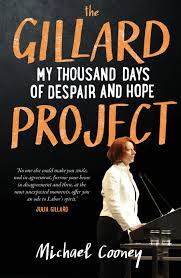
‘The Gillard Project’ by Michael Cooney

cooney

2015,  288 p.

Near the end of this book Michael Cooney admits that its working title was “We weren’t as bad as we seemed at the time” (p253).  While the actual title is a good one, capturing as it does the slow-motion car crash that was the Gillard government, the working title was pretty apt too.  This book proudly proclaims  the fact that, despite the drama and intrigue, this was a government that passed a huge amount of  progressive legislation (especially in comparison with its successor) and that there was a definite Gillard Project of education, health, employment and disability funding.

Until I’d read Don Watson’s Recollections of a Bleeding Heart, I hadn’t particularly considered the nature of a speech-writer’s role. I found it hard to distinguish the voice of the invisible speech-writer from the speech-giver (and still do)  in such a strangely symbiotic relationship.   Michael Cooney came to the job as Gillard’s speechwriter as a Labor man after working as policy director for Kim Beazley and Mark Latham, and as founding policy director of the progressive think-tank Per Capita during the Rudd years.  He comes from the Catholic right-wing of the party, a pedigree which I’m not particularly keen on, and which I find puzzling given that Gillard was from the left.

But there is no doubt of his admiration for Julia Gillard.  My favourite chapter of the book is an interlude titled ‘The Shy Child’, extracts of which appeared in this Fairfax article, where he emphasizes her humour and downright decency.  It comes through in the other chapters as well, as he chronologically traces through the frenetic “just do it” attitudes of the early months of the Gillard government, her performance overseas, and then the awful, drawn out ending.

The political speech today is a strange beast.  Although Parliament and politics in general are largely despised sideshows,  speeches probably have a longer lifespan now than in the past with the advent of YouTube.  But they often appear as a soundbite, or in a truncated form, and we don’t have the patience to listen to a whole speech for the overarching argument.  Gillard’s misogyny speech of course springs immediately to mind, as does her speech after her overthrow – neither speech written by Cooney.  But there are other speeches as well, and this book gives Cooney the opportunity to revisit them, as well as the speeches that he wrote but were never given.  In particular, Gillard’s speech to the Mineral Council of Australia on 30 May 2012 (the ending of which she rewrote) is powerful stuff, even if proved only transitory by subsequent events:

Now I know you’re not all in love with the language of ‘spreading the benefits of the boom’. I know everyone here works hard competes in a tough global environment; you take big risks and you earn the big rewards. You build something. Australians don’t begrudge hard work and we admire your success.

But I know this too: they work pretty hard in car factories and an panel beaters and in police stations and hospitals too. And here’s the rub: you don’t own the minerals. I don’t own the minerals. Governments only sell you the right to mine the resource. A resource we hold in trust for a sovereign people.  They own it and they deserve their share…

The facts endure. Our economy is the envy of the world. Our mining industry is the envy of the world. And there’s nowhere in the world you’d be better off investing. And there’s nowhere in the world where mining has a stronger future.  And this is Australia, and it has a Labor government. (p 191)

Cooney fesses up, as well, to the speeches that bombed, most particularly the “we are us” speech that she gave to the 2012 ALP conference, to which he devotes a whole chapter.  Because this is a book written by a speech-writer, he is able to give the draft of the speech that was not given, but he doesn’t resile from responsibility for the “we are us” phrase that was ridiculed so widely. “The speech” he admits “was by far the worst moment for the prime minister that I had real responsibility for” (p 136).

I had starting reading this book some weeks ago after picking it up from the ‘New Books’ table at the State Library while waiting for material to be delivered to the Manuscripts Reading Room.  It engaged me instantly, and so I suggested that it be purchased by my local library, which subsequently obliged. I must confess that I found it harder to get into the second time, but by half-way through I was hooked again. It’s an insider’s book, with names dropped and allusions made,  very Canberra-centric and Cooney does not make any pretense over where his loyalties lie.  We’ve had the recent, depressing airing of “The Killing Season” and it’s certainly an antidote to that, just as it’s an antidote to the Government’s announcements of its carbon reduction target and quashing of the marriage equality bill.  I doubt that it will have the longevity of Don Watson’s Recollections of a Bleeding Heart but it’s a good read for now.

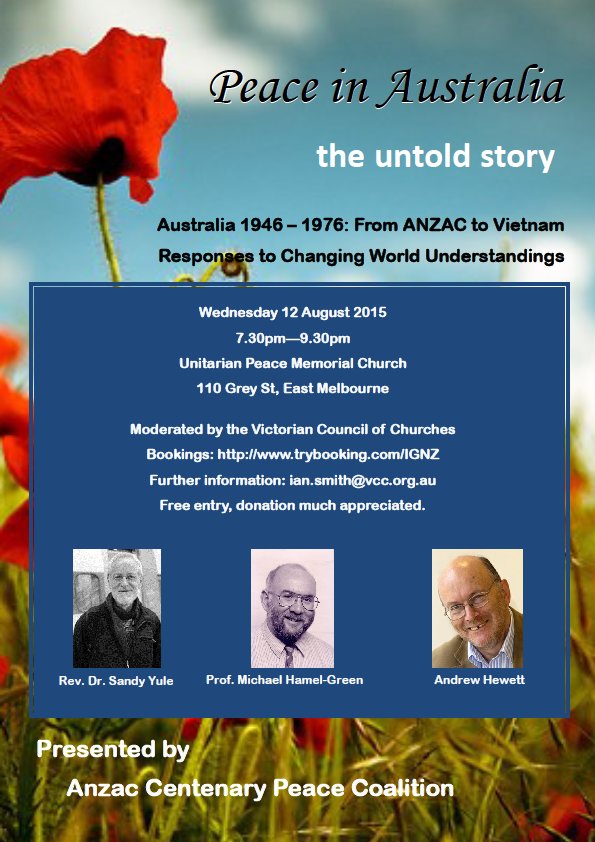
ANZAC Centenary Peace Coalition Forum #3: Australia 1946-1976 From ANZAC to Vietnam

peacecoalitionaugust

I’ll be going to this on Wednesday 12 August at the Melbourne Peace Memorial Unitarian Church.

‘Sir William’s Muse: The Literary Works of the First Chief Justice of Victoria, Sir William a’Beckett’ by Clifford Pannam

Judges may write poetry all the time- how would I know?- but I suspect that it’s not a particularly common judicial past-time.  William a’Beckett, the fourth Resident Judge of Port Phillip did, though, and this small book surveys his literary output from the early 1820s through to the early 1860s when he had retired back in England.  Forty years…so much poetry…such awful poetry. Well maybe not, if you like rhyming poetry because certainly Sir William did.  But these poems were of their time and fashion and should be read that way.

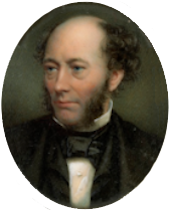
The author, Clifford Pannam QC starts his book with a reflection on the portrait of Sir William that hangs on the walls of the first floor of the Supreme Court library. Although a’Beckett’s writings have been dismissed as “sentimental, priggish and rather boring”, Pannam  decided to plunge into Sir William’s extra-judicial writings and found that:

[Sir William’s]  literary works reveal a romantic and passionate man who found no embarrassment at all in public confessions of his innermost feelings. (p. 4)

The first chapter deals with a travel book that Sir William wrote in 1854 on a 4000 mile European journey that he undertook with his wife and sons between August and November of 1853.  It’s a fairly conventional travel diary although he is moved to poetry in Naples. In a poem ‘At Naples- 1853’ he looks back to a poem that he was inspired to write there more than twenty years ago as a young man and compares his life then and now.  It’s quite biographical in places, especially when he writes about the death of his first wife.

In Chapter Two, Pannam moves to Sir William’s distress at his son’s marriage to Emma Mills, the brewery owner’s daughter.  Most of this short chapter deals with how this event was fictionalized in the works of Sir William’s great-grandson,  Martin Boyd, about his family (The Cardboard Crown and The Montforts).

Chapter Three tracks back to Sir William’s publication of his verse under the title ‘The Siege of Dumbarton Castle and Other Poems’, published in 1824. Between 1824 and his call to the Bar in 1829, Sir William had had hundreds of poems published in literary periodicals, and in 1829 he published them in a 200 page book ‘The Vision of Noureddin and Other Poems’ under the pen name Sforza.  There are long extracts of poems…such ‘rhym-y’ poems.  He also wrote a three volume biography of eminent people, where in the introduction Sir William admits that it was copied from other sources over four years.  Pannam notes that “It is difficult to imagine a more crushingly boring task for a young man.” (p.38) This was, however, a common way of compiling text books for young barristers waiting around for briefs.

Chapter Four sees Sir William now in New South Wales in 1838 where he delivered a series of three lectures at the Sydney Mechanic’s School of Arts entitled ‘Lectures on the Poets and Poetry of Great Britain’. Extracts appeared in the Temperance Advocate (he was a strong Temperance supporter) and he published the lectures separately, the first work of literary criticism published in Australia. He gave a similar lecture series at the Melbourne Mechanics Institute in 1856.  I must confess, reading them through, that they’re not exactly riveting reading and were probably even less riveting listening.

Chapter Five has assorted poems on varied topics: Christmas; his first wife; the conformity of the Anglican church; prize fighting; and the damaging effects of creeds- something that as a Unitarian he would have felt strongly about.

The sixth chapter examines a pamphlet that Sir William wrote under the pen name ‘Colonus’ titled “Does the Discovery of Gold in Victoria, viewed in relation to its Moral and Social Effects, as hitherto developed, deserved to be considered a Natural Blessing or a National Curse?”  As you can guess, by the length of the title, he came down pretty much on the latter.

He did do some professional writing as well, and Chapter Seven looks at the 100 page book that Sir William wrote in 1856: ‘The Magistrate’s Manual for the colony of Victoria’ (the title is longer, but you get the gist). But he also wrote current-events poems that he submitted to the Port Phillip newspapers (especially the Port Phillip Herald) under the pen-name Malwyn.  Pannam reproduces ‘Leichardt’s Grave’, written after the explorer Ludwig Leichardt disappeared the first time then re-appeared (less lucky the second time he disappeared….)

In Chapter 8 Sir William retired and returned to England in 1857 and published a “very long and marvelously romantic poem” under the title ‘The Earl’s Choice’ in 1863. It’s an apt description for this overwrought work, and at least he’s broken out of the straitjacket of rhyme.

Finally, in Chapter 9 Pannam leaves us with a poem on the future of Victoria “Advance Victoria!” also found in ‘The Earl’s Choice’ which you can download free as a Googlebook here.

Advance, Victoria!

From crowded cities severed far

Where glitters bright the southern star

There lies a land of wide domains,

Of golden rocks, and grassy plains;

Whose soil to till, and wealth unlock,

From distant climes, all people flock,

Whilst, canopied ‘neath cloudless skies,

They help a mighty nation’s rise.

If you have access to AustLit, his works are listed there.  If you’re a member of the State Library, you can view it online.

‘Sir William a’Beckett’ by J. M. Bennett

WilliamABeckett

Sir William a’Beckett J.M. Bennett, Federation Press, 2001.

This blog is called ‘The Resident Judge of Port Phillip’ as a tribute to the first resident judge, John Walpole Willis, but there were in fact four Resident Judges of Port Phillip. William a’Beckett, the fourth and final one, is an interesting man. His main claim to fame is that he was the first Chief Justice of the Supreme Court of Victoria, after having served as Resident Judge in Melbourne since 1846.

As proud Victorians, it suits us to forget that until July 1851 the area that we now know as Victoria was instead just the “Port Phillip District” of New South Wales.  La Trobe was a mere ‘Superintendent’; the Legislative Council sat in Sydney where Port Phillip affairs were an afterthought, and all administrative functions were directed from Sydney.  The court was part of the Supreme Court of New South Wales and while the Resident Judge in Melbourne had some degree of autonomy, appeals went automatically to the full Bench in Sydney.  The Resident Judge was still a member of the full court, but distance ensured that in a practical sense he was sidelined from the activities of his brother judges in Sydney.

William a’Beckett was Resident Judge when the Supreme Court of Victoria was finally established under the Supreme Court (Administration) Act 1852. This act brought to an end a rather ambiguous seven-month hiatus where it was assumed, but not definitely stated, that  a’Beckett would continue in his position until Letters Patent were issued by the Queen or colonial legislation would be passed to make him Chief Justice of the new court.  The Colonial Office made it clear that it wasn’t going to issue the Letters Patent or any new Charter, so it was up to the new Victorian legislature to pass the necessary legislation. It eventually did so, and a’Beckett was sworn in as Chief Justice on 24th January 1852, with Redmond Barry (the former Solicitor-General) as first puisne (or assistant) judge, joined by Edward Eyre Williams in July 1852. Continue reading

‘Imagining Early Melbourne’ Kathryn Ferguson

I just found an online article about Early Melbourne from 2004,  published in the very first edition of Postcolonial- an open source journal that is now in its eleventh year.

You can source the article at:

http://postcolonial.org/index.php/pct/rt/printerFriendly/294/780

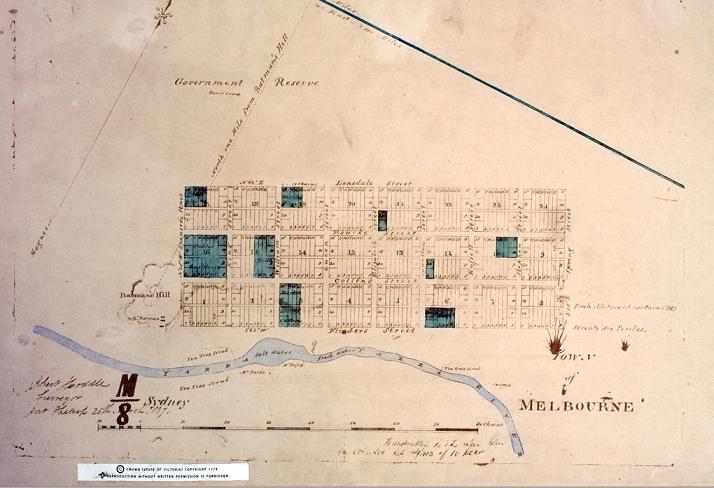
In this article, I will examine three elements that were posited by Melbourne’s early surveyors as incompatible with the development of a city invested in post-Enlightenment commitments to the rational and orderly division of space: the indigenous population, the extant landscape, and the poor. Each of these ‘problematic’ features was, for the most part, posited as antithetical to the creation and sustainability of an ordered and orderly social space through which the settlement, the colony and the Empire invented and inhabits a place.  Each element was, ostensibly, addressed in the founding strategies of Melbourne, with varying degrees of success, between 1836 and 1839.  Thus, this article highlights the irrationality — the almost mythical foundations — of the city.

As she points out, Major Thomas Mitchell’s encomium of the beauties of Australia Felix and Robert Hoddle’s grid were both describing something that wasn’t there.  Mitchell feigned complete ignorance of the presence of indigenous people, while Hoddle just superimposed a public-service template onto the landscape. They were producing predictions, rather than describing extant realities.

There were, of course,  indigenous people right in the centre of Melbourne, and settlers had started building along their own natural contour lines, following the geography of the site before Hoddle got to it with his surveying tools. Even though the word ‘slum’ would not be used for another fifty years,  the Hoddle grid and the push to construct only wide streets was responding to a fear of the vice-ridden poor.

As you might guess from a journal called Postcolonial, there’s some fairly complex language in this article, but it’s an interesting reflection on map-making, symmetry and geographical fantasy.