Filmed clandestinely in Iran (as the director Jafar Pahani had already been imprisoned for criticizing the Iranian regime) this movie somehow manages to combine farce with political commentary. Vahid, an ethnic Azerbaijani auto mechanic, recognizes a man who brought his car to his garage, as the man who had tortured him in an Iranian jail. He kidnaps the man, and is ready to kill him, when he starts to have doubts over whether it is the right man or not. His torturer had a prosthetic leg, and this man did too- but was he the same man? He carts his hostage to various people who had been in jail with him and who had suffered at the hands of the same torturer, and most of them, too, are not absolutely sure. But if they kill an innocent man, doesn’t it make them as bad as the torturer?
This is an excellent movie. In the last minutes of the film, I could hardly breathe. It won the Palme D’Or at Cannes as well as a special award at the American Film Institute, and was shortlisted for many other awards. It’s good.
My rating: 4.5/5
Seen because: I enjoyed his earlier film Taxi and I knew that this one had won many awards. I saw it as part of our Second Saturday Sinema with my Melbourne Unitarian Universalist Fellowship friends. Seen at Palace Westgarth.
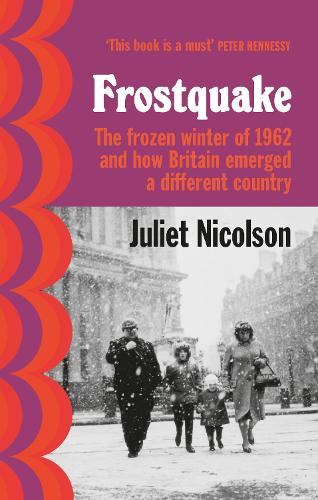
Well, it only took five years between hearing a podcast about this book and being inspired to purchase it, and actually reading it. And even then, I was spurred to read it because I’d like to read Andrew Miller’s The Land in Winter, set in the winter of 1962-3, which was short-listed for last year’s Booker Prize. Interestingly, Miller’s book also won the Walter Scott Prize for Historical Fiction, with the events of sixty years ago now considered history.
Frostquake, on the other hand, positions itself very clearly as ‘history’, telegraphed with the subtitle ‘The frozen winter of 1962 and how Britain emerged a different country’. In it, Nicolson argues that the winter of 62-63, the coldest since 1814, crystallised a tension between the old and the new. The old: Winston Churchill, Harold Macmillan, the continuations of the poverty of the Industrial Revolution, with 15 million people still lacking a plumbed-in bathroom. The new: JFK, Harold Wilson, the Beatles, consumer goods like televisions and refrigerators, glass office-blocks.
There are moments when society, however embedded, shifts on its axis. The long and lingering hardships of the paralysing winter of 1962-3 encouraged, even enabled, change: the very effect of shutting down empowered a thawing. Forces of social change that had been building over many years now found their moment of release as they broke through the icy surface. As the country froze it melted. (not sure about the page number because I read this as an e-book)
So what is a frostquake? One of the epigraphs to her book is a definition from an unnamed source:
Frostquake (n) A seismic event caused by a sudden cracking action in frozen soil. As water drains into the ground, it may freeze and expand, putting stress on its surroundings. This stress builds up until relieved explosively in the form of a frostquake (p. vii)
However, this book is not about weather or geology, although the snow and ice that started falling and forming for 10 weeks from Boxing Day 1962 through until to spring give the book its narrative parameters. Instead, this book is far more about people and their overlap with events on a national and world stage, drawn from conversations, memoirs and interviews. Some of these people are unknown: 19 year old Pauline Stone, driving through the mustard-like fog in her Mini Minor; Terri Quaye a 22-year old black jazz singer, Corporal Dennis Osbourne, travelling with his family on the Liverpool-to-Birmingham Express, which collided with the Glasgow-London express because of poor visibility. They each have a small story, of which the weather is just background.
But many of the people that Nicolson writes about are well known: Joanna Lumley talks about the cold at her boarding school; the Beatles are being transformed from scruffy, rather smelly hack musicians playing the clubs and careering from gig to gig into suited songsters who appear on the television; Mick Jagger and the Rolling Stones are London fixtures- Mick and Brian Jones sharing an Edith Grove flat, and with Mick taking on board the advice of Andrew Oldham, 19 year old window dresser at Mary Quant’s shop and music promoter “If you pretend to be wicked, you’ll get rich”. There’s the eruption of satire on the television, with comedians Peter Cook, Dudley Moore, Barry Humphries and Alan Bennett thriving into the 1970s and later. Author Antonia Fraser floats in and out, as does fellow author Penelope Fitzgerald. There’s a lengthy section on Sylvia Plath, who committed suicide in February 1963, in the depth of this cold winter.
Not only do other people, both famous and unknown, appear, so too does Nicolson’s own family. When she talks about spending Christmas of 1962 at her grandfather’s house at Sissinghurst, the penny dropped- Ah! She’s the daughter of Nigel Nicolson, who wrote Portrait of a Marriage, and the ‘Nicolson’ in the publishing company Weidenfeld & Nicolson. And so, she’s the granddaughter of Harold Nicolson, many-partied politician, who supported the decriminalization of homosexuality and the abolition of hanging, opposed the Munich Agreement with Hitler, published Lolita and disagreed with Anthony Eden’s Suez policy. And the granddaughter of Vita Sackville-West, who had died the previous summer.
Her upbringing in a political milieu is reflected in her attention to the Profumo Affair in particular, and the entanglement of the various characters who appear throughout the book. Nicolson herself received a pinch on the bottom from John Profumo, a one-time parliamentary colleague of her father, when he came to see the garden at Sissinghurst some thirty-years later. The glamour of JFK is here too, a contrast to the dowdiness of the Edwardian-figure of conservative Prime Minister Harold Macmillan whose career was derailed by the Profumo Affair. The anxiety of the Cuban Missile Crisis pervades the book, and Britain is being rebuffed from the European Economic Community by Charles de Gaulle.
The writing is quite beautiful. Here she is waking up on the day after Boxing Day 1962 as the snow begins to fall, the most snow they had ever seen in their lives:
The following morning we woke to the peculiar blue-bright light of reflected now filtering through the closed curtains. Instead of disappearing during the night as we had feared it would, the snow was still there, turning the landmarks of the garden- the walls, lawns, statues, urns- into something unrecognizable but unified. The sight was beautiful, its very transience on this familiar landscape making it even more precious. Snow muffled all sound and the silence felt dream-deep. Outside freezing snowballs melted the second they hit the napes of our necks and we tipped backwards on to the lawn, arms outstretched like acrobats, trusting that the mattress of snow would break our fall. Unlike a sandcastle on a beach, absorbed so soon by the waves, our imprints remained, hollows into which we could flop again and again. (Ch 7)
She returns to the silence of the snow-bound world at the end of the book, writing in the midst of COVID which brought its own silence to us. Writing in the winter of 2019-20, the daffodils and forsythia had just begun to blossom, and suddenly the earth felt lit up by yellow flowers.
Sixty years before the winter of 1962-3 the century had just turned and with it the old Victorian regime was dying. Sixty years after the winter of 1962-3 the world turned again, a little more sharply than it should have, unbalancing the stability we take for granted and throwing everyone into a state of profound shock….In December 2019, on a world map shown on every single news channel, a tiny red dot indicated a town in the heart of China, a million, million miles away from England, as the place where a brand new strain of a deadly virus had emerged, one that targeted the lungs, the enabler of breath, of oxygen and of life itself. Eight weeks later the dots had spread, and much of the world map was coloured red. In the autumn of 1962 many felt we were teetering of the edge of absolute destruction with nuclear weapons capable of wiping out mankind. And now, in the spring of 2020, the coronavirus, constantly visualized on screens as a spiky globe, an exotic species of underwater coral, a logo of frightening change, made us feel we were once again staring into the abyss, looking over the rim…. The country lanes were silent not this time because of the muffling of snow but by the absence of traffic. The world was in lockdown. The skies were blue, blue, blue, devoid of aeroplanes, not through mankind’s choice but for its survival. And the birds were going crazy in the sunshine. Nature seemed to have forgiven us not for doubting but for threatening its resilience and had returned once again with an astonishing beauty….Perhaps every half-century or so we need an intervention that is outside our control, an uninvited pause in order for resurrection to take place.
I enjoyed this book. I’m old enough to recognize the things she is writing about- indeed, the author and I are nearly contemporaries, and I do wonder if someone younger would enjoy it as much. It was not at all what I expected, which was a far more journalistic, meteorologically based account, but enjoyed the political and personal approach much more.
The Rest is HistoryEpisode 638 Revolution in Iran: The Hostage Crisis (Part 3) On 4th November 1979 students broke into the US embassy and took 72 hostages in what they thought would be a short 3-day takeover. At the time Iran was governed by an interim government, but power was increasingly held in the hands of the mullahs, who feared that mooted reforms would undermine the revolution. This was not the first attempt that students had made on the embassy: Khomeini himself called off an earlier protest at the embassy a short while earlier. By now there were few US embassy staff left, and Ambassador Sullivan (who Carter never liked anyway) had been sacked and not replaced. Sullivan warned the US not to let the ailing Shah into the US, but he but he ended up being let in anyway after going first to Romania, then Egypt before dying on 27 July 1980. We need to remember that 1979 was only four years after the fall of Saigon, and the images from that were still strong in public memory. Six embassy staff were able to escape, and the others were split up and sent to separate prisons. They were held captive for 444 days. Khomeini’s initial response was to kick them out, but he later changed his mind when he saw the hostages’ symbolic value. The US thought that they could negotiate their release, but Khomeini and his government didn’t want to release them. Each side saw the other as Evil, with religious overtones of the Great Satan. By this time radical Islam had spread world wide, and there was a sense of Western failure. Carter was facing election and he needed to do something so on 22 March 1980 Carter unveiled his plan to rescue the hostages.
Journey Through TimeEpisode 64 The Spanish Civil War: A Nazi Training Ground (Episode 3) The Battle of Jarama, on 6-27 February 1937 was an attempt by Franco to dislodge the Republican fighters east of Madrid. The International Brigades, including the Lincoln Battalion, were sent in completely unprepared, with insufficient and mismatched ammunition, insufficient maps and poor communications and the battle was over in hours. Technically the Republicans won, but it was a huge psychological defeat for them. Both sides used the battle for propaganda purposes: the Republicans lauded the ‘noble sacrifice’ while the Nationalists reveled in the German expertise to which they had access and they denied the atrocities committed. The role of foreign correspondents was important: Hemingway supported the anti-Fascist loyalists and their sacrifice, and by this time Kim Philby had arrived and was embedded with Franco as a British journalist but was feeding intelligence to Moscow. The International Brigades rebuilt themselves, but now they had more political oversight. Despite being volunteers, deserters were executed because they were an army. By Spring 1937 there were two competing narratives: one that the International Brigade were being used as cannon fodder versus the idea that ordinary people could stop fascism.
The Rest is ClassifiedEpisode 102: Putin’s Secret Army: Criminals and Cannibals (Episode 5) By 2022 Russia was making its plans for Ukraine, and because it was framing it as a ‘special military operation’, Russia found itself having to turn to the Wagner mercenary forces again because they didn’t want to officially call up troops. At its peak, Wagner had 85000 troops in Ukraine, sourced by going to the prisons and offering a pardon to prisoners in exchange for 6 month’s fighting: a good deal if you were facing a long sentence. However, the Wagner troops were used as cannon fodder, or “meat waves” where they were used to exhaust the Ukrainian troops before the better-trained Russian troops came in. By this time, Prigozhin was no longer coy about identifying himself with Wagner or the Internet Research Agency. He had aligned himself with hypernationalists, and was pushing to have full mobilization of Russian Troops.
Episode 103: Putin’s Secret Army: The Coup That Almost Brought Down Russia (Episode 6) By now, Prigozhin’s Wagner group was not the only mercenary army fighting in Ukraine, and the Ministry of Defence (which had never liked him and wanted to distance itself from him) was happy about the competition and not having to rely so heavily on Prigozhin. At the Battle of Bakhmut, Prigozhin’s troops were being used as cannon fodder, perhaps deliberately by the Ministry of Defence. Prigozhin began producing videos criticizing the leadership for incompetence and lack of support. When the Ministry of Defence ordered all mercenary troops to be under the directives of the Ministry, Prigozhin marched back to Russia, calling for people to rise up and join him. They didn’t. The President of Belarus, Alexander Lukashenko (an ally of Putin’s) talked him down, and suddenly it was over. Had the march on Russia been a coup or a negotiating tactic? Two months to the day after the march on Moscow, the jet in which Prigozhin and all his leadership group were travelling plunged to earth, with all on board to die. It was all over, although Prigozhin showed the brittleness of the Russian system, and was the most significant elite challenge to Putin’s power.
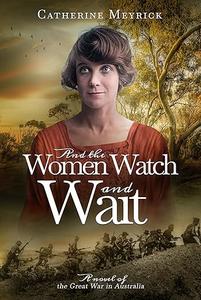
Especially in the wake of the centenary of WWI, there has been no shortage of books about men’s experience in war. They’re usually big fat books, often named for a battleground in large letters, with the (male) author’s name is letters much the same size. Women’s experience- especially the experience of women who didn’t go to war but instead stayed home waiting- is less often documented. And the Women Watch and Wait is based in suburban Coburg in Melbourne, and it captures well the dissonance between suburban life and battlefields far away, the agony of curtailed and delayed communication, and the emotional peril of allowing yourself to fall in love.
Kate is a young country girl who has been sent down to Coburg as company for her Aunt Mary, whose two sons have volunteered and been sent overseas as part of the first contingent of soldiers to be deployed. As well as the excitement of staying in Melbourne, Kate is excited that her boyfriend from Gippsland, Jack, has been sent to the nearby Broadmeadows Training Camp, and there are more opportunities for them to meet up before he leaves than there would have been had she still been in Gippsland. Time is rushing on, as the rumours of the trainees’ departure mount, and she is excited when Jack proposes to her. At this stage, there is still hope that ‘the boys’ will be back by Christmas, and there seems such pressure of time to commit, to get married and start up a married life. Jack leaves with his detachment, and Kate is left with her aunt, working in her aunt’s grocer shop, teetering between excitement to receive mail, and yet fearing what news the mail might bring. News does arrive, and she, along with the women among whom she is living, has to readjust her hopes for the future.
I’m probably a particularly critical audience for this book, because as it happens I’ve been writing a column for the newsletter of my local historical society for the past ten years or so that looks at events at the local Heidelberg level one hundred years previously. Just as Catherine Meyrick would have done in researching this book, I’ve followed the local newspapers closely, consciously looking for women’s experiences, reading every page and even the advertisements and classifieds. This has given me a close-up knowledge of one suburb, (albeit a few suburbs away from Coburg) and how the world-wide events of WWI impacted the social and political life of a community. I must say that she has nailed the local aspects, and I found myself nodding away to parallels that arose in her book which also occurred in Heidelberg.
The book is arranged chronologically by year, starting in 1914 and going through to 1919 with an epilogue. It has over sixty short chapters- too many, I feel- and the frequent changes of location made it feel a little like a screenplay. She integrates political events of the day, like the conscription debates, into her narrative and, again, she captures this big event playing out in small halls and conversations so well. I particularly liked that she explored the WWI experience from the Catholic viewpoint, something that is not represented well in the local newspapers that I have read.
It’s a difficult thing to undertake huge amounts of research, then to let it go in case it smothers the narrative (an advantage that historians have over novelists). At times I felt that small local details were made too explicit, but I’m also conscious that I may have read this book differently to the way that other people might read it. At an emotional level, the book rang true with love, fear, vulnerability and strength being lived out not in trenches but in suburban houses and streetscapes.
Well, both these days were a bit ho-hum. Day 10 Looking Deeply into your Food involved eating mindfully, contemplating a small piece of food in its color, shape, texture, light, and shadow, then imagining its history: the dirt, the crops, the hands that harvested it. Well, I chose a white peach, which had a very strong peachy smell, very juicy and no doubt had a completely industrialized history as it came from a supermarket.
Day 11 Alone with Others involved going somewhere in public, sitting comfortably and watching people come and go, paying special attention to how your sense of self changes in the presence of complete strangers. I actually do this often. Sometimes I get involved (at a distance) from their situation- eavesdropping on their conversations, trying to work out where they’re going and who the people around them are- but other times I observe them as if I’m going to write about them, formulating my descriptions of them in my head. To be honest, I am a rather nosy person, although I rationalize it as being ‘interested’.
The Rest is ClassifiedEpisode 101: Putin’s Secret Army: Wagner’s Control of Africa (Episode 4) As the French withdrew from the Central African Republic, Yevgeny Prigozhin and the infamous Wagner Group saw an opportunity to make themselves useful to the Kremlin by globalizing his model and applying it to new conflicts. After all, the East Indian Company had used this privatized company model of colonization way back in the 18th century. In the end, is there a difference between mercenaries and a government contractor? For quite some time, Prigozhin denied any involvement in Africa, adopting some fairly risible disguises when flying in for meetings. He made a deal with Sudan in exchange for gold; he took advantage of the Civil War in Libya after Gaddafi; in Mozambique different countries were pitching for deals. In exchange for his security and information warfare, he received mining concessions. Ever the publicist, he was heavily into branding, and started making his own publicity films in Africa, starring his own troops. But by January 2022 he came into conflict with the Russian Ministry of the Defence who, he felt, were locking him out.
The Rest is HistoryEpisode 637 Revolution in Iran: The Rise of the Ayatollah Part 2. The Iranian Revolution, despite being characterized in the west as ‘medieval’, is a classic 20th century revolution, with the involvement of the petite-bourgeousie, young unemployed working class men and students but also with the addition of clerics and religious students. The Shah neither repressed nor appeased the protestors, and U.S. President Jimmy Carter was completely out of his depth. He appointed the dovish Cyrus Vance as Secretary of State (of course, Tom points out the irony of having a man called Cyrus being appointed to Iranian (Persian) affairs given the historical Cyrus the Great) as well as the hawkish, anti-Russian Zbigniew Brzezinski as National Security Advisor. Needless to say, the two men did not get on. In October 1978 the Sunni, Arab, Baathist Saddam Hussein expelled Khomeini from Iraq, and he went to Paris where he made himself very available to the world press, who were happy to report his anti-colonial, anti-imperialist views. He did express to the international press his radical view that the mullahs should run the state, but he was quite open about it in his taped lectures which were sent home to Iran and circulated widely. On New Years Eve he issued a call for nine days of protests, and by 19 January 1979 the Shah had agreed to leave, wanting to go to California, which led to more conflict between Vance and Brzezinski over US’ responsibility to the Shah. On 1 February 1979 Khomeini returned after fifteen years’ exile and was greeted by crowds. Brzezinki was urging a coup, but the US Ambassador to Iran, Sullivan, rejected this plan, arguing that there were fears for US businessmen and that oil prices would skyrocket. Meanwhile, back in America, evangelical Jimmy Carter was convinced that US was gripped by a spiritual crisis, exemplified by what came to be known as his televised ‘malaise’ speech, calling for people to use less oil- not the sort of message Americans are accustomed to hearing from their President. Khomeini announced the export of Sharia Law, and the increasingly ill Shah was stuck in the Middle East.
Journey Through TimeEpisode 63 The Spanish Civil War: Fighting Fascism With Hemingway and Orwell (Episode 2) Despite their governments’ squeamishness about getting involved in the Spanish Civil War, combatants from more than 53 countries came to support the Republicans under Comintern. In fact, the Lincoln Battalion, a force of volunteers from the United States who served on the Republican side in the Spanish Civil War from January 1937 until November 1938, was the first racially integrated US military force. Despite the Republican fighters’ enthusiasm, they were amateurs: some came to Spain intentionally, others just happened to be in Barcelona for the 1936 Peoples Olympiad, set up in opposition to Hitler’s Olympics, which ended up being cancelled anyway because of the outbreak of the Civil War. The Republican effort was working class, but its public image has been largely shaped by the writers and photographers who attended, who had the contacts with publishers to get their work out. Women were involved too, defending the feminism in Republican Spain compared with the sexual violence amongst the Nationalists, who were not beyond using systematic rape. The Republican military training was more ideological than practical. Because of Spain’s neutrality during WWI, the Nationalist troops were not particularly experienced either, and the battle-hardened leaders from the foreign legions took control in Franco’s army. Nonetheless, the battle for Madrid was hard fought on both sides.
Late Night Live Barry Jones on a life of public service and the state of politics today Barry Jones might be 93 years old, and in frail health, but his feats of memory are amazing. Obviously interviewer David Marr was apprehensive that Jones might ramble on and kept him on a fairly tight leash, even ringing an imaginary bell when Jones went on for too long. I couldn’t believe how easily Jones could bring to mind names and acronyms in a wide-ranging conversation: none of the -oh-it’s-on-the-tip-of-my-tongue lapses of people half his age. I loved his discussion of the ‘numinous’.
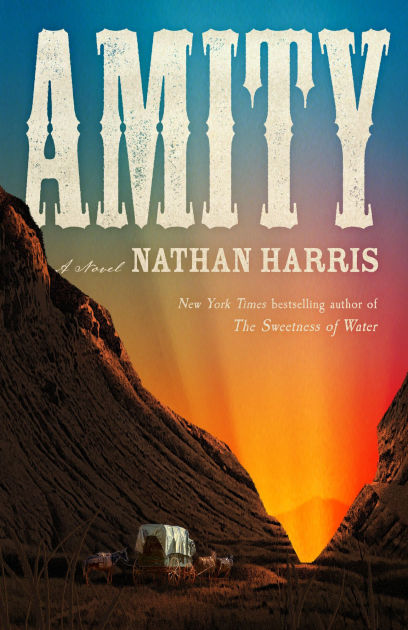
I loved Nathan Harris’ debut novel The Sweetness of Water, which I read soon after it was published in 2021. This second book, Amity bears several similarities to his first book, both set in Reconstruction era America, and both telling the story of a journey. Given that these were the qualities that attracted me to The Sweetness of Water, encountering them again was a pleasure rather than a drawback.
Set in Louisiana in 1866, it is a journey saga, told in two alternating parts. It is not immediately clear who is the author of the first-person frame story, focussing on Coleman, or what is the status of the interspersed ‘June’ stories, that focus on Coleman’s older sister June. Both June and Coleman had been ‘owned’ by the Harper family, and although ostensibly liberated after the Civil War, both were still bound to the family, if not legally, then through coercion and emotional manipulation. Two years earlier the siblings had been separated when Mr Harper took June, whom he had pressured into a sexual relationship, on a wild-goose-chase into Mexico in search of silver. Coleman, a sensitive and rather stilted house servant had been left with Mrs Harper and her adult daughter Florence in Mr Harper’s absence. When they received a letter from Mr Harper summoning them to Mexico, they followed: Mrs Harper and daughter expecting to reap the benefits of the get-rich-quick scheme, and Coleman hoping to find his sister June. Unknown to Mrs and Miss Harper and Coleman, June, revolted by Mr Harper had escaped and finds sanctuary in Amity, a town of emancipated African-Americans surrounded by displaced Native American tribes. As she is heading north, in search of safety and the dream of reuniting with her brother, he is heading south with Florence in response to Harpers’ summons, which Mr Harper wrote more as a lure to bring June back, rather than any intention to share his never-found wealth with his wife and daughter. In the harsh frontier territory the two separate journeys confront bands of Indian and Mexican army renegades, hustlers and refugees as any sense of safety is shattered by multiple betrayals and power switches.
Coleman is an odd character. Self-educated, he speaks in a formal, stilted tone and his loyalty to Florence breaks down in the face of so many threats that he feels unable to overcome. His formality makes it hard to warm to him, but by the end of the book you know why Harris has written him this way.
Harris writes landscape beautifully, and he captures well the ingrained cruelty of enslavement revealed not only through actions and betrayals, but also through the brusque and frankly shocking way that the Harpers spoke to their ‘servants’, despite the legal change in their circumstances.
I really enjoyed this book. Perhaps Harris could be criticized for re-writing his first book again and not moving beyond the Reconstruction Era of the immediate post-Civil War, but given that this era has been so shoehorned into a pro-South Gone With the Wind narrative, we need to hear more about the Black and Native American experience instead.
Day 8 was quite easy. Called ‘Practising Stoicism’, this challenge involved offer a sincere compliment or expression of gratitude—to a coworker, a barista, or a stranger on the sidewalk. Stoicism has a reputation of being dour but there’s also the aspect of making other people’s lives better. I didn’t find it hard to offer a compliment to a fellow volunteer at the historical society: I did it first, then thought- “hey, I can use that for my challenge”. She seemed rather pleased at the compliment, and I felt pretty good about it too. I actually do try to compliment people just as a matter of course.
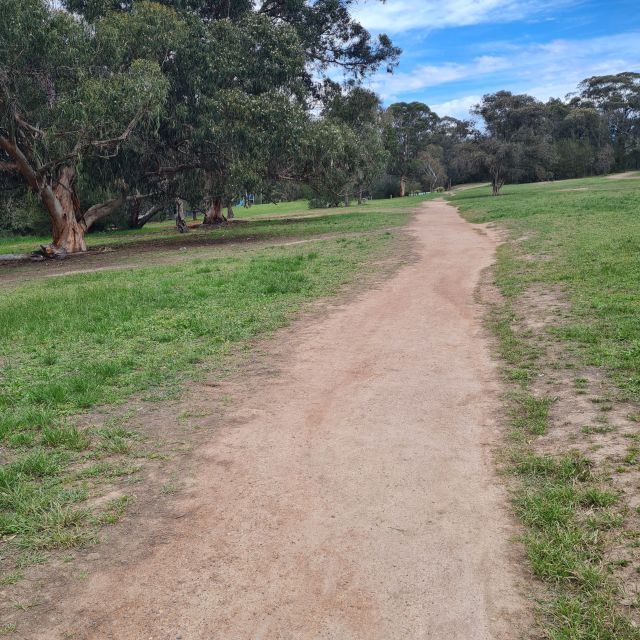
Day 9: Adventurous Listening required taking a walk in your neighborhood and choosing 5 sounds that capture the energy of where you live. I walk down to the museum every Monday anyway, through a long narrow park that was previously a golf course. The five sounds I heard were quintessentially Rosanna Parklands: 1. the loudspeaker from the Monday morning assembly at Rosanna Golf Links Primary School. In fact, there may have even been competing assemblies, because I think I heard the assembly at Rosanna Primary School as well, on the other side of the railway line. 2. A train going past. One of the things I love most about where I live is the easy accessibility of the train. 3. The crunch of gravel as people walked towards or past me. Rosanna Parklands always has people walking there, any time of day. It’s a very popular park. 4. Magpies. Being a decommissioned golf course, there are large expanses of open space which the magpies just love. Such an Australian sound. 5 The radio blaring from a builder’s ute. Because blocks are fairly large here, there is lots of redevelopment going on. For some reason, tradies HAVE to have the radio full volume to regale neighbours and passers-by with Bloke Radio.
I was listening for the sounds which best exemplified the park, and there was no surprise in any of them: I could hear each of them any Monday morning. However, sustained listening for quintessential sounds did make the walk seem faster.
Actually, I took this photo last November before the heat and lack of rain turned everything to brown. And I have no idea why there is no-one there.
In his book, Killing for Country David Marr relates his frustration when trying to find indigenous voices while researching the history of the frontier wars. An Indigenous colleague told him: “You mob wrote down the colonial records, the diaries and newspapers. You do the work. You tell that story. It’s your story.” (p. 409)
In the raw wake of the Referendum result, I felt as if I just wanted to curl up and have it all go away, and I can’t begin to imagine how First Peoples felt. Surely if people knew, there would have been a different result, wouldn’t there? (Would there?) I thought back to the sessions I attended in the local Aboriginal meeting place where we set out timelines and participated in activities- but how every single person there was already committed to ‘yes’. But this is our work: making the dispossession, massacres and injustice part of our (i.e. non-Indigenous) history. Our history generally- not just for the already committed but the sceptical and cynical and antagonistic as well. I don’t know how you do that- a public information campaign perhaps? The first step is right here with this official publication, in writing, with the authority of First Peoples themselves, to be put alongside with the Convicts-Squatters-Gold-Anzac trope of the textbooks and curriculums we grew up with.
In our post-truth zeitgeist, where we all have our own ‘truths’, it seems incongruous that when it comes to ourselves personally, as individuals, we want ‘the’ truth. It seems to draw on a long-buried childhood urgency to assert that you are right, and the other person is wrong. In insurance claims, in relationship breakdowns, in autopsies, we want someone to take our side, we want to know what really happened, and we want ‘them’ (a parent, a counsellor, the media, a court) to take our side. While I was reading this report, I listened to an interview with William Dalrymple on Global Roaming. He pointed out that two opposing facts can both be true: for example, Israel was formed in 1948 and was a haven for post-Holocaust Jews AND hundreds of thousands Palestinians were rendered stateless in the Nakba that followed the establishment of Israel. The Yoorrook Report is the definitive attempt to put the Aboriginal truth on the record so that it stands alongside and is interwoven with the convicts-squatters-gold-ANZAC arc. As the First Peoples’ Assembly stated in establishing Yoorrook:
The Yoorrook Justice Commission was not established to find the truth: the truth was never lost. It was established so the state might finally learn to hear what had long been spoken among First Peoples. It was established to gather the stories that had been scattered by centuries of violence and denial and to give them shape, force, direction—and, crucially, an equal place in the historical record (p.140)…Our peoples will no longer have to carry the pain of these stories alone—this history and these truths become everyone’s history and truths. (p144)
The report is long: far longer than I expected because I didn’t realize that each PDF page actually contained two pages. It starts with a preamble and introduction by both former premier Steve Bracks, and chairperson of the Yoorrook commission, Professor Eleanor Bourke, and then has a lengthy timeline of colonization in Victoria.
Part I ‘The Jagged Line’ is about 100 pages in length, and is divided into chronological chapters:
Sovereigns, squatters and settlers
Massacres and the dawn of injustice
Gold Diggers and the ‘Aboriginal Problem’
Letters, petitions and deputations
Protection, assimilation and the Stolen Generations
Thinking Black, fighting back
The Edge of Something New and Ancient.
There was little here that was new to me, although I hadn’t seen the Gold Rush and the establishment of missions linked like this. It was the Gold Rush that brought in the money that financed the creation of the State Library and Museum and the University of Melbourne, which in turn played their part in scientific racism and the ‘collection’ of artefacts. The missions, which were established in the 1860s, were deliberately placed far from the main gold field sites. The text is supplemented by a map which shows the rapid alienation of traditional lands through surveying and appropriation as Crown land for sale or lease. The section on letters and deputations highlighted the importance of Victoria in particular as the site for protest and organization, and I did raise an eyebrow at the explicit acknowledgement of the Communist Party as allies in this fight.
Part II The Silence and the Telling is a 40 page explanation of the establishment of the Commission in the context of previous commissions, and the explicit actions undertaken to ensure the embedding of Indigenous Data Sovereignty into the testimony. Some of these stories had been told previously, but others not. Truth Receivers were appointed to make contact with 9000 First Peoples, and evidence was received from 1500 people. More than 200 witnesses appeared as part of the four year enquiry. The Enquiry itself faced its own problems: firstly finding somewhere appropriate to hold it (they settled on Charcoal Lane in Collingwood- a site that has resonance amongst Koories in Melbourne), and then gaining the cooperation of government agencies in getting information to the commission in a timely manner. It is striking how much care was taken in ensuring that it was not another white-fella commission of enquiry. There is a series of photographs showing various encounters and bestowal of gifts on various dignitaries, reflecting both the generosity of the First Peoples and also the need to have relationships enshrined in ceremony and ritual.
Section III is the longest part, where selected witnesses tell their stories. Some of the names are familiar: actor Jack Charles, or Paul Briggs, but others will only be familiar to people in contact with the Koorie community in Victoria and who will recognize the leadership role that many of these witnesses play in different organizations, denoted by the title ‘Uncle’ and ‘Aunty’. There are non-Indigenous witnesses too, including the Premier, the Minister for Education, The Chief Commissioner of Police, the Anglican bishop of Gippsland. Suzannah Henty, descendant of the Henty family who appropriated lands at Portland also appeared. Again and again the same themes arise: the heartlessness and pettiness of bureaucracy, the pain of the Stolen Generation and a sense of betrayal.
The report closes with the key findings and a long list of recommendations compiled from the different reports issued throughout the life of the commission. Will they just gather dust, as was feared? Well, the recommendation of Treaty was taken up with alacrity (reflective perhaps of the fear of electoral defeat of the Labor Party next year?) but already is mired in party politics with the Victorian Liberals vowing to scrap it should it win power.
I’m really pleased that I read this report, and I hope that more Victorians do so as well. In places it is beautifully, lyrically written and underpinning it is a quiet, determined insistence and persistence.
Well, not only have I fallen behind with my Waking Up Challenges, but I’ve fallen behind in writing about them as well.
Day 5’s challenge was to sit it somewhere for five minutes and write down exactly what I saw,—objects, movement, colors, textures, light- then to write about what emotions or expectations might be influencing what I saw, and how. Well, I sat at my desk, the same desk that I’m typing this at. I have slimline venetian blinds, and so the light was being sliced up horizontally. What I could mostly see was mess: printoffs of music, little notes to myself, piles of folders, books I’ve read and haven’t decided what to do with. Around me, more piles of books and an assortment of ukuleles. My feelings about them all? Obligation and “I should”s. The one thing that made me smile was looking at my desk calendar which I had printed off with photographs of my grandchildren. Listening to the reflection that accompanied this challenge, I must be a person who sees through a glass darkly (which is not, I must admit, how I perceive myself). Or perhaps I should just clean up this desk (another should).
I skipped Day 6 but it looks interesting, and I might come back to that one.
Day 7 was called ‘Leveraging Boredom’ and the challenge was not to use my phone FOR A WHOLE DAY. Well, I soon decided that I couldn’t possibly do that, but what I could do was to not go onto social media, no Wordle, no Google, no Solitaire, You Tube or The Guardian website for a day. It was disturbingly difficult but I’ve been hating how much time I waste each day, especially at night when I get tired. So, instead of scrolling, I finished reading a book I’ve been enjoying and felt much better for doing so. Instead of watching TV and playing Solitaire at the same time, I actually watched the Foreign Correspondent episode I was watching.

 The Resident Judge of Port Phillip