The Spanish Film Festival has finished here in Melbourne, but as in other years, Palace Cinemas are showing the most popular films after the Festival has finished. El 47 is a Spanish film, set in Barcelona, and it combines both Castilian and Catalan Spanish (distinguished in the subtitles by different colours).
The movie starts in Franco’s Spain of the 1950s as internal migrants, displaced from their own land, move into Torre Barro, in the steep mountains on the outskirts of Barcelona. There they construct chabolas, or shanties, with their own hands. The law allowed any structure with a roof built between sunset and sunrise to remain, but when individual families worked on their own hut alone, they were continually unable to meet the deadline, only to see the authorities pull the hut down again. It is only when they realize that by working together to construct just one chabola a night, that they can manage to build a settlement communally.
Jump forward 20 years, and Franco has finally fallen and democracy has arrived. Those twenty years have seen the inhabitants of Torre Barro improve their houses, but the government has not provided any services in that time, forcing the inhabitants to carry on their backs everything needed to live: water, food, mail. Cars, public transport and emergency services cannot reach the houses, and low-paid workers trudge up and down the mountain each morning and night. Manolo Vital, a bus-driver from Torre Barro, lobbies the government to provide services, but without success. He then decides to hijack his bus, and take it up to Torre Barro, to prove that it is possible for large vehicles to get up the mountain.
This is based on a true story. The movie combines contemporary film footage, and although somewhat predictable, it was a feel-good story that reminds us that Franco’s Spain was another country, where tradition and poverty dominated right up until the 1970s, almost in defiance of the changes that were occurring elsewhere in the world.
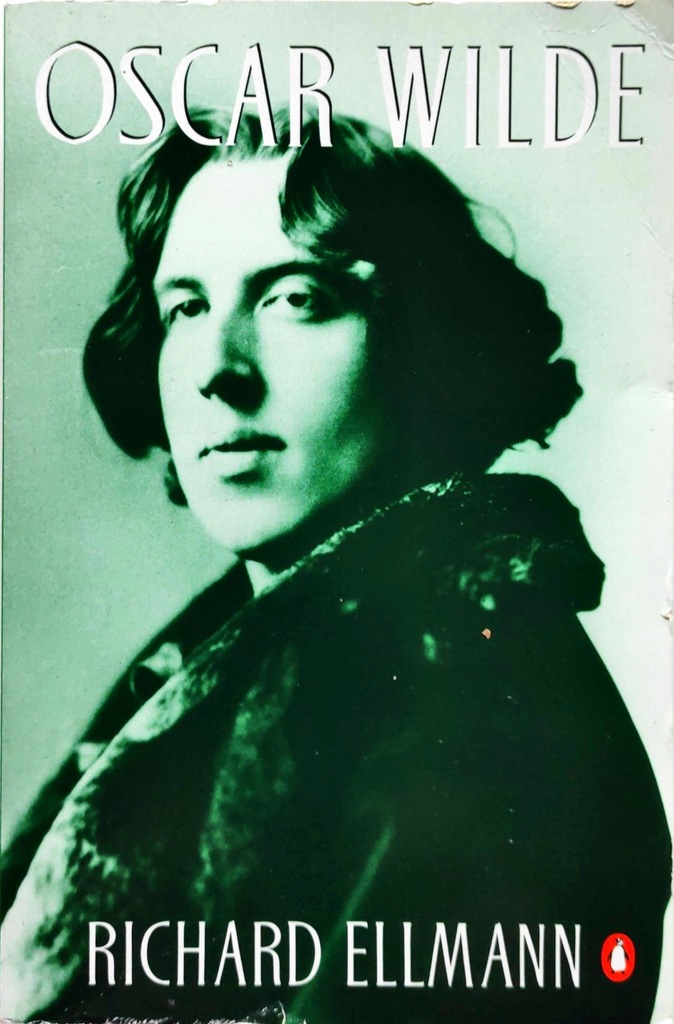
I can hardly believe that I have read this enormous tome not once, but twice. The first time was in 2002, when I read it for an online Literary Biography book group, and this second time was for my former-CAE bookgroup (which I nicknamed ‘The Ladies Who Say Oooh’, which is what my daughter used to call us). The CAE has disbanded its bookgroups and farmed out its book collections to groups, no doubt to save themselves the hassle of getting rid of thousands of books. None of us actually chose this book, but we were happy to read it. That was before the group members realized how long it was, and how small the font was. I think that I was the only one to actually finish it, largely because I knew that I enjoyed it the first time. But I think that I was more impatient with it this time.
Richard Ellman’s biography of Wilde won both the National Book Critics Circle Award and the Pulitzer Prize. It has been described as the ‘definitive’ biography, and I certainly don’t think that another Wildean fact could possibly to be dredged up that hasn’t been included in this exhaustive and exhausting book.
The first time I read it, I was largely unaware of Wilde and his story. I knew that he wrote plays, that he wrote ‘The Happy Prince’, that he was homosexual and that he ended up in jail. Perhaps my enjoyment of the book the first time was that it was all new to me then, although I have since watched Stephen Fry’s wonderful performance in the movie ‘Wilde’, seen an excellent local performance of David Hare’s The Judas Kiss and read Fanny Moyles’ Constance: The Tragic and Scandalous Life of Mrs Oscar Wilde.
Ellmann certainly leaves no stone unturned, starting right back with Wilde’s birth and and going through to rather graphic details of his death. He draws parallels between Wilde’s writing and his own life, and then (as now), I found myself regretting that I have never read The Picture of Dorian Gray. The courtcase that led to his downfall does not appear until about 4/5 of the way through the book, so there is plenty of time for Ellmann to establish Wilde’s large circle of artistic friends – including even Australia’s Charles Conder and Dame Nellie Melba- and Wilde’s conscious creation of ‘aestheticism’ as a cultural movement. In the late 1880s-early 1890s, he seemed to be everywhere: in print, on the stage, amongst the wealthy, the glittering and the cognoscenti. Ellman’s sympathies are clearly with Wilde, although he shows us his fecklessness (especially in relation to his wife Constance), his recklessness and his odd mixture of weakness and doggedness.
This second reading, however, found me impatient at the denseness of the prose and overwhelmed by the minuscule level of detail. It is as if he could not bear to leave a single fact out, and if he couldn’t squeeze it into the text, then he would carry it on in the lengthy footnotes at the bottom of the page. (That said, I was grateful that he included translations of the French in the footnotes as well). I read now that Ellman completed the book just before his death with Motor Neurone Disease in 1987, and that he was not able to revise it or correct errors which have since been corrected by another writer. Perhaps, had he had more time, he might have stripped the book back a bit, which would not have harmed it in any way and indeed may have enhanced it. As it is, Ellmann has covered Wilde’s life so exhaustively that any further biographers could not compete in thoroughness, only in incisiveness.
Half Life (BBC)Episode 5 The Road Through the Mountains Joe travels to the Kurdish region of Tunceli in Turkey, which is the new name for Dersim. Tunceli means ‘bronze fist’ which is appropriate because the area is still heavily miltarized. Poison gas (made by German chemical factories) was used in caverns, and people were bombed from above. In Episode 6 Tranquility Joe’s great-grandfather Siegfried retires to North Carolina in the United States after the war, but by 1957 he was hospitalized in a psychiatric hospital. It was there, as a form of therapy, that he began writing his lengthy memoir, which made Joe question whether that changed the status of the document that had set him off on this whole journey.
Harald Hardrada; exiled prince of Norway and mercenary, has landed in the greatest city on Earth: Constantinople. There he joins one of the most prestigious military organisations in the world, the Varangian Guard, charged with protecting the Emperor. Almost the next ten years of Harald’s young life are spent at war protecting the city from enslaving raiders. But then, he becomes embroiled in the dark and complex political intrigues and plots of the Byzantine court. Zoe, the formidable wife of the recently deceased Emperor Michael IV, who had been exiled by her husband’s successor, recruits Harald to help her seize the throne. Wealthy, influential and renowned in the world’s most glittering city, things have never seemed better for Harald. But then, does he overreach and embark upon a dangerous affair with the empress herself? Imprisoned for his crimes, Harald manages to slay the terrible serpent haunting his prison cell, and escape at last back to Kyiv.
On his return to Kyiv in 1043, greatly enriched, he finds that his nephew Magnus has taken the throne of Norway and Denmark. After a bit of skirmishing, he and Magnus agree to share the kingdom and the wealth, and when Magnus dies, Harald is now the King of Norway, which is what he always wanted. He modernized Norway and introduced Christianity and taxes, and by 1065 and now 55 years old, was known as Harald Hardrada (i.e. hard leader)
Background Briefing Agents of Influence Ep. 1 The PM’s secret strategists Quite frankly I find the whole idea and terminology of an “influencer” offensive: someone who is important for their effect on other people, rather than for anything they actually do themselves. But apparently they’re all the go in politics today, and politicians are falling over themselves to appear on their shows. I’m getting too old for all this.
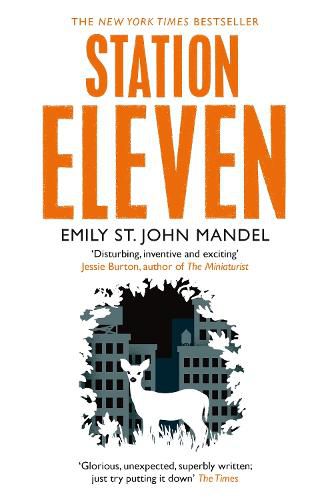
I had heard about this book during the COVID pandemic, and no wonder. Published in 2014, some six years before the world locked down, it describes a world where 21st century Western industrialization has collapsed in the wake of a virulent influenza that has wiped out 90% of the population. What cheering reading during a pandemic!
However, reading it ten years later and with those COVID years behind us, does Station Eleven stand on its own two feet? I think it does. Right from its opening chapter, which starts with a Shakespearean actor, Arthur Leander playing King Lear, collapsing on stage, I was hooked.
As Arthur falls to the floor, a member of the audience, Jeevan Chaudhary, a trainee paramedic rushes to give him CPR, watched by a little girl Kirsten Raymonde who stands in the wings. Returning home, he takes a phonecall from a friend who is a doctor, who warns him that the Georgia flu is rampant, and to take his girlfriend Laura and his brother, and to get out of town.
The narrative then jumps ahead twenty years and takes up again with Kirsten, now an adult, with only scattered memories of that night at the theatre, before everything changed. She is now part of the Travelling Symphony, a rag-tag group of actors and musicians, who move from settlement to settlement to perform music and plays. Electricity, gasoline, the internet and all the things enabled by these had ceased, and in the first years after the pandemic, life had reverted to a light-governed, subsistence struggle against other frightened groups, who were themselves fighting for existence. After twenty years, things had stabilized, albeit at a stagnant level, but a level of menace had been recently introduced by the rise of the Prophet, drawing on a mixture of messianic religion and violence to consolidate his power.
If this sounds at bit like Cormac McCarthy’s The Road, it is. I certainly had the same feeling of dread in the pit of my stomach as I read. But unlike The Road, there is not the same relentless hopelessness. This is a world that is trying to hold onto the best in music and literature, and trying to collect as many artefacts from the old world as possible so that the ‘before’ world is not completely lost. The world still looks for beauty. The book’s ending, while ambiguous, is hopeful.
It is beautifully written with strong control of the narrative, as Mandel slips back and forward between the ‘before’ and ‘after’ worlds, moving from one character to another. How prescient she was, and how chilling it must have been to pick up this book in the early days of COVID. But as a piece of writing, it doesn’t need the experience of the last few years to give it strength: it’s a very human, well-crafted book that celebrates creativity and the best of being human, giving hope without sentimentality.
The Human Subject (BBC) The Woman Who Resisted Mind Control Hiding in plain sight was a renowned psychiatrist, working at the Allan Institute under the aegis of McGill University. As a 16 year old in 1958 Lana Ponting was taken to the Allan Institute where Dr Ewan Cameron subjected her, and other patients, to a regime of LSD, shock therapy at 20-40 times the usual voltage and ‘depatterning’ and ‘positive affirmation’ to wipe clean their memories. It left her unable to form coherent memories, and she even forgot that she had had a child in the hospital who was adopted out. Dr Cameron’s methods soon attracted the attention of the CIA and their mind control efforts. And it all looked so respectable and upfront.
The Rest is HistoryEp 522 The Last Viking: Harald Hardrada Tom Holland was driving the previous four episodes about the lead-up to 1066 (having written Millenium ), but in this episode Dominic takes the reins, having himself written The Fury of the Vikings as part of his Adventures In Time series for children. To be honest, I had never heard of Harald Hardrada and I still don’t know what the connection with 1066 is. I guess I’ll have to wait for the next episode. From the shownotes:
In the 1066 game of thrones for the crown of England, the most extraordinary of the three contenders is arguably Harald Hardrada: viking warrior, daring explorer, emperor’s bodyguard, serpent slayer, alleged lover to an empress, King of Norway, and legend of Norse mythology. How did this titan of a man come to cross the North Sea with his army, and take on Harold Godwinson, in the titanic showdown of Stamford Bridge? His story before this point is so colourful that it may be one the most exciting lives in all history. Fighting from the age of twelve, Harald was born to a petty regional king of Norway, in a Scandinavia of competing religions and kingships. As a teenager, he would then join his fearsome brother Olaf, the man who united Norway but later fell foul of King Cnut, and subsequently sailed the seas and mysterious waterways of Russia, in a mighty battle to take back Norway. Their defeat was terrible and absolute, leaving the young Harald wounded and on the run. A journey of horrors and hardship would then lead him at last to the awe inspiring city of Kyiv, where he would serve as mercenary for the Grand Prince. But still hungry for wealth and glory he then travelled on to the most remarkable city in the world: Constantinople, where his life would take an even more dramatic turn
Half Life (BBC)Episode 3 Lost From 1935 onwards, Ammendorf, south of Berlin was the main manufacturing industry town for mustard gas. It was not used during WE2, but was instead stockpiled and burned after the war, leading to environmental contamination. Our narrator Joe intended to apologize for his great-grandfather’s role in manufacturing chemicals, but it took him some time to find the opportunity to do so. In 1935 the family left for Ankara, so his grandfather no longer oversaw the factory, even though he continued to receive half-pay from the company. In Episode 4 Young Republic Joe travels to Ankara Turkey, where he believed that his grandfather had worked distributing gas masks for a company now known as MKE that still makes gas marks. . Ataturk’s modernization movement welcomed Jewish intellectuals, and Hitler was friendly towards Ataturk. Joe’s grandfather was in fact working at the chemical factory beside the gasmask factory, and he smoothed the way for the Turkish purchase of German chemicals which were used in the 1938 Dersim massacre of 13,000 Kurds (maybe 3 or 4 times more).
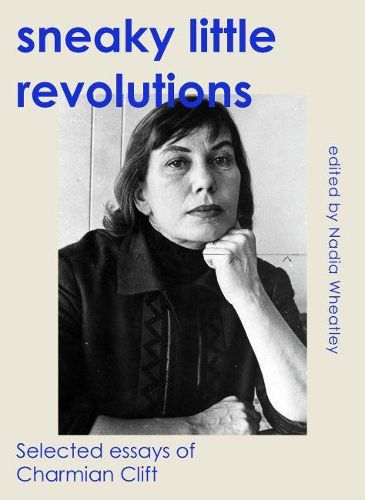
This book, edited by Clift’s biographer and former daughter-in-law Nadia Wheatley, is marketed as ‘selected essays’. More properly, they are a selection of 80 of her 225 newspaper columns published mainly in the Sydney Morning Herald and Melbourne’s Herald between 1964 and 1969, when they came to an abrupt halt with her suicide.
The newspaper columnist was (is?) a curious beast. Although there are innumerable bloggers and sub-stack writers, there seemed to be something rather special about turning over the page of a print newspaper, and seeing an article by a regular columnist, in its accustomed place on the page. I used to enjoy the columns of Sharon Gray (who I see is actually Adele Hulse), Pamela Bone and Gillian Bouras who ended up living in Greece – all women- and Martin Flanagan in the Age. I know that Anne Deveson wrote a regular column, but I only know of her through her daughter Georgia Blain. The only physical newspapers that I still receive are the Saturday Paper and The Age on Saturdays and although they have a stable of staff writers and comment columns, the only one who comes close to my perception of the ‘newspaper columnist’ in the Charmian Clift mould is Margaret Simons with her gardening columns in the Saturday Paper, and perhaps Kate Halfpenny and Tony Wright in The Age. Somehow you feel as if you know them, and that you could plonk down beside them in a coffee shop and just take up talking with them.
Of course, it’s all artifice because despite the appearance of confidentiality and intimacy, columnists project a particular view of themselves, and one that is often quite removed from reality. This is the case with Charmian Clift whose columns brim with confidence and warmth, when instead she had lived, and was still living, a life that was far removed from the suburban Australian life of many of her readers. She and her husband, writer George Johnson, circulated in an artistic and intellectual milieu on the Greek island of Hydra that could simply not be found in Australia (barring, perhaps, the communal living at places like Heide in Bulleen). There’s little sign in her columns of the infidelities and arguments that wracked her marriage. She never mentioned her family members by name, and referred only obliquely to her husband’s long hospitalization with TB. The birth of an illegitimate, and relinquished, daughter when she was 18 years old was coded as “a wrong road…that led me to disaster”.
I could find only one mention of her alcoholism:
A whole human life of struggle, bravery, defeat, triumph, hope, and despair, might be remembered, finally, for one drunken escapade.
One can only read with hindsight her essay about her husband’s forthcoming semi-autobiographical second book Clean Straw for Nothing, which she had not dared read, for fear of what he might reveal about her through the character Cressida Morley
I do believe that novelists must be free to write what they like, in any way they liked to write it (and after all who but myself had urged and nagged him into it?), but the stuff of which Clean Straw for Nothing is made, is largely experience in which I, too, have shared and … have felt differently because I am a different person …
Indeed, several commentators have linked her apprehension about the publication of this book with her suicide in July 1969 at the age of 45- a suicide that seems so paradoxical with the fiesty, intelligent personae that she had curated through her columns.
Wheatley has titled this book ‘Sneaky Little Revolutions’, echoing a rather condescending but also self-effacing comment that Clift made about her own columns to her publisher in London:
I have been making my own sneaky little revolutions …writing essays for the weekly presses to be read by people who don’t know an essay from a form guide but absolutely love it….
Some of her essays are disarmingly suburban, but there are many others that are subversive and indeed, “little revolutions” for the mid-1960s, deep in the midst of the Menzies-era. She resisted the smugness of white-Australia that expected her gratitude for returning to comfortable Australia from a ‘foreign’ country; she supported the rights of women and decried their ‘second-class’ status; she said “sorry” some forty years before the Australian government did; and she revelled in young ‘protestants’ (i.e. protesters) who challenged the complacency of the 60s. In an essay that was not published at the time, she criticized the contingency and unfairness of the National Service draft, which left some men untouched and diverted the life course of others.
As a middle-aged (who am I kidding?) woman myself, I loved her essay ‘On Being Middle Aged’.
…the middle-aged drag time around with them like a long line of fetters, all the years that they cannot escape, the mistakes that can never be undone, the stupidities that can never be uncommitted now, the sames and humiliations and treacheries and betrayals as well as the prides and accomplishments and happinesses and brief moments of wonder…. I often think that middle-aged people have two lives, the one they’ve lived, and a parallel life, as it were, that walks around with them like a cast shadow and lies down with them when they go to sleep, and this is the life they might have lived if they had made different choices in that time when time was so abundant and the choices were so many.
There is a run of essays in the volume about her trip to central and northern Australia. At a time before cheap airfares and mass international travel, her beautiful writing brought to life a view of Australia from above- something that not all Australians had seen. In ‘The Centre’:
Pitted pores. Dried out capillaries of watercourses. Culture slides of viridian clotting thick creamy yellow. Wind ridges raised like old scars, and beyond them the even, arid serrations of the Simpson Desert, dead tissue, beyond regeneration. And yet, the tenderness of the pinks, the soft glow of the reds, the dulcet beige and violet seeping in.
She has a distinctive voice, although one that is not completely unlike my own with her colons and lists and parentheses and made-up words. The genre of the newspaper column does impose a straitjacket of must-haves: an engaging introduction, a set word length, and a rounding-off last paragraph. I found myself longing for a longer essay than the requisite six pages in my e-book and something more thorny and less self-contained.
Is there any point to re-publishing seventy year old newspaper columns? Yes, I think there is in exceptional cases, and few newspaper columnists have that honour bestowed upon them. I think that it rescues some good thought, good thinking and prescience from the flow of ephemera and evokes a humility in us to remember that many others have held certain political positions and made similar observations in the past.
This film, starring Richard Roxburgh, is drawn from Peter Greste’s memoir The First Casualty about his imprisonment for over 400 days in an Egyptian prison after his arrest while covering the unrest in Cairo after the overthrow of President Mohamad Morsi. He is bewildered by the whole process, and sure at first that a mistake has been made until the truth of the gravity of his situation seeps in. He is warned by another political prisoner that, in order to survive, he would need to learn to live with himself. He learns this for himself, as he has to face the fact that his own journalistic derring-do had led to the death of BBC journalist Kate Peyton, while they were chasing a story in Mogadishu in Somalia in 2005. I’m not really sure whether Kate’s death eight years earlier really had the centrality for Greste that is shown in this film, although he was a consultant on this film so he must have been comfortable with it. Certainly the Australian embassy doesn’t come out too well, and the film is a strong critique of what passes for ‘justice’ in Egypt and the impotence of foreign governments to help. The real life Peter Greste himself appears from the outside to be a fairly stoic sort of person, and I felt that Roxburgh didn’t really have a lot to work with here.
In the Shadows of UtopiaSeason 2 Episode 7 A Khmer Rouge Ideology and Sihanouk’s Dark Side returns us to Cambodia after our little foray into Vietnam for three episodes. Covering the period 1963 to 1965, we start with the Cambodia communists in very different roles. Some, like Khieu Samphan who had been educated in Paris, were incorporated into Sihanouk’s government, which although including some anti-Sihanouk figures like Samphan, in reality acted as the pro-Sihanouk party. Others, like the Cambodian-born and bred Nuon Chea continued to act in the shadows, creating a spider’s web of decentralized communist links. Then there was Pol Pot, who left Cambodia for the border regions of Vietnam, where they found themselves being treated as junior partners by the Vietnamese communists.
Although Khmer Rouge ideology wanted to get rid of Buddhism, it also incorporated Buddhist grammar and principles like renunciation and detachment to give Cambodian (Kampuchean) communism a different nature to Confucian-influenced communism.
Meanwhile, Sihanouk was gradually moving away from the United States, culminating in nationalisation of the banks and import/export channels, and refusing US aid. He signed an agreement with North Vietnam to allow arms through the port at Sihanoukville, and eventually in 1965 he severed ties with the United States completely.
Half Life (BBC) Episode 1: Daughter of Radium Writer Joe Dunthorne had grown up on stories of his family’s dramatic escape from Germany in 1936 to England. He had listened to his grandmother’s stories about her father, scientist Siegfried, whose early experiments in using radium in commercial domestic products as a whitening agent led to his grandmother brushing her teeth with radioactive toothpaste. However, when Joe decided to actually sit down and read his great-grandfather’s memoirs, which at 2000 pages had daunted most of the family, he found near the end of the document a confession from his great-grandfather had he had been involved in research that led to the chemical weapons and agents used by the Nazis.
In Episode 2 The Quiet Town by the River Joe travels to Oranienburg, a city that was heavily bombed by the Allies in WW2 because it was the centre of chemical weapons, poisonous gas and uranium research. His great-grandfather worked in the Auergesellschaft factory. The bombing turned Oranienburg into a moonscape, but the soil still contains chemicals and unexploded ordnance.
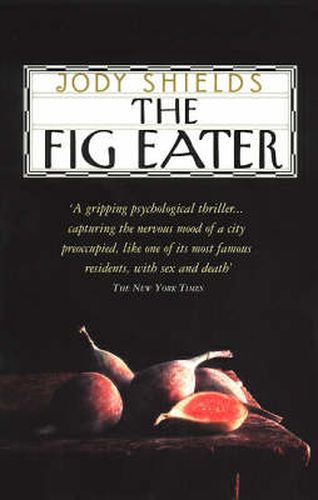
I must admit that this book was nothing like I imagined it would be. From the front cover (yes, I know don’t judge etc etc) I assumed that it would be a historical fiction but instead found that it was a detective story, and a not terribly satisfying one at that.
We meet the victim in the opening pages of the novel as a young woman’s body is being examined in the presence of the Inspector (who is never named) who, steeped in the methodology of crime investigation and influenced by the ideas of psychoanalysis swirling around early 20th century Vienna, calls in his wife, the Hungarian artist Erszébet to make a painting of the 18 year old Dora’s body in the morgue for later reference. Erszébet and her young friend, British governess Wally, embark on their own investigation, separate from and deliberately kept from the Inspector. The two investigations run in parallel, the Inspector’s being dominated by his theories of investigation and the role of the investigator, and Erszébet’s drawing on Hungarian folk tales and tropes. The ending seems to go off on a frolic of its own, straining credulity and it seemed to be an abrupt way of bringing the story to the end.
The book is set in Vienna in 1910 and the book has a detailed map at the start of the book. The text makes specific reference to particular places in Vienna, which can be seen on the map, although without an index, locating the buildings and parks was rather tedious, and I eventually realized that locations were rather incidental to the plot. Despite the care with which Shields has delineated the city, the Vienna location itself does not play an important role in the plot, unlike for example Patrick Süskind’s Perfume. There are many details in the book about figs, folklore and photography, and I began to suspect that the author was unable to let go of the research she had undertaken, and was going to put it in the book regardless of whether it actually added anything.
It was only when reading the notes that came along with the book (it was a bookgroup choice) that I realized the resonances between the victim Dora, and Sigmund Freud’s patient, Dora, on whom he based much of his theory of psychoanalysis. This clever resonance was clearly intended by the author, and yet she left it implicit in what is otherwise a very didactic book.
The relationship between the Inspector and Erszébet is a complex one, and I was pleased that she didn’t overlay the young Wally’s infatuation with Erszébet with a lot of anachronistic gender ideology. She had a light touch here, which could have been highlighted by a more overt interweaving of Freud’s theories, and their destabilizing of ‘reality’ and relationships.
The book was only 352 pages in length, but it felt much longer than that. All in all, not a particularly satisfying read.
My rating: 6/10
Sourced from: a former CAE bookgroup book. To liquidate their stock, they sent boxes of books to the disbanding bookgroups and we’re reading our way through them.
In the Shadows of Utopia Season 2, Episode 6 is the third part of this detour into Vietnamese history which I have found really interesting. The Path to the Second Indochina War – Part Three: Agent Orange, Kennedy… covers the years 1961 – 1963. The first tests for Agent Orange were carried out in 1961, and the program began in 1962. The nerve agent dioxin was included as part of the manufacturing process. JFK was a very close election, so now South East Asia was HIS problem. At this stage, Laos was seen as more of a problem. Kruschev announced his support for wars of national liberation, and Kennedy began escalating the war, although covertly and only as a half measure. The number of ‘military advisors’ was increased from 600 to 1600. Diem supported the defoliation program using Agent Orange, and a South Vietnamese navigator was placed in each plane as cover for the American involvement, despite US military unease about its use. After bombing with defoliants, villagers were moved to ‘strategic hamlets’, which was supposed to isolate villages from contact with the communist insurgency. Meanwhile, the Buddhist crisis that led to the self-immolation with which this little excursion into Vietnamese history began, came to a head in 1963. It had started earlier with the Buddhist Revival Movement in the 1920s. It clashed with Diem’s vision of putting Catholics into positions of power. After the protests and act of self-immolation, Diem was convinced that the Communists must be behind it, and cracked down even harder on the pagodas, leading to even further loss of support. On November 1 1963 there was a coup against Diem which the US ambassador claimed ignorance of, and although officially neutral, the US govt did not assist Diem. Diem escaped but he was later shop by the coup leaders. Meanwhile, back in Cambodia there was increased student and leftist protest. Sihanouk threatened the leaders, and fearing scrutiny of his secret identity Pol (we’ll call him ‘Pol’) returned to the jungles and the revolutionary movement.
The Rest is History Ep. 551 The Road to 1066: Countdown to Conquest (Part 4) I really have learned so much from this four part series. Rather than a great, sudden invasion, the integration of the Normans and the Britons started long before, as did the integration with Denmark. Quoting from the show notes, which explain this much better than I could:
Often symbolised as the last of the Anglo-Saxons, [The Godwinson family]’s stratospheric rise to power was engineered by Godwin, an obscure Thaine from Sussex, in a striking case of social mobility. Making himself integral to Cnut, he was made Earl of Wessex to help him run his new kingdom. But Godwin was also cunning and conniving, constantly shifting sides to ensure the maximum advantage to his family. Even Edward the Confessor, who hated the Godwinsons, had no choice but to promote Harold and Godwin’s other sons, and marry his daughter, Edith. But, with his hatred mounting and the couple childless, the fortunes of the Godwins would soon change…in September 1051, with tensions reaching boiling point, they went into exile. It would not last, and their return would see them catapulted to even greater heights of influence. Meanwhile, just as Edward’s life was dwindling, Harold’s star was rising, and across the channel William of Normandy’s prowess was also mounting.
On returning from exile, Edwin and the Godwins reconciled. Harold Godwin was shipwrecked, and taken under the protection of William of Normanby, and he swore to uphold William’s claim to the throne should Edward remain childless (which it was pretty obvious he would). Was Harold coerced into this? Certainly, if Harold or one of the Godwins became King, William certainly would invade. Meanwhile, there was ‘trouble up North’ with rebellion in Northumbria, where Harold’s brother Tosvig was in charge. In the end Tosvig went into exile, just as Edward was getting increasingly frail. And meanwhile, there was action afoot in Denmark.
Ezra KleinBest Of: Margaret Atwood on American Myths and Authoritarianism Can I admit that I was a bit disappointed in this? It was actually recorded in 2022 before the Second Coming, and there’s lots of talk about story and narrative and it wanders all over the place.

 The Resident Judge of Port Phillip