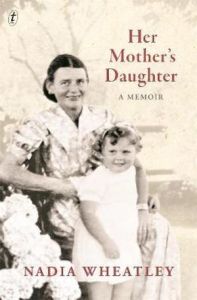
‘Her Mother’s Daughter’ by Nadia Wheatley

Wheatley_Mothers_Daughter

2018, 352 p.

I’ll be honest: I don’t really like the ‘parental memoir’ books, even though I seem to keep reading them.  You know the ones I mean, where a child (often already an established writer) writes the biography of one of their parents, interweaving it with their own memoir and ‘journey’ in trying to understand their parent/s. I’ve read my share of them, historian Jim Davidson writing about his father; Biff Ward writing about her historian father and his wife; Catherine de Saint Phalle writing about her Parisian parents Poum and Alexandre; Marie Munkara writing from the point of view of a member of the Stolen Generations re-discovering her family; Anne Summers writing about her mother and a painting, and Magda Szubanski writing about her family and coming out.

That’s a lot of books for a genre that I’ve said I don’t like. I am uncomfortable with the stripping-bare of a parent who cannot defend their actions, and I dislike the sense of long-held grievance that often permeates a child’s judgement of their parent, no mater how long ago these childhood events occurred.

So why, then, did I read this ‘parental memoir’? I think it’s probably because I admire Nadia Wheatley as a biographer through her excellent biography of Charmian Clift The Life and Myth of Charmian Clift and I was interested to see how a professional biographer/historian deals with the problem of writing a hybrid biography/memoir. [It was this methodological curiosity that led me to read Davidson and Summers, and will probably lead me to Jill Roe and Brenda Niall one day.] More immediately, it was as a response to reading excellent reviews by Jonathan Shaw and Sue at Whispering Gums.

The title of Wheatley’s book Her Mother’s Daughter is an act of claiming back her relationship with her mother. She was told by family that because she was only nine when her mother died, she couldn’t possibly remember her. Besides, she was told, her mother would have hated her Leftist policies. It was in reconstructing her mother’s life as an adult, from what people told her about her mother, and drawing on her own memories written at the time of her mother’s death in a valiant attempt to stop them dissipating (surely the act of a future writer and biographer!) that she realized that her mother would not have rejected her because of her politics and that she was, indeed, more of her mother’s daughter than her wider family recognized.  The choice of title is also an act of distancing herself from her father, to whom she was often likened, and with whom she had a fearful, strained relationship. His behaviour, as her research proved, was even darker than she realized as a child.

The book is written in four parts. The first section ‘Neen’ tells of the early life of Wheatley’s mother Nina Whatley, born in 1906 in northern NSW, whose own mother died while Nina was young. Her life seemed destined to end in nursing her much-loved elderly father and her less-loved stepmother, but World War II was her escape, when she enrolled as a nurse and worked with the 6th A.G.H. in Greece and Palestine. After the war she worked in refugee camps with Displaced Persons with the United Nations Relief and Rehabilitation Administration, taking up a position of responsibility that saw her nicknamed “Miss UNRRA”.

It was in these camps that she met the English doctor, Dr (John) Norman Wheatley, as described in Part II ‘Nina and John’. Dr Wheatley was married (although separated) at the time, and unknown to Nina he had a darker side that manifested itself through his alter ego ‘Mr Black’, a legal identity that he used for gambling, dodgy enterprises, affairs.  Already here as a reader you sense the perils for Nina in finally marrying Dr Wheatley. Their affair, while it was clandestine and without responsibilities, filled their weekends with liaisons, parties and travel. When Neen unexpectedly fell pregnant, he did not welcome the child, and Neen returned home to Australia to have her child.

Part III ‘Nina, John and Nadia’ is the longest section of the book, and it conveys well the anxiety evoked in this little girl by her father’s capricious, heedless and manipulative behaviour. They shift from one house to another as her father’s enterprises turn sour. Her sardonic father plays mind-games with both mother and daughter, with his menacing repetitions “do you understand?” when telling or showing Nadia aberrant  anecdotes and images. When Neen complains of chest pain, he ignores her, dismissing the pain as psychosomatic, a diagnosis too easily conveyed and shared amongst the male-dominated psychiatric fraternity. It was a dismissal that probably robbed Neen of years of health.

In the final Part IV, after Neen’s death, Nadia goes into the care of a school friend’s family; a paid arrangement she later learns, and one where she is vulnerable. The relationship with her father, already brittle, petered out.

Looking over this summary, there’s not a lot of joy here. Disappointments and betrayals, when they occur, seem inevitable. Yet, the book does not have the howl of grievance that too many parental memoirs have, perhaps because Wheatley’s intent is to recover her mother in order to identify with her, instead of to judge. The judgement is directed towards her father instead.

There is a narrative distance between Wheatley the author and Wheatley the character, and I think it is this detachment and – is ‘professionalism’ the word?- that makes this book a work of biographical reconstruction as much as memoir.  Most of it is written in the third person, but occasionally Nadia Wheatley the adult biographer breaks into the narrative, commenting on information that she has uncovered, responding with scepticism, regret or shame (as when she realizes that Neen’s inheritance of the family home had caused such resentment in the family). Wheatley has brought her biographer’s eye to her own family, contextualizing it within the mores and expectations of the time, filling in background information about the refugee schemes after WWII and psychiatric medicine during the 1950s, particularly in relation to women. She is explicit about her sources – her mother’s letters (often quoted verbatim), interviews and conversations with family members,  discussions with people who knew Neen – as a way of testing her own reality and memory against those of other people. Although the structure of the book is mainly chronological, it skips back and forth, shifting between third and first person. It is a deft book, written with confidence. Its emotional tone is dispassionate, and you, as a reader, do the emotional work of being enraged at people’s self-centredness, fearful of what seems inevitable, and hollowed by grief and unfairness. That Wheatley has brought you to this place is a testament to her skill as a writer.

Sourced from: Yarra Plenty Regional Library as an e-book

My rating: 9/10
AWW2019I have included this on the 2019 Australian Women Writers Challenge database
 

Article: Homelessness and Medical Research in Wartime London

There’s an excellent article called ‘Homelessness and Medical Research in Wartime London‘ by David Saunders on the History Workshop website. He’s a PhD student at the Centre of the History of  the Emotions  (a newish historical ‘turn’ that I find fascinating) at Queen Mary University in London.

During the war, pacifist and conscientious objector Bernard Nicholls established ‘Arch 176’, an air-raid shelter for rough sleepers, alcoholics and ‘misfits’ who were not made welcome, and did not want to go to, other conventional air-raid shelters.  The rough sleepers, who were often infested with lice, came to the attention of Patrick Alfred Buxton, Director of the Department of Entomology at the London School of Hygiene and Tropical Medicine.  His glee at finding such good ‘subjects’ is rather ambiguous, and steeped in ambivalent attitudes towards the homeless and their bodies.

It’s a fascinating article, and the British Pathé video embedded in the post is intriguing, repellent and condescending all at the same time.


I hear with my little ear: Podcasts 16-23 September 2019

Letters of Love in World War 2. Have I mentioned that I’m really enjoying this series? In Episode 2 North Africa: Lost Messages, Cyril is sailing off to Egypt, but Olga doesn’t really know quite where he is. The mails are interrupted, and there are whole weeks of silences.  In Episode 3 Siege of Tobruk: Battlefields and Reality,  Cyril writes Olga a long,18 page letter after the battle of Tobruk. It’s surprising that it got through the censors, but I guess the battle was over by then and it didn’t matter what information he gave. His long letter, full of battle, is interwoven with her gentle letters about life back home, shifting house, just getting on with things. I’m not surprised  by their anti-facism, but they are both rather radical and even pro-communist.

RevolutionspodcastEpisode 10.12 The Decembrists led an uprising against the Tsar as part of the revolutionary ferment during the 1820s. But it didn’t go well. Mike Duncan has been doing these Revolutions podcasts for years and years (literally) and now it’s all paying off as the connections between the different revolutions become clear.

Outlook (BBC) A year ago Brazil’s National Museum burnt down.  In Keeping my country’s burned past alive, one of the anthropologists talks about the loss of artefacts relating to the indigenous Wari’ people, although fortunately she had digitized many of the voice recordings that were destroyed. She, and her fellow museum workers, decided to get tattoos to mark their grief at the loss of the museum.


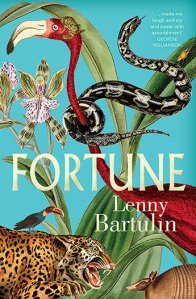
‘Fortune’ by Lenny Bartulin

Bartulin_Fortune

2019, 292 p.

Everyone knows the gods love a good joke, and look… They grinned and nodded between themselves and then pointed down at the crowd, made more random selections: him, her, her, him et cetera. Choices made, they whipped up the sticky tendrils of fate and loosed the surging winds of change (those puff-cheeked cherubs) and ..then the gods took a well-deserved afternoon nap. All that’s left for us are the incomplete maps, to conjecture and argue their scale. (p. 33)

We’re often uncomfortable at the thought of the randomness and contingency of our lives. Even if we don’t believe in a host of gods up in the sky, playing us like chess pieces, it’s unnerving to think that our scheduling and planning can be upset without warning. These capricious and heedless gods of chance pop in and out of Lenny Bartulin’s Fortune, smirking and upending the life trajectories of a sprawling cast of characters reaching from Napoleon’s Berlin of 1806, through to the convict settlements of Australia, ending up on the killing fields of the Western Front.

Characters move in and out of this novel but there is particular interest in four: Johannes Meyer, who is press-ganged into Napoleon’s armies and bounces from one dire situation to the next; Elizabeth von Hoffman who traverses the empire through her connections with different men; Claus von Rolt who deals in the objects of empire, and a questing philosopher Krueger.  This is not a straight-forward narrative, but instead bounces from one character to another, leaving some behind without warning, bringing someone in for little reason before bundling them out again.  It is almost like a film in the way that it cuts abruptly from one scene and storyline to another.  It reminded me a little of Barthes’ The Sotweed Factor or Laurence Sterne’s The Life and Opinions of Tristam Shandy, Gentleman in its quick scene changes, large cast of characters and its insouciance about their fates.

The text is divided into ten ‘books’ that move chronologically. Each book is divided into  multiple ‘chapters’, each with a subheading, some only a page in length, others longer. I found the last two ‘books’ unnecessary, where the action jumped from the late 1830s up to 1916. I’m not sure why the author felt he had to do that – some misplaced Anzackery perhaps? The settings are well-known to us through books popular image and film – Napoleon on his horse, a bit of Robert Hughes’ Fatal Shore or For the Term of His Natural Life, the colonial excesses of Joseph Conrad. Nonetheless, there has been good research go into this book – for example in the Dutch sugar plantation cities of the South American coast – and the book wears the research with a chuckle.

I read this book in one sitting, on a cold Saturday afternoon which I think would be the perfect way to enjoy it. I don’t think that I could have kept all the characters in mind had I read it in my usual 15-minutes-before-bed mode.  It has glowing blurbs from young(ish) Australian male writers and journalists – Geordie Williamson, Paul Daley and Chris Womersley, and there does seem something ‘masculine’ in the writing [says she, not quite knowing what she means by this] – perhaps the nihilism, sexuality and virtuosity that pervades the book?  I enjoyed it for the romp and its vitality. It requires concentrated reading, and it rewards it.

My rating: 8.5 and possibly 9 out of 10

Sourced from:  Yarra Plenty Regional Library.

Other reviews: Lisa at ANZLitLovers didn’t like it: Melanie Kembrey of the SMH did.


Movie: The Australian Dream

I felt ashamed as I watch this. I had forgotten just how decorated Adam Goodes is (was), and I hadn’t realized that he knew so little about his family’s story. His stance against racism was treated with contempt and I just wanted to shrivel up watching Sam Newman, Andrew Bolt and Eddie Maguire. The film operates largely at the emotional level, and I think that Stan Grant lets Australia and the footballing fraternity off too lightly.  And as if that isn’t bad enough, the comments under the YouTube video are horrible reading. Nothing has been learned.

My rating: 4/5

I hear with my little ear: Podcasts 8-15 September 2019

Letters of Love in WW2  I’ve only just started listening to this, but it’s very touching. After their parents have died, adult children and grandchildren find a cache of letters in the attic. They are the letters that Cyril and Olga sent to each other after Cyril went off to fight WW2, having only been married three months. They are beautifully read, and there’s a short commentary from the family at the end of episode 1. Episode 1 is around July 1941 when Cyril sails towards Egypt. [I didn’t know that women were offered 50% off the cost of joining their husbands at war]. Cyril, in particular, writes beautifully.

Lectures in History. You know- I somehow avoided doing American History the whole way through high school, and I know more about Canadian colonial history than I do about American colonial history. Colonial America before the Revolution seems to me to be a fairly evenhanded explanation.

Money Box (BBC). I’m listening to a money program?? (I’m doing a talk about Work at my UU fellowship- that’s the only reason why.) Universal Basic Income – Can It Work? is a panel discussion about Universal Basic Income- how does it differ from current and historical provision? What have the trials found? Can it work?

Revolutionspodcast  Episode 10.11 War and Peace picks up at the death of Catherine the Great, just before Napoleon came on the scene.  Her son Czar Paul came to a bad end and Czar Alexander enters the picture. The podcast gives a fascinating account of the Napoleonic Wars from Russia’s point of view- did you know that Czar Alexander captured Paris? (I didn’t)

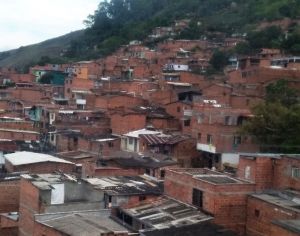
IMG_20190220_094158_smallBBC Assignment. . Colombia’s Kamikaze Cyclists is about young teenagers who career down the steep hills surrounding Medellin in Colombia on specially modified bikes without any safety gear. These kids live in the slums that cling to the sides of the mountains surrounding Medellin.


Start the Week (BBC) Jared Diamond has a new book out – Upheavals: How Nations Cope with Crisis and Change. In it, he argues that there are parallels between an individual facing a crisis, and a nation facing a crisis. As he did in ‘Collapse’, he uses different societies to illustrate his thesis. In this panel discussion of his book, Jared Diamond and national crisis,  there’s quite a bit of talk about Brexit and Trump, but he also talks about Finland and Meiji Japan. And little old Australia gets a look-in too.

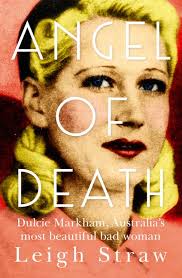
‘Angel of Death: Dulcie Markham, Australia’s most beautiful bad woman’ by Leigh Straw

straw_dulcie_markham

2019, 251 p. & notes

Historian Leigh Straw has been working on the underworld in Sydney between the 1920s and 1950s for some time. This book forms the third part of a trilogy. In The Worst Woman in Sydney: The Life and Crimes of Kate Leigh (2016) looked at underworld figure, sly grogger and cocaine dealer Kate Leigh, while in Lillian Armfield: How Australia’s First Female Detective took on Tilly Devine and the Razor Gangs and Changed the Face of the Force (2018) she looked at Lillian Armfield, the policewoman who, excluded from other types of crime fighting, was charged with chasing down young girls and diverting them from the vices of prostitution and addiction. Working on these two opposing forces – the criminal and the police officer- she kept coming across Dulcie Markham, who was well known to both Kate Leigh and Lillian Armfield. Obviously fond of the long book-title, in Angel of Death: Dulcie Markham, Australia’s most beautiful bad woman, Straw traces the life of this beautiful and notorious woman, who traversed Australia and was completely embedded within the underworlds of the cities in which she lived.

And Dulcie Markham was beautiful: stunningly so. She was known as “Pretty Dulcie”, but she was also known as the “Angel of Death” and “The Hoodoo Girl” as the men with whom she associated were shot and stabbed in a mounting rollcall of violence and death. Born in 1914 in Surry Hills (in Sydney) she ran away from home at the age of fifteen and took up prostitution as one of Tilly Devine’s girls, at a time of rivalry between the two Sydney crime-madams, Kate Leigh and Tilly Devine, and at a time when sly grog, gambling, larrikins and the Razor Gangs made Sydney a dangerous place to be. She first appeared in court as a member of Sydney’s underworld in 1931, when she gave evidence – or more correctly, stalled in giving evidence- at the inquest into the death of her erstwhile lover by her more recent paramour. This was the first of a number of deaths of five lovers and husbands where she was not physically present, but could well have been involved.

It is interesting to see how the sources available have shaped this story. Dulcie Markham was certainly talked and written about, and her police file was bulky, but she herself rarely spoke to reporters and there is virtually nothing written by Markham herself. As a result, Dulcie’s story was completely embedded within the stories of other people. At times I felt as if the author let herself be caught up too much with these other minor personalities, who had crime histories just as sordid as Dulcie’s.  Sometimes the excursions were triggered by some association, for example a sudden jump forward to the murder of a prostitute in the 1980s when discussing whether Dulcie was intimidated – a fairly tangential connection.  Perhaps it’s part of the crime writing genre itself (I’m thinking of John Silvester’s columns in The Age) but there’s a chatty, familiar chumminess and a bit of a chortle that comes through when the excesses of the underworld are being written. It makes me a little uncomfortable.

Yet this intimacy with the underworld is written within the academic framework of sources, academic books and theses, endnotes and bibliographies. The book wears its research lightly.

What these interwoven anecdotes and networks do demonstrate, again and again, is the violence which seemed almost casual, and the narrow line between being a perpetrator and being a victim.  Dulcie was herself shot and bashed, but bound by the code of silence as part of milieu in which she moved.  Surprisingly, although charged and convicted many times,  she spent remarkably little time in jail herself.  Clear, too, is Dulcie’s mobility as she shifts between Brisbane, Sydney, Melbourne and Perth, each time bobbing up in the middle of that city’s underworld, and switching her name frequently. Once in, it was hard to escape.

Straw contextualizes Dulcie’s life well, giving insights into the nature of criminal empires, the specific crime scene in a particular city, the nature of prostitution, and more general social life in Australia across these decades. Her final chapter, when she weighs up Dulcie Markham’s life is strong, where she discusses the trope of the ‘femme fatale’ and assesses her against Anne Summer’s dichotomy of ‘Damned Whores and God’s Police’. As against all the things that we don’t know about Dulcie Markham, Straw concludes:

What we do know is Dulcie May Markham was one of the toughest crime figures in Australia from the 1930s to the 1950s. In the violent neighbourhoods of crime across three cities, she proved herself by utilising the avenues then open to women involved in crime- prostitution, sly-grogging and gambling houses. Dulcie showed great intelligence, resilience and a staggering ability to live through intimidation and violence. She was a survivor in a world that saw few live to retire as she did to a quieter life. (p. 243)

Sourced from: Yarra Plenty Regional Library

My rating: 7/10

AWW2019 I have included this book on the Australian Women Writers Challenge database.

‘What are they feeling?’ game

The Queen Mary Centre for the History of Emotions in the UK has a rather fun little game on their website. What are they feeling? presents you with historical images that you’re asked to interpret in terms of the emotion that is being conveyed.  I did fairly well on the human figures, but very poorly with the animal images. Just as well I’m not a vet.

You can find it at The Emotions Lab website.

They have a good collection of audios and videos on the site, too.

I hear with my little ear: Podcasts 1-7 September 2019

Podcasts about Snyder’s Road to Unfreedom. Having finished reading Timothy Snyder’s book The Road to Unfreedom, I listened to three podcasts where Snyder is talking about his book. Boy- the guy can talk! Certainly he’s going over the ideas that he has already written in his book, but he can talk articulately about tangential issues as well. He comes over as more optimistic in person than I felt he was on the page. On April 9 2018 he spoke at the Free Library of Philadelphia  and answered, not always successfully,  some interesting questions. He made a particular effort to speak about Russia, Ukraine, Europe and America all within the same frame.  It’s notable that he emphasized that the Mueller investigation, which had not reported at that time, would be about the rule of law and not other issues.  In Dan Snow’s History Hit, he speaks more as a historian, about the role of history in reclaiming the importance of time. Finally, Snyder is interviewed in a program titled “Liberal Democracy’s Misplaced Faith in the Future” on Trumpcast, which is a more blatantly politically partisan (i.e. anti-Trump) than the other programs, and this interview is far more U.S. oriented

Rear Vision (ABC) I listened to two podscasts that really tie in with current events. Trump, Greenland and the longer tale of American real estate talks about previous times when America has purchased land – from the French with the Louisiana Purchase, from the Russians when they bought Alaska, from Spain when they bought Florida, and Arizona and New Mexico from the Mexican as part of the Gadsden Purchase. However, in recent years America has been able to exert hegemony through the construction of bases without having to buy the whole country – some 500 of themacross the world. It is suggested that Trump’s plan for purchasing Greenland betrays his real estate developer tendencies, rather than a strategic plan.

The second podcast  Kashmir in lockdown was about Kashmir and India’s revocation of Article 370. The two academics here tell of their perspective of this action from the point of view of their own country (Pakistan or India) although they do have quite a few commonalities.  I’m uneasy about Indian assertiveness here, especially with two nuclear-armed countries.

Rough Translation Two good ones here. DIY Mosul is about the phenomenon in post-war Mosul (in Iraq) where people started volunteering to clean up the city- something almost unheard of after so many years of war. Yet an act that seems so benign wasn’t necessarily perceived that way by the post-war Iraqi government.

We Don’t Say That is about language in France -in particular, language for talking about blackness. There are two related stories here: one about a woman of French/American/Congolese origin who is trying to get a particularly offensive French term changed, and running up against the strict official controls on the French language. The second story is about claiming the word “black” in French, in a culture where race is not spoken about (even though it might operate powerfully). Really interesting.

Saturday Extra. Continuing with her series on Latin America, Geraldine Doogue talks with Gustavo Flores-Macias from Cornell University about the militarization of the Southern Border of Mexico/Guatemala, at the behest of the United States in Mexico Under Pressure. Mexico is beefing up its National Guard, an organization introduced in 2006 to deal with gangs, but which coincided with a higher murder rate in Mexico. Now the National Guard is controlling the Southern Border in a political ‘deal’ where U.S. chooses not to impose tariffs yet, as long as Mexico stops migrants coming through.

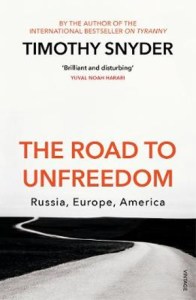
‘The Road to Unfreedom’ by Timothy Snyder

snyder_road_to_unfreedom

2018, 279 p & 60 p. footnotes

Perhaps it’s a function of geography and economics, but here in Australia at this time we are more concerned about the rising power of China than we are about the rising power of Russia. Nonetheless, we’ve been aware of it through reading about the U.S. election and the Mueller Report, through watching with curiosity the Maidan protests in Ukraine, and more tragically through the shooting down of Malaysian Airlines MH17, which prompted particular Australian attention because of the large number of Australians on board.

The subtitle of this book is ‘Russia, Europe and America’ and with its very current focus, it seems a little incongruous that it should be written by a historian, rather than a political scientist.But historian Timothy Snyder is, and he was a close associate and friend of the late Tony Judt, another acclaimed 20th century historian. Echoing the title of F.A. Hayek’s treatise on market liberalization, The Road to Serfdom, Snyder’s book explores the danger posed to the Enlightenment values of reason and reasonableness through two linked historical narrative forces: the politics of inevitability and the politics of eternity.

The narrative of inevitability is the sense that the future is just more of the present, with nothing further to be done, as exemplified by Francis Fukuyama’s hubristic and premature claim of the triumph of Western-style liberal democracy marking “The End of History“.  Communism prior to the collapse of the Soviet Union in 1991 had its own politics of inevitability: “nature permits technology, technology brings social change; social change causes revolution; revolution enacts utopia”. (p.7)

When the politics of inevitability collapses, as it did in 1991 for the Soviet Union and in the wake of the GFC for Western economies, it ushers in the politics of eternity. He focuses on Russia, but any country could slip into the politics of eternity (and indeed, perhaps several other countries are already doing so). The politics of eternity places one nation at the centre of a cyclical story of victimhood (p.8), where progress gives way to doom, crises are manufactured and manipulated, and citizens experience elation and outrage at short interval (p.8). In both forms of politics, history and facts are used in particular ways.

Inevitability and eternity translate facts into narratives. Those swayed by inevitability see every fact as a blip that does not alter the overall story of progress; those who shift to eternity classify every new event as just one more instance of a timeless threat. Each masquerades as history; each does away with history. Inevitability politicians teach that the specifics of the past are irrelevant, since anything that happens is just grist for the mill of progress. Eternity politicians leap from one moment to another, over decades or centuries, to build a myth of innocence and danger. They imagine cycles of threat in the past, creating an imagined pattern that they realize in the present by producing artificial crises and daily drama. (p. 9)

Snyder argues that Russia was the first 21st century power to reach into the politics of eternity, and that it has been increasingly successful in exporting it to other countries.  He points to Vladimir Putin’s championing of the fascist philosopher Ivan Ilyin, an early critic of Bolshevism who was expelled from Russia in 1922. Impressed by the ideas of Hitler and Mussolini, Ilyin proposed a lost, innocent “Russian Spirit” which would throw of the Bolshevism inflicted on an innocent Russia by the West, which would be rescued by a manly, virile redeemer who would unite his people to welcome God to return to the world and help Russia bring an end to history everywhere.  Vladimir Putin identified Ilyin as his chosen chronicler of Russia’s past (even though Ilyin was no historian); he organized the repatriation of Ilyin’s remains from Switzerland to Moscow for reburial in 2005, and he ‘brought home’ his papers from a university in Michigan. His essays were reprinted and reportedly, given to all Russian civil servants.

The purpose of his book, Synder claims, is “an attempt to win back the present for historical time, and thus win back historical time for politics” by “trying to understand one set of interconnected events in our own contemporary world history, from Russia to the United States, at a time when factuality itself was put to the question.” (p.9). His book moves roughly chronologically from 2011 onwards in six chapters titled as opposites: Individualism or Totalitarianism; Succession or Failure; Integration or Empire; Novelty or Eternity; Truth or Lies; Equality or Oligarchy.  He identifies two of Ilyin’s strategies at play: first, identifying enemies to the Russian spirit – homosexuals, Muslims, Jews, separatists, and second, exporting to other countries an attack on truth and facts by outright lies and manipulation, with the aim of using disinformation to divide and polarize democracies (most particularly U.S. Europe and Britain).

We saw the first of these at play in the Breslin school massacre and the Moscow theatre siege, which were blamed on Chechen separatists. With the invasion of Crimea, the poisoning of Alexander Litvenenko and the Skiprals in London, the ‘intervention’ in Ukraine, and the shootdown of MH17 we saw outright lies as the Russian government denied all involvement despite clear evidence to the contrary. We have seen how Vladimir Putin models himself as a hyper-masculine, horse-riding, shirtless ‘redeemer’- and indeed, with the exception of Angel Merkel and Marine Le Pen, women have no place at all in Snyder’s book. And with the Mueller report (which had not been released at the time of publication of this book) we see Russian influence in American politics, even if Mueller did not directly link it with Trump personally. Snyder suggests that Russia is content to use Trump as a ‘useful idiot’, pumping him up as a ‘successful businessman’ and allowing him to sow his own distrust and manipulation of facts. Russia is happy for the European Union to turn on itself and splinter through Brexit,  and it has the computer networks and resources to give prominence to far-right politicians in the West and prod these forces into action.

This book is meticulously footnoted, drawing both on newspaper articles (as one might expect in such a recent history) and academic texts. It is a fairly complex read, and in joining the dots it ranges across countries and events. In doing so, he takes the time to explain the event before weaving it into his broader argument. I found this book chilling and depressing. I’m not sure that individuals are going to have the strength to resist such powerful forces, and everywhere I look – America, Britain, Europe – I find even more reasons to despair.

Perhaps he didn’t want to end up at such a bleak destination because he closes his book by arguing the importance of truth; distinguishing between the true and the appealing, and resisting cynicism. “To seek the truth means finding a way between conformity and complacency, towards individuality.”(p 278)

If we see history as it is, we see our places in it, what we might change, and how we might do better. We halt our thoughtless journey from inevitability to eternity, and exit the road to unfreedom. We begin a politics of responsibility. (p.279)


Sourced from: Yarra Plenty Regional Library

My rating: 9