I have recently discovered that the Instituto Cervantes sponsors free access to Spanish movies on Vimeo, for a period of 48 hours per film. They are streamed through Vimeo, with English and Spanish subtitles. I don’t really know much about Spanish or Latin American film (or any film, for that matter) and my awareness of Spanish directors or actors is very limited. Nonetheless, I’ve been watching a few of these with the Spanish subtitles on. At times I have to stop the video if there’s too much text, or if I think that there might be something particularly important happening. I’d be doomed trying to watch these films without subtitles, but so far, I’ve been able to keep up as long as the Spanish subtitles are there.
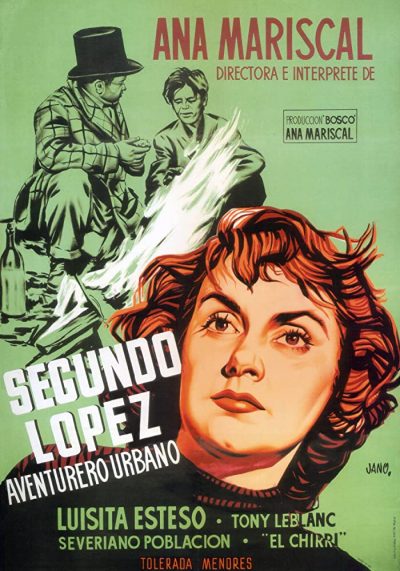
Segundo Lopez is about an honest, good, somewhat naive man who leaves his village after his mother dies. He befriends a street urchin, El Chirri who at first tries to rob him, but they decide to stick together. Segundo gradually goes through his money, buying presents for people he befriends. Segundo and Chirri become close to Marta, a young, ill woman living in their boarding house. Eventually they lose everything and decide to move on.
The film was directed by Ana Mariscal, a leading actress in Franco’s Spain. She also stars in the movie as Marta. It is filmed in black and white, with consciously old-fashioned lighting.
Heather Cox Richardson Her ‘Reconstruction’ series continues on January 28th where she discusses the ‘switch’, where the Republicans went from supporting the idea of every American (man) being able to get ahead, to the protection of Big Business. In order to pay for the Civil War, the Republicans introduced taxation (yes, the Republicans) and erected a tariff wall around the whole US economy. When the economy soured, the argument (that we still hear trotted out today) was that the economy and business had to be protected so that the little man could be employed. There’s a fair bit of economics here, but I’ve always wondered when the Republican/Democrat switch occurred.
The Daily (NYT) Down here in the Southern Hemisphere, we have been watching the icy storms in Texas with disbelief. Texas?! The Blackout in Texas (February 17) has an interview with someone huddling in their icy house, having charged their phone in the car, and then another energy journalist with the NYT.
In A Battle for the Soul of Rwanda, they look at the current situation of Paul Rusesabagina, the hero of Hotel Rwanda, who is currently facing terrorism charges in Rwanda. I feel disappointed that things seem to be becoming more repressive in Rwanda- I was very impressed with the beauty, cleanliness and apparent reconciliation in the country..
Conversations (ABC) Australians are very familiar with Dr Norman Swan and his Coronacast podcasts, but most of us had not heard of his son, journalist Jonathan Swan until his Axios interview with Donald Trump. Jonathan Swan now has a podcast How it Happened and in this Conversations episode Trump’s Last Stand Richard Fidler talks with Jonathan Swan about Trump, and the journalistic environment in the Trump White House.
How It Happened And so of course, I then listened to Jonathan Swan’s podcast How It Happened. It is in five episodes. He argues that there is a direct line between Trump’s premature declaration of victory on Election Night and the invasion of Congress on January 6. He goes through Trump’s clutching at a new legal team, his rupture with Barr and Pence, and finishes with a very detailed analysis of what happened on January 6 from the point of view of the congressmen. Unfortunately, instead of having named sources, he is having to work with “deep backgrounding” where he can use the information given to him, but not identify the source. Nonetheless, the series gives a good fly-on-the-wall retelling of post-election Trump antics.
Background Briefing (ABC) Down in leafy Mt Eliza, there was an ashram led by Russell Kruckman. The chilling secrets of a Melbourne guru is a pretty typical cult-story, complete with manipulation, exploitation and sexual abuse. The chilling secrets of a Melbourne guru spends more time than it should on even questioning whether this is a cult.
I haven’t read the starting book for Six Degrees of Separation in March. It’s Julia Baird’s Phosphorescence and it’s sitting beside the bed unread. In fact, I had to look up what phosphorescence actually IS and I find that it is a sort of light. So, for the March Six Degrees, I’ll go with the theme of ‘light’. You can read the ‘rules’ for Six Degrees of Separation on Kate’s Books are my Favourite and Best website but essentially it’s a form of trigger association based on the books that you have read. So, thinking of light….
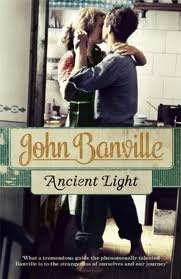
I really like John Banville’s intelligence and the way that he makes you work hard as a reader. In Ancient Light, he effortlessly handles two narrative lines, while expanding your vocabulary. I must confess that I didn’t realize that it was part of a trilogy – and a trilogy that I had read, no less!- and I felt rather foolish when I realized that the books were all related.
I was rather less impressed by Ellen Van Neerven’s Heat and Light, a collection of short stories arranged around three themes: Heat, Water and Light. It was a bit of a ‘curate’s egg’ of a collection- very good in parts, but some stories made less of an impression.
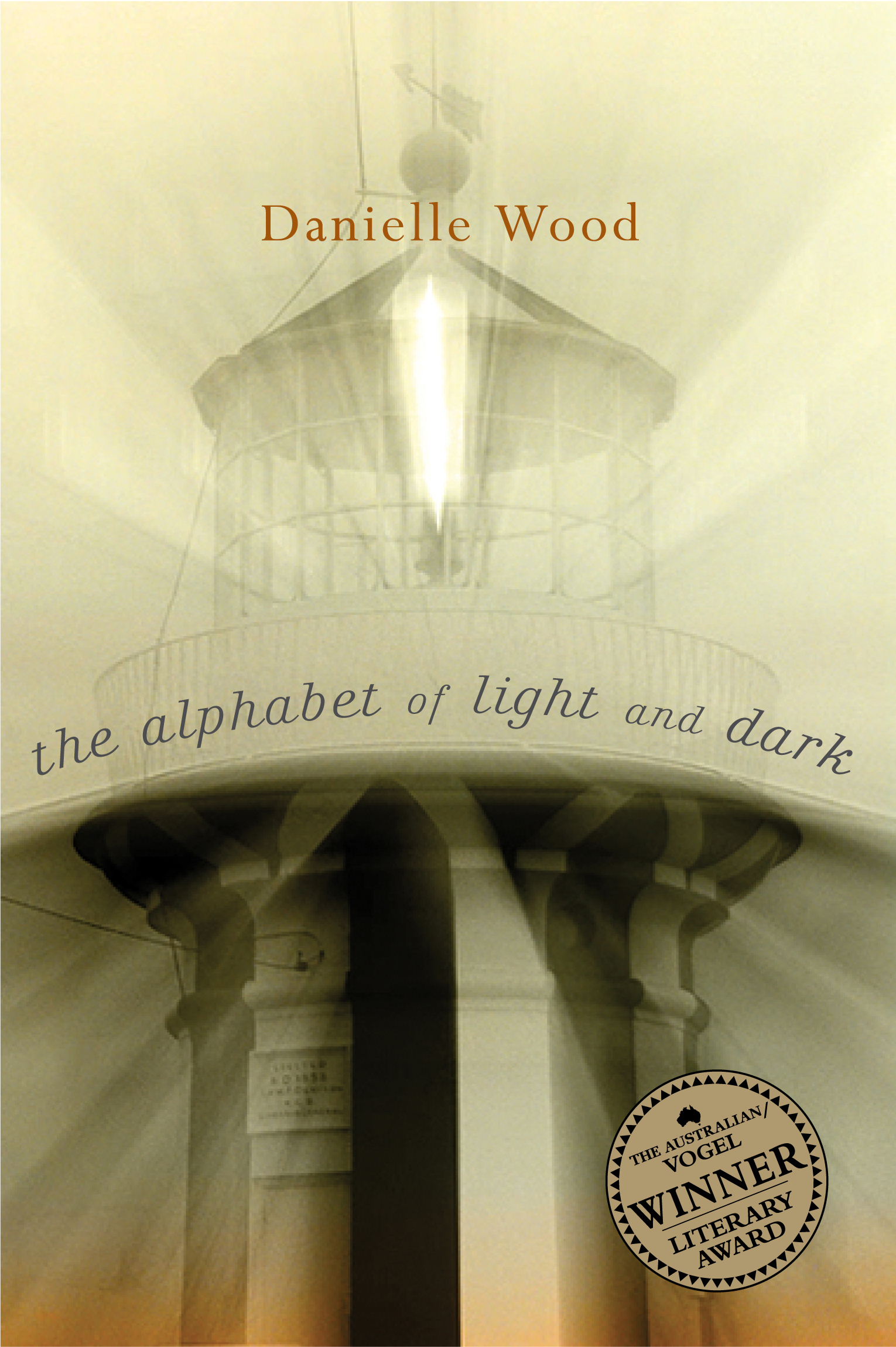
I read Danielle Wood’s The Alphabet of Light and Dark before I started writing this blog. Set on a lighthouse on Bruny Island, it is a story within a story where an aspiring author returns to the lighthouse once tended by her great-great-grandfather and decides to write about her great-great aunt. There are lots of descriptions of landscape and reflections on history.
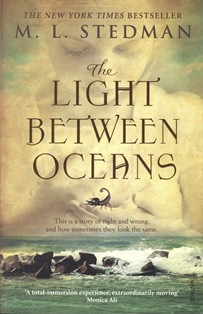
M.L. Stedman’s The Light Between Oceans is set on a lighthouse, too, but this time in the 1920s on the Western Australian coast. A husband returns from the war a changed man, and his wife Isabel cannot understand the existential changes that have been wrought on her husband. Their marriage is wracked by tragedy and loss. There’s a Jodi-Picoult-esque ethical dilemma, which was concluded a little too rapidly for my liking.
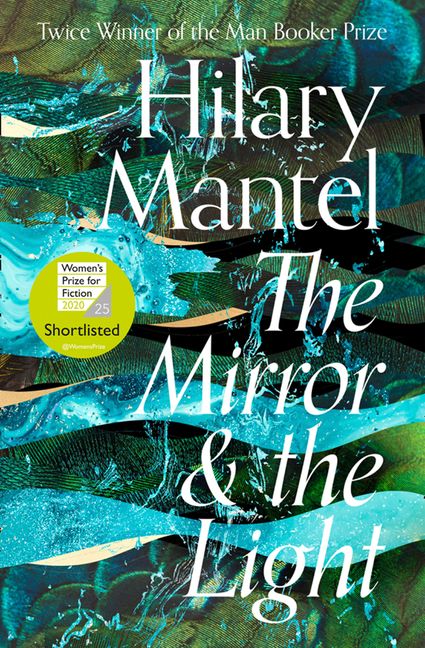
There was no rushed ending in Hilary Mantel’s The Mirror and the Light. The third of her Thomas Cromwell trilogy, it’s the brilliant culmination of a marvellous work of historical fiction. You know how the story is going to end (not well), but Mantel keeps you engrossed right to the last page.
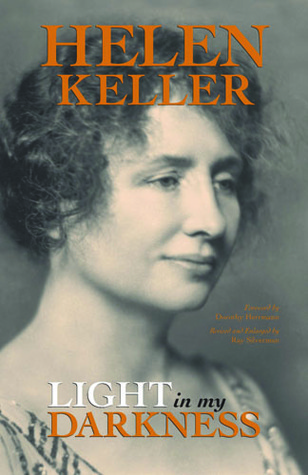
And finally, someone who could barely remember seeing light: Helen Keller. Light in My Darkness is her compilation of autobiographical writing. Originally called My Religion, it’s pretty turgid in places and I found it easier to skip the chapters on Swedenborgianism. Frankly, I wouldn’t bother reading this and instead read Dorothy Herrman’s Helen Keller: A Life.
So, mainly fiction this month and a rather crabby collection of reviews. Rather ironic really, given that the theme I had chosen for myself was ‘light’!
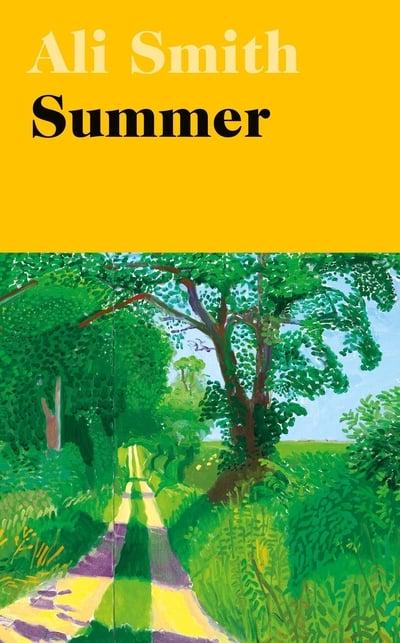
There! I’ve finished the whole quartet. I must admit that I really wanted to enjoy this multi-volume work. I liked the idea of it being written in real-time, and I enjoy series that have an over-arching shape, as well as the detail of the component works. But, I have to admit, I was a bit disappointed.
I had expected there to be more integration between the four books, but the previous three were only loosely connected – indeed, so loosely connected that you wondered whether you had imagined the inter-relationships. I sat up and started taking more notice in this book, once the connections were more overt. “Am I getting too old to read books like this?” I wondered, as I found myself having to flip back pages or dig out reviews of the earlier books (or the actual book if I had it) to remind myself who characters were, and how they fitted into the story. I can imagine that the problem would be further magnified if you read them over four years, instead of over a few months as I have done.
New characters were introduced in this final volume: a rather unlovely brother (Robert) and sister (Sacha) Greenlaw, who live with their mother Grace, while their father lives next door with his new partner Ashley, who has stopped speaking. Characters from the earlier books reappear, but now in a different timespan. Daniel Gluck and his neighbour Elizabeth pop in from Autumn, while Art (in Nature) and Charlotte from Winter make another appearance. Then there is the ubiquitous SA4A security firm, which lurks in the background, refugees, Brexit- and now the Australian bushfires as well as COVID. (My stomach sinks at the thought of all the books that are going to be written with COVID and lockdown as their premise. Oh spare me.) As with the other books, there is a dual (and often triple) narrative being worked out, separated in time, with Summer featuring WWII and the plight of interned ‘enemy aliens’ and resistance workers. Once again, we have another female artist- this time the film-maker Lorenza Mazzetti- and the Shakespeare play this time is A Winters Tale.
There is beautiful writing in this book, and eminently quotable political commentary but it still felt very heavy-handed. Having read all four, I think that they would be best read one straight after the other in order to pick up on the links and connections, although I don’t really know that the prospect particularly appeals to me.
This is not a multi-volume saga like Naguib Mahfouz’s Cairo Trilogy, or the Poldark series. Family does not lie at its basis, although networks and connections and kindness are important. The politics is shout-ier, and the books crackle with current events (that will soon no longer be current). You sense that Ali Smith could just go on producing one volume a year forever because there is no overarching plot. I don’t begrudge the time in reading any of them, but it was not the overwhelming reading experience that I thought it would be.
My rating: 8/10 (I did like the way that the connections became more apparent)
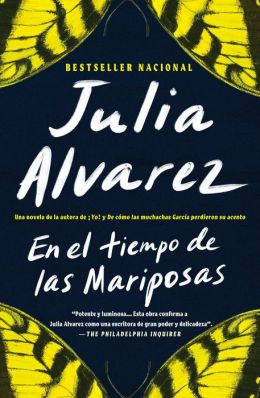
1994, translated into Spanish 2001 and revised 2005, 424 p.
I’m rather proud of reading this in Spanish- just look at the number of pages! Let us not speak too much of the fact that it took me six months and the reality that each page would have between 5-10 words underlined and written out with the English translation. I read it: I understood it, and I would have enjoyed it in English just as much.
“Las Mariposas” was the code-name for the four Mirabel sisters, Patria, Minerva, Maria Theresa and Dede who, for different reasons and to differing extents, were involved in clandestine actions against the dictatorship of Rafael Trujillo (El Jefe) in the Dominican Republic. The whole of the family came under official suspicion, and two of the girls and their husbands and father were imprisoned at various times. In 1960 three of the sisters were assassinated in an ambush that was made to look like a car accident, leaving their sister Dede to guard their legacy. They are today recognized as symbols of social justice and feminism, and their images appear on the Dominican 200 peso bill and on a mural painted on the huge 137ft obelisk that Trujillo constructed to commemorate changing the name of the capital city from Santo Domingo to Ciudad Trujillo (it reverted to its original name in 1961 after Trujillo himself was assassinated). That’ll show you, Trujillo.
The narrative of the book switches between 1994 in the voice of the remaining sister, Dede, and chronological chapters told in the varying voices of Minerva, Maria Teresa and Patria. Although clearly Alvarez has researched the topic thoroughly, it is historical fiction with invented conversations and scenarios. The description of Minerva and Maria Teresa’s imprisonment was chilling, and the suffocating presence of male lust dressed up in military costumes is palpable.
I’m particularly pleased that I was able to read a book that was not translated for language learners, but for Spanish-speaking readers. At times I was frustrated by the presence of so many synonyms, but of course any literary text written in English would vary its vocabulary too, avoiding the repetition that language learners hold onto life a life-raft.
So – it may have taken six months, but it was well worth-while!
My rating: if I had read it in English, I would have rated it 8
History Extra I just finished reading ‘The Shadow King’ and decided that I wanted to know more about the Italian/Abyssian (Ethiopian) War. History Extra had an interview with the author, Maaza Mengiste, The Real History behind The Shadow King but it was more about the writing of the book than the history. Obviously a lot of research went into the book, which she wears very lightly, and she has not been constrained in her imagination or creativity by her research.
Witness History (BBC) Just a short 9 minute episode Italy’s Shame: The Massacre in Ethiopia looks at the retribution that Italy wrought on Abyssinia (Ethiopia) after a grenade attack on Marshal Rodolfo Graziani who was appointed by Mussolini to govern Ethiopia.
The History Listen (ABC) Once the crossing of the Blue Mountains had been achieved in 1813, the town of Bathurst was established two years later. As was often the case, things were relatively peaceful at first, but within 7 years, as more and more settlers flowed into the areas, there was a full-blown resistance. Windradyne’s forgotten war tells about this change, and the way that stories are handed down from family to family that often tell another story to those of the written sources.
Big Ideas (ABC) This lecture Conscription in World War I was originally delivered in October 2016 at the Australian Centre for Public History at the University of Technology Sydney, and broadcast soon afterward. 2016 was the centenary of the first conscription debate, and so this seemed a little anachronistic. I’ve done quite a bit of research (albeit at the local Heidelberg level) into the conscription debates, and I enjoyed listening to Prof. Joan Beaumont’s overview. The broadcasts finishes with a Tom Switzer (not my favourite broadcaster, I must admit) interview with Sean Scalmer, one of the editors of The Conscription Conflict and the Great War
BBC Outlook. If I can’t sleep, I turn on the radio and listen with my wonderful Acoustic Sheep sleepphones. The whole point is to make me drowsy so that I can go back to sleep. But when I started listening to Swimming With Polar Bears: A photographer’s “crazy” dream, it was so gripping that I woke right up, my heart pounding at the predicament the photographer found himself in. They might look cute, but polar bears are terrifying!
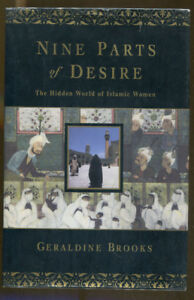
Given that this book was written in 1995, (reprinted in 2008 with a new afterword) I hoped that her analysis of the lives of Islamic Women in Middle East countries might have been rendered redundant. That hope has not been realized. Despite the Arab Spring, the position of women in Islamic countries remains parlous, and possibly even worse than when Brooks wrote this book prior to 9/11, the rise of ISIS and the wars that followed in its wake.
Geraldine Brooks, who was born in Australia, worked as a journalist and foreign correspondent for many years, although she is probably better known now for her historical fiction. While she was working as the Middle East bureau chief for the Wall Street Journal, she was frustrated by the customs that made her life as a journalist so difficult, compared with her male fellow journalists. Then she noted that her colleague and translator, Sahar, had begun wearing the hijab. Curious about why Sahar had adopted it, she realized that as a woman she had access to women’s experience that was closed to male journalists.
For almost a year I fretted and kicked at the Middle East’s closed doors. Then, thanks to Sahar, I looked up and noticed the window that was open only to me.
p. 7 1995 edition
Taking on Islamic dress herself, she sought out women who were still working as journalists, politicians and activists. Many women told her that, historically, Islam provided an improvement on women’s conditions, that the Prophet himself was pro-women, and that Islamic dress provided a respite from the male gaze. She was not convinced:
Once I began working on this book, I looked everywhere for examples of women trying to reclaim Islam’s positive messages, trying to carry forward into the twentieth century the reformist zeal with which Muhammad had remade the lives of many women (other than his own wives and the Muslim army’s war captives) in the first Muslim community at Medina. It turned out to be a frustrating search. In most places the direction of the debate seemed to be exactly the reverse. Palestinian, Egyptian, Algerian and Afghani women were seeing a curtain come down on decades of women’s liberation as Islamic leaders in their countries turned to the most exclusionary and inequitable interpretations. For those women who struggled against the tide, the results were a discouraging trio of marginalization, harassment and exile.
p. 232, 1995 edition
The title of the book is taken from a quote from Ali ibn Abu Taleb, the husband of Muhammad’s daughter Fatima and the founder of the Shiite sect of Islam. “Almighty God created sexual desire in ten parts; then he gave nine parts to women and one to men”. This sounds like an invitation to male lasciviousness to me, and the desires that Brooks explores in this book are not sexual. Each chapter starts with a relevant quote from the Koran.
Chapter 1, The Holy Veil talks about Brooks’ own interview with Hashemi Rafsanjani, who was President of Iran between 1989-1997, for which Brooks wore the chador. She writes about the variations of Islamic dress in different Middle East countries, and the effect of Iran’s theocratic revolution. Chapter 2 “Whom No Man Shall Have Deflowered Before Them” discusses female genital mutilation and its absence in the Koran itself, honour killing, and the paradox between sexual licence for men and repression for women. Chapter 3 “Here Come the Brides” looks at Islamic marriage while Chapter 4 “The Prophet’s Women” looks at Muhammad’s own family life, making the point that many of the revelations from God seemed to be particularly apposite for Muhammad’s own situation. Chapter 5 “Converts” focuses on Janet, an American who had married and converted to Islam, and Janet’s American friend Margaret. Both women complied completely with the demands of their husband and in-laws. Chapter 6 “Jihad is for Women, Too” looks at the paradox of women incorporated into the military forces in Islamic countries, and the empowerment (within limits) that this sometimes provided. Chapter 7 “A Queen” looks at the situation of the American-born Queen Noor of Jordan, a country that at the time offered the most hope for political liberalism. Chapter 8 “The Getting of Wisdom” examines women’s education in different Middle East countries, with differing degrees of segregation and the increasing presence of fundamentalism. Chapter 9 “Risky Business” looks at women’s role in the workforce, and Chapter 10 “Politics, With and Without a Vote” looks at the varied (and decreasing) political roles available to women. Ironically, some Islamic women were elected in hard-line Iran, but I sense that her political acceptability was increased by her persecution under the Shah which made her a striking example of the repressiveness of pro-Western politics. She picks up on the campaign by Saudi women to be able to drive- something that is shamefully still a travesty. Chapter 11 “Muslim Women’s Games” addresses the women-only Islamic Women’s Games and in Chapter 11 “A Different Drummer” Brooks herself gets physical by taking a belly-dancing course.
In her conclusion “Beware of the Dogma” she comes out most strongly with her own conclusions and the question of how we, as Europeans, should respond. She argues that “In an era of cultural sensitivity, we need to say that certain cultural baggage is contraband in our countries and will not be admitted.” (p.238) At the time of writing, America did not have laws banning female genital mutilation (Australia does). She argues – but does not believe that it will ever be accepted – that Islamic women should have a right to asylum on the grounds of “well-founded fear of persecution” as a matter of course.
I have read this book before, and I think that I am even more conscious of the issues that she raises, especially after the Arab Spring sputtered out. Her criticism is most strongly directed at Saudi Arabia, a country which has assumed even more importance on the world stage since Trump. She is strong in her condemnation, especially in her conclusion, but she avoids the reflexive Islamophobia of, say, Ayan Hirsi Ali (who lost me with her association with the American Enterprise Institute). Her interviews mainly deal with middle-class and educated women, but that probably reflects the milieu in which she was working and the contacts that she made. She seems rather oblivious to the effect that her Judaism – something that she does not hide- may have had on her informants.
How my Grandmother Won WWII This was recommended by the Guardian, but I don’t know if I’m going to stick with it. The writer and narrator Enid Tihanyi Weisz Zentelis tells the story of her Hungarian grandmother during WWII in How My Grandmother Won WWII but the narrator is off on a frolic of her own to feel better about her dysfunctional family. She “needs” to know this, and “needs” to learn that. I can’t bear upwardly inflected accents (Australian or American) but this is a downwardly inflected accent instead, which comes over as a depressing, self-centred moan. I don’t know where she comes from, but remind me not to go there.
Strong Songs. This podcast takes a famous popular song and pulls it apart musically. And what could be better to explore than the Beatles’ A Day in the Life. Kirk Hamilton discusses the musical theory behind the song, separates the different tracks etc. and in the end you hear the song with completely new ears.
Latin American History Podcast. Max Sarjeant starts this essay with what was, at the time of recording in June 2019, current news e.g. Mexico’s request/demand that Spain apologize for the Conquest; the discovery from space of more meso-american ruins in impenetrable jungle etc. He then returns to his history. In Episode 5 Cortez was determined to meet with emperor Moctezuma, even though Moctezuma had made it very clear that he wasn’t interested in meeting them. To get there, he had to get past the Aztec city of Cholula (second only to Tenochtitlan) and the land of the Tlaxcalans, neither of whom had any great love of Moctezuma. When they started plotting to kill the Spaniards at the request of Moctezuma, Cortez found out about it and massacred the main warriors and partially burnt the city.
Heather Cox Richardson. Continuing with her Reconstruction story, she starts off her episode of 21 January by sharing why she enjoys this period so much. She read through about 40 years of newspapers, and all of the literature of the time: she likes that from 1860-1900 it is a ‘manageable’ period historically. But her talk gets pretty detailed very quickly, and just covers the 1870s. After the Civil War, many east coast Republicans were disgusted that Grant was made president, and they formed the Liberal Republicans. The election of 1876 was heavily contested and the candidate that won the popular vote did not win the electoral college vote (sounds familiar) and there was widespread cheating by the Democrats in the South. In the end a deal was stitched up where the Republican Rutherford Hayes was made President, but the role of Postmaster General went to a Democrat, who proceeded to place Democrats where-ever he could. Republicans were beginning to wonder if all Americans should have the vote, after all, when it included migrants and poor people. Meanwhile, a courtcase that found that while women were American citizens, they were not necessarily entitled to vote would be used to disenfranchise African Americans.
Saturday Extra (ABC) Not necessarily the whole show this time, but an interesting segment The Glamour Boys, a book by UK Labor MP Chris Bryant, author of The Glamour Boys: The Secret Story of the Rebels who Fought for Britain to Defeat Hitler. The term ‘glamour boys’ was a derogatory sneer at a group of conservative MPs, many of whom were gay or bisexual who challenged Chamberlain’s appeasement policy towards Hitler. I think that he has overstretched a little in suggesting that without their actions, the UK would never have fought, let alone defeated Hitler.
The Forum (BBC) What a lot of programs nestle under the wings of the Beeb. The Forum seems to have historical biographies and events- and I’d never heard of it. Nor had I heard of Sister Juana, a great mind of Mexico. She was born in Mexico of Spanish/Criollo parents in the mid 17th century and was a writer, public intellectual, and feminist long before these terms were in use. There are three experts in this program, two of whom disagree vehemently with each other. Sister Juana, or Sor Juana as she was known, became a nun which gave her the space and freedom to write. She was published in Spain and in Mexico, although our experts disagreed about the degree of agency she had in later life. There are excerpts from her writing- she was incredible! How have I gone my whole life unaware of this woman?
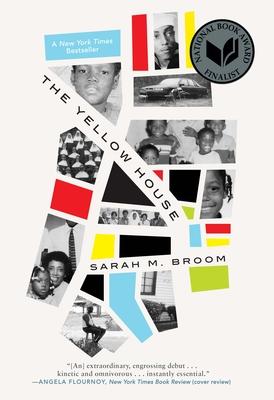
I have no idea why I reserved this book at the library, and it has taken an inordinate length of time to arrive. As it happens, I read Jacqueline Woodson’s coming-of-age novel Another Brooklynimmediately prior to reading this book. Had The Yellow House not already had another hold on it, I might have deferred it, reluctant to read two American Bildungsromans (is that the plural?) in a row. As it turns out, the order was fortuitous, because the lyrical but slight Another Brooklyn is eclipsed by this much meatier book.
Sarah, or Monique as her family knows her, is the youngest of twelve children, and she never knew her father who died when she was six months old. Long before her birth, her mother Ivory Mae bought 4121 Wilson Avenue when the flood-prone New Orleans East area was opened up for industrial and housing development. The house, which she only knew to be ‘the yellow house’ on account of its yellow cladding, was a shotgun house that cost $3500, located at the ‘short’ end of Wilson Avenue, with a trailer park across the road and a scattering of houses along the street. It no longer stands. It was damaged by Hurricane Katrina, and was finally demolished as part of the inadequate rebuilding program that was quick to knock-down damaged houses but stingy in replacing them.
This memoir combines national and local history, family stories and her own story of place and identity. As the youngest, her older siblings circulated in and out of her life as they got jobs, had children, married, separated, and in one case fell into addiction. Her mother and 4121 Wilson Avenue are the linchpins of the family. The house, poorly built from the start, became at the same time a source of shame but also the tethering-spot for the family. After Hurricane Betsy in 1965, and with the hollowing out of America’s manufacturing base, their house became marooned in a deserted industrial area, surrounded by the faded dreams spruiked by developers and boosters. Like many African-Americans in 1960s America, Broom’s family were part of the economic under-class, taking several poorly-paid jobs to cobble together an income. She is the one in her family who ‘escapes’, gaining a university education, a job in journalism. After Hurricane Katrina, her family splinters as her siblings shift to other states. Even though she had not lived in the Yellow House for many years, she is cut adrift too once the house has been destroyed, shifting to Burundi as an expatriate, then returning to live in the touristy French Quarter of the rebuilding New Orleans.
Although this is a memoir, it also reads like a history. She has clearly interviewed her mother and siblings, with direct quotations, and her mother’s words are italicized, appearing throughout the book. As the youngest in a large family, the family lore stretches for decades before her birth. The book is intimate, but also forensic. In trying to piece together the history of the house and New Orleans East she combs through archives and interrogates workers in local government departments. The reporter/journalist is uppermost in her section on Hurricane Katrina. She is circumspect in what she reveals of herself to the reader, with family and place at the heart of her analysis. There is no blame and no howling of injured entitlement here, but instead a clear-eyed, steady gaze at her family and family home, moving out from the personal and particular to a broader analysis of New Orleans and its place within the American dream.
I just loved this book.
My rating: 9.5 (and because the year is yet young, it may well grow into a 10 by the end of the year)
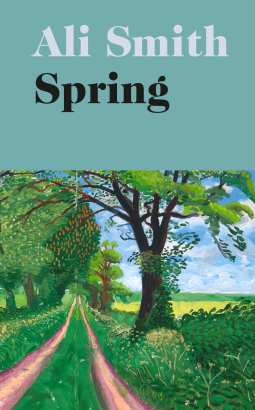
As the name suggests, Spring, the third book in the Seasonal Quartet, has more ‘oomph’ than the earlier two books Autumn and Winter. There are themes and approaches that run across the three books that I have read so far – the work of an artist, political monologues, the play on words – but this book seemed more plot-driven, more directly political and more physically active than the other two.
The artist in this case is Tacita Dean and the painting is ‘The Montafon Letter’ (you can see it here), a huge chalk-on-slate drawing of an avalanche hurtling down a mountain. After seeing it in an exhibition, Richard Lease, a TV and film director, sent a postcard of the drawing to his friend, Paddy (Patricia Heal) who was dying. Paddy has now died and Richard, bereft and distraught, feels that there is nothing more to live for and resolves to take his own life too. His attempt is interrupted by a woman – Brittany (Brit for short) who works as a guard in a refugee detention centre, and a young girl, only ever referred to as ‘the girl’, a preternaturally sharp child who reminded me of Greta Thunberg in her ability to speak up to power. The narrative switches between the present day interaction between Richard, Brit and ‘the girl’, and the approaching death of Paddy. The literary by-play is present here too, with Richard contracted to direct a TV program with a dire script based on Katherine Mansfield and Rilke staying in the same hotel, oblivious to each other’s work and presence.
There is much more political anger in this book, a bit like the avalanche in the Tacita Dean drawing. In Autumn it was Brexit; in Winter it was Trump, and now in Spring, it is England’s refugee detention program (if Smith really wants to get angry, she should look at the ‘Australian model’ that Donald Trump thought so worthy of emulation). It is more overtly preachy, and the book is more plot-driven.
All of which makes me wonder where Smith is going to end up with Summer, which is the next book off the pile after I finish my bookgroup read. I’m conscious of little cross-references between the books, and I really hope that all four are eventually published together because it would make seeking the connections easier. I do wonder, as I always do with series like this that are published with years between each volume, whether readers taking them up year after year would be as aware of the connections as I am while reading them with mere weeks between each book.
Anyway, let the year continue…
My rating: 7.5/10
Sourced from: Yarra Plenty Regional Library (which is also making the connections harder to trace, as I no longer have all the completed books at my fingertips)

 The Resident Judge of Port Phillip