Six degrees of separation: From ‘Shuggie Bain’ to….

This month I have actually read Shuggie Bain the book that starts off this month’s Six Degrees of Separation meme. Look at the ‘rules’ for Six Degrees of Separation on Kate’s Books are my Favourite and Best website but essentially, Kate chooses a starting book, then you link other titles that spring to mind.
I know that Shuggie Bain won the Booker Prize, but I found it reminding me a lot of Angela’s Ashes. I read Angela’s Ashes long before I started blogging and it was certainly a best-seller when it was published in 1996. It wasn’t eligible for the Booker Prize at the time because the author was American, and I don’t know if it would have won it if it were. However, it’s one of the few books that I have read twice, drawn in when flicking through the pages one day.
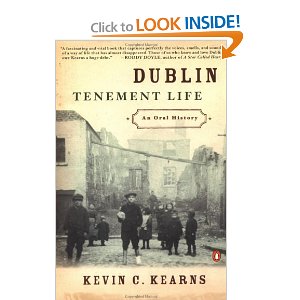
A similar book is Kevin Kearn’s Dublin Tenement Life: An Oral History. In my review, I likened it to ‘Angela’s Ashes: The Documentary’ because many of the same themes emerge. There are some introductory chapters that explain the rise of the tenement and a chapter that encapsulates many of the themes that are repeated in the oral histories that follow. The book was a bit repetitive, but it was interesting social history.
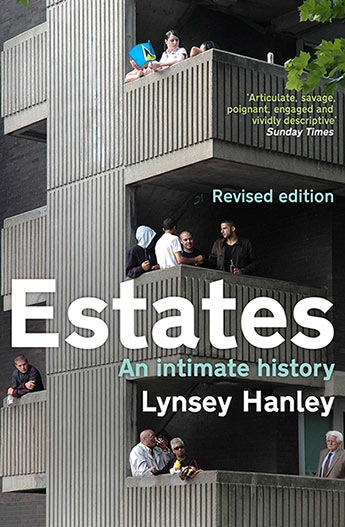
Another social history/memoir is Lynsey Hanley’s Estates: An intimate history, written by a woman who grew up in the Birmingham housing estate at Chelmsley Wood in the 1960s and 1970s. Even though It is mainly a historical approach, interwoven with her own experience, with closing chapters that bring us up to the present day.
A more frightening aspect of living in an apartment tower is found in Karina Sainz Borgo’s It Would Be Night in Caracas. Set in present-day Venezuela, a young journalist who has returned to Caracas after her mother dies, finds her apartment taken over by a female-led gang. It is poignant and frightening to see a formerly-wealthy country spiralling into collapse and lawlessness.
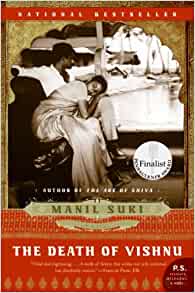
At least the people in The Death of Vishnu by Mani Suri could leave their apartment building in Mumbai. But in doing so, they had to encounter their aging, alcoholic houseboy who lay dying on the steps. We move from apartment to apartment as the residents bicker over what to do with the dying Vishnu.
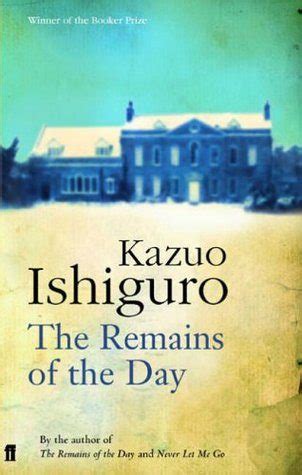
Now, could you get further away from a Mumbai apartment building than a grand old English house? (Well, actually, possibly the grand old English house was purchased with money made in India, as William Dalrymples The Anarchy shows us). But it’s not the building, but the idea of an old servant, Stevens, that makes me mentally link these two books. The book won the Booker Prize in 1989 and was made into a film starring Anthony Hopkins and Emma Thompson.

I started with one Booker Prize winner, and finished with another. I’ve gone from Scotland to Ireland to England, to Caracas, to Mumbai, and back again to England. What an exhausting trip!
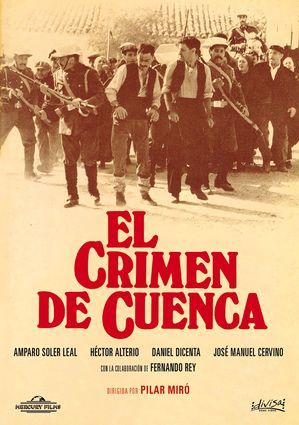
Con subtítulos en español: El crimen de Cuenca (1979)

Based on a true story, this film is set in 1910 when two men are accused of the murder of another man in their village. There is no body and no evidence and at first the case lapses, with the man declared only “missing”. Two years later, a new judge arrives in town and despite their “vehement denials”, the two men are arrested and tortured. This was pretty violent – especially when I had to keep looking to read the subtitles to see what they were screaming. Anyway, eventually the missing man turned up after the two men had narrowly escaped execution to serve many years in jail. It was a good film but (shudder) too violent for me. It is a very famous film, and was originally banned for two year, even though it was a democratic government at that time. Once it was released it achieved great success.

‘Shuggie Bain’ by Douglas Stuart

2020, 430 p.

******SPOILER ALERT******

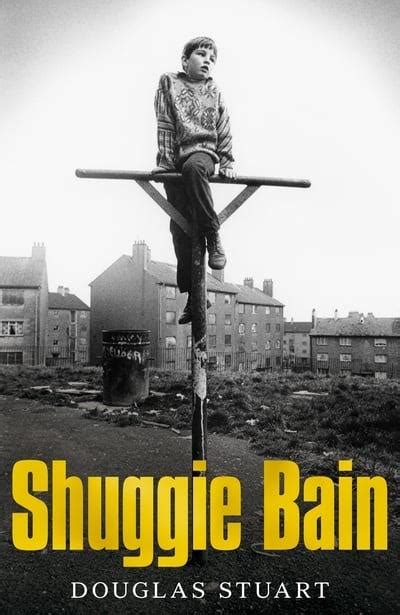
When Shuggie Bain won the Booker Prize, I had heard of neither the book, nor the author. Having just completed The Shadow King, which was also shortlisted, I thought that the winner must have been an outstanding candidate to top Maaza Mengiste’s book. Now having finished the ultimate winner, I feel a little disappointed. It’s not that Shuggie Bain is not a good book: it is. It’s well written and will stick in your mind for some time after reading it. But it’s a little too much Angela’s Ashes for me (again- well-written and memorable but not Booker Prize material, not that it was eligible at the time), and I wonder if Stuart will be able to move beyond books steeped in his own experience. Time will tell, I suppose.

The book is a thinly disguised autobiography. Shuggie Bain is the youngest of three children, always fastidious and conscious of appearance. The woman whose appearance meant most to him was his mother, Agnes, whose attention to her dress, hair and makeup masked increasingly futile attempts to disguise her alcoholism. As the youngest and rather effeminate child, there was an intimacy between Shuggie and his mother as they slept and bathed together, and chose outfits together. Increasingly Shuggie became familiar (in a non-sexual way) with her body as he undressed her and put her to bed in yet another drunken stupor.

The book is set in a Glasgow ravaged by Thatcher’s economic policies. It is circular in its narrative, starting and finishing in a bedsit on the South Side (of Glasgow) in 1992, then backtracking to Sighthill 1981 where Shuggie is living in his maternal grandmother’s house with his parents Big Shug and Agnes. In 1982 Big Shug moves his wife, daughter Catherine and two sons Leek and Shuggie to Pithead, a former mining village that has been closed under Thatcher’s economic rationalism. He then promptly leaves the family. By 1989 Shuggie and his mother move to the East End, his older siblings having escaped the continuous degradation and betrayal caused by their mother’s drinking. By 1992, in the final section of the book, Agnes is no longer Shuggie’s burden.

And burden she is. She drinks through the Monday and Tuesday social security money as soon as she receives it. She breaks into the various meters attached to the utilities in a user-pays society to scrounge change. She goes out with men- too many men- and uses her body to get the money to drink. There is too much vomit and too many sprawled bodies. That one bright year when she finally breaks free of her addiction is even more tragic for how it ends. She is in no place or state to respond to her children’s needs. Near the end, when she has spent all the money and without a single bite of food in the house, she deflects Shuggie’s complaints of hunger by scoffing that at least he gets a free lunch at school. Not so. Shuggie is being bullied, and his lunch passes are extorted from him.

For Shuggie has his own needs and his own problems. Identified by everyone- his own family, neighbours, other students – as ‘not right’, he is struggling with his own sexuality. He would have stood out as a figure of fun. As a five-year-old, just moved into the Pithead house, he interrupts his mother as she is meeting the neighbours- a toxic scrabble of vicious women who congregate around the fence gossiping and bitching- to express his dissatisfaction with their new house.

The front door opened again, and Shuggie came out on to the top step. Without addressing the women he turned to his mother and put his hands on his hips; he trust a foot forward and said as clear as Agnes had ever heard him speak, “We need to talk. I really do not think I can live here. It smells like cabbages and batteries. It’s simply unpossible.” (p.101)

p.101

Despite his older brother Leek’s attempts to get him to walk in a more masculine way by ‘not being so swishy’ and making ‘room for your cock’ (p.152), Shuggie is a target and he suffers.

‘Social services’ is remarkably absent in this book. This is no surveillance state: instead it is a state of neglect. Would Shuggie have been better off, removed from his mother? No, I don’t think so. She is the centre of his world – too much- but his sense of obligation and persistence in keeping on hoping, keeping her sober, catching her beauty, lies at the core of his existence. Other people just drop away- his own siblings, his grandparents, his own father, her partner – none of them can withstand the selfishness and energy-draining repetition of Agnes’ drunkenness. An illness, yes, but one for which it is hard to have sympathy.

Why do I feel short-changed with this book as a Booker Prize winner? It is a long book at 430 pages, and it feels every bit of it without actually moving far (which is of course, a function of the stuck-ness of Agnes and her family). It tells a narrative well, its use of dialogue is good, the emotional tenor of Shuggie’s bond with his mother is nuanced, and Stuart imagines himself sensitively into Agnes’ befuddled mind. It is all of these things, but for me it didn’t have the literary heft that I would want a Booker Prize winner to have. It is, at heart, a misery memoir, self-contained within its own world. A worthy short-list contender, but for me not ‘winner’ material.

My rating: 8/10

Sourced from: Yarra Plenty Regional Library

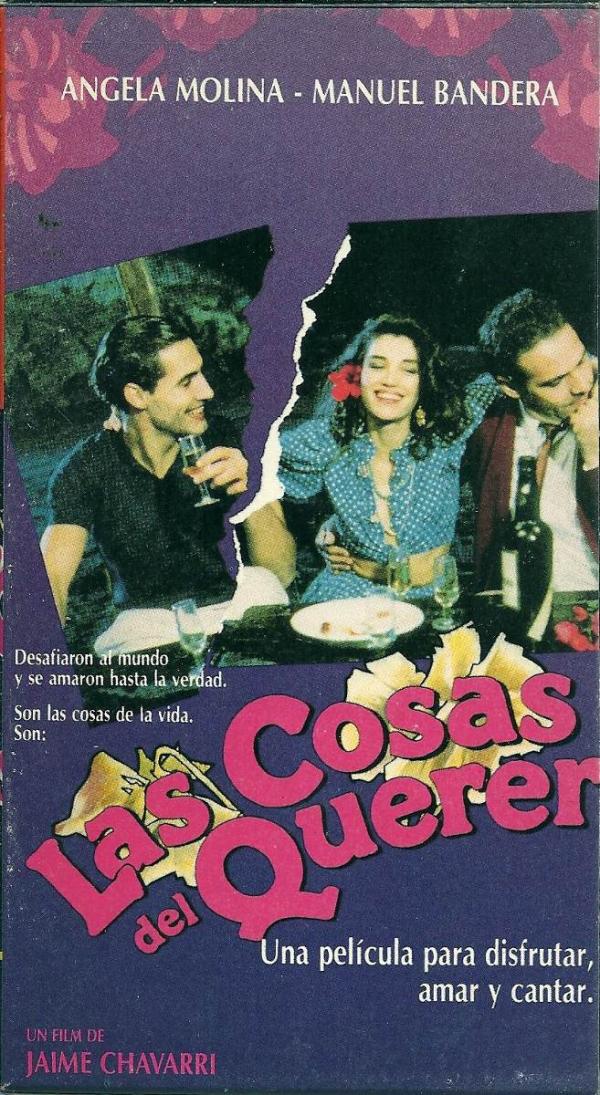
Con subtítulos en español: Las Cosas del Querer (1989)

(The Things of Love)

Instituto Cervantes has been featuring a number of films that star Angela Molina. This year she has been awarded the Goya Prize of Honour by the Academy of Motion Picture Arts and Sciences. She was born in 1955 and made her film debut in 1975. She is still making films, now as an “older woman”.

But she played a younger role in this 1989 film, set in Franco’s Spain. What a dour, bleak society that was- especially for women. She plays a singer, Pepita, who performs with the very handsome Mario. She is in a violent, unhappy relationship with their pianist Juan. Mario yearns for a relationship with Juan (I have no idea why), but Juan is not interested. Mario embarks on a string of casual relationships with other men, which eventually ends in tears.

There was a lot of singing in the movie, but the music didn’t particularly appeal to me. For some reason, it reminded me a bit of Cabaret. It had English and Spanish subtitles on Vimeo.

I hear with my little ear: Podcasts 9-16 March 2021

Rear Vision (ABC) Franklin Delano Roosevelt’s first 100 days have been referenced several times by Joe Biden. Unlike Biden, Roosevelt had sizeable majorities in both houses, and although he didn’t get everything he wanted, there was more willingness to cross party lines to pass legislation. His initial bill to stop the run on the banks was passed quickly and set him up for further success, much as a successful vaccination program would do for Biden. Although Roosevelt didn’t really know what he was going to do, he knew that he had to do something and he surrounded himself with experts.

The Last Archive. Yesterday I was sitting at the railway station with my 5 year old granddaughter, and she asked if the lady making the announcements was actually in the railway station. Of course, she wasn’t as she is an automatic recording, scheduled fifteen and then one minute before the train arrived. I thought of the disembodied women when listening to Jill Lepore’s The Invisible Lady episode. It’s a wide-ranging podcast, starting with the gimmicky ‘Invisible Lady’ who was put on display in New York in 1804, moving to Emily Dickenson (“I’m nobody, Who are You?….”), the Warren and Bradeis Right to Privacy doctrine, H.G. Wells’ The Invisible Man book and subsequent movie, and ending up with Siri and Alexa and other disembodied female voices.

History Extra. This episode 1962:London’s Big Freeze was really good, and it has spurred me to buy (yes, buy!) the book. Between Boxing Day 1962 and the first week of March 1963 – three months!!!!– England was plunged into freezing temperatures. The author Juliet Nicolson looks at this period in her book Frostquake. Written prior to this current lockdown, it tells of a different sort of lockdown with any similarities – transport paralysis, public events cancelled, schools closed etc. It also examines other events of the time: the Beatles, Profumo, the Cuban Missile Crisis etc.

Heather Cox Richardson took a week off from her ‘Reconstruction’ series of podcasts because Trump’s second impeachment was being debated, but she returned on February 19 to discuss the way that women, after the war, found themselves sidelined after the 14th Amendment the the Minor v Happersett decision. So they reframed their identities as “mothers of the nation”, and used the education they had gained from the colleges that had opened since the war to present evidence of the working/living conditions of women.

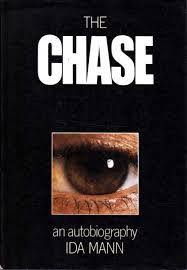
‘The Chase’ by Ida Mann

1986, 217 p.

Our face-to-face book went into hibernation during the lockdown throughout 2020, so when received our most recent read, The Chase, an autobiography by Ida Mann, we opened the box with anticipation. But what a smell ! the books had obviously been unread for a very long time (probably pre-dating COVID) and they were very musty. And having finished the book now, there’s probably a good reason why this book has not been particularly popular. Published in 1986, it’s very much a product of an earlier time, drawing on fairly pragmatic and workmanlike ideas of autobiography, and expressing attitudes for which Ida Mann would be condemned today (and indeed, in the 1980s as well).

If you’re wondering ‘Who is Ida Mann?’, you’re not alone. She was a world-famous ophthalmologist, born in 1893 in England, who had already reached the peak of her research career when she emigrated to Australia with her husband Profession William Guy, an acclaimed cancer research in 1949. After her husband died in 1952, she continued her work in ophthalmology, researching the prevalence of eye disease (especially trachoma) in indigenous populations, and speaking at World Health Organization conferences in many places throughout the world. She was also an inveterate traveller.

As might be expected from a woman steeped in the sciences, the book is very much a start-at-the-beginning-and-go-through-to-the-end endeavour. The presence of lines of verse scattered through the text does little to dispel this impression, reflecting the old-fashioned nature of the narrative rather than the author’s literariness. In its tone, the book reminded me of military histories, where every single individual has to be named and acknowledged, and Christmas family letters regaling the reader with travel tales to exotic places (from the days when we still could travel). Neither genre particularly appeals to me. The book (which admittedly has been edited from an even lengthier text) descends into an extended travelogue at the end.

This is not to detract from her professional achievements, which are many. One hundred and forty three published papers, a string of scholarships and fellowships, a CBE and DBE attest to her hard work and professional reputation within the field of ophthalmology. She was, however, no feminist. Just as Margaret Thatcher did little for the cause of feminism, Ida saw the ‘nonsense about women’s rights’ as unnecessary, because if you wanted a job enough, you would get it. She was vehemently opposed to the NHS, and it was its introduction, along with her husband’s ill health, that prompted her shift across the world. She expresses little empathy for patients, preferring the research aspect of her work. She was dismissive of the Australian slap-dash attitude when the pure genetic lines of her research mice were compromised because insufficient care was taken. Particularly repellent was her classification of the Aboriginal people she examined for eye disease into the categories based on their likeness to ‘us’: Similar, Almost, Rather, Hardly and Not-at-all. (p. 150)

Yet this intensely driven and pragmatic woman had a mystical side as well. She writes often of her dreams, particularly one vivid dream where she was presented with two doors. In the dream, she chose the door that opened onto sunshine, blue sky and fear, and this dream changed her life. She rejected the life of an office-worker that her parents had chosen for her, and became proactive in choosing and pursuing her own career. As in most autobiographies, there are elisions and silences, most particularly in her response to her husband’s death and a rather curious allusion to incestuous feelings towards her older brother, Arthur.

You’re unlikely to find a copy of this autobiography very easily. In a way, that is a pity because autobiographies of female scientists are not common. On the other hand, the stilted narrative, incessant name-dropping and dismissive individualism are not appealing features of this autobiography. Perhaps Ida Mann needs a biographer who can rescue her life from her own narrative.

My rating: 6/10

Sourced from: CAE as the March book for The Ladies Who Say Oooh (i.e. my face-to-face bookgroup). The other ladies enjoyed the book more than I did, and were more appreciative of her achievements than I was.

Ida Mann appears in the Australian Dictionary of Biography, so I have included her on the Australian Women Writers Challenge Database.

I hear with my little ear: Podcasts 1-8 March 2021

Latin American History Podcast In The Conquest of Mexico Episode 6 the presenter, Max Sarjeant, says that he is about half way through his planned series, and that for the last time he will explore Cortez’ character (which he sees as crazy-brave and impetuous) and the inevitability of the conquest of Mexico. He suspects that the ‘Montezuma thought Cortez was a god’ trope is a bit of ass-covering (not that he says that) and also that European conquest was an inevitability. In The Conquest of Mexico Episode 7, it’s all action with Cortez having to go off back to the coast to fight Spanish soldiers who had been sent from Cuba to stop his progress, then returning to find that the relationship had really deteriorated with the Aztecs. Montezuma died and the Spanish needed to escape Tenochtitlan. I watched the SBS series Hernan a while back, and this is the point where the series finished.

Heather Cox Richardson In her podcast of 5 February, Heather Cox Richardson turns her gaze westward, where, as she points out, the new areas being opened up already had well-established government systems, be they Spanish or Mexican. Treaties were signed with Indigenous tribes that were more a relationship with obligations rather than a land-ownership matter, and when the settlers did not keep up their side of the bargain, all bets were off. The indigenous people were purposely excluded from the 14th amendment, which is ironic given that the whole point of the Civil War was over men’s rights.

The Real Story (BBC) I like this podcast. It has experts who don’t necessarily settle into the expected left/right, liberal/conservative dichotomies. In China’s Advance into Latin America, the guests are a Brazilian economist, a former Mexican ambassador to China and two directors of academic programs- one at the centre for Inter-American Dialogue, and the other the director of Latin American programs at a Beijing University. Lots of parallels between Australia and Latin American countries, especially in terms of China’s use of market power for political outcomes.

Dan Snow’s History Hit. Carol Dyhouse, Emeritus Professor of History at the University of Sussex talks about her book Love Lives: From Cinderella to Frozen. Her book of the same name examines how women’s (and mens???) attitudes to love have changed since 1950, when Disney’s Cinderella was released, up to the present day. Actually, there’s an interesting timeline to accompany the book on the OUP blog here.

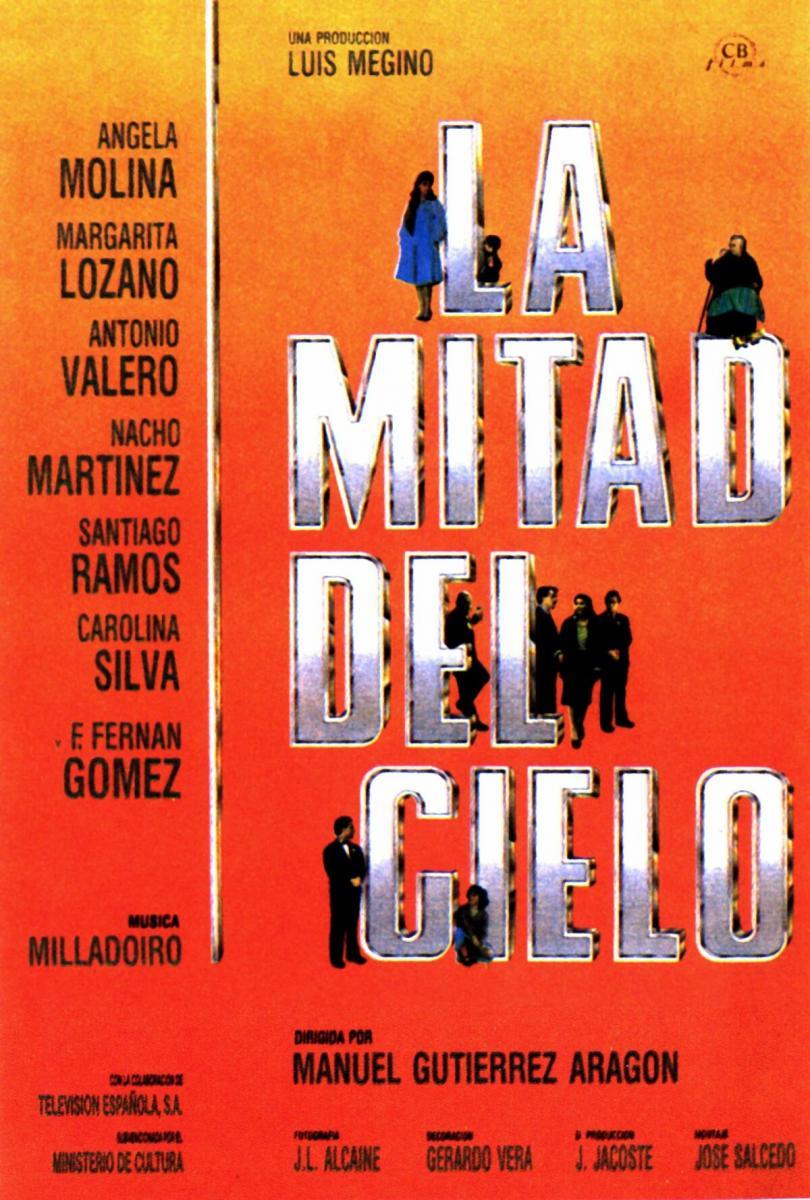
Con subtítulos en español: La Mitad del Cielo (1986)

As part of their celebration of the Spanish actress Angela Molina, Instituto Cervantes has been streaming her films for 48 hours. In this film, Molina plays Rosa, a young woman who leaves her much-loved grandmother and her remote village in order to marry a young knife-grinder who ends up being a swindler. He dies in prison, and Rosa and her young daughter move to Madrid. She gradually works her way out of poverty and opens a restaurant.

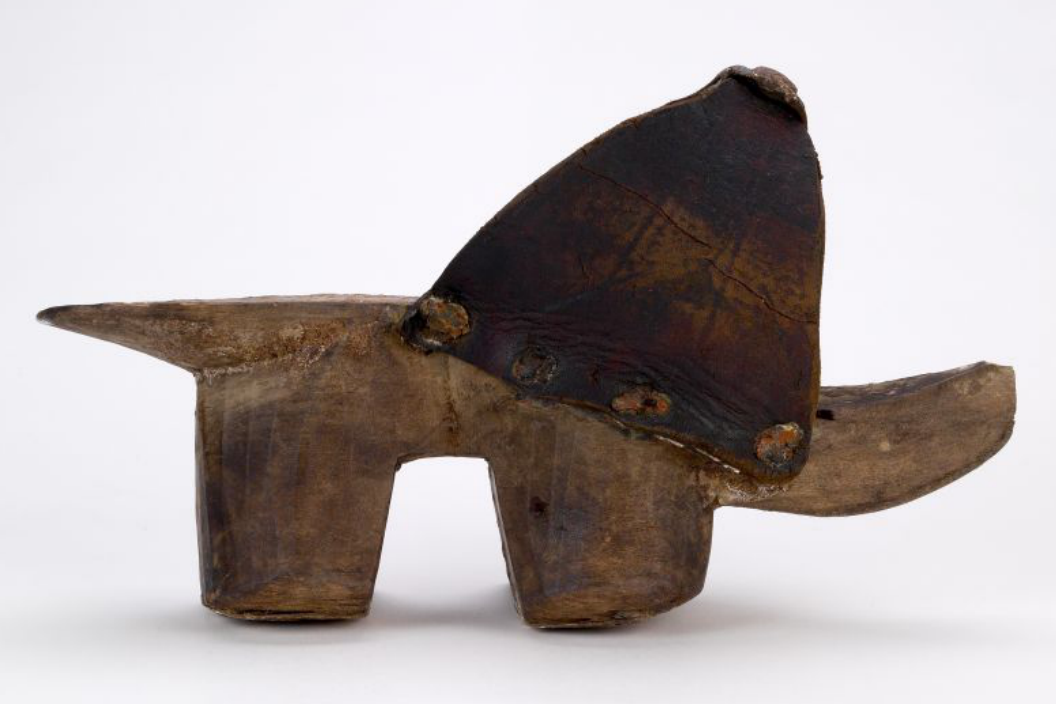
But the REAL star of this show I thought was Margarita Lozano, who played the grandmother. She looked at her granddaughter and great-granddaughter with such love. And these shoes! Abuela (grandmother) clomped around in these shoes, in the village and then in Madrid when she came to stay with her granddaughter. They are wooden pattens, worn by peasants across Europe from the 12th century onwards, to protect your feet from the mud. (You can learn more about pattens from the Two Nerdy History Girls here).

‘The Shadow King’ by Maaza Mengiste

2019, 424 p.

When I started reading this book, I started feeling a bit panicky. Ethiopia in 1935?? I knew nothing about it and started furiously Googling Ethiopia/Italy 1935 (‘Duck Duck Go-ing’ doesn’t slip off the tongue quite as easily, in my feeble attempt to stand up to Google’s ubiquity). But then I thought: hold on, this is the author’s job, not mine – no Barthesian ‘death of the author’ for me- and so I sat back and let Mengiste take me where she wanted. I was right to trust her: she took me to a war that I was only vaguely aware of, to the men and the women who fought it, and to soldiers on both sides.

Hirut is a young girl who, after the death of her parents, has been taken as a servant into the household of Kidane, a friend of her parents, and his wife Aster. All that Hirut has left to remind her of her father was his old rifle, that he used during the first Italian-Abyssinian war in 1896. Although Aster had been forced into an unwilling marriage to Kidane, she is also jealous of her servant Hirut, and almost beats her to death. However, as Italy invades Ethiopia, Aster is determined to fight alongside the men, and she drags Hirut into the conflict as well. Hirut’s gun is confiscated and added to the meagre cache of the Ethiopian rebels. Kidane, who veers between kind and abusive towards Hirut, assumes the leadership of a group of rebels -both men and women- who harry the Italian troops.

Carlo Fucelli is the leader of those Italian troops. He is a sadistic man, particularly after his own masculinity is challenged, and realizing that he has leverage over Ettore Navarra, the Jewish Italian photographer amongst his troops, he forces the photographer to photograph the atrocities that he commits. Compliant but deeply uncomfortable, Navarra is feeling his own position becoming more precarious as the anti-Semitism in Europe increases, especially learning about his father’s own history, something previously unknown to him.

The ‘Shadow King’ of the title is a peasant with an uncanny likeness to the now-exiled Emperor Haile Selassie. While Selassie frets in Bath UK, his ‘shadow’ appears, almost like a vision, before the troops to inspire them. I wasn’t particularly convinced by this Shadow King character. He seemed rather implausible and unnecessary and by choosing the ‘The Shadow King’ as the title, the author gives him a prominence not found in the book itself.

There is a lot going on in this book. Told in the present tense, the point of view switches back and forth between characters, separated only by an icon. The text is interrupted by short incantations by the ‘Chorus’, evoking a Greek play. There are short descriptions headed ‘Photo’ which describe a photograph taken by Navarra, or his framing of a photograph that he will take.

All these diverse elements add to the breadth of the book. Even Fucelli, the butcher of the story, is explored with sensitivity, and Kidane is seen as both ally and monster. Navarra is conflicted: he is the photographer who has captured atrocity but he is also a son, in a world that is becoming increasingly dangerous. Women in this book are at the mercy of men, but they too can be violent.

The book is beautifully written, if a little overwrought at times. However, Mengiste was not served well by her proof-reader, who let several typos go through. Notwithstanding these glitches, I finished the book feeling as if I had been in the hands of a masterful, poetic writer, who had taken me to a theatre of war totally unknown to me. She has eschewed the male-dominated military narrative to see women as active fighters, and ultimately all actors as victims. I can see why this book was short-listed for the Booker. It makes me wonder how ‘Shuggie Bain’ bested it.

My rating: 9/10

Sourced from: Yarra Plenty Regional Library. I have had it reserved for months!

‘Days Without End’ by Sebastian Barry

2017, 320 p.

SPOILER ALERT

I’m always a sucker for an American Civil War book, but I didn’t realize that this was going to be one until I started reading it. (I should have read the back of the book, where it is quite clear that this is set in 1850s America). I had been more attracted by the author, Sebastian Barry, whose A Long, Long Way and The Secret Scripture I had read before. Those two books were both set in Ireland, and I expected this to be the same.

It was only when I started reading that the memory floated back of a fellow postgraduate working on the Irish involvement in the American Civil War. Thomas McNulty, the main character in this book, is such a man: driven as a 17 year old from famine-struck Ireland, he joins the army to fight in the Indian Wars and there he befriends- indeed, more than befriends – falls in love- with his brother-in-arms John Cole. I certainly hadn’t expected that, and was brought up with a jolt when Barry comes out and says it: “And then we quietly f**ked and then we slept”.

Before joining the cavalry, and both destitute, Thomas and John work as ‘girls’ on the stage in a mining town starved for women, until they get too old and big to carry off the pretense. Needing work, they join the cavalry. Their platoon is charged with ‘clearing’ the land for white emigration, and they encounter the Oglala Sioux chief Caught-His-Horse-First first in an act of generosity, then betrayal. Discharged from the army, Thomas and John head for the midwest, taking with them Winona, the niece of Chief Caught-His-Horse-First, to form a make-shift and unusual family. They rejoin the theatre-circuit, and Thomas reprises his cross-dressing act. When the Civil War comes, they join up on the Union side. It is an ugly war, and its ugliness pursues them into their post-war life.

It’s strange: I was completely drawn into this book and finished it in an afternoon. Yet, when writing this post, I was left mainly with impressions and I confess to having to look up other reviews to remember the actual plot. The book as a whole made a stronger impact than the individual details.

In reading this book, there were flashes of Cold Mountain and unexpected echoes of Blood Meridian. There is certainly violence, but somehow it is dream-like and disconnected. The narrative voice in this book, speaking in the present tense throughout, in my head sounded to be a completely American accent, without even a trace of Irishness. It is, essentially, a love story, with beautiful descriptions of landscape and climate. I don’t often read a book with a film in mind, but I expect to see this on the screen one day, as it has a very filmic, epic quality.

My rating: 8

Sourced from: Yarra Plenty Regional Library