Well, that’s seventy minutes of my life that I’m not going to get back again. I have no idea what this film was about, and I doubt if I would have understood it any better had I used the English subtitles instead of the Spanish ones. Two men, one living in a campervan, the other in a shack, are living beside a lake in the mountains. The scenery is magnificent, but they seem to be the only two men alive on earth. Each living in their own place, they get up each morning, they fish – sometimes alone, sometimes together – they fix nets, they burn their rubbish, they chop wood. At night they talk. Who are they? Where did they come from? Are they lovers? Where did one of them go in the end? I kept expecting a story, but there isn’t one. You may as well just watch the trailer.
Travels Through Time. I was in the car driving down to Airey’s Inlet, listening to podcasts through Spotify and it just went from one episode to the next. So I heard Dr Diane Atkinson, who chose 1914 as her year to discuss, looking at The Suffragettes and their actions during this first year of the war. Her three scenes were a drawing room in the industrial city of Preston during January 1914, at Charing Cross Station at the same time, and then on 21 May 1914 at the gates of Buckingham Palace.
She was followed by Sir Michael Palin, no less, talking about HMS Erebus in From Pole to Pole. He cheated a bit by spanning seven years from 1841 to 1848. Still, I guess you don’t pull rank on Michael Palin.He started off in Hobart on 1st June 1841, at the Erebus and Terror Ball, where the best of Hobart Society were there to celebrate the two ships- the Erebus and the Terror. His second scene was the New Year celebrations in the Antarctic, but his final scene was 22 April 1848 off King William Island in the Arctic, where HMS Erebus and Terror were abandoned.
New Booksin Latin American Studies Diana Arbaiza The Spirit of Hispanism: Commerce, Culture and Identity Across the Atlantic.1875-1936. In this podcast, she looks at the idea of the ‘Spanish world’ and how it was leveraged as a form of nostalgia for ‘lost glory’ even before Spain lost the Phillipines in 1898. She chose 1875 as her starting year because that was when the Bourbon Monarchy was restored in Spain, and closed off her narrative in 1936 with the Spanish Civil War. She argues that ‘hispanism’ has served different purposes in Spain (nationalism, commerce through the book industry) and that it gave support to the contested idea that the Spanish Empire was less materialistic than British and Dutch imperialism.
History Extra Podcast. I’d never really thought about Ethiopia as an alternative seat of Christendom (in fact, it had been since the 4th century) but in this episode Medieval Ethiopa’s Diplomatic Missions, Verena Krebs discusses the diplomats who were sent to Europe during the 15th and 16th century by the Ethiopian Christian leaders. It was relatively easy for Ethiopians to travel to Europe, compared with the difficulty of Western Europeans going the other way. Although it has often been supposed that the Ethiopian diplomats were seeking military assistance, she suggests instead that they sought religious artefacts (saints’ fingers etc.) out of a clear sense of confidence in their Christianity.
Earshot (ABC) ‘Trough Man’ was an almost mythical figure in the pre-AIDS Sydney gay scene. An afficionado of ‘water sports’, he could be found in the men’s toilets of Oxford Street bars, enjoying a long golden shower. In Searching for Trough Man, the interviewer decided to try to find him, some 30 years later.
Heather Cox Richardson I continue to listen to her Thursday history podcasts, which she is now presenting as ‘one-offs’ rather than following a theme. Her talk of 15 April Why the Civil War Still Matters marks the anniversary of Lincoln’s assassination but it’s very much an encapsulation of her arguments over the last couple of years. She starts off by talking about her horror at seeing the Confederate flag in Congress during the January insurrection, and talks more personally about how reading the Civil War through a single Chicago newspaper gave her just a small taste of the shock that people felt when Lincoln was assassinated. She rounds it off by bringing it back to current events. This is a really good podcast- if you haven’t listened to her before, this is a really good place to start!
History of Latin America In The Conquest of Mexico Part 11, attention turns to Honduras. By this stage, Cortez and his men had stopped fighting the Aztecs and were just fighting other Spaniards with their eyes on treasure and loyalties to either Cortez or the guy back in Cuba (whose name I have forgotten).
Background Briefing (ABC). In recent years we have had both state and federal inquiries into institutional child sexual abuse. What makes The memo that erased a scandal particularly distressing is not only that the the man who is accused of causing so much misery is still alive, unable to be tried in court because of his dementia, but that it seems to have been covered up at the highest levels of the Victorian (Liberal) government in the 1960s. Sir John Dillon, Sir Henry Winneke and the Attorney-General Sir Arthur Rylah – they are all named, and are all dead.
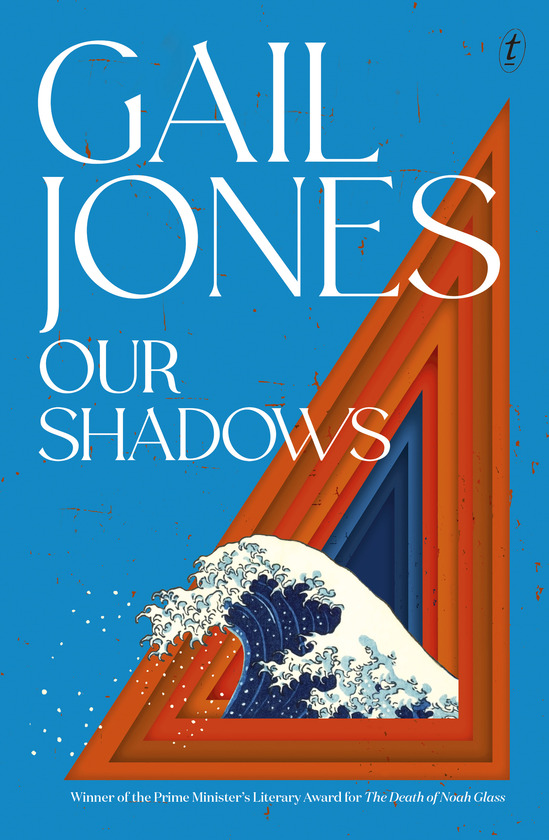
As a child of a 1960s education, I’ve often thought that the stories we read in our School Reader have a particular endurance in our memories. Perhaps it was because it seemed that the whole curriculum seemed to centre around the School Reader, or because as a fast reader, I was condemned to reading and re-reading the story until the slower readers caught up. When I read the italicized preface to Gail Jones’ Our Shadows, where a young girl is remembering a story of a trapped Italian miner named Modesto Varischetti waiting to be rescued, something snagged at me. It was only at the end of the book that Jones brings this preface back into focus. It was a story in the ‘Fifth Book’ of the Victorian School Readers. There had been a mining accident; the water rose too quickly in the mine; he was trapped on a ledge; then divers came for him, with those huge circular diving helmets. And for any of us who read and remembered that story with its blurry black-and-white sketches, it all sprang into life again with the rescue of the boys in the Tham Luang Cave Rescue in 2018.
This story is part of the clever bookending that Jones employs in Our Shadows. The past and the present jostle against each other, just as they do in the threaded narrative of the book. There are multiple strands. One is Paddy Hannan, famed as the discoverer of the gold that made Kalgoorlie and Coolgardie famous as ‘Wild West’ gold towns during the 1890s. Fleeing the Irish Famine that has winnowed out his family, the discovery of gold and his notoriety is just one part of his long life as he escapes to Melbourne where he drifts around St Ambrose’s church in Brunswick and the domed, green lamp-lit State Library.
The other, more substantial strand is the Kelly family, who lived in Kalgoorlie. In the present day, there are two sisters, Nell and Frances. Their mother Mary died after Frances was born, and their devastated maternal grandparents, Fred and Else, took over the care of the very young girls. Their father, Jack, left and the girls grew up completely in the care of their grandparents. Now Fred has died, and Else is in a nursing home. The two sisters, while not estranged, are awkward and tentative around each other. Nell suffered with mental illness as a teenager, while Frances has recently been widowed when her husband died with mesothelioma from a childhood spent in an asbestos mining town. Frances, the younger sister, is perhaps more grounded than her older sister, and when they agree to look for their father, it is Frances who travels back to the family home, now occupied by their embittered aunt Enid.
At first I thought that this was going to be a multi-generational family history story and I felt that Gail Jones was punching below her weight to adopt such a clichéd narrative structure. I should have trusted her more, because the writing is much more complex than that. One of the shadows that falls over the sisters is their innocent acquiescence in the erasure of their mother’s memory by their grief-stricken grandparents, and the dominance of the maternal side of the family when their father disappears. So the narrative skips back and forth between the present day, and their grandparents’ own story, and the sisters’ childhoods. The interweaving of Paddy Hannan’s own story complicates the narrative even further.
Jones writes landscape beautifully, and I think that her Western Australian sensibility shows through here. Her writing, in this as in her other books, is very carefully wrought, although at times over-wrought. Frances deciding to go for a run for its ‘ravishing repetition’, and feeling the ‘delectable’ pull of her muscles when doing hamstring stretches feels like the writing of a much less experienced, polished writer. I have read several of Gail Jones’ books, although I only reviewed Five Bells (see my review here) and it seems that I have had similar reservations about her other books as well.
As the winner of the Prime Minister’s Literary Award for The Death of Noah Glass (which I have not read), Gail Jones is often regarded as a ‘literary’ and ‘hard’ writer. I do not find her this way, but this book is probably more accessible than her other books because of its apparently familiar family-history structure. It is much more complex than that, picking up the themes of her other books – estrangement, guilt, white response to indigenous dispossession, strained relationships – explored within family bonds. Her control of the different strands and time shifts is masterful, and it is a ‘meaty’ book with multiple themes and reflections.
Fifteen Minute History from the University of Texas. Episode 132 History of the Second Ku Klux Klan features historian Linda Gordon who wrote The Second Coming of the KKK The Ku Klux Klan: of the 1920s and the American Political Tradition in 2017. She argues that the KKK has had several iterations: after the Civil War, in the 1920s, during the Civil Rights Movement and more recent events. During the 1920s, the second iteration, she suggests that between 4-6 million Americans were members (or at least agreed with their politics). It was a sort of pyramid scheme, and it was the financial improprieties that largely led to its temporary decline. There were women KKK members who even leaned towards feminism, while still maintaining KKK beliefs. Interesting- and you don’t need a lot of background knowledge to enjoy it.
New Books Network. I seem to be on a bit of a Paraguayan ‘thing’ at the moment. My friend Diego mentioned the Triple Alliance War (which I had never heard of), and sent me an article from BBC Mundo. Then I watched the movie ‘Guarani’. I also listened to this podcast Road to Apocalypse: Paraguay versus the Triple Alliance 1866-1870. Historian Thomas Whigham discusses his second volume on the war- the result of 20 years work- where he has accessed the archives of Brazil, Uruguay, Argentina and Paraguay, something that few Latin American historians would have the funding to do. It’s a really interesting podcast, and doesn’t require back ground knowledge (although a glimpse at a map first wouldn’t hurt).
History Extra Podcast. I wasn’t very impressed when I heard Simon Winchester speaking about his book Land: How the Hunger for Ownership Shaped the Modern Worldearlier. But this podcast on History Extra How Our Hunger for Land Shaped History gives him more scope to talk about the book in a wider context than just ‘settler colonies’. Perhaps I would be interested in it after all.
Duolingo Spanish Podcast The podcasts presented by Duolingo, the language learning program, are excellent. They alternate between Spanish and English, and even if you don’t speak Spanish, you could probably understand them anyway. Episode 81 La lucha libre de hoy is about José Luis Hernández, whose stage name is “El Demasiado” (The Too-Much) and he \’free fights’ (i.e. think World Championship Wrestling on Sunday Mornings in the 60s and 70s) in drag.
The Daily I was wondering why I hadn’t heard much about ‘herd immunity’ any more. This NYT podcast Why Herd Immunity is Slipping Away discusses vaccine hesitancy and refusal in U.S. and the idea that COVID might end up like measles (which Orthodox Jews refuse to vaccinate against) which continues to kill unprotected people, but is just seen as inevitable.
Travels Through Time I’ve been hearing good things about Kate Fullagar’s book The Warrior, the Voyager and the Artist which recently won the Premier’s Prize for General Historyand the Douglas Stewart Prize for Non-Fiction in the recent NSW literary awards. Unfortunately it is eyewateringly expensive at $76.00. So I listened to her instead, on the History-Today associated podcast Travels Through Time and the episode named for the book The Warrior, the Voyager and the Artist. The ‘rules’ are that the visiting historian/guest has to choose one year in history and three scenes to visit. She/he has to just observe, without changing anything. Kate Fullagar chose 1776- in fact just one day (10 December)- in three places: Somerset House in London, a Cherokee town in the Southern Appalacian Mountains and the Indian Ocean. These places pick up on the three main characters in her book: Sir Joshua Reynolds and the exotic ‘ambassadors’ Ostenaco of the Cherokee nation and Mai, one of the Pacific Islanders who accompanied Captain Cook.
Nothing on TV. I do enjoy Robyn Annear’s podcast series, and the first episode in her second series Agnes and Geraldine was as delightful and discursive as those of her earlier series. It tells the story of Agnes Simmons, a swimming teacher at Hegarty’s Baths in St Kilda and her very good friend Geraldine Minet who was deeply involved in spiritualism. Together they launched a coal mine at Red Bluff in St Kilda, which despite being directed from ‘beyond the grave’, never made money.
This is the film offering for this weekend from Instituto Cervantes. They are free, but you do need to book to get the link. Like the film last week, this is a semi-documentary (or as the co-producers describe it ‘narrative non-fiction documentary’, this time about two boys, one aged 13 and the other 9, who have grown up together in a country town. Now the older boy is shifting to La Habana. Much of the film involves the two boys romping, wrestling and teasing each other. My knowledge of Spanish slang is insufficient to understand much of what they were saying, but it all seemed to be good-natured offensiveness. It is summer holidays, and the kids just roam around disused buildings and empty swimming pools, with nary an adult in sight. Once the older boy Antuán shifts to Havana, the younger boy Leonal visits him but things have changed.
I gather that this was filmed documentary-style, and largely unscripted. I’d forgotten the slow easiness of Cuba, even in Havana. It’s all very subtle and atmospheric, but not much happens.
I know that the Spanish Film Festival has finished for this year, but this is mainly to remind me of the films that I watched as part of it.
This film is set on a rugged island off the coast of Galacia in 1921. The men have left to go to the mainland, leaving only the women, the local school teacher and lighthouse keeper and the cruel overseer. A storm hits the island, and a passing ship with 260 emigrants bound for Buenos Aires sinks. In the turmoil of the storm, we see three women murder the overseer but it’s not really clear what is going on. The three women then take a lifeboat and are responsible for saving the lives of the few survivors. They are feted on the mainland, but then the news story changes and their act of mercy comes under suspicion.
To be honest, I’m not really quite sure what was true, although I think that might have been the purpose of the film-makers, who have based this film loosely on a true story. I was struck by the primitive conditions on the island, and the primal wildness of the women. I hadn’t really thought of links across islands transcending national boundaries, but it reminded me of islands off the Scottish and Irish coasts.
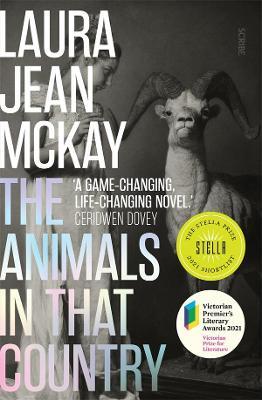
This book won the Victorian Premier’s Literary Award for 2021 and it comes emblazoned with glowing praise from other writers and reviews. ‘A game-changing, life-changing’ novel, it is supposed to be, according to Ceridwen Dovey. High praise indeed, but I’m afraid that it left me rather cold.
Jean is an older woman who has lived hard. She is an untrained wildlife carer and guide in a refuge, a job that allows her to be close to her granddaughter Kimberley. Kimberley’s mother, Ange,the manager of the refuge, grudgingly allows Jean to live on site even though her partner, Lee (Jean’s son) shot through years ago. News begins filtering through of a pandemic – [oh yes, a pandemic. Are we about to be deluged with books about pandemics? Spare us] – colloquially known as ‘zooflu’ which turns your eyes red and makes you able to understand animals talking. I must admit that the implausibility of this turned me off from the start.
The effect was not Dr Doolittle. Instead, people were driven crazy by the voices that they heard, and as fear gripped the community, some chose to expunge every animal from their environment; while others were drawn to the animals who surrounded them, to their own peril.
When the infection finally reached the wildlife refuge, they were closed down immediately. Jean’s son Lee, already suffering from the influenza returns home, and takes his estranged daughter Kimberley with him. Jean feels compelled to follow.
Jean drinks too much, smokes too much, and is harsh and uncouth. She does love animals, though, especially a dingo called Sue, even though Sue had bitten her when she was trying to release her from some wire. Jean and Sue take off in their ute, following Lee and Kimberley’s trail through an increasingly desolate landscape. Jean is infected too, and soon can hear Sue’s thoughts. The infection from the dingo bite is becoming increasingly toxic as the surrounding animals become more menacing, and as societal norms break down.
So what do these animals sound like? McKay depicts their language in a sort of blank verse in a bold font, tangentially related to events, usually fixated on food or excretion, and somehow ‘off’.
Gasping
over the lock (I’m
mingy.) It’ll call me and
I’d like
to get a drink of
it
p. 82
I must confess that I found these animal dialogues opaque (as they were intended to be) and rather twee. I kept thinking “this book is ridiculous”, and even though the concept is interesting, this is pretty much the way I felt through the whole book. Written in Jean’s voice – and a limited and uneducated voice it is, too – it is told in the present tense throughout. There were many times when I was confused about what was happening, although my confusion was generally resolved so that I think I know what happened.
I’m surprised that this book has received the acclaim it has. Although it was written prior to our own pandemic, it probably was released into a market more primed for pandemic-books than might have been the case five years earlier. I found the basic premise implausible (although interesting) and the writing rather flat. Not my type of book, I’m afraid.
Instituto Cervantes is releasing a series of short films during May, although I missed the first one. They are only available for 48 hours, and it’s too late for you to order a (free) ticket- but there are more films scheduled for the rest of the month. I’m not quite sure how to translate “Para la guerra” because ‘para’ can mean so many things: To War? For War? In order for War?
Anyway, it’s about an old man, who fought in wars in both Angola and Nicaragua during the 1970s and 1980s, now living in Cuba just after the death of Fidel Castro. He is looking for the soldiers who fought alongside him, all of whom are just as old as him now. It’s pretty slow moving, with long minutes of night vision of walking through the grass and along roads. I was more interested in the switch between historical film, taken in a stadium where soldiers were demonstrating their hand-to-hand combat and ability to smash bricks with their heads, and the present-day reenactment where this old man smears his face with grease and grass, and dances his choreography of combat. He seems to have a lonely life, without family, and I was pleased that he finally reconnected with an old comrade.
How lovely to see a film again!! This was part of the French Film Festival, but it has now gone on to general exhibition at the Palace Cinemas. Antoinette, a school teacher, was planning to have a naughty holiday with her lover, but her plans were upended when her lover’s wife made alternative plans for the vacation. She decides to go on her planned walk alone through the Cevennes with a hired donkey, Patrick, where she is the talk of the other trekkers. Given that we can’t travel anywhere at the moment, it was an enjoyable form of vicarious travel, and a gentle romantic comedy.
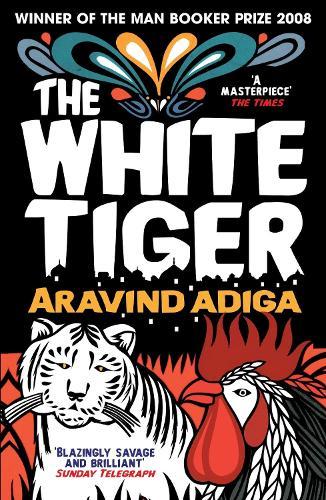
I suggested this as a read for our bookgroup about three years ago, and it finally arrived! Fortunately I hadn’t read it while I was waiting, so I came to it ‘fresh’ even though it was published in 2008 and won the Booker Prize that same year. It is told in the voice of Balram Halwai, a village boy made good as an ‘entrepreneur’, who writes a series of letters to the Chinese Premier, Wen Jiabao. Describing himself as a ‘half-baked Indian’, he also sees himself as a White Tiger: “the rarest of animals – the creature that comes along only once in a generation”. Unlike the rest of his family, he takes (and makes) his opportunities to get ahead, and escape the destiny of custom and servitude.
He tells us from the very start that he killed his employer, Ashok, one of two brothers who along with their father, hire him as a driver. Forced to leave school despite his intelligence, Balram takes the opportunity to become the main driver when Ashok, and his American wife Pinky Madam move to Delhi. There Ashok becomes enmeshed in the corruption of political figures. When by p.285 Balram does finally kill his master, we have come to share his disdain for Ashok’s weakness and the dog-eat-dog world in which Balram lives. While the actual murder takes several pages, Balram then makes huge mental leaps over the consequences of the murder, especially for his family. He is completely unrepentant, on several levels.
The most striking image that I took away from the book was that of the ‘rooster coop’ where individuals are hemmed in by their family pressures to stay within that coop, and not even seek to escape. It is a self-imposed structure that keeps workers honest, even against their own interests. This is something that I have thought about when travelling in second or third world countries: why don’t people rob me? Why is it acceptable for me to move through their society so heedlessly, when my spending money for just that day could make a change to their lives?
One of the things that I loved most about this book was Balram’s narrative voice, which leaps off the page. He is a sardonic, self-serving and perceptive humble-bragger and like all good entrepreneurs, he takes you along with the dream, no matter your misgivings. The book is told completely from Balram’s point of view, although the author gets in his own critique of post-colonialism, corruption, loyalty and the deadening effect of the supposedly-extinct caste system. It is never really explained why Balram is writing to Wen Jiabao, except as the head of the rising power within Asia as distinct from the rotting and dying power of the old India.
I enjoyed this book, its structure as a series of letters and the sheer vitality and front of Balram himself. The author Aravind Adiga has had a life nothing like that of Balram, but he says that Balram is a composite of the many men he heard talking while they hanging around drivers’ ranks and train stations, in slums and in servants quarters. The narrative voice is so strong that you feel as if you are hearing it direct, even though it is as much of an artifice as the epistolary structure that Adiga has employed. Still- I don’t think that I have read another book quite like it.


 The Resident Judge of Port Phillip