This is the film offering for this weekend from Instituto Cervantes. They are free, but you do need to book to get the link. Like the film last week, this is a semi-documentary (or as the co-producers describe it ‘narrative non-fiction documentary’, this time about two boys, one aged 13 and the other 9, who have grown up together in a country town. Now the older boy is shifting to La Habana. Much of the film involves the two boys romping, wrestling and teasing each other. My knowledge of Spanish slang is insufficient to understand much of what they were saying, but it all seemed to be good-natured offensiveness. It is summer holidays, and the kids just roam around disused buildings and empty swimming pools, with nary an adult in sight. Once the older boy Antuán shifts to Havana, the younger boy Leonal visits him but things have changed.
I gather that this was filmed documentary-style, and largely unscripted. I’d forgotten the slow easiness of Cuba, even in Havana. It’s all very subtle and atmospheric, but not much happens.
I know that the Spanish Film Festival has finished for this year, but this is mainly to remind me of the films that I watched as part of it.
This film is set on a rugged island off the coast of Galacia in 1921. The men have left to go to the mainland, leaving only the women, the local school teacher and lighthouse keeper and the cruel overseer. A storm hits the island, and a passing ship with 260 emigrants bound for Buenos Aires sinks. In the turmoil of the storm, we see three women murder the overseer but it’s not really clear what is going on. The three women then take a lifeboat and are responsible for saving the lives of the few survivors. They are feted on the mainland, but then the news story changes and their act of mercy comes under suspicion.
To be honest, I’m not really quite sure what was true, although I think that might have been the purpose of the film-makers, who have based this film loosely on a true story. I was struck by the primitive conditions on the island, and the primal wildness of the women. I hadn’t really thought of links across islands transcending national boundaries, but it reminded me of islands off the Scottish and Irish coasts.
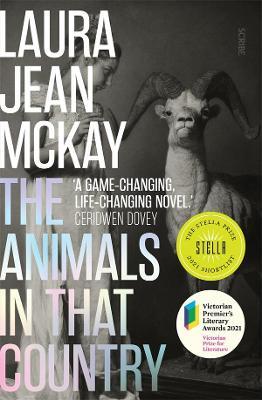
This book won the Victorian Premier’s Literary Award for 2021 and it comes emblazoned with glowing praise from other writers and reviews. ‘A game-changing, life-changing’ novel, it is supposed to be, according to Ceridwen Dovey. High praise indeed, but I’m afraid that it left me rather cold.
Jean is an older woman who has lived hard. She is an untrained wildlife carer and guide in a refuge, a job that allows her to be close to her granddaughter Kimberley. Kimberley’s mother, Ange,the manager of the refuge, grudgingly allows Jean to live on site even though her partner, Lee (Jean’s son) shot through years ago. News begins filtering through of a pandemic – [oh yes, a pandemic. Are we about to be deluged with books about pandemics? Spare us] – colloquially known as ‘zooflu’ which turns your eyes red and makes you able to understand animals talking. I must admit that the implausibility of this turned me off from the start.
The effect was not Dr Doolittle. Instead, people were driven crazy by the voices that they heard, and as fear gripped the community, some chose to expunge every animal from their environment; while others were drawn to the animals who surrounded them, to their own peril.
When the infection finally reached the wildlife refuge, they were closed down immediately. Jean’s son Lee, already suffering from the influenza returns home, and takes his estranged daughter Kimberley with him. Jean feels compelled to follow.
Jean drinks too much, smokes too much, and is harsh and uncouth. She does love animals, though, especially a dingo called Sue, even though Sue had bitten her when she was trying to release her from some wire. Jean and Sue take off in their ute, following Lee and Kimberley’s trail through an increasingly desolate landscape. Jean is infected too, and soon can hear Sue’s thoughts. The infection from the dingo bite is becoming increasingly toxic as the surrounding animals become more menacing, and as societal norms break down.
So what do these animals sound like? McKay depicts their language in a sort of blank verse in a bold font, tangentially related to events, usually fixated on food or excretion, and somehow ‘off’.
Gasping
over the lock (I’m
mingy.) It’ll call me and
I’d like
to get a drink of
it
p. 82
I must confess that I found these animal dialogues opaque (as they were intended to be) and rather twee. I kept thinking “this book is ridiculous”, and even though the concept is interesting, this is pretty much the way I felt through the whole book. Written in Jean’s voice – and a limited and uneducated voice it is, too – it is told in the present tense throughout. There were many times when I was confused about what was happening, although my confusion was generally resolved so that I think I know what happened.
I’m surprised that this book has received the acclaim it has. Although it was written prior to our own pandemic, it probably was released into a market more primed for pandemic-books than might have been the case five years earlier. I found the basic premise implausible (although interesting) and the writing rather flat. Not my type of book, I’m afraid.
Instituto Cervantes is releasing a series of short films during May, although I missed the first one. They are only available for 48 hours, and it’s too late for you to order a (free) ticket- but there are more films scheduled for the rest of the month. I’m not quite sure how to translate “Para la guerra” because ‘para’ can mean so many things: To War? For War? In order for War?
Anyway, it’s about an old man, who fought in wars in both Angola and Nicaragua during the 1970s and 1980s, now living in Cuba just after the death of Fidel Castro. He is looking for the soldiers who fought alongside him, all of whom are just as old as him now. It’s pretty slow moving, with long minutes of night vision of walking through the grass and along roads. I was more interested in the switch between historical film, taken in a stadium where soldiers were demonstrating their hand-to-hand combat and ability to smash bricks with their heads, and the present-day reenactment where this old man smears his face with grease and grass, and dances his choreography of combat. He seems to have a lonely life, without family, and I was pleased that he finally reconnected with an old comrade.
How lovely to see a film again!! This was part of the French Film Festival, but it has now gone on to general exhibition at the Palace Cinemas. Antoinette, a school teacher, was planning to have a naughty holiday with her lover, but her plans were upended when her lover’s wife made alternative plans for the vacation. She decides to go on her planned walk alone through the Cevennes with a hired donkey, Patrick, where she is the talk of the other trekkers. Given that we can’t travel anywhere at the moment, it was an enjoyable form of vicarious travel, and a gentle romantic comedy.
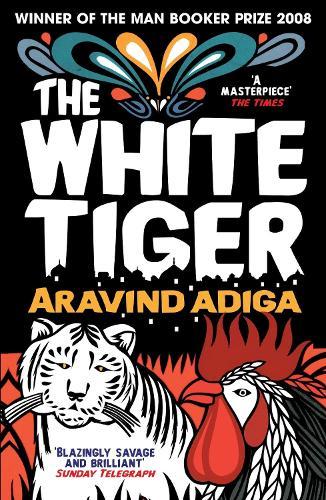
I suggested this as a read for our bookgroup about three years ago, and it finally arrived! Fortunately I hadn’t read it while I was waiting, so I came to it ‘fresh’ even though it was published in 2008 and won the Booker Prize that same year. It is told in the voice of Balram Halwai, a village boy made good as an ‘entrepreneur’, who writes a series of letters to the Chinese Premier, Wen Jiabao. Describing himself as a ‘half-baked Indian’, he also sees himself as a White Tiger: “the rarest of animals – the creature that comes along only once in a generation”. Unlike the rest of his family, he takes (and makes) his opportunities to get ahead, and escape the destiny of custom and servitude.
He tells us from the very start that he killed his employer, Ashok, one of two brothers who along with their father, hire him as a driver. Forced to leave school despite his intelligence, Balram takes the opportunity to become the main driver when Ashok, and his American wife Pinky Madam move to Delhi. There Ashok becomes enmeshed in the corruption of political figures. When by p.285 Balram does finally kill his master, we have come to share his disdain for Ashok’s weakness and the dog-eat-dog world in which Balram lives. While the actual murder takes several pages, Balram then makes huge mental leaps over the consequences of the murder, especially for his family. He is completely unrepentant, on several levels.
The most striking image that I took away from the book was that of the ‘rooster coop’ where individuals are hemmed in by their family pressures to stay within that coop, and not even seek to escape. It is a self-imposed structure that keeps workers honest, even against their own interests. This is something that I have thought about when travelling in second or third world countries: why don’t people rob me? Why is it acceptable for me to move through their society so heedlessly, when my spending money for just that day could make a change to their lives?
One of the things that I loved most about this book was Balram’s narrative voice, which leaps off the page. He is a sardonic, self-serving and perceptive humble-bragger and like all good entrepreneurs, he takes you along with the dream, no matter your misgivings. The book is told completely from Balram’s point of view, although the author gets in his own critique of post-colonialism, corruption, loyalty and the deadening effect of the supposedly-extinct caste system. It is never really explained why Balram is writing to Wen Jiabao, except as the head of the rising power within Asia as distinct from the rotting and dying power of the old India.
I enjoyed this book, its structure as a series of letters and the sheer vitality and front of Balram himself. The author Aravind Adiga has had a life nothing like that of Balram, but he says that Balram is a composite of the many men he heard talking while they hanging around drivers’ ranks and train stations, in slums and in servants quarters. The narrative voice is so strong that you feel as if you are hearing it direct, even though it is as much of an artifice as the epistolary structure that Adiga has employed. Still- I don’t think that I have read another book quite like it.
Heather Cox Richardson. Heather Cox Richardson refers to herself as a ‘Lincoln Conservative’ and in this episode of 18th March she explains why. American conservatism had nothing to do with Edmund Burke’s conservatism (which arose out of his horror at the French Revolution). When the slave owners deprecated the new Republican party for being ‘radical’ and wanting to get rid of slavery, Abraham Lincoln claimed to be ‘conservative’ in that he wanted to keep to the ideals of the Founding Fathers, which was silent on slavery and proclaimed the equality of man (albeit, assumed to be white men). She does not use the term ‘conservative’ for today’s Republican party.
Start the Week (BBC)What if the Incas had colonized Europe? features the recently-released book Civilizations by Laurent Binet, which is a counter-factual fictional book that images what would have happened if the Incas and Aztecs had colonized Europe, instead of the other way round. He is joined by two academic historians, Caroline Dodds Pennock, one of the world’s foremost historians of Mesoamerican culture, and Christienna Fryar’s from Goldsmiths, University of London, who focusses on British/Caribbean History. Both historians are fairly relaxed about counter-factual fiction, and have some interesting observations about the new perspectives that what-if history can bring. I really enjoyed Binet’s HHhh, so I’ve put a reservation on this book at the library.
Rear Vision (ABC) I was out doing the weeding with ABC listen on my phone, and a string of Rear Visions floated past. The Suez Canal burst back into our consciousness when it was blocked by that humongous container ship, and The Suez Canal -ambition, colonial greed, revolution and the ditch that reshaped global trade tells the story of the creation of the Suez Canal and its interweaving with French and British colonial politics and Egyptian nationalism. I hadn’t realized that the Egyptians have blocked the Suez Canal in the past, or the broader political implications of the Suez Crisis (which I’m a bit fuzzy about anyway).
The Latin American History Podcast. Episode 10 of The Conquest of Mexico follows one of Cortez’s conquistadors, Pedro de Alvarado as he strikes out from Tenochitlan down to Guatamala. He might have been good at fighting, but he lacked the skills to actually establish colonies. Many of the names were unfamiliar here, so I found it a little hard to follow. But- in short, there was lots of killing and betrayal.
Based on true events, this is the story of the Spanish writer Miguel de Unamuno, rector of the University of Salamanca during the first months of Franco’s Nationalist government. Although previously left-leaning, he was disillusioned by the disorder of the Republican government, and he gives increasingly luke-warm support to the Nationalists. But when his friends fall victim to the Nationalists, he changes his mind and takes a stance. Franco is depicted as a rather diffident leader who nonetheless is playing a long game while the war hero Millán-Astray is seen to be driving events and whipping up passions. It made me think about how support for a political party of any persuasion can take you to places and stances beyond your comfort zone, and the line between inconsistency and a considered change of position. I’d never heard of Miguel de Unamuno, or this event – but then again, I’m constantly being confronted with things that I know nothing about!
Although the Spanish Film Festival has now finished in Melbourne, there’s an extra showing of While at War on 16th May at the Kino.
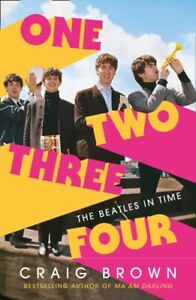
I am a sucker for anything about the Beatles, even though I’m sure that every interview has been reported and combed over and every possible angle explored. Books, documentaries, podcasts – I’ll consume them all. But, enjoyable enough though it was, I really don’t know if the week that it took me to read this huge tome was really well spent.
The book takes a chronological approach, from the earliest days of playing together and goes through to their last performance on the roof of the building in London. It is written as a series of short chapters – 150 of them – some a few pages in length, some only taking up a page.
There are little vignettes that he repeats throughout the text. For example, he writes present-tense descriptions of various parties held over the years that the Beatles were together, where he names who was there, the drugs consumed, the ‘vibe’. As they accumulate, you sense the increasing lack of control as the Beatles and their hangers-on descend into a vortex of jealousy, unhappiness and irresponsibility.
The references are all at the back, and there are many of them, but what is more interesting is the footnotes which become increasingly florid as the book continues. Many of his anecdotes involve unknown people, whose ‘celebrity’ is only revealed in the footnote, and you do get a sense that this is a little microcosm of people who know people.
Some of the chapters are quite quirky- e.g. the list in Chapter 97 of the figures on the cover of Sgt. Peppers (e.g. Dr David Livingston, Oscar Wilde, Aldous Huxley, Lenny Bruce, Stephen Crane the author) and those who were dropped (Mahatma Ghandhi because of pressure from the head of EMI; Leo Gorcey the actor who wanted $400 for his images; and Hitler and Jesus Christ, both requested by John but dropped because too controversial). There are interviews with people who saw his concerts (the Ruby Wax one is really funny), rehashed interviews with the Beatles themselves, and quirky stories. Black and white photographs appear in the chapter to which they apply, which I much prefer to an insert where all the photographs are grouped together. The ending of the book is interesting. He finishes with Brian Epstein, and tells the story backwards, highlighting the many ‘what-if’ paths that could have been taken along the way.
Some of the chapters are autobiographical, where the author talks about his own experience of the Beatles, and his rather dyspeptic current-day excursions to tourist ‘attractions’ in Liverpool. Some chapters are counterfactuals e.g. a chapter where he posits Gerry and the Pacemakers becoming the big thing of the 1960s, with the Beatles just lowly support acts. Other chapters are about things only tangentially related, that occurred at the same time. I must confess that I was hoping for something a little more analytic and dare I say ‘historical’, but this was not the book to bring me either of those things.
The Latin American History Podcast. In The Conquest of Mexico Part 9, Max Sarjeant continues the story beyond the usual end point of the Spanish retaking of Tenochtitlan. Even though they had Tenochtitlan under their control, the Spanish troops did not occupy it immediately, preferring to camp at another location not far away (perhaps all that rampant smallpox turned them off a bit). But eventually they moved into Tenochtitlan, destroying most of the temples in order to construct their own buildings on top of them. They then had to build a stable government, while keeping his own troops and the defeated Aztecs happy, while fending off rival conquistadors.
Big Ideas (ABC) During Trump’s presidency, we saw again the craziness of fear, hysteria, and political grandstanding. In Joe McCarthy and the politics of fear, historian Richard Norton Smith talks about the political rise of Joe McCarthy, his fall and his toxic legacy. It’s an interesting podcast- I learned a lot about Joe McCarthy.
In Our Time: Religion. Arianism was an early form of Christianity that believed that the Son of God was not co-eternal (and therefore equal) with God the Father. (Be careful- it’s not Aryanism, which is the belief in white supremacy.) It was quite a common belief amongst early Christians, but during the Council of Nicea in 325 it was declared to be heresy. However, it continued amongst the Goths and Visi-Goths, and still lingers today amongst Unitarians and (yikes!) the Church of the Latter Day Saints. This episode Arianism has three historians contextualizing Arianism within early Christianity and the Eastern and Western Roman Empires.
Not content with listening to one arcane program, I then listened to a previous 2007 In Our Time episode on The Nicene Creed. It was the Nicene Creed that finally marked the end of my mainstream Christianity, when I found myself unable to say even a single sentence with any conviction. This program covered much the same territory as the Arianism one, albeit with different historians, and I must confess that angels dancing on pin heads did come to mind.


 The Resident Judge of Port Phillip