In 2015 Nobel Prize winning author Kazuo Ishiguro admitted in an interview with the Guardian that “I tend to write the same book over and over, or at least, I take the same subject I took last time out and refine it, or do a slightly different take on it.” I must admit that this is the way that I felt about his most recent book Klara and the Sun which seemed to be almost a companion novel to his 2005 Never Let Me Go.
Klara, the eponymous narrator of this novel is an AF – ‘artificial friend’ – a type of intelligent mannequin marketed at parents and children who want a trusted, safe ‘friend’ for the child. From her storefront window, basking in the warmth of the sun which replenishes her solar cells, Klara is observant as she watches the passing pedestrians and traffic while affecting a mannequin-like blankness. She is purchased for Josie, a young girl suffering from some unspecified illness. Josie has been ‘elevated’, a form of genetic engineering for intelligence, but now her mother is desperate that Josie, like her older sister Sal, is going to die. When she acquiesces to Josie’s urging to purchase Klara, we do not know why, although it becomes clearer as the book goes on.
As with Never Let Me Go, the narration is flat and just somewhat off-kilter. Klara can move, but her perception and observation is very much limited to what is immediately in front of her. She has no sense of smell, and her vision at times is broken into small screen-like boxes. We have no idea what she looks like, or what anyone else looks like for that matter. For some reason, I had assumed that it was set in England but it was only when ‘being English’ was seen as a distinguishing trait, that I began wondering where it really was set. Things are described with the eyes of the outsider: people look at their ‘oblongs’ (phones?) and just as Klara needs to piece together stimuli to make sense, so we too gradually understand what being ‘elevated’ involves, and Klara mother’s intentions for Klara and Josie.
I felt that the book was a bit heavy-handed in its treatment of ‘sacrifice’, a deity and miracles, which are superimposed over the limited worldview of Klara. Just the scenario of a deliberately constrained consciousness, and a body so utilitarian in its construction, is bleak and though-provoking in its own right. I found myself fearing for Klara, an emotion that she did not hold for herself. Like Cathy in Never Let Me Go, the real strength of this narrative voice is its emptiness, punctured by savage shards of awareness.
I think that my enjoyment of this book was heightened by having read Never Let Me Go, which as Ishiguro himself admitted, has a similar theme, with a slightly different take. They make two companion stories. In Never Let Me Go (which I think is the better book) we have the creation of the physical body for a purpose; here we have a consciousness awakened (but not allowed to develop) with the body itself immaterial. Other people have dealt with similar themes of course – I’m thinking here of the television series Humans – but being taken into the limited worldview of Karla, and Cathy from Never Let Me Go, gives both these novels added and memorable poignancy.
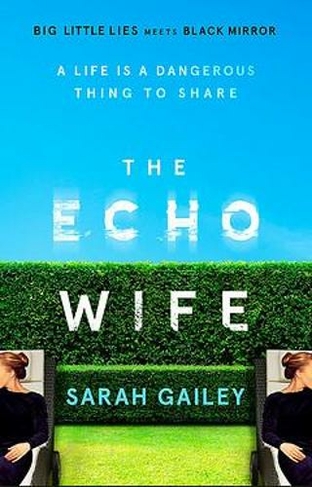
I’m not in the habit of getting book recommendations from the New Scientist, but when I saw this review, I thought that it sounded interesting. My library, which insists on putting genre labels on its books, describes it as a ‘thriller’, while the blurb on the front describes it as ‘Big Little Lies meets Black Mirror’. I guess that it is a mixture of all three, but I thought that it also raised questions about coercive control and domestic relationships not suggested by its marketing.
Evelyn Caldwell is an acclaimed developmental biologist, who is at the top of her field in adult cloning research. Her marriage, under strain for some time, has failed and her husband Nathan has left her for a younger, less driven woman happy to give him the children he craved. She had been aware of ‘the other woman’ for some time, but this was a more fundamental betrayal. Nathan had been using her own research in adult cloning to develop a copy of her, but less intelligent, more pliable, more maternal and less threatening.
And that’s probably as much as I will say, because I don’t want to give away the story, but suffice to say that it branches into murder and crime, as well as its science-fiction-y premise of adult cloning. Our narrator, Evelyn, is insensitive and unaware, and she has her own back story of a bullying father and a nervous, anxious mother – both of whom she resembles at all times, even though she consciously tries to avoid doing so.
One thing that did not strike me about the book was the New Scientist designation of it as “a comedic look at the risks of cloning”. I found little comedy in this book at all. It raises questions about identity, autonomy and coercive control, and I was not completely surprised to read the author’s lengthy ‘acknowledgments’ where past abuse is still very present.
This book is probably more commercially-marketed than I am accustomed to reading, it’s not high literature, and it is more plot-driven than I prefer. At times the plot strained credulity and the ending was far too neat. But for all that, I found it compelling and disturbing, with more depth than I expected.
The History of Rome Episode 10: Barbarians at the Gate deals with the sack of Rome by the Gauls in 390AD. The Gauls besieged the Roman army in the Citadel, and in the end they had to pay their way out. It was the last invasion on Roman territory for 850 years. Episode 11: The Morning After The Gauls trashed the city so much that there was serious consideration of deserting Rome and settling in Veii instead (it was, after all, only 12 miles away and though deserted, still in good condition) but they decided to rebuild instead. They rebuilt in a hurry so that, even though the towns that Rome built throughout their Empire were to a standardized template, Rome itself was a hodge-podge. The Plebes and Patricians were still sparring with each other. The Plebes, saddled with debt from the reconstruction, forced through reforms in 367 BC that finally gave them access to the most powerful office of state: the Consulship. Then in Episode 12: The First Samnite War we have the Romans winning an inconclusive victory in a war against one of the surrounding hill tribes, the Samnites, in 343-341 BC. No sooner had the dust settled, in Episode 13: The Latin War, they are lured into fighting their Latin neighbors from 340-338 BC. This time they won more convincingly, and the Latin League was abolished. Episode 14 is in two parts as he breaks off to talk about military strategy. In Episode 14a A Phalanx with Joints, he notes that under Romulus, Roman armies just plunged headlong into battle. Then they adopted the Phalanx, a Greek strategy which worked well when you were fighting another army that had phalanxes on flat ground. However, with the Samnites, they were fighting on steep rocky ground, and the Samnites were able to get round the side of the phalanx, so they had to find another way. Episode 14b A Phalanx with Joints, they invented the Maniple formation, where they had long lines of soldiers, three deep. At the front were the young, inexperienced soldiers, then behind them veterans, and in the third line the seasoned, long-time soldiers.
Those Samnites didn’t lie down, and sure enough there was a Second Samnite War (Episode 15a). The Romans did well at first, but then they were handed a humiliating defeat at Caudine Forks. The fighting stopped for five years, and Rome emerged victorious in 304 AD (Episode 15b). During that five year hiatus Appius Claudius embarked on an infrastructure building spree that resulted in the Appian Way and the first aqueduct the Aqua Appia (not beyond a bit of branding, our Appius). He came from a prominent patrician family, and served as censor, consul and dictator. Finally in Episode 16 The Third Samnite War, Rome took on the combined army of Samnites, Etruscans, Umbrians and Gauls. At Sentinum, the two sides fought the largest battle in Italian history up to that point. Once the Samnites and Etruscans were seen off, Rome turned its attention to the Greek city-states (Magna Graecia) on the Italian mainland. They appealed for help to Greece, and it came in the form of King Pyrrhus of Epirus. This was the first time that the Maniple faced a tradition Greek phalanx, and the first time that the Roman army encountered elephants in battle. Episode 17: Phyrric Victories goes through the various battles between Phyrrhus and the Roman army. Phyrrus won the battles, but decided that it wasn’t worth it and sailed home. In effect, all he did was show the Romans how to fight Greek-style.
Time for a video interlude I think. Episode 2 of the TV documentary the History of Rome (narrated by Peter Coyote) took me too far ahead, right up to Augustus. I only want to hang around in the 3rd century BC.
99% Invisible A lavishly illustrated cookbook, The Book of Tasty and Healthy Food was produced in 1939 by the Soviet government to develop a ‘Soviet’ cuisine as a unifying feature of Soviet nationalism, even though it bore very little resemblance to the food that was actually available. It was developed by Anastas Mikoyan, who Stalin had named to be the People’s Commissar of the Food Industry in the 1930s. He travelled to America to investigate their mass-food industry, and took advantage of the opportunity on his return to build factories that produced hamburgers, orange juice, canned food etc., naming many of the products after himself. The podcast finishes with an extract from another podcast describing the communal kitchens in Soviet Russia – no glossy photos there!
The Daily (New York Times) The Daily sometimes has a reading of articles that appear in the New York Times Magazine, as is the case with The Sunday Read: He Wants to Save Classics From Whiteness: Can The Field Survive? As you know, I’m churning my way through Mike Duncan’s History of Rome podcast series because I feel that there is something lacking in my knowledge of –what? history? the world? my culture? — through never having studied any Roman history at all. So it’s a good time to listen to this podcast about Dan-el Padilla Peralta, a Classics scholar himself from the Dominican Republic, who is really challenging the field of Classics over its links with White Supremacy. The podcast starts off with a conference in 2019, where after giving his presentation, Padilla Peralta was strongly challenged by an ‘independent scholar’ in the audience, Mary Frances Williams, who attacked him for his views and very directly in a personal sense- it must have been quite a conference. I found this podcast really interesting and challenging. I wonder how Mary Beard (my idol) responded to his views?
Travels Through Time. This podcast keeps adding to my list of TBR books. This time it features Colin Jones, talking about his recent book The Fall of Robespierre. In this episode The Fall of Maximilien Robespierre, Jones chooses 9 Thermidor, Year II in the Revolutionary Calendar (27-28 July 1794) when, after giving a speech in the Convention and then in the Jacobin Club, Robespierre goes home to sleep. The next day the Convention turns against him and he was captured and wounded by a gunshot that has never been entirely explained. By the following day he was beheaded.
Conversations(ABC) I’ve just finished reading Dale Kent’s The Best I Could Be (review coming soon). I was hoping that Richard Fidler would conduct this interview, but it was Sarah Kanowski who spent too much time on being regaled with anecdotes. It made me realize that I had read most of these in the book, and that they come over well as after-dinner-tales, which is pretty much how they did in the book too.
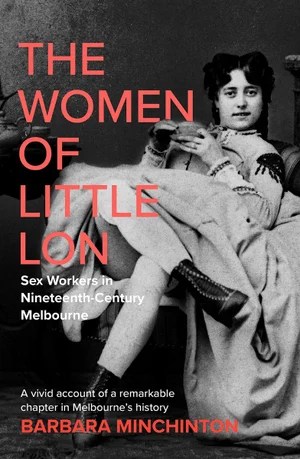
It was odd that I should be reading this book when the issue of prostitution re-emerged into the public discourse. First, the state of Victoria finally decided to decriminalize sex-work by the end of the year. Second, The Age published an article about The Men’s Gallery in Lonsdale Street being accused of facilitating prostitution and breaching liquor and planning guidelines. Concerns about breaching planning guidelines are a very 21st century concern, but the anxieties about prostitution and liquor, especially in Lonsdale Street (albeit at the other end) are highly pertinent to Barbara Minchinton’s lively, well-researched and eminently readable book about sex workers in ‘Little Lon’ during the 19th century.
As she points out in the author’s notes, the term ‘sex worker’ was not used at the time. In fact, the word ‘sex’ did not appear at all in the newspaper or court reports. Instead they were ‘common prostitutes’, ‘gay women’ or ‘streetwalkers’. As society became more censorious, they were ‘sly girls’ and ‘she traps’, and ‘unfortunate creatures’. Surprisingly, prostitution itself was not illegal in the 19th century. Women could be (and were) charged with ‘behaving in a riotous or indecent manner’ or ‘being drunk and disorderly’ but not prostitution or soliciting per se. The focus was on ‘disorderly’ behaviour, and there was a feeling that shutting down brothels in one area would only shift the problem elsewhere. This changed in 1891, and even more so in 1907 with amendments to the Police Offences Act, which made street soliciting, and then soliciting from windows and doors illegal, and outlawed profiting from prostitution. It may have destroyed the business of prostitution that existed in Little Lon for Melbourne’s first seventy years, but it did not eradicate the profession itself. (p.239)
Thanks to C. J. Dennis’ Songs of a Sentimental Bloke, ‘Little Lon’ became notorious as the site for gang violence, drunkenness and prostitution. However, as Minchinton points out through her informative maps, there was an equally notorious site in the block between Bourke Street and Little Bourke Street, bounded by Spring Street and Stephen Street (today Exhibition Street). In a city riddled with lanes and small cross streets that have been largely obliterated by large-scale development today, Romeo Lane, Juliet Terrace and Bilking Square were central to another sex work precinct, just opposite Parliament House, and close to the Eastern Market, the Haymarket Theatre and the Theatre Royal. She likens these precincts to a cake in layers. Streetworkers were on the bottom level, using parks, gardens and laneways as their workplace. Some of these workers were just starting out, and perhaps doing it for pocket money, while others were alcoholic, ill and destitute. The second layer comprised women working out of rented rooms or houses. Some of them doubled as bar-maids, some paid only for the time they used the bed or the room, while others lived in ‘short time’ houses, sometimes known as ‘cribs’. The ‘flash brothels’ were the icing on the cake: double storey houses, with domestic servants, extravagantly decorated with lavish dining and entertainment services. Men could stay for weeks at a time, and the “dressed girls” entertained them with singing, cards and dancing. (p. 23-26)
Minchinton captures well a whole economy, dominated by women, that had spin-offs in other, more ‘respectable’ endeavours. Food, drink, drapers, dressmakers, chemists, money-lenders and furniture-hire companies all catered to the sex-work industry. Real estate lay at the base of it, ranging from the short-term hire of a room, the lease of house from landlords (and landladies) who often held several properties in their portfolios, right up to the purchase of adjoining houses to create a ‘flash brothel’, at times purchased by female brothel-keepers themselves . Nor were these areas solely turned over to prostitution: shops, hotels and residences existed side-by-side, sometimes in a reciprocal arrangement, at other times in a more censorious relationship.
There are nearly 100 women named in this book. Many are of Irish origin. Some appear just fleetingly, while others keep emerging from the court reports and newspaper articles that Minchinton has drawn upon, where she often reproduces the article in full. At times, the names threaten to become over-whelming, and so I was pleased when Minchinton drew breath to concentrate on six women in particular, who demonstrate the range of wealth (or poverty) and prominence (or anonymity and confusion in the public record) of women involved in the sex work network.
Annie Britton was famous for marching down Bourke Street in January 1873, with a captain’s cap on her head, scabbard by her side, sword over her shoulder and smoking a cigar: all probably the possession of her client Captain Gillbee of the East Melbourne Volunteer Artillery who frequented her “house of ill fame” in Spring Street. Sarah Fraser, the daughter of convicts, was the owner of one of the flashest brothels in Melbourne comprising 24 rooms across four separate houses. At the other extreme of wealth, there is Mary Williams who co-owned a series of brothels with her husband, starting with a two-room crib in a back lane. At her peak she had two adjoining houses and at least 3 women working from her premises. Sarah Sarqui, a singer, was said to have catered to the desires of the Duke of Edinburgh when he visited Sarah Fraser’s brothel during his visit to Melbourne in 1867-68. Finally, Mrs Bond worked from a house in Stephen (later Exhibition) Street, and later in Grattan Street Carlton. She purchased 143 Lonsdale Street in 1875 and set it up as a grocery store. It is thought that the absinthe bottles unearthed as part of the archaelogical dig in the Little Lon area were associated with her establishment at 143 Lonsdale. As part of explaining the decline of Little Lon through increased surveillance and harsher legislation, Minchinton looks at one of the most famous ‘flash madams’ of all, Caroline Hodgson or ‘Madame Brussels’ whose multiple court appearances and vilification in the tabloid newspapers between 1889 and 1906 reflected changing social and legislative changes.
In developing these portraits of women who were part of the Little Lon network, Minchinton draws on newspaper articles, court reports, family history and archaeological objects uncovered by the archaeological projects conducted at the ‘Commonwealth Block’ and later ‘Little Lon’. By broadening her vision out from the breathless, flippant and often censorious newspaper reports, she gives a picture of the whole lives of these women. For some of them, the appearances in court were just part of the price of doing business; for others they were part of a cycle of violence, drunkenness and imprisonment. They were daughters, sisters, wives and mothers as well as sex workers, and many of them moved in and out of the purview of the courts. In Minchinton’s view, the true villains are those misogynist male writers like Marcus Clarke (who wrote as the ‘Peripatetic Philosopher’) and “slummer journalists” like John Freeman (‘Liber’) and The Vagabond (John Stanley James – see my review of his work here, where I am less critical than Minchinton) who sensationalized and moralized within the same breath. Then there was David Blair, who wrote a Report on the Social Evil to Parliament in 1873 on the dangers of ‘contagion’, who after enumerating the reasons why European women might be driven to prostitution, claimed that the good wages for servants in Australia meant that only “vicious inclination and evil example” could explain its presence in ‘young’ Australia.
In representing the whole lifespan of these women, beyond court appearances and titillating newspaper articles, Minchinton emphasizes the agency and independence of this 19th century women’s network. Certainly there was violence, addiction and illness -and she does not in any way downplay it- but as she says:
The predominance of Melbourne’s nineteenth-century brothels shows that in a world where sex has has a commercial value, women can and will make use of their sexuality when it suits them, without necessarily suffering harmful consequences.
p.241
Minchinton’s wide-ranging research and focus on whole lives emphasizes the networks between women in this largely (but not completely) female-dominated economy that extended far beyond just the provision of sex. You get a sense of the collective ‘up-yours’ of women who danced in the streets -not quite the vision of degradation and evil depicted by journalists and moralists.
My rating: 9/10
Sourced from: review copy from Black-Inc/Schwartz Media
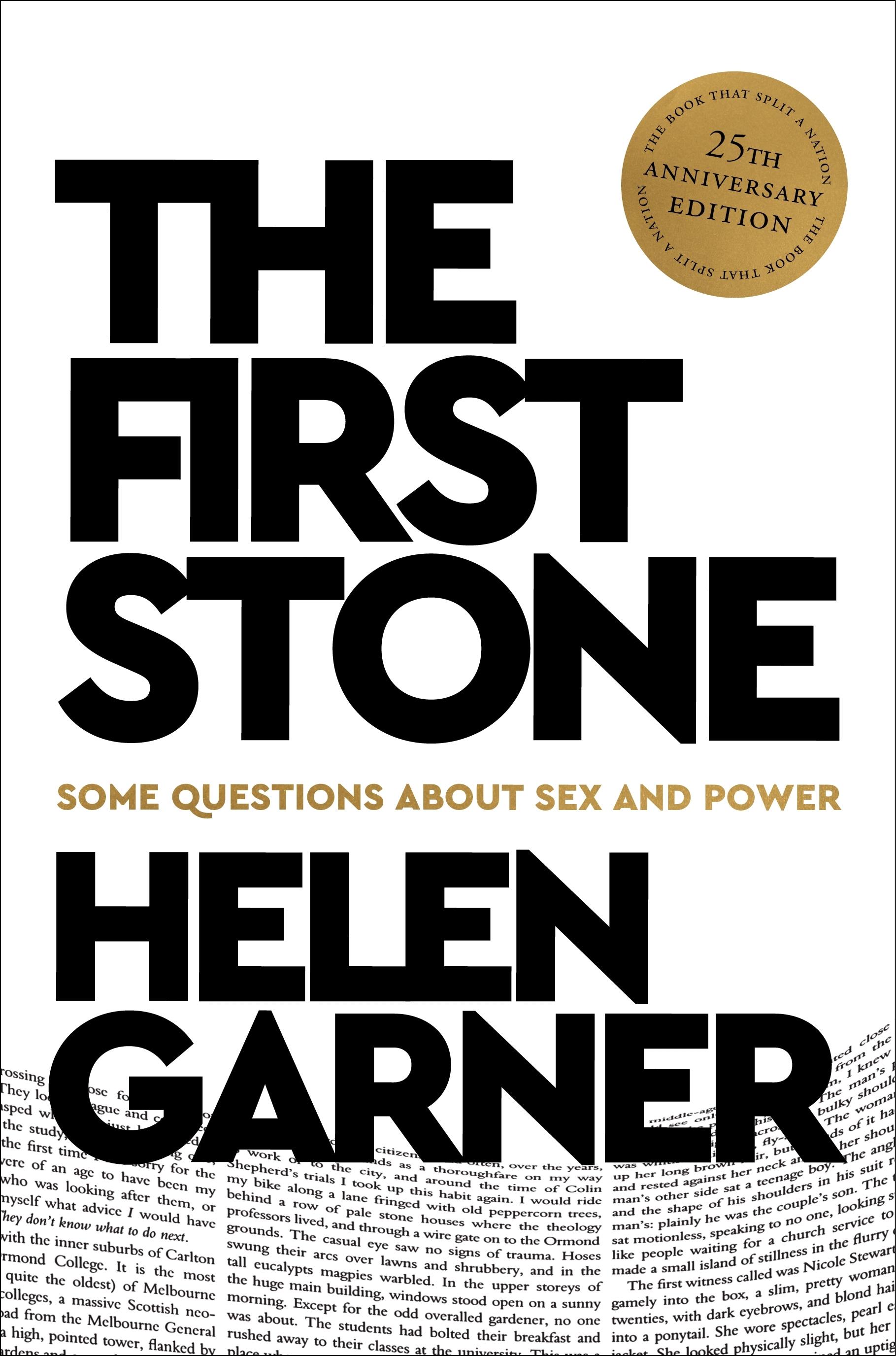
It was the little sticker announcing ’25th Anniversary Edition’ that attracted my attention to The First Stone, which I read back in 1998. Is it really 25 years since this came out? How did this edition differ to the original? I wondered. Has Helen Garner added anything to this book? How does she feel about The First Stone now? How do I feel about The First Stone now?
Well, the first and easier questions first. This edition has a foreword written by Leigh Sales in November 2019, and has three additional pieces at the end. The first of the additions, ‘The Fate of The First Stone’ is a speech delivered by Helen Garner herself as the Sydney Institute’s Larry Adler lecture in August 1995, just after the book had been released and when Garner herself was coming under heavy criticism. The second ‘Helen Garner’ was written by David Leser and published in the Good Weekend in March 1995. The final piece is an excerpt from Bernadette Brennan’s A Writing Life: Helen Garner and her Work first published in 2017. Garner herself has not added anything else to the book. I was interested that its publication in 2020 did not seem to provoke any further commentary from her or anyone else for that matter. And so, I don’t know how she feels about The First Stone now. The only question that I can answer is how I feel about The First Stone now.
So what was The First Stone? It was a book where Garner reflected on the case of the Master of Ormond College at Melbourne University, who was charged with indecent assault by two female students. The events had occurred after the ‘smoko’ after the Valedictory Dinner in October 1991. One student claimed that the Master had groped her breast while they were dancing; the other claimed that he had asked her into his office after the smoko and groped her there. He denied both accusations. The charge on the second offence was dismissed in the Magistrates’ Court. He was found guilty on the first groping charge, but successfully appealed the verdict in the County Court. After initially backing the Master, Ormond College withdrew their support and he lost his position.
On first reading about the groping case, Garner, as a veteran of the women’s movement of the 1970s, was appalled that the girls had gone to the police over what she saw as such a minor offence. After all, she and practically every woman she knew had been exposed to similar lewdness. She felt that the feminist struggle had been transmogrified into a legalistic, puritanical, punitive, petty process, that conflated minor infractions and egregious assaults. Her immediate response was to write and send a letter of support to the Master of Ormond College, who was personally unknown to her. When she came to interview the women themselves and their supporters, she was seen as being an apologist for the Master and to have betrayed her own feminist identity. Positions quickly hardened, on both sides, despite Garner depicting her book as series of questions and reflections.
I read The First Stone in January 1998 and then quickly followed it up with Virginia Trioli’s Generation F (which has also been republished in late 2019) and Jenna Mead’s Bodyjamming, the latter two written fairly soon after the original book’s publication. I noted in my reading journal that Trioli’s book was seductively easy to read, but that I felt that I had had enough after Jenna Mead’s edited collection of essays. It is hard to capture now just how controversial Garner’s book was. It was pretty unedifying really. Reading it 25 years later, I found myself wincing at her venom against the feminist supporters of the two women, and her blithe dismissal of the power imbalance between the Master of Ormond College and two students. Garner bridles against the smooth entitlement of the ‘Ormond Man’, but seems oblivious to how it would reinforce power, when two young women took on The Establishment writ large, as Ormond College surely is, by taking their complaints to police. Reading the essays that follow the reprint in this Anniversary edition, I am not comforted by the fact that she spoke at the conservative Sydney Institute, or that her stance was supported by conservative commentators P.P. McGuiness or John Laws (much to Garner’s own horror). She tried to interview the two women, but they would not speak to her (as indeed was their right), and they have kept their silence ever since. No doubt, The First Stone would have been a different book had they spoken to her, but I’m not sure whether it would have entrenched, or challenged, Garner’s argument.
Nonetheless- and that’s a very Garneresque thing to say- her point about ‘degree’ still stands. Reading this edition, 23 years after I first read it, I am now closer in age to Garner (both then and now) than I am to the young women. I do wonder about, and am glad that I do not have to negotiate, the sensitivities over ‘ongoing consent’, and the red-lines over banter and flirting. I enjoy Garner’s writing- I always have- and even though I intended reading only the foreword and the closing essays, it was so easy to be drawn into re-reading her original book, with her mixture of self-effacement yet grit, her questioning and her uncertainty. The older I become, the more appreciative I am of nuance and ambivalence, and you find them both in her writing.
But – and there’s another very Garneresque expression- 25 years later we have had the ‘Me Too’ movement, something that Garner herself pre-figures in the book by telling us of her own experiences, some where she felt she had agency, others where she did not. The organizational and legislative channels that were in their infancy then -and indeed had been created as a result of the work of those 70’s feminists – failed the young women at the time but have become more robust. Even more disturbingly, we have seen a number of powerful, well-connected, QC-laden men rebut ‘strenuously’ (as if the strength of their rebuttal is sufficient proof of their innocence), and often successfully, the accusations against them through the courts, sometimes in their own defence, at other times in order to seek legal redress from their accusers. Today, the power-relations implicit in this case would be not have been overlooked, or side-lined, as they were at the time.
However- and there’s another qualifier – even though it might seem more clear-cut, questions still remain. Because we are talking about ‘humans’ and ‘relations’ then questions should, must remain. There might not be many who would spring to the Master of Ormond College’s defence today – would Garner? (I don’t know). In that regard, the book has dated badly. But the questions of proportionality, agency/victimhood, generational change, the law, class and feminism are just as pertinent – if not more pertinent- today.
My rating: How do I rate this? Should I rate high because it drew me in just as much as it did when I first read it. Or should my rating reflect the fact that time has moved on? I don’t know. I can’t say
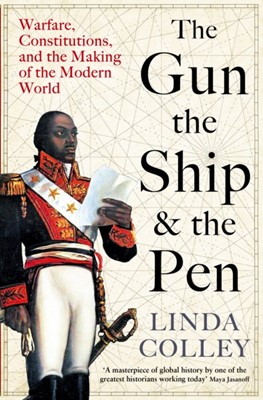
When I was thinking about writing my thesis, my supervisor exhorted me to “go big”. I disregarded his advice, but now I wish that I had listened to him. Linda Colley certainly “goes big” in this book that explores warfare and constitutions and the making of the “modern world”. It’s a big modern world, that includes Corsica, Tahiti, Japan, Tunisia as well as Britain, France, Russia and America. It’s only when I read such an expansive book as this that I realize how rarely I read a history that spans such a broad canvas.
Many people assume that constitutions emerge out of revolutionary politics, the rise of the nation state and the inexorable progress of democracy. Drawing on constitutions developed between 1750 and the present day Colley argues, instead, that constitutions are written in response to warfare and threats of foreign aggression, prompted by ‘umbrella wars’ involving both naval (i.e. the ‘Ship’ in the title) and land battles (the ‘Gun’) conducted across different regions of the world. They are not a feature of the nation-state, but more often an artefact of empires: Britain, China, Russia, France, Germany, the Netherlands, the Habsburg monarch, the Ottoman empire, Japan, Italy and the United States (p.9). Historically, through their constitutions governments held out the promise of rights, especially the franchise, to compensate men who would fight with their own bodies and pay the taxes to support large armies. Because constitution-making was interwoven with war and violence, along with monarchs, politicians, lawyers and political theorists, there were also military, naval and imperial officers, intellectuals, clergymen and cultural figures of all kinds who made their contributions (p. 11). These were written constitutions, responsive to increased literacy, an explosion in print and its transmission, translation and even the rising popularity of the novel (p.12).
Linda Colley is one of my favourite historians. She is probably best known for Britons (which I have on my shelf and haven’t actually read, even though I have read many papers that cite it) and I loved her The Ordeal of Elizabeth Marsh which combines the ‘small history’ that I love and the ‘big history’ that my supervisor wanted me to write. She does not particularly address methodology in this book, but she does make this comment:
For some, laying stress on the impact of transcontinental warfare – or on any other large-scale and wide-ranging sets of changes – risks flattening out important and essential differences, and detracts from the specific roles and contributions of particular nations, cultural groupings and individuals. There can be a fear, as the anthropologist Arjun Appadurai puts it, that addressing the large-scale will tend ‘to marginalise the already marginal’ and foster neglect of ‘small agencies and local lives’. Yet there is no need, I would argue, to become trapped in such chicken-and-egg type arguments. Drawing attention to the big and the wide and to connections does not mean – and should not mean – ignoring and effacing the specific, the local, the small-scale and finely researched individual details.
p.42
Her book, vast in scale as it is, honours both elements. Each of her chapters starts up close with an individual or an episode before she draws back to take a wider perspective. These individuals, each with their own lived history and cultural context, form a touchstone in that chapter and she returns to them at various stages throughout the text to highlight the distinctions and commonalities between different constitutional responses.
The book is divided into three parts. Part One: Into and Out of Europe has two chapters. Chapter One, ‘The Multiple Trajectories of War’ starts with Pasquale Paoli and his ten-page constitution for Corsica, written in 1755 on re-used letters with the inked words scraped away. Colley then moves outward to discuss the way in which warfare became more expansive and more expensive, pointing particularly to the Qing dynasty of China in the 1640s as an example of imperial force against the Zughar-Mongolian empire. Hybrid wars involving both maritime and terrestrial warfare helped give rise to a series of revolutionary conflicts which expanded the design of written constitutions, namely in North America after the War of Independence and in France and Spain after the Seven Years War. Haiti, she suggests, is the exception that both broke and proved her claim that wars preceded revolution. Toussaint Louverture is the best-known revolutionary war leader on Haiti, but she focusses instead on another, less-recognized leader, Henry Christophe. Colley often does this: she acknowledges the well-known figurehead, but then turns her attention to another player standing off-stage.
Chapter Two ‘Old Europe, New Ideas’ starts off with Catherine the Great, writing her own constitutional document, the Nazak. Colley points out the influence of Rousseau and Montesquieu, then returns to Catherine and her Nazak, and its dissemination and influence across geographical borders and on Frederick II of Prussia, and Gustaff III of Sweden, both Lutherans and both influenced by Enlightenment thinking. She rounds out this chapter with Tom Paine, whom she dubs ‘Charter Man’, who championed the constitution as a real, tangible paper or parchment outline of power, rights and laws, prompting a new interest in the 1215 Magna Carta.
Part Two: Out of War, Into Revolutions has three chapters which are quite different each from the other. Chapter Three ‘The Force of Print’ starts in Philadephia with the Constitutional Convention in May 1787. She describes in detail the development of the 4,500 word American Constitution which was inscribed on four sheets of parchment, each about two feet wide and two feet high. It appeared on the front page of the Pennsylvania Packet on 19 September and by late October, the text had been picked up by over 70 other American newspapers. She points out that this constitution was publicized widely throughout the world, and particularly influenced South American states, especially in Venezuela, the Irish Free State, Norway, Calcutta and the Cherokee nation within America.
Chapter Four ‘Armies of Legislators’ starts in Paris in 1789 when the American Gouverneur Morris [sic] of New York arrived after finalizing a draft constitution for the United States, slap bang in the middle of the summoning of the Estates-General which kicked off the French Revolution. Although Morris returned to America, Colley stays in France with her analysis, following Napoleon and his imposition of constitutions on the lands he conquered. In particular, she looks at the Constitution of Cadiz of March 1812 which was explicitly a document for a reformed, more inclusive Spanish empire in South America and the Phillipines.
Chapter Five ‘Exception and Engine’ looks at the paradox that even though Britain does not have a written constitution (and glories in the fact), London in particular was the heart of constitutional inquiry. Jeremy Bentham plays an important role here, with his belief that written constitutions were a template of rational principles of liberal justice and rights that could be imposed on any society, no matter its history or customs. Bentham met and corresponded with men (always men) interested in constitutional matters from all over the world- Greece in 1821, Haiti, Islamic North Africa, Argentina. Colley returns to look at Britain’s relationship with her own Magna Carta and Cromwell’s unsuccessful attempts to codify republican politics. Some two hundred years later John Cartwright, a colleague of Bentham’s, was travelling Britain and corresponding with European politicians, promulgating the ideas that led to Chartism. For some, the essential beauty of the British constitution was that it didn’t exist physically and was perpetually in flux. Many of the politicians and intellectuals in South American countries (e.g. Simón Bolívar) looked to the inroads that British commerce, capital and shipping were making in their countries, and some spent time in London (the British Library was a particular drawcard).
Part Three New Worlds travels to far-flung places in its examination of constitutions. Chapter Six ‘Those Not Meant to Win, Those Unwilling to Lose’ starts off in Pitcairn, of all places, where English mariner Capt. Russell Elliot gave the islanders a spare Union Jack and a ‘few hasty regulations’ that ended up being regarded as a written constitution. It was a remarkably sensitive list: it paid attention to the environment by regulating dogs, pigs and goats; it limited the cutting down of trees; made school attendance mandatory for all children between 6 and 16, and elections for Pitcairn’s ‘magistrate and chief ruler’ were held annually and all adults (including women) voted. This differed from other countries, where women were excluded, largely because they could not fight. The places where women did achieve some sort of franchise were generally on the edges of the British Empire (e.g. Cook Islands, New Zealand, Australia). Turning to settler warfare, especially in the Pacific, she focusses on Governor Gipps in NSW and his nemesis John Dunmore Lang, that fiery Presbyterian minister, who travelled to America and Brazil and dreamed of a future republican Australian federation that might include NZ, New Guinea and Fiji. She discusses Pomare II in Tahiti, and Kamehameha III and King Kalakaua in Hawaii – countries I would never have thought of including in a discussion of constitutions!
Chapter 7 ‘The Light, the Dark and the Long 1860s’ picks up on her interest in the 1860s (she co-organized a conference ‘The Global 1860s’ at Princeton University in 2015). Good grief- here are General Hasayn Ibn ‘Abdallah and Khayr al-Din in Tunisia, a long way from America emerging from the Civil War in the mid 1860s, which she examines in some detail. Then across to Africa, where James Africanus Beale Horton, from Sierra Leone and of African-British heritage, encouraged the emergence of west African political communities with strong African monarchies alongside strong African republics, with ‘universal’ suffrage.
Chapter 8 ‘Break Out’ starts with an analysis of the 1889 woodblock print ‘Issuing of the State Constitution in the State Chamber of the New Imperial Palace’ where the artist Adachi Ginko indulged in some imagination in depicting the handover of a new constitution. Most of this chapter deals with Meiji Japan, and Japan’s victories against China and then Russia in the early 20th century, and its seizure of Taiwan in 1895 and annexation of Korea in 1907.
Her Epilogue picks up on WWI, drawing in all the empires, and further amplified by the Spanish flu epidemic. The collapse of the Russian Empire triggered off a new bout of constitution-making, while other earlier constitutions across the globe collapsed. The dissolution of the Soviet empire in 1991 resulted in the emergence or re-emergence of fifteen ostensibly independent countries in Eastern Europe, central Asia and Transcaucasia. The civil wars that still afflict the world drive up constitution-writing to unparallelled levels. By 1991, she claims, only about 20 of the 167 single document constitutions in existence were more than 40 years old. She brings her analysis into the present day, with a 2016 poster promoting the repeal of the 8th provision of the Irish constitution that effectively banned abortion, and photographs of a demonstrator in Pretoria, South Africa hiding his face behind his pocket-book edition of the constitution, and Olga Misik protesting in Moscow in 2019, holding her copy of the Russian constitution.
What a journey across time and place! Who would have thought that a history of constitution-writing could take us across so much territory? I must confess that I find it hard to become exercised over constitutional discussions – although we are often glad of robust constitutions and rules when they are challenged. I feel that historians have to use their very best narrative skills to breathe life into a study of constitutions, as Colley has here and as Peter Cochrane did in Colonial Ambition. But even the most inflexible constitution is not written in stone. We are seeing the rise of Originalism in the U.S. Supreme Court and with the Uluru Statement from the Heart, Australians are being asked again to consider their constitution and the place of First Nations people in it (or not). And rather more ominously, the constitution of the People’s Republic of China identifies Taiwan as “part of the sacred territory of the People’s Republic of China” and claims that “re-unifying the motherland” is a “lofty duty”. Colley’s magisterial and beautifully written book – and I don’t use that term lightly – highlights constitutions as forever-evolving political creations, shaped by individuals and larger historical forces. And still they keep forming….
The History of Rome. At least these podcasts are short. Episode 4: the Public Thing picks up after it was decided that they would appoint two consuls instead, for a period of only one year, so that they wouldn’t get too cozy in the job. (They were called praetors at first, but came to be known as consuls). Each consul could veto the decisions of the other They were drawn from the patrician class, which was sure to annoy the plebs. And sure enough in Episode 5: Trials and Tribunlations, the plebs refused to enrol in the army because they were being hounded over debts that were contracted while soldiers were off fighting war. Wars were brewing on the borders, so a dictator was appointed either for a specific task, or for a period of six months. He had almost unlimited power, but only for a short period of time. It was agreed that a new class of magistrates, called Tribunes, would be elected from among the plebians to protect their interests against the patricians. In Episode 6: The Twelve Tables a committee was ordered to compile and condense Roman Law (at that stage a mixture of documents, customs and patricians’ self-interested memories) into a single text called the Twelve Tables of Law. The laws were printed on twelve bronze tablets, which have unfortunately been lost. The impetus came from the plebians, and the tablets formed Roman Law for 1000 years. They laid down court procedures, established the legality of capital crimes, intentional homicide, treason, perjury, judicial corruption, and writing slanderous poems, and the rights of family heads, inheritance law, laws of acquisition and possession, land rights, public law and sacred law. Episode 7: The Roman Washington looks at the dictator Cincinnatus. He was not the first dictator, and he was a patrician, not a lover of the underdog. He had lost all his money because of his son’s recklessness, and when war and dissent arose, he left his farm to become dictator in 458BC. Most importantly, once things settled down again, he stood down and went back to his farm. He was called on again during times of crisis and again, reliquished his position afterwards. Americans (who had Roman delusions of their own) designated Washington a second Cincinnatus because he, too, returned to his farm after the War of Independence. They named Cincinnati after Washington (who they named after Cincinnatus).
And at this stage, I took a break and looked at a documentary – very American and rather too presentist for my liking – The Roman Empire Episode 1: The Rise of the Roman Empire available on YouTube. This first episode takes us up to Cincinnatus.
Back to the podcast! Episode 8: Decades of Gloom points out that the Patricians and the Plebs were at each others throats, the Plebs annoyed that the Patricians were hogging all the power, and the Patricians reluctant to give it up. There were real shortages of food, and Spurius Maelius, a wealthy Pleb, hoping to make himself popular, bought up huge supplies of grains as a populist measure. Despite populist acclaim, the Patricians suspected that Maelius had ambitions to have himself crowned King (they really were burned by their experience with kings). Cincinnatus had been reappointed dictator (again) because of the unrest, and he order Maelius to appear before him. When Maelius refused, he was slain by the Master of the Horse. There had been an ongoing and inconclusive war between Rome and Veii, an Estruscan city just 12 miles from Rome, and it finally came to a head because Rome wanted access to the salt on the north bank of the Tiber and because of land shortages in Rome. Episode 9: A Trojan War looks at the war against Veii, when Marcus Furius Camillus was appointed dictator and led the Romans to victory. The Roman war strategy up until this point had been to use overwhelming and unstoppable force, and have a ‘war season’ each year before going back to their fields. Under Camillus, they had a year-round paid army instead, and undertook seige warfare against Veii, and infiltrated the city by tunnelling into its drains.
The History Listen (ABC) In the 1970s I saw Peter Singer’s ‘Animal Liberation’ film, and decided to become a vegetarian. I probably only lasted a year or so. This episode Those Bloody Vegos- a short history of vegetarianism in Australia credits Peter Singer with this 1970s phase of vegetarianism, as part of a longer history. At first, vegetarianism was associated with Spiritualism but then was boosted by the Seventh Day Adventists and the “wellness” movement promoted by the Kellogg brothers (yes- the cereal ones). Vegetables were more accessible once the Chinese started market gardens, and WWII increased the growing of vegetables. Then there was the animal liberation argument, and now environmental and health grounds as well.
Big Ideas (ABC) I could listen to Gideon Haigh all day. He’s so articulate, so knowledgeable. His recent biography of H.V. Evatt is called The Brilliant Boy, but in this Big Ideas episode, he talks about ‘Doc Evatt’s great dissenting judgement‘ where Evatt wrote his opinion about another ‘brilliant boy’ who drowned in a drain in inner Sydney, and his mother sued the council for mental suffering. This is a fairly legalistic discussion, and very broad ranging, but it emphasized Evatt’s legal skill even if he is better known for heading Labor for years in the wilderness.
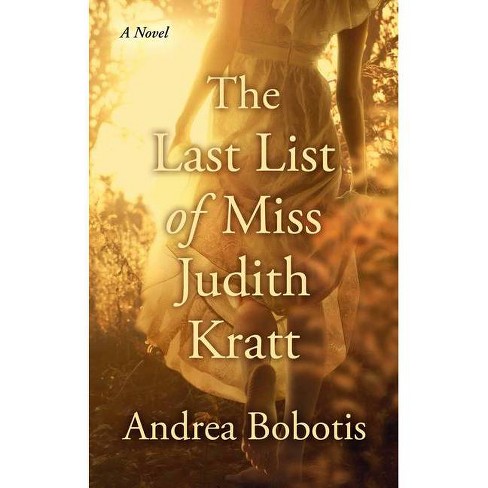
I can’t quite remember why I ordered this book from the library. Theresa Smith reviewed it back in 2019, and I think that I must have read a more recent review of it as well. It’s the debut novel of an American historical fiction author, Andrea Bobotis, who has a PhD in English Literature, and has published academic articles on Irish writers, as well as short stories. She teaches creative writing at Lighthouse Writers Workshop in Denver.
Perhaps I was attracted to its setting in the decaying, hard-luck town of Bound in South Carolina, where Judith Kratt, an elderly spinster, has been living in her family home all her life. It is 1989 and the quiet, if cluttered, domesticity of Judith and her African-American companion Olva is disturbed when Judith’s younger sister Rosemarie suddenly turns up. She had run away sixty years ago at the age of thirteen in 1929, just after her older brother Quincy, had been murdered.
Quincy’s murder is announced on the first page of the book, with an extract from the York Herald.
Quincy Kratt, aged 14, sustained a fatal gunshot wound to his person in the early hours of Friday, December 20. Young Mr Kratt was a scion of the cotton industry in Bound, South Carolina. His father, the influential businessman Brayburn Kratt, is one of our local captains of that industry. The principal suspect in the shooting is a negro called Charlie Watson, who is employed by the Kratt Mercantile Company and whose whereabouts are as yet unknown.
That Charlie Watson was responsible for the murder was local lore, but when Rosemarie returns in 1989, this certainty is unsettled. We can tell from Judith’s 1989 narrative that although Olva is a ‘companion’, there is a complex power imbalance here, only partially explained by colour. As the remaining matriarch of the Kratt family, Judith decides to compile an inventory of the objects within the family home, and these items trigger off memories from the past. Each chapter closes with an ever-growing list of objects, which have enhanced resonance for the reader after travelling with Judith back to the 1920s. These are not happy childhood memories. Her father, Brayburn, was a violent and mercurial man, who cultivates his son Quincy as a spy on the employees of Kratt Mercantile company, and who tries to coerce Judith into his racist activities as well.
This book is probably more heavily plotted than what I am used to reading, and at times I felt that some of the plot turns were a bit implausible. However, she captured well the insolent, swaggering menace of racism both in 1929 and 1989 and I liked the slightly stilted, rather self-serving narrative voice of Judith. It was well-researched too (says she who has listened to just one podcast about the South during the 1920s!) in capturing the economic decline of Southern towns prior to the Depression. The device of the ever-growing list of objects at the end of each chapter worked really well in highlighting both the uselessness of sheer objects, but also the freight of memories, both good and bad, that they carried.
My rating: 7/10
Sourced from: Yarra Plenty Regional Library as a large-print book. I wonder why it was only in that format.
First Saturday. Six Degrees of Separation Day. This meme is hosted by Kate at BooksAreMyFavouriteandBest and it involves drawing links from the book that Kate chooses – in this case, Carrie Fisher’s Postcards from the Edge – and nominating six other books that you mentally link with the starting book.
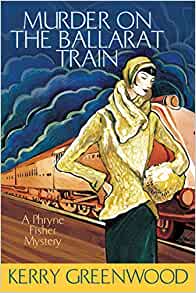
I don’t remember reading Postcards from the Edge, but I do know who Carrie Fisher the actress was. But another “Miss Fisher” who is far more familiar to me is Kerry Greenwood’s creation Miss Phryne Fisher. I’m not really into mystery novels, but I did read a Phyrne Fisher years ago. I had no idea how to pronounce her name then, but the television series has taken care of that. To be honest, I can’t remember which one I read, but let’s go with Murder on the Ballarat Train because that leads me to….
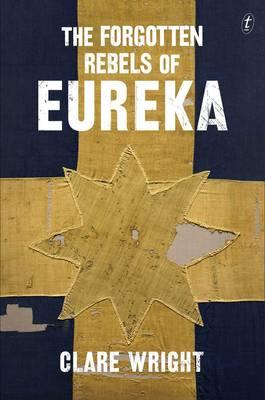
…Ballarat, and Clare Wright’s fantastic history of women in the goldfields in her Forgotten Rebels of Eureka. This book won the second-ever Stella Prize in 2014, highlighting that the Stella was for both fiction and non-fiction books. It is written in Clare’s trademark warm, bubbly voice but underpinned by serious academic research. It is based on the Eureka Stockade rebellion which took place on the Ballarat goldfields, which leads me to…
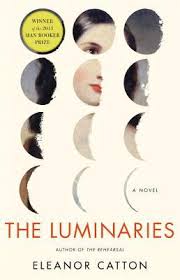
Another goldfield, but this time in New Zealand with Eleanor Catton’s The Luminaries. Actually, when I look at my review, I didn’t seem to be particularly impressed with it, and rather disgrunted about its length even though it won the 2013 Booker Prize. As I remember it, much of the action took place on a boat, which leads me to….
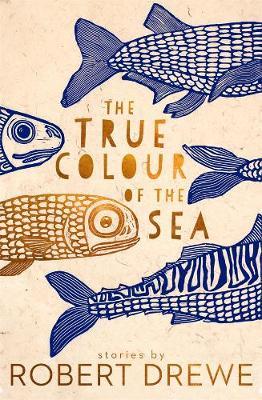
Robert Drewe, who is drawn to writing about water. The True Colour of the Sea is a collection of short stories, several of which make reference to the sea. We’re taken to a Pacific Island and to Cuba, as well as more recognizable Australian oceans and beach-side settings. And as a good little Australian school child, I was well and truly drilled in the importance of Captain Cook, one of the greatest navigators of Empire which leads me to….
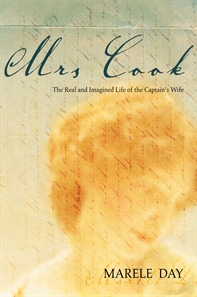
Mrs Cook: The Real and Imagined Life of the Captain’s Wife by Marele Day. As suggested by the title, this is not a straight biography, but nor is it pure fiction either. The book is organized around a fairly large collection of existing Cook artefacts which, from the the notes at the back of the book, are located in various museums, libraries, churches and parks across the world. She uses these real-life objects as the tethering posts to which she attaches her fictional narrative, complete with conversation and internal speech. I don’t seem to have been terribly impressed by this book either. But another book about the sea that I was impressed with is….
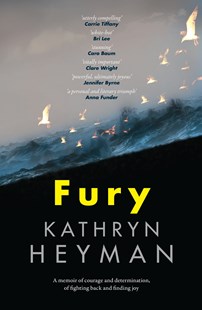
A very recent read, Kathryn Heyman’s Fury. You might think from the front cover and the opening chapter that it’s going to be about a woman clinging onto the boom of a fishing trawler in a howling storm, which is it. But it’s about far more than that. It’s about class, femaleness, sexuality, the power of story and the narratives we tell ourselves.
Thanks, Kate, for hosting this meme, even though I very rarely have read the book you start off with. September is Rachel Cusk’s Second Place, nominated for the 2021 Booker. I don’t like my chances of having read that one, either.
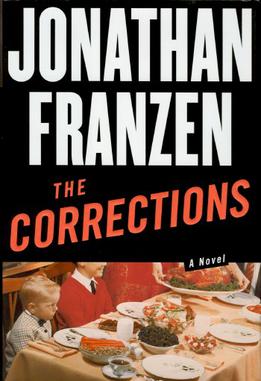
Perhaps this post should be titled ‘Re-reading The Corrections’, because I read it in 2002- think, nearly twenty years ago. I was interested to see what I wrote about it in my pre-blog reading journal back then:
I can’t remember having such varying feelings about a book. It is really a tragedy mixed with farce. In its tragic parts, I felt uncomfortable at the harsh glare of reality: in its farcical sections I felt bored and tired of the author’s look-at-me cuteness and self-conscious wittiness. It is, as the author admits, five novellas and for me, the sections dealing with the cruise and the Lithuanian venture could easily have been dropped.
But the family dynamics were brilliant: the well-meaning but manipulative mother who wants to bring the family together for one last Christmas; the father bewildered by his Parkinson’s Disease; a psychologically-hypochondriac son bullied by his wife and children; a son who throws away a career because of sexual indiscretion and ends up doing very shady deals in Lithuania, and a daughter who discovers her lesbianism only while wrecking her own career as a chef because of an affair with both her employers. Incisive, current, but very in-your-face. 8/10
So how does it shape up 20 years later? I was more impatient this time of the self-indulgent length of 653 pages, the long lists of objects, and sheer show-off-iness of the writing. I just wanted him to shut up, frankly. Too much talk, too much self-indulgent angst.
It now seems very much of its time – pre September 11 and the GFC, it’s a time of American bombast and certainty, where greed was still good (if somewhat grubby) and the American viewpoint dominated the world. Trump, the non-existent Weapons of Mass Destruction and the whole Middle East mess that it gave rise to, and COVID have punctured all that.
The search for the ‘Great American Novel’, fat and sneering and self-important, seems now to be a very masculine endeavour, with Franzen being likened to Saul Bellow, John Updike, Philip Roth, Don de Lillo, Thomas Pynchon etc. (all men, I note). Actually, I think that Elizabeth Strout should be in this list too, and her books are so different from these. Yes, there are deeply flawed and unlikeable characters in her books too, but there isn’t the superciliousness in these other contenders.
Of course, I’m not the same reader either. Twenty years on, Parkinson’s is a much more sensitive topic, given that someone I love dearly has it. Twenty years later, having sat beside both my parents as they died, I understand more about death and age. Hell, twenty years later, I tick the 65+ age box now. Now I’m the grandmother and mother-in-law. Given that Franzen himself is now 61, I wonder if he would write the same book.
This is an unkind book that is far, far, far too long. Twenty years later, I’d downgrade that 8 to a 6.5


 The Resident Judge of Port Phillip