Zooming history: ‘Records and Recollections: the pneumonic influenza pandemic in Australia 1918-1919

How naive we were, thinking that once 2020 came to an end, the year of COVID would be over. We only have to look back to the ‘Spanish’ flu to see that epidemics can spiral around the world again and again. This ANU Annual Lecture is presented by Anthea Hyslop who lectured in History at ANU from 1989 until her retirement in 2009. She observes that there is quite a bit of written material about the ‘Spanish’ flu- Richard Collier wrote a global history in 1974 based on a questionnaire which included the Australian experience, and there was an oral history project on the Flu epidemic in 1980. From these questionnaires and interviews we learn that at first people conflated bubonic plague and pneumonic influenza. I’d always wondered about the ‘vaccination’ that was spoken of at the time. There was a ‘vaccine’ but it didn’t really affect the influenza, but it did help to avoid secondary infection. It came in A and B doses, with the second dose stronger than the first, and CSL produced 3 million doses. There was also the inhalorium or “a course of whiffs” which was supposed to prevent transmission. Once people contracted the influenza, they treated it with APC (terrible stuff- I was given it when I had tonsillitis as a child), proprietary medicines or onions. Schools and public resorts were closed, but factory work continued, so there was no lockdown. And what happened in the end? Well, it just petered out after about a year. We’re still waiting.
Six degrees of separation: from Rules of Civility to…..

First Saturday of first month in a New Year: it must be Six Degrees of Separation day. To see how this works, head over to https://booksaremyfavouriteandbest.com/6-degrees-of-separation-meme/ Essentially it’s a free association game where you link a given title, in this case Amor Towles’ Rules of Civility with other books that you have read.

As usual, I have not read the starting book but I have just finished Towles’ wonderful A Gentleman in Moscow. But as I haven’t blogged it yet, I’ll take a different tack, looking at the ideas of rules and civility in their different forms.

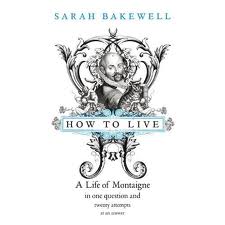
A book with a similar injunction on behaviour is How to Live or A Life of Montaigne in one question and twenty attempts at an answer by Sarah Bakewell. Actually, it’s not Bakewell telling you how to live, but Michel de Montaigne, the prototype blogger, who doodled around philosophical questions in his ‘Essays’ in the sixteenth century.

This book, How to Live, is a biography in the quirky and digressive spirit of Montaigne too.  It, like Montaigne, takes the question “how to live?” and distills twenty answers that Montaigne might have given, as prisms onto Montaigne the man and his work. (See my review here)

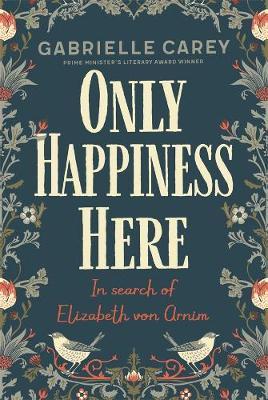
Writers are quite fond of telling us how to live and what to do, and the wonderful Elizabeth von Arnim was no exception. Elizabeth von Arnim’s work was my discovery of 2021 and I really enjoyed Gabrielle Carey’s Only Happiness Here: In Search of Elizabeth von Arnim. The author, who was going through a rather rough patch in her life, decided to seek out von Arnim’s advice about happiness because so many of the characters in her books revelled in it.

So, the book is a search for Elizabeth von Arnim’s Principles for Happiness, which she nicely presents as a single page certificate at the end of the book. She finds nine: freedom, privacy, detachment, nature and gardens, physical exercise, a kindred spirit, sunlight, leisure and creativity. Each of these is discussed in turn throughout the book, appearing as a subheading in a book without chapters. This is not just a one-way distillation of wisdom from on high. Carey brings her own life to the search, particularly with the concept of ‘privacy’ which recent events prior to embarking on the book had brought to the front of her own consciousness. (My review here)

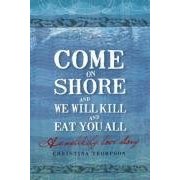
The injunction to Come On Shore and We Will Kill You and Eat You All: An Unlikely Love Story is a fairly clear directive on how to live, or at least how to not die. You might not guess it from the title, but it is a combination of memoir and a discussion of border-crossings in colonialism and personal life when an American academic marries Seven, a Maori man, and has three children with him.

She is an American academic, based in Melbourne to write her doctoral thesis, and when she meets and marries Seven, she finds herself enmeshed in Maori family and community obligations that she both observes and critiques as a border-crosser. She is quite open about the fact that there are values and responses that she does not share, or even completely understand, and she feels conflicted about the historical trajectory that has seen her New England family amass wealth and status over another disenfranchised people, the American native. She can see the parallels in her own story, and that of the history of Seven’s family and culture. (My review here)

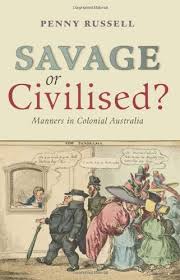
Not quite so graphic is the concept of ‘good’ behaviour as a marker of ‘civilization’ as spelled out in Penny Russell’s Savage or Civilized: Manners in Colonial Australia. She’s not talking about ‘politeness’ as described in the etiquette manuals that flooded the British Empire, but how manners played out in the everyday lives of individuals, in the way that we acknowledge and respect the humanity of others (or not).

Not everybody cared about manners, but this book concentrates on those who did. It explores what she calls four ‘contexts’: the pastoral frontier; convict society; the domestic world and the new public space that opened up in the the latter part of the nineteenth century. The book is not necessarily chronological, as these ‘contexts’ were continuous throughout the late eighteenth and nineteenth century time period, but there is nonetheless a chronological trajectory in the narrative. (My review here)

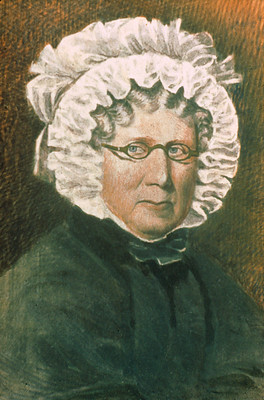
We can see the concept of ‘rules for civility’ being played out in the life of Anna Murray Powell, the wife of the Chief Justice of the Kings Bench in Upper Canada (i.e. Toronto) in the early 19th century in Katherine McKenna’s A Life of Propriety: Anna Murray Powell and her family 1744-1849. Despite her insistence on ‘propriety’ the good judge and his wife had a series of dud children including her young daughter who became caught up in a highly-scandalous infatuation with an eminent lawyer.

Mrs William Dummer Powell,
Toronto Public Library

The most fascinating chapter was that concerning the ‘unnatural’ daughter, Anne Murray Powell Junior. It is a very nineteenth-century take on the difficulties with parenting a wilful and troubled adolescent daughter. The story of Anne Jnr.’s infatuation with John Beverley Robinson, the future attorney-general, has been told by other historians, but I suspect not with the sensitivity that McKenna brings to the situation. It all ends tragically, and although the expectations and language of these unyielding 19th ‘pillars of society’ in their treatment of their daughter might not sit well with us today, the experience of parenting, loving, and losing transcends these differences. (My review here).

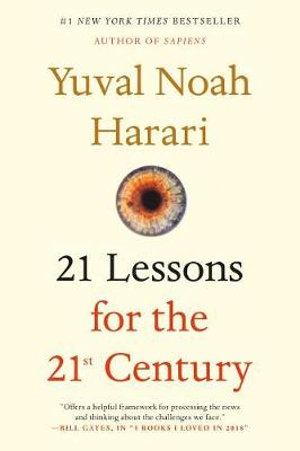
But it’s not only 19th century figures who tell us how to live. Jumping right into our current day is Yuval Noah Harari in his 21 Lessons for the 21st century. Actually the 21 lessons are just chapter headings in a book of five parts: (1)The Technological Challenge; (2) The Political Challenge; (3) Despair and Hope; (4) Truth; (5) Resilience.

This book felt like a series of essays, a bit like a chocolate ripple cake concertinaed together with an introduction and bridging paragraph launching you off into the next essay. I thought that the first two parts of the book were much stronger than the other sections. Even though I am open to deepening my spirituality, his promotion of meditation just felt ‘off’ in this book.

One very sobering thought, though. My grandchild, due in late 2019/2020 has every chance of living into the 22nd century. I really fear for him/her. I don’t think that we’ll learn the 21 lessons here well enough to offer a world better than what we have now. (My review here)

And now that we have passed the first 21 years of the 21st century – Happy New Year full of reading delights!

I hear with my little ear: 16-23 December 2021

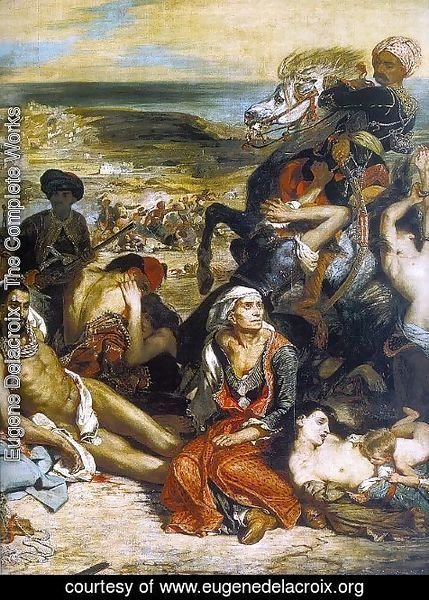
Delacroix Massacre at Chios

History Extra Podcast This year was the bicentenary of the 1821 Greek War of Independence, or as Historian Mark Mazower prefers to call it,The Greek Revolution. In the episode Triumph against the odds: the 1821 Greek Revolution, he counts it as a ‘revolution’ alongside the American, French and Napoleonic revolutions which occurred not that much before. He sees the path to revolution more as a chain of events rather than adopting Marxist or nationalistic explanations. It was a bad time to have a revolution, because the European powers had come to a consensus that there would be no more revolutions after Napoleon. It was public opinion, often based on the enthusiasm for Classical Greece among Romantics and intellectuals, that led to the European powers finally becoming involved. It started in Romania, not Greece, against an Ottoman empire that was having trouble, having extended itself too far into Europe. In many ways, the changes that it prompted in the Ottoman Empire were as important as the territory gained by the Greek state. The 150th anniversary was claimed by the military junta in power in 1971, which took a bit of a shine off it. This 200th anniversary was affected by COVID, and has taken the form more of art exhibitions and conference rather than a display of strength.

The Real Story (BBC) Just to add to my unease about the emergence of right-wing populist politics world-wide here’s What’s going wrong with the Balkans? featuring Alida Vračić Co-founder and head of the Bosnia-based thinktank Populari; Ivan Vejvoda – Head of the Europe’s Future programme at the Vienna-based academic institution The Institute for Human Sciences (IWM); and Charles Kupchan Formerly Director for European Affairs on Bill Clinton’s National Security Council, Senior Director for European Affairs during the Obama administration – now a Senior Fellow at the Council on Foreign Relations and Professor of International Affairs at Georgetown University. The rise of Serb nationalism, with its downplaying of massacres on the grounds that ‘other sides did it too’ and the linking of support from other right-wing populists, is chilling.

Stuff the British Stole (BBC) In 1977 five-year old Graziella Ortiz-Patino was kidnapped in Geneva. Her Mafia-linked abductors demanded a $2 million dollar ransom, which her wealthy art-collector father paid. To do so, he had to sell objects from his collection, including the Montunui epa, five intricately carved wooden panels that had briefly appeared, then disappeared, in the early 1970s. This episode The Abductions explores this dual abduction of the epa and a little girl – although this time there is a happy ending.

The Emperors of Rome Well, Marcus Aurelius has shuffled off this mortal coil, so I’ll listen to my two ‘Rome’ podcasts in tandem. Episode LXXII – On Behalf of the State deals with the uprising by Cassius, a formerly loyal governor in Syria. Was Marcus’ wife Faustina in on it? Probably not, thinks Dr Rhiannon Evans, who sees it more as a matter of fake news. Certainly not, thought Marcus Aurelius himself, who wouldn’t hear a word against her. But Cassius was killed by his own troops, riding out to meet with Marcus Aurelius who wanted to talk with him. And soon Marcus Aurelius really was dead. Which brings us to Commodus. Episode LXXIII – From a Kingdom of Gold sees the 19 year old Commodus become emperor, as Marcus Aurelius had wanted. After all, he’d been pushing him up the ladder of success all along, making him a consul at just 15. Why? Dr Evan’s suggests that Dio, a major source, is making a bigger argument about blood not necessarily being the best qualification for leadership (Dio champions the 5 good emperors, none of whom were direct heirs). Nonetheless, it would be a really big thing to pass over your own son in the line of succession. Marcus Aurelius was said to have died not from his disease (which was probably the plague) but at his doctors’ hands. In judging his significance, Dr Evans notes that he satisfied the Senators, didn’t alienate anyone and that he did as well as he could. (I think he’s a bit better than this lukewarm praise. You’ve got to love a leader who THINKS, don’t you?) Episode LXXIV – Iron and Rust deals with his 12 year reign. Edward Gibbons in The Decline and Fall of the Roman Empire starts off the decline with Commodus, arguing that immorality and the loss of power are linked. Dr Evans sees it as bad leadership and what has been left to him. Commodus mixed up the public and the private e.g. he put his freedman lover Saoterus into his rather prematurely granted triumph. The first assassination attempt on his life came after just two years, where the assassin stuffed up by theatrically declaring “Here’s the dagger the Senate sends you” before stabbing him and getting himself arrested. Episode LXXV – Flying Too Close to the Sun looks at the fate of Commodus’ right hand men who ran the empire while he was off indulging his desires. Saoterus withdrew ended up getting killed after the assassination attempt. Perennis, a Praetorian Prefect took over, and was not incompetent but when British troops decided to choose their own emperor, Perennis ended up being put to death on the accusation, led by Cleander that he was plotting against Commodus. Cleander was a freed man, which the Senators hated, and after getting rid of Perennis, he took power, selling positions to the highest bidder (another no-no as far as Edward Gibbons is concerned. Commodus was becoming increasingly paranoid, and there was daily, if not hourly, turnaround of the people he trusted. He was also a populist, and when the people protested against food shortages, they set up children to begin chanting against Cleander, then the adults took up the cry – and so Commodus got rid of him too. Episode LXXVI – It’s Good to be the King looks at the sources, which are unanimously against Commodus. That might be expected, but we have coins and statues to back up their claims of his meglomania. He wanted everything named after him- the months, even Rome itself! But he slummed it too, which was unforgivable, by becoming a gladiator, something that Dr Evans likens to Queen Elizabeth going on Big Brother. He killed lots of animals- hippos, elephants-, modelled himself on Hercules, and was downright intimidating.

The History of Rome Podcast Episode 96 The Most Aptly Named Emperor introduces the 19 year old Commodus, the first direct heir emperor in a long time- he was ‘born to the purple’. He was likened by his enemies as Nero and Caligula combined, but the general population liked him, because he gave them games. He was quick to withdraw troops from the Danube, thus securing the support of the soldiers. However, Commodus’ reign marked the end of the line for the Senate. When his sister Lucille unsuccessfully conspired against him in 182, the cycle of purge and proscription against wealth senators recommenced. However, Commodus chose well in his right hand man Perennis, who was pretty competent.

Boyer Lectures (ABC) Episode 4 Imaginary Forces starts off by considering the importance of reading and listening in the past, compared with today where visual is king. Shakespeare’s audiences generally came long prepared to listen rather than watch. His characters often announce where they are, and Shakespeare puts in their words vivid descriptions of what the audience is to imagine. He also conveys the emotional timbre of the play through light and dark (his comedies take place during the day where his tragedies take place at night) and through climate (Romeo and Juliet is set in hot Verona, Macbeth in on a blasted heath, the final scene of Lear is in a storm). I think that I liked this episode best out of the four, but can I confess to being just a bit disappointed in the whole series?

My best reads for 2021

It’s always a bit arbitrary choosing my best reads for a year, but these are the books to which I awarded five stars on Goodreads. Many of them were published recently, which surprises me somewhat, as I usually borrow my books from the library and can’t always get new releases. There’s quite a pleasing spread between fiction, memoir and history, with more women writers than men.

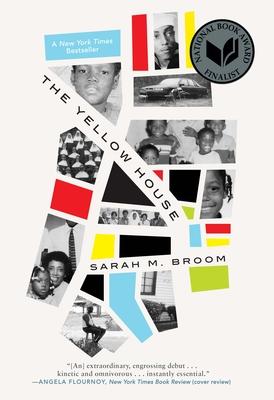
The Yellow House (2019) by Sarah M. Broome (Memoir)

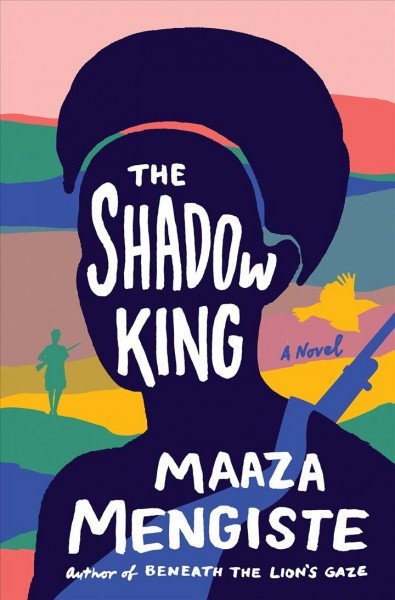
The Shadow King (2019) by Maaza Mengiste (Fiction)

The Lying Life of Adults (2020) by Elena Ferrante (Fiction)

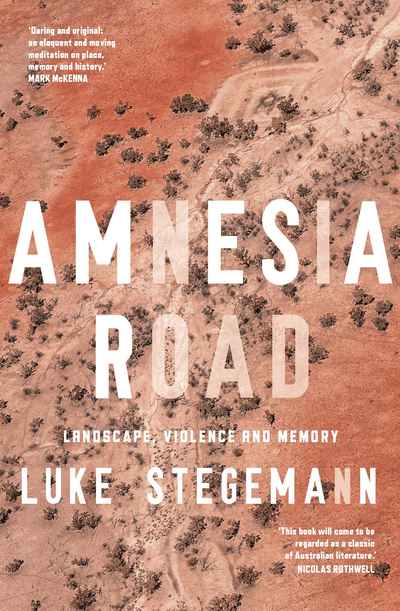
Amnesia Road (2021) by Luke Stegemann (History)

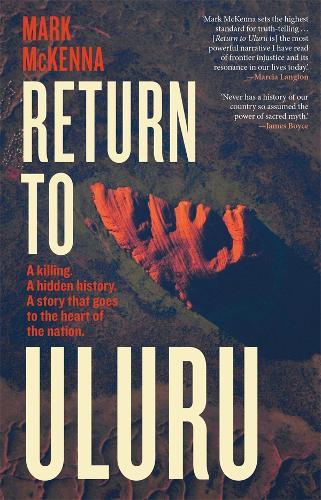
Return to Uluru (2021) by Mark McKenna (History)

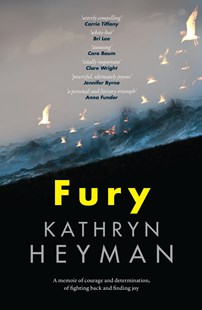
Fury (2021) by Kathryn Heyman (Memoir)

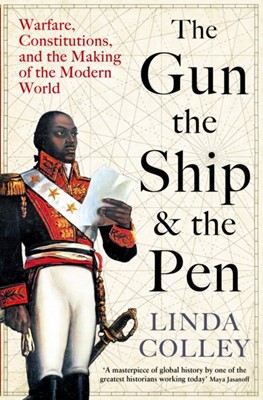
The Gun, the Ship and the Pen (2021) by Linda Colley (History)

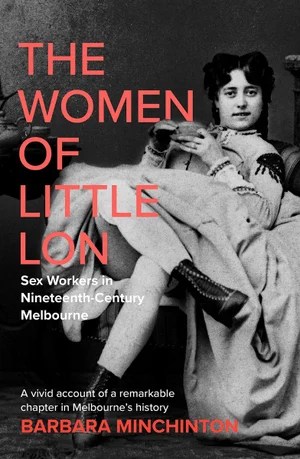
The Women of Little Lon (2021) by Barbara Minchinton (History)

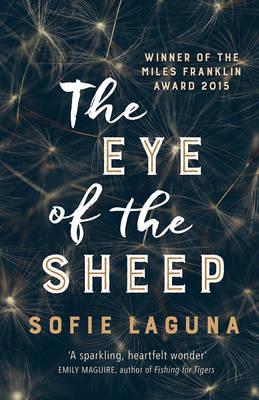
The Eye of the Sheep (2015) by Sophie Laguna (Fiction)

The Sweetness of Water (2021) by Nathan Harris (Fiction)

Australian Women Writers Challenge 2021

I always forget to do this “I’ve finished!” post once I’ve met my self-selected target for books written by Australian women writers. But this year I have an excuse: I didn’t reach my target of twenty-five books, and I didn’t really read more fiction either, even though I vowed to do so.

Here’s what I did read in alphabetical order by surname:

FICTION:

Our Shadows (2020) by Gail Bell

Say No to Death (1951) by Dymphna Cusack

Questions of Travel (2012) by Michelle de Kretser

The Eye of the Sheep (2015) by Sofie Laguna

The Animals of That Country (2020) by Laura Jean Mackay

The Ruin (2019) by Dervla McTiernan

NON-FICTION:

Black, White and Exempt (2021) by Lucinda Aberdeen and Jennifer Jones (eds)

Caroline’s Dilemma (2019) by Bettina Bradbury

Nine Parts of Desire (1995) by Geraldine Brooks

Oh Happy Day: Those Times and These Times (2020) by Carmen Callil

Only Happiness Here (2020) by Gabrielle Carey

The First Stone (1995, 2020) by Helen Garner

Fury (2021) by Kathryn Heyman

The Palace Letters (2020) by Jenny Hocking

The Most I Could Be (2021) by Dale Kent

Malinche’s Conquest (1999) by Anna Lanyon

The New World of Martin Cortes (2003) by Anna Lanyon

The Chase (1986) by Ida Mann

The Women of Little Lon (2021) by Barbara Minchinton

The Countess from Kirribilli (2021) by Joyce Morgan

A Trip to the Dominions (2021) by Lynette Russell (ed.)

Defiant Voices: How Australia’s Female Convicts Challenged Authority (2021) by Babette Smith

Ten Thousand Aftershocks (2021) by Michelle Tom

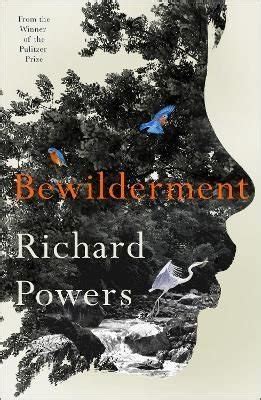
‘Bewilderment’ by Richard Powers

2021, 288 p.

I must be getting cynical. You look at the headlines and peep over the edge of the cauldron of the bubbling social media brew, and you know that you’re going to see all this moulded into fiction within the writing-and-publishing lead time that drives the book industry. MeToo, neurodiversity, gender, bushfires, climate change: I bet that readers in the future will be able to predict the publication date of a book by its theme (although, I do wonder if that hasn’t always been the case). Capturing the zeitgeist, yes, but there’s a narrow line that separates it from a form of political bashing-over-the-head. Perhaps it was because I’ve just watched the contortions of COP26, or been listening to a series of podcasts on Australia’s response to the climate crisis, or because I read The Guardian, but Richard Powers’ Bewilderment felt too heavy-handed for me.

Theo Byrne is a widowed astrobiologist, working on a long-term government-funded project programming simulations of life on other planets, spinning tales of other forms of life and society amongst the immensity of space. These are the stories he tells his son Robin, a brilliant and neurodiverse nine-year old, whose obsessions and volatility have led to his threatened expulsion from school. Both father and son are left bereft by the death of Alys, an environmental activist, in a car-crash two years before the story starts. When the school issues an ultimatum about medication or expulsion, Theo turns to a family friend who is working on a technology called Decoded Neurofeedback. Cocooned into an MRI machine, Robin learns to control his mental waves to approximate those of another subject, who just happens, in an ethical WTF, to be his mother whose neural records had been retained from her participation in earlier iterations of the technology. He adapts quickly to the learning, and begins to draw on not only his mother’s emotional and intellectual brain waves, but also on her world view and even, at a stretch, her relationship with Theo, Robin’s father. Already attuned through his father’s work to the contingency and explosive variation of life – in all its forms – Robin’s awareness of the climate crisis is heightened to the point of anguish. Publicity about the Decoded Neurofeedback technology catapults Robin into social media celebrity which, driven by his mother’s environmental passion that he is now channelling, he uses as a platform for activism in a world hurtling towards climate oblivion.

I hadn’t noticed the ‘Science Fiction’ designation on the back cover of this book, and when I heard someone else talking about it, I had felt that it sounded a bit implausible. However, for me, science fiction is most accessible when it is written in near-time, with the emphasis on the human rather than the science. I know that neurofeedback is increasingly being drawn into the medical and psychological mainstream, and there are many characters in this book who are familiar: a Donald Trump-type President (maybe even the Real Donald Trump) who tweets in capital letters and exclamation marks, and a Greta Thunburg- type character, an “oval-faced girl in tight pigtails”, called Inger Alder, who inspires Robin to action. There’s a nice little twist in the title with the inclusion of “wild”, reflecting its environmental theme. Also running through the book are allusions to Daniel Keyes’ short story Flowers for Algernon, but perhaps these references should have come with asterisks and links to an online bookshop, because it is important to the plot which becomes patently obvious to anyone who has read Keyes’ story or seen the film ‘Charly’ which it spawned. Although, perhaps it would have been more powerful if you were unaware of these antecedents.

The book is written from Theo’s point of view, with both Robin’s and his wife Ally’s words in italics, as if they are coming from somewhere else. There are no chapters, but instead a series of short episodes, each marked by capital letters in the opening sentence, giving the book a filmic character. Emotionally it is powerful, just as Keyes’ short-story was, leaving you with a hollowness at the loss of passion and intelligence, as the world and the protagonists of the book subside into a dark silence.

Much of the science in this book passed me by, but it is a testament to Powers’ writing that, instead of repelling, its complexity helped build a cosmological imagination, against which our heedlessness and intransigence in relation to climate and the environment seems particularly bone-headed. I regret, though, that the book veered into telling and not showing. It was just a bit too didactic for me.

My rating: 8.5

Sourced from: Yarra Plenty Regional Library

Read because: I read this book because it was short-listed for the Booker Prize. It merits its place on the shortlist, but its inclusion validates my fears that the Booker Prize would lose its distinctively Commonwealth nature, as it is a very American book.

I hear with my little ear: Podcasts 8-15 December 2021

Democracy Sausage (ANU) Lying with a Smile takes us over to the UK with Elizabeth Ames, Board Director of the Britain-Australia Society, and Chair of the Menzies Australia Institute at King’s College London, to talk about Boris Johnson. How does anyone support this clown? Sleaze, lies, bombast and a complete failure to take responsibility for anything.

Wikipedia

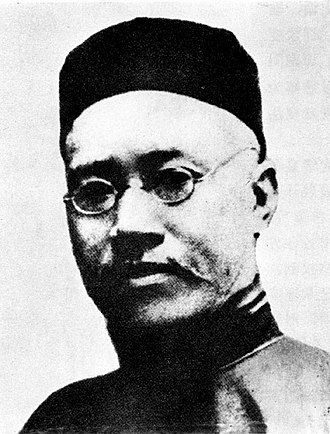
The Philosopher’s Zone (ABC) I don’t very often listen to this program but, knowing my newly-aroused interest in translation, my husband suggested that I listen to Yan Fu: China meets Western liberalism. Yan Fu was a late 19th century naval officer and writer who was fascinated with Western philosophy. His translations of works by Thomas Huxley, Adam Smith, John Stuart Mill and others were celebrated successes in China. However, in making these texts comprehensible to a Confucian culture, he has been accused of mistranslation – e.g. Huxley’s ‘Ethics of Evolution’ became translated as ‘Heaven’s Progress’. Still, he was hugely influential- in fact, Mao Tse-tung read his works in Yan Fu’s translation. At the end of his life, he eschewed Western liberalism and returned to Confucianism. I wonder what he would make of China today?

Women, the alt-right and the liberal centre is an episode from 1st August 2021. The promotion for this episode is “Why do women join white nationalist and other far-right movements?”. I’ve wondered that too. This episode features Louise Richardson-Self, lecturer in Philosophy and Gender Studies from the University of Tasmania, and Tracy Llanera, Research Fellow, Institute for Ethics and Society, University of Notre Dame. Neither of them have any time for the Alt-right at all. One of them has based her study on reading the comments on The Australian’s website, particularly the resistance to the idea of quotas in political representation.

History of Rome Podcast Episode 91- Marcus and Lucius and the Parthians. Antoninus favoured Marcus as his successor and gave him good opportunities to develop his bureaucratic skills, but because Antoninus didn’t go anywhere, neither did Marcus. He was attracted to Stoic philosophies, and when Antoninus died, it was Marcus who insisted that the terms of the will be complied with and that Lucius co-govern with him. Perhaps this way from a sense of duty, or perhaps because he realized that the empire was becoming too big for one man. Almost immediately war with the Parthians broke out. At this point, Mike Duncan backtracks to explain who the Parthians were i.e. they were one of the tribes that took over the Persian empire, which was very dependent on the Silk Road for its economic strength. As soon as Vologases IV of Parthia realized that there were two militarily inexperienced emperors in charge, the Parthians went to war. Episode 92 The Parthian War Severanius, the Governor of Cappadocia in Albania, on the front line was convinced by the prophet Alexander of Abonoteichus (whose Glycon cult was then as popular as the Christian cult) that he would have a stunning victory so he launched an attack against the Parthians, but he was defeated. It looked as if the Parthians would defeat Rome but Marcus shuffled generals and legions around, and sent the party boy co-emperor Lucius to take charge. Meanwhile the Antonine plague broke out, and there was unrest on the Danube border where the Goths were causing a refugee crisis. In Episode 93 The Marcomannic Wars, the tribes above the Danube, which had previously been kept weak by Rome’s divide-and-conquer strategy began joining together. The Marcomanni were just one of the tribes who began resisting Roman rule. Marcus had to take control of the legions himself, even though he was known more as philosopher than fighter. Fortunately for him the Miracle of the Lightning and then the Rain Miracle bolstered his reputation as the gods’ favourite. However, the Antonine Plague was running rampant through the legions, especially as they crossed back and forth across the empire to quell problems in the east, then back in the north and to make matters worse the Tiber flooded as well. As well, there was refugee pressure from people fleeing the Goths who were pushing down from the north.Then news came from the east of an uprising in Syria led by Avidus Cassius, a formerly loyal Senator who had been given Imperium over all of the eastern provinces of the Roman Empire. Episode 94 Revolt and Meditations looks at Cassius’ revolt against Marcus in 175 AD. This might have been a case of ‘fake news’ because, now that Lucius had died, there was no clear succession because Marcus’ son Commodus was not old enough to take over. It is suggested that Cassius had heard from Marcus’ wife Faustina that Marcus was about to die, and that he declared himself emperor to forestall any civil unrest. Or not. Mike Duncan then goes on to talk about Marcus Aurelius’ Meditations, a series of short notes to himself based on Stoic philosophy. Episode 95 The Beginning of the End takes us to Marcus Aurelius’ death and thus, the end of the Five Good Emperors. His son, Commodus (unfortunate name- it sounds like an invalid aid) was the first biological heir since Vespasian back in 79AD- all the rest of the emperors had been adopted sons. Marcus allowed Commodus to become a troop mascot, just as Caligula had been – never a good move. His father pushed him up the ladder, and became co-ruler with him (although Marcus retained ultimate authority). When Marcus died, Commodus was only 18. I’ve got a feeling that this isn’t going to end well.

Emperors of Rome Podcast. There’s a bit of an interlude with Episode LXVI – Fronto who was a senator appointed as tutor to both Marcus Aurelius and Lucius Verus, but Marcus got more benefit from Fronto’s wisdom than his brother did. He tutored them in rhetoric and oratory and remained in contact with Marcus for the rest of his life. We know about their correspondence because 200 letters were recovered in the 19th century, having been written over by a council making use of good parchment. The episode features Dr Callain Davenport (ARC DECRA Senior Research Fellow at the University of Queensland). Episode LXVII Heir and a Spare introduces the two co-emperors Marcus and Lucius. Hadrian seemed to have a bad touch choosing heirs because they tended to die, so he hedged his bets by choosing two. Marcus was from Spain, continuing the heavy influence of Spain in imperial circles. They point out that in today’s British Royal family we see a similar pattern of Very Serious Heir and Playboy Spare (think Charles and Andrew; William and Harry). Episode LXVIII – Never Underestimate the Parthians The first threat the empire encounters comes from the east, where the long-time enemy of the Romans, the Parthians, make their move. They were encouraged by Alexander, who they liken to one of the cult leaders in Monty Python’s Life of Brian holding the shoe with a crowd following him. Still, he was a popular cult leader, so it was not unusual that he was convincing. The Parthians moved on Armenia first, then Mesopotamia. Marcus sent Party Boy Lucius to the front, where he acted more as supervisor than warrior. Episode LXX – The Marcomannic Wars sees Marcus go to the front himself. There had been a long standing fear of the people from the north (Dr Rhiannon Evans prefers ‘people’ to ‘tribe’), and it was to be a long term malaise, coming to a head two centuries later. The northern people first mounted in an incursion into Roman territory, then went on to invade Italy itself and at this point Marcus himself took charge.

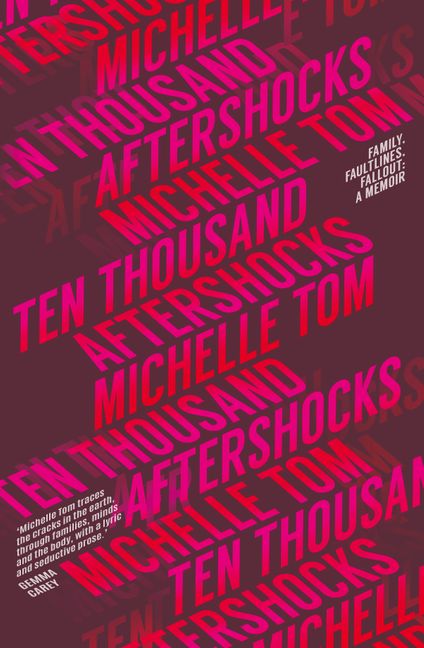
‘Ten Thousand Aftershocks’ by Michelle Tom

2021, 368 p.

As I have grown older, and as more images flood our screens, many of the mental images I used to have of disasters have changed. I always thought of a tsunami as one of those enormous waves that big-wave surfers challenge themselves against, only to see in the Boxing Day tsunami that inexorable advance of water which, although not particularly high, just engulfed everything in its path. Bushfires I envisaged and saw as a roaring furnace, but not that blood-red, sullen sky of Mallacoota. Likewise with earthquakes. I knew about the shaking, the crumbled buildings and the ruptured roads but I had never heard of liquefaction. But liquefaction is here in this book:

Liquefaction is a fascinating, frightening seismic phenomenon. When it occurs over large areas it behaves as quicksand, a natural hazard capable of swallowing people and vehicles, and causing subsidence in buildings. It is a cruel epilogue to upheaval. Just as the survivor of a seismic event grapples with injury, damage and ongoing aftershocks, as they attempt to reel in their runaway panic and rush to check on children and property, as they disconnect gas bottles and grapple with what has just happened, within those hectic minutes a rising tide of liquefaction might come to lurk beneath the surface, seeking to pour forth a second wave of destruction….

What becomes of liquefaction after it has issued forth from the darkness beneath, into the light of the world? Like shame, it cannot survive being seen. In the heat of the sun, it dries to a grey powder as fine as talc and disperses on whatever current of air may find it, gentle zephyrs and howling gales alike, leaving only a scar in the earth where it emerged.

p. 277, 278

I knew from the title of this book that it was about the 2011 Christchurch earthquake. Tom uses the five stages of an earthquake as the organizing structure for her memoir, but only the fourth stage deals directly with 22 February 2011. The earthquake is a rupturing, all engulfing moment in the narrative, but it only part of Tom’s own memoir of her family, written as a promise to her forty-three year old younger sister whose burial occurs in the opening pages. Michelle is the eldest of three children, but both her siblings have died, Meredith through melanoma cancer and her youngest brother, Paul, through suicide after a long struggle with schizophrenia. Michelle is very much the ‘golden child’ and her sister Meredith the scapegoat, and all three children are damaged by the toxic, inexplicable and warped relationship between the parents.

The five stages of the earthquake frame Michelle’s telling of this family trauma: Stage One- the secret straining and warping long before; Stage Two – the replacement of water in the fissures of the rock by air ; Stage Three- the forcing back of water into the cracked, expanded rock and the accumulation of elastic strain; Stage Four- the rupture of the earthquake and the release of energy in seismic waves; Stage Five – aftershock, sometimes for many years afterwards, dangerous in their ability to bring down already weakened structures.

Within these stages, the narrative is presented as short, non-chronological bursts, almost like rocks that grind against each other. Each segment is at most ten pages long; sometimes only one or two pages, and they jump back and forth. It is as if the narrative itself is moving under the surface, squeezing, forcing, with the pieces rubbing up against each other. It is not an easy read, emotionally or in terms of sense-making.

In another review I read recently, I came across the term ‘authorial hand-holding’. I think of the vignettes in this book, put into groups under an overarching structure, but without any clear organizing principles. There’s certainly no hand-holding going on here, and I wonder if the writer has eschewed authorial responsibility altogether -with the exception, perhaps, of the fourth, ‘earthquake’ section. Each separate vignette is carefully written in very polished, introspective prose but it is the reader who puts them together into a narrative. For me, it is the connections and transitions across the whole of a narrative that mark out good memoir writing, and I tend to think that this mosaic-type, pointillist style of assemblage baulks at that final step of integration and creation.

Perhaps I’m getting too old. Not only do I find such splintered writing difficult to read, but I’m also more jaundiced and less empathetic, perhaps, at reading ‘family trauma’. Is it that as I get older, everything is flattening out? Or is it that with time I am more aware that everyone has their wounds, their secrets, their weaknesses, their uglinesses as well as their unfulfilled intentions and their failed attempts? I keep wanting to wriggle out of the author’s shoes, in order to stand in those of the people she is judging. With age, I am less deafened by the howl of the child’s pain drowning out everything else, and I am listening for those other mutterings, those other pleadings. I think, perhaps, that I need to put family memoirs aside for a while.

My rating: 6.5/10

Sourced from: Yarra Plenty Regional Library

This will be my last Australian Women Writers Challenge book for 2021.

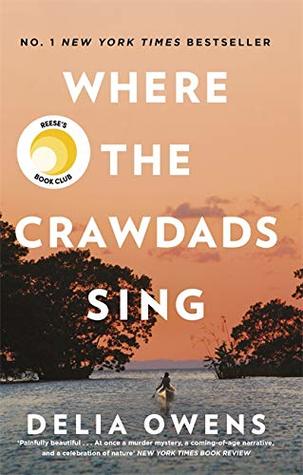
‘Where the Crawdads Sing’ by Delia Owens

2020, 384 p.

If I had been the person who identifies the genre in marketing a book, how would I have classified this book? It starts off with a murder, moves into a sensitive depiction of neglect and isolation, interweaves evocative descriptions of landscape and nature, shifts towards being a coming-of-age novel and ends up in a court case. It is like five books in one, and I’m undecided whether it is a skilful mish-mash of genres, or whether it is a genuine attempt to move beyond the murder/courtroom genre by providing a protagonist with nuance, depth and change over time.

The chronological narrative shuttles between a court case and the backstory starting back in the early 1950s, gradually moving forward until the two timelines converge in 1969 with the discovery of the body of footballer and small-town Lothario Chase Andrews in the swamp. Accusations mount against Kya, the ‘Marsh Girl’, who lives alone in a shack in the North Carolina swamp marshes. In 1951, her mother walked out one day in her crocodile-skin shoes, leaving her five children to their violent, drunken father. Gradually Kya’s siblings leave home, unable to cope with their father’s beatings and neglect. At the age of six, she is left to fend for herself as her father disappears on days-long benders until he, too, disappears leaving Kya as a ten-year-old to make her own way. Able to negotiate the inlets and tides of the swamp, she earns enough money from fishing to buy bare necessities, but she does not attend school and ekes out a precarious, lonely existence. She is very much a child of the marsh, attuned to the rhythm of the tides, the turning of the seasons and the wildlife that surrounds her. The people of Barkley Cove know that she is living there, and she is shunned as ‘swamp trash’ by the people of the town, but as she grows older, she attracts the attention of two boys – Tate Walker and Chase Andrews – both of whom show remarkable restraint (at least initially) with a young, feral, unprotected girl living on her wits. Tate teaches her to read, and opens up to her an avenue by which she can draw, and write about and study the natural world that teems around her. Wary and self-sufficient, she is slow to trust either man, and as a reader you feel the latent menace of them both. Betrayal comes, as you know it must, but in different ways. When Chase Andrews’ body is found near an abandoned fire tower in the swamp, it seems to justify many of the prejudices of the people of Barkley Cove.

Of this ‘five for the price of one’ volume, I liked the landscape writing most. Delia Owens has written non-fiction environmental writing before, and she does it well. Not for nothing has she been likened to Barbara Kingsolver. The swamp is depicted as a living, breathing, moving body, and Kya is closely attuned to its movements and changes. I thought that the author captured well the fear that Kya and her siblings felt in the face of her father’s rages and neglect, and the petty and oblivious cruelties played out on her by the people of Barkley Cove. So did the book need a murder as well? For me, Owens could have rested on these two themes alone.

But if Owens was determined to have a murder and court-case, then she did write it well, even though it marked an abrupt change in pace and intent. The court case sections reminded me a bit of To Kill a Mockingbird, with its small-town setting and the rejection of a Mayella Ewell-type character, albeit in very different circumstances. I found the book a real page-turner at this point. I often rail about being left at the end of a crime book wondering ‘So who did do it?’ but there was no danger of that with this book. I just don’t know if the whole murder and its aftermath was necessary.

The part was was least convincing to me – and it’s an important plot development – is Kya’s transformation from a feral, illiterate child into a writer/scientist, with published works under her belt, and sufficient experience of the world to want to purchase comforts to make her shack more habitable without changing the outward appearance. Kya the child is plausible: Kya the adult is less so.

And so, how do I assess this book? I admit to sharing Jonathan Franzen’s wariness of a book emblazoned with an ‘Oprah Book Club’ sticker, and knowing that this book was endorsed as part of Reese Witherspoon’s book club did not necessarily endear it to me. I hadn’t noticed Tic-Toc book reviews until I searched for this book. Certainly the book has achieved best-seller status. Was the murder and court-case added to appeal to a wider audience? Or is this a book that moved beyond the two-dimensionality of many crime/court novels, just as I have often craved for them to do? I felt as if I was being buffeted around by the different genres that the book drew upon, even though most of them were done well in their own right. Perhaps it was the amalgamation of different types of writing that disconcerted me, leaving me feeling stuffed with too much plot.

My rating….a difficult one. I’d have to rate a book highly that has me sitting up in bed until 1.30 a.m. to finish it. And yet, and yet…. let’s go for 7.5

Sourced from: purchased as an e-book

Read because: Ivanhoe Reading Circle suggestion.

I hear with my little ear: Podcasts 1-7 December 2021

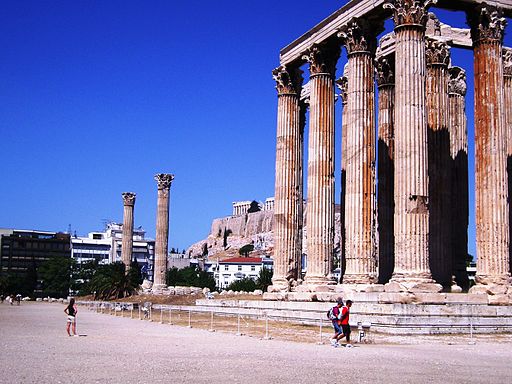
Emperors of Rome. I’m really enjoying this Australian podcast, with the interplay between the presenters, Dr Rhiannon Evans (from my very own La Trobe University) and Matt Smith. So I’m five years behind- doesn’t matter. Episode LII Hadrian the Little Greek goes through Trajan’s search for a successor. His wife was pushing for Hadrian, but Trajan wasn’t completely won over and made sure that Hadrian went through the usual career path (military, governor etc). As usual, Dr Rhiannon Evans is very concerned with sources, noting that with Hadrian we actually have a biography (however biassed) to draw on. Episode LIII Rome Welcomes Hadrian sees him take over power, although he got off to a bad start by having four prominent senators assassinated. Not a good start. He pulls back troops from Parthia, which doesn’t go down well either. Episode LIV There and Back Again (An Emperor’s Tale) sees Hadrian taking the scenic route of about four years to tour his empire, planting cities and planning building projects. While withdrawing troops into defensible areas, he fortified the walls to the north (Hadrian’s Wall) and south (in Africa). These walls were part of the cultural declaration of Roman power, and they made a finite line on a map as well as keeping the Army busy as peacekeepers. He finally finished off the Temple of Olympian Zeus, 638 years after it was started. Did I mention that Hadrian really liked Greece?

Temple of Olympian Zeus- Wikimedia

Episode LV What Hadrian Loves Best looks at the three things he loved most. First, building big buildings. He built the Temple of Venus and Roma in Rome itself (thus bringing together his love of Greek and Roman ideas) on the last bit of land remaining from Nero’s Golden Palace, and he rebuilt the Pantheon for the third time (it had burnt down twice). He didn’t tend to put his own name on buildings. His second love- well, maybe- was his wife Vabia Sabina, although it didn’t seem to be a particularly happy marriage. His third love was his young lover Antinous, who died in controversial circumstances although no-one seems to think that Hadrian was behind it. Some say it was form of self-sacrifice. Anyway, how he died is not that important, but Hadrian’s action in deifying him afterwards is, especially as it was the first time that someone outside the imperial family was deified, and very quickly. Episode LVI May His Bones Rot deals with Hadrian’s treatment of Judea and Jerusalem. Titus had wrecked Jerusalem, and Trajan was struggling to put down a Judean Revolt. He had to deal decisively with Judea. He sacked it, rebuilt it as a Roman City, forbade Jews from entering it and banned circumcision. No wonder Simon Bar Kokhbar rose up as a messianic leader (something that the Christians weren’t keen on) and a guerilla fighter. It was a bloody 3.5 year war, even for the Romans, and the market was flooded with Jewish slaves. Just as with the Daicians, they were completely dispossessed, but the Jews managed to keep their culture intact. Episode LVII Little Soul, Little Wanderer, Little Charmer brings Hadrian’s life to a tetchy close. He executed Apollodoris, the architect (who had mocked Hadrian, long before he was emperor, as the designer of ‘pumpkins’, given his penchant for domes) as well as Fuscus and Servianas. He took a long time to die.

Then, because History of Rome podcast has moved onto Antoninus Pius, I thought I’d catch him on Emperors of Rome as Well. In Episode LXV Anoninus Pius they deal with him in one episode (think, twenty two years of power for one measly episode). Still, he only became emperor in 138CE as a means of keeping the empire safe until Marcus Aurelius and Lucius Verus came of age.

Things the British Stole (ABC) This episode The Headhunters discusses the trade in decapitated, dried, and tattooed Māori heads that has led to their presence in museums across the world. The British, prompted by Joseph Banks, were an insatiable market for these ‘curiosities’, which were often obtained by other Maori tribes and exchanged for weapons. Meanwhile Ta moko facial tattoos, once synonymous with Maori urban gangs, are now becoming popular again as a sign of cultural identity. As with Australian indigenous artefacts and human remains, there is now an indigenous-led movement to get the objects and remains repatriated home.

Boyer Lectures 2021 (ABC) Soul of the Age- Shakespeare’s Women Of course, women were not allowed to act on the stage in Shakespeare’s time, so all the parts written for women were done so with a male actor in mind. He goes through the different types of women in Shakespeare’s work- comedic characters, gender-bender confusions, women showing up the men in wisdom and empathy, women ‘unsexing’ themselves to become like men. He considers Cleopatra to be the best female Shakespearean character. It’s a shame he spoiled it by drawing an unduly long bow at the end of his talk to linking Shakespeare’s women to “issues of domestic violence, predatory male behaviour in the workplace, be it on the factory floor or in Parliament House. It forces us to confront the issues of equal pay, equal opportunity and redefining of male/female roles in our society.”

The History of Rome Podcast Episode 85- Antoninus the Dutiful. At least Hadrian had worked out the succession before he died, and Antoninus was embraced by the Senate as being a Senator’s Senator. This is generally seen as the “Golden Age” of the Roman Empire, because it was stable, although in many ways Antoninus just kicked the can further down the road. He was 51 years old when he came to power and lived and thus ruled for much longer than people thought he would. He was called Antoninus Pius either because he lobbied hard for Hadrian to be deified (because it reflected on his own legitimacy) OR because he stopped persecuting individual senators. Either way, he didn’t travel around like Hadrian did and was an Italian homebody. Despite skirmishes on the borders (e.g. he had to build a second wall further north in Scotland called the Antonine Wall), there was no big war and continuity was valued. In Episode 86 Wealth and Class, he draws breath at last to compare life in Second Century Rome with late republican Rome (he last did this in Episode 28, so it has been a while). There was real inequality, with the wealth of the emperors increasing with expansion. Society was divided between slaves, freedmen, and free citizens of every economic class. Despite the influx of Jewish slaves after Hadrian razed Jerusalem, there was a low birth rate among the slaves, and it was a sign of status that you could afford to manumit your slaves. Freedmen remained in a client relationship with their former owners. Free farming families were pushed to the cities by large slave-owning families, although many peasants stayed in their birth place. The poor urban masses were provided with grain and games, but the lower middle class had to scape by. Actually, it all sounds a bit grim really. Episode 87- Thinking and Feeling goes through the pretty soul-destroying education system in the Second Century, where fathers no longer educated their sons but instead outsourced it first to educated Greek slaves, and then to schools. At primary level both girls and boys were drilled in the 3Rs, while secondary school concentrated on grammar and then rhetoric. It was all so stultifying that no wonder they looked to philosophy and religion for meaning. The Romans had always been polytheistic, and now Eastern mystical religions were added to the mix. Christianity was one of these cults (and lots of American Christians are taking offence in Mike Duncan’s comments feed about Christianity being called a cult). Christianity was particularly problematic because it insisted on just one god, and attracted the underclass, who were the majority. Philosophy attracted the higher, leisured classes, in particular the Stoics (where reason overcame emotion) and the Epicureans (who believed that if something caused you pain, you should stop doing it). Both philosophies led to peaceful citizens, but they were derided at the time. Episode 88- A Day in the Life is about everyday life in Rome, which is more or less why I started listening to this podcast in the first place. A Roman day went from sunrise to sunset, because there was no street lighting and the streets were dangerous and full of delivery vans at night. So all that sitting around in the bath-house and lounging over a meal took place during the day. Episode 89 Provincial Matters takes us on a whirlwind tour of the Antonine empire, following Hadrian’s route previously. There were more or less 42 provinces, which were either Senatorial or Imperial Provinces (i.e. under the direct control of the emperor, with legions stationed there). I really enjoyed this, although it would have been better if I had the map (on his webpage) with me while I was listening.