I hear with my little ear: Podcasts 9-16 March 2022

The Daily (New York Times) I’m doing a fair bit of listening about Ukraine at the moment. In Four Paths Forward in Ukraine (March 17) David Sanger, White House and national security correspondent for The New York Times, explores four scenarios: 1. The diplomatic path- Ukraine agrees to Russian demands to give up any claim on Crimea; accepts independence of Donetsk and Luhansk; declarse its neutrality; and promises never to join NATO. Russia would demand that all sanctions be lifted. Scenario 2: A long war of attrition, with Russia ‘winning’ but an ongoing Ukranian insurgency (which Sanger thinks is likely). Third scenario: China helps Russia. Sanger thinks that China will just sit back and watch how things play out for now. They might assist, but from behind the scenes. Scenario 4: Putin decides to expand the conflict beyond Ukraine.

Axios – How it Happened. This series on Ukraine just has two episodes so far. Episode 1 Putin’s Invasion Part I: How We Got Here features Axios’ world editor Dave Lawler talking about how Putin came to power and how he has wielded that power. The podcast also features “our Aussie” Jonathan Swan, speaking about his exclusive Axios on HBO interview with Ukrainian President Volodymyr Zelensky. Trump, Zelensky- is there anyone he hasn’t interviewed? Episode 2 Putin’s Invasion Part II: The Consequences discusses President Biden’s decades of political experience with Russia and the sanctions the U.S. and Europe have brought against the country. It also explains why it’s so hard for the West to cut ties with Russia when it comes to energy, and why the Biden administration chose to do so even if it would send gas prices soaring.

History of Rome Podcast. Episode 113- Three Empires. Although the Roman Empire now split into three, Mike Duncan argues that all three empires remained culturally Roman, and that’s what’s important. Following the capture of Valerian in 260 AD, the western provinces broke away to form a separate Empire and the east became controlled by the city of Palmyra where Odaenathus was the last stop on the Silk Road. He defeated the Sassanids, and so he was mollycoddled a bit by the Romans who, deep down, thought he was a bit of a barbarian. Meanwhile Postumus was up on the Danube. At this time, local troops threw their support behind their own commander as Emperor, and when he had a stunning victory, Postumus was acclaimed emperor of Gaul, Germania, Britannia and Hispania in what was known as the Gallic Empire. Meanwhile Gallienus concentrated on the centre of the empire. He hit on the idea of the mobile cavalry as a way of reinforcing his authority, and it was a good psychological connection with the provinces to have the cavalry come by occasionally. In Episode 114 The Nadir of our Fortunes, Mike Duncan reminds us of the mess that the Empire was in, with the Sassanids in the East, the Goths on the Danube, the Alamanni in Italy and the Franks in the West. He then backtracks to Odaenathus over in the East, who was seen as a bit of a saviour when Macrinus and his son were killed, and he took over. Over in the west, Postumus was chosen by his own troops, and he happily embraced Aureolus, Gallienus’ top general, when he defected to Postumus. Gallienus had concentrated his efforts on Rome, but the senators hated him because he turned to military men instead of Senators- so he ended up with a bad rap from the historical sources. He founded four mints near the big military deployments so that the soldiers could be paid on time, but this just caused inflation and debasement of the currency. In the end Gallienus defeated Aureolus in battle, but then he was shot (probably assassinated). Episode 115 Phase Two Complete sees the almost simultaneous deaths of Gallienus, Odenathus and Postumus in the Late 260s. The Goths were coming south and Odenathus was assassinated by his nephew -(why? Personal reasons? or was his wife Zenobia behind it?) Zenobia stepped right in to the role of emperor of the east, assuming that she had the right as Odeanthus’ widow. The Goths sailed down and sacked Athens. When Gallienus left Rome to fight the Goths, his trusted general Aureolus mounted a revolt. Gallienus was assassinated in a conspiracy of his top officers. The troops rallied around Claudius, who demanded the head of Aureolus.
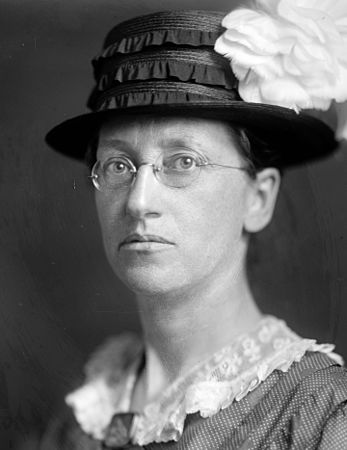
Emily Greene Balch. I prepared a presentation for my Unitarian fellowship on the Women’s International League for Peace and Freedom (WILPF), and the connection with the Australian Church’s Sisterhood of International Peace. Emily Greene Balch was raised a Unitarian in America (although she later joined the Quakers) and, along with Jane Addams, was a founding member of WILPF. This podcast, from the Internet Archive, is of Kristen E. Gwinn talking about Balch at First Church of Jamaica Plains (which Balch and her family attended). A pretty formidable woman. She was one of the pacifists who was really challenged by the rise of Fascism, and ended up siding with ‘freedom’ over ‘peace’.

Now and Then I’ve been listening to American historian Heather Cox Richardson for quite a while, and she has started a podcast with fellow historian Joanne Freeman called ‘Now and Then’. As you might expect from two American historians, it is VERY American focussed, but in the episode Avatars of Democracy, they express their admiration for Ukrainian President Volodymyr Zelensky. They then look at three other historical leaders who fought for democracy: the French-born Revolutionary War hero Lafayette, the Latin American liberator Simón Bolívar, and South African political prisoner and president Nelson Mandela.
Six degrees of separation: From Our Wives Under the Sea to….

Does having a book on reserve at the library count as having read it? Probably not. So, I must confess to not having read Our Wives Under the Sea by Julia Armfield, the starting book for April’s Six Degrees of Separation Meme. A literary association game, Kate at Books Are My Favourite and Best chooses the starting book, and participants name six books that spring to mind because of some association- no matter how obscure- with the starting book.

I could instantly think of many books about the sea, but I have chosen to stick to the idea of being under water.

The first book that I thought of is Margo Lanagan’s Sea Hearts (2012). I have no idea what happened in Armfield’s book, but I have always been attracted to books and films about selkies (I absolutely loved the film The Secret of Roan Inish).

It’s a beautifully told story, spun out over several generations. It is set on remote Rollrock Island, with its village of fisherfolk and small cottages. The chapters are of varying lengths, told in the first person in a curious, lilting accent. Each chapter focuses on a different character and time elapses between generation to generation. One of the longest and most compelling chapters is told by Missakaella, an awkward young woman, shunned by the villagers, drawn to the sea and especially the seals in the bay. They are attracted to her, too, and her mother forces her to wear an apron with crossed strings, that somehow keeps the seals at bay. It is through Missakaella that the age-old meeting between selkie and human is reconsummated. It is a powerful and evocative piece of writing that I found oddly, and breath-holdingly erotic. That’s quite a narrative feat: to not only be lulled into suspending disbelief about the physicality between seal and woman, but to actually stir a response to it as well. But actions have consequences: obsession becomes possession; love becomes loss; something taken can take in return.

See my review here

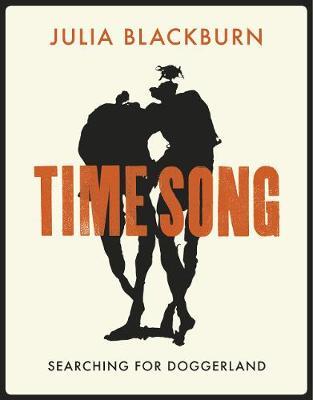
I’m fascinated by lands under the sea- in particular Doggerland, which existed in the North Sea and English Channel 18,000 years ago, making what we now know as the United Kingdom a contiguous part of Europe. It was not a land ‘bridge’, which suggests a narrow and tentative link between UK and Europe. Instead it was a fertile plain, with its own coastlines and rivers, with humans roaming across it. It was not a route from one place to another, but a territory in its own right. Julia Blackburn’s Time Song (2019) is an environmental history, but it is more:

But it’s also a very human story because of the way she tells it. Her search is narrated almost as a conversational journey, as she meets with this person and that, and as she relates her own reminiscences of places and items she has herself found. Collectors and academics share their enthusiasms with her, and indirectly with us too. There is a lot of science in this book (and her list of acknowledgments at the back of the book demonstrates her debt to academia) but it’s written very much in layman’s terms. Her response to the academic literature is expressed in 18 ‘Time Song’ poems, which intersect the text, each preceded by a black and white drawings by Enrique Brinkmann.

See my review here.

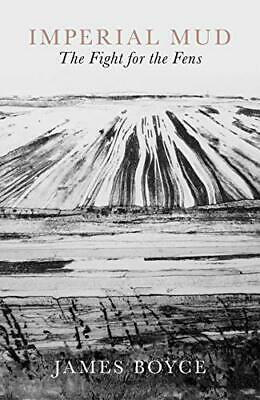
Doggerbank may be well and truly under the sea, but in James Boyce’s Imperial Mud: The Fight for the Fens (2020) we have man fighting against the encroachment of water in ‘The Fens’ in Cambridgeshire, Lincolnshire, Norfold and the Isle of Axholme in Yorkshire. The Fens, he explains, are not a precise location, given that the creeks and waterways that constitute them have always been an ever-changing phenomenon. James Boyce is an Australian historian, so this book seems a bit of a departure for him. But his focus is ‘colonization’, which can occur within a country, as well as overseas.

It is this bi-focal approach to colonization, seeing it as a process wielded in Britain and well as by Britain that is the real strength of this book, prompted by Boyce’s deep engagement with Indigenous history here in Australia. I must confess as an Australian reader, I found myself wishing that I knew more British history and geography. … Boyce is an incisive and economical writer, carefully attuned to landscape and ecology, continuity and change. His book is only small, but it makes an argument about colonization and resistance with its feet planted in two different, widely separated continents.

Read my review here

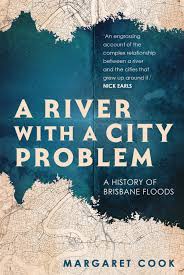
There’s plenty of water in Northern NSW and Queensland at the moment, and I’ve found myself thinking recently of Margaret Cook’s A River with a City Problem: A History of Brisbane Floods (2019). She takes as her focus the 2011 floods which devastated the homes and businesses along the Brisbane River, right into the CBC.

This book tells the story of the three major floods – 1893, 1974 and 2011 – from ecological, geographical and human perspectives. More importantly, though, it looks at the failure of policy as successive governments of both persuasions lacked the courage to say ‘enough!’ and prevent development on the floodplain. In the aftermath of a crisis, there’s a proud defiance in claiming that” we will rebuild” but often it defeats good sense.

See my review here

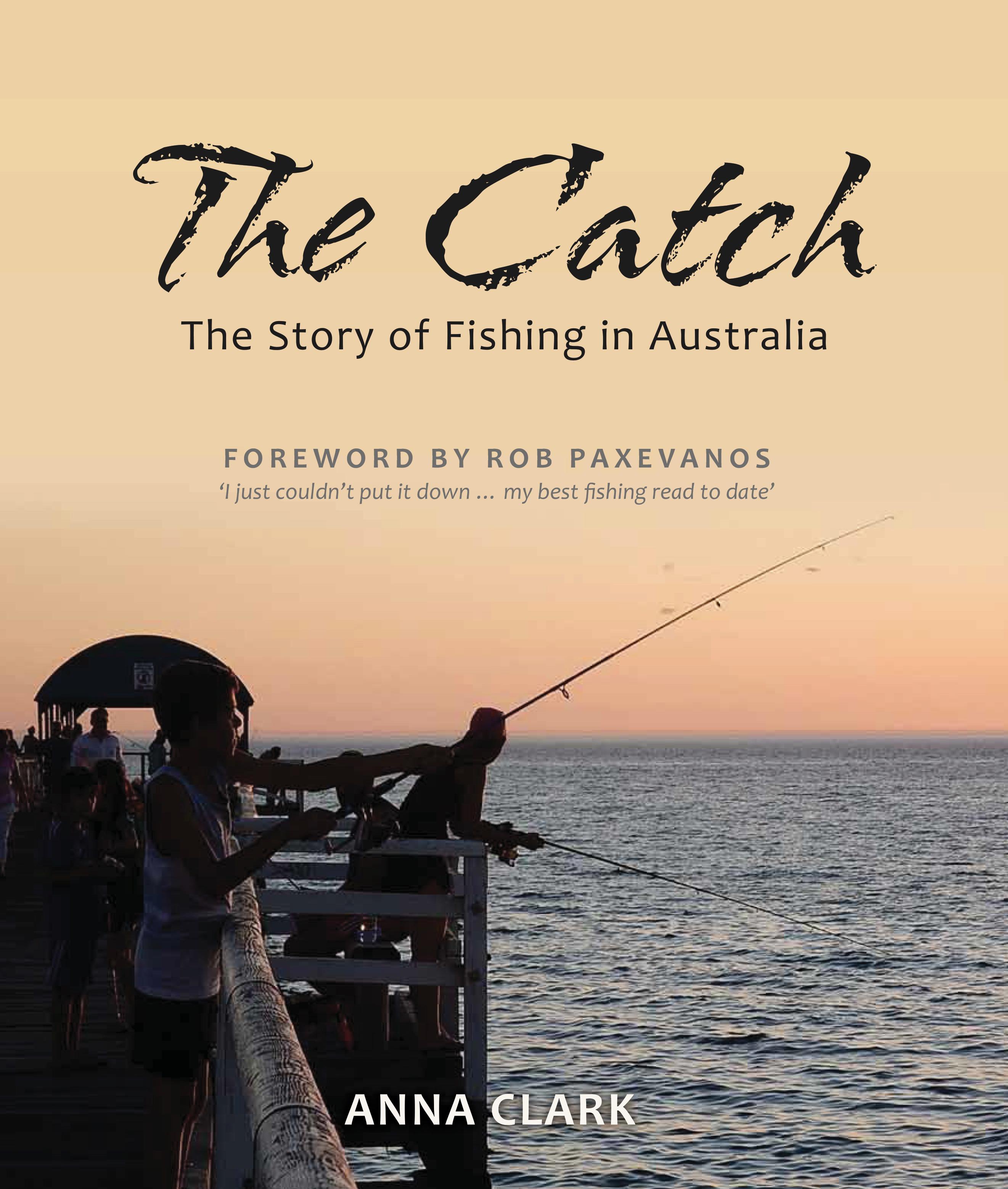
Fish live under the sea. And people bob around in boats and stand on the river banks trying to catch them. Historian Anna Clark takes a bit of a detour here from her interest in the historiography and teaching of Australian history to tell the history of fishing in Australia in The Catch: The Story of Fishing in Australia (2017). She shares her own love of fishing not just in the “we” language that Clark deploys, but also in the carefully crafted ‘fisher’s-eye’ paragraphs that commence each chapter.

Its copious and beautiful illustrations mark it out as a coffee-table book, but the text ranges beyond the ‘whoa! look at that!’ response to a photograph of a big fish. Its author, Anna Clark, is well known in academic circles for her work on public history and history teaching and she brings to the book an awareness of sources and a keen sense of finding history in the everyday. Most importantly, she brings her own love of fishing to the text, and I think that this is what fishers will respond most to in this book.

See my review here

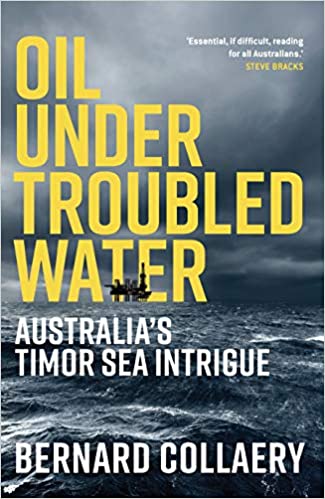
Natural resources are under the sea as well. And as Bernard Collaery has found to his chagrin in Oil Under Troubled Water: Australia’s Timor Sea Intrigue (2020), governments are fiercely protective of the negotiations that govern their use by competing nations. Bernard Collaery is a former Attorney-General of the Australian Capital Territory and worked for many years as legal counsel to the government of East Timor. In May 2018 he was charged by the Australian Commonwealth Director of Public Prosecutions with conspiracy to breach the Intelligence Services Act of 2001, introduced in the wake of September 11. He, and Witness K, a former senior ASIS agent, have been effectively gagged over a claim that ASIS had bugged the offices of the East Timorese team during negotiations over Timor Sea oil. Actually, even though I am very interested in the legal ramifications of Collaery’s silencing, and the sorry tale of Australia’s treatment of East Timor in these negotiations, I found the book quite difficult to read.

This, then, is a history of Australia’s dealings with East Timor and Indonesia over the oil resources- and more importantly, the helium reserves- in the Timor Sea. It moves chronologically, but it is a lawyer’s argument rather than a historian’s….I did manage to finish this book, but I found it very hard to read. Inexplicably, there is no map until page 362 and in a book that bristles with acronyms, there is no glossary. It is meticulous, with every fact noted, but it groans under the weight of so much detail. My gut feeling all those years ago was that Australia was acting like a bully, and this book only confirmed it further.

Read my review here

Well, with the exception of the Lanagan book, I’ve drawn on non-fiction books in this Six Degrees with a heavy dose of history.

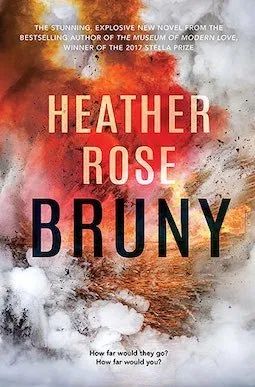
‘Bruny’ by Heather Rose

2019, 424 p.

This book was nothing like I thought it would be. I don’t know quite what I was expecting, but I wasn’t expecting a political thriller, a rather hum-drum love story and too many of my own political opinions stuffed down my throat. It does, however, raise questions about political expediency in a time of climate crisis while, rather unfortunately, ramping up anti-Chinese rhetoric.

The book is set in the near future, and a beautifully designed, two billion dollar bridge connecting Bruny Island and mainland Tasmania has just exploded. With an election on the horizon, the Chinese consortium funding the bridge receives clearance to bring in Chinese workers to ensure that the bridge meets its opening date schedule. Astrid Coleman, the sister of both the Tasmanian Premier ‘JC’ and (rather implausibly) also of the Tasmanian Opposition Leader Max, is summoned home to liaise between the pro- and anti- bridge lobby groups and, to a lesser extent, find out who sabotaged the bridge and why.

This professional summons by her brother is matched by the personal summons of family, with her father succumbing to dementia by quoting apposite slabs of Shakespeare and her mother in the last stages of cancer. She has a difficult relationship with her mother -and near the end of the book we learn why – and despite the different political allegiances of her siblings, she loves them both.

This near-future world is a plausible extrapolation of our own. A Trump-like US president has won a second term, there is a King on the throne in England and climate change is wreaking its own ongoing crisis. But I found the banging of the present-day political drum through Astrid’s first-person observations too blatant and too instrusive, even though they match my own. Who knows what I would have thought of them had I been on the other side of the political divide. Moreover, I suspect that many of the celebrity-culture references will date badly. I found the political scenario, when it was finally revealed, to be rather implausible, but nonetheless interesting to contemplate.

The descriptions of scenery are really well written, and Rose captures well the sense of love that place can engender in us. But the whole book felt a little too ‘Womens Weekly Good Read’ for me – although that I doubt that it would earn a gold sticker from that august publication on account of its political stance. But overall, the book felt rather too much like someone shouting at the television. I can do that for myself: I don’t need my books to do it for me.

My rating: 7/10

Sourced from: Yarra Plenty Regional Library.

I hear with my little ear: Podcasts 1-8 March 2022

The Coming Storm (BBC) I enjoyed this so much that I binge-listened to the final four episodes. Episode 5 Blowback starts with the US attempts to shore up Boris Yeltsin through the use of rock music (what a weird idea that was). Decades later, British spy Christopher Steele, who was hired to dig up dirt on Donald Trump, claimed that the Russians held ‘pee tapes’ that they would use as blackmail. Half of America believed that the Trump campaign colluded with the Russians to defeat Hillary Clinton; the other half believed that the investigations into Russian collusion are a hoax, as a way of unseating a democratically elected president. Q-Anon and General Michael Flynn, took up this second narrative. Episode 6 The Usual Suspects goes to a pro-Trump rally after the 2020 election where Michael Flynn whips up the crowd, urging people to join school boards etc. to refute the big lie and take over the country from the bottom up. (Actually, Heather Cox Richardson said that the Republicans have been using this approach from Phyllis Schlafly onwards). Episode 7 Welcome to the Future takes us back to the first scenes of the series, where he was contemplating the 16th century panic about witches. On attending a Rock the Red event in mid-2021 he wonders if the ‘satanic panic’ of the QAnon conspiracy is a parable for the takeover by a minority elite, or is it an epochal shift? He believes that QAnon is being weaponized, and it is a beginning of something new. Episode 8 Epilogue was an afterthought: the series was supposed to finish at Episode 7 but he returns to ‘The Sovereign Individual’, the book written by James Dale Davidson and Lord William Rees-Mogg (father of the MP), a book that responds to our desire to link everything together. It is a favourite of the tech billionaires of Silicon Valley, who think a new version of the web, based on cryptocurrency and blockchain, will bring about the next step in the societal shift driven by the internet. Take, for example, Peter Thiele, the founder of Paypal who is buying up New Zealand, and who has vowed to be back in the game for the 2022 mid-term elections. What does this mean for democracy?

The History Listen (ABC) To celebrate International Women’s Day, Steely Women celebrates the decades-long fight for women to be employed by BHP, and then to receive equal pay. It was Australia’s longest anti-discrimination case.

Deeply Human Accents starts off with an attempt at an Australianism – the increasing rapid repetition of ‘Rise Up Lights’ to end up with ‘Razor Blades’. (Personally, I don’t think it does, really). Apparently the language patterns of the future are already in evidence amongst 15, 16 and 17 year olds (what a depressing thought) with the shifting of vowels. The program then goes on to look at a case in the America courts where the Afro-American accused may have said “You know I committed that crime” or maybe “You know I ain committed that crime.” How much hangs on an “ain”.

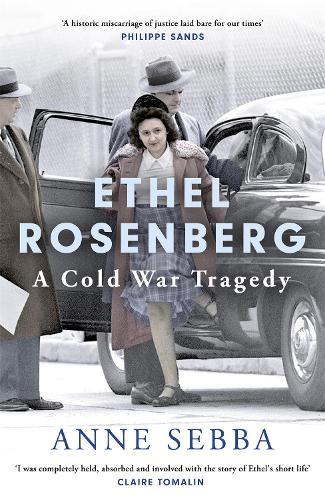
‘Ethel Rosenberg: A Cold War Tragedy’ by Anne Sebba

2021, 250 p. plus notes

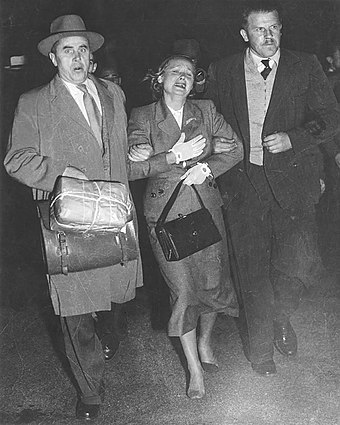
I must confess to sometimes confusing Ethel Rosenberg and Evdokia Petrov. After all, both were accused of being Russian spies, both came to public attention in the 1950s, and both were photographed being escorted under the supervision (and in Petrov’s case – the coercion) of men in images that seemed to exemplify the Cold War.

Edvokia Petrov being ‘escorted’ across the tarmac at Mascot Airport Sydney. Source: Wikimedia

But of course, they are very different women. Edvokia Petrov was Russian and her husband worked at the Soviet embassy in Canberra, and the Petrov’s exposure exacerbated Australian fears of infiltration by “foreigners”. Ethel Rosenberg was born and raised American, as was her husband and, as evidenced by the subtitling of this book for the American audience, this was “An American Tragedy” just as much as it was “A Cold War Tragedy” for Australian readers. And of course, Edvokia Petrov and her husband went on to live in obscurity in suburban Melbourne under assumed names until their deaths in 2002 and 1991 respectively, while Ethel Rosenburg and her husband Julius were executed on Friday 19 June 1953, as we learn in the opening pages of this book.

Just as in Australia we know of “The Petrovs”, in America they were known as “The Rosenbergs”. In this book, however, Anne Sebba consciously focuses on Ethel. As she says in the introduction:

In the past it has suited those who wanted to prove Julius’ guilt to refer always to ‘the Rosenbergs’; Ethel was used as a pawn in the hope that the threat to her would elicit a confession from him…Part of my task in the pages that follow is to extrapolate Ethel, to see her as an individual, perhaps a victim of her times as much as of an implacable government which found itself inert, like a cumbersome juggernaut caught at an intersection, seeing the ongoing traffic but unable to turn itself around.

p.10

Thus the book deliberately focuses on the womanly roles Ethel played during her short, 37 year life: mother, sister, wife and daughter. The initial third of the book, which focusses on her childhood and adolescence could have been written about any number of Jewish, Lower East Side families in New York. Her father, Barney Greenglass was a sewing-machine repair man, catering to the Jewish immigrants who poured into their neighbourhood with tailoring skills and little else, and they lived in a tenement building behind the Greenglass Machine Shop. Ethel was a bright girl who attended Seward Park High School in a ‘rapid advancement’ class, but her love was the stage and singing. To help the family finances, she left school in 1931 to take a secretarial course, which took her to the National New York Packing and Shipping Company, where she became involved with the Shipping Clerks’ Union, and led a picket line during a strike at the Company. Her involvement with the union and friendships with theatre friends working under the Works Progress Administration introduced her to the ideas of Soviet Communism, which at the time seemed miraculous to ‘progressives’. It was while waiting for her turn to perform at a benefit held by the International Seamen’s Union, that the 21 year old Ethel met an 18 year old engineering student, Julius Rosenberg. He had grown up on the Lower East Side too, and they lived around the corner from the Greenglasses in an apartment in Lavanburg Homes, a model affordable housing cooperative. He studied electrical engineering at New York City College in Harlem, sometimes dubbed the poor man’s Harvard. There he made many close friends, mostly Jewish and all left-wing. In the early years of their marriage, neither hid their passion for Communism, which was not illegal at the time. After the war, they moved into an apartment in Knickerbocker Village, a massive 1600-apartment federal housing project on the Lower East Side.

There they had their first son, Michael, in 1943. Michael seems to have been a difficult child who would no doubt receive some sort of diagnosis today, and Ethel exhausted herself following various child-rearing strategies. Their second son Robbie was born in 1947, and was an easier child. Her motherhood, in Sebba’s depiction of her life, places her firmly in the domestic realm, whatever her husband might have been involved in. Further, it was Ethel’s status as ‘mother’ that made even Edgar J. Hoover hesitant to execute her, conscious of how that would play out in the press internationally. This didn’t constrain the authorities from acts of deliberate cruelty in terms of her sons, removing them from foster placements in which they were happy and putting them into an orphanage. Visits from her children were allowed, but one senses that even these were less for Ethel or her sons’ benefit than as a way of leveraging emotional power over her, to encourage her to confess. Her sons’ eventual adoption by Anne and Abel Meeropol (who wrote the lyrics to Billie Holliday’s ‘Strange Fruit’), despite the State of New York’s determination to institutionalize the boys, was perhaps the only bitter-sweet outcome of this grubby emotional state blackmail.

Apart from her husband Julius’ activities, it was her status as sister and daughter that most damagingly implicated her as a spy. She had a very strained relationship with her mother Tessie, who always favoured her son David, the youngest child in Ethel’s family. It was David, along with his wife Ruth, who testified against Ethel and Julius, directly accusing them of encouraging David to spy, and testifying that Ethel herself had typed information for their Soviet handler. The Greenglass family swung their support behind David and Ruth, who were also charged but became prosecution witnesses under pressure from Roy Cohn (Trump’s former lawyer). Ethel’s mother Tessie angrily urged Ethel to divorce Julius and co-operate with the government, as David and Ruth had done. Her brother Bernie offered lukewarm support, but her older half-brother Sam adopted his mother Tessie’s stance.

Much was made of Ethel’s ‘ordinariness’, both in her defence and as a warning of how insidious the ‘Soviet menace’ could be. She was a plain woman, with a round face, and she wore unflattering clothes. She rarely smiled, and seemed sullen. Just as Lindy Chamberlain was to find when she faced court over the disappearance of her daughter Azaria at Uluru, public judgements often fasten onto demeanour and clothes, particularly for women.

So unprepossessing was she that the vehemence of their love story, displayed through their correspondence after their arrests, comes as rather a surprise. The letters are not unproblematic in that Julius recognized the importance of saving the letters he and Ethel were exchanging in case they were useful in attracting public sympathy for their appeal, and indeed some of the letters were published by the National Guardian, a radical left-wing but non-Communist newspaper. As a result, the letters from May 1951 seem more self-conscious with regular crossing-outs and corrections (p.176). Nonetheless, their love and yearning for each other seemed, if anything, to increase. On the trips to court, the other prisoners shifted around in the back of the prison van, so that Ethel and Julius could hold hands through the wire separating male and female prisoners, and Ethel wrote to Julius of her “implacable hunger” for “l’amour”. Running alongside this was her increasing infatuation with her psychotherapist Dr Saul Miller, whom she had originally consulted when struggling with parenting her son Michael. Her lawyer had initially prevented Ethel’s access to Dr Miller while in jail, fearing that it would be used by the prosecution lawyers against her. Eventually Dr Miller was able to visit her again, and if transference of feeling from husband to psychotherapist occurred, it is easy to understand.

She remained unshakeable in her loyalty to her husband. It well may have been misplaced. Intercepted cables with Russia through Project Verona between 1943 and 1950 (only declassified and published in 1995) named Julius, David and Ruth and gave them code names. However, Ethel had no code name, and was mentioned only once, and then by her given name. This one reference indicated that she was “sufficiently well developed politically” and that she knew about her husband’s work. However,

In view of delicate health does not work. Is characterized positively and as a devoted person.

cited on p 216

Ethel was not going to disavow her husband, but if Julian was guilty, he could have saved Ethel. He didn’t. Her sons believed that Ethel would not have been able to live with herself had she repudiated her marriage or betrayed her friends. Sebba believes that Julius was naive, optimistic and sincerely believed that he was not guilty of treason. He did not know about the Project Verona intercepts, and as a result thought that there was no good direct evidence against him. The increasing public campaign against their execution, which spread around the world, also encouraged him to maintain their innocence. Sebba concludes that

…ultimately Ethel saw her death as inevitable. She could not confess to something which she had not done and so, in a topsy-turvy world where logic and rationalism no longer played a role, she believed she was dying for truth and justice and for her personal legacy…. In the end her story is, for me, not about a narrow definition of what is meant by innocence or guilt. It is about the multiple meanings of betrayal.

p. 250

This biography certainly succeeds in its aim in “extrapolating” Anne beyond the designation of ‘the Rosenbergs’ (I’m not sure that ‘extrapolating’ is quite the right verb). It is well written, with a judicious use of narrative story-telling techniques balanced against analysis and use of source materials. The book ends with an interesting discussion of the cultural uses to which ‘the Rosenbergs’ have been put, and traces through to their end the biographies of the main characters who acted both for and against them. We still might not be sure of Ethel’s culpability, although Sebba gives any ex post-facto certainty a good shake, but one thing we do know. Right to the end, the state hoped that by executing Julius first, Ethel might recant. But Ethel Rosenberg died, maintaining her innocence to the end.

My rating: 8.5/10

Sourced from: Yarra Plenty Regional Library

I hear with my little ear: Podcasts 24-28 February

I always forget that February is a short month!

The Daily (New York Times). The episode ‘A Knife to the Throat: Putin’s Logic for Invading Ukraine’ is really excellent. A specialist who speaks Russian goes through Putin’s speech on 23 February where he explained his rationale for ‘de-communizing’ Ukraine as a way of assuring Russia’s security. There’s a transcript if you don’t have time to listen to the whole thing. Really good. Check it out.

History of Rome podcast Episode 111- Phase One Complete. After the Battle of Abrittus, with two dead emperors (Decius and his son) killed in battle, Trebonianus Gallus knew that the last thing Rome needed was another civil war, so he agreed to share power with Decius’s youngest son Hostilianus. It was a rotten time to become Emperor, with the Persians fomenting war in the East again, and with about twenty years of plague (what a discouraging thought). The plague probably carried off Hostilianus because he disappears from the historical record, and the plague and its effect on agriculture destroyed the economy. The Moesian troops became dissatisfied with Gallus, and proclaimed Aemilianus emperor instead, who lasted less than a month on the throne before being ousted by Valerian. Episode 112 Captured Alive continues this messy 3rd century. In the 18 years since Antonius Severus was killed, there had been 11 emperors. Valerian brought 15 years of relative stability, but only in the central areas of Rome, Greece and the Balkan – not out in the provinces. Valerian went to Syria, while his son Gallienus (who he had promptly made caesar) went north. In this way, the defence of the empire was divided again – although this was probably the only way it survived. There was peace while the emperor was present, but as soon as he left, skirmishes would commence again. Valerian left Syria to go to the Rhine where the Franks, a Germanic tribe, were uprising and on the way back he was captured by Shapur the king of Persia. There are lots of stories about his captivity: some that he lived quite peacefully, others that the king used him as a footstool or flayed him alive. We don’t know. Either way, the Emperor was captured and everything was in turmoil.

The Real Story (BBC) The title of this podcast Why is China Supporting Russia on NATO? may have been overtaken somewhat by events, because I’m not completely sure that China is supporting recent events in Ukraine. Nonetheless, this interesting podcast goes through the history of Russia/China relations since the 1950s, when the two Communist countries saw each other as brothers. However, it was a very personal relationship between leaders, and Mao Tse-tung was only prepared to defer to Stalin, and not his successors. In 1970 Richard Nixon executed a triangulation move of the US and China against the Soviet Union, which changed the balance. In 2001 a new Sino-Russia pact was signed, and then in February of this year we saw a new Putin/Xi statement issued during the 2022 Winter Olympics. It was suggested that the pact was not person-to-person, but an agreement to strategic military co-operation as pushback against the United States, and as a way of freeing up troops on their shared borders so that they could be deployed elsewhere. It was pointed out that Russia sees itself as European. China has extensive economic ties with Europe, but Russia would be able to fall back on China for exports. However, it was an agreement, not a pact, and they would be able to stand aside militarily from each other’s conflict, with no commitment to become involved (which perhaps we might be seeing in the Ukraine) The panel comprised Sergey Radchenko – (Professor at the School of Advanced International Studies at Johns Hopkins University and author of Two Suns in the Heavens: The Sino-Soviet Struggle for Supremacy, 1962-1967) Bonny Lin –( A senior fellow for Asian security and director of The China Power Project at the Center for Strategic and International Studies (CSIS) and Robert Daly – A former US diplomat in Beijing, now director of the Kissinger Institute on China and the United States at the Wilson Center in Washington DC.

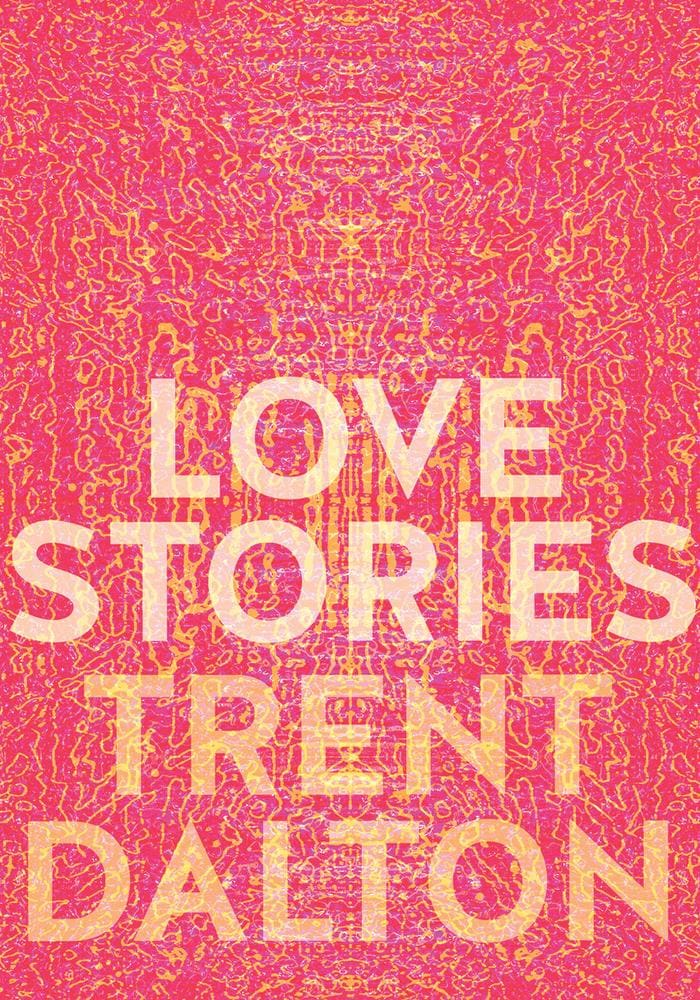
‘Love Stories’ by Trent Dalton

2021, 333 p.

So there’s a thought. A published author sets himself up on a Brisbane city street with a folding table and a blue Olivetti typewriter, with a sign reading ‘Sentimental Writer Collecting Love Stories’ and waits for people to come and talk to him. And talk to him they do – 42 of them – and he writes their love stories up for them, and for us. Most of them are only about three pages in length, although some are longer, and one extends over two parts widely separated in the book.

I must confess that I can barely remember any of them afterwards. These are not great epics: they are often everyday and quotidian, and there are as many love stories that break up as there are love stories that last a lifetime. You get the sense- and perhaps this is Dalton’s intention- that nearly everyone has a love story of some description in them, no matter how tarnished it may seem from the outside.

I must be about the only person in the world who has not read Boy Swallows Universe and so I didn’t come to this book with a reservoir of affection and goodwill towards the author earned through enjoying an earlier novel. The book could have been cut in half: it could just as easily have been extended to double its length. There is no rhythm or build up in the argument, instead it is just the addition of one story after another after another, as if rolling the paper out of the typewriter and adding it to the pile. For me, it felt a bit like a newspaper column, and I found myself wondering if it were, whether I would seek out the column each day. I suspect not. I think that the earnestness and wide-eyed wonder would pall after a while.

One fact (as distinct from a story) did stay with me, though : that the average hug is less than 3 seconds. Coming from a family of huggers, I would like to think that our hugs last longer than that.

My rating: 6.5

Sourced from: Yarra Plenty Regional Library

I hear with my little ear: Podcasts 15-23 February 2022

History of Rome Podcast 109- The New Millennium tells us that we really don’t know how much Phil the Arab (is that too familiar? Probably) had to do with Gordian III’s death. The Senate wanted Gordian deified and they did so over Philip’s objections – sign of a guilty conscience? Philip and his brother Gaius divided the Empire into East and West in order to govern it. Mike Duncan pauses at this stage to discuss the Goths. It is unclear whether they came from Sweden and pushed into Ukraine, or whether they were native to Ukraine. Either way, by 238 AD they were on Rome’s doorstep with persistent border raids, especially in Dacia. Philip oversaw the ‘secular’ games in 248 CE to celebrate Rome’s 1000th birthday which, despite the name, were highly religious. Meanwhile there was a rebellion in Moesia (near Kosovo) but the wise old senator Decius predicted that it wouldn’t last. Nonetheless, Philip sent Decius north to take charge of the troops. Another big mistake. There is a view, contested between historians, that Philip was the first Christian emperor, but this was probably only in comparison to Decius who outright persecuted them. He probably wasn’t. Ep.110 A Gothic Horror sees Decius (invited/compelled) by the troops to lead them back to Rome to confront Philip, whom the troops felt had been too reluctant to confront the Goths. Once Decius became emperor, he decided that Rome had lost its way because the gods had abandoned it on account of lax morality. He decreed that everyone had to sacrifice to the gods within 30 days- something that the Christians had a real problem with. After Decius was gone (it didn’t take long), the Christians had a real problem: what should they do with those Christians who complied? The second thing he decreed was that the role of Censor should be revitalized to improve the virtue of Rome. He offered it to Valerian, but he declined it – a wise move because it was too dangerous and impossible anyway. Then the Goths invaded, and both Phil and his son were killed.

The Coming Storm (BBC) I’m really enjoying this podcast. Episode 3 The Basement looks at the development of 4-chan and 8-chan, which stemmed from a site for video game fans. A severely disabled boy, Frederick Brennan, gets drawn into a toxic world of mainly young men and launches 8chan. It is on 4chan that ‘Pizzagate’ was spawned: a story about Hillary Clinton’s campaign manager, paedophilia and a pizza restaurant. Episode 4 Q Drops looks at ‘Q’, a supposed insider, who tells a story in which Trump is engaged in an epic battle against a cabal of satanic paedophiles who have hijacked the American Republic. Frederick Brennan moved to the Phillipines where 8chan was taken over by Jim Watkins because it was getting too big and expensive for him. There’s a suggestion that Jim Watkins might be Q, or might know who he is. This is all crazy stuff.

Emperors of Rome Episode CLXV – Phillip asks ‘who would want to rule Rome?’ Why did the younger brother become emperor and not his older brother Gauis? Perhaps it was because Philip had a son, and could start a dynasty, which he commenced by appointing his 9 or 10 year old son Caesar. But really, to be emperor was on a hiding to nothing. He contracted a peace treaty with Armenia by paying money comprising 3% of the income of the empire paid as a tribute to Persia, not that the Romans called it a ‘tribute’. Then he contracted a peace treaty on the Danube. I can imagine that the troops didn’t think much of all these peace treaties. Dr Caillan Davenport calls the 1000 year celebrations the ‘cyculum’ games, based on the idea that they would only be seen once in a man’s life time (assuming that he lived to about 110). Dr Davenport discusses the claims that Philip was the first Christian emperor, pointing out that the claims are not found in the usual sources. Instead the stories seem to be ‘floating anecdotes’ which appear in a variety of sources, decontextualized from time and location- and thus, pretty suspect. Episode CLXVI – The Edict of Sacrifice (Decius I) goes into more detail about Decius’ instructions that all Romans (women, slaves, babies included- everyone except Jews) should make a sacrifice. Decius, an older man, had been claimed as emperor by the troops he was sent to command, and his troops fought with Philip’s troops at Verona and Philip and his son were killed. Decius himself came from current-day Serbia, and he carefully crafted his image for what he hoped would be a new Decian dynasty. For example, he added ‘Trajan’ to his name, trying to evoke “the good old days” and made much of his Danubian roots. Within the first two or three months of his reign, he issued the Edict of Sacrifice, a very public act of compulsory sacrifice, and a huge bureaucratic undertaking, with cards attesting that the sacrifice had been made. Those who refused could be imprisoned, beheaded or burnt. The Bishop of Rome was the first to be executed. In Episode CLXVII – The Gothic Invasion (Decius II) Dr Caillan Davenport suggests that the Goths may have originally come to Ukraine from Poland (or there are some suggestions of Scandinavia).’Goth’ means simply “The People” and in the mid 3rd century, they were still one people, not yet divided into Visigoths and Ostrogoths. They were led by King Kniva, who although initially defeated by Decius who was leading his troops, then pushed forward to take Phillippolis (in current Bulgaria). Dr Davenport then goes on at some length about a letter under Decius’ name but probably not his pen, to the governor of Phillippolis, telling him to wait until Decius himself arrived before embarking on battle with the Goths – Davenport has written an article about it, so he does go on a bit. Episode CLXVIII – The Battle of Abritus (Decius III) sees Decius and his son being killed at the Battle of Abritus. The Christian sources exulted in his death, seeing Decius only as a persecutor. The Battle of Abritus was a bad defeat, on a par with the Battle of Teuteoburg Forest, and it sent shockwaves through Rome. Decius had had a vision for the empire, but he had only a short reign, perhaps best seen as unfulfilled potential.

London Review of Books Podcast. I’ve just finished reading Anne Sebba’s book Ethel Rosenberg: A Cold War Tragedy. In this podcast, Ethel and Julius, Deborah Friedell discusses the book, giving a good summary of its contents (so much so that you barely need to read the book). The article on the LRB website is good too.

Six degrees of separation: from The End of the Affair to…

It’s the first Saturday of March, so it’s Six Degrees of Separation day. This meme, hosted by Kate at Booksaremyfavouriteandbest involves mental association of six book titles from the starting book that Kate provides each month. It might be on the basis of the title alone, or the themes that it deals with, or author, or location or…. anything that springs to mind. This month’s starting book is Graham Greene’s The End of the Affair. Yet another book I haven’t read. So, I’ve gone by title, focussing on the word ‘End’, with no mental gymnastics or creative insight. What a gloomy road I have been taken down!

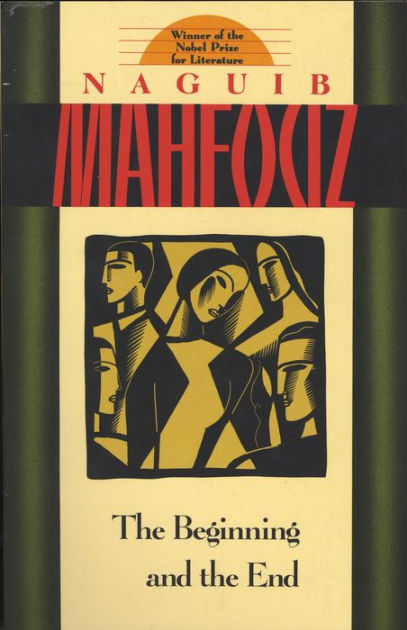
I started with fiction first. Naguib Mafouz’s The Beginning and the End is a stand alone novel from 1949, and precedes his better-known Cairo Trilogy. I read it before I started blogging but here is what I wrote about it in my reading journal at the time. I gave it a score of 7/10.

Set in Egypt, a family is plunged into penury when the father dies. The eldest brother continues his life of idleness and becomes involved with criminals. Hussein sacrifices his own hopes to study to put his younger brother through army college. The youngest brother, selfish to the last, encourages his sister, disgraced when caught in a brothel, to suicide, then follows her. Reminiscent of Zola or Hardy in its lurching from one disaster to the next, but in its values quite Arabic.

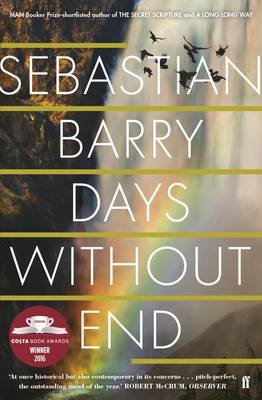
From 1930s Cairo to the American Civil War, the next book I thought of was Irish writer Sebastian Barry’s Days Without End (2017) In my review, I wrote:

In reading this book, there were flashes of Cold Mountain and unexpected echoes of Blood Meridian. There is certainly violence, but somehow it is dream-like and disconnected. The narrative voice in this book, speaking in the present tense throughout, in my head sounded to be a completely American accent, without even a trace of Irishness. It is, essentially, a love story, with beautiful descriptions of landscape and climate. I don’t often read a book with a film in mind, but I expect to see this on the screen one day, as it has a very filmic, epic quality. (See my review here)

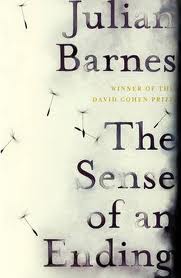
Julian Barnes’s The Sense of an Ending (2011)gives us just what the title suggests -a vague uneasiness about the ending. The main character, Tony, who writes in the first person in the first section of the book, receives a letter which causes him to go back to revisit his memories from the past, challenging his sense of life-narrative. Here’s what I wrote in my review

The title of the book is The Sense of an Ending, and it’s truly only a ‘sense’ that you are left with.  Tony, too, thinks that he has found an ending to his story, but “there is unrest.  There is great unrest.”

I thought that I had reached the end of the book, and had my own certainty that I’d finished with the story.  In planning to write this post, I looked at a few other reviews in newspapers and blogs- only to find that perhaps I hadn’t finished it at all.  Read this review that explains the ending, then keep on going through the comments -ye Gods, 423 of them!- and the real cleverness of the book reveals itself.  It has sent me back to the start again! (See my review here)

My fiction titles exhausted, I turned to non-fiction . My word, historians and political commentators are very fond of the word “end”, finding “ends” to everything. Most of these I read before starting blogging, so either there are fewer books with “end” in the title now (it does seem rather presumptuous to declare the end of anything, really, given that we don’t know what is ahead of us) or I tired of reading them.

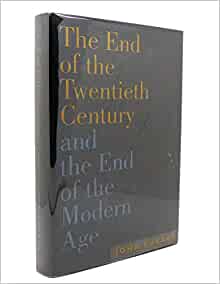
A book from 1992 (and hence pre 9/11) is The End of the Twentieth Century and the end of the Modern Age written by one of my favourite historians John Lukacs. Given the current events in Europe right now, it’s interesting to look at his interpretation written from the 1990s. Again, I read this pre-blog, but this is what I wrote about it at the time.

Lukacs argues that the twentieth century was a short one, starting with the guns of 1914 and ending with the collapse of the Soviet Union in 1989. He argues that the defining nature of the twentieth century was not the Cold War, but instead nationalism, which led to Nazism and explains why the USSR fractured. He clearly distinguishes between nationalism (i.e. ‘the people) and patriotism (‘i.e. ‘the country’). He predicts the re-emergence of Germany as a world power after a period of contrition, and expresses scepticism over the idea of a pan-stage, pan-national Europe. This is a mixture of history and the personal as he writes in the first person about his return to his native Hungary after the fall of the Soviet Union. Quite difficult to read, perhaps because he is a historian’s historian.

It seems that I wasn’t too impressed with Sam Harris’ The End of Faith: Religion, Terror and the Future of Reason (2004). How interesting- I now actually pay to subscribe to his meditation and philosophy podcast ‘Waking Up’. However, I wrote in my reading journal back in September 2005:

A book full of the piss and vinegar of self-conviction, Harris characterizes all religions as lacking reason, and moderates as culpable as fundamentalists in their acceptance of the inconsistency of ‘sacred’ texts. All religions are criticized, but especially Islam, which he sees as particularly provocative of violence. He does not deny that there is a ‘spiritual’, as distinct from ‘religious’ impulse, but argues that this comes from meditation rather than text. While I agreed with much of his argument, I found his know-it-allness and intolerance of nuance to be off-putting, and his trenchant criticism of Islam in particular to be too strident.

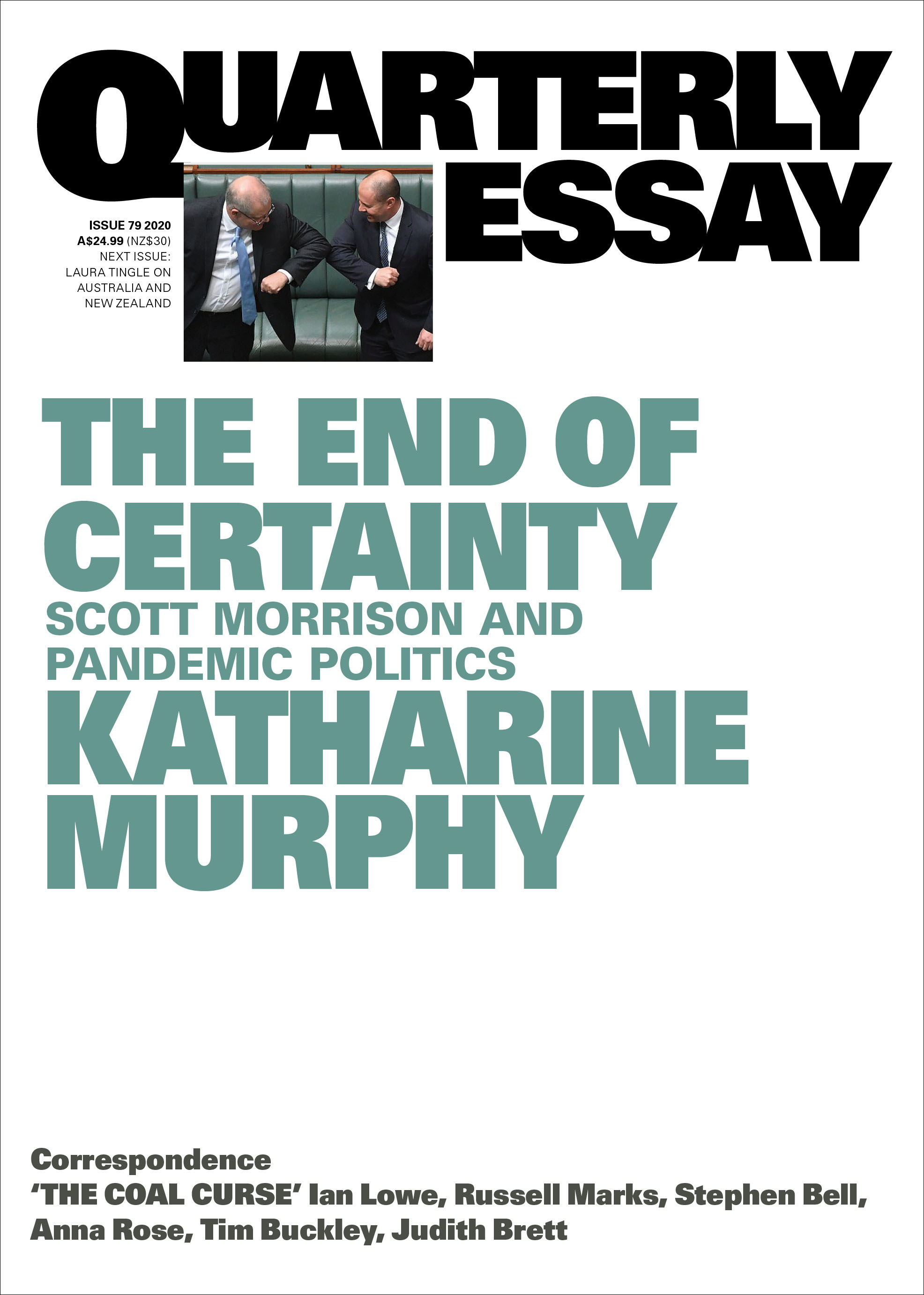
Finally I end up back in my own country and current politics with Katharine Murphy’s The End of Certainty: Scott Morrison and Pandemic Politics (2020). This is part of the Quarterly Essay publishing stable, and as Politics Editor for The Guardian, she writes from a current events political perspective. This meant that she had to jettison her original plans for this issue:

Journalism has long been described as the first draft of history and that’s certainly the case with Katharine Murphy’s latest Quarterly Essay The End of Certainty: Scott Morrison and Pandemic Politics. The arrangements for the Quarterly Essays are usually locked in a year ahead of time, and Katharine Murphy thought at first that she would be writing a profile of Australia’s unexpected Prime Minister, Scott Morrison. But in this Year of Madness, events overtook her and instead of writing an essay based solely on his personality, she interweaves it with a chronology of the unfolding of the COVID pandemic and the politics it has engendered. (See my review here)

Economic dislocation, war, terrorism, plague…. what a list!

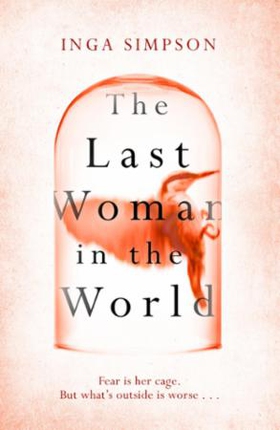
‘The Last Woman in the World’ by Inga Simpson

2021, 341 p

It seemed particularly fitting that I should finish reading this book on a weekend when anti-vaxxers, anti-mandate anti-government protesters and so-called ‘sovereign citizens’ should be gathering in Canberra, with a thicket of red Australian flags and placards reflecting their multiple priorities. The Last Woman in the World ends up in a Canberra, ringed by fire, threatened by both right-wing militias and shadow-like creatures that feed on fear, wiping out most of the population and civic society.

Rachel has been living off-grid in the New South Wales bush, working as a glass-blower and in contact with only her sister, Monique, and a local woman, Mia, who brings her food and supplies and ferries Rachel’s glass creations to various markets. Her solitude is shattered by a woman hammering on her door, imploring to be let in with her sick baby. Wary and resentful, Rachel opens the door to Hannah. Hannah tells of screaming people dying suddenly, engulfed by dark shadows that both women refer to as ‘them’, their faces contorted with terror. Death is everywhere, but as Hannah’s baby Isaiah becomes sicker and sicker, both women decide to seek out Rachel’s sister Monique, a G.P. in Canberra. They drive into the smoke-wreathed bush, as bushfires encircle Canberra, only to find corpses everywhere and the lurking presence of ‘them’.

There’s a lot going on in this book. Rachel has suffered from mental illness after a traumatized childhood and a past assault, and it’s not really clear whether ‘they’ are real or hallucinations. The descriptions of driving through fire are evocative and terrifying, but I had the feeling as if they belonged in a book other than this one – perhaps another book that Simpson wants to write one day- particularly when I learned that the writer herself had had to evacuate twice because of fire while writing the book. It marks the advent of novels, sure to continue over the next decades, when the years of pandemic of the early 2020s are background facts. The tension is ratcheted up by not really knowing who is friend or foe, although this is clearer by the end. Those shadowy figures – them– remain ambiguous and other, not ever fully realised or explained. The explanation for why some people seem to be immune to the influence of them strains credulity a bit and the ending was perhaps a bit too neat for my liking.

However, it was good to read a pursuit story like this where the protagonists were women. While disturbing, it is not as nihilistic as Cormac McCarthy’s The Road (and I’m glad that it’s not), and I enjoyed reading Canberra as a familiar, if eerily quiet, setting. But I’m still bemused by the title, which is not even accurate. Or did I miss something?

My rating: 7/10

Sourced from: Yarra Plenty Regional Library.