This book is set in a very specific timeframe: from Wednesday 5th November 2008 to Tuesday 20th January 2009. Ring a bell? Probably not. I’ll help you out. It’s the time between the election night that saw Barak Obama elected as President of United States, and the day of his inauguration the following year.
If you’ve ever been to an election-night function as a volunteer, you’ll recognize the awful, chin-trembling bleakness of defeat when the balloons, the music, the party pies all of a sudden take on a bilious yellow hue. For white, racist, life-long Republicans that election night -more than any other before it- must have seemed like the world was shifting on its axis. And so we meet Hitchens, nick-named “The Big Guy” who decides that something must be done. He calls on his mates, fellow-Republicans, entrepreneurs, a crackpot historian, a tax lawyer etc, all rich, entitled, puffed up with their delusions that they can change history if they get the right people onside and pull a few strings. And so they launch into a series of sleazy meetings with ‘fixers’ and quasi-military figures where men talk in catch-phrases and allusions, plotting to somehow over-turn Obama’s election, to set the world right again. If we hadn’t seen Rudy Giuliani sweating away in the All-Seasons Garden Supply car-park, or January 6th, this would just seem like farce. Not any more: as the author of this book, published in 2022, knows only too well.
While all this is going on, the Big Guy has his own problems at home. His wife Charlotte is an alcoholic who finally seeks help for her addiction; his daughter Meghan is at boarding school and starting to question her own views on life and politics, after joining the family jaunt to the polling booth to vote for John McCain. The family has its own secrets and it is forced to face up to them, while Big Guy is escaping reality through his ham-fisted political manipulations to try to go back to the good old days.
This book read very much like a play, with a heavy reliance on dialogue. There are no chapters, but instead a series of ‘scenes’, each identified by date and location. There are probably a lot of political references and in-jokes that escaped me, and I felt my Australianness keenly while reading the book. What an unsavoury group of people. How depressing that they’re still here.
My rating: 6/10
Sourced from: Yarra Plenty Regional Library
Read because: I heard the author on a BBC Start the Week podcast (see my response to the podcast here). This podcast has a lot to answer for.
Background Briefing. Is is just my inattention, or is there less news about the protests in Iran recently? Under the Eye of Iran Part I explores the surveillance of Iranian people here in Australia. There are interviews with young women now resident in Australia, one who was happy to give her name, another who did not want to be named for fear of repercussions on her family back in Iran. It was chilling to hear of this young Iranian girl, out on a night on the tear with friends whose “F*** you” to a man who told her to behave more discreetly led to her sitting in court, facing charges that could have led to her execution. Also has an interview with Kylie Moore-Gilbert, who has spoken out since her release from prison. [Update- just in the last week (i.e. mid February) there is news of the protests beginning again]
Wikimedia
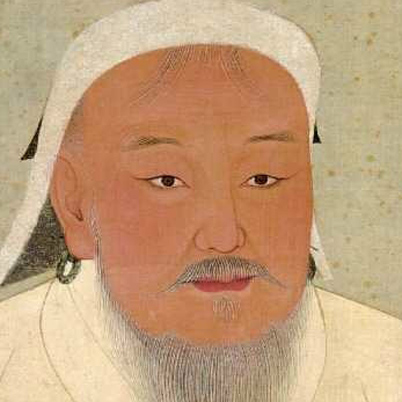
History Hit/Gone Medieval I’ve been reading Simon Sebag Montefiore’s gigantic The World which has made me aware of how much I don’t know, about anything, really. I listened to Mongol Empire where Matt Lewis talks to Dr. Nicholas Morton, author of The Mongol Storm: Making and Breaking Empires in the Medieval Near East. The Mongols emerged out of a confederation of nomadic tribes, led by Genghis Khan, and they rode wave after wave, integrating conquered societies into their empire. There were differing responses to conquered communities: if they submitted early, they were treated more humanely. In 1220s they invaded Armenia and Georgia, in 1230 the Near East and in 1260 Syria, but they were stopped by the Mamluks. In 1241 they defeated Hungary and Poland in a fleeting raid, but they did not return as planned because they broke down in a Civil war in the 1260s. The legacy of the Mongol Empire was the increase in scientific knowledge and the growth of trade.
Full Story There was plenty in the news about the death of George Pell, and I was interested to hear David Marr’s take on it. David Marr on the Life and Legacy of George Pell doesn’t hold back at all (as you might expect) declaring right up front that “George Pell was a danger to children”. The conservative Catholic Church of George Pell was a shame machine, generating over 4000 complaints between 1980 and 2015. Pell moved easily in political circles, and was able to leverage funding and the founding of the Catholic university system. The Ellis Defence that was put forward under his leadership relied on old rules. He did apologize on behalf of the Catholic Church, but not for his own personal role. Marr suggests that, with Pell’s death, it is going to be difficult to maintain scrutiny of the Church.
You’re Dead to Me. I would hate to be the historian on this show. Ivan the Terrible features Prof Peter Frankopan from the University of Oxford and Russian-born comedian Olga Koch. Ivan used violence as a form of political control, although he wasn’t alone in that- violence was ubiquitous throughout Europe. Much of his time was spent in a power struggle with the Boyars, and he ended up dividing Russia into two.
Axios I’ve never really got into Twitter, but Elon Musk did, and he bought the company. Although that wasn’t clear during this series, which was recorded while Musk was negotiating to buy it, and then withdrawing, and then buying it again. How It Happened: Elon Musk vs. Twitter discusses Musks’ moves throughout different industries and his tolerance for risk, best exemplified by his expansion into autonomous self-driving Teslas- an experiment that uses us. The most recent episode, which dropped in January this year after a three-month hiatus, examines his first few months as CEO of Twitter, and the challenges facing his other companies.
History Hit To mark The International Holocaust Remembrance Day on 27th January, Anne Frank’s Life After Her Arrest takes up her story after leaving the Secret Annexe and up to her death. Dan Snow is joined by Bas von Benda-Beckmann, historian and co-author of After the Annex: Anne Frank, Auschwitz and Beyond, to reconstruct Anne’s life after her arrest. We don’t really know whether the family was betrayed or not: Otto Frank believed that they were, but it is possible that the police discovered them as part of a search into forged food stamps. They were sent to Westerbork prison camp in the Netherlands, where the girls worked recycling batteries. This prison allowed families to stay together, and although there were rumours about the death camps, there was an effort not to panic the prisoners. They were sent on the last train from Westerbork to Auschwitz, arriving on 6 September 1944. Up until May 1944 only 20% of the passengers survived the selection process for the gas chambers, but the demand for slave labour meant that by this time, 65% went to work as slave labour. Much of this labour was senseless. In November 1944 Anne, Margot and Peter’s mother were sent to Bergen Belsen, while Anne’s mother died at Auschwitz. At Belsen, the system was breaking down and there was no food, although parts of the camp were better than others because ‘high value’ Jewish prisoners were kept there for prisoner swaps. Mrs Van Pels was sent on to another labour camp. It is now thought that Ann died in early February 1945, not March as previously thought.
The Philosophers Zone (ABC) Conspiracy Theories, anti-Semitism and fun is a repeat of a program originally broadcast in May 2022. In it, Charles Blattberg, Professor of Political Philosophy, University of Montreal discusses his essay ‘Anti-semitism and the aesthetic’ where he argues that conspiracy theories have an aesthetic dimension. He identifies four manifestations of this aesthetic: savouring details; playing for fun; putting on shows and fantasizing. There’s lots of labels and definitions here (in a very philosophical way) but he notes that conspiracy theorists tend to underestimate incompetence, and that it is not possible to reason with a conspiracy theorist – you can only mock them. Very theoretical, but interesting. There’s a link to Blattberg’s lengthy essay on the ABC site.
I have only read one other James Meek novel, The People’s Act of Love, although I’ve often seen his articles in the London Review of Books. I read The People’s Act of Love before I started blogging. It was set during the Russian Civil War that followed the Revolution – a time when fortunes and allegiances shifted in response to the global political situation, and when loyalty and survival were pitted against each other. Meek’s most recent book To Calais, in Ordinary Time is likewise set in 1348, a time of political flux, but this time politics is rendered hollow by the threat of plague. This book was published in 2019, before our own world was to face its own plague, and to read it in 2022 is to find resonances of which the author would have been unconscious, as the plague is at first just a rumour, dismissed, politicized or seen as divine intervention. But by the end of the book, the plague dominates, throwing into question social distinctions, faith, and the nature of commitment.
The book involves a journey from South-West London to Calais, two years after the battle of Crecy where a group of archers under Edward III routed a larger French army and went on to capture Calais. A band of battle-hardened archers is gathered together by knight Laurence Haket to return to Calais, and young serf Will Quate is nominated by his liege lord to join them. The other archers, led by Hayne, had been involved in the sack of Crecy two years earlier and had taken captive French noblewoman Cess, who was forced to accompany them back to England. Now they are heading back to Calais again, and they are joined by Lady Bernardine, Wills’ master’s daughter who is escaping an arranged marriage to an older man; Thomas, a clerical administrator on secondment to an abbey who, while not an actual priest, is steeped in the church; and Hab, a swineherd with desires of his own. While they are heading to France, the plague is heading towards them.
The narrative is told in different voices. The cleric Thomas writes his first-person narrative on parchment, in a high, intellectual tone; while the third-person narrative depicts Lady Bernardine as speaking in a lofty, French-inflected language. Will, Hab and the archers, on the other hand are depicted as speaking a form of dialect : not quite Chaucer, but with many unfamiliar words (‘neb’ for face; ‘steve’ for voice) and a curious sentence-construction. Meek sustained this well throughout the book, although I confess that it often tangled my reading.
What I found most confusing, though, was the names. Hab (the swineherd) is very similar to Mad (one of the archers); Mad (the archer) is very similar to Madlen (Hab’s ‘sister’); Hayne (the leader of the bowmen) is very similar to Haket (the knight). Add to this abbreviations (Cess for Cecily; Berna for Lady Bernardine), some gender-bending, and a play within in a story- and I didn’t know where I was for much of the book. In a way, my own confusion mirrored the other-worldliness and the unfamiliarity of the 14th century setting. It did resolve, particularly as the plague set in and different characters dropped away.
In her blurb for the book, Hilary Mantel wrote:
Fans of intelligent historical fiction will be enthralled by a story so original and so fully imagined. Meek shows the era as alien, which it is, and doesn’t falsify it by assimilating it to ours. But his characters are recognisably warm and human.
I confess that I found myself wondering if I was “intelligent” enough for this book, because I did find it challenging. But as Mantel points out, Meek has created a world on its own terms, with disorienting little twists, that reinforces that his characters are not just ‘us in funny clothes’ and he sustains this across the whole book. And, by chance, we bring to this 14th century world our own 21st world view of plague which, for me, only enhanced the book further. It’s a remarkable- but challenging- book.
Sirens are Coming (ABC) This seven part series (plus a bonus episode) is written and presented by Matthew Condon, who wrote a trilogy about organized crime in Brisbane, comprising Three Crooked Kings (2013), Jacks and Jokers (2014) and All Fall Down (2015). I’ve been meaning to read these books for a while, even though I am not a great fan of true crime, because by now they almost have the status of being history (after all, they always say that journalism is the first draft of history….)
In many ways, this podcast goes over the same territory as his trilogy, but he takes a slightly different perspective. Yes, he’s talking about crooked cops and politicians but he considers them through and from the perspective of four very brave women who worked in the sex industry over a period of about 40 years. Episode 1 The Great Survivor takes us back to Brisbane in 1958 when three bent coppers- Glen Hallahan, Terry Lewis and Tony Murphy- form ‘The Rat Pack’ which extorted sex workers for protection money – a pastime they dubbed ‘the joke’. Two of their early recruits were Dorothy Edith Knight, who fell in love with Glen Hallahan, and Shirley Brifman, who did their dirty work in Queensland’s first-ever Royal Commission into police misconduct. Episode 2 From Kickbacks to Paybacks is set in the 1970s when an enquiry is called into the goings-on at the National Hotel, a favourite watering hole for the Rat Pack.. At the enquiry, Shirley Brifman lied to protect the police while Dorothy Knight was the first person in Queensland to wear a wire in a sting operation to take down her former lover, Hallahan. Episode 3 The FallOut sees Brifman dead, supposedly of a drug overdose, after appearing on This Day Tonight and admitting that she had lied to the National Hotel Enquiry. Meanwhile, Dorothy Knight was holed up in a safe house, reaping the consequences of snitching . Episode 4 Old Dogs, New Tricks moves into the mid 70s as the sex industry expands to the Gold Coast as well, and Simone Vogel moves up from Sydney and establishes herself as a power. When she wanted out, she disappeared too. By this stage, one of the Rat Pack, Terry Lewis, had been appointed Queensland Police Commissioner. The cold case has never been solved. Episode 5 Change is Coming takes us to the 1980s, as heroin hits the streets. ‘The joke’ has now transformed itself into the “new joke”. Lewis is still Commissioner, and although Murphy had retired, he still was heavily involved in extortion. A new madam emerges, Katherine James. By this time, Four Corners screened ‘The Moonlight State’ in May 1987, leading to the appointment of the Fitzgerald Enquiry. Episode 6 The Greatest Show in Town Katherine James (a pseudonym) was fundamental to the Fitzgerald Enquiry and corrupt police and politicians fell like dominoes. In the Bonus episode – Katherine want to talk she speaks publicly for the first time. Meanwhile, although the joke is at an end, police have a new form of intimidation – entrapment, described in a Episode 7 Bonus episode. Queensland lags behind the other states in its legislation regarding sex workers, and you find yourself wondering if the Rat Pack really is in the past….
Emperors of RomeEpisode XXXI Enter Vespasian. Vespasian was from equestrian ranks and his father was known as an honest tax collector (which was obviously big deal). He was born in Rome in the Sabine hills in 9CE. He went with Claudius to Britannia and was rewarded with a province in Africa. But he wasn’t particularly ambitious and ended up returning to Rome broke (which shows that he wasn’t ripping people off enough) and set up a business trading in mules. In 66CE he was sent to Judea by Nero, partially to neutralize him as a competitor, and also because there were religious issues there over monotheism and taxes. He is written about by Josephus, a Romanized Jew, who depicts him as ruthless. He declared loyalty to Otho, but once Vitellius defeated him, he made his move. Episode XXXII Vespasian as Prophesised discusses the various prophesies about him e.g. a tree, a dog dropping a human hand at his feet, his supposed healing powers, and eagles seen in the sky fighting. He entered a traumatized Rome which had undergone a series of civil wars. He recognized the authority of the Senate, was generous with the senators and the people, and began rebuilding temples. He started the Flavian amphitheatre (now Colosseum) and the Temple of Peace. He finished off Claudius’ temple, to reinforce his links with Claudius. Episode XXIII Emperor Vespasian, Becoming a God reviews his 10 year rule. He was popular, approachable and modest, with high morals. He didn’t claim the title of Father of the Country (PP), and although he did raise taxes, he spent them on culture, the arts and education. He died naturally at 69 years of age, joking on his deathbed “O dear, I’m becoming a God”. He was probably one of the 5 best emperors; he ended the civil wars; he commenced the Colosseum and started a dynasty. Not bad.
London Review of Books Dorothy Thompson was known as the ‘First Lady of American Journalism’ and also as The Woman Who Interviewed Hitler. She tried to get an interview with him for seven years, and when she finally succeeded, she had to submit her three questions in advance. She wrote him off as useless, and hinted that he was homosexual, which didn’t please the Nazis one little bit so they promptly expelled her after the Night of the Long Knives.. She was born in 1893, was university educated and worked as a freelance journalist. She was involved in the suffragette movement, and was married to the writer Sinclair Lewis. It’s hard to pigeon-hole her opinions. She saw FDR as a proto-dictator but anti-isolationist, and she was a fierce advocate for American involvement in WWII (but not necessarily boots on the ground). She wrote an essay ‘Who is a Nazi?’ where she argued that Nazism attracted people holding particular social and economic views (suggesting that ‘the Jews’ might have been Nazi under different circumstances). In fact, she was quite anti-Semitic, despite wanting America to be involved in the war. She often promulgated ideas too early, before people were ready too accept them e.g. that there should be no harsh reparations against the Germans. In the podcast, Deborah Friedell argues that it is impossible to overstate her significance as a journalist early on, but that she increasingly became viewed as a crank.
Strong Songs. Queen’s Bohemian Rhapsody I’m not always familiar with the songs that Kirk Hamilton deconstructs, but everyone (even me) knows Bohemian Rhapsody – and how much he has to work with here! This is a replay of an earlier episode, but it’s really good. He is full of admiration for Freddie Mercury’s vocal skills and the judicious but lavish use of Brian May’s guitar. Really good. And who can resist watching the Live Aid concert.
Although this book purports to be about a curmudgeonly old man, the American film (renamed ‘A Man Called Otto’) stars Tom Hanks so he certainly couldn’t be too curmudgeonly. As someone who has experience of Grumpy Old Men (Reader, I married one) Ove is only eye-rollingly annoying with a heart of gold. It was altogether too saccharine for me.
There are advertisements at the end of the book for the author’s other publications, My Grandmother Sends Her Regards and Apologizes and Britt-Marie was here. They sound just like this book with an misunderstood older person covering a hidden warmth who blossoms under the attention of others. Pardon my cynicism.
Sourced from: purchased e-book (it was on special)
One sure sign that time is elapsing faster than I realize is the way that the Six Degrees meme on the first Sunday of the month comes round so quickly! I missed the January one, but here I am for February. It is hosted by Kate at Books Are My Favourite and Best, and the idea is that she chooses a starting book – in this case Trust by Hernan Diaz. I haven’t read it, of course (I almost never have read the books she chooses to start off the Six Degrees) but I gather that it’s about a wealthy 1920’s New York power couple.
How to proceed? I was tempted to go with titles of one word, linked to an emotion or state but instead opted to go for the (more predictable?) route of New York books. Of which there are many.
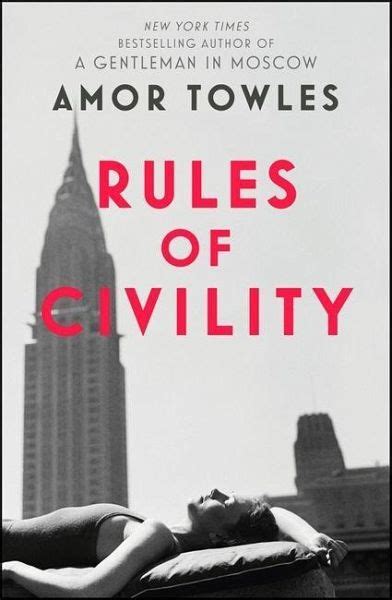
I’m really enjoying Amor Towles’ work and I just loved Rules of Civility (my review here), set in New York in 1937, and evocative of all those black-and-white films with the Empire State Building in the background and imbued with New York glamour.
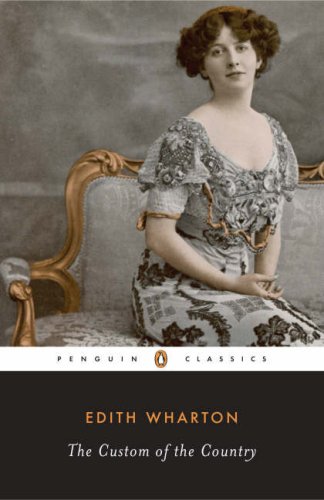
For me Edith Wharton exemplifies Gilded Age New York. But which to choose? I could go with The House of Mirth or The Age of Innocence, but perhaps I’m settle on The Custom of the Country with the deliciously named Undine Spragg, who arrives in New York craving money and social celebrity, and moves through multiple marriages to get it.
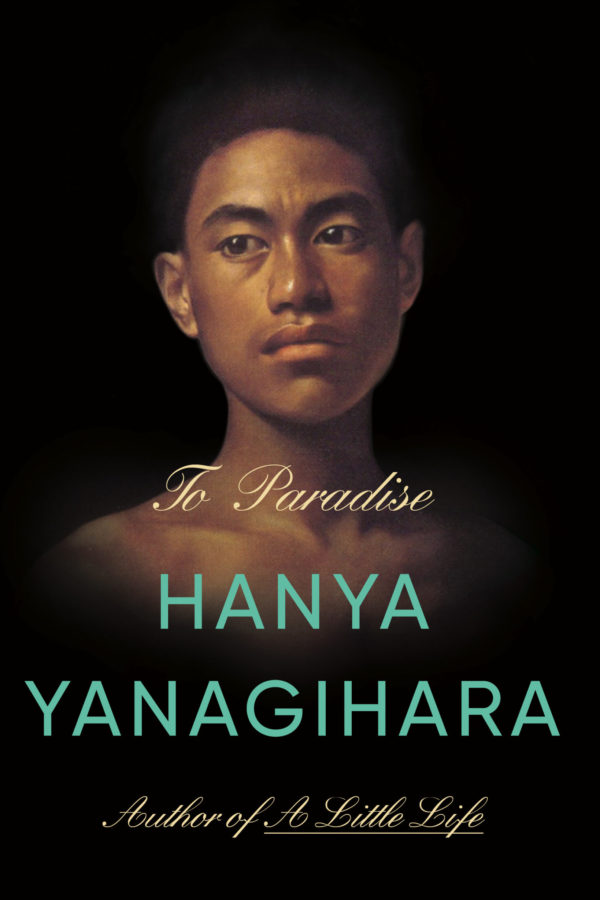
We visit New York twice in Hanya Yanagihara’s To Paradise (my review here), once in 1893 and again in 2093 with an interlude in Hawaii in between. It’s a big book, with recurring characters in different guises, and I loved it.
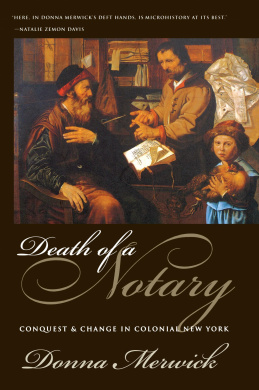
You’ll never find a copy, but when I read Donna Merwick’s Death of A Notary (my sort-of review here), I’d never read history written like this before. The first part is a conversational, present tense, rather speculative narrative that pieces together the small documentary fragments that refer to Janse, the Dutch-speaking notary in Albany, who commits suicide in the late 17th century, a number of years after the English have taken possession of New Amsterdam (which they renamed New York). The second part is an extended footnotes section, where every ‘invention’ in the first part is sourced and validated; every assumption is justified, and every source is credited- it’s watching the historian at work.
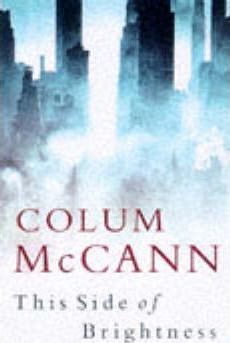
Another book that I read prior to blogging but which has stayed with me is Colum McCann’s This Side of Brightness. It starts in 1919 with the tunneling under the Hudson River, then pendulums forward to 1991 with Treefrog, a psychotic derelict living in the tunnel. There’s a real symmetry in this book- the narrative moves forward and back until the two characters become one.
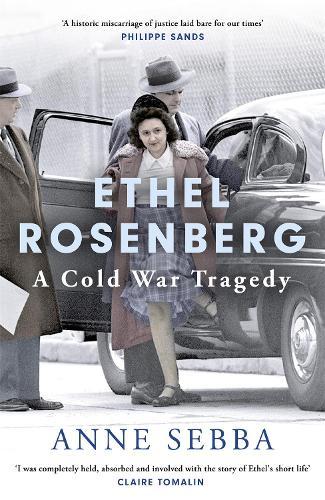
It’s odd to add a biography here – Ethel Rosenberg: A Cold War Tragedy by Anna Sebba (my review here). But both Ethel and Julius Rosenberg grew up on the Lower East Side (why is it ‘on’ and not ‘in’ the Lower East Side?) and in many ways, they had a very ‘New York’ upbringing. In my mind, they are inextricably linked with New York.
So, I might have stayed in New York, but I’ve travelled from the late 17th century to 2093, with socialites, notaries, tunnel diggers and spies.
At first, I didn’t think that I was going to like this Metropolitan Opera movie of ‘The Hours’, despite its stellar cast of Renee Fleming, Joyce DiDonato and Kelli O’Hara. I’ve read the book; I saw the Nicole Kidman film; and now the opera. With all three narrative lines running at once on the stage- something that isn’t possible with a book- at first it sounded very screechy with rather banal lines.
But by the end, the theatre was completely silent, with audience members holding their breath. It was very, very good.
And how did I even know who Joyce DiDonato even is? Through this video, that I discovered during lockdown. I’ve followed her ever since.
During January I was at the beach, largely staying by myself, and so there was lots of time for listening to podcasts! Nothing better than walking along the beach as the sun rises with my earbuds in, or sitting on the sand, staring out at the water, listening to a podcast as night falls….
Emperors of Rome. Back to the chronology and the year 69CE, best known as the year of four emperors who vied to fill the vacancy after Nero’s death. Episode XXVIII Galba starts us off. He was very aristocratic, and pretty old, having been born in 3 BCE and had been there right through the Julio-Claudian era and a friend of Livia’s. He was a general, and noted for his toughness. Being head of the army gave him immediate authority, but he quickly undercut this authority by promising a wage rise to the troops which he straight away rescinded. He only lasted seven months and wasn’t popular from the start, imposing heavy taxes, crucifying Roman citizens (a real no-no) and making punishments fit the crime. He was ambushed by his rival Otho, who mistreated his body after death- the ultimate insult. So Otho takes over in Episode XXIX Otho. He only lasted 95 days. He was only 37 and had a strong connection with Nero: in fact, Nero got Otho to marry his (i.e. Nero’s) mistress and then sent Otho to Spain. Although Nero doesn’t have a good reputation now, there were still people who liked him so the Nero connection wasn’t necessarily a drawback. He had expected to be Galba’s successor but he wasn’t, so he decided to take the emperorship anyway. There were criticisms that he was too vain, and took care of himself rather too much. He was proclaimed Emperor by his troops, but unfortunately for him, Vitellius’ troops were doing exactly the same thing in Germany. He suicided after defeat by Vitellius. Episode XXX Vitellius was the next cab off the rank. He had a good resume: military experience, governor in German but he was a disaster. There was talk that he was one of the boy loves of Tiberius, but by now he was tall and fat. He didn’t actually declare himself Caesar, and on gaining victory over Otho, he replaced the Praetorian guard with his own troops. By this time Vespasian in Judea had been acclaimed by histroops too, and after Vespasian triumphed over him, he was dragged out by Vespasian’s troops, tortured to death and thrown into the Tiber.
The Essay (BBC). After listening to the Emperors of Rome episode on Ovid, I realized that I had never really read any of his work. The Essay has a brief segment of 15-minute radio plays taken from Ovid’s Metamorphoses, acted out with rather discordant Cockney (?) accents. In each of these stories, there is a metamorphosis from one human form to another non-human form. Episode 1 Ceyx and Alcyone is about King Ceyx who needs to travel to consult the oracle, and dies in a shipwreck. Alcyone doesn’t know that he is dead, and she continues to pray to Hera for him. Hera gets a bit embarrassed and so sends Morpheus to impersonate Ceyx and tell her in a dream. She is heartbroken, ran to the beach and comes across Ceyx’s lifeless body. The gods take pity of them, and turn them into birds. In Episode 2 Pygmalion, a gifted sculptor falls in love with the sculpture of a woman he has made, and the gods grant his wish that she become real. Episode 3 Opheus and Eurydice is more familiar to me, where Eurydice is bitten by a snake on her wedding day and Orpheus travels to the underworld to get her back on condition that he not turn around while she is following him out. Episode 4 Biblis and Cannus is rather transgressive where Biblis falls in love with her brother. She confesses her love in a letter to him, and he leaves for another city. She turns into a stream, and one day he drinks from that stream. Episode 5 Philemon and Baucis are a devoted old couple who are generous to the passing Gods, and are thus saved from the Gods’ wrath with the other people in the village who refused them hospitality. In the end, they turn into trees.
In Our Time (BBC). The episode Ovid takes a literary approach, featuring Maria Wyke (Professor of Latin at University College London), Gail Trimble (Brown Fellow and Tutor in Classics at Trinity College at the University of Oxford) and Dunstan Lowe (Senior Lecturer in Latin Literature at the University of Kent). So all thoroughly British and erudite. Virgil and Horace were of an earlier generation and more anxious about the new regime than Ovid was, and his poetry was edgier as a result. The ‘Art of Love’ was a didactic poem, crossing genres, while the ‘Metamorphoses’ was an epic poem – the highest form of the genre- stitching together 250 stories into a whole. There have been criticisms of Ovid’s misogyny (his women do tend to come to a bad end, with a lot of rape) but it is probably more noticeable because he does actually include women in his stories.
Archive on Four(BBC)Ovid in Changing Times features Tom Holland (author of Rubicon etc.) in a wide-ranging episode that looks at the transgressive nature of Ovid’s writing. The emperorship of Augustus changed everything, but he pretended that there was continuity in his takeover of power. Ovid’s political message was that everything changes, no matter how much you might pretend that it doesn’t. He then goes on to talk about The Metamorphoses and the blurring of male and female roles, body modification, present-day narcissism and has a go at the demand for ‘trigger warnings’ for Ovid. Very interesting but digressive.
Russia If You’re Listening (ABC) And here I am at the end of the seventh series, recorded on December 14, 2022. How will the war against Ukraine end? can only be speculative. At this stage, it is a toss-up between Zelenskyy pulling off an unlikely and unexpected victory; Putin crushing Ukraine; a stalemate or Putin being toppled. Since then, we have had the Germans releasing the restrictions on the use of Leopard tanks – who knows how this will end.
The Forum (BBC) I’m reading Simon Sebag Montefiore’s The World (although I’m not sure whether I will persevere with it). It has, however, introduced me to many woman rulers that I had never heard of. Queen Tamar of Georgia is one of them. Queen Tamar: The Myth of a Perfect Ruler. Bridget Kendall is joined by Dr. Ekaterine Gedevanishvili, Senior Researcher at the National Centre for the History of Georgian Art in Tbilisi; Alexander Mikaberidze, Professor of History at Louisiana State University; Dr. Sandro Nikolaishvili, researcher at the University of Southern Denmark, who works on retracing connections between the Byzantine and Georgian worlds; and Donald Rayfield, Emeritus Professor of Russian and Georgian at Queen Mary, University of London. She ruled between 1184 to 1213, when the Georgian kingdom was at its height, stretching from the Caucasus through to Armenia. She was crowned twice, first while her father was alive as co-ruler, then in her own right. She was the granddaughter of David the Builder, and the times suited her as her potential enemies were distracted. She extended the kingdom, and her reign was known as the “golden age” with music, poetry and church-building. A poem written by Rostaveli ‘Knight in the Panther Skin’ was a form of homage to her, and it is still a very important work today.
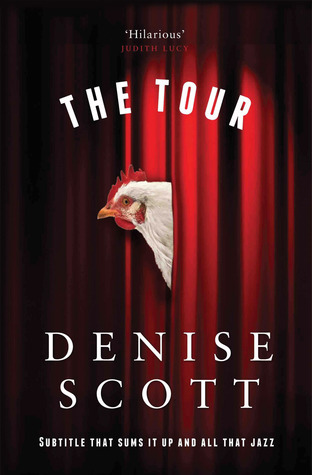
Denise Scott is one of my favourite comedians – no, she’s my FAVOURITE comedian. I enjoyed All that Happened at Number 26 and when I was looking for a book to read quickly to round out my Goodreads Challenge for 2022, this seemed a good choice. There’s quite a bit of repetition here from All that Happened at Number 26 but that didn’t stop me laughing out loud in bed and on the train and bus on a 3 hour journey.
We were both born in the same year, and she grew up in Watsonia/Greensborough which is just up the road from my own house, so many of the schools and places she mentions are familiar to me. So, too, are the experiences of facing the death of parents and the bodily indignities of aging. It was interesting to read of the frequency of sexual assault, that of course underpins the whole “me too” movement, but was almost taken for granted by women of our age. I suspect that a younger woman today would conceptualize and write about it very differently.
It’s not high literature but she’s funny and human and I wish that I were sitting beside her, just listening to her and laughing.
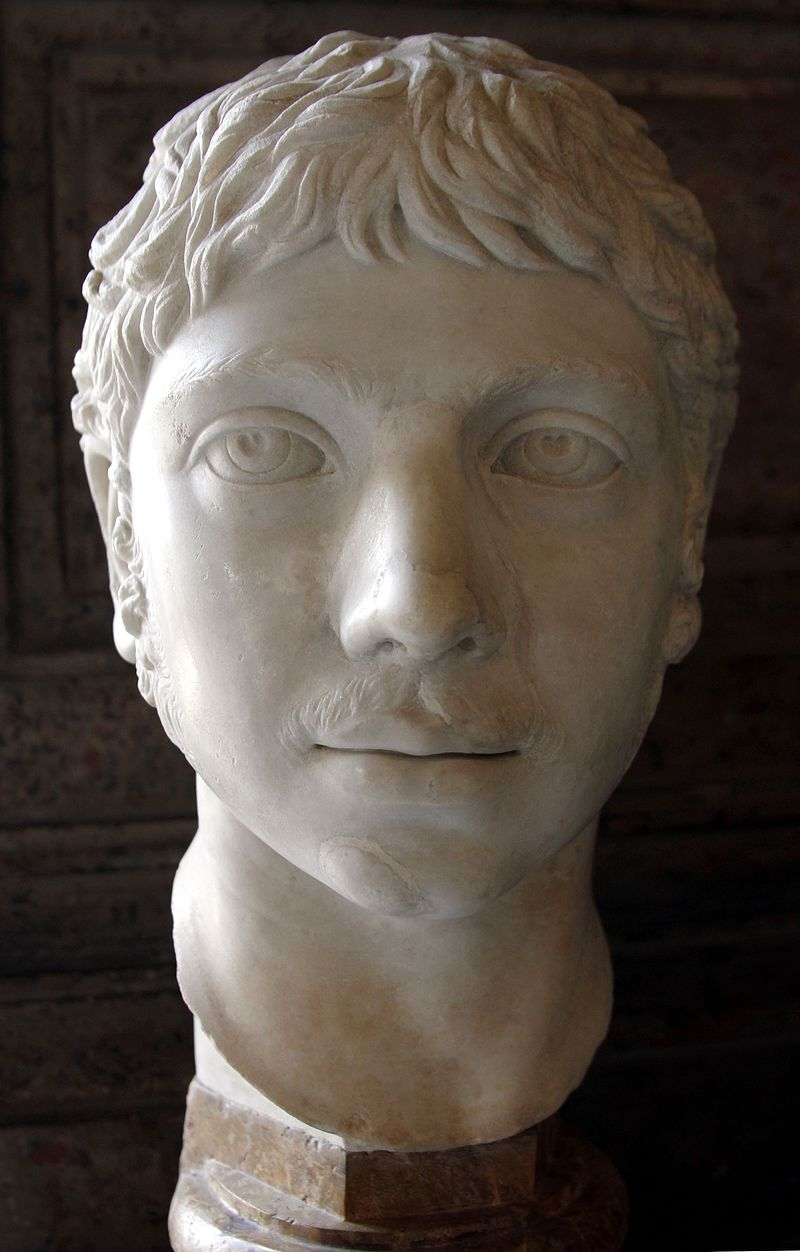
Travels Through Time218 The Mad Emperor with Harry Sidebottom. Well, there have been plenty of mad leaders over history, but Heliogabalus was right up there with them. In this episode, the producers trample on tradition as well by allowing Harry Sidebottom, historical fiction author whose most recent (non-fiction) book is The Mad Emperor to choose three separate years instead of just one. His first date is 1 May 218 CE when Heliogabalus’ grandmother sneaks him out of Emesa (modern day Homs) in Syria to start the revolt that will elevate him to the position of Emperor of Rome. He is only 14 years of age, and the empire is at the height of its power, but the wheels were starting to fall off when his predecessor Caracella was murdered by Macrinus. Heliogabalus was probably his cousin, but he portrayed himself as Caracella’s illegitimate son. The second date is Midsummer’s Day 220 when Heliogabalus holds a huge parade in Rome to demonstrate his new religion. The Romans enjoyed parades, but the PR with this one was all wrong. It was interpreted as a triumph over a defeated people as the procession headed off to the new temple that he had constructed to his god, Elagabalus. He seemed to delight in trashing convention: he married 5 times, including to a Vestal Virgin; he married men and delighted in taking the ‘lower’ position; he alienated everyone. The third scene is in March 222 when Heliogabalus is murdered on the orders of his grandmother after a controversial four-year reign. His grandmother promptly replaced him with another more tractable grandson, Alexander Severus. Sidebottom doesn’t completely see him as mad; instead he sees him as in the grip of a religious fervour.
The London Review of Books Is Alan Bennett still alive? He must be, because here he narrates his diary for 2022 On Failing to Impress the Queen. He’s been publishing his diary every year in the London Review of Books since 1983. He’ll be 89 this year, and he sounds every bit of it in this rather quotidian but elegiac reading that seems to feature a lot of funerals.
Kerning CulturesExodus was originally published in Guernica magazine and is written and read by Zahra Hankir. After the disastrous explosion in Lebanon, the author returns to a city that she had left years before, as the economy crumbled around her. She tells the story of other people who tried to immigrate as well, part of the multiple waves of immigration from the 1890s onwards, after the Civil Wars and again with the war with Israel. The economic collapse in 2019 caused another wave, with the explosion just another symptom of economic and social collapse. How awful to watch your country just fall apart through incompetence and corruption, with no political solution in sight.
In Our Time (BBC). It’s only because I’m reading Simon Sebag Montefiore’s The World that I became familiar with Hatshepsut, the second historically confirmed female Pharaoh (the first was Sobekneferu). The episode Hatshepsut features Elizabeth Frood (Associate Professor of Egyptology at the University of Oxford- and a New Zealander), Kate Spence (Lecturer in Egyptian Archaeology at the University of Cambridge) and Campbell Price (Curator of Egypt and Sudan at The Manchester Museum). It was common enough for women to rule as regents, but as Principal Wife of a Pharaoh and regent for her step-son, she declared herself full King and ruled for at least 15 years in her own right. As time went on, she was depicted as a male complete with false beard and male dress. Her step-son finally took over, and after reigning for about 20 years embarked on a project of erasing her likeness and reputation as Pharaoh, perhaps as a way of clearing the succession rather than as revenge (20 years really is a dish served cold).
You’re Dead to Me (BBC) also had an episode devoted to Hatshepsut featuring again Campbell Price from the Manchester Museum and comedian Kemah Bob- my God, what a grating voice! I don’t know how a serious historian could bear to go onto this program, but needs must, I suppose.
Emperors of Rome. Having dispatched Nero, the Emperors of Rome podcast has a little interlude here where they catch up on some biographical information about people mentioned in passing – namely Cicero, Livia, Seneca and Ovid. Episode XXV Livia looks at Augustus’ wife Livia, so memorably played by Sian Phillips in I Claudius. Livia was of impeccable patrician background, so she experienced the fall of the Republic. She and her first husband backed the wrong side in the Civil War, but she was granted amnesty. In 39BCE Octavian divorced his wife and married Livia while she was pregnant with a child from the first marriage, her husband having been ‘persuaded’ to divorce her. It seems that it was both a love match and a strategic power play on both their parts. They didn’t have any children together, which could have been grounds for divorce, but instead he adopted her children. She was very publicly visible, but there were rumours that she was responsible for a number of murders- a matter that Dr Rhiannon Evans doesn’t buy into. Certainly, her son Tiberius had mother issues. Episode XXVI Seneca the Younger is another stand-alone episode. Seneca the Younger is best known (notorious?) as the the tutor and advisor of Nero, but he was a respected stoic philosopher, a writer of tragedies, and one of the richest men in the Roman empire. He was born c. 4 BCE into a Spanish Equestrian family and his father Seneca the Elder (naturally) was a rhetorician. He didn’t get on with a number of Emperors: Caligula hated him but spared him his life because he was expected to die soon: Seneca had the last laugh here because he outlived Caligula and lived to relative old age. He also clashed with Messelina, Claudius’ wife and he was sent into exile at Corsica on rather spurious ‘adultery’ charges. He was recalled to Rome as Nero’s tutor- a rather bad advertisement for his teaching and philosophy. He was very popular as a writer during the Renaissance, and it is thought that his tragedies influenced Shakespeare’s writing. He decided to retire, but was forced to commit suicide after the Pisonian Conspiracy against Nero, even though he was probably innocent. He did so by bleeding out, but it was a difficult way to die and he advised his wife (who was also required to commit suicide) not to do it- in the end she didn’t have to suicide anyway. He was out of favour as a writer, but there has been a recent rehabilitation of his reputation. Episode XXVII Ovid started me off on a little podcast spree on Ovid. Ovid was born in 43 BCE (i.e. a year before Julius Caesar was assassinated) into a wealthy, but politically negligible, family. His wealth meant that he didn’t need patronage. He began writing while he was young, and achieved almost immediate popularity. His book ‘The Art of Love’ was seen as a subtle attack on Augustus’ marriage legislation, although there was a long time between publication and being forced into exile in Romania on the Black Sea on account of his writing. But exiled he was- and he died in exile, separated from his family. He is best known today for his work The Metamorphoses.


 The Resident Judge of Port Phillip