I hear with my little ear: Podcasts 24-30 April 2023

The Documentary (BBC World Service) Caught in Sudan’s Conflict. It all seems so pointless and unnecessary: an armed struggle by two factions within the same army. As if Sudan hasn’t been through enough already: violence, protest, dictatorship, political instability and upheaval. Sudan borders seven other countries apparently, and ripples are likely to spread to these neighbouring countries. In this episode three women from Khartoum – Dallia, Sara and Enass – share their personal situations and concerns, followed by interviews with a very young doctor. Incessant bombing and sniper fire, electrical failure, lack of food and water, unstable internet- and overwhelmingly fatigue from the stress and 24 hr bombing- what a nightmare.

Emperors of Rome Podcast Episode LXIV – Q and A III. This Q&A session dealt with:

  • What did the Romans know about China and India? (Answer: They knew a bit through trade. They knew that Alexander the Great got to north-west India, but not the subcontinent, and they knew vaguely about the Chinese through the fabled land of Scythia. The Chinese reported that a Roman envoy had visited them)
  • At what point does someone who is conquered become a slave? (Answer: if the commander of a battle wanted to, he could take everyone into slavery- or he could kill them, or he could leave them alone. Up to him)
  • Where did the colours come from for Roman garments? (Answer: the red came from plants. It was expensive, and so only rich people would wear it – pictures depicting the Roman Empire during the Renaissance were not accurate. Purple, which came from fish, was even more expensive.)
  • What did Romans celebrate? (Answer: Saturnalia, triumphs, the emperor’s birthday (when he would give presents to the people) and their own birthdays)
  • What did Romans eat? (Answer: pretty rank and disgusting things. They covered everything with garum, a fermented fish sauce. They liked disguising one food as another. For the poor people, they mainly ate grains. In fact, nearly everyone in the Ancient World was malnourished).
  • Do we know where Julius Caesar was stabbed? (Answer: no, it’s an internet thing)
  • Who is our favourite Emperor? (Dr. Rhiannon likes Hadrian. So do I)
  • How did the ancient texts get to us today? (Answer: most of them are copies of copies because paper decays unless it’s in the desert, or buried under lava)
  • How do we prepare and do our research for the podcast? (Answer: it’s not scripted but Matt does have some talking points)
  • How did the emperors see themselves compared with other emperors (Answer: they had to walk a narrow line between being a ‘king’ – because the Romans were allergic to kings- and a god – but only once they were dead. The image of an emperor, and their own concept of themselves, changed over time).

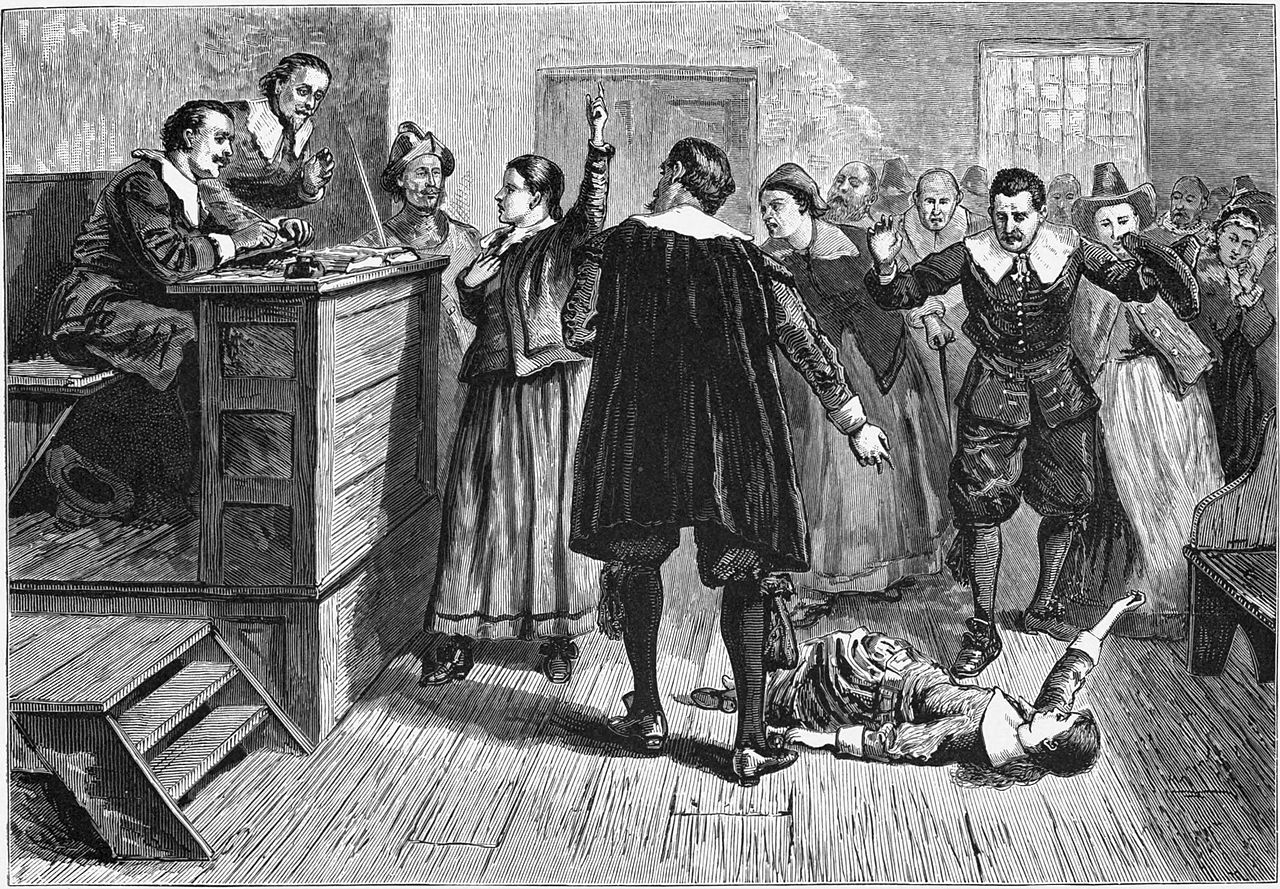
Latin American History Podcast The Conquest of Peru Part 7. Now that they had killed off Atahualpa after sitting looking at each other for 9 months, they had lost their main bargaining chip. The Spanish troops were playing cat and mouse with Quizquiz, who had been one of Atahualpa’s generals. Pizzarro had arrived during a civil war between Atahualpa and his brother Huáscar, and now that Atahualpa was dead, he had to decide which side he would throw his support behind as a way of saving his own skin. In the end he went for the south, wanting to base himself in the city of Cusco.

Source: Wikimedia.

In Our TimeReligion. NOT that I am reconciled to the idea of one of my children taking his family to Bloody Cambodia…. but. Angkor Wat was built for Suryavarman II in the 12th Century in modern-day Cambodia. The Sanskrit culture at that time stretched from Afghanistan through to Bali, in a form of colonialism without the military bit. At the time, Angkor Wat was the largest urban location in the world, with 700,000 to 900,000 people. The temple itself is four times the size of Vatican City and almost the same size as Old London at the time. It is a sculpture in its own right, constructed without mortar. It was built as a Hindu temple to Vishu, but in the 16th century the royal family became Buddhist. Unlike European cathedrals, it was built in an amazing 32 years, and the carvings were made in situ, so there was no scope for mistakes. When the French colonized, they put out the belief that the temple had been ‘lost’, but in fact, it had never been abandoned. Melvyn Bragg, who has been hosting this program for decades, sounds very old and quavery.

Hoy Hablamos. This podcast in Spanish, presented by a Spaniard (as distinct from a Latin American) goes pretty damned fast. I bought a year’s subscription, which gives you access to a transcript and some vocabulary exercises, and with the transcript I can just follow it. Fortunately, the episodes only last about 10 minutes which is my limit at such intensity, so I listen first time by myself, a second time with the transcript, then a third time without the transcript once I know what it’s about. Anyway, during February this year he did a four part series a bout the Guerra Civil Espanola (i.e. the Spanish Civil War), with one episode a week, and it’s really good. It had never occurred to me (forgive me if this is self-evident to everyone else in the world) but Franco the right-wing dictator was actually the rebel leader. I’ve listened to three episodes: Episode 1515 Antecedents and Causes; followed a week later by the Episode 1519 Parties (Bandas), then Episode 1524 Developments. The last episode is Episode 1528 Consequences. But be warned: it’s all in Spanish, and it’s fast.

Take Me to Your Leader (ABC). I’ve finally finished listening to this series, with the final Episode 8: Narendra Modi. I must confess to being rather wary of Narendra Modi and the BJP party, and I don’t particularly feel reassured after this program. It features Nilanjan Mukhopadhyay, Journalist and Author of ‘Narendra Modi: The Man, The Times‘.Dr. Bharat Barai and Dr Panna Barai, longtime friends of Modi;  Professor Ian Hall, Griffith University. Author of ‘Modi and the Reinvention of Indian Foreign Policy’.Lance Price, Author of ‘The Modi Effect‘. Modi faced international criticism over the Gujurat Riots in 2002, and several of the guests (except his friends) felt that he could be characterized as anti-Muslim, even though the Indian Supreme Court acquitted him of complicity. As with many of the leaders that Hamish Macdonald has examined in this series, there is consensus that he’s not going anywhere in a hurry.

Rear Vision (ABC) Heading up to the Voice Referendum, this is a two-parter. The first episode looks at the 1967 Referendum- a vote to count Aboriginal and Torres Strait Islander People as part of the Australian population. As the presenters point out, there had been Aboriginal activism from the 1930s onwards, but by the 1950s, pressure was building for constitutional change. Holt agreed in 1967. There were two parts to the Aboriginal question. The first was that they be counted in the census which they did not previously, presumably because censuses were used to allocate electoral boundaries and there was little prospect, when the constitution was framed, that Aboriginal people would vote. In fact, Aboriginal people did have the vote by now, but many of them did not realize it. The second was that the race powers of the Constitution, which had been written to support the White Australia Policy by legislating against Indian, Chinese and Islander worker populations, be extended to Aboriginal people so that special legislation could be implemented for them. [It’s interesting to hear ‘No’ voters saying that the Voice will be divisive because it gives ‘special’ treatment, and yet the 1967 Referendum, which had bipartisan support at the time, did exactly this quite consciously]. There was another referendum held on the same day with a question about the composition and size of Parliament, and this was far more politically contentious, and when it did not get up, newspaper headlines said that the referendum had failed. The 91% yes vote for the Aboriginal questions was more or less taken for granted. In reality, little changed immediately following the Referendum, but the clause about race-specific legislation laid the groundwork for later legislation, not all of which was positive for Indigenous people.

Part II Giving a Voice to Indigenous Australians- why has it always failed? goes through the history of different consultative committees, highlighting why the Yes proponents want it enshrined in the constitution, and not just by legislation. After 1967 an advisory committee was established with three white men. Whitlam established the elected National Aboriginal Consultative Committee, but when Fraser got in, he abolished it and established the National Aboriginal Conference. This was probably more an exercise in political fence-marking, because both bodies were elected, with about 35-40 delegates, and Fraser made only modest changes. Both were largely ignored. Hawke abolished the National Aboriginal Conference in 1985, probably because it was critical of the Hawke government’s backdown on land rights, and established ATSIC instead in 1987 after two years consultation. It was formed of 63 regional councils (later reduced to 35), and it had a board of 17 members and a chair. It had two roles: 1. to advise the government (not just the Minister) and 2. to oversee expenditure of money. When Howard got in, ATSIC, its regional councils and aboriginal organizations were heavily audited, and the accusations and ongoing criminal proceedings against the ATSIC Chair Geoff Clarke gave Howard licence to abolish ATSIC, supported by Mark Latham. Nothing replaced it. I really enjoyed both these episodes. I thought that I was relatively well-informed, but I really learned a lot.

‘Nothing Bad Ever Happens Here’ by Heather Rose

2022, 236 p.

SPOILER ALERT

I enjoy reading memoirs, but they are a strange beast. First, there are the events that the memoirist decides to include or exclude. Second, there’s the voice that the writer adopts, and here Heather Rose adopts a present-tense, unadorned voice with short sentences. And then there is the structure that the writer chooses to shape their memoir. Heather Rose’s memoir is subtitled ‘A Memoir of Loss and Discovery’ and she uses the loss/discovery dichotomy as the fulcrum on which her memoir balances. Despite the title, you have the sense that for sure something bad is going to happen here.

It starts idyllically enough. Born in the 1965, Heather Rose grows up in a new subdivision, close to the River Derwent and under the watchful shadow of Mount Wellington. Her earliest memory, as a two-and-a-half year old, is of her mother climbing a ladder to hose down the roof during the Hobart Black Tuesday fires on 7 February 1967. Their house was spared, and she continued to grow up in Hobart, ensconced in a family with loving and present grandparents. Her maternal grandfather, Grandad Burgess, built a tiny shack on the Tasman Peninsula, 120 kilometres from home, five minutes from the beach and on the shores of a tidal bay. They spent all Christmas holidays, Easter, long weekends and school holidays at the shack where they ran wild, going fishing with their Grandad, and rather intimidated by their intelligent but imposing Nan Burgess. They had even more contact with their paternal grandparents, who lived across the road from the primary school they attended. As the family lived more than a kilometre from the school, the children would go across to Nan and Pa Rose’s house for a home-cooked lunch every day, and return there after school until their mother picked them up. When Heather Rose was eleven, her grandfather died suddenly of a heart attack, and she learned that

Grief is when nothing can be done and there’s no going back to fix it, and there’s no going forward without knowing that it can never be fixed.

p.15

She is to learn even more about grief the following year. A boating tragedy sees her family rent apart after her brother Byron and Grandad Burgess drown when their fishing dinghy overturns in Lime Bay, half an hour from their beach shack. It is in the wake of this tragedy that she has her first visitations – or whatever you want to call them- from the spiritual realm. The morning before the tragedy, she dreamed that her brother was drowning, and she blamed herself for years for not rousing her parents, convincing them to do something – that it could not be fixed. On seeing her brother leave for the fishing trip, she saw a white light around him as if he were glowing; after his death she saw Byron in their house, sitting in the chair by the bookshelf, standing in the open door. But the family is broken: no-one mentions Byron’s name; her remaining brother becomes moody and volatile; her sister becomes quieter. And

A bitterness sets in between my parents. There are silences at the dinner table, arguments, fights and long cold spells in which Mum and Dad do not speak to one another. I want everyone to be happy. If only, I can make everyone happy, maybe it will be okay. Years later, when my own marriage unravels, I experience the same sense of defeat. I have failed to keep everyone happy.

p. 28

The shack is sold, her parents separate, her mother remarries and her father ‘retreats into a monkish solitude’.

She leaves Tasmania in 1984 to travel around Asia; the backpacker’s rite of passage. She catches typhoid in Java, heads into Thailand, visits opium dens in Malaysia, then becomes addicted to heroin in Thailand. It is the midst of a heroin stupor that she goes looking for death, finding it as an old door mounted in the wall of a cave, that she only has to push open. Then she hears a small voice that says “No. Not this way. Not here. Go back. Go back. Not now.” It is this experience that propels her towards a monastery in Bangkok, opening up the second pillar of her memoir: discovery.

Then follows a long section on her spiritual journey, which takes her from monasteries to Native American sweat lodges and the grueling Sun Dance ritual. Here I felt as if I should be enjoying this memoir more than I was. I am a spiritual person, and attracted to that yearning and questioning that hums under my day-to-day life. But I found myself recoiling in bemusement from the physical extremity and bizarreness of the rituals she describes (appropriates?) as part of her spiritual source. Perhaps there’s a reason why words fail in the face of spiritual experience. How to distinguish the earnestness of this spiritual search for the sublime and transcendent from an unhealthy obsession with the self and the sidelining of other people and issues?

This emphasis on the ineffable dissipates in the chapter near the end of the book titled ‘Elephant’. She has mentioned in passing her diagnosis of ankylosing spondylitis, a crippling hereditary chronic arthritis that brings flare-ups and periods of remission. She uses her hard-won skills in meditation and supplements, but also drugs, supplements and medical cannabis. After many pages describing her own spiritual journey, she becomes frustrated by the remedies, diets, rituals and meditations prescribed in books by Eckhart Tolle, Louise Erdich, the Dali Lama and a long list of other authors. She spells out a long list of forty-nine therapies she has undertaken over the last forty years, from physiotherapy to a whole shopping list of New Age rituals, and any number of food regimes: no starch, low starch, paleo, candida elimination, vegetarian, vegan, no fruit, no sugar no fats, no red meat, raw food, the fast diet. (p 214) As she gradually has fewer flare-ups, perhaps associated with age and menopause, she takes nothing for granted. This chapter, although it seems inconsistent with all the spiritual exegesis that takes up the central part of the book, almost gives the sceptical reader an escape-route: she has undergone all this mortification of the flesh but she needs to heed it, in the end.

She returns to the theme of loss in the closing chapter. Some forty or more years after Byron and Grandad Barnett’s drowning, she tracks down a copy of the coroner’s report on their deaths. Her parents had never seen, or requested, it. She resists the word ‘closure’, but she notes that reading the report eases something in both her parents, to know that there had been multiple attempts to save them. It is when she returns to swim in the bay where they died that she realizes that, for Grandad and Byron, it was what happened. But nothing bad ever happens; that every life is perfect in its own way. She closes with some learnings about memories and their place in our life that reflect, although couched in a bit of ‘woo-woo’ery, both age and experience:

There are memories to acknowledge if we are to learn to live with ourselves, events we revisit over and over, wondering who we are, and why we made those choices. There are always parts too painful to either forget or surrender, and parts that remain unknown until something or someone comes along who offers an invitation. Trauma is a form of haunting. In the darkness of life, there is an invitation for expansion…I’ve come to accept that what I perceive as myself is actually something malleable, prone to change, to shed and reconstruct, and to blossom at unlikely moments and for unlikely reasons. That seems to be the nature of being human. We become what we are story by story, piece by piece.

p, 233, 234.

My rating: A bit too hardcore spiritual and flaky for me. 7.5/10

Read because: I had read ‘Bruny’ and was interested to see what she would do with memoir.

Six degrees of separation: From ‘Hydra’ to…

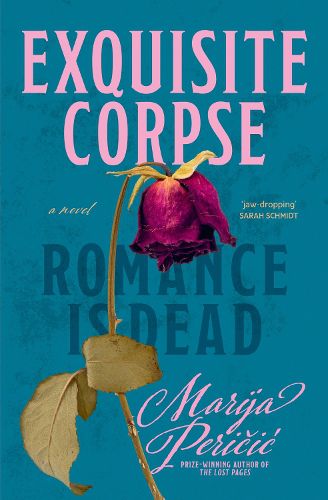
First Saturday, so that means Six Degrees of Separation Day. This is a meme hosted by Kate at BooksAreMyFavouriteandBest, where she chooses a starting title, and you link six other books that are related in whatever way you choose. You can read the instructions for the meme here. It is a truth universally acknowledged that I have never read the starting book, and I haven’t this month either. It is Hydra by Adriane Howell, which was shortlisted for the Stella Prize in 2023.

So….. Hydra. There’s Hydra the island, and hydra the freshwater organism, but there’s also Hydra of the Greek myth, the monster with nine heads. I’ll go with the latter, which made me think of David Malouf’s Ransom, where Malouf takes a couple of lines from the Iliad, where King Priam travels to recover the body of his son Hector, which is being dragged behind a chariot by the crazed Achilles.

Thinking of Greece, I jump to Gillian Bouras’ A Stranger Here. Back in the 1980s Gillian Bouras used to write columns in the Age about her life in a Greek village, where she emigrated with her husband. A Stranger Here is a novel, but I suspect that it has strong autobiographical elements, where an older woman has experienced divorce and the chains of love for her son that keep her in Europe.

With an older woman as narrator, both chastened and emboldened by experience, it reminded me of Susan Johnson’s My Hundred Lovers (I bet that you thought I would go for Johnson’s biography of Charmian Clift instead).It is written as one hundred chapters, each very short consisting rarely of more than four pages, and sometimes as little as a paragraph. The hundred lovers here (such a daunting number!) are the spark between sensuousness and embodiment (in the sense of being in the body) and the whole range of a woman’s experiences.

A book with a similar title is Steven Lang’s 88 Lines about 44 Women, but the title does not refer to a countdown of lovers, but instead references a song by The Nails which I’d never heard of. There’s not 44 women it, either, just three and the main character is a washed-up rock singer, now living in a cold and isolated farmhouse in the Scottish Highlands.

Rock singers don’t come much bigger than Jimmy Barnes, although he grew up in Glasgow rather than the Scottish Highlands, before emigrating with his poor, violent family to Elizabeth in South Australia. I read Working Class Boy but I don’t seem to have blogged it, although I did see the documentary. They are both excellent.

Another boy from Scotland with a difficult childhood is in Douglas Stuart’s Shuggie Bain, although his life took on a very different trajectory than that of rock star. It’s set in Thatcher’s United Kingdom – later than Jimmy Barnes’ book- and much of it is about his relationship with his alcoholic mother and his own conflicts about his sexuality.

So, I seem to have rattled around between Greece and Scotland, between blinding sunlight and cold, dank Scotland. Next month we start with Friendaholic. Guess what: I haven’t read that either.

I hear with my little ear: Podcasts 16-23 April 2023

Emperors of Rome Podcast Episode LXII – Juvenal deals with the poet Juvenal. We don’t really know much about him, but he probably wrote between 96- 127 CE. He was the last and the greatest of the Roman satirical poets. He went out of fashion, but had a bit of a comeback in the English satirical tradition when Samuel Johnson became a big fan. Roman satire was written in hexameter meter, like the epics, and in a way they were a bit of a take-off of the epic tradition. His satires were very metropolitan, with their focus on the city of Rome. Juvenal was aware of the dangers of writing about current emperors, so he saved his venom for Nero and Domitian who were safely dead. There’s always a tension in writing satire: its observations about society need to be realistic enough to be recognizable, but they also need to be clearly satirical. Episode LXIII – Women Poets. Well, so far we’ve been doing all these men poets and writers and satirists- but what about the women? We have pictures of women writing, but little actual writing done by women exists. There were two women writers called Sulpicia, although the second one may have adopted the name as a pseudonym. The first lived in Augustan times and wrote elegiac (i.e. love) poems from a woman’s point of view. The second Sulpicia was mentioned by Martial as a poet. We have lists that include women orators, but none of their work. Then there are inscriptions written by women, as in the Column of Memnon where Julia Balbilla and Caecilia Trebulla both left poetic inscriptions. Not a lot, really.

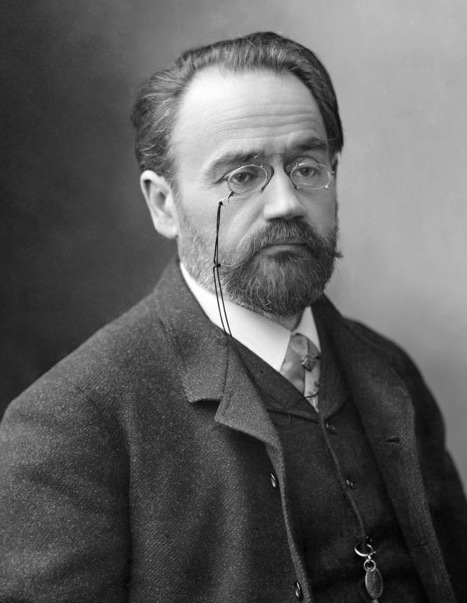
By George Cruikshank (27 September 1792 – 1 February 1878) – The Public Domain Review, Public Domain, https://commons.wikimedia.org/w/index.php?curid=1075926

History this Week The Tragic Life of London’s Favourite Clown tells the story of Joseph Grimaldi, who gave his last performance on the 17 March 1828 at the Sadler Wells theatre. He exemplified the comic/tragic nature of the clown. His father, ‘Senor’ was a famous clown, who started his son working at the age of three. It was Joseph Grimaldi who invented the white clown make-up, the floppy clothes and the ‘drunk’ routine. But he had a tragic life: his first wife died in childbirth, his son died, and he and his second wife were so unhappy that they devised a joint suicide pact, which was unsuccessful. The guests on this episode are Andrew McConnell Stott, author of The Pantomime Life of Joseph Grimaldi: Laughter, Madness and the Story of Britain’s Greatest Comedian, and Naomi Shafer, Executive Director of Clowns Without Borders USA.

Travels Through Time A Year of Great Promise 1480 Finally the Wars of the Roses were over, the plague had abated, and 1480 dawned as a year of promise. This episode features Nicolas Orme, who is a self-described ‘mosaic’ historian, who gathers his information about phenomena hiding in plain sight. His most recent book is Tudor Children, and he starts off talking about concepts of childhood in Tudor Times. Generally, 0-7 was seen as infancy; 7-14 as childhood; 14-21 as adolescence and 28 onwards as adult- quite late really, considering the short life span. He then goes on to talk about 1480. His first scene is William Caxton’s Printing Shop where, reflecting the fall from favour of French, 80% of his books were printed in English. His second scene is Oxford, where William Waynflete is opening his new grammar school, Magdalen College School.It taught classical Latin, which was seen as a unifying language force in Europe, and was the first school to use textbooks. The third scene is Bristol. William Worcester is measuring and describing the streets of the city: the first ever historical survey of an English town. He was a retired polymath, and he returned to his childhood city of Bristol, measuring the streets in what was a forerunner of later geographical surveys. In the meantime, his sister’s nephew was leaving the port of Bristol to look for ‘Brazil’- at that time, still just a fable, in a year that was on the cusp of being the Age of the Great Explorers.

Take Me To Your Leader (ABC) I should have listened to this earlier, as by now Episode 7 Sanna Marin is about an ex-Leader, having lost the leadership in the recent Finnish elections. The episode features Laura Liswood, (Secretary General of the Council of Women World Leaders) Salla Vuorikoski, (Finnish Journalist for Helsingin Sanomat and political commentator) and Herve Lemahieu, Director of Research, Lowy Institute. I hadn’t heard of the Council of Women World Leaders, which has 89 former and present prime ministers and presidents as its members. Liswood mentions the “crumbling cliff of women’s leadership” when women are only appointed after all hope is lost, but this wasn’t the case in Finland where the requirement of 40% of all cabinet positions to be allocated to each gender means that there is an ongoing stream of potential women leaders. Nonetheless, Sanna Marin copped flack for dancing at a nightclub, and for working as a checkout worker (‘chick’) in a supermarket, in comparison with Rishi Sunak, who uses his experience of waiting in an Indian restaurant as a badge of pride. Good on Jacinda Adern for slapping down the journalist who asked if she and Sanna they met together because they were both young, instead of because they were both leaders of their country.

A History of the Inca. Episode 5 deals with Los Nasca (in Spanish) who I only knew because of the Nasca lines (and isn’t there a car race of that name too? Oh. It has an ‘R’ at the end). It’s available in English here. I’m a little tempted to listen to the English episode as well, because I’m not sure if I understood the Spanish one completely. The episode talks about their ceramics and depictions of the Anthropomorphic Being (AMB) combining elements of animals like cats and monkeys, whales and plants. There’s some exploration of the ideas put forward to explain the Nasca lines from the God-type theories, to water channels, to ritual dance (which this program seems to favour). And then there’s the trophy heads, which have a range of explanations too- literally trophies from defeated foes, or perhaps fertility ritual objects. The site has a link to a story map (in English) which has some good images and explanations.

New Books Network. I keep my eye on the Australian and New Zealand books, and this time Elizabeth Elbourne’s Empire Kinship and Violence. I had come across Elizabeth Elbourne before, and it didn’t occur to me that she was Canadian. In her book Empire Kinship and Violence she looks at three families, the the Haudenosaunee Brants of northeastern North America from the American Revolution to exile in Canada; the Bannisters, a British family of colonial administrators, whistleblowers and entrepreneurs who operated across Australia, Canada and southern Africa; and the Buxtons, a family of British abolitionists. I guess that it falls under the ‘Australian and New Zealand’ label because of her treatment of Saxe Bannister, the first Attorney-General of NSW, who clashed with Governor Darling, and who participated in a duel with newspaper editor Robert Wardell. She chooses the time frame 1770-1842 so that she can start with the American War of Independence, and end with Buxton’s unsuccessful Niger Expedition. I like her approach. The book is available as an e-book from SLV (just as well, because the book costs $170. Cambridge University Press books are exorbitant. I can only imagine that people publish with them for the prestige, because few individual readers would buy them, only libraries)

‘A White Hot Flame: Mary Montgomerie Bennett, author, educator, activist for indigenous justice’ by Sue Taffe

2018, 468 p.

“What’s with all the Mary Montgomerie Bennett?” you might be asking yourself, as my other recent post dealt with Alison Holland’s book Just Relations: The Story of Mary Bennett’s Crusade for Aboriginal Rights. Well, March being Women’s History Month, I often volunteer to give the talk during March at my small Melbourne Unitarian Universalist Fellowship group as an opportunity for myself to research a woman whose ideals and values propelled her into activism. In this year of the Voice to Parliament referendum, and perturbed by the splintering of opinion amongst ‘progressives’ and the hardening of attitudes on the right, and stung by criticisms by some among the Blak Sovereignty movement of non-indigenous people acting as ‘white saviours’ I wanted to look at a woman who had been involved with aboriginal activism as a non-indigenous person (as I am). Hence my reading of two books in close succession about Mary Montgomerie Bennett. You can read my talk here.

In many ways I wish that I had read this book first. Although it was published later than Holland’s book, its approach is much more readable and more focussed on biography rather than political ideas. Fundamental to Bennett’s work, she argues, is the conflict and dissonance between her hagiography of her pastoralist father and romanticization of the relationship between blacks and whites on the family station ‘Lammermoor’, and the reality of the impact of government policy on aboriginal lives which she fought all her adult life to challenge.

Perhaps it’s my own leaning towards biography, but I felt as if I had a much fuller picture of Bennett (or Mimi Christison as her maiden name was) through Taffe’s emphasis on her childhood influences and adult experiences, rather than ideas. There are many paradoxes in her life: her emphasis on family in Aboriginal culture and yet her own fairly sterile family life once her much-adored father had died; her entirely correct assertion of the centrality of land to Aboriginal identity and yet her own rootlessness (the amount of travelling that this pre-air-travel family undertook is amazing) and her deep devotion to the Wongatha people of the goldfields of Western Australia and yet lack of action for the Dalleburra of northern Queensland on whose land Lammermoor stood (perhaps out of a feeling of guilt?) Taffe has relied heavily on family correspondence to give a fuller picture of Bennett/Christison’s childhood and London life, and on correspondence with fellow activists both overseas and interstate as she became increasingly critical of government policy. It was much of this correspondence that was seized after Bennett’s death, but Taffe has a more benign explanation than that suggested by Holland.

After an introduction, Taffe’s book is arranged around four main sections, ending with an epilogue:

Introduction

PARENTS AND CHILDREN

  • Ch. 1 Parents: A pioneer Scots pastoralist and a London artist
  • Ch. 2 Mimi’s Childhood

FROM AUTHOR TO ACTIVIST

  • Ch. 3 Mimi Christison: Art student and young English lady
  • Ch. 4 Christison of Lammermoor: Romance burdened by reality
  • Ch. 5 M.M. Bennett: Emerging activist

THE EASTERN GOLDFIELDS OF WESTERN AUSTRALIA

  • Ch. 6 Learning about Western Australia: ‘My eyes open and my mouth shut’
  • Ch. 7 Mrs Bennett, Teacher: Mount Margaret Mission
  • Ch. 8 Commissioner Moseley and Chief Protector Neville
  • Ch. 9 Disillusionment

BELONGING, IDENTITY, COMMITMENT

  • Ch. 10 Dora and Gladys: Wartime London and a return to Australia
  • Ch. 11 Families: Peter Pontara and Human Rights for Aborigines
  • Ch. 12 The Wongatha people of Kalgoorlie
  • Ch. 13 Final days

Epilogue

Perhaps it was the ease of reading, or perhaps Taffe’s emphasis on people, but I came away with a much clearer view of the sheer bastardry of Chief Protector Neville’s ‘absorption’ policy than I had gleaned from Holland’s book- and hence her call for justice as much as ‘rights’. The two books cover the same material (naturally) but I was attracted more to the biographical than political/philosophical approach. They complement each other, but I’d certainly read Taffe’s book first.

My rating: 8.5

Sourced from: e-book borrowed from State Library of Victoria.

‘Just Relations: The Story of Mary Bennett’s Crusade for Aboriginal Rights’ by Alison Holland

2015, 382 p. plus notes

Books are a bit like buses: there can be nothing for a long time, and then two arrive together. This book Just Relations was published in 2015 and three years later Sue Taffe’s A White Hot Flame was published, both of them dealing with Mary Montgomerie Bennett, aboriginal activist (1881-1961) active from the 1920s through to her death in 1961.

Mary Montgomerie Bennett was a most unlikely activist. She was born in London, the daughter of a Queensland pastoralist and an East End actress mother and she spent most of her early life in England, her way eased by the wealth generated by the Queensland holding ‘Lammermoor’, near Townsville and Bowen. She lived in Australia between for the first six years of her life, but not on the station but instead in Stanthorpe and Tenterfield, Sydney and Hobart. She returned to England with her mother for another five years, before returning to Australia again for a further five years. This time, she would spend vacations between the ages of 12 and 17 with her father on Lammermoor, returning again to sell the property with her father in 1910. Yet Lammermoor, and her idealized view of her father’s own interaction with the Dalleburra people whose land it was, shaped her writing and politics throughout her adult life.

While in London, she became involved with the London-based Anti-Slavery and Aborigines Protection Society and was also confronted in her views by the outspoken Aboriginal activist Anthony Martin Fernando, who stood outside Australia House with skeletons pinned to his coat to protest the treatment of Indigenous people in Western Australia and Australia generally. After her husband’s death she travelled to Australia in 1932 and began working on Mount Margaret Mission, near Kalgoorlie, as a teacher. She continued her lobbying work, both in London and in Australia. She particularly fought against the Western Australian Aboriginal protector A.O. Neville whose blatant policy of ‘absorption’ and ‘die out’ was adopted by other state governments, to be replaced after WWII by ‘assimilation’, which continued the policy of child removal. Over time, she shifted her emphasis and political allegiances from humanitarianism to human rights, and from feminists to activists and internationalists.

Alison Holland’s Just Relations: The Story of Mary Bennett’s Crusade for Aboriginal Rights is a fairly academic book that examines her connections with various networks and lobbyists over time, as Barnett’s emphasis shifted from humanitarianism as a political project, to human rights as an international campaign. Holland contextualises her discussion of Mary Bennett’s ideas within Michael Barnett’s discussion of this philosophical shift from humanitarianism to human rights in his Empire of Humanity: A History of Humanitarianism (2011). This emphasizes the international context of Bennett’s work as she developed networks with other people working in the political space. Although originally working within the ‘missionary’ mode, with an emphasis on education and the rights of aboriginal mothers, near the end of her life she joined with other political indigenous and non-indigenous activists, especially from the southern states, working to raise the profile of government policies and their abnegation of human rights, an increasingly potent international idea. This narrative is very much a political one, as was Bennett’s own writing, and it ranges across international, state and national levels. It was very much a crusade in writing and discourse mode, as she collected evidence, wrote submissions, appeared before commissions, maintained correspondence and wrote articles. Anthony Martin Fernando may have had his coat with toy skeletons: she had her files and her pen.

The book starts with a discussion of dissent at both imperial and Australian levels (with an emphasis on the former), then moves to a more chronological survey of Bennett’s life and the change in her emphasis over time. The chapters are

  • Introduction
  • Chapter 1 Contextualizing Dissent: Humanitarians and the Aboriginal Problem
  • Chapter 2 Defining a Reform Agenda: Mary Bennett and the Humanitarian Moment
  • Chapter 3 Freeing Women: Righting the Wrongs Done to Aboriginal Women
  • Chapter 4 Domestic Rules: Ignoring the Rights of Mothers
  • Chapter 5: Mt Margaret: Promoting Adaptable Education
  • Chapter 6: An Inhumane Dictatorship: Challenging Policy in Western Australia
  • Chapter 7 Hunt and Die: Saving the Race from Extinction
  • Chapter 8 Defending Fathers and Sons: Human Rights for Australian Aborigines
  • Chapter 9 Demanding Justice and Freedom: Critiquing Assimilation
  • Chapter 10 At War with Evil: Dying in the Fight
  • Conclusion
  • Epilogue

Holland starts her book with the rather startling scenario of Bennett’s papers being confiscated by government officials after her death in 1961, highlighting the government’s discomfort with her life-long and increasingly internationalist activism. She returns to this scene in the epilogue, and suggests that it may have been part of ASIO surveillance as part of the ‘fabric of the times’. In any event, Holland argues, by confiscating her papers (which were returned but later lost), it was a

profound personal violation because her papers were inextricably connected to Bennett’s spirit and self-definition. They were deeply rooted in her own past and family story as they documented those of others, and they were critical to her crusade because, above all else, she was a writer…There is no doubt that Bennett’s crusade was a mental fight and her pen her sword which never slept. She saw her task as the pursuit of truth and the evidence of the department as it (ab)used its power to defeat Aboriginal lives.

p. 381

This is a fairly dense book, very much embedded in the politics of activism and political groups. The list of abbreviations at the start of the book was much appreciated as her action moved increasingly into the political sphere. It is, as the subtitle denotes, the story of a campaign and issues, many of which have been vindicated and are still relevant today.

My rating: 7/10

Read because: I did a talk at the Melbourne Unitarian Universalist Fellowship about Mary Montgomerie Bennett to both celebrate Women’s History Month and in the context of current debate about the Voice Referendum

Sourced from: purchased second hand.

I hear with my little ear: Podcasts 8-15 April 2023

A History of the Inca. Why the sudden interest in the Inca? you might ask. Just before Covid, I was planning to go to Peru with my son and daughter-in-law and little granddaughter. If the ‘vid didn’t kill off the plan, the high altitude with a young child did, and we didn’t end up going (my refunded deposit bought a new washing machine instead). But now I’m reading an Isabel Allende book (in English) Inez of my Soul, and I thought that I’d go back to the Inca podcasts again. Anyway, Episodio 3: Los Moche (in Spanish) or Episode 3 The Moche deals with the Moche society, one of the four that preceded the Incas until about 700-800 CE. I had no idea they existed. Here’s a short travel video about them (in English)– check out The Lord of Sipan- a discovery as jaw-dropping as the discovery of Tutankhamen .

Emperors of Rome Podcast Episode LIX – Martial. And there I was, thinking that I would be listening to a podcast about armies. But no, Martial was a poet, writing during the time of Domitian, Nerva and Trajan. He was famous for his epigrams, short poems that were often satirical or obscene, and the ‘sting’ often came in the last line. Matt Smith, the co-host, likens Martial to a stand-up comedian, which is probably not a bad parallel. Episode LXI – Gladiator (2000) looks at the Russell Crowe film, which I have never seen, so that made it a bit hard to follow what they were talking about. Of course, it’s a fictional film and Maximus is a fictional character, but Dr Rhiannon Evans was at pains to point out that Commodus didn’t kill Marcus Aurelius (which is the whole premise on which the film is based) – in fact, he wasn’t even there. Nor did Marcus Aurelius intend reverting to a republic, and it didn’t. Interlude – The Bronze Head of Augustus talks about the bronze head of Augustus which featured in the exhibition A History of the World in 100 Objects from the British Museum, which was on show at the National Museum of Australia in 2016- in fact, I went to it! You can see the sculpture at https://www.britishmuseum.org/collection/object/G_1911-0901-1 It’s a bit confronting, because the statue still has its inlaid eyeballs, instead of the blank holes in most statues. It was part of the publicity machine of circulating the emperor’s image throughout the empire (a bit like the Queen). It was found in the ancient city of Meroë, in what is now Sudan, buried under the steps of a temple, probably placed there as a victory trophy when the local people defeated Roman troops- they literally walked all over his head. This episode features Dr Lily Withycombe, a curator from the National Museum of Australia.

Witness History (BBC) Richard Dimbleby Describes Belsen . BBC journalist Richard Dimbleby was one of the first journalists to report on Bergen-Belsen. He filed this radio report soon after visiting Belsen, and at first the BBC mandarins were reluctant to release it because his report had not been verified by other witnesses. After they equivocated for four days, he made it clear that unless they aired it, he would never do another report for them again, and so it was broadcast. I don’t know if it’s included in this podcast, but the version I listened to (on Stitcher) had an interview with his son Jonathan, talking about his father’s interview, and then they played Richard Dimbleby’s report in full. It was not an extermination camp, instead it was a ‘holding’ came for prisoners of war, and the emphasis was on the starvation and disease amongst the 40,000 people who were imprisoned there. It’s pretty grueling listening.

The Guardian Long Read The Ciskei Experiment: A libertarian fantasy in Apartheid South Africa looks at the concept of a ‘zone’, much loved by libertarians and economic rationalists where you don’t have to worry about nasty annoying things like democracy or unions. It was promoted as a South African Switzerland, but in reality it was a cluster of sweatshops, especially in the textile industry, where South Africans were no longer citizens of South Africa, but instead of the ‘Bantustan’ Ciskei, nominally an independent country. For all the talk of ‘small government’, it was heavily reliant on the government to subsidize the industries that set up there. Rather soberingly, the episode points out that there are more ‘economic zones’ now than there were in the 1980s, and that they keep being championed as the powerhouse of economic growth.

Radio Ambulante Me autodeclara Negra is a podcast in Spanish, but if you click on the link it will take you to the Radio Ambulante website where you can find a transcript in English. During Dilma Rouseff’s presidency of Brazil, she established a system where universities would set aside quotas for black and indigenous applicants. Lindinês de Jesus Sousa applied unsuccessfully, and it was only when she looked closer that she found that many of these quotas were occupied by white students pretending to be black. As a result of her challenging the process, a board was set up to test applicants using physical characteristics- hair, skin, lips etc. It seemed to be purely appearance-based, without the ‘community acceptance’ criteria that applies in Australia, where I suspect a scheme based on physical distinctions would be much more problematic. Interesting and rather confronting.

Latin American History Podcast The Conquest of Peru Part 6. This episode started off with cheering and tooting horns to celebrate Argentina’s victory in the World Cup – not quite what I was expecting! So there are Atahualpa and Pizarro sitting there in in Cajamarca looking at each other after the Spanish troops defeated the Inca and Atahualpa had been taken captive. Atahualpa was still worried about his half-brother Huáscar, who he had defeated in the Civil War. He might pop up again, thus rendering Atahualpa irrelevant. So he suggested that he would pay a huge ransom in gold, to be brought in over the next seven months, and he suggested that they all go to Cusco, which was a Huáscar stronghold, to collect it. Pizarro wouldn’t come at that, so Inca and Spaniard troops went off to Cusco, which they looted from Huáscar’s supporters. The Spanish had no appreciation of the religious significance of the gold they plundered, or of its workmanship, and they just melted it down. Meanwhile, rumours were circulating that another of Atahualpa’s half-brothers was gathering an army (he had 50 half-brothers and the rumour never specified which one) so Pizarro had Atahualpa tried for treason, and executed. Atahualpa converted to Christianity to avoid being burned to death, and he was strangled instead. Meanwhile Almagro turned up, and Pizarro found himself just as threatened by his own Spanish compatriots as the Inca. Even though they were given instructions to colonize, they knew that once they reported that they had colonized an area, that would be counted as the geographical extent of their territory, and that other Spaniards would come and take the ‘unexplored’ land. So it was in their interests to keep conquering, to take as much land as they could.

‘Statements from the Soul: The Moral Case for the Uluru Statement from the Heart’ Shireen Morris and Damien Freeman (eds.)

2023, 288 p.

Although the Uluru Statement comes ‘from the heart’, it is not hard to sense its moral force. Religion does not have a monopoly on moral thinking, but this particular volume contains essays from people of faith, speaking about their moral response to the Uluru Statement and talking about the elements of their own faith that have brought them to that position.

In many ways, this is a further step from the statement issued in May 2022, the fifth anniversary of the Uluru Statement, when the leaders of Australia’s major faith communities passed a joint resolution supporting a Voice, and the referendum to bring this about. The statement said:

As leaders representing diverse religious communities, we declare our support of the Uluru Statement and its call for a First Nations Voice guaranteed by the Constitution. We endorse this reform as necessary, right and reasonable. Indigenous Australians must now be afforded their rightful place in the Australian Constitution…We call on political leaders to take immediate bipartisan action to hold a referendum on a First Nations voice.

p. 12-13

As Shireen Morris says in her introduction:

The joint resolution signified the advent of religious communities uniting to speak with one voice on this issue. The significance of the essays in this collection lies in the unique ways in which these different voices advocate. It is important to hear both the unity and diversity of their messages. They reach the same conclusion – support for a First Nations constitutional voice- but through different and illuminating paths.

p. 14

Then follows a series of essays, most about 8-10 pages in length by religious figures writing from their own religious tradition. Many of them come from multi-cultural backgrounds, which reflects the diversity of Australian society. From within Australia there is:

  • Shireen Morris, Fijian-Indian and former ALP candidate, director of the Radical Centre Reform Lab *
  • Stan Grant, Wiradjuri journalist and writer
  • Kanisha Raffel, British-born Australian Anglican bishop of Sri Lankan descent and Anglican Archbishop of Sydney
  • Peter A. Comensoli, Catholic Archbishop of Melbourne
  • Antonios Kaldas, Parish Priest of Archangel Michael and St Bishoy Coptic Orthodox Church
  • Sabah Rind, lecturer at the Centre for Aboriginal Studies at Curtin University, fourth generation descendant of a Baluch Afghan cameleer and a Badimaya-Yamatji Aboriginal woman*
  • Fiona Jose, CEO Cape York Partnership with indigenous/Torres Strait Islander/Portuguese identity whose family were Latter Day Saints (Mormons)*
  • Ajmer Singh Gill, Sihk and President of the National Sihk Council
  • Prakruthi Mysore Guraraj – Hindu *
  • Sheik Wesam Charkawi, director of Abu Hanifa Institute, NSW muslim
  • Ralph Genende, Jewish
  • Bhikkhu Sujarto, Theravada Buddhist monk
  • Russell Broadbent, Liberal MP, Christian
  • Karina Okotel, former federal Vice President of Liberal Party*

International contributions are provided by

  • Anthony Ekpo, Rome-based, Vatican
  • David Saperstein, Past President of World Union for Progressive Judaism
  • Rowan Williams, Archbishop of Canterbury.

The collection closes with a conclusion by Damien Freeman, Australia Catholic University

Among such a diverse group of writers, some draw on their own biography; others use the history of their own cultural group in Australia (e.g. connections with Muslim Makassans) while others concentrate more on the teachings and principles of their faith that bring them face-to-face with the moral questions raised by the Uluru Statement. I must confess to feeling a bit uncomfortable about Prakruthi Mysore Guraraj’s somewhat presumptuous claim to insight through the welcome offered to her by the Gunggari Nation, which did not sit well with the other contributions in the book. I found conservative Liberal Party contributor Karina Okotel’s essay rather partisan and mean-spirited, but I enjoyed Liberal MP Russell Broadbent’s contribution interweaving the Beatitudes from the New Testament tradition with the Uluru Statement.

I suppose that any book that draws on ‘major faith traditions’ will, by the nature of formal and often patriarchal religious structures, feature more men than women. But I found the representation of only five women contributors amongst the 18 essays to be very unbalanced. (I have asterisked the female contributors).

And as we head towards this referendum, I guess that it reflects the deeply-regrettable intrusion of the culture wars into something that need not necessarily be partisan. These are generally voices from the conservative side of politics, but as it turns out the question has splintered on both conservative and progressive sides.

For me, the referendum is a moral question, and an appeal to the soul just as much to the heart and head. I can see what this book is doing by appealing to religious leaders, but other groups in society have their own moral response as well. I hope that we hear more of that too.

My rating: 7/10

Sourced from: Yarra Plenty Regional Library

‘Honk if You Are Jesus’ by Peter Goldsworthy

1992, 290 P.

SPOILER ALERT

This book might have seemed far-fetched when it was published in 1992, but it doesn’t any more on a day when meatballs have been created from the DNA of long-extinct mammoths . Nor do resort-like Bible Colleges seem implausible in a post-tele-evangelist world. This book is a fairly light-hearted approach to topics like artificial insemination and DNA recovery, set on the Gold Coast in Queensland when middle-aged Dr Mara Fox, lecturer in obstetrics and authority on in-vitro fertilization is head-hunted to work in a research department attached to an American-evangelical-style Bible College. She’s not the only academic import: there is also another scientist Scanlon, who has been working on recreating long-extinct animals like dodos and thylacines. She learns that Scanlon’s work has involved scraping religious relics for possible traces of Jesus’ DNA, and she comes to learn that her reason for being attached to the Bible College was to perform some off-campus artificial insemination on the wife of the founder of the Bible College, Hollis Schultz. I think you can probably see where this is heading….

The book is fairly predictable and the ending, although ambiguous, is rather predictable too. Still, this is not high literature and I found myself willingly going along for the ride. I thought that Goldsworthy captured the studious, naive Dr Fox well, whose work had consumed her life and for whom romance just never happened.

I’m not quite sure why it’s called what it is, but no doubt it echoes those ‘Honk if You Love Jesus’ bumper stickers that used to be around (in fact, what has happened to bumper stickers? Perhaps they don’t stick on plastic…) It’s a gentle satire and enjoyable enough.

My rating: 7/10

Sourced from: my own bookshelves, but obviously purchased second hand somewhere for the princely sum of 20c. It is certainly worth more than that!

I hear with my little ear: Podcasts 1-8 April 2023

Emperors of Rome. Interlude – The Singing Colossus of Memnon. Just a little short 10 minute podcast this time about Hadrian’s visit to the Singing Colossum of Memnon, near Luxor in Egypt. Actually, there were two statues there, standing guard over Amenhotep’s memorial temple. The biggest one had a crack in it, probably caused by an earthquake, and it made a noise in the middle of the night or as the sun rose, which was said to be the statue ‘singing’. Memnon was a hero during the Trojan War, which is probably why Hadrian wanted to see it. As was custom of the day, he left his signature and Julia Balbilla, a Roman noble woman and poet who was travelling with Hadrian as part of the court, wrote a . Whilst in Thebes, touring Egypt as part of the imperial court of Hadrian, wrote three epigrams which were inscribed on the leg of one of the statues. Episode LVII – Little Soul, Little Wanderer, Little Charmer It’s probably good advice not to end up a Grumpy Old Man, because that’s how you will be remembered. Hadrian was suffering from degenerative heart disease, and took a long time to die, just as was foretold in a curse uttered against him by an erstwhile successor whom he later put to death that he would “long for death but be unable to die”. He was a testy old bugger in the last few years. He chose his former brother-in-law and his son as possible successors, then executed them; then he chose a young, sickly man who also predeceased him, and then finally chose the future Emperor Antoninus Pius, along with Lucius Ceionius Commodus (not the later Emperor Commodus- he’s a way off yet) and Marcus Annius Verus as a three-way bet. Episode LVIII – Tacitus looks at one of the most important historians of the Julio-Claudian and Flavian dynasties. We don’t know much about Tacitus himself e.g. when he was born, when he died, even his real name. The little that we do know about him came from his biography of his father-in-law Agricola, which probably only came down to us because of the connection with Britain. Tacitus himself was a consul and a senator. He wrote 5 works covering 14CE and 96CE but the most famous ones were his Histories and Annals, which drew on Senate records and oral testimonies, even though we’re missing about half of them. He was dramatic, engaging and a bit sententious. He was on the side of the Senate, and the emperors who respected the Senate.

You’re Dead To Me (BBC) The Colombian Exchange is a modern day term (invented in the 1970s) to describe the interchange of animals, food, plants, people and culture between the New World and Europe. Featuring Dr Caroline Dodds Pennock, author of On Savage Shores: How Indigenous Americans Discovered Europe and comedian Desiree Burch. In relation to animals, the Spanish introduced cattle, sheep, goats and pigs (i.e. big domestic animals) and nearly wiped out llamas. Flowing back to Europe were birds in particular and cochineal from insects (which was used for the colour red). The plants mainly went from South America to Europe, including Brazil wood and rubber tobacco (the act of smoking was described as ‘drinking smoke’), tomatoes, beans, squash, potatoes, pineapple. Instead the Europeans gave them cauliflower, wheat, rice, olives. There was an interchange of diplomats e.g. In 1544 Mayan lords visited Phillip II, bringing gifts of chocolate and feathers and taking back crosses and religious items (they wuz robbed). Pennock reminds us, too, that tens of thousands of South Americans ended up in Europe as slaves and servants.

Take Me To Your Leader (ABC) Rishi Sunak It didn’t surprise me at all that Liz Truss defeated Rishi Sunak in the first ballot after Boris Johnson. I always expected that Tory voters would prefer a woman over a man of colour when push came to shove, but that ended up being a disaster. The prominence of women and people of colour in the Conservative party never ceases to amaze me, particularly considering the dearth of both in the Labour Party, but this is the result of David Cameron’s concerted efforts to increase the representation of both. He is described as ‘Asian’ in the United Kingdom, which has a different meaning than in Australia, but both his parents actually came from Africa. He had an elite education, and his wife is very, very rich. As one of the commentators pointed out, in Britain it is now not a matter of race, but of class. He promised to calm things down, which he has, but he is quite hard-line (e.g. over Brexit) without engaging in culture wars. However, neither Johnson or Truss have gone away, so perhaps this still has some way to run. The guests were Baroness Kishwer Falkner of Margravine, British politician and member of House of Lords; Sir Craig Oliver, former British news editor and former Director of Politics and Communications for British prime minister David Cameron and George Brandis, former High Commissioner to the UK and former Australian Attorney General.

The Latin American History Podcast The Conquest of Peru Part 5 The Spanish sent their first envoy to Atahualpa, who kept him waiting. Both sides thought that they had each other’s measure, and so the vastly-outnumbered Spanish agreed to meet with Atahualpa in Cajamarca, a large square surrounded by mountains. After Pizarro read the Requerimiento, a legal document (“requirement”) drawn up in 1513, to be read before initiation of the conquest of Amerindians offering them Christianity, Atahualpa asked to see the Bible that was being brandished around. Not having ever seen a book before (let alone a Bible), he dropped it on the ground and Pizarro ordered his hidden army to attack. Six thousand Inca were killed, with no reported Spaniard deaths, and Atalhualpa was captured, thus replicating Cortez’ ‘success’ with Montezuma.

A History of the Inca I saved this to my podcast feed ages ago and haven’t really listened to it. I was excited when I found it, because it has episodes in English and in Spanish. The English version was done first, and then the presenter Nick Machinski decided to translate them into Spanish, read very clearly by Alicia Yantas. I’m about Intermediate B1 in Spanish, and I was able to understand her quite easily. Episode 1 is just a five-minute introduction, then Episodio 2 Bienvenidos a los Andes in Spanish (or Episode 2 Welcome to the Andes in English) talks about the terrain and the climate, especially the influence of El Nino and La Nina, and the development of ayllus as a way of spreading the risk of drought or flood amongst loosely linked communes. Actually I saw an ayllu (below) when I was in the Atacama desert, and I didn’t realize what it was.