‘The Invisible Hour’ by Alice Hoffman

2023, 252p.

Spoiler alert

I’ve done it again. I borrow books by Alice Hoffman, thinking that it’s Alice Walker… and it’s not. I did that with Practical Magic and I’ve done it again with The Invisible Hour. I thought from the blurb that I was borrowing a book about a young woman and her daughter breaking away from a cult, only to find that I was reading a time travel book about Nathaniel Hawthorne, author of The Scarlet Letter. Now, I’m not opposed to time travel books, but I do feel that they are a bit of a guilty pleasure and that there’s something almost adolescent about them. For me, they are plots built on a rickety foundation that can collapse quickly if I start thinking about them too much. [Having said that, I’m really enjoying Life after Life on ABCTV- more than the book, in fact].

Ivy, a sixteen-year old girl from Boston, is estranged from her family who cannot accept her pregnancy. She runs away and joins a cult in rural Massachusetts, and the leader of the cult, Joel, takes her as his wife and, although theoretically all children belong to the community, takes a particular interest in her daughter Mia. Born into the community, Mia knows no other life than this one, controlled by Joel and his rules and punishments, where members work on the apple orchards that fund the commune and are kept in ignorance of the outside world. Ivy, yearning for the world that she has left behind but too frightened to leave the community, encourages her daughter to go to the town library, located in an old building, and staffed by conscientious and sensitive librarians who, aware of the rarity of a community child coming to a library, turn a blind eye to Mia’s theft of books. There Mia comes across The Scarlet Letter by Nathaniel Hawthorne which, curiously, has an inscription to her– Mia- in the frontispiece. She steals this book too, and becomes enamoured of its author, who died in 1864. This book, and the death of her mother Ivy, emboldens her to run away and to seek the help of the librarians. She is stalked by Joel, determined to bring her back to the community and to find a paper which he believes she has stolen.

Somehow, and don’t ask me how, this book transports her back to the 1830s where she meets Nathaniel Hawthorne and falls in love with him. He has not yet written The Scarlet Letter, and she knows that Hawthorne will marry Sophia Peabody and have children, and that although suffering writer’s block at the moment, he will become a famous author. Meanwhile, she is stalked by Joel, who manages to travel through the same time portal that she does. She is aware that she needs to distance himself from Hawthorne in order for him to fulfill the life that he does have, and the menace represented by Joel insinuates itself into both her 1830s and present-day lives.

As I said, it doesn’t bear to think too hard about the logistics of all this. In many ways, the book is a paean to the power of books and reading, and parts of it are beautifully written. I haven’t travelled much in America, but I did travel to Boston and (for my sins) Salem, and I enjoyed her descriptions of them both. It’s the sort of book that would make a good, if rather lightweight film and it’s the sort of book that might attract a ‘Womens Weekly Good Read’ sticker if such things still exist.

My rating: 7/10

Sourced from: Yarra Plenty Regional Library

Movie: The Zone of Interest

I don’t know if I’ve ever seen such an unsettling movie and one where the sound plays such an important role. Right from the electronic scream in the opening moments, the sound track and small details (like the smudge of smoke against the sky) provide all the horror that you know exists. Not a great deal happens in the movie: it’s more like watching a painting or the stage in a play. Frightening. Surely it will win an Academy Award for sound, if not for other categories as well.

My rating: 5/5 stars

I hear with my little ear: Podcasts 16- 23 February 2024

Revisionist History This episode The IT Revolution creeped me out a bit and made me angry. It’s sponsored by T-mobile for Business, so it’s no surprise that his guests, two Chief Information Offices for different enterprises (one a hospital, the other a farm-machinery franchise network) talked positively about the changes that will come about from 5G. The hospital CIO lost me when she kept insisting that patients were consumers and customers, and that they all want access and self-service. Having just tried to make an appointment for a screening test and the insistence that I create a 15 character password, I was in little mood for self-service. She lauded the idea of Artificial Intelligence listening in on a consultation between specialist and patient (oops, consumer) and automatically scheduling your follow up appointments for you. Now that’s powerlessness- not only are you a cog in their machine, but it’s not even a human controlling it! Grump.

History Extra Love and Marriage in Austen’s Era This episode features Rory Muir is the author of Love and Marriage in the Age of Jane Austen (Yale University Press, 2024). He points out that there was often a large age gap between men and women when they married (largely because men had to work to get the money in order to get married) and 12-25% of English people did not marry at all. The slur of “old maid” only applied to poor people: wealthy single people had a rich, good life. Weddings were always held in the Anglican church for legal recognition, and usually before 12.00 noon followed by a wedding breakfast. It was possible to obtain a licence from the Archbishop of Canterbury that would allow you to marry at any time of the day, in whatever place. It was necessary to be 21 years old and have parents’ permission to marry, after the Banns had been read, so this caused a surge of elopements, particularly to Gretna Green over the order, where women of 12-14 years could be married. Honeymoons were usually held at a house of a friend, and it was common for a parent or friend to accompany the honeymooning couple. If the marriage was unhappy, there were few legal protections. There were only a total of 100-odd divorces in the fifty years between 1750-1800. Couples could separate, but not re-marry.

Dan Snow’s History Hit The City of Alexandria Well blow me down, the city of Alexandria is in Egypt! I always thought it was in Greece! It was founded by Alexander the Great, and it was a planned city, complete with a sewerage system and uninhabited space, located as a key node for the Eastern/Mediterranean trade. It was said to be the first city to reach a population of a million, and was known as a liberal, multicultural city, the site of the Lighthouse of Pharos and the Library of Alexandria. With the rise of Christianity and then the Islamic conquest of Egypt, it became less tolerant. The Muslims feared attack by water, so they shifted their capital inland but Alexandria remained unique in that it was IN Egypt, but not seen AS Egypt. (So perhaps me not knowing that it was in Egypt isn’t such a sin after all). Episode features Islam Issa, Professor of English at Birmingham City University and author of ‘Alexandria: The City that Changed the World’.

The Rest is History Britain in 1974: State of Emergency (Part 1) Dominic Sandbrook, one of the presenters of this podcast, has written several books about 20th century Britain, so this series of four episodes on Britain in 1974 is right up his alley. 1974 has been claimed as the worst year in post-War British history with the collapse of the social-democratic consensus, retreat from empire (albeit without any serious consequences), deindustrialization and inflation. After the failure of the Wilson Labor government, Tory Prime Minister Edward Heath took over. Despite being a Tory, he was from a humble background, but he himself was spoiled as a child and socially insecure, having adopted a patrician accent to hide his background. He was seen as a modernizer, in the mould of Kennedy. But he faced strikes, most particularly by the miners, who had not struck since 1926. In 1973 the Heath government adopted “Stage 3” which involved limiting pay increases unless a threshold for inflation was reached, in which case wages would go up automatically. They thought the threshold would never be reached, but it was with the OPEC Oil embargo. So for the fifth time in 3 years, the government declared a state of emergency when the coal miners went on strike, imposing a 3 day working week, no heating, no television after 10.30. Much as occurred with COVID recently, the government was blamed for the measures they took. Then the IRA bombings started on the mainland. The leader of the union movement offered Heath a ‘once-off’ offer that any rise granted to the miners would not extend to other workers (I don’t know how he could promise that) but Heath refused. Eventually he called an election at the end of February 1974.

The Daily El Salvador Decimated Gangs. But at What Cost? I’ve been horrified by the photographs of shaved, skinny, humiliated prisoners and overcrowded prisons in El Salvador, but many people in El Salvador embrace these policies for the success they have brought in eliminating the gangs that made the country unliveable. In this episode, even a mother whose son was -it seems- arrested while innocent and held incommunicado for two years still accepts that her son’s life is the cost for peace in the country. There’s a series about Bukule on Radio Ambulante that I must listen to one of these days (it’s not exactly relaxing listening to a podcast in Spanish!)

Being Roman (BBC) Rome’s Got Talent This time Mary Beard takes us to a tombstone, set high up on a wall bordering a busy street. It’s a tombstone- well, a replica really- for 11 year old Sulpicius Maximus who died soon after appearing at the Roman games of 94AD in a poetry competition in front of Emperor Domitian and 7000 other people. His parents had been slaves, and Sulpicius knew that education was his ticket to social mobility. Apparently the poem that he made up on the spot (the rules of the competition) seemed to draw on a legend from the past, but perhaps it had a message for his parents (i.e. “back off, Mum and Dad”) to which his parents were completely oblivious. The original tombstone, which today stands in a museum in a disused powerstation had been incorporated into the city walls, and was only re-discovered when the Italian Nationalists blew the walls apart in 1870, revealing the pieces of the tombstone.

‘Yeah Nah’ by William McInnes

2023, 320 p

Well named, because this is exactly how I felt about this book. Yeah, I like to listen to William McInnes, who tells anecdotes so well in his mellow, very Australian voice. I could listen to him for hours, but when I think about it, it’s the sort of listening you do in the car, or when working around the house, when you’re not particularly paying attention. 

And so Nah, my reading time is so limited, I’m not going to live forever, and there are so many other books that I could be reading instead. I gave it 100 pages, and then decided Yeah Nah. It was too much like listening to someone rabbitting on without getting anywhere. Might be worth looking for an audiobook version, if he was narrating it.

My rating: Did not finish

Sourced from: Yarra Plenty Regional Library

Six degrees of separation: From Tom Lake to…

First Saturday, so it’s Six Degrees of Separation day, hosted by Kate at BooksAreMyFavouriteandBest. She chooses the starting book – in this case, Tom Lake by Ann Patchett- and participants think of six titles that they associate, springing from that original book.

Although I have read several Ann Patchett books, I haven’t read Tom Lake, but that’s par for the course because I almost never have read the books with which she starts her chain. This time I’m going completely by the title of the book, jumping from one word in the title to its use in the next title in the chain. I confess to having to resort to the sub-title at times, but it’s still on the front cover! So…Tom Lake…

Blue Lake by David Sornig is subtitled ‘Finding Dudley Flats and the West Melbourne Swamp’ and it deservedly won the Judges’ Special Prize in the Victorian Community History Awards in 2019. Sornig describes himself a writer and a psychogeographer, not a historian, but this is beautifully written history that starts with Blue Lake, known variously as Batman’s Swamp, Batman’s Lagoon, the North Melbourne or West Melbourne swamp, now a vast construction site. The narrative shifts back and forward as the narrator walks – literally – what he called ‘the Zone’, while he also delves archives, sifts newspapers, follows up family history links. (Read my review here)

Night Blue by Angela O’Keeffe is about Jackson Pollock’s ‘Blue Poles’ painting. Presented in three parts, Parts I and III are told by Blue Poles the painting itself as narrator- something that requires the reader to suspend disbelief and cynicism. It is, as Yes Minister would say, a “courageous” narrative decision. Part II is told by Alyssa, an academic art historian, who many years earlier had done some conservation work on Blue Poles. I must admit that I found this second part of the book rather unsatisfactory, although it did work as vehicle by which the author could work in the factual information about the painting. (Read my review here)

Our Souls at Night by Kent Haruf is a simple, affirming, grown-up book and an absolute gem! It’s only 179 broadly spaced pages long, but it’s gentle and wise and sad and when I finished it too late into the night, I sat in bed and cried. (Read my review here).

Statements from the Soul: The Moral Case for the Uluru Statement edited by Shireen Morris and Damien Freeman. Although the Uluru Statement comes ‘from the heart’, it is not hard to sense its moral force. Religion does not have a monopoly on moral thinking, but this particular volume contains essays from people of faith, speaking about their moral response to the Uluru Statement and talking about the elements of their own faith that have brought them to that position. I am heart-broken that moral force was not enough. (Read my review here).

Return to Uluru by Mark McKenna explores the shooting of Anangu man Yokununna in a cave nestling within Uluru by Northern Territory policeman Bill McKinnon back in 1934. I sometimes bridle at the historian-as-detective trope that is used to pump up the narrative in order to make a history more ‘saleable’, but here it is absolutely justified. Coming to a case some 80 years later, and in a world where the politics of indigenous history are changing but still contested, McKenna tracks down some interesting leads and sources, some of which make him reflect on the sheer, remorseless plunder of indigenous country, others which challenge the ethics of doing history. (Read my review here)

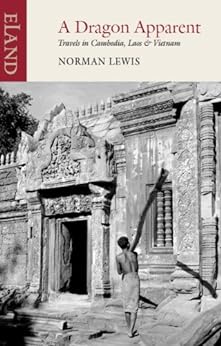
Australian writer Christopher Koch makes a return, too, in his book The Many Coloured Land: Return to Ireland. As a reader, I have little red flags that pop up when authors do particular things. I must confess that when the book started with family history, I inwardly groaned. Family history, while fascinating to the descendant, can be rather eye-glazing for other people, unless it’s contextualized and the author has convinced you that it’s going to be worth your while. Nor do I enjoy descriptions of food, and I don’t really care what people look like. This book violated all of these no-go zones at times. Nonetheless, I really enjoyed it. It’s a beautifully written plaiting-together of historic research, family history, travel narrative and memoir. (Read my review here).

I seem to have travelled all over the place in my chain: West Melbourne, Canberra, a small town in Colorado, Uluru and finally Ireland.

‘The Postcard’ by Anne Berest

Translated from the French by Tina Kover

2023, 480 p.

This book is an autofictional telling of the virtual extermination of a Jewish family by the Vichy regime. It stands almost as a companion piece to Irene Nemirovsky’s Suite Francaise and indeed, Nemirovsky appears as a shadow character in this book. For me, it is a strong story betrayed by some lacklustre telling of the frame story.

Expectant mother, Anne, is fascinated by a postcard that is delivered to her mother’s family home in Paris in 2003. On the front is a photo of the Opera Garnier in Paris. On the back written in an awkward hand are the names of the author’s great-grandparents and their children, all of whom had died in concentration camps. Given that court cases were underway over reparations for Nazi confiscations, was this an anti-Semitic taunt? Was there someone who knew more of the family history than the family did itself? Why was it sent?

And so, framed as some sort of detective story/ researcher-as-hero search, Anne turns to her mother who has herself been undertaking her family history research for years before the arrival of this postcard. Her mother co-operates to a point, but then withdraws once it gets close to her own part of the family history, leaving Anne to continue the search alone.

The novel (at least, it describes itself as ‘fiction’ on the copyright page) alternates between the current-day search and the findings of that search. I have no problem at all with Berest’s telling of her great-grandparents’ and grandparents’ story. She captures particularly well the gradual tightening of the Nuremberg Laws and stripping away of rights, wealth and independence described so well in Saul Friedlander’s Nazi Germany and the Jews. Ephraim and Emma, Anna’s great-grandparents had already fled once, from Moscow to Latvia, and then had moved briefly to join Ephraim’s parents in Palestine, before returning to Paris where Ephraim sought ceaselessly to obtain French citizenship for himself and his family. He did not succeed, but in any event it would not have saved the family: although at first directed against ‘foreign Jews’ the racial laws against Jews would have trumped any citizenship claims anyway. Living away from Paris, the family seems to be existing in a summer bubble, until all of a sudden the Nuremberg laws come right to their door. The family is separated, with two children sent off on the pretext that they were going to work, the parents left to desperately search for them, and one married daughter, Myriam, sent away by her father to avoid deportation as well. The story follows Myriam, who is the only one to survive as she lives in isolated places and joins the resistance. But this is not a ‘derring-do’ resistance type story: her activities are spasmodic and often in abeyance. Her marriage, which in many ways was her salvation, takes her to strange places and experiences that she would never have anticipated. It is Myriam who haunts the Hotel Lutetia, where prisoners released from the camps are sent, searching for the family that she will never find.

So strong was the Myriam story that the frame story seemed insipid and banal in comparison. Heavily conversation-based, I found myself resenting when it intruded on the main narrative, and I wished that the narrator and her mother would just get out of the way. One part that was interesting was the modern-day Jewish parents’ outraged response to anti-antisemitism experienced by the narrator’s daughter at school, and the discussion of inter-generational trauma. But for me, this just distracted from the main story. After all, does the world really need another family history as quest novel? I ask myself. It has been done over and over and over again.

So, I have mixed feelings about the book. The story of Miriam and the loss of her family was excellent: the frame story (which may well have been true) less so.

My rating: 8/10 (high because of my regard for Miriam’s story)

Sourced from: Yarra Plenty Regional Library

I hear with my little ear: Podcasts 8-15 February 2024.

Emperors of Rome Episode CIII Old Age in the Roman World. Professor Tim Parkin (Elizabeth and James Tatoulis Chair of Classics, University of Melbourne) is so careful to point out that the sources deal only with wealthy Roman men, that I don’t know that I learned much here. It’s hard to say what ‘old age’ was: people lived into their 60s and 70s in Rome, and people and headstones often exaggerated people’s age. There was variation in perceptions of old age across the Empire: in North Africa, for example, there was more openness about peoples’ ages on their tombstones. He talks about ideas of medicine at the time, with the four humours, and it was generally seen that during old age, the humours ‘dried up’. Tell me about it.

History Extra Chivalry: Everything You Wanted to Know. Featuring medievalist Lydia Zeldenrust, this episode talks about the changing perception of chivalry from its origins in the post-Carolingian world – about the 11th or 12th century as a way of knights treating other knights; through the Crusades; its adoption during Tudor and Elizabethan times (thinking of Henry VIII’s Cloth of God knightly games) and then its 19th century manifestation as manners. There is always an interplay between the warrior-reality and literature. The idea of the strong protecting the weak was not extended to peasants, and it does have a dark side, sliding at times into misogyny (women are there for kidnapping and rescuing) and colonialism (the Spanish Conquistadors drew on the language and imagery of chivalry to justify their actions).

New York Times A Guilty Verdict for a Mass Shooter’s Mother This was fantastic. In Michigan, Jennifer Crumbley, the mother of a 16 year old mass shooter at his school, was found guilty of criminal manslaughter for the shooting. She didn’t do the shooting: her son did. However, she purchased the gun for her son and took him to a shooting range (legally); she did not take him out of school when she and her husband were called in because her son had drawn pictures of shooting and guns on his geometry paper (but then again, none of the other adults in the room, who were all under mandatory reporting rules, allowed him to stay at school) and she did not seem to take seriously strange messages texted to her by her son (which she says have been taken out of context). The reporter on the story, Lisa Miller (no, not ‘our’ Lisa Millar) obviously has concerns about the case, which legal experts said was unlikely to end up with a guilty verdict- but it did. Really interesting.

I Was a Teenage Fundamentalist. So was I. This podcast, which started in 2021, is hosted by two other men who were part of the big evangelical churches during their adolescence/early adulthood, but as middle aged men, no longer attend. It’s a story-based podcast, and each episode is pretty much self-contained. I went right back to the starting episodes, where they were rather coy about their identities, referring to themselves by the letter of their first name only, but that has obviously gone by the board as their website now names them openly. Episode 1: Brian’s Conversion Story and Episode 2: Troy’s Conversion Story are just what the name says: they talk about how they came to ‘give their lives to Jesus’ – something that I had done some ten years earlier than did, but which seemed to be very much the same experience. Now in its third year, there are more episodes here than I’m likely to want to listen to (there is, after all, a sameness about them) but as an ex-fundamentalist, I find them interesting. I like that it’s Australian.

Democracy Sausage. I was always bemused by the term ‘water cooler conversation’, given that I had heard of the expression before I even knew what a water cooler was, in those days when we didn’t feel compelled to lug water bottles everywhere and got water from a tap if we were thirsty. Anyway, the recent ABC documentary Nemesis has certainly gained ‘water cooler conversation’ status among my circle of left-leaning, politically-engaged friends. In the episode Do Unto Others Emeritus Professor Paul Pickering, Dr Marija Taflaga and Professor Mark Kenny discuss the recently-completed ABC Nemesis program. Interesting to get other perspectives on it.

Things Fell Apart Season 2 Episode 3 Tonight’s the Night Comrades Continuing on with Jon Ronson’s exploration of culture war skirmishes in 2020, this episode looks at a family who were going on a short camping holiday in their converted white camperbus, only to find themselves in a small town, surrounded by heavily armed townfolk. Locals had been riled up by media reports of ‘Antifa’ plans to move out of the city centres into the countryside, and they were ready.

Movie: Anatomy of a Fall

Subscribe to continue reading

Subscribe to get access to the rest of this post and other subscriber-only content.

‘The Great Fire’ by Shirley Hazzard

2003, 314 p

I was disappointed by this book. It won the Miles Franklin and the National Book Award for Fiction in 2004, and was short-listed for the Orange Prize. So why, 150 pages in, could I not remember or care about any of the characters? why was I exhausted by her pretentious prose, re-reading sentence after sentence thinking “what on earth does THAT mean?” To deny the external and unpredictable made self-possession hardly worth the price (p. 10) or a place being differently aware in that murmurous season (p. 59), or That vulnerability should make a man strong. That there could be thought without helplessness; without that very helplessness in which their women were marooned, as if, by existing at all, one had become a victim. (p. 292). Oh mercy.

You might think from the title that this is about the Great Fire of London, but it’s not- instead the Great Fire is the conflagration of two World Wars.

The 1947 setting, in post World War II Asia, is an interesting one from an Australian perspective. The English protagonist Aldred Leith, who had sustained injuries during the war, has been dispatched to write reports on China, and then occupied Japan; while Australian Peter Exley, whom he had met during the war and rescued, is working as a war crimes lawyer after the dropping of the bomb on Hiroshima. The story traces through their progress through Japan and Hong Kong. Aldred falls in love with the 17 year old daughter of the Brigadier in charge of the army base in which he is staying. She is devoted to nursing her chronically and fatally ill brother Benedict, but she reciprocates Aldred’s feelings, and yearns to join him, especially when her parents, who disapprove of the relationship, take her to New Zealand. It was at this point that I began to be interested in the book and the characters fell into place.

The book, written in 2003, has captured well the stiff formality of language of the 1940s, and is replete with small details of clothing, setting, communication etc. The theme of Empire runs throughout, especially in the ashes of World War II which has devastated England and will wrench apart the Empire on which the sun never sets. Hazzard generally sees Australia as a parochial outpost, to which people are exiled- a reflection of her own attitudes to Australia, I suspect.

But her descriptions are so laboured and unnecessarily complex, and I felt as if I was drowning in a sea of unnecessary, pretentious words. And no Miles Franklin winner should take 150 pages to engage its reader, and even after finishing the other 150 pages, I really don’t know if it was worth the effort.

My rating: 6/10

Read because: CAE bookgroup selection.

‘This is Not a Border’ ed. Ahdaf Soueif & Omar Robert Hamilton

2017, 328 p.

The first Palestinian Festival of Literature was conducted in 2008, and this volume of writing was produced to celebrate its tenth anniversary. We in Australia take for granted that if we want to go to a writing festival in our own city, or regional area, or interstate for that matter, then there is nothing to stop us. That isn’t the case for the residents of the Gaza Strip (especially now) or the West Bank, who face checkpoints and turnstiles and outright prohibitions against travelling from one place to another. So the founders decided that if people couldn’t go to the festival, then the festival would come to them. Attracting noted Western authors, the presenters were bussed from region to region, intentionally exposing them to what the Israeli government does not want outside visitors to see, with the hope and expectation that these authors would return home and use their words – their tools of trade- to expose what is happening.

So who are some of these authors? Among others: J. M. Coetzee, Geoff Dyers, Alice Walker, Deborah Moggach, Henning Mankell, Michael Ondaatje, Michael Palin, Chinua Achebe, and China Mieville, and many other Middle Eastern writers I am not so familiar with.

Most of the contributions are only about 4 pages in length, or else single-page poems, and I must confess to feeling a bit as if I were reading a lot of “What I Did on my Trip” responses. As you might expect from writers of this calibre, they are all well written, but the length constraint (and perhaps the task itself) imposed a sameness and almost a banality in most of the short chapters. In spite of this, certain images repeated: the Allenby Bridge and Qualandia checkpoints where unseen young Israelis surveil the waiting lines through CCTV; the wire netting constructed over markets where settlers in high rise buildings throw their rubbish, urine and faeces onto the street below; the incessant tunnelling conducted by Jewish settlers (facilitated by the Israeli government) under Palestinian homes and mosques, with the risk (expectation?) that the honeycombed land will collapse completely. For me, the power of a book can be measured by how much I tell other people about it, and I have been bailing up anyone who will listen with “Hey, there’s this book I’m reading and did you know….?”

The most powerful pieces in the book for me where when the author was able to exceed the word limit, particularly China Mieville’s piece that was actually illustrated with photographs of the checkpoints, even though photography at checkpoints is prohibited. It was followed by a longer chapter by one of the current trustees of the festival, Omar Robert Hamilton who speaks of the importance of J. M. Coetzee’s short half-page contribution where, after resisting attempts to urge him to name the situation ‘apartheid’, he defines South African apartheid then describes Palestine in exactly the same words and invites us to “draw your own conclusions” (p. 35). Hamilton highlights the importance of words in describing what is happening in Palestine, resisting the neutrality of language that we use for fear of being labelled ‘anti-Semitic’.

I’m struck by the injustice and the sheer vindictiveness of small power plays against the Palestinian people, carried out over and over again, day after day. This book was published years before October 7, but it’s all of a piece. I’m so far trying to resist seeing what is happening in Gaza in binary terms, but it’s becoming harder to do so, and this book has largely contributed to this.

My rating: Hard to say. As individual stories, perhaps an 8/10 but taken as a whole, and in terms of impact on me, 9.5/10

Sourced from: Yarra Plenty Regional Library

Read because: of my distress about what is happening in Gaza