I hear with my little ear: Podcasts 14-21 March 2025

History Hit Why Isn’t Canada the 51st State? Trump thinks it should be, and in this episode Dan Snow goes through the various attempts that have been made in the past to achieve this end. When the 13 colonies rebelled, they hoped that the French colonists in North America would join them and rise up against the British. But the Catholic French were not keen to align themselves with these land-hungry Puritans and so they stuck with the devil they knew. In 1775 the first US military action was an attempt to annex Canada, and in 1812 with Britain at a low ebb after the Napoleonic Wars, they tried again. The 1812 War ended with the boundaries remaining much as they were when the war started. In 1844 President Polk, the successor and protege to Trump’s hero Andrew Jackson, wanted to take all the west coast up to Alaska as part of America’s ‘manifest destiny’. During the Civil War, the British in Canada were friendly towards the Confederates and after the Civil War Charles Sumner demanded the whole of Canada in reparations payments. Instead, the US settled for 15 million pounds and an apology. In 1911 Canadians wanted lower tariffs but big business wanted Protection, and when the Conservatives won, they wanted higher tariffs against US goods. In 1948 Newfoundland had a referendum about self government or integration with Canada, but joining the USA was not one of the options. So, although Trump’s rhetoric about making Canada the 51st state is not new, he is drawing on older sentiments like small government, tariffs and manifest destiny. I hope that Canada stands strong.

The Rest Is History Episode 230 Portugal: Football, Fado and Fascism? (Part 4) By the 1820s, Portugal had lost Brazil, and although it still had a few enclaves throughout the world, it called itself a ‘pluri-continental nation’ rather than an empire. There was a sense of stagnation and nostalgia, exemplified by saudade , a sense of longing for something that will never come again, and expressed through Fado music. There was a Republic in Portugal during WWI, but it was a disaster. Portugal supported Britain and France during WWI but it was a time of tension between the Liberals and devout Catholics. It was the time of Our Lady of Fatima, who prophesied the Russian Revolution (and gave 2 other prophesies as well, which are in the keeping of the Vatican). In 1926 after years of chaos under the Republic, there was an army coup and they called on Salazar, a professor of economics to fix their problems. A deeply conservative man who disliked modernity, he only lasted 5 days, so to keep him, the army generals kept giving him more power. By 1932 he was Prime Minister, but interestingly, never President. He did sort out the economy, and was seen as an important and useful tool by the army, landowners, the church and the conservative forces in Portuguese society. Although he copied much of the iconography of Fascism, he doesn’t fit neatly into the category of Fascist. He always served at the pleasure of the President, and although he had secret police and political prisoners, only about 50-100 prisoners died as the result of torture or assassination- bad enough, but nothing compared with the other Fascist leaders of the time. He hated both Franco and the Communists, and was benign towards the Nazis and flew the flag at half-mast when Hitler died. However, Britain was more important as a long-time ally, and so Portugal remained neutral during WWII, although its diplomats did provide visas for Jews to escape Hitler. He was a founding member of NATO as part of his anti-Communist stance, and he knew the importance of popular events and so championed football (soccer) with Portugal winning several World Cups. But he was becoming increasingly politically isolated, eventually having links only with South Africa and Rhodesia at a time when no-one else was talking to them. In 1968 he suffered a stroke from which he was not expected to recover, and so the President dismissed him and appointed another academic technocrats. But no-one told Salazar, who believed that he was still Prime Minister. He is an unsettling, ambiguous figure: not a clear ‘baddie’ but backward looking and deeply conservative in a world that had changed.

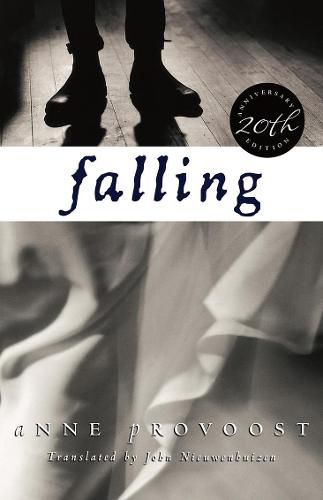
‘What I Loved’ by Siri Hustvedt

2003, 367 p.

For the first time in over 20 years, I didn’t finish the book for my CAE bookgroup. Partly, it was because I forgot that we had changed the day of our meeting, bringing it forward. But also it was because at 367 small-print pages this is a far longer, denser book than I anticipated.

The story is narrated by an elderly professor, Leo Hertzberg about his life in New York between about 1975 and 2000. It is prompted by the discovery of five letters written to his neighbour and friend, the artist Bill Wechsler by Violet, the woman who was to become Bill’s second wife. They were to become neighbours, with Bill and his first, then second, wife living upstairs with their son Mark, and Leo and his wife Erica living on the floor below with their son Matt, who was of a similar age. Marriages disintegrate under the pressure of infidelity and tragedy. Leo finds himself acting as an indulgent-uncle type figure to his friend Bill’s son Mark, who proves himself unworthy of the love and indulgence extended to him as he disappears into the rave culture of New York and comes under the influence of the menacing artist Teddy Giles.

Leo is an art historian (one of the wankiest genres around, I reckon) and Bill is an artist and so there are long- far too long- descriptions of Bill’s contemporary artwork. Violet researches hysteria, anorexia and representations of the body and identity, and this is described at length too. Indeed, there is much in this book about representation and reality, and it all became rather precious and over-intellectualized.

The book starts off fairly slowly as a domestic narrative within a New York setting, but becomes far more urgent and fast-paced- dare I say, a thriller?- in the second half of the book. It really feels like a book of two halves. Leo is a gracious, self-deprecating first-person narrator, and so it felt comfortable to be in his company. The second half of the book was compelling enough that I continued to read it, even though our book group meeting came and went, but I found the descriptions of art and the self-conscious intellectualizing of the book rather tedious.

My rating: 6.5/10

Sourced from: A left-over book from the former Council of Adult Education

Read because: it was The Ladies Who Say Oooh (ex CAE) bookgroup selection.

I hear with my little ear: Podcasts 7-14 March 2025

Thoughtcast I was preparing for my talk at the Melbourne Unitarian Universalist Fellowship about the Peabody Sisters, three 19th century Unitarian women living in Boston and Salem who mixed in Transcendentalist circles, but are mainly known as the wives of important men, rather than significant figures in their own right who were at the founding (and even prefigured) Transcendentalism. This interview conducted by Jenny Attiyeh is with Megan Marshall, the author of The Peabody Sisters: Three Women Who Ignited American Romanticism, and it gives a good flavour of the book.

The Human Subject. This rather gory podcast looks at The Prisoners Used for their Skin at Philadelphia’s Holmesburg prison (AKA ‘the Terrordome’) during the 1960s. Dermatologists at the University of Pennsylvania, led by Dr Albert Kligman, instituted a program where they would pay prisoners, the vast majority of whom were black and on remand, $1.00- $1.50 per day to subject themselves to experimentation. The prisoners were told that they were testing bubble-bath, but many of the experiments were funded by Dow Chemicals, but without their oversight. Kligman tested the effects of dioxin at concentrations 480 times the level recommended by Dow, and also experimented with depigmentation of black skin.

The Rest is History Episode 229 Portugal: Gold, Earthquakes and Brazil (Part 3) starts with the Lisbon earthquake of 1755, which destroyed 85% of the city and killed perhaps 50,000 people. Because Portugal was now under the Spanish crown, they were at war with the Dutch, and the Portuguese felt that the Spanish weren’t pulling their weight. Because of slavery in Brazil, huge wealth was pouring into Portugal. During the Napoleonic Wars, the British (with whom Portugal had always had a good relationship) gave escort to the Royal Family to Brazil, in exchange for opening Portuguese ports to British trade. (Huh. They were doing ‘deals’ back then too.) Wellington invaded Spain successfully, but withdrew in order to secure Lisbon. With the Royal Family ensconced in Brazil, it was becoming the metropole for Portugal- a strange turn of events. In 1821 the King returned to Portugal and was forced to sign the Constitution, and Brazil achieved independence.

‘Joe Cinque’s Consolation’ by Helen Garner

2004, 329 p

Near the end of her book, Helen Garner writes: “I longed to write a lament for Joe Cinque” (p.281).

And she has done so, because as she tells us many times, to keep front of mind, “Joe Cinque is dead”.

This is the third time that I have read Joe Cinque’s Consolation, and each time I see it somewhat differently.

It was published in 2004, when the term “intimate partner violence” wasn’t as common as it is today. When I read it earlier, I think that I saw it more as a deliberate murder, rather than as a manifestation of domestic or intimate partner violence. But I find myself wondering whether “intimate partner violence” which disproportionately involves a female victim, is the right description. Even though Joe Cinque and Anu Singh were intimate partners, the murder doesn’t appear to have been committed within an environment of violence or intimidation. Somehow “intimate partner violence” doesn’t do justice to the self-centredness and premeditation of Joe’s murder. Nonetheless, it something that is more visible in 2025 than it was in 2004.

When you return to a book after 20 years, you are a different reader too. I now read this book as the mother of adult children who themselves have young children. When on the news I see the stricken family of the murder victim outside the court, it seems to me to be the ultimate betrayal, and a crime that I don’t think I could forgive. How dare that person take the life of my child, and all the future that was ahead? As Garner keeps reminding us, Anu Singh and Madhavi Rao’s lives went on; they woke each morning to another day; but Joe Cinque was dead. The knowledge that Singh went on to write a PhD thesis on “Offending Women: Toward a Greater Understanding of Women’s Pathways Into and Out of Crime in Australia” is even more galling. Apparently she doesn’t write about her own case in her thesis, but it’s still all about her.

Garner’s response to Anu Singh is hostile from the start, drawing largely on the visceral dislike of some other women that develops from girlhood. There is, too, a generational aspect to it as well: an impatience with the self-centredness of ‘young people these days’. There’s an irony that it’s Helen Garner who is writing this; the same Helen Garner who wrote of her junkie friend Javo in Monkey Grip; the same Helen Garner who inhabited the world of university share-houses and parties. The Canberra Garner depicts is a meaner, edgier drug world than the inner-Melbourne 1960s drug haze of her novel, and she herself is aware that she is not the same person. Her third marriage had just broken up in 1999 when she first learned of the case, and she was living in Sydney. There is a strong element of the more mature woman here, although she finds her certainties about justice, memory and truth being shaken as she follows the case. She measures both Singh and Rao against what she thinks she would have done in the same circumstances, but finds herself unable to identify with Singh. Alongside her quickly-established empathy for and with Joe Cinque’s mother, in particular, she draws on her own moral, as distinct from legal, compass. Like Maria Cinque, Garner can scarcely believe that Singh receives an effective sentence of only four years.

I had forgotten about the Madhavi Rao case that followed Anu’s sentencing for manslaughter. She does not have the same knee-jerk reaction to her as she did to Singh- indeed, she sees her as largely invisible and pliable- but because Rao seems to be more comprehensible, that same moral compass makes Rao seem culpable because Garner can envisage what she would have done had she seen Joe Cinque lying, blue and breathing shallowly, on the bed. Yet, given that Singh has evaded the verdict of ‘murder’ (being found guilty of manslaughter instead), surely the two women’s actions are not comparable. Justice clearly cannot lie in the degree to which you can identify with the accused, and yet at gut-level Garner baulks at the clinically logical approach undertaken by Rao’s defence lawyer, Lex Lasry, that sees her acquitted of any charges.

In spite of this being my third reading of Joe Cinque’s Consolation, I found myself instantly drawn into conversation with Helen Garner. I can even see her in my mind’s eye, head cocked to one side, like a small sparrow, simultaneously morally certain and yet scrabbling to find her feet in a quicksand of competing arguments, judgements and ‘shoulds’. I want to sit beside her, to talk with her. I do find myself wondering about the title though. Consolation? Certainly, a lament for Joe Cinque; a tribute to Joe Cinque; or her own consolation for Maria Cinque? Joe Cinque is dead: he can not console, or be consoled by, anyone.

My rating: 9/10

Read because: CAE bookgroup – although it’s not CAE anymore and this is one of the ‘left-over’ CAE books.

I hear with my little ear: Podcasts 1-7 March 2025

I was so horrified by the Trump-Zelensky press conference that I spent the rest of the week listening to commentary about it, including The Rest is Politics (both UK and US editions), Fareed Zakaria on the NYT Ezra Klein Show with The Dark Heart of Trump’s Foreign Policy, Heather Cox Richardson, Ian Bremmer on GZERO, Matt Bevan on If You’re Listening, David Smith on the Guardian’s Full Story Podcast Trump v Zelenskyy and the 10 minute tirade that changed the world, and Simon Schama This is a day of massive historical importance (video)

I am very apprehensive.

‘The Bee Sting’ by Paul Murray

2023 (2024), 656 p.

Spoiler-ish

Had I been watching this on television, I would have thrown the remote at the television when the closing credits scrolled down the screen. As I read it in its a lengthy book form, I found myself beseeching Charles Dickens to come back and show how to tie up a complex story with a definite ending (send the main characters to Australia, drown them, send the car over the cliff- anything that finishes the story off!)

I had heard that this book was about a car-yard closing down, which did not seem a particularly promising premise for a book. Indeed, it is about a family-owned car-yard closing down, but it’s also about the implications on the family – Dickie, Imelda, Cass and PJ- as their financial situation tightens.

It’s set in Ireland, but it took me quite a while to shake off the sense that it was an American story instead. Certainly, there are mentions of the Magdalen convent in the middle of the town that nobody talks about, and the weather is often wet, but I still didn’t have a strong sense of its Irishness. Perhaps the car-yard, which seems a particularly American phenomenon, led me astray.

Dickie and Imelda married about 20 years ago, largely on the rebound from the death of Dickie’s brother, the local football hero Frank. Frank and Imelda had been engaged to be married, and after his death, Dickie and Imelda both sought solace from grief in each other’s arms. Dickie had long been slated to take over the family car-sales yard from his father Maurice, after completing a degree at Trinity College in Dublin. But other events had intervened, and so we find Dickie and Imelda, living in what had been the large family home on a large tract of land, deeply indebted and with the car yard in trouble. Their daughter, Cass, is in her final year of school, trying to work out her place with her friend Eileen and her own sexuality as she, too, goes to Trinity College. Their son PJ spends much of his time online, where he is being taken beyond his depth.

The story moves around, concentrating on different characters in turn, some written by a detached narrator, others told as a stream-of-consciousness where thoughts and verbal utterances are intertwined. As with all families, there are the family stories but here they are unpacked and challenged as the spotlight shifts from person to person, and through flashbacks and back-story. Each of the characters is being lured by a different way of being, and there is an underlying pessimism about the outside world with its physical and emotional violence. Sex in the book is largely sordid, either physically or emotionally, and there are many near misses as events could have taken an even more calamitous turn.

The book is fairly heavy-handed in its preaching on climate change and societal collapse, although it does play a part in the plot. It does add to the ‘going to hell in a handbasket’ vibe of the whole book.

The action speeds up at the end of the book, with increasingly short chapters told from different characters’ perspectives until the narrative is a series of short paragraphs, as all the characters converge on one spot. But what happened? I think that perhaps, there was no near-miss here.

I enjoyed the book, although particularly in the first third I felt an oppressive sense of dread and doom every time I picked it up again. Despite the underlying pessimism of the book, and the unrelieved bleakness, Murray had filled out his characters enough for you to care about them as fellow humans, with whom we share vulnerabilities and thwarted dreams. My son said that it was the best book he read last year: I wouldn’t go that far, but I could barely put it down the further into it I went. So for me, not the best, but pretty damned good.

My rating: 8.5/10

Read because: Ivanhoe Reading Circle selection- and then I couldn’t attend the meeting because of COVID!!

Sourced from: Ladyhawke Books, Ivanhoe.

Off again…

Well, I’m off to Cambodia again, with a little detour via Tasmania for about ten days, and a side trip to South Korea before heading for home again.

You can follow my travels at https://landofincreasingsunshine.wordpress.com/2025/03/21/tasmania-20-march-2025/

I hear with my little ear: Podcasts 24-28 February 2025

The Coming Storm This second series petered out with Episode 8 The Last Election, which was just basically an interview between Gabriel Gatehouse, producer Lucy Proctor and Ben Ansell, Professor of Comparative Democratic Institutions at Oxford University, in front of a live audience at the BBC’s Radio Theatre. It wasn’t really worth listening to. However, the program redeemed itself with Inauguration: A Bonus Episode where Trump’s picks for cabinet positions threw up many people that they had interviewed or come across earlier while exploring different conspiracy theories. They briefly discuss Kash Patel, but the majority of the episode is devoted to Robert Kennedy Jnr and the vast conspiracy theory he espouses that links the assassination of his uncle and father, vaccines, China, COVID and Anthony Fauci.

In the Shadows of Utopia Season 2 Episode 17 The Khmer Rouge’s New Vanguard isn’t quite as long as the very lengthy previous episode- far more manageable. Lachlan Peters returns to Cambodia, where the Workers Party of Kampuchea was working mainly through teachers at private schools. He starts with a meeting in 1960, attended by perhaps 30 people at the Phnom Penh Railway Station (I’ve been there!) where Saloth Sar, who was by now third in line for the leadership of the party, addressed the faithful with a peaceful, relevant speech. They were by now shedding the Vietnamese influence, and the students from France took a more prominent role, sidelining the veterans of the older communist struggle, who were more tolerant of Sihanouk for his anti-imperialism, and more aligned to the Vietnamese communists. The ‘old guard’ were despatched to the countryside to gain the affections of the rural peasantry. But communism was a hard sell. By 1960s Sihanouk’s father, who had taken over the throne to free Sihanouk up to stand for election, died so he put his mother in, and had himself made Head of State for life. This required a referendum, which passed with a yes vote of 99.8%. Sihanouk was popular, and getting money from China, Russia and the United States. In 1961 he relaxed the pressure internally because he was more involved with the conflict with Thailand for the first half of the year. In the second half of the year he turned his eye back to the communists, with an eye to the upcoming 1962 election. The party went into hiding, while the official Communist Party the Pracheachon were arrested. Tou Samouth, the party secretary of the clandestine party was murdered. Historians disagree whether Sihanouk’s supporter Lon Nol, or Saloth Sâr (Pol Pot) were behind the murder. Nonetheless, Sâr became acting secretary of the party in hiding. It’s hard to know when he changed from Saloth Sâr to Pol Pot. In 1963 there was a student riot at Siem Reap where anti-Sihanouk slogans were chanted. The Workers Party of Kampuchea held another congress near Central Market (I’ve been there too!) where Sâr was elected Party Secretary. In February 1962 Sihanouk published a list of 34 ‘known subversives, which included Saloth Sâr .

‘The Family Files’ by Mark Aarons

2010, 368 p.

Some years ago I was attending the Melbourne Unitarian Peace Memorial Church when someone mentioned the almost certain presence of ASIO spies at the service. I really don’t know if they were there or not – (certainly this church and its attendees would have been under surveillance over many years, I’m sure)- but it had just never crossed my mind to think that they would be there amongst the silver-haired people in the pews that day. I have wondered about the presence of ASIO agents when I’ve attended rallies, but the whole world of ASIO and espionage is something completely outside my consciousness.

Not so for the Aarons family though, with four generations of Communist activity under their belt. When Mark Aarons finally got access to the ASIO files on his family (including him!), they amounted to 209 volumes and 32,000 pages. Carefully noted was where they went, with whom, and what was said- for a family researcher, almost like one long home-movie over several generations.

Aarons’ great-grandparents Louis and Jane Aarons were founding members of the Communist Party of Australia. Louis had grown up in Whitechapel, part of the influx of Russian, Polish and East European Jews who flooded into Britain in the wake of the Russian pogroms of the late 1880s. He had arrived in Australia in November 1889. His wife, Jane, was from Brooklyn. In Melbourne, they lived in Carlton, where there was a large poor working-class Jewish population, then they moved to Sandringham and Balwyn, which would have been very outer suburbs at the time. Like many radical socialists of the day, Jane could speak Esperanto fluently, and they joined the Sandringham branch of the Labor Party around 1910. Their children attended the Victorian Socialist Party Sunday School, and during WWI Jane and Louis threw themselves in with the revolutionary socialists, joining the Victorian Socialist Party as active members, leading to Jane’s arrest for flying the Red Flag. They were foundation members of the Melbourne Communist Party of Australia in 1921 and Jane travelled to the Soviet Union to join a May Day parade in 1932.

Their son, Sam, was very involved in the Western Australian CPA, and drifted in and out of the Melbourne and Sydney branches when visiting. After his first marriage ended, he moved to Sydney and opened a While-U-Wait shoe repair business in Pitt Street near Martin Place. He was fired up by a speech by a CPA member after the execution of American anarchists Sacco and Vanzetti, and rejoined the Sydney CPA branch in late 1929. He travelled overseas, and was part of the International Brigade in the Spanish Civil War.

His son Laurie was born in Sydney in 1917 to Sam and his first wife. The family had moved to Melbourne, but then returned to Sydney after Sam’s marriage broke up in the early 1920s. At the age of 14, Laurie decided to become a professional revolutionary. He was the head of the Young Pioneer’s Section of the Communist Party. He was a prominent paid member of the CPA for 33 years, and probably the most notorious of the Aarons family.

His son and the author of this book, Mark Aarons was what was known as a “red-diaper baby”, born and bred in the Communist Party. His brother Brian campaigned against the Vietnam War, supported the environment and advocated for Indigenous rights and reconciliation. In 1965 Brian was involved in the Freedom Ride for Aboriginal Rights (in fact, I read about him just the other day now that it’s the 60th anniversary). When conscripted to fight in the Vietnam War, he became a draft resister. Mark himself was also a member of the Communist Party until 1978, and ended up a journalist and senior advisor to the NSW Labor government between 1996 and 2007.

I found myself wondering about family interests handed on for four generations. Do families still ‘hand on’ organizational affiliations like this? I suppose that church affiliation runs between families, as does private school affiliation (a good argument for State education, I reckon). Professions and football affiliations run in families too. Military involvement tends to run in families too, but that might be a reflection of the times, rather than personal choice. But, given the propensity for 20th century children to run a mile from anything their parents are involved in, I find it quite remarkable that the CPA was able to ‘hold’ four generations. Its Socialist Sunday School and the Eureka Young League made membership a family affair.

The book focuses on the Aarons family, and ASIO’s interest in them, but running alongside it is a history of Australian left radicalism as well. Right from his great-grandparents’ involvement in WWI anti-conscription and suffrage politics, his family was involved in the radical edge of mainstream Australian politics. The influence of the Soviet Union on Communist parties internationally was overpowering, which became problematic during WWII when, at first, the Soviet Union and Germany were in alliance. For Jewish families like the Aarons – albeit Jewish by heritage rather than religious practice- this was a challenging choice to be forced to make. Once Russia had joined with Britain and France, members of the Communist Party were freed up to enlist, and members of the Aarons family now did.

Post War, the Communist Party was particularly targeted by Prime Minister Menzies, epitomized by the photograph of Evdokia Petrov being escorted from the country by burly Russian embassy minders. The Communist Party was declared illegal in 1940. There were many accusations of Soviet agents in the Communist Party of Australia, and although he was never charged with treason, party member Walter Clayton later finally admitted to Laurie Aarons in an oral history, that he had been a Soviet agent. It’s rather odd having Laurie Aarons bursting into the narrative as an oral historian in his own right, juxtaposed against the secret service surveillance which covered his whole life.

A further challenge to lifelong Communist Party members came when Kruschev distanced himself from Stalinism, and when the Soviet Union invaded Hungary and Czechoslovakia. Just as generational Catholics had to confront their church’s covering-up of sexual abuse in recent years, Communists whose families had been aligned with the Communist Party for generations, needed to decide where they stood. The Aarons family had to do that, too, and Mark in particular found himself returning to the Labor Party that his great-grandparents had joined at the start of the 19th century.

There are lots of names in this book, and I’m sure that people involved in radical politics would see agendas and paybacks running through this book to which I’m oblivious. I could only read it against my knowledge of the broader sweep of Australian history, not the minutiae of Communist/Socialist Party politics.

But as a family narrative, it is a satisfying one, particularly with the closing of the circle when Michael Thwaites, who had been the head of counter-espionage organization that had tracked Laurie Aarons for over 20 years, wrote to Laurie in 1987. He told him that he had enjoyed an interview that Laurie Aarons had given to Caroline Jones’ The Search for Meaning, telling him that he admired his honesty about the influence of Czechoslovakia on his thinking, and wishing him success in the book he was writing. Likewise, in old age,Laurie mended bridges with Jack McPhillips, with whom he had feuded for decades. So much scrutiny, so many arguments… and in the end, they were all old men facing their inevitable ends. As are we all.

My rating: 8/10

Sourced from: purchased e-book

I hear with my little ear: Podcasts 16-23 February 2025

The Daily NYT ‘The Interview: Curtis Yarvin Says Democracy is Done. Powerful Conservatives are Listening Well, as far as I am concerned, anyone who is a friend of J.D. Vance is an enemy of mine, and Vance talks very approvingly about Curtis Yarvin. He is a computer engineer who has “done his own research” to come up with an argument that, to quote The New York Times “the mainstream media and academia have been overrun by progressive groupthink and need to be dissolved. He believes that government bureaucracy should be radically gutted and that American democracy should be replaced by what he calls a monarchy run by what he’s called a CEO, which is basically his friendlier term for a dictator.” His way of arguing is repellent: he machine-guns out a scattershot of historical facts, any one of which could be unpicked if he gave you time. A repellent, slipshod, bombastic man.

In the Shadows of Utopia Season 2, Episode 2 Maoism and the Great Leap Forward 1949-1962 In this very long episode (2 hours 43 minutes) Lachlan takes us over to China where, after the Korean and Indo-China wars finished, the Chinese Communist Party could concentrate on local matters and the need to delineate ‘the people’ from ‘the enemy’. In 1953 a five year plan was initiated on the Stalinist model, where small farmers took over the land that had previously belonged to their landlords. In May 1958 Mao looked at the countryside, and after declaring the four pests (rats, flies, mosquitoes and sparrows) embarked upon the Great Leap Forward, later described as a ‘bubble of unreality’ which pushed the country towards starvation. The small farms, only recently given, were taken back into huge communal farms, with an emphasis on agricultural targets and communal eating. There was a push towards industrialization, with backyard furnaces slowly pillaging families’ household goods in the production of poor-quality steel. By 1959, famine had taken hold, prompting cannibalism and necrophagy and culminating in the death of perhaps 30-45 million people (no-one really knows). After Mao’s Minister of Defence criticized the Great Leap Forward, Mao rachetted it up even more to prove him wrong. It was not until 1962 that conditions improved. Meanwhile, the Sino/Soviet relationship had always been testy but initially Russia showed a readiness to co-operate militarily with the new Communist regime in China. However, Krushev’s denunciation of the ‘cult of personality’ after Stalin’s death was not taken well by Mao, who was curating a cult of personality of his own. Mao can be seen as either the 3rd or 4th Great Prophet of Communism after Marx (who identified the stages of communism and the importance of class), Lenin ( who introduced the concept of the ‘vanguard’ of the revolution), and maybe or maybe not Stalin (who created the centralized command economy). Mao wanted to use the nationalist cause combined with Confucian concepts of ‘right thinking’ and built on struggle and volunteerism. He had a fraught relationship with Krushev, who he believed had betrayed communism, and as the rift between the two countries increased, Soviet advisors returned to Russia and the promise of an atom bomb was withdrawn.

The Rest is History Episode 228 Portugal: The Golden Age of Discovery Part 2 The first episode finished with the reconquest of the Muslim ‘invaders’ of the Iberian Peninsula. This led a militant edge to Christian exploration outside the known world. The Portguese had ports all around the Cape of Good Hope, so they didn’t need Columbus. During the negotiations for the Treaty of Tordesillas, the Portuguese tricked the Spaniards by getting them to shift the line 1000 km that meant that Portugal got Brazil. Vasco da Gama was chosen to lead his expedition in search of India because he was a hard man. He rounded the Cape of Good Hope, turned right at Kenya and sailed for 23 days to get to Kerula. He reached Indian, Malaysia and Japan, and was very violent towards the Muslims. The Portuguese ’empire’ was more a series of nodes, and they were not very good at administration. By now the Portuguese throne had been inherited by a Spanish king, but Portugal retained its own identity.