Category Archives: Uncategorized

Reclaiming Anzac

I had hoped that the fetishisation of Anzac was a symptom of the Howard years, and that perhaps with a change of government, it might recede.   I think I’m about to be disappointed though: if anything it seemed just as fervent this year.

I’d been disconcerted by Rudd’s evocation of “The Anzac Spirit” at the bushfire memorial service– a characterization that was largely rejected by firefighters themselves, who under procedures revised after Ash Wednesday and the later fires in the Dandenongs,  deliberately withdraw from situations where lives are endangered- a luxury not extended to soldiers in battle.

ANZAC Day’s co-option by the AFL as a marketing opportunity is even worse. I was repulsed by the visits that AFL football teams made to the Shrine this week to soak up the ANZAC spirit to embolden them for the Anzac Day Round of football this weekend, and the pre-match images of war shown to players to gee them up for the game.  Mick Malthouse’s petulant response to Collingwood’s loss says it all:

I don’t think we played anywhere near (well enough) to capture the spirit of the Anzacs, and I think this is what makes this one of the most disappointing games I have ever been associated with…Unfortunately, I reckon we let the Anzacs down.  The whole game, not just (the final few minutes), the whole game, and Essendon showed true Anzac spirit, why we play here.

Some how, I don’t think the Anzacs themselves will be too fussed about the loss of a football game.  I’m sure that the diggers who played for Essendon before dying in war won’t feel too let down at all.  The whole solemn intoning of the sentimental nationalist pap before the ” invented tradition” of the fifteenth Collingwood/Essendon match (yep, that’s some tradition),  the marketing of the “Badge of Honour” football magazine,  and the crass slippage between “heroism in the trenches”  and “heroism in taking a mark” is manipulative and demeaning.

Thursday’s Age carried an edited version of a longer paper that Marilyn Lake delivered at Melbourne University’s free public lecture program hosted by the School of Historical studies. In this paper she challenges the funding of an ANZAC creation story provided  so generously by the Department of Veterans Affairs since 1996 that elides the controversy over involvement both during and after the war, that excludes on the basis of gender and race, and which silences other claims to Australian identity.

The comments posted to the Age website are revealing. Jack Jones, for instance, writes:

Typical academic perspective pandering to the lefty minority groups whilst ignoring the majority view and belittling past sacrifices made so she could actaualy be in a position to enjoy the opportunity to write such diatribe. Suggest you revisit your history lessons (if you had any) and go on a site visit to Gallipoli and see what it means first hand. Then come back and write an apology.

David Farmer writes:

Trust a left wing ‘academic’ to loose site of emotional reality! I’ve been to Galipoli and the sense of pride and spiritual emotion was enormous. It made me proud of our fallen hereo’s regardless of the success or idealogy that came with fighting for mother England. Time for a true blue Aussie reality check Marilyn Lake!

Yes,  Marilyn, it seems that you do have to go to Turkey to know what it means to be Australian, and learn some ‘real’ history while you’re at it, girlie.

In an otherwise worthy speech, the Governor-General has elevated our response to the ANZAC story even further beyond the call of national identity to that of  the spiritual:

We have a sacred trust to remain accountable to its legacy.

I’m not quite sure by whose authority it became “sacred”.

And all the shiny-eyed school children, brought to the Shrine breathlessly parrot that “the diggers at Gallipoli died for our freedom”.  Ah- freedom!- is that the same “Fridom” that G. W. Bush held aloft for us?  King, Country, Empire, British Liberty, Mum, my sisters, “the boys”, my house, our way of life– all these for sure, but “freedom” then didn’t necessarily mean the same as “fridom” now.

Although, having said that and to contradict myself completely – I was interested to see if “freedom” rhetoric was common during WWI. I went to the “Despatches from Gallipoli” section of the NLA site, and conducted a word search for “Freedom”  and found only a reference to press freedom in reporting the war, which seemed rather ironic.  But a word search of newspapers on the NLA website turned up this hither-to unpublished poem, written by a Mr Gilbert Crawford, a reader on the night staff of the Daily Mercury Office,  Mackay Qld- safely on home soil, but eager to encourage men to hear Freedom’s call.

I hear a voice a’calling and its note is one of pain

Don’t you hear that voice a’calling out to you?

Tis the voice of nations ravished, Freedom crushed and honor slain

Can’t you hear that voice a’calling out anew?

Chorus:

Don’t you hear that voice a’calling, calling clear as tocsin peal?

It is echoing throughout the whole world wide.

T’is the voice of Freedom calling from beneath the tyrant’s heel

The sons of Freedom calling to her side.

I hear a voice responding from the heart of sunny France

Don’t you hear her answer sent to Freedom’s call?

And the tenor of her message makes men’s pulses throb and dance

Have you no response to make to it at all?

Chorus: Don’t you hear that voice? etc…

I hear a voice responding and it sounds now loud, now low

Don’t you hear it in the shrieking Arctic wind?

T’is the Russian National Anthem, rolling o’er the fields of snow

And the might of Russia’s millions rolls behind.

Chorus: Don’t you hear that voice? etc…

I hear a voice responding by the Meditterean shore

Don’t you hear the sons of Italy reply

And ’tis swelling ever louder o’er the din and battle’s roar

As Freedom’s hymn goes mounting to the sky

Chorus: Don’t you hear that voice? etc…

I hear a voice responding from across the Atlantic waves

Don’t you hear them  as they come to play their part?

‘Tis the warsong sounding lustily of Canada’s proud braves

Don’t their warsong wake an echo in your heart?

Chorus: Don’t you hear that voice? etc…

I hear a voice come swelling o’er the burning desert sand

Do you hear the sons of Africa respond?

And a pealing echo answers it from India’s coral strand

Don’t these voices make your recreant heard despond?

Chorus: Don’t you hear that voice? etc…

Where the Southern Cross is beaming comes another voice that swells

Don’t you hear the answer of your own Home clime?

‘Tis the slogan of the Anzacs welling down the Dardenelles

And their war song echoes down the tide of Time.

Chorus: Don’t you hear that voice? etc…

And another voice comes pealing through the starry night

Don’t you hear the eager Banzai of Japan?

‘Tis the men of Nippon marshalling to battle for the right

Can’t these voices stir your soul to play the man?

Chorus: Don’t you hear that voice? etc…

Won’t you hear those voices calling, they are calling close and clear

Won’t you also take your place beside the brave?

To Freedom’s earnest pleading do you still turn a deaf ear?

Will you bear the coward’s brand into your grave?

Chorus: Don’t you hear that voice? etc…

I hear a voice that rises now supreme above them all

Don’t you hear it through the battle’s awful roar?

‘Tis the voice of Victory swelling up to Heaven’s highest hall

As the Tyrant’s ramparts fall, to rise no more.

Last chorus: Don’t you hear that voice a’calling, calling clear as tocsin bell

It is echoing through the whole world wide

‘Tis the voice of Freedom calling, and the notes of triumph swell

From the sons of Freedom rallied to her side.

NORTHERN TERRITORY TIMES AND GAZETTE 27 JULY 1916

No doubt, this is all part of the conscription debate of the time, and Freedom is depicted as a feminized  figure calling to the Allies at a national level,  even ‘the sons of Africa’ and those ‘from India’s coral strand’.   What ever it is, it’s not the personal freedom our “me-me-me” culture tells us we are entitled to.

I have been to the dawn service at the Shrine, and found it a sobering and yes, emotional experience.  In April 2003, I went with my teenaged children to a local ANZAC ceremony on the Gold Coast, where we were holidaying at the time.  With a heightened sense of being a nation contemplating war, I wanted to show my respect for older men and women who had responded- for whatever reason- to their country’s call for action.  I wanted to acknowledge the waste, the pity, the tragedy of war.  And so, it was with mounting anger that I sat as the gathering was harangued by the local RSL president about the commie hippies who were protesting Australia’s involvement in the war to find Saddam’s weapons of mass destruction that were going to destroy freedom for us all.  In the end, I stood up and left.

And I think that, for a while, I want to stand up and leave for Anzac Day generally as it is being manufactured and marketed at the moment.  I have not forgotten: I do respect.


Birthday girl

img0811

Happy birthday to me….

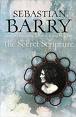
‘The Secret Scripture’ by Sebastian Barry

2008, 300p.

I really don’t like my chances of reading the Booker Prize shortlist before it is announced on 14 October, especially as this is the only one I have read!  I always try to read the Miles Franklin shortlist of Australian literature, and usually finish the night before it is announced! But the Booker is usually beyond me.

But I was excited about reading The Secret Scripture when I realised that it was written by Sebastian Barry. I read A Long, Long Way last year, and along with The Book Thief, these are the two books that have had me audibly sobbing whilst reading.

As with A Long, Long Way, this book is set in Ireland and takes for its main characters people, events and perspectives that are often overlooked.  Indeed, the main character of The Secret Scripture, Roseanne McNulty- or is it Roseanne Clear?- has certainly been overlooked.  She has been incarcerated in an asylum for about sixty years, and it is only at the age of 100, as the asylum is being deinstitutionalized, that questions are again raised about why exactly she came to be placed there, and by whom.   The story is told in alternating voices- Roseanne’s own testimony surreptitiously written on scrap paper and hidden under a floorboard, and that of Dr Grene, her recently-bereaved psychiatrist who has to decide on the appropriate placement for her when the asylum is closed.

Roseanne has truly been a victim of Ireland’s ‘big’ history in her own little life: all the distrust and hatred of religion and politics comes right into her most intimate and precious relationships.  She is a passive victim- perhaps to stop resisting is the ultimate defeat. Tragic things have happened to her,  often not of her own making, and yet there is a simplicity that shines through her. Or is there?  The major theme of this book is history- its evasions, its slipperiness and its unreliability.  And Dr Grene himself, who at first seems to be the anchoring ‘truth’ in the narrative becomes increasingly suspect as a narrator.  You find yourself wondering if either of these narratives- Roseanne’s and Dr Grene’s – can be trusted.

Barry has written about these characters, and their situations before.  Eneas McNulty had already appeared in his The Whereabouts of Eneas McNulty and was an officer in Thomas Dunne’s policeforce.  Dunne was a main character in Barry’s play The Steward of Christendom, and his son Willie appeared in A Long Long Way, and Willie’s sister appears in Annie Dunne.  So while each book is self contained as a narrative, there are allusions and resonances in Barry’s other work as well.  Of course, Barry is not the only author to construct an interconnected web of characters like this- Tim Winton does it too- and there’s a frisson of recognition when you make the connection.

In this case, Barry takes his characters from his own family tree.  He’s not the only writer to do that either-  Kate Grenville seems to be devoting herself to it  (her new book The Lieutenant pairs up with her earlier The Secret River) , and Peter Behrens (whose Law of Dreams I reviewed earlier)  also based his story on an ancestor.  On one level I can understand the attraction of recovering and making your own family members come alive again through your writing.  I guess that it’s a form of self-reflection, wondering whether certain characteristics have come through to you.  And there’s also the element of identification and indebtedness: that I am who I am because of them.  But all this seems very “me” oriented.  I think about the ‘celebrities’ on the increasing formulaic Who Do You Think You Are? wide-eyed with  wonder at their forebears’ lot and determined to squeeze every possible supposition out of the flimsiest of evidence- and culminating, always always always with trembling chins and tears at the injustice and hardness of other people’s lives. Ah, but they are OUR other people’s lives- hence our empathy and imagination wells up for them, when it has laid dormant for any other of the millions of other people who trod the same paths.

Not just characters- Barry also revisits his earlier work in his narrative voice too. The scene that affected me so much in A Long, Long Way was where the young boy stood up and sang Ave Maria- I don’t have the book here, but it was beautifully written with a sob of pain in each sentence.  Beautiful, beautiful writing.  And then, in The Secret Scripture, I found another lamentation which evoked the keening of his earlier work as well:

…that he hanged himself.  Oh, oh, oh, oh, oh oh, oh, oh, oh.  Do you know the grief of it? I hope not.  The grief that does not age, that does not go away with time, like most griefs and human matters.  That is the grief that is always there, swinging a little in a derelict house…..

But I have a little lamentation of my own- the ending.  Barry has unsettled us throughout the book over issues of truth and secrecy, and yet has tied up all the ends neatly and plonked it on our laps as a finished product.

So I have mixed feelings about the book.  The writing was beautiful; Roseanne was a haunting, tragic character; it is a very sad, sad book.  The ambiguity of truth, invention and forgetting keeps you wary and watchful as a reader.  But oh- the ending- (oh, oh, oh, oh, oh, oh, oh….).

For Better or For Worse? Probably worse….

Oh no! I can’t believe it! For Better and For Worse, the daily cartoon strip that I have been following for all my adult life has finished!!! I’ve had my children with this cartoon strip!! Like Elly, I despair at the changes that are happening to my body without my permission!! I hated Deanna’s mother Myra with a vengeance!! What a good wife Iris has been to Grandpa Jim, somehow leaving space for them both to honour their now-deceased first spouses!! I was so pleased for Michael getting his book published, and so distressed when their house burnt down!! Dang it, I cried when the dog died rescuing baby April from the rushing stream!!

Much as enjoy a good wedding, though, Elizabeth and Anthony’s wedding day was dragging on a bit.  I had it all worked out- Elizabeth and Anthony were going to rush from the wedding service to Grandpa Jim’s hospital bedside when they heard about his heart attack (I was right, they did); he was going to wake from his semi-coma and see her in Grandma Marion’s wedding dress ( I was right, he did that too), then he was going to cark it right then and there (he didn’t).

But finished?? Is April going to settle down and become a vet after all?  Will Deanna and Michael have another baby for their country?  Will Elizabeth have a baby with Anthony?  How will she get on with her step-daughter?  When will Grandpa Jim finally cark it then?

Wait!  hold on…. there’s a follow up page that finishes off all the stories. Lynne Johnston, the creator is going back to the beginning and starting again.  Oh no.  Bad idea. I can see a shark circling.  Somehow the thought of having it warmed over and served up again is less appetizing… time to let go, I think.

Middle of the night meditations

The Resident Judge does not always sleep well. But one thing that will send her nodding off within minutes is the sound of voices on the radio, especially when they’re talking about something that she’d really be quite interested in if she…didn’t…drop…off…halfway..thr…….

It is not really a practice to be recommended, though.  Not only do I wake with the wires to the ear-buds wound several times around my neck, but I find that I really have very little memory of what I have heard.  I think that the great plan of the 1970s to learn subliminally while playing information while you sleep was a pile of hooey- and certainly rather impractical if you had to wake yourself up to turn the tape over.

Unless ABC Radio National has something that interests me, I listen to the BBC World Service which is rather repetitive because it has a news broadcast about every 15 minutes, but given that I’m usually asleep by the end of it, what I miss this time I will catch up with next time as my sleep cycle turns around again.

It does lead to some rather garbled reception of what I’m hearing, though. Sometimes when I open the paper the next morning, I recognize a news story that I might have heard in snippets.  I sometimes remember small details, but am not really sure enough of them to be able to vouch for their veracity. And sometimes- like yesterday- I’m actually able to check up on what I thought I heard and what I actually did hear.

Early on Thursday morning, I heard what I thought was a fascinating workshop discussion about meditation in Christian and other religious traditions.  The speaker, who was a Christian, led a guided meditation about darkness: the way that when you are walking in the dark, your eyes gradually adjust and you’re able to see things more clearly than you would have thought.  I thought it was wonderful- I let him take me, and I was able to actually walk through the meditation with him. Then, I thought the Dalai Lama responded…and by now I was actually waking up, and I was so impressed with this guided meditation that I resolved to find out what the program was by looking up the Radio National website that day.

Well, that’s what I thought I heard.

So, I was fascinated to find that I was actually listening to a program called “Encounter” that came on at 4.00 a.m.  I was right- there was an interfaith component,  it was about prayer and meditation, and the Dalai Lama was a contributor to it.  But where was the guided meditation that so impressed me? Here’s what the transcript says:

Margaret Coffey: Paul Murray, who then took one of Johannes Tauler’s 14th century sermons to explore the Christian notion of searching for God in prayer. It was a sermon built around a reflection on a passage from St Luke’s Gospel.

Paul Murray OP: Today’s Gospel, Tauler tells us, tells of a woman who has lost a coin and lit a lantern and searched for it. The woman in her great anxiety, Tauler informs us, turns her house up side down searching for the coin. But what, we might ask, does this searching mean?

First of all it refers, according to Tauler, to the two most ordinary ways in which people seek God – an active way, which entails the external performance of certain religious practices and good works, and a passive way which entails a beginning journey into the innermost self. Tauler writes, we must allow ourselves to sink into our ground into the innermost depth and seek the Lord there, as he instructed us when he said the Kingdom of God is within you.

Up to this point in his sermon we have heard for the most part about our searching for God but Tauler now goes on to speak about another more important searching. Earlier he had noted that it is eternal wisdom itself which has lit the lantern and now, he says, as soon as we enter our house to search for God, God in his turn searches for us – and the house is turned upside down. He acts just the way we do when we search for something, throwing aside one thing after another until we find what we are looking for. All of a sudden then we discover that the object of our search for God and of our search for wisdom is not some kind of passive divine truth, something which we are able to assess and possess with our own minds and at our own pace, but is rather something literally uncontrollable, a mystery of love our minds can barely begin to grasp, an urgency of attention to our most basic human needs and wants, a divine compassion and care for that very aspect of our lives which seems most hopeless and most lost.

Where was my guided meditation?  The light was there, and the darkness, and the looking…. but what had I done to it in my half-awake state? And yet, I felt so sure that I’d experienced it as a meditation- that I’d actually done the walking and the looking and the searching.

Or maybe it was just a glass or two of wine too many before bed?

Things to celebrate

1.  That I live in UNESCO’s second City of Literature. I KNEW that there was a reason that I live here!

2.  That the Abortion Law Reform Bill might actually pass.

3. That St Kilda’s  stupendous Robert Harvey will have a send-off at Telstra Dome this Sunday- and I may just go!

Position, position, position

Today’s real estate agents really can’t hold a candle to those of the 1840s.  Not only did they offer champagne lunches at THEIR auctions, but their literary and biblical effusions really do put modern billboards and advertisements to shame.

But they rarely mention the fact that perhaps the sunlit rolling plains and luxuriant growth might have been occupied by Aboriginal people previously.  Notwithstanding John Batman’s countermanded attempt at a treaty, the official policy promulgated by Governor Bourke at the time stated that aboriginal people could not sell or assign land, nor could an individual person acquire it, other than through distribution by the Crown.  Indeed, there was little acknowledgement that aboriginal people had even been on a particular piece of land. However, I did find this advertisement in the Port Phillip Herald of January that surprised me.  It’s for allotment 16, block 28 in Lonsdale Street (now part of the inner-city grid of Melbourne)

Who is there remembering Melbourne in her infancy…who knew Lonsdale-street as it was, so lately the quambi of the savage, would imagine that a period almost imperceptible would exhibit the same Lonsdale-street as the centre of the white-man’s comfort, as the spot to which all love to congregate, yet such is the fact, Lonsdale-street once the centre of savage orgies, with nought to break the silence of the forest, but the wild yell of the Australian Cannible, sheltered by his Mia Mia alike from the heat of summer and the chill of winter, now exhibits all the most fastidious could desire…

I have no idea what a ‘quambi’ is- wait- yes I do!  ‘My baby name’ website gives the meaning as Aboriginal for ‘shelter’ should you decide to name your baby boy Quambi, which is, after all the site’s 50584th most popular baby name.  But how appealing- the memory of ‘savage orgies’ in the location, and the ‘wild yell of the ‘Australian Cannible (sic)’. As they say, position, position, position…

Putting your name on the line

In Saturday’s Age there was a full-page advertisement ‘Honoring the Life of a Great Australian: Ken Dyers 14 July 1922-25 July 2007’.  No doubt the anniversary of his death (it’s odd that there’s no word for that) has prompted this outflowing of emotion.

Apparently he was the founder of the Kenja Communication group (see http://en.wikipedia.org/wiki/Kenja_Communication) and he previously had links with Scientology. Kenja was named in NSW Parliament as a “sinister organisation”, and there have been suggestions of sexual abuse of children and a link between Kenja and Cornelia Rau’s mental state.  According to Wikipedia, for $130 you can undergo an Energy Conversion Session, where you sit opposite another person and stare into their eyes.  That would do it, I reckon.

Anyway, what interested me most about this advertisement was the list of the names of the people who signed, and I assume, paid for this advertisement.   During the Howard government, there seemed to be a string of letters by Eminent Australians castigating the government over treatment of refugees, climate change,  industrial relations legislation etc. etc.,  and a cynic would sniff that they were all signed by the ‘usual suspects’. I was interested to see if the ‘usual suspects’ had signed this one too. Certainly not.  There was not a single name that I recognized.

There did seem to be a preponderance of sports people and dramatists.  And how cute, people affixed their academic qualifications-  two Ph.Ds, quite a few Bachelors degrees and even  an Associate Diploma of Medical Reception Administration- there’s a qualification to conjure with!!  Several company directors, a few personal trainers, and even a “Mother of Five”.  But, thankfully, no-one I’ve ever heard of before.

Ah, technology!

I’ve been mystified by this THING that I’ve been seeing in the paper recently. What IS it???

Ah! So that’s what it is- a code for your mobile to take you to a website???? Obviously I’m not alone in my bemusement: there’s a website QRious.com.au

It really is strange seeing a new technology being ‘born’, and being puzzled by what it is at first. More often, technologies build on other pre-existing technologies and there’s not that same sense of ‘I just don’t get it’.

I can though, from my 50plus vantage spot, remember a few technologies being born.  Dad used to have a mobile telephone in his car in the late 60s/early 70s.  You had to call an operator, who would then connect you. I can even remember the phone number 0172 21522!!!  He also had one that he could take out of the car, but it was VERY heavy, and was literally the size and weight of a brick.

I remember our neighbours across the road, who were international travellers (unusual then) and early adopters (also unusual) who had the first microwave oven I had ever seen.  We all stood around it, watching as Uncle Eric boiled a cup of water.  They also had the first reel-to-reel tape recorder that I had ever seen, and we had great fun round the table listening to it and recording our voices.

And my first personal computer? A little Macintosh- a squat, oblong thing higher than it was broad. Until then, my only contact with computers had been pushing out the chads on a card with a pin in mathematics, aware that it was going off to ‘the university’ to a computer kept in a specially controlled room. To this day I don’t really know what it was all about- push out bits of cardboard with a pin? Hey, even I can do that!

I’ve always been a television child- Mum and Dad bought one for the Olympics when I was a year old. But colour television was something else again.  We lined up at the Royal Melbourne Show to shuffle in a queue into a tent to see colour television- coming soon!! And when Mum and Dad bought one, I can remember sitting just LOOKING at it- even looking at the test pattern once programs had finished for the night. I don’t know if  television even stops anymore- do they still have a test pattern??

And so to this little code-thingie.  I don’t know what it’s called. I don’t know what it’s FOR.  It might be dead in the water in a year’s time: on the other hand,  we might forget that we ever didn’t know what it was!

Raising the dead

As part of tracing through the progress of the controversy over Judge Willis in Melbourne, I’ve been reading the Port Phillip Herald very closely. Of the three regular Port Phillip papers, the Port Phillip Herald is the only one that is available online, so I’m using it as the ur-newspaper, and just referring to the other two papers (the Port Phillip Gazette and the Port Phillip Patriot) on microfilm when I want to concentrate on a particular episode.

I’m struck by the high proportion of interstate and international news in each edition. Each edition was four pages in length, with the first page devoted largely to paid advertisements as their revenue stream. Pages 2 and 3 generally contained news from the other Australian colonies and local news from Port Phillip. Page 4, however, was generally devoted to extracts from overseas newspapers across the Empire and, to a lesser degree, from American papers. As might be expected, British news predominated and in 1841 (which is as far as I have reached so far), there is quite a bit of emphasis on China news and- rather disconcertingly for colonists on the other side of the world from ‘home’- shipwrecks! The selection of extracts wasn’t solely on the basis of their newsworthiness or interest: they could be used to make a political point. On 15 October 1841 when the Herald editor George Cavenagh was feeling particularly aggrieved at Judge Willis’ behaviour towards the press, the international news comprised an exegesis on the judicial character of Lord Denman the British Chief Justice, a report of the drowning of the Chief Justice of Sierra Leone, a romantic story of the female editor of a French newspaper who fell in love with one of her anonymous correspondents, and a humourous extract from an American newspaper about the perils of an editor working out what to print in his newspaper. There does seem to be a bit of a theme running through these extracts!

I was fascinated, and rather transfixed, however, by this rather ghoulish extract from the Port Phillip Herald on 29th October 1841:

WONDERFUL EFFECTS OF GALVANISM

The following, which is going the round of the papers, headed “Wonderful effects of Galvanism” is from an American paper, and we give it in illustration of the tone of feeling prevalent in the Model-Republic:-

“John White, convicted of the murder of Messrs. Gwatkin and Glenn, on board a flat boat on the Ohio river, was executed in Louisville, United States, on the 8th ult, a little after six o’clock in the morning. The rope not “playing” well occasioned the knot to slip over the chin instead of being under the ear, so that his neck was not broken by the fall. Previously to his execution he wrote a letter to his father, in which he stated that he was present when the unfortunate men were murdered; that he did not participate in the act, but was compelled to beg his own life from two men who murdered them. He was cut down after hanging about 25 minutes, and his body given to the doctors for the purpose of experiment.

The Louisville City Gazette gives the annexed extraordinary circumstances attending an experiment with the galvanic battery:- The poles of powerful galvanic pile, which had been prepared for the occasion, were immediately applied to him, and, to the unutterable joy of all present, with the most perfect success. On the first application of the fluid to his body, which was yet warm and trembling, a universal tremor was seen to pass over his frame; on a sudden he arose from the bench to a sitting posture, and, with great eagerness and impatience, raised his hand to his neck, trying to grasp the scar with his fingers and tear it from his throat. He first snatched at it with great rashness, as though the rope was yet around his neck, and then continued some moments picking at the seam with his fingers, as though it was something that adhered to his throat giving him great uneasiness. But this symptom was soon forgotten, for almost the next moment he rose upon his feet, raised his arms level with his breast, and, opening his bloodshot eyes, gave forth from his mouth a most terrific screech, after which his chest worked as if in respiration in a very violent manner. Every one at this minute was as mute as death, when one of the surgeons exclaimed that he was alive. The excitement was too great to allow time for a reply to the remark; every eye was riveted upon the agitated and shaking corpse. The operator continued to let upon it a full quantum of the galvanic fluid, til the action upon its nerves became so powerful that it made a tremendous bound, leaping by a sort of imperfect plunge into a corner of a room, disengaging itself entirely from the wires which communicated the galvanism.

All immediately drew around the body. For a moment after its fall it seemed perfectly motionless and dead; a surgeon approached, and, taking hold of its arm, announced that he thought he felt a slight though a single beat of the pulse. The galvanic operator was just going to arrange his machine to give him another charge, when the surgeon exclaimed that he breathed. At this moment he gave a long gasp, rising and gently waving his right hand; his sighs continued for two minutes, when they ceased entirely. His whole frame seemed to be agitated, his chest heaved, and his legs trembled. These effects were supposed to be caused by the powerful influence of the galvanic fluid upon the nerves; none of these movements were yet supposed attributable to the act of life. It was considered that the animating principle of nature had left his frame and could never be again restored. In the very height of anxiety, the surgeon announced that he could feel feeble pulsations. A piece of broken looking-glass was immediately held before his nostrils, which was instantly covered with a cloud. The most intense anxiety was felt for some seconds, when the motion of his chest, as in the act of respiration, became visible. He rolled his eyes wildly in their sockets, occasionally closing them, and giving the most terrific scowls. In about five minutes his breathing became tolerably frequent, probably he would give one breath, where a healthy man would give four. His breathing, however, rapidly increased. The doctors began to speak to him, but he gave no indications that he heard a word. He looked upon the scene around him with the most death-like indifference. A young medical student approached him, and, taking hold of his arm and should, White rose upon his feet, took two steps thus supported, and seated himself in an arm-chair. His muscles seemed to relax, and he appeared somewhat overcome with the exertion he had made. A bottle of hartshorn was immediately applied to his nose, which revived him, but his life seemed to be that of a man much intoxicated. He seemed upon one occasion to try to give utterance to some feeling, but from an unknown case, an impediment probably occasioned by the execution, he was unable to give utterance to a word. His system was critically examined, and though he was pronounced by the doctors to be perfectly alive, yet he could live but a very few minutes, for congestion of the brain was rapidly taking place. Every method was adopted to equalize the circulation, and save the patient from the terrible consequence of so sad a catastrophe, but in vain. The blood vessels of the head were enormously distended, and his eyes appeared to be balls of clotted blood. His system was immediately thrown into direful spasms, and he died in a few minutes in the most excruciating agonies.”

I remember reading about the Tyburn executions in Britain, and the hanging traditions about three-times botched hangings that resulted in the victim being set free. I’m curious and somewhat amused by the “anxiety” evoked by the “catastrophe” of his death- he had, after all, just been executed by the state!