Category Archives: Uncategorized

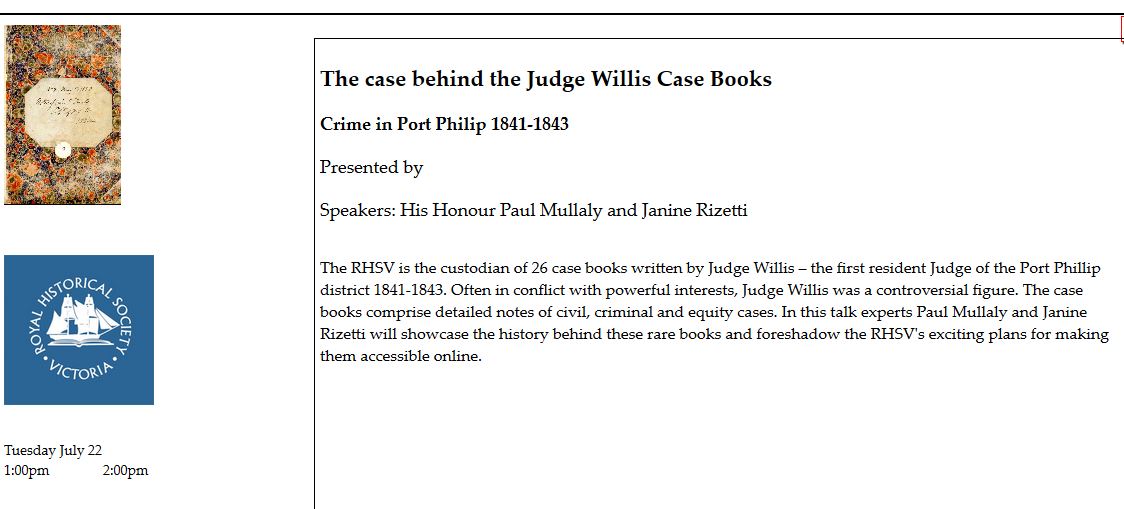
‘The Case behind the Case Books’ at Rare Book Week

Tuesday 22nd July, 1-2 p.m.  Royal Historical Society, 239 A Beckett Street, cnr. A Beckett and William Street, Melbourne

Rarebooksweek

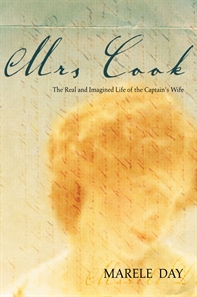
‘Mrs Cook: The Real and Imagined Life of the Captain’s Wife’ by Marele Day

mrscook

357 p. 2002

Marele Day has subtitled her book “The Real and Imagined Life of the Captain’s Wife”, signposting that this is not a straight biography, but nor is it pure fiction either.  The book is organized around a fairly large collection of existing Cook artefacts which, from the the notes at the back of the book, are located in various museums, libraries, churches and parks across the world.  Some of them are documentary, but several of them are domestic objects like drinking glasses, teapots, fans.   She uses these real-life objects as the tethering posts to which she attaches her fictional narrative, complete with conversation and internal speech. The narrative unfolds chronologically, with each chapter named for the object which appears somewhere in that chapter.

However, given that many of the objects are rather domestic in nature, it means that the narrative is even more quotidian than it would already have been, given that it is examining the life of the woman left behind by one of the world’s great navigators.  At times, too, the narrative becomes quite contorted and unnatural in trying to bring the object into the story- for example, in devoting a whole chapter to the act of buying a teapot.

The ‘imagined’ life in the title mainly revolves around Elizabeth’s emotional and sexual life.  A explorer’s wife spent years not knowing whether her husband was dead or alive, and somehow life had to be lived at two speeds: the long years of waiting, reunion and waiting again,  and at the same time the day-to-day accumulation of  rather banal, land-based, domestic detail. Elizabeth Cook  endured the tragedy of outliving her husband and all six children, and the book makes much of her sorrow.

Day has decided to remain true to the main facts of Elizabeth’s life – thus the ‘real’ Elizabeth stays firmly rooted on solid ground, waiting for James to return, with no imagined affairs, imagined illegitimate children, or imagined crimes of passion.  The ‘imagined’ part of the book is most clearly seen in the sexual passages, of which there are several.  I found them all rather uncomfortable, I must admit. Somehow, looking at that picture of James Cook sitting  in his skin-tight white breeches looking at a scrolled map on the table before him will never be the same again:

He would start at the nape of her neck, gently blowing aside the wisps of her hair, and making a place for his lips.  He began the journey south, each vertebra rising to the moist warmth of his mouth.  The long channel under which lay the reef of her backbone descended to her buttocks, two plump hillocks with a dimple either side.  Elizabeth lay with her arms by her sides, and when she shifted, bent her elbows to make a pillow of her hands, James saw the shoulder blades rise up like the beginnings of angel wings….When she was ready, she turned to face him and their desires would meet… Gradually, James’s gentle perseverance awakened Elizabeth’s pleasure.  How wonderful that her body opened to him, moistening the pathway he would take.  Then he lifted her into rapture and Elizabeth became a wave.  (p. 102)

I was never convinced of the emotional and sexual authenticity of this eighteenth century woman, who seemed to me to have a very twentieth century head on her shoulders (and other parts of her body).   I was put off by the awkward, didactic tone of the text when the author explained the context and use of particular artefacts, and its juxtaposition with  the heavy-breathing, purring tone of passages describing their intimate life.

Nonetheless, the decision to integrate real-life artefacts into the story is an interesting one, and I find myself wondering if there are other ways that it could have been done more successfully.  Could the author have inserted herself into the text more  in describing the artefact and its provenance in a strictly non-fictional way at the start of the chapter, then moving to the imagined story? Could the artefact and associated information  have been marked out typographically from the fictional text?

This book was a bookgroup selection, and I must confess that I would have abandoned reading it had I not felt an obligation to read to the end.  It was probably one of the most divisive books we’ve read in recent years: some absolutely loved it; others were distinctly underwhelmed.  I’m afraid that I was one of the latter.

awwbadge_2014I have posted a link to this book on the Australian Women Writers Challenge.

Mirror, mirror

There was an interesting article in the New Scientist from 2 November last year.  It describes a Halloween party trick that involves quite simply looking at your face in the mirror.

As I prepare the room, it feels as if I’m getting ready for a seance.  I close the curtains to block out most of the light and place two chairs about a metre apart.  I prop up a large mirror on one and sit in the other so that I can just see my reflection in the near darkness.  Then I set a timer for 10 minutes and wait patiently for the faces to appear.

When they do, it is startling.  At first the distortions in the mirror are small: a lifted eyebrow, a twitch of the mouth.  But after seven minutes my reflection suddenly looks fake, like a waxwork.  And then it is no longer my face.  For a few seconds an old man with a thickly wrinkled brow and down-turned mouth stares back at me.

Apparently these visual illusions are quite common. Giovanni Caputo, a psychologist from the University of Urbano in Italy came across the phenomenon by accident when conducting an experiment looking at self-identity in a room entirely enclosed with mirrors.  The experiment was usually conducted in normal lighting, but one day he decided to dim the lighting, and found that many people experienced a distortion in what they saw after about 10 minutes.

Since his chance discovery, Caputo has found that most people perceive some degree of eerie distortion to their face if they stare into a mirror in low light for at least 10 minutes. “Usually, after about 1 minute of mirror-gazing, the eys start to move or shine, the mouth opens, or the nose becomes very large,” he says. “If you continue to gaze there are very big changes, until completely new faces appear.”  And it’s not just human faces that are seen-” some report seeing animals and others fantastical or monstrous beings….You are suddenly conscious that there is another person behind the mirror.”

The article offers a number of explanations for the phenomenon. One is that the incomplete view of the image disrupts the way that the brain binds together features to make a recognizable face, and so it patches together a ‘photo fit’ of features.  Another suggestion is that it is a form of dissociation, which is apparently heightened by looking in mirrors.

I must confess to being a little frightened to try it myself.  But it did bring to mind many of the those Victorian horror-stories and reports of seances conducted in dimly lit rooms.  Of course, darkness hides a plethora of tricks and manipulations by unscrupulous shysters, but it’s an interesting thought that perhaps some of the effects are generated within the brain of the perceiver as well.

Source: “Mirror, mirror” by Douglas Heaven. New Scientist, 2 November 2013

Queens Birthday

It’s the Queens Birthday holiday in Australia today.  I know that only naughty bloggers recycle old posts, but I did write this years and years ago…..

And I suppose that I should mark the day in some fashion.

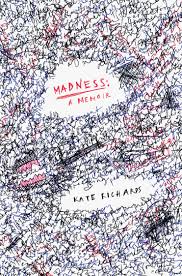
‘Madness: A Memoir’ by Kate Richards

madness

2013,  261p.

I don’t know what to say.

On the opening page, a knife etches its way down an arm between the shoulder and elbow. “The scalpel finds the deepest skin, the dermis, the little yellow pillows of fat like pearls.  Bluish-red bloodlines seep down my right arm, over my right breast.”   This is the first of several self-harm episodes in this book.  It is followed by yet another hospitalization, yet more prescriptions, a shaky scrambling together again, then more self-harm, more hospitalization, more prescriptions…

A small preface to this book says:

This memoir relies on the many volumes of notes, observations, conversations, odd phrases and sudden ideas written during episodes of illness and transcribed here unedited.  It also relies on memory, which is commonly subjective and fragile, and on the notes of treating clinicians.  The events took place over a period of about fifteen years.  In the interests of telling a story, time is on occasion expanded and on occasion compressed.

And thus we climb into Kate Richard’s life and it’s not a good place to be.  She is a qualified doctor, but years of mental illness have made this career path untenable for her.  There is  this chaotic, obsessive, hyper-sensitive existence inside her head that somehow co-exists falteringly with the semblance of a ‘normal’ life: a job in medical research, friends, parents, a flat.

She makes us privy to the people who live inside her head: something that she deliberately does not share with the psychiatrists and therapists she comes into contact with.   The voices she hears are ugly:  garrotte garrotte garrotte the world will spin you into obsidian oblivion keep the fires burning watch yourself muddy red.  We watch her resist taking medication, make mistakes, treat people (including herself) badly.  It is relentless.  There is no escape for her, or you as reader, from the suffocating presence of her head.

The text is broken up in places by pages of her handwriting from her journal. She is a true writer, with an eye that captures the essence of things, but it is a gift that can be turned against her as well.  At times of illness, her words trigger clang associations that are not poetic, but just chaotic.  Language breaks down.

Her critique of the psychiatric and medical system is devastating.  Psychiatrists are too quick to prescribe;  after an episode of self-harm, a doctor in a hospital refuses to treat her and she is vulnerable to the whims of the system. But she has a good GP, Jenny, and when she finds her psychologist, Winsome,  it is like a haven of calm.  Winsome tells her that her mental illness is a sickness that she will need to treat with medication day in and day out, for the rest of her life and finally, finally, Kate herself reaches the same conclusion.  As a reader, you start to hope, with her,  that perhaps this spiral of medication and madness might finally slow down.

This is such a brave book.  It is simply written, but it is hard to read.

Other reviews:

Christine from Freud in Oceania has written an excellent review.

awwbadge_2014I have added this to my reviews on the Australian Women Writers Challenge website.


Video

Banyule Homestead- the movie!

A promotional video by Jellis Craig for Banyule Homestead. Good to see that beautiful young woman reading Don Garden’s “Heidelberg: The Land and Its People 1838-1900″ while she reclines beside the pool. I like to think that she’s learning about the history of Banyule Homestead.

Interesting to consider the message that’s being conveyed by this video. I have spent more time than I’d like to admit looking at the other Jellis Craig videos and I’m struck by the emptiness of the houses they show. This is the only one that I’ve seen (and believe me, I’ve had enough of looking!) that actually shows a person in the house.

More on Banyule Homestead at http://banyulehomestead.wordpress.com

Charcoal Lane

There was a birthday in our house yesterday: Mr J’s, not mine. Even though it didn’t end in ‘0’, it was the birthday that the Beatles sang about, so that calls for a celebration, I reckon.

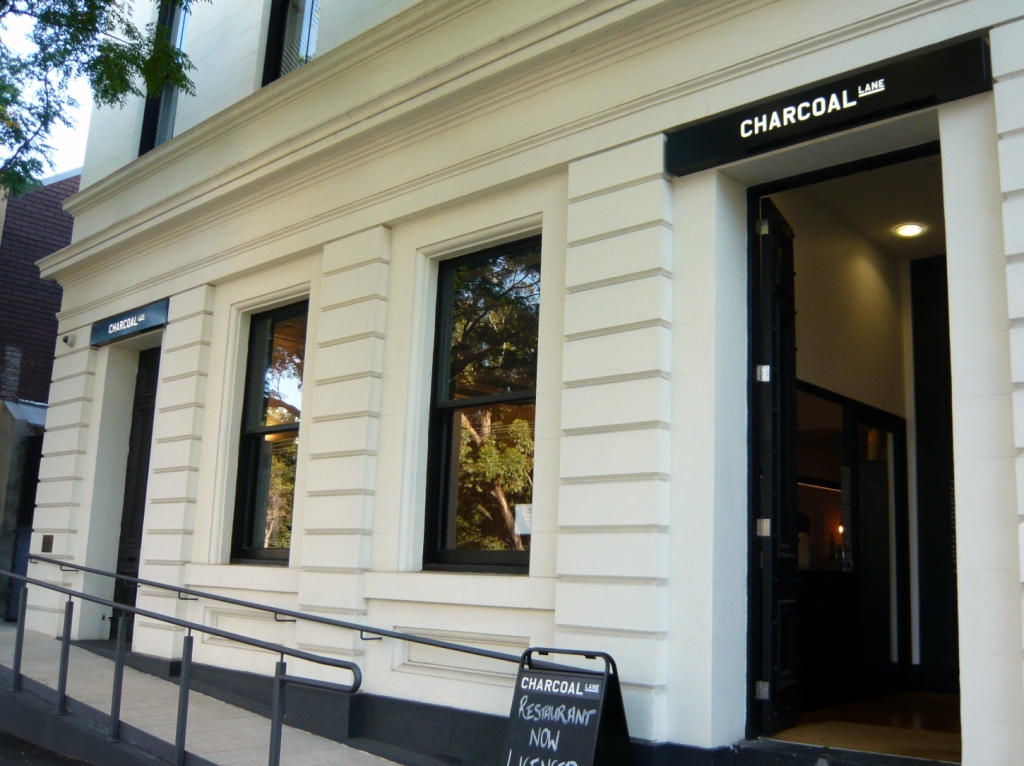
We went to Charcoal Lane, in Gertrude Street.  I haven’t been to Gertrude Street in a while and my, my- hasn’t it changed! The restaurant is situated in the old Aboriginal Health Service building, which is very appropriate.  The building is no longer decked out in its proud black, red and yellow but is instead a very stark white.  The building itself has had an interesting history: first the ES&A bank, then the VD clinic, then the Victorian Aboriginal Health Service where it served as a central spot for the local Koorie community.

charcoallane

The restaurant is run under the auspices of Mission Australia as a training venture for Aboriginal and other disadvantaged young people- similar I suppose to those Jamie Oliver type enterprises.  The food is bushtucker-inspired and very good.  We had a tasting platter first which included a fantastic kangaroo chorizo, followed by emu fillets as a main course.  I’ve never had emu before- a bit chewy in places, but an interesting flavour, served with little brussell sprouts with kaiserflesch , potato gratin and a red wine jus. Then a double chocolate and wattleseed cake which was just a sliver, but a very rich sliver.  It ended up being $120.00 for the two of us.

The service was good-  enthusiastic and very attentive.  It was just right. The interior and fittings are beautiful- you wouldn’t recognize the place.  It’s a win all round.

A photo in the paper

There was a striking photograph in yesterday’s ‘Sunday Life’. It’s a double page spread as you open the magazine,  showing a smiling, short-haired, blonde topless woman sitting on a chair, with her daughter in a ballet tutu playing on the floor beside her. The woman has had a double mastectomy.

It’s a breath-catching image. At first I felt guilty even looking at it, and turned the page quickly with an ‘Oh! as if I’d disturbed her, and seen something that I shouldn’t. Then I turned back the page and looked more closely. I’ve never seen a double mastectomy before. It’s confronting, but became less so the longer I looked.  You see her smile more clearly than anything else.

The caption reads:

This is what matters to Lisa Wilkinson. Lisa took this photo of Marina and her daughter Sydney to capture the beauty and incredible strength of women. Visit canon.com.au/shine to upload your own image and shine a light on what matters to you.

I really don’t know what to think.  It’s a beautiful image: stark, positive and you sense that Marina is in charge of the situation.  But I wish it wasn’t produced as part of some advertising campaign by a camera company.

What is the camera company’s purpose in paying for  this campaign?  (quite apart from the licensing and ownership questions that arise from the photos produced by participants). Would a photograph of someone with a colostomy bag have had the same effect from an advertising point of view?  It probably would have on me as a viewer- that instant flash of feeling like an intruder, followed by an almost guilty sense of curiosity – but would the camera company so ready to embrace it?

I’m trying to imagine the conversation around the board table when planning this campaign. I suspect that this blog post is exactly the reaction they were hoping for.  That (and not the photograph itself)  makes me uncomfortable.

A little trip to Phillip Island

One of the real advantages of Steve only working four days a week is that every weekend is a long weekend.  We’re taking advantage of the beautiful autumn weather to take a weekend down at Phillip Island.  Yes, THAT Phillip Island which Matthew Guy is getting all het up about. My, he’s as cross as patch, isn’t he?  I think he doth protest too much.  Something very fishy about it all, I reckon.  What a joke that IBAC can’t investigate politicians.

Nonetheless, I really don’t know why we don’t come down here more often.  It’s only 90 minutes from Melbourne, on freeways the whole way.  It really is quite beautiful.

We’re staying at a Genesta B&B in Cowes. Very nice it is, too.  Full marks for having a top sheet and summer blanket that can be used instead of the pretty but stiflingly hot doona.  I can’t work out why more places don’t do the same.

It’s on a quiet side street that abuts onto Westernport Bay, about three minutes walk away.   Have you ever wondered why Westernport bay is actually located east of Port Phillip Bay?  That’s because Bass, who named it, did not venture any further west than this before heading back up along the eastern coast.  This bay WAS west of the coast that he had charted.  Apparently the Bunurong name for it is Warn’marring.   Given that Westernport Bay is east of  Melbourne, that would be a pretty good case for renaming it, I reckon.

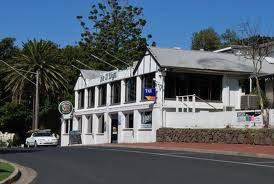
If you’ve been to Phillip Island (and most people in Melbourne have been at some stage), you’ll probably remember the Isle of Wight Hotel overlooking the pier.

isleofwight

Rather ordinary, I must admit, but I saw photographs of it at the local Historical Society this morning, and it was originally a mock-tudor hotel built in the early 1930s.  It was rather attractive, and reminiscent of the guest houses that used to be in Marysville.  It was built to replace an earlier wooden hotel that had been on the site and burnt down.

Well, it ain’t there now.  The site has been empty for four years.  Is that a burning rat I smell?

Phillip Island is well known for its penguins and koalas.  It’s a very popular destination for bus tours of international tourists who want a day trip to see furry animals.

We went to see the Penguins last night.  I can’t quite remember the controversy over the Seal Rocks Centre or whatever it was…something about Jeff Kennett?  Well,  whatever it was then, it’s now a huge slick place full of shops and merchandise  and cafeterias.  Still, the penguins are the real show.  The lights on the beach are dimmer than I remember them being, and you sit in two large ampitheatres facing the sea. At first you can’t see the penguins at all (although you can hear them), then they seem to just materialize out of the waves.  They huddle in a little cluster like shy, giggling, stagestruck toddlers, they scuttle up in a group into the sand dunes.  There were three main groups of them that we saw- there may have been more, but we decided to leave by then.  The sky was clear and the stars magnificent.  I was rather proud that I was able to identify Mars when it rose.

Then today over to Churchill Island.  It’s a beautiful, tranquil spot.  Thank you, Dick Hamer, for purchasing it for us all.  Lt. Grant established the first farm there in 1801 although they can’t locate the exact site. Now surely that’s  a 3-day job for Time Team, I reckon- the first white agricultural site in what is now Victoria?  The first permanent settlers between 1860 and 1866  were Samuel and Winifred Pickersgill, but he lost possession of it in a card game.  It was taken over by John and Sarah Rogers who lived there until 1872, when it was purchased by the successful stonemason and ex-Lord Mayor of Melbourne Samuel Amess. He built the holiday house that is the main building there today.  You can read more about the history of Churchill Island here.  I must dust off my copy of A.G.L. Shaw’s The History of the Port Phillip District when I get home and re-read those first chapters.

Melbourne in 1954

In 1954 the Melbourne Metropolitan Board of Works produced a film showing the planning challenges that faced Melbourne, that “vast metropolis of one and a half million people”.  The 17 minute film is available in full here:

http://www.theage.com.au/comment/past-planning-problems-are-present-predicaments-in-melbourne-20140321-358gm.html

I was surprised to see so many women in the footage of the city, and despondent to see the absolute dearth of women in the planning offices of the MMBW.  I had a chuckle at the apocalyptic music that accompanied scenes of traffic jams and am puzzled by the footage of new suburbs which look a bit like West Heidelberg or perhaps Ashwood with their housing commission homes.  The images of the slums must predate their demolition and replacement by the inner city high-rise Housing Commission flats.

I wonder what happened to the survey conducted by all those university students? I mourn the loss of planning for the “rural zone around the city”.

Well worth a look!