Category Archives: Uncategorized

ANZAC Centenary Peace Coalition – Second forum

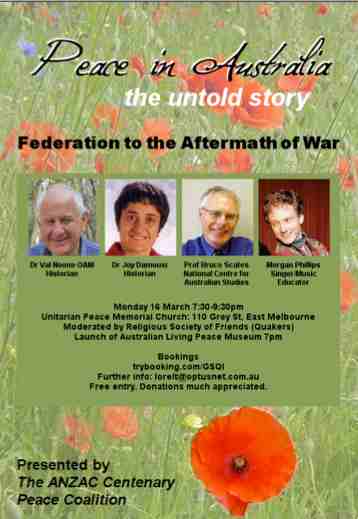
Where I’ll be tonight:  Melbourne Peace Memorial Unitarian Church, Grey Street, East Melbourne

peacecoalition2

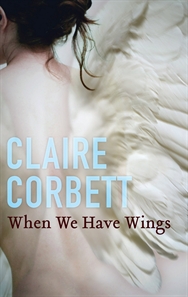
‘When We Have Wings’ by Claire Corbett

corbett

2011, 480 p.

I must confess that I’m not a great speculative-fiction reader, although my husband is.  I like the idea of it- the interplay of scenario, plot and character- but somehow one of them seems to miss out.

The scenario that underpins When We Have Wings is that medical technology and genetic manipulation has enabled those with the finances and desire to have wings grafted onto their backs. This self-selected elite is able to soar, literally, above the rather brutish and ugly city below, giving only grudging access to their beautiful architecture and affluent culture to the wingless, earth-bound masses below.  It’s not clear what country the book is set in, although the reference to RARA (Rural and Regional Areas) suggests that it’s Australia, although obviously nation is no longer important in a society so hierarchically ordered by the class and status denoted by wings.  Access to the city is limited and those without wings are relegated to service positions only, while outside the city boundaries, environmental change and the stripping out of wealth leaves a grubby and increasingly violent and deprived underclass. It’s set in the future, but it’s a future that is highly recognizable to us.

The book is told from two perspectives.  The first is that of Peri, a young girl employed as a carer for baby Hugo, although it’s a much darker arrangement than this  She is rewarded by her employers with wings, and it is with these wings that she absconds with Hugo.  She is rescued by a group of rebel flyers who, while revelling in their wings, are resisting the corruption of the flying elite. The second perspective is that of Zeke, the wingless private detective who has been employed by Hugo’s father,  to search for her.

The book has many things going for it: an engaging and rich premise; a female main character who reveals tenderness and fear; a bit of sex; a bit of a detective thread. Unfortunately, it’s also very long.  I found myself wishing that there had been a sharper editorial pen deployed here, slashing some of the description of flight mechanics in particular.  It’s 480 pages in length, and I’m just not sure that there’s enough emotional meat here- as distinct from ideas- to sustain such a long book.

aww-badge-2015-200x300I read this as part of the Australian Women Writers Challenge for 2015.

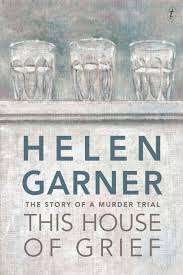
‘This House of Grief: The Story of a Murder Trial’ by Helen Garner

garner_grief

2014, 288 p.

This has been yet another of the  books  that I’ve purchased and had sitting in its little brown paper ‘Readings’ bag waiting for a self-indulgent Christmas-time read, long after everyone else seems to have read it. Helen Garner seems to evoke strong reactions in her readers. I don’t think that it’s just that she chooses controversial topics: I think that it’s Helen Garner herself that some readers object to.  As for me- I wish I knew her, although I suspect that she’d bridle against the thought that she could be claimed by a reader, and I think I’d feel a bit intimidated by her. I like the way that she puts her head on one side and considers hard…but then comes to a decided opinion.  I like her occasional tartness and her willingness to revisit her own judgments.

Any Melburnian could tell you about the Farquharson case- an appalling “accident” on Fathers Day 2005, where three young boys drowned when the car driven by their father after an access visit went off the road and ran into a dam. The father suffered a coughing fit, he said; an explanation accepted at first by his ex-wife at the first trial, but she later changed her mind. It was a convoluted legal process, involving a trial, an appeal and then a retrial and Helen Garner attended it throughout, drawn by equal parts of fascination and incredulity.

The subtitle to Garner’s book is “The Story of a Murder Trial” and the book largely consists of her observations of the theatre of the court as this performance of administering justice wends its slow, deceptively soporific way through questions that go to the heart of love, family, obsession and betrayal.  What a good observer she is-  the square faces that people pull when they’re trying not to yawn; the impatient ‘come along’ grasp of a sister pulling her adult brother through the press pack that sets itself up along the Melbourne footpath outside the court for the nightly news. Garner has her opinions: she judges.  I wonder if the witnesses who appeared in the stand have read this book and found themselves stripped bare by her eagle eye.

She’s very good.

aww-badge-2015-200x300I’ve posted this to the Australian Women Writers Challenge for 2015.

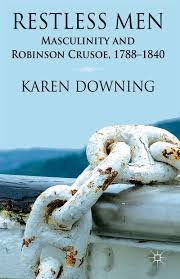
‘Restless Men: Masculinity and Robinson Crusoe 1788-1840’ by Karen Downing

downing_restlessmen

Basingstoke, Palgrave Macmillan, 2014, 175 p & notes

ISBN9781137348944 (hbk.)

Allow me to rave. I’ve just finished reading Karen Downing’ book, Restless Men and I’m in awe of its breadth, intellectual complexity and insight that has made me look again at the writings of the immigrating men who came to Australia’s shores.  I always think that’s a good sign in a history: you re-read documents and stories that you’ve encountered before with new eyes, and find yourself giving a little nod in acknowledgment to the historian as you do, wishing that you could nudge her and say “Look- there’s another example!”

History is full of restless men. Constantly active, averse to being settled, they have been explorers, traders, pirates, crusaders and invaders, the forgers of empires that have come and gone across time, heroes and villains.  Such men- if not the drivers of history, at least its colour and movement- have been so ubiquitous that constant activity seems to be part of the essential character of men themselves.  Fiction, too, is full of restless men. From the ancient Greek hero Odysseus to the crew of the Starship Enterprise, imagined men have been forced, coerced and have chosen to leave home in the name of patriotism, protection, profit and pleasure.  The most enduring of these literary figures is the protagonist of Daniel Defoe’s Robinson Crusoe, first published in 1719. (p. 1)

Again and again, Downing finds examples of young (and not so young) men braving the seas to the colonies who identify with Robinson Crusoe, a book that they had read in their childhood which had become a wider part of the contemporary consciousness of the 19th century.  Wild escaped convicts (think William Buckley) were dubbed real-life Robinson Crusoes,  William Joyce, a young mechanical engineer fired up by the letters he had received from Port Phillip from his brother declared in his memoirs that “I felt I was going to be a sort of Robinson Crusoe” (and so he brought a huge amount of luggage out with him lest he run out!); explorers called themselves Robinson Crusoe.   Defoe’s book itself did not make men restless, but it captured the tension in men’s lives of the time between material circumstance and dreams, traditions and adventures, wildness and domestication.

In structuring her book, Downing deliberately eschews a straight cause-effect relationship, and a similarly simplistic here-to-there trajectory.   Nor is she treading a well-worn path: her book is an exploration of masculinity that doesn’t engage in the question of separate spheres, or the construction of male identity vis-a-vis women.   Instead, she focusses on the ideas of manliness between men.

Chapter 1 Confined by the Gout- Perceptions of Men’s Physical Health describes the perception that civilization and industrialization were seen as a threat to men’s bodies, with the health-giving colonies often seen as a panacea.   Chapter 2 The Ecstasies and Transports of the Soul- Emotional Journeys of Self-Discovery turns to men’s letters, journals and memoirs to capture the tropes of fiction (and especially Robinson Crusoe) in describing the emotion of leaving home.

Chapter 3 My Head Filled Early with Rambling Thoughts- Raising Boys and Making Men examines the theories of boy-raising current at the time. She looks particularly at the literature they imbibed as part of their education that valourized restlessness at the same time as driving them into conformity. Chapter 4 Satisfied with Nothing But Going to Sea- Seafaring Lives and Island Hopes examines a response to this restlessness through seafaring in empire, focussing particularly on island experiences and the Bounty mutineers in particular.

Chapter 5 To Think that This Was All My Own- Land, Independence and Emigration grounds (literally) this restlessness into the promises held out for land, adventure and independence by the emigration literature and colonization proposals of the early 19th century.  Chapter 6 The Middle Station of Life- the Anxieties of Social Mobility  explores the uneasiness between the dreams held out to restless men and the confining, restricting effect of the brittle distinctions of rank and order that were replicated in the colonies.  In Chapter 7 A Surprising Change of Circumstances – Men’s Ambivalent Relationship with Authority this ambivalence is extended into an examination of the debates about crime and punishment and loss of autonomy- a particularly loaded debate in an ex-penal colony. Chapter 8 The Centre of All My Enterprises- the Paradox of Families explores the paradox that many of these restless men were, like Robinson Crusoe, torn between wanting to establish and maintain a family as much as they wanted to escape familial obligations.

As you can see, this book traverses unusual and unexpected territory.  There are themes that run across it as well – adventure, land, independence- with their different and contested meanings.  It ranges broadly across a wealth of writing, and while limiting her view to the Australian colonies, her argument works for the other settler colonies as well.

Early Port Phillip teemed with these restless men and I’ve met them during my own work on Judge Willis– the young Burchett boys, some of the financial adventurers among the Twelve Apostles, and a whole host of the first generations of Port Phillip arrivals.  They brought their restlessness with them, and it affected the nature of a new colonial society. At the same time, I’ve taken her argument and held it against the mobility of the colonial civil servant, and found it a useful counterpoint.

This is an academic text but I’m regretful that the expense of this book means that only those with university library borrowing rights are likely to read it: even the Kindle edition is prohibitive- how can that be?  It’s a shame, because it’s an enjoyable read in its own right.

aww-badge-2015-200x300I’ve reviewed this book as part of the 2015 Australian Women Writers Challenge under the history/biography/memoir category.

Bohemian Melbourne exhibition

bohemianmelbourne

Well, as usual I am writing about an exhibition in its last days, and what is even more annoying is that I went to see it months ago, before Christmas and forgot to blog it!  If you want to see it, you’ll need to put your skates on.

Some time ago I reviewed Tony Moore’s book Dancing With Empty Pockets and I see that he has been a subject adviser for this exhibition at the State Library of Victoria.   As a proud Melburnian, this is  a satisfyingly home-based exhibition, with plenty of familiar names and places.  It starts with Marcus Clarke, complete with his cabbage tree hat which I was surprised to see was a much more stylish construction than I imagined. (I can’t believe that I’ve lived this long without ever seeing a cabbage tree hat- or perhaps I just didn’t realize what it was I was looking at.)  It’s all very masculine in the first section, with bohemian gentlemen’s clubs and bonhomie. Women  are thin on the ground until the 1930s onwards, when they emerge in the artistic enclaves and on the stage.  Lovely Mirka Mora gets a look-in, there’s the definitely weird Percy Grainger (whose own museum is well worth a look if it’s open when you’re going along Royal Parade) and look- there’s Red Symons (and what does it say about Bohemia that an ex-Bohemian ends up the morning host on ABC local radio?)

All good fun, although I must admit that I found the layout confusing and somehow missed the chronological thread of it all which, in this case, was important.

I see that the State Library have a self-guided walking tour of Bohemian Melbourne too.  Might be a pleasant Sunday afternoon stroll sometime.

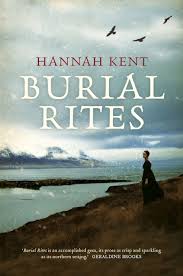
‘Burial Rites’ by Hannah Kent

BurialRites

2013, 352 p.

The problem with coming to a much-talked-about book after the wave of publicity and interest has broken is that there’s not really much else left to say about it.  I’ve just dabbled in some of the reviews and it’s hard to get away from the fact that Kent received a very large advance for the novel; that she’s young and doing a PhD in creative writing, and  that it has been translated into twenty languages.    Ben Etherington has written an interesting piece in the Sydney Review of Books  about the marketing context that has many links- well worth reading.

As probably everyone knows, the book is a ‘speculative biography’ of Agnes Magnusdottir, who was executed for murder in Iceland in 1829. Awaiting sentence, she is interned on a remote farm, where enforced proximity draws her into the circle of her keeper’s family.

Everything that I would want to say about the book has been said before.   Reviewers speak of the historical setting, and I’ll talk about it too. Historical documents preface each of the chapters, that not only lend verisimilitude, but also act as a fence to constrain this speculative biography.  The research is obviously deep, and  its occasional didacticism can be excused when writing about such an unfamiliar historical setting.  Just as in history-writing itself, the endpoint is known, and it’s the author’s task to make it plausible and real.

Many reviewers rave about her descriptions of settings, and I need to join with them in praise. Her descriptions of setting are so evocative that you can almost see it. It’s a very cinematic book, and of course it has been optioned for a movie.  In your head you can see the opening scenes and hear the voice-over already.

I was struck in the opening pages by the story-ness of it.  Of course, story-telling is one of the themes of the book, but I couldn’t shake the feeling that I was reading the sort of book I might have read as a teenager, where all the people and events were set out in place, then ‘action’- the story proper began.   I still can’t decide whether it’s slightly clunky and old-fashioned, or very clever and self-reflexive. The device of the priest worked to usher in a first-person story-telling narrative, but I didn’t find myself particularly interested in him as a character.

And yes, several reviewers have squirmed under the buffeting of poetic imagery, and at times I felt rather overwhelmed by it as well.  But then she’d capture an image in a couple of words so cleanly and sharply that you’d nod and forgive her everything. I enjoyed the viscerality of her descriptions as Agnes is released from her cell as she smells herself and the grunge of captivity.  I felt the smoky fug of too many people in a small cottage  that evoked  shades of Halldor Laxness’ Independent People.

Then there’s the cover. Is it trite to talk about the cover? I don’t think so- it was part of my experience of settling down with a real-life, hold-in-the-hand book to read a bit more.  You won’t detect it on screen, but the cover has a beautiful pearlescent sheen, inside and out, and I often found myself running my hand over it as a thing of beauty.

aww-badge-2015-200x300This book has already been read so many times under the Historical Fiction category in the Australian Women Writers Challenge that I feel a little redundant putting it under the 2015 reviews as well.  Never mind.  Two years on from its publication, it should be standing on its own two feet. It does.

Abbott’s blues

Will there be a leadership spill? Personally, I’m watching the ties.  You know, the blue ties that Julie Gillard warned us about.

Well, she wasn’t wrong

meninblueties

I’m watching the men in blue ties coming out to offer their support for Abbott in varying degrees of warmth.  I’m watching, too, to see if they break ranks with their ties.

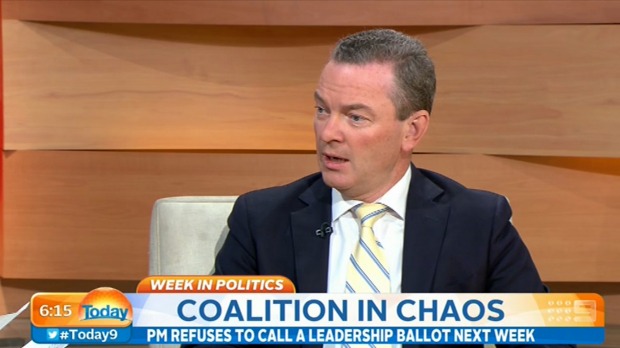
Snappy young Christopher Pyne this morning…..hmmmm.

meninbluetiespyne

So watch the tie.  Remember, you heard it here first.

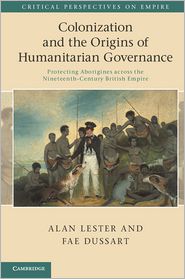
‘Colonization and the Origins of Humanitarian Governance’ by Alan Lester and Fae Dussart

lester_dussart

2014, 275 p. & notes

When I read Rowan Strong’s book on Anglicanism and the British Empire recently, I found myself somewhat surprised that historians coming out of  a different academic stream- in this case, the history of Christianity- were  wading in the same waters that I splash around in through studying colonial communities through a transnational lens.  There were similar questions and concerns, but when I checked the bibliography, I found that the author had drawn from a largely unfamiliar body of literature written by strangers (to me!). Why hadn’t I heard of any of these people before?

This was not at all the case with this book, which felt very much like ‘home’ for me.  Alan Lester and Fae Dussart have written a couple of  papers together, and Alan Lester is perhaps best known for his concept of ‘imperial networks’ of people, goods and ideas- a concept that I’ve found really useful.  Lester is a Professor of Historical Geography at the University of Sussex, where Dussart is a Visiting Research Fellow, lecturing in Modern British and Imperial History (originally from the University of North Carolina).   Looking through their bibliography, I found very familiar names- Catherine Hall, Zoe Laidlaw, Antoinette Burton, Julie Evans etc.   These are my people!

Their book explores the paradox that at the very time that the British Empire was embarking on its violent dispossession of indigenous land across multiple sites, it was also professing humanitarianism and a deep desire to ‘do the right thing’.  Is it possible to reconcile two such disparate impulses?

Lester and Dussart choose to use the term ‘humanitarian’, even though other historians  have chosen other terms more commonly used at the time (for example, Jessie Mitchell’s In Good Faith? uses the term ‘philanthropy’) .  But in the opening chapter of this book, it is clear that their observations extend beyond the 19th century settler colonies when they discuss present-day humanitarian campaigns and organizational structures.

As in Strong’s book, they draw a longer timespan for humanitarianism than just the 19th century evangelical movement, while acknowledging its fundamental importance for the settler colonies under discussion  They describe humanitarianism as a chain, with donor/philanthropist/recipient links, noting that it is always an unequal power relationship. Actors at each point perform roles for the benefit of those next along the chain with missionaries, protectors or aid workers on the ground always having to perform dual roles for the benefit of donors above them and recipients below them (p.11).

The book combines biography and geography.  Humanitarian governance during the 19th century was mediated through the men (for it was, in this case always men) who took it upon themselves to govern the empire.

To get to know what feelings and behaviours, what affects and effects, a humanitarian moral code engenders, one has to try to understand these men at various levels of governmental structures as complex individuals with varying capacities in a world of dynamic social relations that they only partially comprehended and controlled, but sought to improve, in the process raising their self-esteem and the esteem in which they were held by others.

The book emphasizes the importance of the sequential locations of its main ‘characters’, and by picking up on Doreen Massey’s idea of ‘place’ as the juxtaposition of intersecting trajectories, highlights the fact that these mobile men of empire encountered differentially contrived sets of relations between Britons and ‘others’ in the colonies they administered.

It traces the genesis of humanitarian governance as it moved from the idea of  ’emancipating’ and  ‘ameliorating’ the conditions of slaves in the West Indies through to ‘conciliating’  ‘protecting’ , and attempting to  ‘develop’ the indigenous peoples in the expanding British empire.  It focusses in particular on the Protectorates established as secular schemes in the Cape, Port Phillip and New Zealand, and the experience of the men working, often for the very noblest of motives, in a program- for Port Phillip at least-  that always had eventual assimilation and dispossession as its ultimate intention.

The book opens with Sir George Arthur, whose career took him from Honduras, to Van Diemens Land, to Canada and then India and then closes with another George- Sir George Grey, who career traversed South Australia, New Zealand and the Cape Colony.  Historians in these erstwhile colonies often have a very different ‘take’ on the slice of career spent in their homeland, and the nuanced approach in this book gives them a coherence not easily detected in colony-bound biographies.

I really enjoyed this book, and not just because it is right in my area.  Many of the chapters have been published in article-form in different journals, and I enjoyed having them integrated into a single text like this.  It was easy to read, and the interweaving of observations about current-day humanitarianism was insightful.  Once again, it’s damned expensive in both hard cover and even in e-book form ($65A), so it’s one for the  academic libraries, I guess.  A shame really, because I think its appeal could well stretch further than that.

What I did on Australia Day

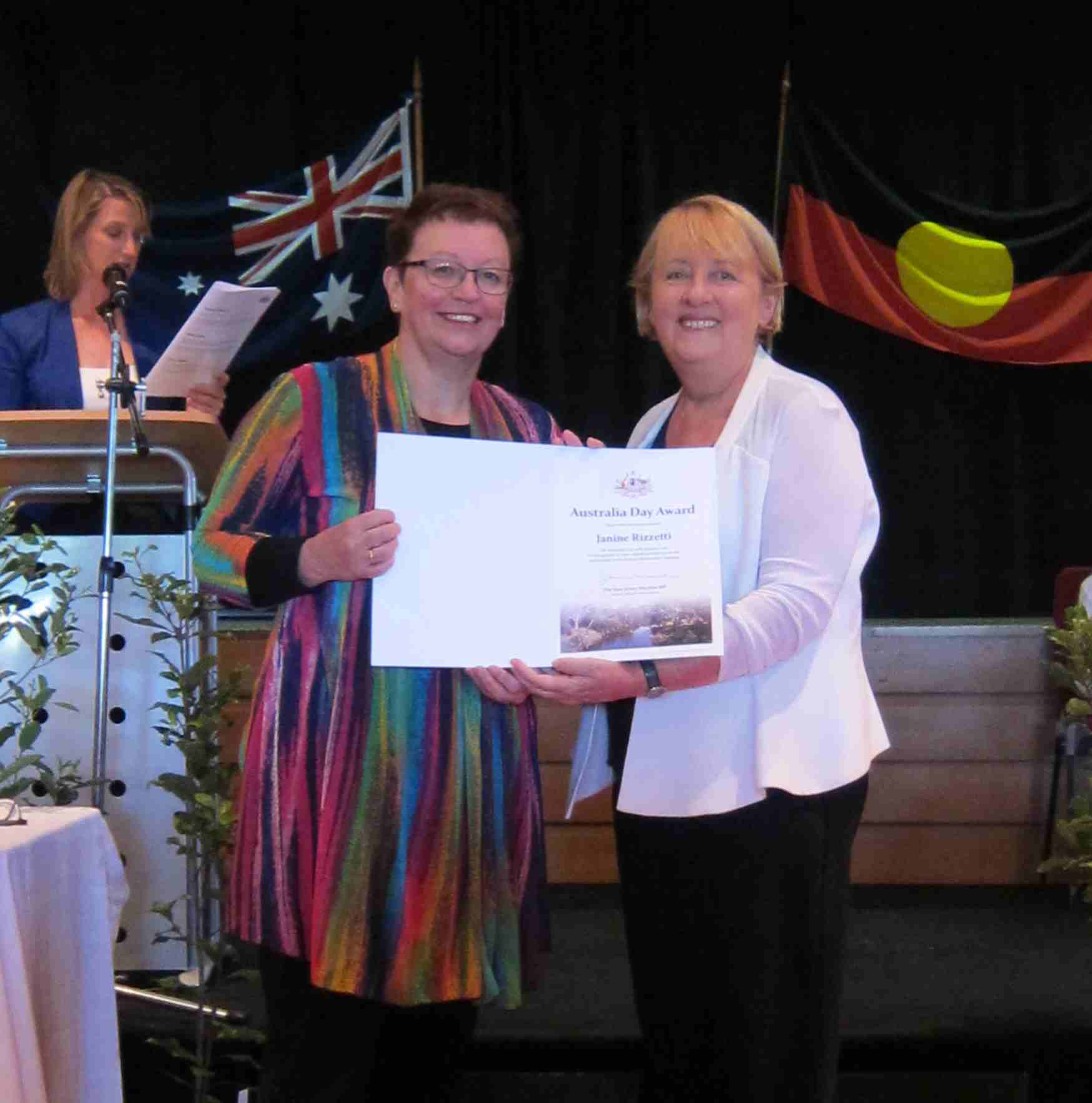
So what did I do on Australia Day?  I received an award!!  Not one of the big ones that they print in the paper, but a JagaJaga Community Australia Day Award for my work as Secretary of the Heidelberg Historical Society.  I’m touched and unexpectedly chuffed!

IMG_1535a

A historian’s nightmare

lesueur

390p , 1979

On my shelf there are two books that I have borrowed about William Lyon Mackenzie.  I pick up the first one, The Firebrand and check out the publication date- 1956.  I pick up the second one William Lyon Mackenzie: A Reinterpretation, thinking from the title that it would probably be the more recent book.  Ah, but I’d be wrong.  Although it was published in 1979 for the first time, the text itself was written seventy-one years earlier.  And in this case, the story about this book and its troubled publication history is probably even more interesting for a 21st historian on the other side of the world, than the book itself.

A household name in one country can be greeted with a quizzical “Who??” in another.   William Lyon Mackenzie (1795-1861) is such a person.  Newspaper editor, entrepreneur, and controversial politician, he was one of the leaders of the rather disorganized and immediately suppressed Upper Canada Rebellion of 1837  (although he escaped fairly lightly compared with the rebels he led, many of whom were transported to Australia as Tony Moore’s recent book- review here-  explains).  Particularly for Canadian schoolchildren, in a historiography  that can seem (like Australia’s)  rather, well, bland, the rebellion and William Lyon Mackenzie stand out as flashpoints, rather like Peter Lalor and the Eureka Stockade might stand out in Australia’s similarly ‘colourless’ schoolroom historiography.

The first book about William Lyon Mackenzie was a two-volume ‘official’ biography written by his son-in-law Charles Lindsey and published within a year of Mackenzie’s death. As might be expected, it was a highly laudatory appraisal and set the scene for Mackenzie to be embraced as the Father of the Upper Canada Rebellion and Founding Figure of Canadian Democracy.

When, in the early 1900s,  Toronto publisher George Morang embarked on his multivolume biographical work ‘Makers of Canada Series’ to celebrate the makers of Canada’s national and independent  history (with none of that servile backward-looking Colonial stuff) Mackenzie was a shoo-in.  But William Dawson LeSueur was not originally approached to write the Mackenzie volume.  Instead, as a  recently-retired prolific essayist and historian, he was asked to review the Mackenzie biography that was originally commissioned for the Makers of Canada series.   On LeSueur’s advice, the manuscript was rejected.  Publisher George Morang asked LeSueur to take up the challenge, but he refused.  It was only when the replacement biography fell through that LeSueur was contracted for the job, commencing in 1905 .

LeSueur contacted Mackenzie’s son-in-law, Charles Lindsey (who had written the very first biography) and arranged to have access to the Mackenzie Papers in the Lindsey home- in fact, he was invited to stay at the house to work on them.  LeSueur told Lindsey that he was writing the biography for the Makers of Canada series, but did not mention that he had been responsible for the rejection of the first manuscript.  Some family members were concerned that LeSueur was rumoured to be ‘a Tory’ and were concerned that the new biography would tarnish the reputation of their much-lauded forebear.  Most concerned of all was Mackenzie’s grandson and up-and-coming politician Dr William Lyon Mackenzie King who was at the time the Minister for Labour and would just happen to end up Prime Minister. Given the family’s misgivings,  LeSueur offered to withdraw, but Morang encouraged him to keep writing.

But having handed over the single longhand manuscript, Morang rejected it.  LeSueur was keen to recover his manuscript and offered to return the $500 cash advance he had received during the two years it took him to write it.  Morang refused his offer and insisted on keeping the manuscript.  Charles Lindsey had died by this time, but his son asked LeSueur to return all the Mackenzie papers he had in his possession, which LeSueur did, but he refused to hand over his own notes.

And so the matter headed into the courts.  The first case involved LeSueur’s attempt to recover his manuscript from Morang.  Morang’s lawyers argued that because he had purchased the manuscript, property had passed to him and he could use it or not as he pleased.  The case finally ended up in the Supreme Court which found for LeSueur on the grounds that where the inducement to write a book was both pecuniary and reputational (because it was based on the prospect of publication), the mere payment of the money without publication could not convey a title to the possession of the work.  An appeal was unsuccessful. So, after three and half years, LeSueur regained his manuscript.

But then the Lindsey family sought an injunction to stop LeSueur using any of the family materials that they had made available to him, arguing that he had breached their confidence when they gave him access to the papers. There was much argument over the distinction between an ‘agreement’ and a ‘contract’ to write a fair and balanced biography.  LeSueur was ordered to hand over any papers and any extracts or copies that he had made in his own notes.  He was prevented from publishing or making public any information he had gleaned from those papers.  That’s an interesting thought for a historian. How, having read something, do you then separate out one particular idea from the whole general picture that you’ve developed?

In 1915 LeSueur rewrote the book, citing other readily available sources to support the same argument that he had mounted in the original book.  He wrote a lengthy preface, putting his side of the controversy.  This revised book and its preface, however, were never published- and remained unpublished until A. B. McKillop published Willian Lyon Mackenzie: A Re-interpretation in 1979 with his own foreword, LeSueur’s preface to the 1915 expurgated text and the original 1907 manuscript.

As for the book itself?  Yes, it certainly does challenge the Mackenzie-as-Hero characterization, and argues that the Canadian Rebellion would have occurred without him- and that, in fact, his actions cruelled it. I find it quite amazing that a family could have stopped publication of what, to me now, reads as a historical argument rather than a warts-and-all biography.

I must confess that while I’m aware of the ‘fair dealing’ approach for research and study purposes here in Australia, I haven’t really thought (or been encouraged to think) about the legal ramifications of dealing with primary documents.  Interesting, too, given that with the current push to have universities place theses online blurs the line between ‘research’ and ‘publication’ even more.

If you have a look at the articles I’ve listed below, it’s quite sobering what a law court in America could do to the writing of history/biography if a published biography ended up there.  The distinction between fact and expression, a narrow definition of ‘fair use’ for unpublished materials, privacy issues– is there any scope for primary source, critical biography at all? I have read Janet Malcolm’s The Silent Woman and been aware of biographer/family tensions over recently deceased biographical subjects, but reading these articles is rather chilling.  If you have a library registration that allows access to academic databases, you can find out more in these very legalistic, American-law articles:

Harvey, Cameron, and Linda Vincent. “MacKenzie and LeSueur: Historians’ Rights.” Manitoba. Law Journal  10 (1979): 281.

Bilder, Mary Sarah. “The Shrinking Back: The Law of Biography.” Stanford Law Review (1991): 299-360.