Category Archives: Uncategorized

The Strays and my missing reviews

Reader, I haven’t felt much like writing lately.  I must confess that most of the reviews I’ve posted since early November have been “a little something I whipped up earlier” as the cooking shows might say.  They have been bobbing around in my drafts folder and I’ve been pulling them out, and dusting them down before posting them here.

Except that WordPress has changed their ‘Blog Posts’ function. When I post a pre-prepared review, it seems to be inserted at the date when I first wrote it rather than on the top of the blogroll at today’s date.  I fiddled around with some of the last posts and managed to get it to show first on the page, but I don’t know how I did it.

And so, I did write a review of Emily Bitto’s The Strays and if you want to read it, click here and it will take you back to November.

‘Medea’s Curse’ by Anne Buist

buist

2015,  363 p.

In her book  This House of Grief , Helen Garner wrote of her sinking feeling on hearing of the death of the Farquarharson children on Fathers Day- “Oh Lord, let this be an accident”.  For right or wrong, hearing of the death of children at what might possibly be their father’s hand often provokes an almost immediate suspicion of his guilt- “not again”.  However a child’s death at possibly their mother’s hand evokes incredulity- “how could she?”  The young (or even older) woman who has denied her pregnancy and  has reality crashing down on her with the birth of the child- understandable.  A deliberate, extended series of deaths like Katherine Folbigg has been accused of- less so.  Ah, we all judge. None of us really knows.

Natalie King, the protagonist of Medea’s Curse knows, though. Or at least, she is required, professionally, as a forensic psychiatrist, to withhold judgment in her special expertise with mothers who have killed their children.  But she’s human, and  she can’t completely.  She clashes with Professor Wadhwa, who is convinced that a woman who has had several children die under mysterious circumstances is suffering from Dissociative Identity Disorder (multiple personalities): Natalie is less sure. In a separate case, she has identified strongly – too strongly- with Amber, a woman jailed for murdering her child who, Natalie suspects, has been unjustly punished for a crime committed by her husband.  Meanwhile,  Amber’s husband is linked with another possible crime involving another child.

Then there’s Natalie herself.  She suffers from bi-polar disorder and flirts with abandoning her medication. She obviously has a complex family back-story herself that will no doubt be explored in future books in the series mooted on the back cover. She rides a motorcycle: she enjoys sex but not the mess of relationships.  And she’s being stalked: or at least, she thinks she’s being stalked.

As you can see, there’s a lot going on here.  Too much? Possibly, for this reader who leans toward Dr Blake and Midsomer Murders in her crime tastes, and is often known to state “Well, I have NO IDEA what THAT was about!” at the end of a Friday night crime series on television. Nonetheless, I was able to follow the various threads, and found myself picking up the book for “just 10 minutes reading” to see what happened next.

Anne Buist, the author, is the Chair of Women’s Mental Health at the University of Melbourne, and is a specialist in perinatal psychiatry. She obviously knows her stuff (although she is at pains to stress that she has not used her patients in this book). At times the book was a little too technical, although having her supervision sessions with another psychiatrist, Declan, (an established feature of psychiatric practice) was a good narrative device for explaining things to the reader. As a Melburnian, I enjoyed its local setting.

So, given that this is not normally a genre that I’d read, and given my difficulty with following multiple plot lines, I enjoyed this book. It was a rather frenetic read though, and I was happy to turn to something quieter afterwards!

aww-badge-2015-200x300 I have included this as part of the Australian Women Writers Challenge

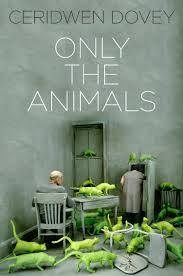
‘Only the Animals’ by Ceridwen Dovey

dovey

245 p. 2014

This book is a series of short stories written by the souls of dead animals mentioned obliquely in literature.  Not a promising premise, I must admit. When I mentioned to my husband what this book was about, he said  (rather derisively) that it sounded like the little tsunami of books that emerged a few years ago about the overlooked wives of famous men ( Mrs Cook; Shakespeare’s Wife; Ahab’s Wife etc).  While I’m not enamoured of the comparison, I can see the similarities. Dovey is writing into and against a better-known narrative by using imagination to bounce off her historical and literary research.

The stories are arranged chronologically and range across continents.  They are set during times of war, and all of them explore human-animal interaction. In each case, there is a connection with a writer who paid homage in some way to an animal in her or his work. In the case of the parrot, Dovey pays homage to Julian Barnes who himself paid homage to Flaubert in Flaubert’s Parrot. The stories have this layer-upon-layer texture.

We start with the Camel who accompanied Henry Lawson on an inland expedition in 1892; we meet the Cat that Collette took with her to the Western Front in 1915; we meet Tolstoy’s tortoise who ends her long life in space; we encounter a dolphin trained by the US navy in 2003, and a parrot in Lebanon in 2006- and others in between.  I’m not sure, though, that the narrative voices of the different animals were different enough (unless, of course all souls sound the same), even though there were cadences and allusions referencing the authors mentioned in each chapter.

I must confess to feeling rather out of my depth in catching the allusions and little in-jokes that I detected, but could not understand, as I read the stories. As with any mash-up, which is I suppose what these are, there’s a blurry line between the derived and the truly original. There’s a list on Dovey’s website that references her sources, both literary and historical, and it further blurs the line between fiction and non-fiction.

As a result, I found this book a rather uneasy reading experience.  As with The Girl with the Dog, I found myself discomfited by feeling as if an academic and literary game was being played over my head, or as if I was being excluded from a conversation spoken in riddles by a group determined not to let me understand. Does that matter, if you’re enjoying the story in its own right? I suppose not.  Or is it that I resent being excluded by ignorance and am chafing against how that makes me feel?

There’s enough curiosity about seeing the author perform that keeps you reading,  because this is a book of literary performance.  Any collection of short stories is arbitrary- what is included, what is left out- and I felt that way with this collection as well.  There could be an Only the Animals II, or III if she felt so inclined (and I strongly suspect and hope that she does not).  Not because the project is flawed, but because it should only be done once, and done well, as it is.

I have posted this review to the Australian Women Writers Challenge site

aww-badge-2015-200x300

Movie: ‘Holding the Man’

I’m pleased to see that Cinema Nova is still screening the Australian movie ‘Holding the Man’ twice each day.  I saw it about six weeks ago and expected that it would have finished by now.

I don’t know much about homosexual relationships or the gay scene during the AIDS ‘epidemic’ but certainly the attention to detail in depicting  late 70s-1980s Melbourne is exquisite- right down to the ‘Web of Life’ textbook in the locker room at Xavier. I can only assume that its fidelity in other areas is just as sound.   I hadn’t seen either of the lead actors before (which may say more about me than them), but the supporting cast is a veritable ‘who’s-who’: Anthony La Paglia, Sarah Snook, Kerry Fox, Guy Pearce and even Geoffrey Rush pops up as well.  Go to see it while it’s still on.


‘Lost Relations: Fortunes of my family in Australia’s Golden Age” by Graeme Davison

davidson

2015, 288 p.

How to produce a good family history?” asks fellow-historian John Hirst in his blurb for this book. His answer: “Get a master historian to write about his own.”  Hirst is right.  Davison is a master historian and this book is far more than a family history.

Graeme Davison, who is most familiar to me with his Rise and Fall of Marvellous Melbourne and The Use and Abuse of Australian History, has not been (and still is?) not completely comfortable with family history as a pursuit.

For most of my life I have avoided family history.  The crowds of chattering genealogists in public libraries and archives are one of the daily hazards of the academic researcher. I have written critically about the perils of ‘speed-relating’, the craze for online genealogy, and the business activities of Ancestry.com and other commercial genealogical websites… Only as I grew older and my parents passed on did I begin to recognize how much of my life had been shaped by family tradition and expectation, not to mention genetics; although even now, when temptations to reminiscence and nostalgia grow stronger, I resist them, conscious of their distortions.  In the end, however, encouraged by my family, I succumbed to the appeal of family history, not only because I wanted to better understand who I am, but also in order to think more concretely about the relationship between the familial and the communal pasts. And ‘doing’ my own family’s history, or a part of it at any rate, seemed the best way to tackle it  (p. xiii)

He doesn’t leave behind his identity as professional historian in doing so, though.  He starts his book in Hampshire, with the railway carving its way past the Hewett family’s village, and finds himself wondering what the Hewetts thought about it- and the historian in him makes its presence felt:

As an academic historian I would not even attempt to answer the question: it is too conjectural.  I would be better off examining the opinions of people who actually wrote them down. But the people who wrote things down are not the people whose feelings I want to know. Ancestry inspires the assumption that our forebears, being our own flesh and blood, are somehow more accessible, as well as more important, to us than other dead people… However, our distant forebears were not people just like us in period costumes…The idea that we can actually put ourselves in the shoes of our forebears is a harmless enough delusion, but a delusion nonetheless. [However] By reconstructing the situations they faced, taking account of the beliefs and attitudes of the time, comparing their situation with that of others, we can begin to understand their actions, even if we cannot enter their minds or hearts. This is what historians call the discipline of historical context.  It begins by treating our own forebears not as special but as ordinary people of their time, and it ends- I would argue- not by enhancing family pride but by expanding our common humanity. (p. 18-19)

Unlike Nick Brodie’s Kin, (my review here) which makes the rather large claim of being “The Real People’s History of Australia”, Davison’s book works on a more modest canvas. He focusses on “Australia’s Golden Age” and those members of his family who emigrated to Australia in the years surrounding the gold rush. He stops his account at his father, who did not emigrate until 1911.  Like a spider weaving a web, he tethers the thread in England- in Hampshire, in London and the journey of the Culloden to Port Phillip-  and stretches it to the gold fields of Castlemaine, strings it across the seaside town of Williamstown on Hobson’s Bay,to  the small cottages of Richmond and eventually to the middle-class prosperity of suburban Essendon.

He notes that

Family historians rely largely on sources created by the state, or earlier by the church. Our narratives are hung on the skeleton created by legally defined events-  births, marriages, deaths, bequests, leases, taxes, property transactions, crimes, censuses and the like. But little of what matters most in our lives is captured by such documents. If we are lucky, a few old letters… or bits of oral testimony…are left to reconstruct the most intimate, precious, fragile, irreducibly personal part of our lives from the outside in, relying on materials that are cold, standardised and impersonal.  Like the prophet, the family historian sometimes seems to inhabit a valley of dry bones, inert and meaningless until they are clothed with flesh and the spirit is somehow breathed into them (p.100)

Davison does breathe life into them, not from filling them from imagination (as a novelist might) or by speculation (which a less disciplined historian might do) but by bringing to the endeavour what historian Keith Hancock called ‘span’- that big picture perception that makes sense of the small.  I learned a great deal from this book, particularly in terms of push-factors, both in the United Kingdom and within Australia itself, that prompted the geographical shifts revealed by those dusty dry documents.  As it happened, his family history provided a rich case study for the effect of religion on individuals and families, not just as an entry in a document but as lived experience.

Davison is a much older and more experienced historian than Brodie, and he does not feel the same urge to slash at the historians who surround him.  In this regard, this is a much gentler and more mature history than Brodie’s, told with humility and grace.

Does the world need a deluge of  autobiographical, family-based histories, written by historians? I’m not sure that it does, and perhaps this will be a passing phase. Nonetheless, I suspect that Davison’s book will survive when the genealogical juggernaut moves on.

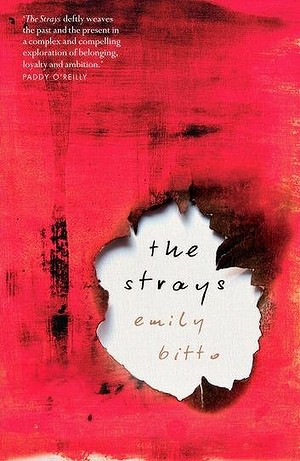
‘The Strays’ by Emily Bitto

bitto

2014, 336 p.

I had heard that this book was inspired by John and Sunday Reed and the Heide artists, and for the opening pages I kept wondering who each character was representing.

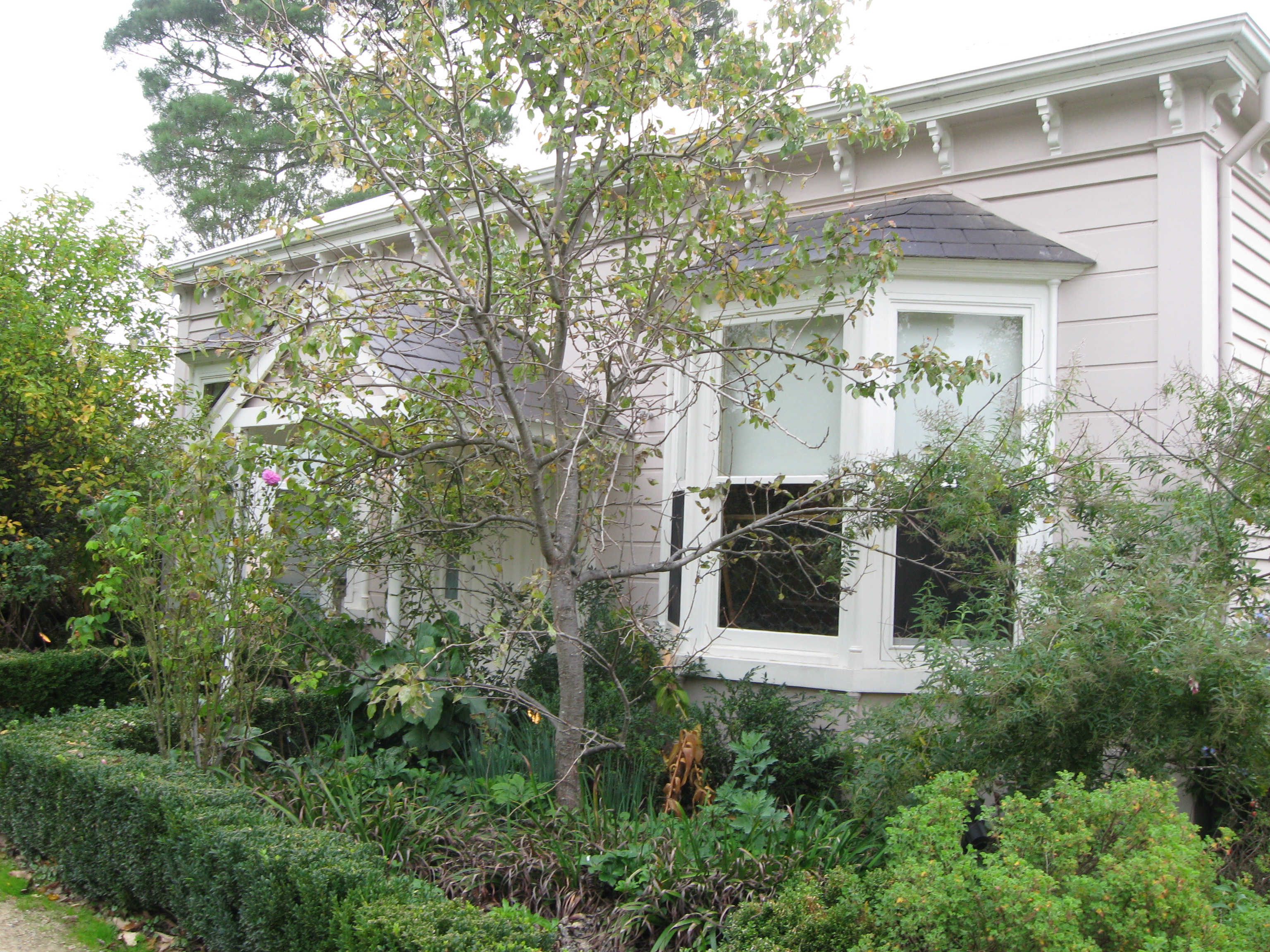
IMG_4813

Heide I, Bulleen

I soon let go of that rather fruitless quest, and I’m glad that I did. This book is much more than a fictionalized history: it’s a reflection on the loss of childhood innocence, families, sisters, art and secrets.

The book starts in the 1980s as Lily, an established art historian receives a letter from her childhood friend Eva Trentham, from whom she has been long estranged, asking her to attend a retrospective exhibition of Eva’s father’s artwork. Lily is thrust back fifty years into reminiscence about her childhood infatuation with the Trentham family- loud, artistic, transgressive – and the artists who circulated around them. Lily is an only child, and her description of her own parents is flat, muffled and dull, just as she perceived them to be in comparison with the Trentham house where she was treated as yet another of the ‘strays’ who attached themselves to the family.

In many ways this book reminded me of L. P Hartley’s The Go-Between, Ian McEwan’s Atonement or Evelyn Waugh’s Brideshead Revisited. In all these books we have a regretful, adult narrator, reflecting on a situation in which they were the immersed observer, infatuated by difference but ultimately confirmed in their outsider status by actions which they did not really understand at the time. All these books are suffused by a summer goldenness, and so is this book too, but it’s the distinctive heat and smell of an Australian summer. I’ve visited Heide many times, and clearly Emily Bitto has too, and she captures beautifully the river flats, a rampant but much-loved garden and a rambling farm house.

These are large characters, manipulators and exhibitionists by turn, fuelled by alcohol, drugs and sexuality. The entangled relationships between different adults in the household are observed with an innocent, but increasingly knowing eye, but the sense of impending doom builds, and the betrayal when it comes, is not unexpected- although perhaps not in the way I anticipated.

This is a remarkedly assured debut novel. Her descriptions are evocative, her shifts in chronology are confident and the narrator draws you into her hurt, wistful excitement over such a different way of living that she still mourns losing.

This book spoke to me on so many levels- as a riff on a well-known story about the Heide painters and artistic Melbourne in the pre-WWII years, as a reflection on childhood and the intimacy of pre-pubescent best friends, and as an exploration of the heady combination of sex, alcohol and freedom, and the lure of a transgressive lifestyle.

[Actually, I read The Strays and wrote this review almost six months ago. It was only when I read Sue’s insightful review at Whispering Gums that I looked for my own review on my blog.  Where on earth was it?   It is with much relief that I have found it bobbing around on my tablet, and assured myself that yes, I did really read it, and yes, I did write a review. Phew.]

I’ve added this to the Australian Women Writers Challengeaww-badge-2015-200x300

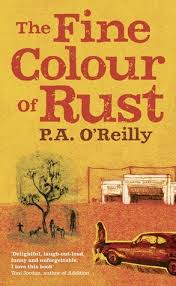
‘The Fine Colour of Rust’ by P. A. O’Reilly

colourofrust

2012, 247 p.

She’s certainly versatile, is P. A (or Paddy). O’Reilly. I’ve read her book The Factory and was kindly (thank you Lisa) given a copy of The Wonders, but am rather embarrassed to say that have not yet read it yet  (a TBR#20 contender perhaps?)  Both of these books have little in common with The Fine Colour of Rust  which is a light, humourous read, ideal for a book group (which is how I came to read it) or just for a lay-back-and-enjoy read.

Loretta Boskovic is one of three sisters, named by her mother in tribute to women country-music singers (her sisters are Tammy and Patsy). She lives a country life, and in many ways it reflects the staples of country-music lyrics: a small town, a no-good husband, and single motherhood.  But there’s no misery here: Loretta is funny, self-deprecating and a crusader for her small rural local community of Gunapan. Her children’s local school is threatened with closure, and so Loretta charges up the Save our School Committee, regales the local MP on his fleeting visit to the school, and has a partial success.  It is not long before she becomes aware of other nefarious doings involving local movers-and-shakers and big money.

I don’t live in a small town, but largely because of my participation in the Heidelberg Historical Society,  I am involved in local community action about heritage and development issues.  I haven’t yet earned ‘regular feature’ status at Council meetings, but I’ve been often enough to see grassroots politics in action, and Loretta’s activism and community involvement rings absolutely true to me. I’ve met several “Lorettas”  in committees, in local politics, at the school gate. They are the sinew of local life.

Her husband has breezed back into town with a new girlfriend in tow, and she watches sadly as her teenaged daughter reads significance  into his fleeting visit. Her kids drive her crazy, and she loves them like mad. She has women friends who she doesn’t always treat well, and her friend Norm, the old scrap-metal collector up the road, is a steady backstop and surrogate grandfather for her children.

When we discussed the book at bookgroup, we found ourselves calling “But what about when….” and flicking through to find yet another small snippet that had us laughing anew.  I didn’t even notice that the book was written in the present tense, and at times I had a lump in my throat just a couple of pages after laughing aloud.

The Fine Colour of Rust is an affectionate lovesong to community, to friendship, to motherhood and to small country life.  It’s not high literature, but it’s honest to the core.

aww-badge-2015-200x300I’ve added this to the Australian Women Writers Challenge website

Far away…..

Regular readers may be interested to know that I’m back in Kenya for three weeks, awaiting the birth of my very first grandchild.  I’ve dusted off the blog from 18 months ago, and you can see what’s going on at

http://landofincreasingsunshine.wordpress.com

Time Travel: Listening to the Adelaide Writers Week 2015

I’ve been thoroughly enjoying the Adelaide Writers Festival – six months after it was held.  The festival was recorded and is available on podcast. What a treat! No having to toss up which session to go to. No regretting that you’d hadn’t gone to the other one instead. No trying to think back after a full day of talk, trying to remember what the first session was about.

wilson

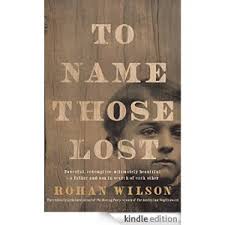
So I’ve heard Rohan Wilson talking about his book To Name Those Lost, which I’d just finished at the time, and which I will review soon.  He talks about the relationship between history and fiction, although not at the depth I might have expected from his PhD thesis (which he omits to mention at all- it’s as if he’s distancing himself from his academic credentials completely).

uglow

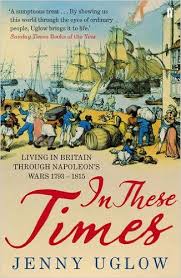
I very much enjoyed Clare Wright interviewing Jenny Uglow. In fact, I enjoyed that interview so much and was so taken by Uglow’s readings from her most recent book In These Times that I even purchased it (even though, as part of the TBR20 challenge I committed to – and have not really fulfilled- I promised I wouldn’t buy any more books until I read twenty of the books I already have.  Yet another resolution bites the dust).  I’m particularly attracted to the domestic scene in Britain during the Napoleonic Wars, because this was the period during which Judge Willis (my own research interest) grew up and formed his character and opinions.

castor1castor2

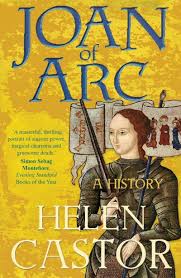
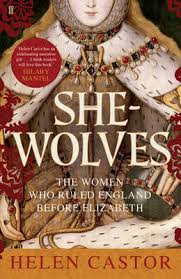
A second panel chaired by Claire Wright discussed the art of historical writing with Jenny Uglow (again) and Helen Castor, who is sometimes seen on television documentaries.  Castor’s most recent work deals with powerful medieval women and Joan of Arc. Given Wright’s own interest in the historical documentary format, it was interesting to hear the way that the narrative can be shaped to the demands of a television audience while maintaining historical integrity.  A note of verisimilitude to the podcast was introduced by the RAAF flyover that interrupted the presentation!

watson

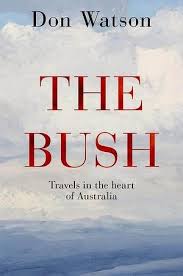
After listening to the session with Don Watson,  I’ve resolved to borrow  The Bush again, as I had to return it to the library before starting it.  In his laconic style, he makes some pointed current-day political observations, as well as discussing settler and urban perceptions of ‘the bush’ over the last 200 years of white settlement. He observes that, unlike the American West, (e.g. Shenandoah) the Australian bush has never prompted a love song, and that the few ‘bush’ songs we have (Waltzing Matilda etc) are variations of songs written elsewhere.

lanchester

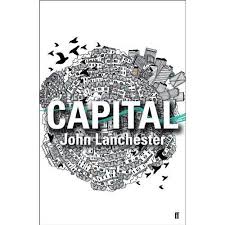
The session with John Lanchester, author of Capital (reviewed here) gave insights into the opportunities and constraints of the fiction and non-fiction genre for authors.  Lanchester, whose work often deals with economic themes – most recently, the GFC- writes in both genres, with a leaning towards non-fiction. The fiction genre, he says, has two cardinal rules: first, that the author must not explain to the reader, and second, that unlikely events can not be introduced.  Non-fiction has no such constraints.

clementswilson2

The theme of fiction/non-fiction was also explored in a panel on Van Diemen’s Land featuring Nicholas Clements, the young historian who has recently released The Black War: Fear Sex and Resistance in Tasmania (definitely on my TBR) and Rohan Wilson (recent author of To Name Those Lost) whose first book The Roving Party dealt with the Black War through fiction.  Wilson’s book took the contentious path of writing from the perspective of one of his Indigenous, historical characters, while Clements faced criticism that he had not consulted with present day Aboriginal groups.  In response to this, he argued that he wanted to present voices from the time, without the interposition of contemporary perspectives. Both books, from fictional and historical approaches, aimed to complicate a goodies v baddies dichotomy.

What a lovely virtual and asychronous day I’ve had at the Adelaide Writers Week!  I may just hop in my time machine and travel a bit further back and enjoy the podcasts from earlier years too.

History Week Walk: Migration and the private lives of the Hoddle Grid Oct 18, 2015

This upcoming event for History Week in October might be of interest to those of us interested in Port Phillip and early Melbourne history.

From the History Week website:

http://historyweek.org.au/sessions/migration-and-the-private-lives-of-the-hoddle-grid/

MIGRATION AND THE PRIVATE LIVES OF THE HODDLE GRID

Join historian of colonial Melbourne, Nadia Rhook, to retrace the urban foot paths of migrants – from the British colonists who laid the Hoddle Grid over Wurundjeri land to the nascent South Asian diaspora based around ‘Little Lon’ and the politics of love, labour and opium in Little Bourke’s Chinese Quarter.

Discover how Melbourne has been made and remade by migration and its fraught restrictions.

This 2 hour walk will leave you amazed at the tapestry of cultures and languages woven across the streets, residences, shops and churches of colonial Melbourne.

Date: October 18, 2015 Time: 12:00 pm – 2:00 pm

Location: CBD

Cost: Free

Enquiry: Bookings via Nadia Rhook – N.Rhook@latrobe.edu.au