
Heather Cox Richardson Her History and Politics Chat on 29 July was a commentary on the events in Portland and the Republican Jim Jordan’s showing of a manipulated video showing the violence there. She was asked how to respond to REAL fake news like this, and she talked about the importance of changing the narrative back to reality. As far as moving the Feds in, she reminded her listeners of other events, e.g. Waco Branch Davidian siege, and the preceding Ruby Ridge siege, that act as a warning that the optics of a Federal intervention are always bad. She then moved on to whether the Russian bounty scandal is real. She notes that Trump isn’t really engaging with it, and wonders why. Finally, she addresses the question of Trump refusing to leave office. She is not overly concerned about that at the moment, noting that lots of things can happen between now and the election e.g. Trump’s finances, Portland. etc.
Her History Chat of 23 July continues her History of the Republican Party into the 1930s and 1940s. Now that the Republican Party had allied itself with big business, it was happy to bask in this alliance during the 1920s when things were good (for some). But it backfired in the 1930s, when everything fell apart. There was a philosophical determination to overlay unemployment with moral overtones, and so the Republican Party couldn’t compete with FDR’s New Deal, which was very electorally popular. The Republican Party split between the Taft Conservatives (who wanted to return to the big business led affluence of the 1920s) and the Dewey Republicans (who embraced a lot of the New Deal ideas). The Democrats split too, with the Dixie Democrats from the south objecting to policies that black people were able to benefit from.
The Thread Continuing on with the thread of ‘non violent resistance’, we’ve gone back from Martin Luther King to Bayard Rustin, and now with Turning Enemies into Friends we go back further to Ghandi, who was a direct influence on Rustin. Ghandi himself corresponded with Leo Tolstoy, who is explored in The Transformation of Leo Tolstoy. What a fundamental spiritual/political shift he made! Then finally we end up with I Will Be Heard, which looks at the abolitionist William Lloyd Garrison, printer of The Liberator newspaper in the 1830s, decades before the American Civil War.
The Latin American History Podcast How curious- a Latin American history podcast from Australia, presented by Malcolm Sargent. I have no idea who he is. But anyway, I enjoyed The First Circumnavigation of the Globe Parts I and Part II about Magellan’s three year circumnavigation journey in 1519. Actually, he didn’t actually make it, because he was killed in a battle with the locals in the Philippines when he became embroiled in political/religious affairs.
Lectures in History C-span. This lecture from 2013 is called Culture and Society in the 1920s. Professor Michael Kazin from Georgetown University (and co-editor of Dissent magazine) discusses Prohibition, the reactivation in the 1920s of the Ku Klux Klan as an anti-Jewish and anti-immigrant movement, the growth of Hollywood and the Production Codes that led to sanitized bedroom scenes in American movies, and Al Capone. Interesting.
Latin America in Focus. This podcast in English is produced through the Americas Society/Council of the Americas. Do you remember seeing a few months back those photos of thousands of semi-naked prisoners chained together, crammed together on the floor in rows? That was ordered by the El Salvadorean president Nayib Bukele, Latin America’s youngest president (39) who styles himself as being an ‘outsider’. In The Strange Case of El Salvador’s Plummeting Homicide Rate, the Central American analyst with the International Crisis Group, Tiziano Breda, argues that gangs can choose to dial up or down intra-gang violence for political ends, and that perhaps Bukele’s current very high popularity gives him political capital to institute dialogue with the gangs. I’m not sure that these photos, which Bukele tweeted himself, will help. Breda suggests that he did that to shore up his over-90% popularity, because he is not in a strong legislative position. Mmm. I’m not so sure.
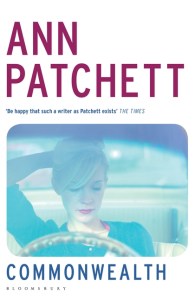
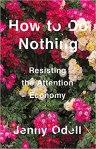 So, another month- another Six Degrees of Separation – see the ‘rules of the game’
 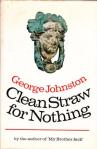 But the title put me in mind of George Johnston’s Clean Straw for Nothing (1969), the second of his David Meredith trilogy, and the sequel to My Brother Jack. Unfortunately, I read it before I started my blog, so you’ll just have to take my word for it that I absolutely loved all three books of the trilogy.
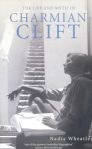 So caught up was I by the trilogy that I became fascinated by Charmian Clift, writer and journalist and, as it happens, George Johnston’s wife. Nadia Wheatley wrote a brilliant biography of her called The Life and Myth of Charmian Clift (2002) which, again, I read before starting this blog.
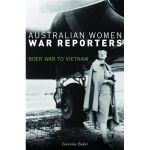 Clift was a journalist, although more of the domestic kind, with long-running columns in the ‘women’s pages’ of the newspaper. Jeannine Baker explores the world of Australian woman war journalists in her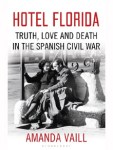
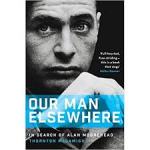 Mentioned in passing is the Australian journalist Alan Moorehead, who was also in Spain during the Civil War. Thornton McCamish wrote a fine biography of Moorehead in his
 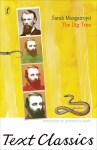 Moorhead wasn’t the only historian to write about Burke and Wills. English writer Sarah Murgatroyd wrote an eminently readable history in her book The Dig Tree (2002), which again, I read before I started this blog. It was quite tragic to learn that she died of cancer just a few weeks after it was published. It has been republished as one of the Text Classics, which is impressive for a book published so recently.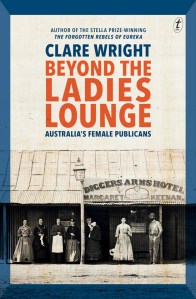
 So, the starting book is Siri Husdvedt’s What I Loved. I could have sworn that I have read this book, but I have no record of it at all, and when I read the synopsis it doesn’t sound familiar either. But I gather that it starts off with an art historian and a painting, so that leads me to….
 Alex Miller’s
 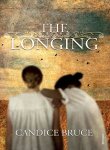 Candace Bruce’s
 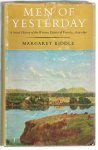 Margaret Kiddle’s Men of Yesterday: A social history of the Western District 1834-1890. This book, written in 1961, is written by a daughter of the Western District herself, celebrating the white settlement of western Victoria. Its reverence for ‘settlement’ and ancestral pride, without considering the theft of indigenous lands, does not sit well today but it is beautifully written by a young historian who died before it was published. Another historian who discovered Margaret Kiddle’s work was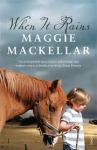
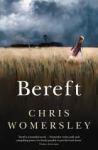 Chris Womersley’s
 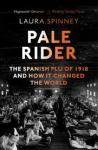 Laura Spinney’s
  The Resident Judge of Port Phillip