Category Archives: The ladies who say ooooh

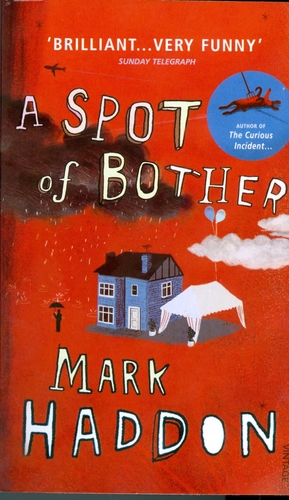
‘A Spot of Bother’ by Mark Haddon

2007, 503 p.

I read in succession two books that start off with the sudden death of a middle aged man, and writing this review some time (too long) after reading the book, I find myself getting confused between this book and J. R. Rowling’s The Casual Vacancy (reviewed here). Both are set in England, both have unlikeable characters and treacherous families, and neither shows off the author’s skills to best effect.

George is a 61 year old retiree who would certainly qualify for the Dull Men’s Club. The secret of contentment, he thinks, lies in ignoring many things completely. Things like his wife’s affair with his ex-colleague or the wisdom of his daughter marrying a man who seems to be nearly as dull as George is. But when George discovers a lesion on his hip, he is convinced that it is cancer and spirals off into his own whirlpool of paranoia, planning to kill himself or, literally, to take matters into his own hands. Meanwhile, his wife Jean is recapturing her lost youth with George’s business partner David, an affair that she sees as something romantic and beautiful, but which, when George discovers them having sex, is unattractive and embarrassing between two “old people”. When George and Jean learn that their daughter Kate is going to marry Ray, a tradesman with a strong northern accent, they both disapprove, as does Kate’s gay brother Jamie. Somehow weddings often seem to bring out the worst in families. Jean’s meddling, Jamie’s huffiness over whether his boyfriend Tony should be invited and how he will be received, and tension and uncertainties between Kate and Ray make this whole wedding seem a disaster in waiting. The whole thing teeters into farce, which undermines somewhat the rather acute and poignant observations that Haddon had made along the way.

The story is told from the varying perspectives of the characters, each of them rationalizing their stance, as we all do. What Haddon does well is butt these perspectives up against each other, challenging the veracity of the various points of view. Jean, for instance, sees herself as a vibrant and attractive older woman, where George sees her as a slightly repellent, plump, aging woman with witch-like hair. George sees himself as a slightly ironic, logical older man, where Jean sees him as a rather pathetic, lost retiree looking for relevance. Kate values Ray for how good he is with her young son Jacob; Ray is bemused by how angry Kate is all the time.

This book had none of the endearing charm of The Curious Incident of the Dog in the Night-Time, and it felt as if it could have been written by any number of middle-ranking English authors. The ending was just ridiculous, and I finished the too-lengthy book – and its unlikeable characters- feeling as if I was glad to leave them all behind.

My rating: 6/10

Sourced from: ex- CAE Bookgroups stock

Read because: my ex-CAE Ladies Who Say Oooh Bookgroup chose it from the dregs of the books left over now that CAE has closed.

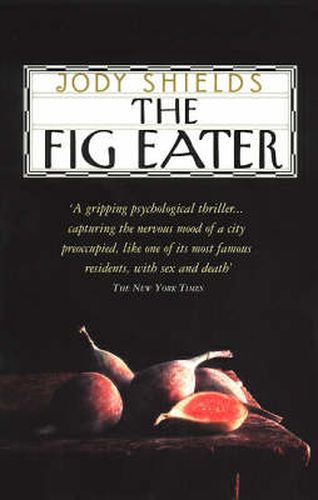
‘The Fig Eater’ by Jody Shields

2001, 352 p.

I must admit that this book was nothing like I imagined it would be. From the front cover (yes, I know don’t judge etc etc) I assumed that it would be a historical fiction but instead found that it was a detective story, and a not terribly satisfying one at that.

We meet the victim in the opening pages of the novel as a young woman’s body is being examined in the presence of the Inspector (who is never named) who, steeped in the methodology of crime investigation and influenced by the ideas of psychoanalysis swirling around early 20th century Vienna, calls in his wife, the Hungarian artist Erszébet to make a painting of the 18 year old Dora’s body in the morgue for later reference. Erszébet and her young friend, British governess Wally, embark on their own investigation, separate from and deliberately kept from the Inspector. The two investigations run in parallel, the Inspector’s being dominated by his theories of investigation and the role of the investigator, and Erszébet’s drawing on Hungarian folk tales and tropes. The ending seems to go off on a frolic of its own, straining credulity and it seemed to be an abrupt way of bringing the story to the end.

The book is set in Vienna in 1910 and the book has a detailed map at the start of the book. The text makes specific reference to particular places in Vienna, which can be seen on the map, although without an index, locating the buildings and parks was rather tedious, and I eventually realized that locations were rather incidental to the plot. Despite the care with which Shields has delineated the city, the Vienna location itself does not play an important role in the plot, unlike for example Patrick Süskind’s Perfume. There are many details in the book about figs, folklore and photography, and I began to suspect that the author was unable to let go of the research she had undertaken, and was going to put it in the book regardless of whether it actually added anything.

It was only when reading the notes that came along with the book (it was a bookgroup choice) that I realized the resonances between the victim Dora, and Sigmund Freud’s patient, Dora, on whom he based much of his theory of psychoanalysis. This clever resonance was clearly intended by the author, and yet she left it implicit in what is otherwise a very didactic book.

The relationship between the Inspector and Erszébet is a complex one, and I was pleased that she didn’t overlay the young Wally’s infatuation with Erszébet with a lot of anachronistic gender ideology. She had a light touch here, which could have been highlighted by a more overt interweaving of Freud’s theories, and their destabilizing of ‘reality’ and relationships.

The book was only 352 pages in length, but it felt much longer than that. All in all, not a particularly satisfying read.

My rating: 6/10

Sourced from: a former CAE bookgroup book. To liquidate their stock, they sent boxes of books to the disbanding bookgroups and we’re reading our way through them.

Read because: a bookgroup read.

‘What I Loved’ by Siri Hustvedt

2003, 367 p.

For the first time in over 20 years, I didn’t finish the book for my CAE bookgroup. Partly, it was because I forgot that we had changed the day of our meeting, bringing it forward. But also it was because at 367 small-print pages this is a far longer, denser book than I anticipated.

The story is narrated by an elderly professor, Leo Hertzberg about his life in New York between about 1975 and 2000. It is prompted by the discovery of five letters written to his neighbour and friend, the artist Bill Wechsler by Violet, the woman who was to become Bill’s second wife. They were to become neighbours, with Bill and his first, then second, wife living upstairs with their son Mark, and Leo and his wife Erica living on the floor below with their son Matt, who was of a similar age. Marriages disintegrate under the pressure of infidelity and tragedy. Leo finds himself acting as an indulgent-uncle type figure to his friend Bill’s son Mark, who proves himself unworthy of the love and indulgence extended to him as he disappears into the rave culture of New York and comes under the influence of the menacing artist Teddy Giles.

Leo is an art historian (one of the wankiest genres around, I reckon) and Bill is an artist and so there are long- far too long- descriptions of Bill’s contemporary artwork. Violet researches hysteria, anorexia and representations of the body and identity, and this is described at length too. Indeed, there is much in this book about representation and reality, and it all became rather precious and over-intellectualized.

The book starts off fairly slowly as a domestic narrative within a New York setting, but becomes far more urgent and fast-paced- dare I say, a thriller?- in the second half of the book. It really feels like a book of two halves. Leo is a gracious, self-deprecating first-person narrator, and so it felt comfortable to be in his company. The second half of the book was compelling enough that I continued to read it, even though our book group meeting came and went, but I found the descriptions of art and the self-conscious intellectualizing of the book rather tedious.

My rating: 6.5/10

Sourced from: A left-over book from the former Council of Adult Education

Read because: it was The Ladies Who Say Oooh (ex CAE) bookgroup selection.

‘Joe Cinque’s Consolation’ by Helen Garner

2004, 329 p

Near the end of her book, Helen Garner writes: “I longed to write a lament for Joe Cinque” (p.281).

And she has done so, because as she tells us many times, to keep front of mind, “Joe Cinque is dead”.

This is the third time that I have read Joe Cinque’s Consolation, and each time I see it somewhat differently.

It was published in 2004, when the term “intimate partner violence” wasn’t as common as it is today. When I read it earlier, I think that I saw it more as a deliberate murder, rather than as a manifestation of domestic or intimate partner violence. But I find myself wondering whether “intimate partner violence” which disproportionately involves a female victim, is the right description. Even though Joe Cinque and Anu Singh were intimate partners, the murder doesn’t appear to have been committed within an environment of violence or intimidation. Somehow “intimate partner violence” doesn’t do justice to the self-centredness and premeditation of Joe’s murder. Nonetheless, it something that is more visible in 2025 than it was in 2004.

When you return to a book after 20 years, you are a different reader too. I now read this book as the mother of adult children who themselves have young children. When on the news I see the stricken family of the murder victim outside the court, it seems to me to be the ultimate betrayal, and a crime that I don’t think I could forgive. How dare that person take the life of my child, and all the future that was ahead? As Garner keeps reminding us, Anu Singh and Madhavi Rao’s lives went on; they woke each morning to another day; but Joe Cinque was dead. The knowledge that Singh went on to write a PhD thesis on “Offending Women: Toward a Greater Understanding of Women’s Pathways Into and Out of Crime in Australia” is even more galling. Apparently she doesn’t write about her own case in her thesis, but it’s still all about her.

Garner’s response to Anu Singh is hostile from the start, drawing largely on the visceral dislike of some other women that develops from girlhood. There is, too, a generational aspect to it as well: an impatience with the self-centredness of ‘young people these days’. There’s an irony that it’s Helen Garner who is writing this; the same Helen Garner who wrote of her junkie friend Javo in Monkey Grip; the same Helen Garner who inhabited the world of university share-houses and parties. The Canberra Garner depicts is a meaner, edgier drug world than the inner-Melbourne 1960s drug haze of her novel, and she herself is aware that she is not the same person. Her third marriage had just broken up in 1999 when she first learned of the case, and she was living in Sydney. There is a strong element of the more mature woman here, although she finds her certainties about justice, memory and truth being shaken as she follows the case. She measures both Singh and Rao against what she thinks she would have done in the same circumstances, but finds herself unable to identify with Singh. Alongside her quickly-established empathy for and with Joe Cinque’s mother, in particular, she draws on her own moral, as distinct from legal, compass. Like Maria Cinque, Garner can scarcely believe that Singh receives an effective sentence of only four years.

I had forgotten about the Madhavi Rao case that followed Anu’s sentencing for manslaughter. She does not have the same knee-jerk reaction to her as she did to Singh- indeed, she sees her as largely invisible and pliable- but because Rao seems to be more comprehensible, that same moral compass makes Rao seem culpable because Garner can envisage what she would have done had she seen Joe Cinque lying, blue and breathing shallowly, on the bed. Yet, given that Singh has evaded the verdict of ‘murder’ (being found guilty of manslaughter instead), surely the two women’s actions are not comparable. Justice clearly cannot lie in the degree to which you can identify with the accused, and yet at gut-level Garner baulks at the clinically logical approach undertaken by Rao’s defence lawyer, Lex Lasry, that sees her acquitted of any charges.

In spite of this being my third reading of Joe Cinque’s Consolation, I found myself instantly drawn into conversation with Helen Garner. I can even see her in my mind’s eye, head cocked to one side, like a small sparrow, simultaneously morally certain and yet scrabbling to find her feet in a quicksand of competing arguments, judgements and ‘shoulds’. I want to sit beside her, to talk with her. I do find myself wondering about the title though. Consolation? Certainly, a lament for Joe Cinque; a tribute to Joe Cinque; or her own consolation for Maria Cinque? Joe Cinque is dead: he can not console, or be consoled by, anyone.

My rating: 9/10

Read because: CAE bookgroup – although it’s not CAE anymore and this is one of the ‘left-over’ CAE books.

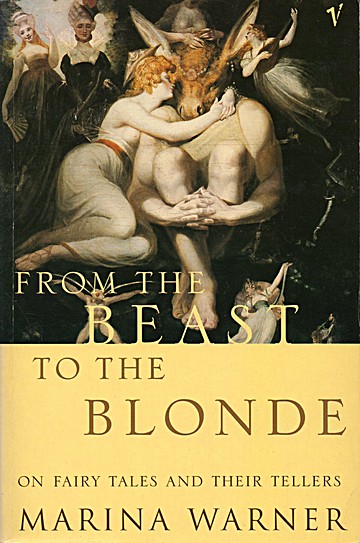
‘From the Beast to the Blonde’ by Marina Warner

1994, 458 p.

I was rather startled to see that my CAE bookgroup had chosen Marina Warner’s book for our December 2023 read. We’re a rather cosy bookgroup, once condescendingly designated ‘middlebrow’ readers, more drawn to fiction than non-fiction, and I was familiar with Warner’s rather erudite contributions to the London and New York Review of Books magazines. From the Beast to the Blonde is a hefty tome, both physically, and intellectually. I raised an eyebrow at the notewriter’s opening paragraph in the CAE notes that accompanied the book:

Perhaps the book should be approached by reading the lucid and interesting introduction and conclusion, which summarize all the themes developed at length in the main text, then glancing through the text’s handsome and liberal illustrations, which will give a visual impression of the contents.

CAE notes p. 1

Once I felt that I had ‘permission’ to skip bits, I actually ended up reading most of the book, even though I only started reading it about four days before the meeting, as is my usual practice. It was very dense, with long sentences and a forbidding vocabulary (autochthonous? peripeteia?). It was very digressive, as if Warner couldn’t allow a possible association to go unremarked. Most of her material was focussed on European fairy stories. Some Islamic stories do get a look in, but few Asian or indigenous stories are mentioned. In fact, I’m not sure that she ever really defined what a fairy story is, and the distinction between a folk tale and a fairy story.

The book is divided into two parts: The Teller and the Tale. In the first part of the book, she highlights that most fairy stories originated in women’s talk, especially in women-only places like child-bed, washing, kitchens etc, even though they were generally published under men’s names (e.g. Charles Perrault, the Brothers Grimm, Andrew Lang). Wrested into the male realm, they often display a disparagement of the original women tellers, drawing on the imagery of the old crone, or a bird to declare them “Mother Goose’s” tales or a grandmother’s stories.

In the second part of the book she moves on to specific stories, particularly Cinderella and the rather disturbing Donkeyskin fairytale (where a young girl has to disguise herself in a donkey skin to avoid her father’s incestuous designs on her) among others. She discusses the Disneyfication of fairy stories, especially ‘The Little Mermaid’, and the cultural stereotypes of blondness and step-mothers that are conveyed through them. But this division between the two sections is not clear cut. For example, although name-checking Marie-Jeanne L’Heritier, Henrirette-Julie de Murat, and Marie-Catherine d’Aulnoy as women writers of fairy stories prior to their absorption into the male-author canon in Part One, it is only in Part Two that she actually gives biographical details about the women and their part in late seventeenth and early eighteenth century French circles. She reveals her indebtedness to Angela Carter, whose adult fairy stories have extended and subverted the genre.

To her credit, she does give a good plot summary of the various stories and their variations, as few readers would be familiar with them, and she does the English reader the courtesy of translating French quotations from them. But it is still a very dense, difficult text. In the conclusion, she embarks on a discussion about a historical as distinct from psychoanalytic reading of fairy stories, arguing that they need to be read within their historical context in both their authorship and allusions, rather than as representatives of archetypes (at least, I think that’s what she was arguing).

The proliferation of anti-fairy stories, even more so in the decades after this was written, have picked up on the feminist emphasis on this book which no longer seems particularly radical or new. They certainly do not call on the same intellectual fortitude and commitment that this book requires of its reader. And it did remind me to one day introduce the original versions of the stories to my grandchildren (yes, it will probably only be my granddaughters) from my own mother’s ‘The Children’s Treasure House”, which will test their attention spans with its dark themes and its black and white art-deco line drawings. Just like my attention span was tested with this book. I recognize its contribution and I admire its breadth and erudition, but it was hard work.

My rating: 7/10

Sourced from: CAE for my CAE Book Group (AKA ‘The Ladies Who Say Ooooh’)

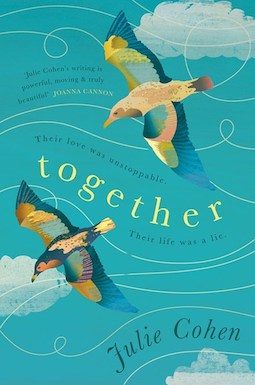
‘Together’ by Julie Cohen

2018, 352 p.

The book starts in Maine in 2016 with a death: that of eighty-year old Robbie, who awakes, untangles his limbs from those of his sleeping wife of decades, Emily, gets dressed, writes her a farewell note, then goes down to the ocean to die. He is a retired boat builder, father and grandfather, and his memory is failing him. He is confusing generations, losing things, feeling as if he is in a fog that descends without warning, obscuring all familiarities and, he fears, loosening secrets that he and Emily have held tight for years.

The book then goes backwards to 1990, when Emily’s mother dies and, despite years of rejection from her family, Emily returns to her native England for the funeral. Nothing has changed: the anger and hurt that has alienated her from her family still remains. While she is away, Robbie’s estranged, alcoholic son William returns, much to the delight of his younger teenaged half-brother Adam, who barely knew of his brother’s existence.

Another jump- this time to 1975-77 where the childless Emily and Robbie adopt Adam as a four-week old baby. Robbie has lost contact with his son William, from an earlier marriage, and as an obstetrician/gynecologist, Emily is heartbroken that they have no children. When an opportunity comes to circumvent the bureaucracy and waiting lists, they jump at it – only to find out that perhaps it is not what it seemed.

Back three years to 1972 when Emily and her first husband Christopher return from a stint of medical work in Bolivia, joining her family on a holiday in Florida. Suddenly she encounters Robbie, after nearly ten years separation and they are instantly drawn to each other, prompting huge changes in everyone’s lives.

And finally, back to 1962 where they meet for the first time and fall in love. It is an instant, overwhelming attraction that is to last for fifty years.

I can’t really say much about this book because of spoilers, but the backward trajectory of the narrative gave you an opportunity to get to know Robbie and Emily, from their old age forward, so that ‘the secret’, when it is revealed, needs to be held up against everything else that we have learned about their life together. I thought that she captured Robbie’s dementia well, and the powerful attraction that they exerted on each other, right from the start, is well described. It is a bit Mills-and-Boonsy – how could it be otherwise?- but I think that Cohen showed real skill in controlling the backward plotting which is such an important part of the book.

My rating: 6.5 / 10

Read because: CAE bookgroup.

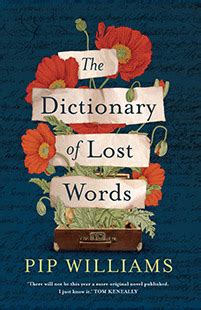
‘The Dictionary of Lost Words’ by Pip Williams

2020, 406 p.

“Have you read The Dictionary of Lost Words?” I asked my daughter-in-law. She hadn’t, she said, although she started it and then abandoned it because she didn’t find it very interesting. I could sympathize: I wasn’t too enamoured of the first eighty or so pages of the book either. But I’m really glad that I persevered, because by the end, I absolutely loved this book.

I am a historian, and I love history, but I am very conscious of when the research behind a book swamps the narrative. I find myself wishing that the author had done their research, and then just put it away out of reach and written into the spaces left in the history. This is exactly what Pip Williams has done here, and her book is all the stronger for it.

The book is based on the real-life compilation of the Oxford English Dictionary, which formed the basis of Simon Winchester’s The Surgeon of Crowthorne, a book which describes the relationship between James Murray, the Editor of the OED and volunteer Dr. William Chester Minor, incarcerated at Broadmoor Asylum. Pip Williams read that book too, and in her author’s note, she says:

I thoroughly enjoyed it, but I was left with the impression that the Dictionary was a particularly male endeavour. From what I could glean, all the editors were men, most of the assistants were men, most of the volunteers were men and most of the literature, manuals and newspaper articles used as evidence for how words were used, were written by men. Even the delegates of the Oxford University Press- those who held the purse strings- were men

p. 410

Yet there were women involved in the Dictionary, and Pip Williams found them. There were James Murray’s wife Ada and three daughters Hilda, Elsie and Rosfrith who were engaged in the endeavour. Edith Thompson and her sister Elizabeth provided 15,000 quotations – perhaps not as many as Dr Minor, but prolific nonetheless. There was Eleanor Bradley who worked as part of her father’s team of assistants. Then there were the women who sent in quotations for words, or who wrote the texts that counted as ‘evidence’ of a word.

It is among these real-life women that Williams has created her story, finding the gaps and merging fact and fiction. Her fictional character, Esme, is the daughter of one of the lexicographers working in the Scriptorium, a rather-grandly named shed in the grounds of James Murray’s house. Her mother had died, and her father is raising her with the aid of Lizzie, an Irish maid not much older than Esme herself. Esme accompanies her father to the ‘Scrippy’, where she hides under the table as the lexicographers work, and it is from under the table that she notices one of the slips on which the words are written floating down to the floor. It’s the word ‘bondmaid’, and she takes it and hides it in the trunk under Lizzie’s bed onto which she scratches the label ‘The Dictionary of Lost Words’. As she becomes increasingly aware of the class gap between herself and Lizzie, and the gender gap between the men compiling the Dictionary and the women whose work provides the fabric of their middle-class existence, she is drawn to more ‘lost’ and ‘unknowledged’ words. She collects them from Lizzie, from old, toothless Mabel in the market, from actress-turned-suffragette Tilda, and as her experience grows, from her own knowledge of women’s bodies.

At the same time, this fictional Lizzie is living within a real-life historical world including the suffrage movement and World War I. Just as we are shaped by events and trends (for myself: baby-boomer prosperity, a politics in which the Labor Party became a viable political contender, the internet, 9/11, COVID), so too Lizzie’s life is touched by historical events, but Williams deftly keeps these as external, but inexorable influences without letting them overwhelm the narrative. She has her research well under control.

The book is steeped in questions of language and power, and there are some nice little plot tweaks that highlight the importance of language and words. One of the lexicographers speaks to Esme in Esperanto – that quixotic attempt to construct an international language and the Suffragettes adopt the motto of “Deeds, Not Words”. The epilogue, which takes us to a Lexicography conference in Adelaide in 1989 might seem superfluous or tangential but it’s not: the collection of the Kaurna language by ethnographers and missionaries and its restoration, like language reclamation projects in many Indigenous communities, is another form of “lost words”. In this way, Williams takes the process of transcription and compiling out of the little Scriptorium in an Oxford garden over a period seventy-one years to our own present as Australians as we face our own truth about languages that were proscribed and extinguished, only to be found again.

I really enjoyed this book, and didn’t want it to finish.

My rating: 9/10

Sourced from: CAE bookgroups, and my own copy as well.

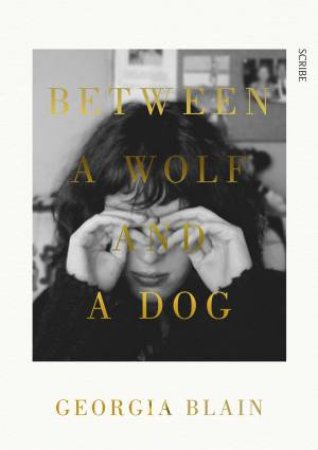
´Between a Wolf and a Dog´ by Georgia Blain

2016, 320 p.

SPOILER ALERT

I have often thought that one´s response to a particular book is often shaped by the books you have read immediately prior. Sometimes a brilliant book casts everything else into the shadows and dulls your appreciation for whatever comes after, but sometimes it works the other way too. Immediately before reading this book, I read a dialogue-heavy political novel and I’m still reading a very long survey history non-fiction book. There’s no ‘singing’ prose in either of them. But right from the first page of Georgia Blain’s book I just relaxed into her precise and confident prose, knowing that I was reading a writer who can really write.

Much of the action in the book takes place over one day – a dank, wet Sydney day with the rain pouring down almost without stopping. We learn in the early pages that 70-year old Hilary is very ill, but she is keeping this knowledge from her two adult daughters, April and Ester. The two sisters have been estranged for three years, after April and Ester’s husband Lawrence had a brief fling. There had always been an underlying tension between the two siblings. Ever since childhood, April has had a scant regard for possessions, and freely takes what she desires. However, ‘taking’ Ester’s husband is a far cry from the ‘borrowed’ clothes and pilfered jewellery from their childhood. Ester and Lawrence’s marriage breaks down, and the two parents are negotiating the shared care of their children.

The phrase ‘Between a Wolf and a Dog’ refers to that twilight time when the shape of things is blurred, and it is no longer clear whether an animal is a wolf – a threat- or a dog -potentially friendly. Likewise, all the characters in the novel are at a pivot of change. Ester, a counselor, has met a man who might be a possibility; Lawrence’s career reputation is about to come crashing down; April and Ester are both wearying under this long estrangement, and Hilary is facing big, life-and-death decisions.

The narrative focus swaps from one character to the other, while the book itself is divided into sections ‘Now’ and ‘Three Years Ago’. I didn’t find all parts equally compelling. Following Ester through her counselling consultations as she negotiates around other people’s pain seemed superfluous, and could easily have been omitted. April and Lawrence’s separate irresponsibility and obliviousness to consequences was repellent, but Blain captured their own self-absorption and recklessness well. One character who remained shadowy was Hilary’s husband and the girls’ father Maurie, a successful artist whose reputation continues to grow after his death from heart attack. His widow Hilary is curling into her own ball of pain, and the closing scenes were poignant as she meets separately with her daughters who are blithely unaware of what is about to come.

The most beautiful writing in this book is in her descriptions of that drumming, streaming rain which lowers like an oppressive cloud over the family. Particularly the two opening scenes, where Lawrence and Ester wake up in their separate houses to the sound of the rain on the roof brought me right into the room with them.

Georgie Blain’s own experience of the same cancer that Hilary faced is a tragedy of irony, but it would be wrong to read this book solely in terms of the author’s own illness. The characters were so real to me that I found myself wondering what happened next, even while reminding myself that it is fiction. That doesn’t mean that it doesn’t hold its own truth.. It is a beautifully written, domestic novel, carefully constructed and balanced.

My rating: 8.5

Sourced from: CAE as our February 2023 bookgroup read.

‘The Diaries of Jane Somers’ by Doris Lessing

501 p. 1984

I was going to say that I hadn’t read any of Lessing’s work because I saw her as an outdated writer from the 1960s in a tweed skirt and pudding-basin haircut. I now realize that I had her mixed up with Iris Murdoch, and that she actually lived until 2013, writing until the early 21st century. And consulting my reading journals from before starting this blog, I found that I had read a Lessing before – The Good Terrorist, a book I loathed. So it’s just as well that I was pushed into reading this book by my CAE bookgroup, because I would never have read it by myself (if I could even find it because it’s not widely available any more).

It has an interesting publishing history. It was published as two separate novels ‘The Diary of a Good Neighbour’ (1983) and ‘If the Old Could…’ (1984) under the pseudonym of ‘Jane Somers’. Lessing explains in the preface to this 1984 volume that she sought to publish the books under another name to test out the publishing industry’s willingness to take on an unknown author, and the effect of a known ‘name’ in achieving publication. She was right to be sceptical about the industry: her main publishers of her many previous works both rejected it. When it was picked up by Michael Joseph (later Penguin), they said that The Diary of a Good Neighbour reminded them of Doris Lessing. Her French publisher made a similar observation. Unlike her other books, it was mainly reviewed by women journalists in women’s magazines, highlighting for her the difficulty in bringing books to the attention of readers (I’m not sure that this is such a problem now, is it? Although you only have to look at the piles of remaindered books to realize just how much writing becomes literally junked because it has missed its wave).

Spoiler alert

Set contemporaneously in the early 1980s (which is when they were published) the books are written in the form of undated diary entries, a format which becomes increasingly implausible with the increasing use of direct speech and which leads to one continuous screed of writing. Jane, or as she calls herself, ‘Janna’ is an editor at Lilith, an upmarket glossy women’s magazine that includes several ‘serious’ sociological pieces on birth control, sex, health, social problems generally, often gleaned and barely disguised from New Scientist and other publications, as well as a heavy photographic emphasis on clothes, food, wine and decor. Janna was smart, fastidious about her own grooming and presentation, with a stylish home but a circumscribed social life beyond work. She had started working at Lilith in 1947, straight from school, and she was still there some 35 years later, although the magazine itself had changed its focus and structure over time. She had married in 1963, but her husband Freddie died with cancer. Several years later her mother died, after living with her briefly when her married sister Georgie said that she could no longer cope with her, as she had four children of her own. By her own admission, and increasingly, Janna realizes that she had been repulsed by, and emotionally absent for, both these deaths.

It is strange, then, that in The Diary of a Good Neighbour this chic and self-contained woman should befriend Maudie Fowler, whom she met in the chemist’s shop and accompanied back to her home. More than ‘befriend’ in a bureaucratic sense: she became a mainstay, a ‘carer’ (before than was a thing) and intimately involved with Maudie’s increasingly frail body in a way that she never could would have done with her husband and mother. This is part of Janna’s own growth as she reaches middle-age and looks back on her earlier life with an appalled guilt and regret that she had not really engaged with mortality, even when it affected those closest to her. Lessing captures well the despair felt at the betrayal by the body in old age, the mutual love/hate relationship between the aging person and their carers, and the bureaucratization of ‘care’ contracted out as part of a financial arrangement. Although set in the 1980s, the old women that Lessing describes live in squalor, with no internal bathrooms and inadequate heating. It’s pretty bleak.

If the Old Could’ picks up after Maudie’s death as Janna falls unexpectedly in love with Richard, a married man. It seemed light and airy after the oppressive sadness of the first book, although as time goes on the one-sidedness of the relationship becomes increasingly apparent. It is clear that Richard is not going to leave his wife; neither Richard nor Janna can bring themselves to actually make love with each other; Richard has Janna’s phone number but she has no way of contacting him; they spend a lot of time moving from pub to coffee shop and walking the suburbs of London. Janna’s caring responsibilities have, if anything increased, as her moody and indolent niece Kate moves in with her and Janna becomes a frequent visitor to Annie, an old, complaining woman who stays immured in her stuffy rooms. Kate is clearly mentally ill – her other niece Jill and Janna’s co-workers at Lilith can see it- but Janna is largely passive in the face of Kate’s slovenliness and her half-hearted involvement with a group of squatters who trash Janna’s immaculate apartment and take advantage of her generosity (shades of The Good Terrorist here). Janna herself is likewise passive in the face of the theft and cheating of the carers employed to look after Annie, perhaps through a misplaced sense of solidarity at the poor treatment of women working for the elderly. If Janna didn’t give enough to her mother or her first husband Freddie, she is surely compensating here, from a sense of guilt and lost opportunities. But the last part of her relationship with Richard and his family, particularly his son, is puzzling and strains credulity.

Moreover, I was never really convinced by Lessing’s selection of career for Janna. We are told repeatedly that she is very busy, but I couldn’t really work out what Janna did at Lilith. She seems to spend a lot of time worrying about her former co-worker and friend Joyce, who leaves for America to save her marriage, and she can drop everything for lunches and walks with Richard when he deigns to call. Janna’s focus on clothes and presentation (both for herself and in judging others) is an important part of her personality, but these could be woven into any professional job. I suspect that Lessing knew little about the high-end magazine industry.

Taken together, this is a lengthy two-part book. Particularly at the start, I seemed to read and read without making progress, and I despaired at ever reaching beyond the first quarter of the book. The writing is dense and wordy. The lack of chapters gives the book a feeling of relentlessness, especially in the dark sections with the increasing oppressiveness of Maudie’s frailty.

However, Lessing is very good at depicting the contradictions and compromises of women’s lives. Although written in Janna’s voice, she leaves space for the reader to make their own judgments of Janna’s actions and priorities. Despite my qualms about Lessing’s choice of high-end journalism for Janna’s work, the book itself has an emotional authenticity that is best appreciated, I suspect, by older readers. Readers who have watched their elderly parents die, have made mistakes and feel regrets, and have lived more than one life. In fact, I can’t imagine younger readers persisting with this book at all but, as an older reader myself, I appreciated watching a woman re-evaluating her life, finding her younger self a puzzling creature, and facing her own mortality head on.

My rating: Hard to judge. 8??

Sourced from: CAE Booksgroups (The Ladies Who Say Oooh)

‘The Woman in White’ by Wilkie Collins

1985, 646p.

I can remember this book being on the shelves at my high school library, but I was never tempted to read it. Perhaps its length was off-putting then, and that’s probably just as true today at 640 small-print pages. (My Kobo estimates a reading time of 22-24 hours). Who has time to read such a lengthy book? But – oh, what we would miss out on!

The Woman in White was serialized in 1859-60 and first published in book form in 1860. It is pure Victoriana, with its grand houses, fortune hunters, madness, swapped identities, secrets, dastardly deeds, swirling fog and graveyards. It uses a favourite Victorian technique of doubles: two sisters; two houses; two villains. But it also comes over as quite modern with its multiple narrators, evoking the structure of a court case, with its steady accumulation of evidence and witnesses. It starts with a young drawing-master, Walter Hartright (is that a pun?) who helps a distressed young woman, dressed all in white, on a dark country road. When he is later appointed as a vacation art tutor to two sisters, he notices the similarity between the youngest sister, Laura, and the unknown Woman in White. He falls in love with her, despite the differences in their social standing, but Laura is already promised to Sir Percival Glyde, a man many years her senior. Sir Percival is not all that he seems, and Laura is the unwitting victim of a conspiracy to defraud her of her inheritance. And I’ll stop here….

It is easy to dismiss as “Victoriana” the concern with inheritance, and women’s financial powerlessness until the passing of the Married Women’s Property Act in 1870 in the UK. But the heiress kidnappings, and the ‘gas-lighting’ of women to the point of insanity were not just literary plot devices: they were real. In fact, Collins dedicated the book to Bryan Proctor, the Commissioner for Lunacy, who had championed Louisa Nottidge, whose real-life story encompasses many of these themes. Although an utterly evil, decisive bout of murder might have solved all the plot machinations, Collins maintains enough ambiguity about his characters – even the baddies- that as a reader you’re glad that the author hasn’t taken such a bloodied step (besides, that could finish the book in 200 pages, instead of 600!) He is a very visual writer, and although his language is convoluted, the accretion of small details helps the reader to ‘see’ the characters and setting. Although it was serialized, its careful plotting right from the start means that you don’t have whole chapters of ‘filler’ and implausible false-leads as you sometimes get in Dickens.

He sustains the tension so well over these 600 pages, so much so that I could hardly put it down at the end and kept sneaking away to snatch covert 15-page reads whenever I could. It has been described as a melodrama, but I prefer to think of it as a thriller, with mounting suspense and a sense of dread, ratcheted-up as the story proceeds. There’s nothing hard-boiled about it at all: instead, it is intricate, verbose, lush, formal – and a damned good read. Even at over 600 pages.

My rating: 9/10

Source: CAE bookgroup (aka The Ladies Who Say Oooh)